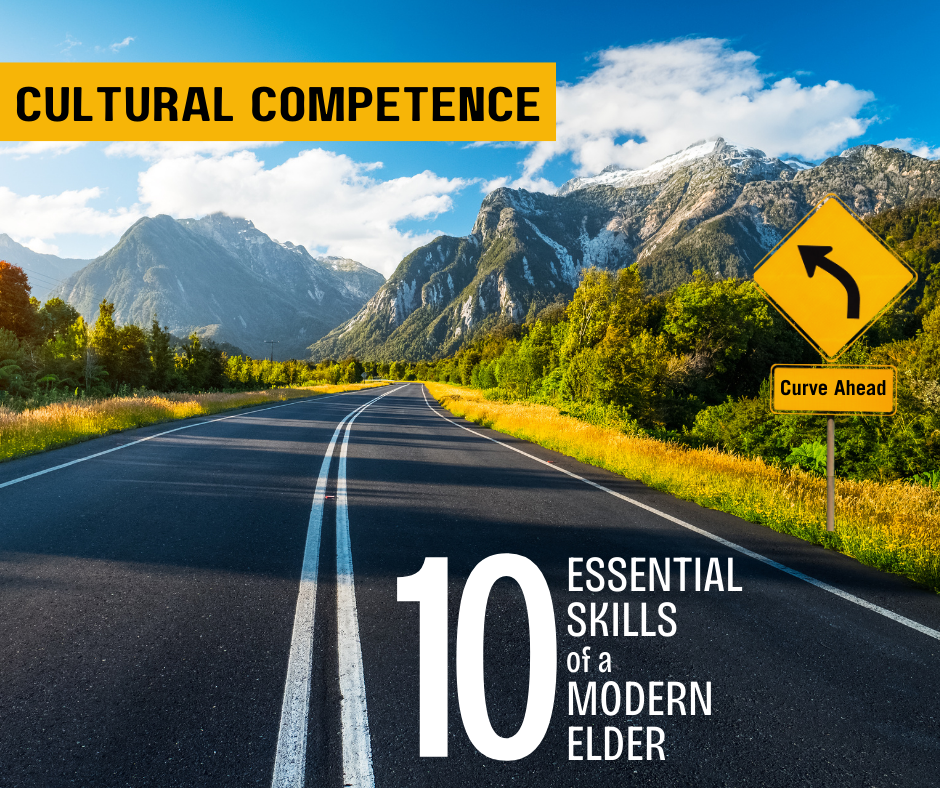
When you are navigating a winding mountain road, you often glimpse sunlight peeking through the trees or shining through a pass. When you come to a particularly sharp bend, do you expect to see a breathtaking panorama with a majestic vista of towering peaks and an end to your journey?
Most of the time, however, the road does not end there; instead, it extends into the distance, with more curves before disappearing into the distance.
The word picture above describes where we find ourselves at the end of a 10-week journey exploring the 10 Essential Skills of a Modern Elder.
One of the most important characteristics of a Modern Elder, reflected in all of the topics above, is that of a willingness to learn, adapt, and engage with new ideas and technologies.
With that in mind, I hope you will join me as my journey to becoming a Modern Elder continues…
Exercise. Eat a balanced diet. Go to therapy. Most wellness advice is focused on achieving and maintaining good physical and mental health. But Harvard-trained social scientist and pioneering social health expert Kasley Killam reveals that this approach is missing a vital component: human connection.
Relationships not only make us happier, but also are critical to our overall health and longevity. Research shows that people with a strong sense of belonging are 2.6 times more likely to report good or excellent health. Perhaps even more astonishingly, people who lack social support are up to 53% more likely to die from any cause. Yet social health has been overlooked and under-appreciated – until now.
Just as we exercise our physical muscles, we can strengthen our social muscles. Weaving together cutting-edge science, mindset shifts, and practical wisdom, Killam offers the first methodology for how to be socially healthy. An antidote to the loneliness epidemic and an inspiring manifesto for seeing wellbeing as not only physical and mental, but also social, The Art and Science of Connection is a handbook for thriving.
The Art and Science of Connection will transform the way you think about each interaction with a friend, family member, coworker, or neighbor, and give you the tools you need to live a more connected and healthy life – whether you are an introvert or extrovert, if you feel stretched thin, and no matter your age or background. Along the way, Killam will reveal how a university student, a newlywed, a working professional, and a retired widow overcame challenges to thrive through connection – and how you can, too.
In our quest for optimal health, we often focus on physical fitness and mental wellbeing. We diligently count our steps, monitor our sleep, eat nutritious foods, and practice mindfulness. While these practices are undoubtedly beneficial, they overlook a crucial component of our overall health: social connection. This often-neglected aspect, known as social health, is emerging as a vital factor in our longevity, happiness, and overall quality of life.
What is Social Health?
Social health refers to the dimension of our wellbeing that stems from our relationships and interactions with others. It encompasses our ability to form and maintain meaningful connections, feel supported and valued within our communities, and navigate social institutions effectively. Unlike physical and mental health, which have long been recognized as essential components of wellbeing, social health has remained largely under-explored and under-appreciated.
The Alarming Decline in Social Connections
Recent decades have witnessed a concerning trend in social health across many societies. In the United States, for instance:
The percentage of people with ten or more close friends has dropped by 20% over the past 30 years.
Time spent alone has increased by an average of 24 hours per month over the past two decades.
Participation in community activities has fallen by nearly 20% in the last ten years.
A 2019 national survey revealed that about half of adults felt that no one knew them well.
This trend isn’t limited to the US. Globally, hundreds of millions of adults go for weeks without speaking to family or friends, and a significant portion of the world’s population lacks anyone to turn to for help.
The Health Implications of Social Disconnection
The consequences of this social disconnection are far-reaching and severe. Research has shown that lack of social connection can:
Increase the risk of stroke by 32%
Raise the risk of dementia by 50%
Elevate the risk of early death by 29%
These statistics underscore the critical role that social connections play in our physical and mental health. In fact, strong social ties are as essential to our wellbeing as proper nutrition and regular exercise.
The Balance of Social Health
It’s important to note that social health isn’t just about quantity; quality matters too. An overwhelming amount of social interaction or unfulfilling connections can be equally detrimental. Many people struggle with finding the right balance, whether they’re introverts drained by excessive social obligations, extroverts spread too thin, or individuals grappling with the pressures of social media.
Recognizing the Crisis
The decline in social health, coupled with rising hate crimes, escalating polarization, and eroding trust between individuals, amounts to nothing less than a public health emergency. Recognizing this crisis, some governments and international organizations are taking action. The UK and Japan have appointed ministers for loneliness, while the World Health Organization has established a global Commission on Social Connection.
The Path Forward: Understanding and Improving Social Health
Author Kasley Killam has spent over a decade studying the concept of social health, building on the foundational work of scholar Robert D. Russell. In her book, The Art and Science of Connection, Killam offers a comprehensive exploration of social health and provides practical strategies for improvement.
The book is structured in three parts:
Evaluating personal social health and understanding its importance
Practical steps to enhance social health and navigate challenges
Examining social health in various contexts, from neighborhoods to national policies
Killam’s work serves as both a guide for individuals seeking to improve their social wellbeing and a call to action for society to prioritize connection and community.
Practical Steps to Improve Social Health
While the concept of social health may seem abstract, there are concrete steps we can take to improve it:
Evaluate your current social connections and identify areas for improvement.
Make a conscious effort to maintain and deepen existing relationships.
Seek out new connections through community activities, shared interests, or volunteer work.
Practice active listening and empathy in your interactions.
Balance your social interactions with alone time for self-reflection and recharging.
Limit excessive or unfulfilling social media use in favor of more meaningful in-person interactions.
Address conflicts and misunderstandings promptly and constructively.
Cultivate a sense of belonging within your community.
A Call for a Social Health Movement
Killam’s book is more than just a self-help guide; it’s a manifesto for a movement centered on the practice of social health. The author argues that this concept should not be confined to academic discussions but should be embraced and experienced by everyone, woven into the fabric of our society.
By recognizing social health as an essential component of overall wellbeing, alongside physical and mental health, we can work towards creating a more connected, resilient, and healthy society. This shift in perspective has the potential to not only improve individual lives but also address broader societal issues such as loneliness, polarization, and community breakdown.
As we continue to navigate an increasingly complex and often isolating world, prioritizing our social health becomes more crucial than ever. By fostering meaningful connections, building supportive communities, and recognizing the profound impact of our social ties, we can unlock a powerful tool for enhancing our overall health, happiness, and longevity. It’s time to bring social health to the forefront of our personal and collective wellbeing strategies.
Part of a regular series on 27gen, entitled Wednesday Weekly Reader.
During my elementary school years one of the things I looked forward to the most was the delivery of “My Weekly Reader,” a weekly educational magazine designed for children and containing news-based current events.
It became a regular part of my love for reading, and helped develop my curiosity about the world around us.
What would we see if we could peek inside our typical American neighbor’s home? On an average day, your neighbors spend:
8 hours and 44 minutes sleeping
48 minutes showering, dressing, and putting on makeup
7 hours and 33 minutes working, for the 41 percent of our neighbors who work
74 minutes eating
5 hours and 15 minutes for leisure and sports
18 minutes exercising
These statistics are a few years old, but a quick scan of more current data seems to back them up.
On the other hand, here are some more recent stats that point to a troubling trend in the U.S.:
Users of all ages spend an average of 3 hours and 57 minutes per day on phones, tablets, and computers
Users of all ages spend another 4 hours and 37 minutes in front of a TV
Even if you take away time that your neighbors are online but don’t use social network sites, the average time drops to “only” two hours a day. If you do the math, at 2 hours a day x 366 days a year (it’s a Leap Year, folks), that’s almost 31 days a year with our faces buried in a small screen.
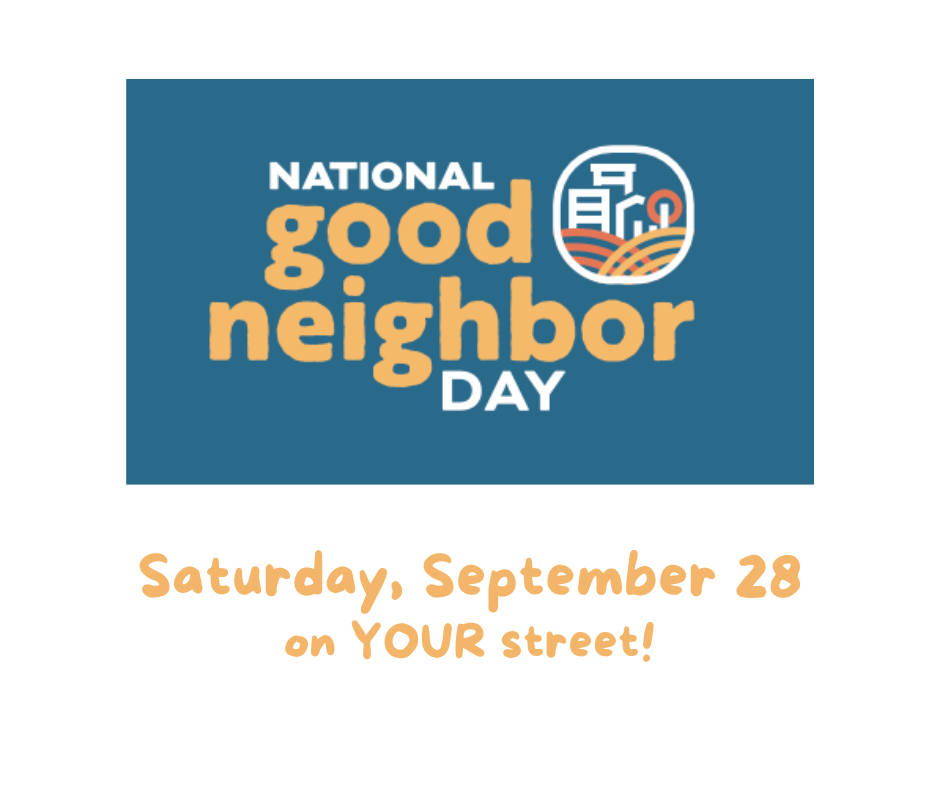
By the way, did you know Saturday September 28 is Good Neighbor Day?
Here’s the single best thing you can do to celebrate:
Power down all your devices, leave them in your house, and step outside to say “hi” to your neighbors.
In person.
Technology makes it easy to connect online, but our goal is to connect in real life.
As Amy Lively states it so well, “God has carefully placed us in our neighborhoods. He planned your neighborhood long before your Homeowner’s Association Handbook or your town’s zoning committee. He planted you on your street, on your block, in your house for a specific reason, which is explained here:
From one man he made all the people of the world. Now they live all over the earth. He decided exactly when they should live. And he decided exactly where they should live. God did this so people would seek him. Then perhaps they would reach out for him and find him. They would find him even through he is not far from any of us.
Acts 17:26-27, NIrV
The reason God is not far from our neighbors is that He is in each one of us. Each of us will have to stand before Him and tell Him how we loved our neighbors.
Jesus loves your neighbors.
He stepped down from heaven to save them.
All you have to do is walk across the street to meet them.
Over the past decade, the concept of a “Modern Elder” has emerged – a seasoned professional who combines years of experience with a commitment to ongoing learning and adaptation. As we wrap up the series exploring the essential skills for these Modern Elders, we arrive at our tenth installment: Personal Branding and Networking. This skill set is crucial for maintaining relevance, influence, and career momentum in an increasingly digital and connected world.
Understanding Personal Branding and Networking
Personal branding and networking are interconnected skills that can significantly impact a Modern Elder’s career trajectory. These competencies involve showcasing your unique value and building meaningful professional relationships in both traditional and digital spheres.
Personal branding and networking encompass two key components:
Skill in articulating one’s value proposition
Ability to build and maintain professional relationships, both online and offline
Let’s delve deeper into each of these aspects and their significance for Modern Elders.
Articulating One’s Value Proposition
In a competitive job market, the ability to clearly communicate your unique strengths is invaluable. For Modern Elders, articulating a compelling value proposition is the key to standing out and demonstrating the worth of their extensive experience.
A value proposition is a clear statement that explains how your unique blend of skills, experience, and insights can benefit others. For Modern Elders, this is particularly crucial as it helps to:
Differentiate yourself: In a job market that often favors youth, a well-crafted value proposition highlights the unique advantages of your extensive experience.
Stay relevant: By continually refining your value proposition, you demonstrate your ability to adapt and remain valuable in changing times.
Guide career decisions: A clear understanding of your value helps in choosing opportunities that best align with your strengths and goals.
Strategies for Articulating Your Value Proposition
Crafting an effective value proposition requires introspection, strategic thinking, and clear communication. Here are some strategies to help Modern Elders develop and refine their unique value proposition:
Reflect on your journey: Identify key experiences, skills, and insights you’ve gained over your career.
Pinpoint your unique offerings: What combination of skills and experiences sets you apart?
Understand your audience: Tailor your value proposition to the needs and interests of your target industry or role.
Craft a compelling narrative: Develop a concise, engaging story that illustrates your value.
Practice and refine: Regularly update your value proposition as you gain new skills and experiences.
Building and Maintaining Professional Relationships
Networking is more than just collecting business cards or LinkedIn connections. For Modern Elders, it’s about fostering genuine, mutually beneficial relationships that span generations and leverage both traditional and digital platforms.
Networking remains a cornerstone of professional success, and for Modern Elders, it’s about leveraging years of connections while continuing to expand and nurture new relationships. This involves:
Online networking: Utilizing digital platforms to maintain and expand your professional network.
Offline networking: Engaging in face-to-face interactions at industry events, mentoring programs, or community activities.
Intergenerational connections: Building relationships across age groups to stay connected with emerging trends and perspectives.
Strategies for Effective Networking
Successful networking requires a blend of traditional techniques and modern approaches. Here are some strategies that Modern Elders can employ to build and maintain a robust professional network:
Leverage existing relationships: Reconnect with former colleagues and clients, offering your expertise and support.
Embrace digital platforms: Maintain an active, professional presence on platforms like LinkedIn, Twitter, or industry-specific forums.
Attend industry events: Participate in conferences, workshops, and local meetups to connect with peers and stay current in your field.
Offer mentorship: Share your knowledge with younger professionals, fostering mutually beneficial relationships.
Seek reverse mentorship: Learn from younger colleagues about new technologies and emerging industry trends.
Join professional associations: Engage with groups relevant to your industry or areas of expertise.
Create content: Share your insights through blog posts, articles, or speaking engagements to establish thought leadership.
The Impact of Personal Branding and Networking for Modern Elders
When executed effectively, personal branding and networking can open doors to new opportunities and enhance a Modern Elder’s professional life. Let’s explore the multifaceted impact of these skills:
Enhanced career opportunities: A strong personal brand and network can lead to new job offers, consulting gigs, or board positions.
Increased influence: By articulating your value and maintaining strong relationships, you can shape industry conversations and decisions.
Continuous learning: Networking exposes you to new ideas and perspectives, fostering ongoing personal and professional growth.
Legacy building: Sharing your expertise through your brand and network allows you to make a lasting impact in your field.
Adaptation to change: Strong networking skills help you stay informed about industry shifts and emerging opportunities.
Overcoming Challenges
While personal branding and networking offer numerous benefits, Modern Elders may encounter specific obstacles in mastering these skills. Recognizing and addressing these challenges is crucial for success.
Modern Elders may face unique challenges in personal branding and networking:
Technology adoption: Staying current with digital networking tools may require extra effort.
Ageism: Crafting a personal brand that emphasizes the value of experience while demonstrating continued relevance.
Time management: Balancing networking activities with other professional and personal commitments.
For Modern Elders, personal branding and networking are not just about self-promotion or collecting connections. They’re about articulating the unique value that comes with years of experience and wisdom, and fostering meaningful relationships that benefit all parties involved. By mastering these skills, Modern Elders can ensure their continued influence, relevance, and success in an ever-evolving professional landscape.
As we navigate the complexities of today’s environments, the ability to clearly communicate one’s value and build strong, diverse professional relationships stands out as a critical skill. For Modern Elders, it’s an opportunity to leverage their vast experience while continually growing and adapting, ensuring their voices remain influential and their contributions valued across generations.
Ahoy, mateys and landlubbers alike! Gather ’round, for I’ve got a tale to spin about a day that’s sure to shiver yer timbers and tickle yer funny bones. Arrr, it be none other than the infamous Talk Like a Pirate Day! A day when we cast aside our everyday lingo and let our inner buccaneer run free, savvy?
Every year on the 19th of September, the world transforms into a sea of eye patches, tricorn hats, and parrots on shoulders, all in honor of this whimsical holiday. But ye might be wonderin’, “Why, oh why, do folks suddenly decide to speak like salty sea dogs for a day?”
Well, me hearties, it all began in 1995 when two chaps named John Baur and Mark Summers were engaged in a raucous game of racquetball. As they swung their racquets and swatted at the ball, they started mockin’ one another in pirate-speak. Aye, ye read that right! And from that very moment, a new tradition was born.
Since then, Talk Like a Pirate Day has gained more traction than a rogue wave on the high seas. It’s a day for young and old, scallywags and seadogs, to channel their inner Jack Sparrow or Blackbeard.
What secret is behind the popularity of pirates, when the subject matter was inspired by the lives and actions of some of the most notorious individuals ever to live?
In a word, experience.
While practically no one in their right mind would want to actually be a pirate, almost everyone wants to dream of the experience of a pirate – freedom to come and go as you please, subject to no one save maybe your crew, adventures and danger guaranteed, the chance to become wealthy beyond your wildest dreams…
Walt Disney, a genius in so many definitions of the word, astutely recognized that his cartoons, films, and theme park attractions captured the already-present fascination of buccaneers and the thrilling, dangerous world they inhabited.
When the most recent Disney adventure about pirates, Pirates of the Caribbean: Dead Men Tell No Tales, hit the theaters in May 2017, it was not just the latest “Pirates” movie from Walt Disney Studios.
It was the latest stop of a long and very successful “voyage” that Walt Disney personally began in 1927, and the company that bears his name continues today. The journey we are invited to join has been one of entertainment, delivered through various media: silent cartoons, animated shorts, live action films, full-length animated features, immersive theme park attractions, and coming full-circle, the blockbuster series “Pirates of the Caribbean” – inspired by the attraction, but only full-realized in the character of Captain Jack Sparrow.
As we celebrate Talk Like a Pirate Day, we tip our hats to the enduring legacy of Disney’s pirate-themed entertainment. From the early days of animation to the modern blockbuster films, pirates have played a significant role in Disney’s storytelling. These tales of swashbuckling adventures, cunning villains, and hidden treasure continue to capture our hearts and imaginations. So, me hearties, whether you’re at a Disney park or in the comfort of your own ship (couch), take a moment to savor the magic of Disney’s pirate world on this special day. Yo ho, yo ho, a pirate’s life for all!
Several years ago, it occurred to me that the stories, characters, and objects found in both the theme park attraction and the movies could be very useful in helping organizations understand more about Guest Experiences.
But what does all this pirate stuff have to do with Guest Experience?
I thought you’d never ask…
Jerry Bruckheimer, producer of the Pirates of the Caribbean movies, comes close with this comment:
Pirates as a form of entertainment were resurrected for the Disney parks and for motion pictures in a way which was both familiar and completely new. Story is everything, but it’s not about telling the same old story. It’s about finding new ways to tell that story. We’re all looking for that horizon, just like Captain Jack. The trick is to always keep looking not only towards that horizon, but beyond it.
The Guest Experience in your organization is about taking something familiar (welcoming) and making it completely new (experience). It’s about the people, place, and process that come together in new ways to create and deliver an amazing experience for everyone who comes to your campus.
I’ve written a series of posts that dive deeper into the Guest Experience – Pirates connection. Here’s the entire voyage:
This post inspired by Walt Disney and his amazing ability to bring a story to life on the screen through many animation shorts and films, and in person at Disney Parks worldwide
adapted for Guest Experiences by the Pirate Navigator
The Pirate Navigator has hung up his compass and maps, but if you’re really intrigued by the concept of how Pirates and Guest Experiences can go together, drop me a line!
“You believe in pirates, of course?” Walt Disney once asked on a Disneyland television program. . . .
Disney Pirates: The Definitive Collector’s Anthology delves behind-the-scenes across ninety years of Disney film, television, and park history. Pirates have captured people’s imaginations for centuries, and Walt Disney believed in pirates as a source of great popular entertainment. Walt’s very first all live-action feature film was based upon Robert Louis Stevenson’s Treasure Island, and even before that, he selected J. M. Barrie’s Peter Pan, in which pirates figure so prominently, as a key feature-length animated film for his studio.
Years later, Pirates of the Caribbean opened in Disneyland just months after Walt had passed away, making it one of the last Disney theme park attractions in which he was personally involved. That attraction ultimately spawned similar versions at Disney parks around the world, one of the most successful series in motion picture history with the five Pirates of the Caribbean films, and a vast themed land at Shanghai Disneyland called Treasure Cove – celebrating the entirety of the Pirates of the Caribbean franchise.
In the early years of Walt Disney’s animation journey, pirates played a significant, albeit subtle, role in shaping the studio’s evolving storytelling. The era from the late 1920s through the 1940s saw Disney experimenting with pirate themes in a way that foreshadowed the company’s later obsession with buccaneers, leading to some of their most iconic characters and stories.
Steamboat Willie (1928) and The Karnival Kid (1929)
While Steamboat Willie may not immediately evoke a traditional pirate narrative, it established crucial elements of rebellious spirit and adventure that mirror the qualities associated with buccaneer life. Released in 1928, Steamboat Willie was the debut of Mickey Mouse and was revolutionary as one of the first synchronized sound cartoons. Mickey’s character, navigating the open river aboard a steamboat, is mischievous, resourceful, and playful – traits that would later echo in pirate personas like Captain Jack Sparrow. This cartoon also debuted “Captain Pete” who personified the evil characteristics of a pirate.
Similarly, in The Karnival Kid (1929), while not explicitly about pirates, Mickey shows a more roguish personality, playing pranks and engaging in clever schemes, themes that align with the pirate archetype of being both lovable and rebellious. These early shorts played with ideas of defying authority and seeking freedom, indirectly reflecting the allure of pirates, who were often portrayed as rejecting societal norms in favor of adventure on the high seas.
The 1930s and the Rise of Pirate-Like Characters
Throughout the 1930s, Disney animation began to experiment more directly with the types of characters and narratives that would later become central to its pirate stories. Pirate-like characters, or those with the spirit of adventure, began appearing in animated shorts that leaned on slapstick humor and whimsical storytelling. For instance, Mickey’s Revue (1932) and The Dognapper (1934) featured wild antics that hinted at the chaotic, adventure-driven lives of pirates. Characters often navigated dangerous, unpredictable situations, much like a pirate at sea.
As Disney refined its animation techniques, the studio’s storytelling became more sophisticated. Many of the cartoons from this era began to reflect deeper themes of exploration, lawlessness, and individualism – key elements of pirate mythology. Characters might not have worn eye patches or wielded cutlasses, but they embodied the traits of adventurous rogues seeking freedom, much like the swashbucklers of classic literature.
Pirate Themes in the 1940s
The 1940s brought even more sophisticated and elaborate storytelling from Disney. By this time, the studio was producing more polished features and integrating pirates and pirate-like characters into its films. Notable examples can be found in the 1940 Pinocchio, where the whale Monstro serves as a stand-in for the threatening forces of the sea, a common antagonist in pirate lore. Similarly, Fantasia (1940) showcased themes of danger and exploration of the unknown—key elements of the pirate experience, although through a more abstract lens.
The pirate ethos of risk, adventure, and freedom resonated with audiences, and Disney continued to build on this foundation in the 1940s. The focus on the seas, high adventure, and rogues was fertile ground for Disney’s future, when they would bring pirates into full focus with later classics like Peter Pan (1953).
Influence on Later Pirate Narratives
These early influences of pirates and pirate-like characters in Disney shorts and features served as the groundwork for what would become some of Disney’s most beloved pirate stories. The fascination with adventure, exploration, and the unknown – captured in the spirit of the pirates, albeit in more subtle forms during this era – evolved into a full-fledged pirate obsession with Treasure Island (1950), Peter Pan (1953), and the ultimate homage to the genre in the form of the Pirates of the Caribbean (2003-2017) franchise.
This period of experimentation and playful engagement with pirate themes in the 1920s through the 1950s laid the foundation for the robust pirate narratives that would become central to Disney’s storytelling legacy, shaping both animated and live-action representations of swashbucklers for decades to come.
Walt Disney’s Last Masterpiece
The Pirates of the Caribbean attraction, which debuted at Disneyland in 1967, marked a pivotal moment not only for the Disney theme parks but for the broader theme park industry. This ride represented a major leap forward in immersive storytelling and technological innovation, setting the standard for what theme park experiences could achieve.
Notably, Pirates of the Caribbean was the last attraction personally overseen by Walt Disney before his death in 1966. Its development became a personal project for Disney, who envisioned a grand, immersive experience that would transport guests to the golden age of piracy. Originally conceived as a walk-through wax museum, the attraction evolved into an elaborate boat ride, utilizing groundbreaking audio-animatronics – a technology that Disney had been developing since the early 1960s. These animatronics gave the pirates lifelike movement and character, adding an unprecedented level of realism to the experience.
Walt Disney’s vision for Pirates of the Caribbean was to bring to life the high-seas adventures depicted in pirate lore, but with a family-friendly, lighthearted twist. The narrative of the ride combined adventure, danger, and humor, introducing visitors to the world of pirates through a series of highly detailed scenes, filled with lifelike pirate characters engaging in swashbuckling antics. From a skeleton-filled treasure cove to a town under siege by drunken, rowdy buccaneers, the ride’s scenes were intricately designed to immerse guests into a whimsical pirate world.
A Groundbreaking Attraction
When Pirates of the Caribbean opened, it was the most technologically advanced theme park attraction in the world. The audio-animatronics allowed for synchronized movement, voice, and facial expressions, enabling the characters to interact with one another and the environment in a way that felt incredibly dynamic. Prior to this, most animatronic figures in theme parks were much simpler, with limited movement and often used only as static props.
The ride’s boat system also revolutionized theme park design. Guests boarded flat-bottomed boats that glided along a water-filled channel, creating a seamless, gentle flow that transported riders through the various pirate scenes. This slow-moving, controlled experience allowed for detailed storytelling, with each set piece and scene carefully designed to unfold in front of the audience at just the right pace. The boat ride system became a hallmark of Disney’s dark ride experiences, influencing many future attractions.
The ride’s music, particularly the iconic song Yo Ho (A Pirate’s Life for Me), became an integral part of the attraction’s charm. Written by Disney legends George Bruns and Xavier Atencio, the song captured the playful spirit of the pirates and became an ear worm for generations of park-goers. The use of music to punctuate the ride’s narrative was a masterstroke, ensuring that the experience was memorable long after guests exited the attraction.
Pirates of the Caribbean’s Impact
The success of the Pirates of the Caribbean attraction had a profound impact on Disney’s approach to themed entertainment. The ride’s storytelling, immersive environment, and advanced technology raised the bar for future attractions, not just at Disney but across the industry. It demonstrated the power of story-driven rides, where narrative, theming, and cutting-edge technology could blend to create experiences that resonated emotionally with guests. Pirates of the Caribbean became a template for future attractions like The Haunted Mansion (1969) and Splash Mountain (1989), which followed similar principles of blending dark ride elements with innovative technology and engaging storylines. Over the decades since the introduction of Pirates of the Caribbean, those same principles have been applied to new attractions based on Disney’s acquisition of the Marvel and Star Wars intellectual properties.
The attraction’s success also helped cement Disneyland’s status as a cultural institution. Pirates of the Caribbean quickly became a must-see for visitors, drawing massive crowds and becoming one of the park’s signature attractions. The ride’s appeal transcended age groups, with both children and adults being captivated by the lively pirate world. Its legacy is such that, over half a century later, it continues to be one of the most popular attractions at Disneyland and at other Disney parks worldwide.
Expansion and Influence
Due to its immense popularity, the Pirates of the Caribbean ride expanded beyond Disneyland. It was replicated and modified at other Disney parks, starting with Magic Kingdom in Walt Disney World (1973) and later at Tokyo Disneyland (1983), Disneyland Paris (1992), and Shanghai Disneyland (2016). Each version of the ride offered slight variations in design and storytelling, but the core experience – a journey through a lively, pirate-filled world – remained intact.
In many ways, the ride also influenced pop culture’s ongoing fascination with pirates. Decades after its debut, the attraction inspired the wildly successful Pirates of the Caribbean film franchise, which debuted in 2003. The films, particularly the character of Captain Jack Sparrow, drew heavily from the ride’s whimsical, adventurous tone. Interestingly, after the success of the films, Disney modified the original ride to include references to the movies, adding characters like Jack Sparrow, Barbossa, and Davy Jones, thus bringing the ride full circle by blending cinematic elements into the classic experience.
A Legacy of Immersive Storytelling
The enduring success of Pirates of the Caribbean lies in its ability to transport guests into a fully realized world. Its attention to detail, from the intricately designed pirate ships and taverns to the expressive, life-like animatronics, immerses visitors in a narrative-driven adventure that transcends the simple mechanics of the ride itself. It exemplifies Disney’s ability to create experiences that are more than just attractions – they are stories that guests feel part of.
In the broader history of theme parks, Pirates of the Caribbean represents a turning point where rides became immersive, cinematic experiences rather than mere amusements. It is not only a beloved attraction but a symbol of Disney’s continued innovation in themed entertainment, inspiring generations of creators to blend technology, art, and storytelling in ways that push the boundaries of what theme parks can achieve.
If you liked this post, come back tomorrow for a special feature!
Part of a regular series on 27gen, entitled Wednesday Weekly Reader.
During my elementary school years one of the things I looked forward to the most was the delivery of “My Weekly Reader,” a weekly educational magazine designed for children and containing news-based current events.
It became a regular part of my love for reading, and helped develop my curiosity about the world around us.
Picking up from the ideas over the last few weeks here, here, and here, consider these additional ways to celebrate National Good Neighbor Day on September 28:
1. Write Thank-You Notes: Express your gratitude to neighbors who’ve made a positive impact. A heartfelt note can go a long way in strengthening relationships.
2. Volunteer for a Community Project: Organize or participate in a local clean-up, tree-planting event, or food drive. This shows commitment to improving your shared space.
3. Host a Neighborhood Cook Out: Food brings people together. A casual cook out can be an excellent opportunity for neighbors to mingle and get to know each other better.
4. Start a Neighborhood Book Club: Promote intellectual engagement and regular social interaction by initiating a book club with your neighbors.
5. Create a Neighborhood Directory: With permission, compile contact information and special skills of willing neighbors. This can be invaluable during emergencies or when seeking local expertise.
6. Organize a Neighborhood Yard Sale: This event can help declutter homes while providing a fun, community-wide activity.
7. Initiate a “Random Acts of Kindness” Challenge: Encourage neighbors to perform small acts of kindness for one another throughout the day.
8. Host a Skills Exchange Workshop: Neighbors can teach each other various skills, from gardening to basic home repairs.
9. Create a Neighborhood Time Capsule: Collect items and messages representing your community to be opened in the future.
10. Plan a Neighborhood Walking Tour: For areas with historical significance, organize a tour to educate residents about local history.
Making It Happen
To bring these ideas to life:
Plan Ahead: Start organizing at least a few weeks in advance.
Communicate: Use social media, flyers, or door-to-door invitations to spread the word.
Be Inclusive: Ensure your activities are accessible to all neighbors, regardless of age or ability.
Follow Local Regulations: Obtain any necessary permits for larger gatherings or events.
Document the Day: Take photos and videos to commemorate the celebration.
Call to Action
We encourage you to share your National Good Neighbor Day plans and experiences on social media using the hashtag #GoodNeighborDay2024. By sharing your stories, you’ll inspire others and showcase the power of community spirit.
Remember, being a good neighbor isn’t limited to one day a year. Use National Good Neighbor Day as a springboard for ongoing community engagement and relationship-building. Together, we can create stronger, more connected neighborhoods that enrich all our lives.
In our increasingly interconnected and diverse world, cultural competence has become a crucial skill for leaders of all ages. For Modern Elders – experienced individuals who bring wisdom and perspective to their roles – this skill is particularly vital. Cultural competence enables them to bridge generational and cultural gaps, fostering understanding and collaboration in multicultural environments.
Understanding Cultural Competence
Cultural competence encompasses two key elements:
Understanding and respect for diverse cultures and viewpoints
The ability to work effectively in multicultural environments
These components are intertwined and mutually reinforcing. Let’s explore each in more detail.
Understanding and Respect for Diverse Cultures and Viewpoints
At its core, cultural competence begins with a genuine curiosity about and respect for different cultures, traditions, and perspectives. This involves:
Continuous learning: Modern Elders should actively seek knowledge about various cultures, their histories, values, and customs. This can be achieved through reading, attending cultural events, or engaging in conversations with people from diverse backgrounds.
Challenging personal biases: Recognizing and addressing one’s own cultural biases and stereotypes is crucial. This requires self-reflection and a willingness to question long-held assumptions.
Embracing diversity: Viewing diversity as a strength rather than a challenge is essential. Modern Elders should appreciate how different viewpoints can lead to innovation and more comprehensive problem-solving.
Practicing empathy: Developing the ability to see situations from others’ cultural perspectives fosters deeper understanding and connection.
Ability to Work Effectively in Multicultural Environments
Understanding and respect lay the foundation, but the true test of cultural competence lies in applying this knowledge effectively in diverse settings:
Adaptive communication: Modern Elders should be able to adjust their communication style to suit different cultural contexts, including being mindful of non-verbal cues and varying communication norms.
Conflict resolution: In multicultural environments, misunderstandings can arise from cultural differences. Culturally competent leaders can navigate these situations sensitively and find common ground.
Inclusive leadership: This involves creating an environment where all team members, regardless of their cultural background, feel valued and empowered to contribute.
Building diverse networks: Modern Elders should actively cultivate relationships with individuals from various cultural backgrounds, both within and outside their organizations.
The Impact of Cultural Competence
For modern elders, cultural competence is not just a nice-to-have skill – it’s essential for effective leadership in today’s global context. Here’s why:
Enhanced problem-solving: Diverse perspectives lead to more creative and comprehensive solutions.
Improved team dynamics: Cultural competence fosters a more inclusive and harmonious work environment.
Broader market understanding: In a global economy, cultural competence helps leaders better understand and serve diverse customer bases.
Increased innovation: Cross-cultural collaboration often sparks new ideas and approaches.
Better talent acquisition and retention: Organizations led by culturally competent leaders are more attractive to diverse, top-tier talent.
Developing Cultural Competence
Becoming culturally competent is an ongoing journey. Here are some strategies for Modern Elders to enhance this skill:
Seek out cross-cultural experiences, both professionally and personally
Participate in cultural competence training and workshops
Mentor or be mentored by individuals from different cultural backgrounds
Stay informed about global events and their cultural implications
Reflect regularly on cultural interactions and lessons learned
As our world becomes increasingly interconnected, cultural competence stands out as a critical skill for Modern Elders. By cultivating a deep understanding and respect for diverse cultures and developing the ability to work effectively in multicultural settings, these leaders can bridge divides, foster innovation, and guide their organizations toward a more inclusive and successful future. In embracing cultural competence, Modern Elders not only enhance their leadership capabilities but also contribute to building a more understanding and collaborative global community.
The famous battles that form the backbone of the story put forth of American independence – at Lexington and Concord, Brandywine, Germantown, Saratoga, and Monmouth – while crucial, did not lead to the surrender at Yorktown.
It was in the three-plus years between Monmouth and Yorktown that the war was won.
Alan Pell Crawford’s riveting new book,This Fierce People, tells the story of these missing three years, long ignored by historians, and of the fierce battles fought in the South that made up the central theater of military operations in the latter years of the Revolutionary War, upending the essential American myth that the War of Independence was fought primarily in the North.
Weaving throughout the stories of the heroic men and women, largely unsung patriots – African Americans and whites, militiamen and “irregulars,” patriots and Tories, Americans, Frenchmen, Brits, and Hessians, Crawford reveals the misperceptions and contradictions of our accepted understanding of how our nation came to be, as well as the national narrative that America’s victory over the British lay solely with General George Washington and his troops.
The American Revolutionary War holds a revered place in the nation’s collective memory, often depicted as a heroic struggle led by George Washington against the mighty British Empire. This narrative, deeply ingrained in American culture, typically focuses on the war’s northern theater, highlighting iconic moments such as the battles of Lexington and Concord, Bunker Hill, Washington’s crossing of the Delaware, and the harsh winter at Valley Forge. However, this perspective, while stirring, presents an incomplete and potentially misleading account of the conflict that birthed a nation.
The Washington-Centric Narrative
The dominance of this northern-focused, Washington-centric narrative can be traced back to the early years of the republic. Biographies of George Washington, such as Parson Weems’s The Life of George Washington (1808) and John Marshall’s similarly titled work (1838), played a significant role in shaping public perception. These accounts, naturally centered on Washington’s experiences, emphasized events in which he was directly involved or closely associated. This trend continued with Washington Irving’s five-volume biography in 1855, further cementing the focus on the northern theater of the war.
Even contemporary histories written in the early 19th century, such as those by William Moultrie (1802) and Henry “Light Horse Harry” Lee III (1812), which provided valuable insights into other aspects of the war, never achieved the widespread readership of the Washington biographies. Additionally, early histories of the young nation, like that of Mercy Otis Warren (1805), were often written by New Englanders, inherently biasing the narrative towards events in that region.
The Overlooked Southern Campaign
This established narrative, however compelling, overlooks a crucial fact: much of the war, including some of its most decisive battles, took place in the South. The events that ultimately forced the British to surrender at Yorktown in 1781 largely occurred in the southern states, far from Washington’s direct command. Ironically, Washington himself did not cross the Potomac until the late summer of 1781, more than three years after the last major battle in the North at Monmouth.
The southern campaign of the Revolutionary War is rich with dramatic events and compelling figures that deserve recognition. Battles such as Camden, Kings Mountain, and Cowpens played critical roles in shaping the war’s outcome, yet they remain unfamiliar to many Americans. The war in the South was not just a conflict between American Continentals and British redcoats; it was also a brutal civil war between “partisans” fighting for independence and their “loyalist” neighbors, marked by fierce battles, skirmishes, and acts of domestic terrorism.
Factors Contributing to the Oversight
Several factors have contributed to the relative neglect of the southern campaign in popular and academic histories:
Early Historiography: The earliest accounts of the war, primarily biographies of Washington, naturally focused on his direct experiences in the northern theater.
Regional Bias: Many early histories were written by New Englanders, leading to a focus on events in that region.
Civil War Legacy: In the aftermath of the Civil War, historians were reluctant to celebrate the contributions of southerners to the Revolutionary War, given the recent conflict.
Loyalty Concerns: Even in the early years of the republic, the presence of loyalist elements in the South during the Revolutionary period made some historians wary of emphasizing the region’s role.
Slavery: Perhaps most significantly, the fact that many southern Revolutionary leaders and soldiers were slaveholders has made modern historians hesitant to celebrate their contributions to the cause of independence.
The Complexity of the Southern Theater
The southern campaign of the Revolutionary War presents a complex and sometimes uncomfortable narrative. It involves slaveholders fighting for their own liberty while denying it to others, a contradiction that was apparent even to contemporaries. Samuel Johnson famously asked, “How is it that we hear the loudest yelps for liberty from the drivers of negroes?”
This complexity extends to the involvement of African Americans in the war. They fought on both sides of the conflict and, when denied the opportunity to fight, served as laborers and servants. The record of slavery and abolitionism during this period is not as straightforward as later generations might wish. There were abolitionists in the South and slaveholders in the North, including such notable figures as Benjamin Franklin and Alexander Hamilton.
Some southern leaders, including Thomas Jefferson and Henry Laurens, acknowledged the moral wrongness of slavery, viewing it as a violation of the very values for which the Revolution was fought. However, they remained compromised by their continued ownership of slaves and inability to devise practical plans for abolition.
The Need for a More Complete History
Despite these complexities – or perhaps because of them – it is crucial to reassess and more fully incorporate the southern campaign into our understanding of the Revolutionary War. Doing so does not require diminishing Washington’s role or the significance of the northern campaign. Indeed, it can enhance our appreciation of Washington’s leadership, particularly his ability to recognize and trust the abilities of commanders like Nathanael Greene and Daniel Morgan to conduct the war in the South.
A more complete history of the Revolutionary War would reveal that the South had its own “embattled farmers” and “citizens in arms,” its own heroic figures like the “Molly Pitchers” of northern lore. It would acknowledge the civil war aspect of the conflict in the South, with its attendant brutality and complexity. It would also grapple with the uncomfortable truth that many of the southern leaders fighting for independence were themselves slaveholders, some even slave traders.
The standard narrative of the American Revolutionary War, focused primarily on Washington and the northern theater, while inspiring, fails to capture the full scope and complexity of the conflict that gave birth to the United States. By expanding our view to include the crucial southern campaign, we can gain a more nuanced and accurate understanding of the war, its participants, and its legacy.
This broader perspective allows us to appreciate the contributions of often-overlooked figures and regions to the cause of independence. It also forces us to confront the contradictions and moral complexities inherent in the Revolutionary period, particularly regarding the institution of slavery. While it may be uncomfortable to acknowledge that many of those fighting for liberty were themselves denying it to others, it is essential for a full and honest reckoning with our nation’s history.
As we continue to seek a “usable past” in the story of the American Revolution, we must strive for a narrative that encompasses the full geographical and moral landscape of the conflict. Only by doing so can we truly understand the origins of our nation and the ongoing struggle to live up to its founding ideals.
Part of a regular series on 27gen, entitled Wednesday Weekly Reader.
During my elementary school years one of the things I looked forward to the most was the delivery of “My Weekly Reader,” a weekly educational magazine designed for children and containing news-based current events.
It became a regular part of my love for reading, and helped develop my curiosity about the world around us.
The importance of a safe and supportive neighborhood cannot be overstated. As we celebrate National Good Neighbor Day, it’s the perfect time to reflect on our role in fostering a secure community environment. By working together, neighbors can significantly impact the safety and well-being of their local area.
Neighborhood safety is the cornerstone of a thriving community. When residents feel secure in their surroundings, they’re more likely to engage with one another, participate in local activities, and invest in their area’s well-being. A safe neighborhood not only reduces crime but also fosters a sense of belonging and trust among its inhabitants. By working together to implement safety measures and build strong community bonds, neighbors can create an environment where families can flourish, businesses can prosper, and individuals can enjoy a higher quality of life. Prioritizing neighborhood safety is an investment in the collective future of all who call it home.
The Power of Neighborhood Watch
One of the most effective ways to enhance community safety is through organized neighborhood watch programs. These initiatives bring residents together to act as extra eyes and ears for local law enforcement. Here’s how you can get involved:
Contact your local police department to learn about existing programs or how to start one.
Attend regular meetings to discuss community concerns and share information.
Learn to recognize and report suspicious activities without putting yourself in danger.
Use social media or community apps to stay connected and share updates.
Community Safety Tips
Beyond organized programs, there are many ways individuals can contribute to neighborhood safety:
Know your neighbors: Introduce yourself and exchange contact information.
Improve home security: Install proper lighting, secure locks, and consider security systems.
Look out for one another: Keep an eye on neighbors’ properties when they’re away.
Maintain your property: Well-kept homes deter criminal activity and improve neighborhood appeal.
Report issues promptly: Don’t hesitate to contact authorities about safety concerns.
Addressing Common Neighborhood Concerns
Every community faces unique challenges. Here are strategies to address some common issues:
Traffic safety: Work with local officials to implement speed bumps or increased signage in problem areas.
Property crimes: Organize community clean-ups and beautification projects to show an active presence.
Youth engagement: Create or support after-school programs and recreational activities for young residents.
Emergency preparedness: Develop a neighborhood emergency plan and conduct drills.
The Importance of Collaboration and Communication
A safe neighborhood is built on strong relationships and open dialogue. Consider these approaches:
Host regular community events to build connections among neighbors.
Create a neighborhood newsletter or online forum to share information and concerns.
Attend local government meetings to voice community needs and stay informed.
Establish a diverse neighborhood council to represent all resident demographics.
Call to Action
Your involvement is crucial in creating a safer and stronger neighborhood. Here’s how you can make a difference:
Join or start a neighborhood watch program in your area.
Attend the next community safety meeting or town hall.
Organize a block party to get to know your neighbors better.
Share your ideas for improving community security with local leaders.
Volunteer for community improvement projects.
A safe neighborhood is a collective effort. By working together and looking out for one another, we can create a community where everyone feels secure and supported. This National Good Neighbor Day, take the first step towards making your neighborhood a safer place for all.
What will you do to help make your neighborhood safer and stronger?
Check out these other “Good Neighbor Day” articles:

















 27gen.com