It’s Time to Read the Year Out

2020 was the year of reading for me.

2020 wasn’t the year I learned to love reading; that occurred long ago.

2020 wasn’t the year I read widely because I had to; that occurred first in college, and then, to an extent, in seminary and post-graduate studies.

2020 wasn’t the year I read because there wasn’t anything else to do, because of COVID-19 travel restrictions, lockdowns, and quarantines – though there was plenty of “extra” time because of those things.

2020 wasn’t the year I read because my job requires it, though that IS part of my job, and one I look forward to every day.

So why is 2020 the year of reading for me?

It’s best expressed in these thoughts from Anne Bogel in her great little book, I’d Rather Be Reading (on sale for Kindle for $1.99 through the end of the year!).

We are readers. Books grace our shelves and fill our homes with beauty; they dwell in our minds and occupy our thoughts. Books prompt us to spend pleasant hours alone and connect us with fellow readers. They invite us to escape into their pages for an afternoon, and they inspire us to reimagine our lives. Show me a cover of any book I’ve read, and it will take me right back to where I was when I read it.

Anne Bogel

Books are portals to all kinds of memories.

And so, 2020 is a year full of book-inspired memories.

In 2020, those books came to me like this:

  • Books acquired this year: 287
  • Books borrowed from the library: 173
  • Digital books acquired this year: 12

As I have always been clear to point out, I have not read every page of the 472 books that have been in front of me this year. 

With such an immense (and pleasurable) task in front of me (see below), and knowing there is more to my life than reading, I have to resort to some method of finding out what an author is trying to say without reading the whole book. There’s dozens of the total in which I only read the “highlights,” following methods I’ve learned over the years. In about 15 minutes, I can tell whether I will be reading the book, deep-diving into the book, skimming the book, or maybe just returning it (mainly library books).

If a book captures your attention after using whatever method of “quick review” you choose, you should read it.

The converse is true: if a book doesn’t capture your attention after a few attempts, stop reading it. Pick out another one on the topic – there are always more waiting for you!

With those caveats in mind, my “cover-to-cover” reading for 2020 was 217 books.

For the curious, like picking your favorite child (I have four), or favorite daughters/son-in-law (I have four), or grandchildren (I have ten), I don’t typically make a “Best of” list for the year. I find some value in almost every book I read, and for me, that’s good enough.

I talked about that in a podcast with Bryan Rose. You can listen here.

A Little More About My “Book-Inspired” Memories from 2020

In my vocational role, I am responsible for publishing SUMS Remix every two weeks. SUMS Remix is a modified book excerpt in which I develop solutions to a common problem faced by church leaders from 3 different books. So, preparing SUMS Remix in 2020 alone means I have gone through over 100 leadership and organization development books to arrive at the 81 used in producing 27 issues this year. All together, we have published 161 issues, covering 482 books, since 2015. We have just released 6 collections, covering all 161 issues, available for purchase as a downloadable PDF. Find out more here.

Other parts of my role require reading current trends books, used for team research, Navigator support, social media content creation, and other content writing.

I have had a passion for Guest Experience for decades. It’s taken a more-refined shape over the last fifteen-plus years of client work, particularly through constant research in the area of customer experience books for application for churches. Through that, an ongoing project is building The Essential Guest Experience Library, currently over 300 volumes.

A project that has been in development for over three years just became public this year: First Place Hospitality. This is a movement to help church leaders “bring hospitality home” through members building bridges to their neighbors. In addition to research needed for weekly posts, white papers, tools, and social media content, I am also building The Essential Home Hospitality Library, currently at just under 200 volumes.

I am a Disney Fanatic, plain and simple (though my wife says there is nothing plain nor simple about it). From boyhood exposure to the magical world of Walt Disney in the early 1960s, to my first of dozens of theme park visits in 1975, and especially in conversations with current and former Cast Members, I am alway seeking to learn more about Walt Disney the man, and the empire which he started. Of course, that extends to building a Disney library, currently over 420 volumes and growing! A lot of that library contains excellent material that can be applied in Guest Experience, leadership development, and organizational improvement.

Finally, there’s just the pure pleasure of reading – an almost nightly hour or two in the late evening reading a wide range of books, both brand new and classics, fiction and nonfiction. A bulk of the library books listed above fit into this category. This type of reading also helps expand the subject libraries also mentioned above, and helps start new ones!

In these closing days of 2020, and the beginning of a new year just ahead, why don’t you give yourself a gift?

The gift of reading.


Be sure to check out my other websites for more information on how to “Read the Year Out!”

First Place Hospitality

Guest Experience Design

Our 5 Generation Star Wars Family

Just typing the title gives me pause…

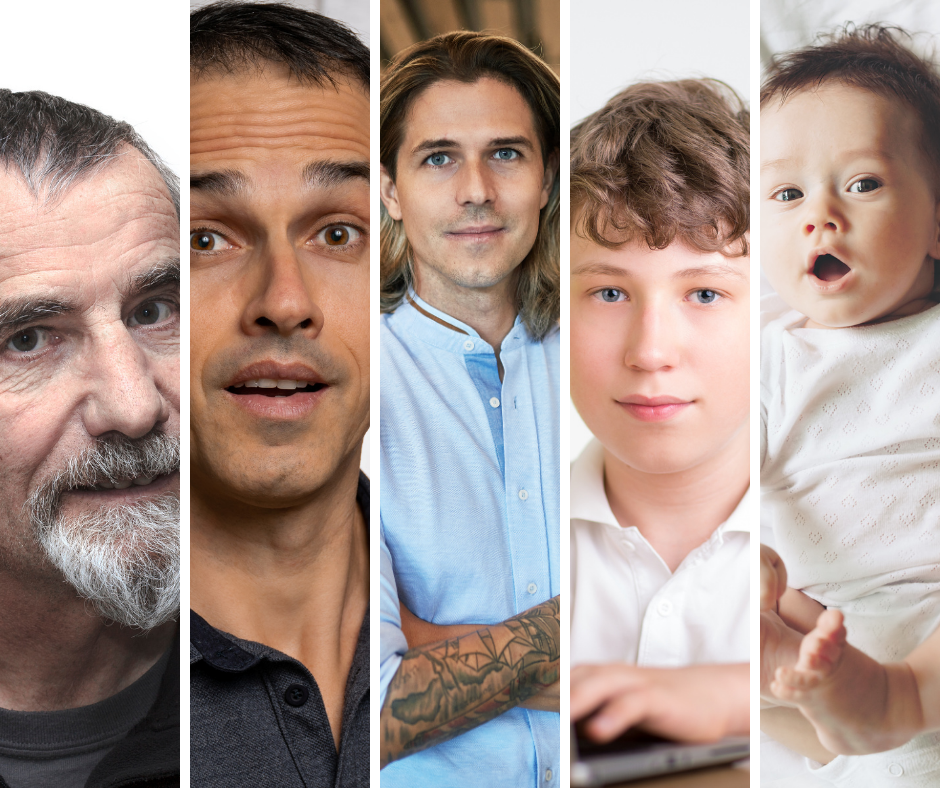
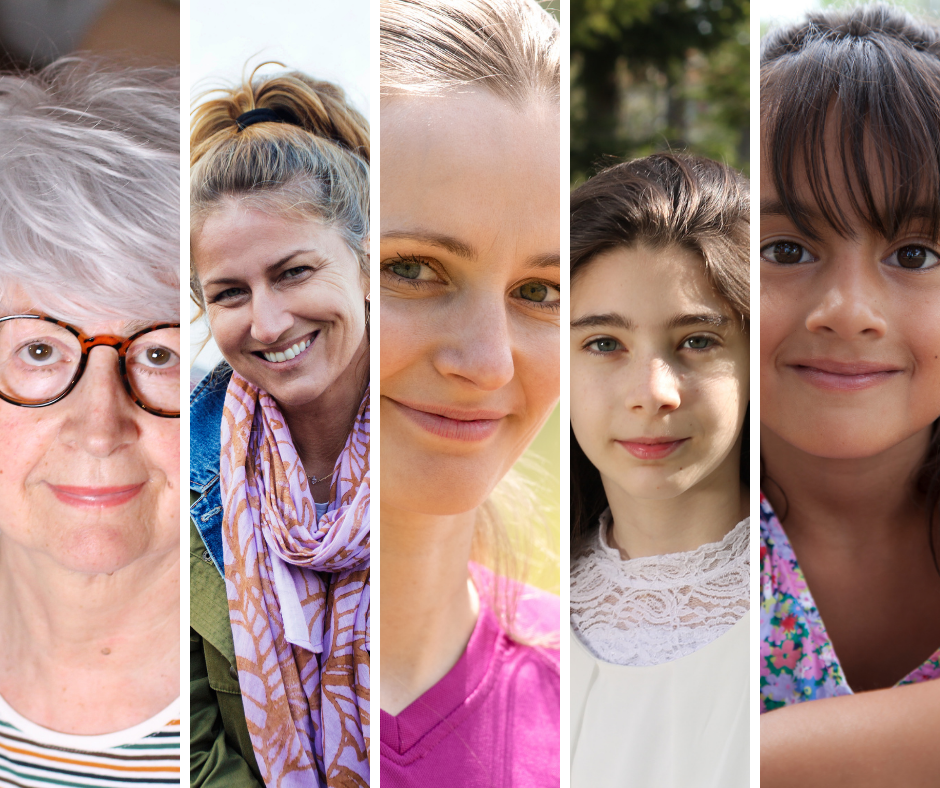
But it’s true – my immediate family: my wife and me, our four children and their spouses, and all their children fall into five generational cohorts in use today.

Here’s the breakdown:

  • Boomer – born 1943-1964 – 2
  • Gen X – born 1965-1981 – 2
  • Millennial – born 1982-1996 – 6
  • Gen Z – born 1997-2010 – 2
  • Alpha – born 2011-2025 – 8

That’s 20 humans, ranging from 4 months old to 65 years old.

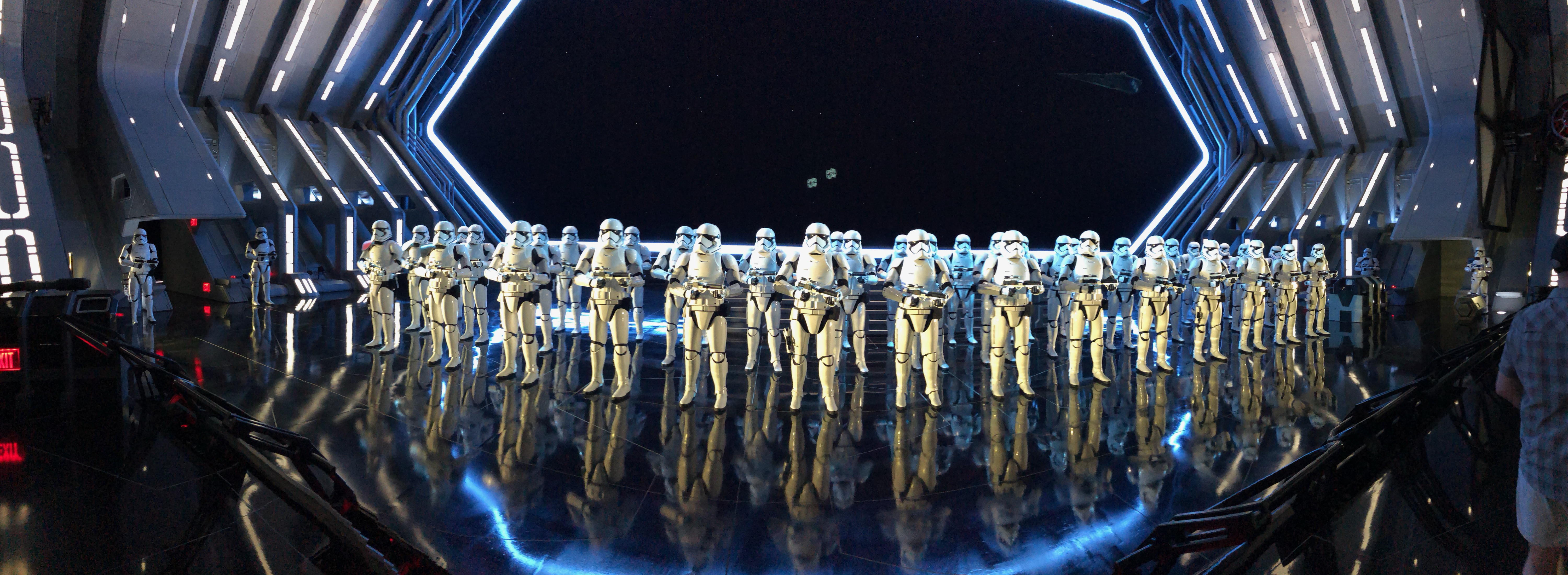
And since we are a Star Wars family, with the announcement of the official new Star Wars Universe timeline, we have a new way to track our generational cohorts.

Here is the official new Star Wars timeline, updated to include The High Republic era:

  • The High Republic – The new official starting point of the Star Wars canon, set 200 years before the Prequel Trilogy. It will be explored in the new “High Republic” line of Star Wars books and comics coming in 2021. A tie-in series on Disney+ (The Acolyte) has also been announced.
  • Fall of The Jedi – Covering the Jedi Order’s fall and Sith return, in The Phantom Menace, Attack of the Clones, The Clone Wars, and Revenge of the Sith.
  • Reign of The Empire – Exploring the initial rise of The Empire and the chaos of its shadow covering galaxy. Covering events depicted in the upcoming Bad Batch animated series, and Solo: A Star Wars Story.
  • Age of Rebellion – The slow but sure rise of The Rebellion in the decades after the Empire’s rise. Covering events in Star Wars Rebels, Rogue One: A Star Wars Story, A New Hope, The Empire Strikes Back, and Return of the Jedi.
  • The New Republic – The chaos after Palpatine’s seeming demise, as the Empire struggled to survive, and a New Republic started to take form. The Mandalorian is set in this time period.
  • Rise of the First Order – The Imperial remnants re-organize into The First Order, and attempt to reclaim the galaxy, as part of Palpatine’s resurrection. Covers events in Star Wars: Resistance, The Force Awakens, The Last Jedi, and The Rise of Skywalker.

In the summer of 1977, just finishing my freshman year in college, I went to the opening night of A New Hope as soon as it came to Nashville, TN. And I returned – three more times in the next week, and a few more during the summer.

Our children, especially the older two boys born in 1981 and 1984, grew up with Star Wars movies (via videotape), LEGO sets, and other toys.

All of this finds us following the Age of Rebellion.

As they reached high school and then college age and then young adulthood, the boys, their mother and me, (and eventually their spouses), entered the Fall of the Jedi timeline.

My second son, by this time entering into his early twenties, took an even deeper dive in the Star Wars: beginning the building of a large Star Wars library from the vast amounts of books and comic books available; adding to the Star Wars LEGO sets in a big way; creating costume elements for display and wearing, and in a few short years, welcoming his daughter to the world of Star Wars.

Born in 2010, she (along with her older cousin) were the perfect age for the development of the Rise of the First Order. With a huge amount of material available in her father’s library and carefully curated access to the Internet, she became the most knowledgeable of the younger generation in our family.

Last year’s debut of Disney+, with The Mandalorian leading the way, was eagerly anticipated by multiple generations in our family. Some of us watched it during lunch breaks the day it came out; most of us had completed each week’s release by the evening it came out, often jumping on a intra-family text thread. We’re squarely in The New Republic now.

With the avalanche of announcements by Lucasfilm this week, we’re ready to branch out in both directions: The Reign of the Empire will be right in time for more of our grandchildren as they come of (the right) age to understand, and The High Republic will anchor the founding history (at least for now) for our entire family.

With no Christmas holiday movie release this year (a much-anticipated family event over the past five years), we will no doubt be talking (virtually) about the eagerly-awaited development of all the new shows, books, comics, and yes, LEGO sets, that are coming in the next year.

And then there’s always an anticipated trip to a galaxy far, far away.

But in the meantime, the finale of the second season of The Mandalorian is now out, and it’s time for an early morning viewing!

These Are Not the Worst of Times; America Has Been Here Before

Over the first six decades of the twentieth century American had become demonstrably – indeed measurably – a more “we” society.

Over the past five decades America has become demonstrably – indeed measurably – a more “I” society.

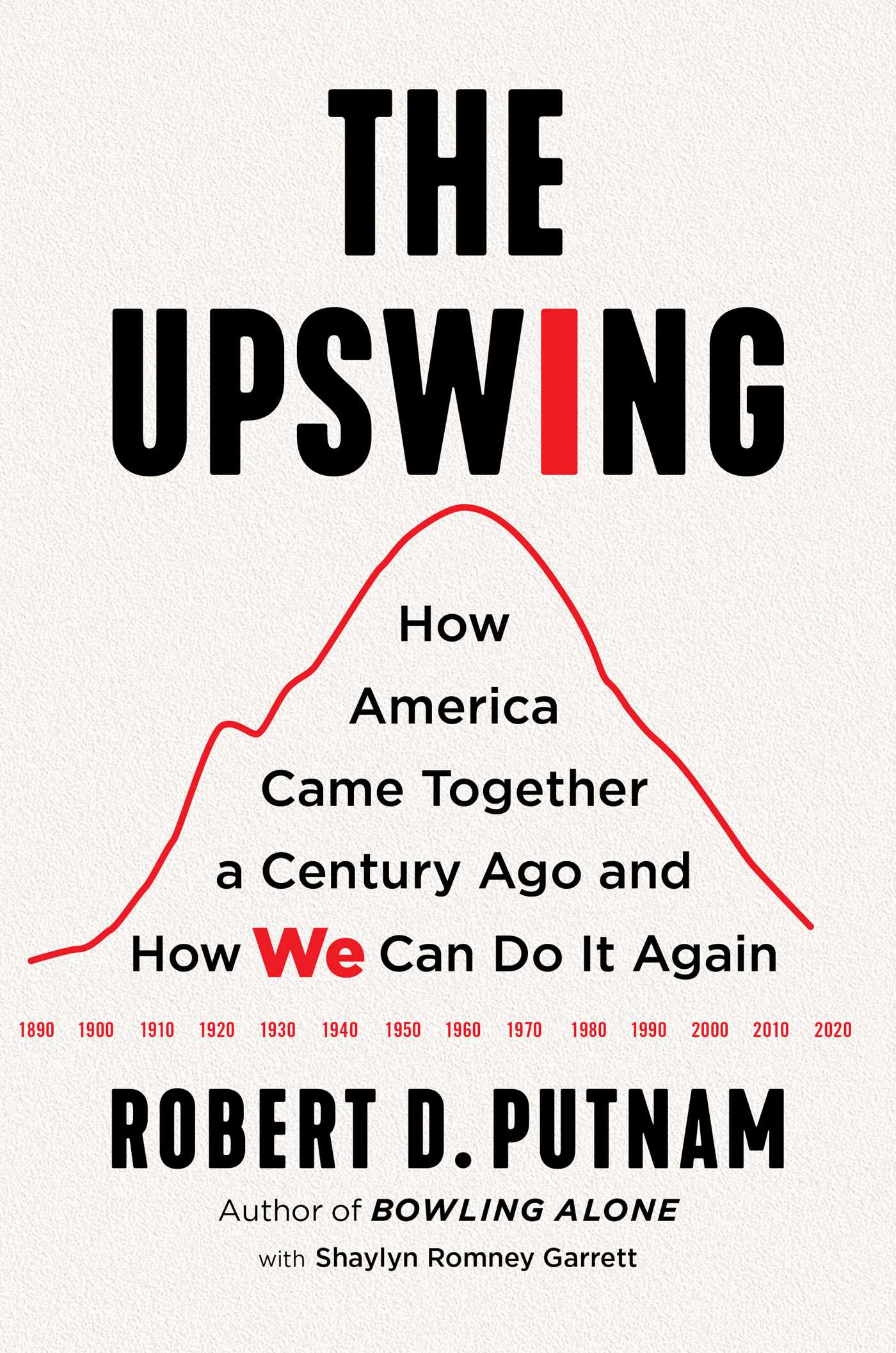
By using advanced methods of data analysis to combine four key metrics of economics, politics, society, and culture into a unified statistical survey, authors Robert Putnam and Shaylyn Romney Garrett have been able to discern a single core phenomenon – a single inverted U-curve that provides a scientifically validate summary of the past 125 years of American’s story.

The Upswing traces the roots of today’s problems to the last time the same problems threatened to engulf our democracy. It contains an evidenced-based story about how we have arrived at our current predicament. The authors examined how economic inequality, political polarization, social fragmentation, cultural narcissism, racism, and gender discrimination each evolved over the course of the last 125 years.

Putnam and Romney Garrett argue that the state of America today must be understood by fist acknowledge that within living memory, each of the adverse trends they now see were going in the opposite direction. To a surprising degree century-long trends in economics, politics, society, and culture are remarkably similar, such that is tis possible to summarize all of them in a singe phenomenon:

The story of the American experiment in the twentieth century is one of a long upswing toward increasing solidarity, followed by a steep downturn into increasing individualism. From “I” to “we,” and back again.

Perhaps, according to the authors, the single most important lesson we can hope to gain from this analysis is that in the past America has experienced a storm of unbridled individualism in our culture, our communities, our politics, and our economics, and it produced then, as it has today, a national situation that few Americans founded appealing.

But, America successfully weathered that storm once, and the authors believe we can do it again.

If there were ever a historical moment whose lessons we as a nation need to learn, it is the moment when the first American Gilded Age (1870-1900) turned into the Progressive Era (1900-1915), a moment which set in motion a sea change that helped us reclaim our nation’s promise, and whose effects rippled into almost every corner of American life for over half a century.

Putnam and Romney Garrett hope that an awareness of the this moment may find the tools and inspirations needed today to create another American upswing – this time with an unwavering commitment to complete inclusion that will take us toward yet a higher summit, and a fuller and more sustainable realization of the promise of “we.”


Inspired and adapted from The Upswing: How American Came Together a Century Ago and How We Can Do It Again, by Robert D. Putnam and Shaylyn Romney Garrett

How To Communicate Clearly Through Vivid Thinking

Most church leaders, especially the senior pastor or teaching pastor, rightfully view their skills as a communicator to be one of the most important aspects of their position. From the weekly sermon to regular leadership meetings to training and development presentations to special, one off events, the spoken word is of paramount importance to church leaders.

But what if you realized that, by communicating only through words, you are effectively ignoring one of the richest methods of communication that draws on the most powerful part of your brain – your visual sense?

To be the most effective communicators we can be, leaders must learn to use the simplicity and immediacy of images to help clarify our ideas for both ourselves and others.


THE QUICK SUMMARY – Blah Blah Blah: What to do When Words Don’t Work by Dan Roam

Ever been to so many meetings that you couldn’t get your work done? Ever fallen asleep during a bullet point presentation? Ever watched the news and ended up knowing less? Welcome to the land of Blah-Blah-Blah.

The Problem: We talk so much that we don’t think very well. Powerful as words are, we fool ourselves when we think our words alone can detect, describe, and defuse the multifaceted problems of today. They can’t – and that’s bad, because words have become our default thinking tool.

The Solution: This book offers a way out of blah-blah-blah. It’s called “Vivid Thinking.”

In Dan Roam’s first acclaimed book, The Back of the Napkin, he taught readers how to solve problems and sell ideas by drawing simple pictures. Now he proves that Vivid Thinking is even more powerful. This technique combines our verbal and visual minds so that we can think and learn more quickly, teach and inspire our colleagues, and enjoy and share ideas in a whole new way.

The Destination: No more blah-blah-blah. Through Vivid Thinking, we can make the most complicated subjects suddenly crystal clear. Whether trying to understand a Harvard Business School class, or what went down in the Conan versus Leno battle for late-night TV, or what Einstein thought about relativity, Vivid Thinking provides a way to clarify anything.

Through dozens of guided examples, Roam proves that anyone can apply this systematic approach, from left-brain types who hate to draw to right-brainers who hate to write. This isn’t just a book about improving communications, presentations, and ideation; it’s about removing the blah-blah-blah from your life for good.

A SIMPLE SOLUTION

According to author Dan Roam, our default method of communication is words. Even when verbalizing a thought, we attempt to string words together in meaningful ways, because it’s the best way to share an idea. We also believe that the ability to speak well is the primary cornerstone of intelligence.

In reality, defaulting to using only words quickly leads us down the path of blah-blah- blah.

Roam defines blah-blah-blah as:

  • Complexity – which kills our ability to think.
  • Misunderstanding – which kills our ability to lead.
  • Boredom – which kills our ability to care.

Blah-blah-blah is the overuse, misuse, and abuse of language – anything we say that interferes with our ability to convey ideas.

The reason we are talking more and saying less, hearing more and listening less, learning more and knowing less is simple: We’ve moved off the center of balance between focusing on details and seeing the big picture.

The reason for all the blah-blah-blah is that we’ve simply forgotten how to use both of our minds. As we’ve become increasingly enamored of and reliant upon words, our verbal minds have become heavier and heavier, while our visual minds have gotten lighter and lighter. Now that we are facing some of the most difficult challenges of all time, we suddenly realize that we’ve lost half our minds.

Getting our balance back on center is simple: All we have to do is take a half-step back from our unshakable belief in the power of words and at the same time give our visual mind a kick in the pants. That’s what Vivid Thinking does.

Vivid Thinking stands for visual verbal interdependent thinking, which means actively forcing our visual and verbal minds to work together when we are thinking, leading, teaching, and selling.

It’s so simple to get our verbal and visual minds working together again that Vivid Thinking really has only three rules.

Vivid Thinking Rule No. 1: When we say a word, we should draw a picture (and vice versa).

Vivid Thinking Rule No. 2: If we don’t know which picture to draw, we look to vivid grammar to show us the way.

Vivid Thinking Rule No. 3: To make any idea more vivid, we turn to the Seven Vivid Essentials.

Dan Roam, Blah Blah Blah: What to do When Words Don’t Work

A NEXT STEP

To help you learn to practice Vivid Thinking, use the techniques below developed by author Dan Roam.

Rule 1

This is at the same time one of the easiest to understand and most difficult to practice. The next time you have an idea, instead of just talking about it, draw it out.

If you say, “ball,” draw a ball.

Learn to actively engage your visual mind each time your use your verbal mind.

Rule 2

“Grammar” may be a dreaded word to many people, bringing back early childhood memories. Yet the fact you are reading this sentence means it worked!

Grammar helps us use words to form sentences, then paragraphs, then pages, which can become a one-page article or a 500-page book. In the same way, Vivid Grammar is the set of rules used to compose a visual idea from a small set of pictorial elements. Learning to use this tool means that when you say a word, you will know which picture to draw to accompany the word.

  • When you hear a noun, draw a portrait.
  • When you hear an adjective of quantity, draw a chart.
  • When you hear a preposition, draw a map.
  • When you hear tense, draw a timeline.
  • When you hear a complex verb, draw a flowchart.
  • When you hear a complex sentence, draw a multi-variable plot.

Rule 3

Words are abstractions – the ultimate mental shorthand. When you know what they mean, words instantly call to mind ideas, images, feelings, and memories. However, we know that the words we use are distinct from the things they represent, and if we are unclear about what they mean, our audience certainly will be.

Roam suggests that you walk your idea through the Vivid Forest:

  • F – Your idea has Form.
  • O – Your idea can be expressed with Only the Essentials.
  • R – Your idea is Recognizable.
  • E – Your idea Evolves.
  • S – Your idea Spans Differences.
  • T – Your idea is Targeted.

Part of a weekly series on 27gen, entitled Wednesday Weekly Reader

Regular daily reading of books is an important part of my life. It even extends to my vocation, where as Vision Room Curator for Auxano I am responsible for publishing SUMS Remix, a biweekly book “excerpt” for church leaders. Each Wednesday on 27gen I will be taking a look back at previous issues of SUMS Remix and publishing an excerpt.

>>Purchase SUMS Remix here<<

>> Purchase prior issues of SUMS Remix here<<

What I Can Expect from My Gen Z Grandchildren’s World

As I tend to do with a lot of Friday’s 27gen posts, I try to look at the world around us through the lens of the five generations currently in my immediate family of 20: 2 Boomers, 2 Gen X, 6 Millennials, 2 Gen Z, and 8 Alpha Generation (the “unofficial,” but popular name for those born since 2010).

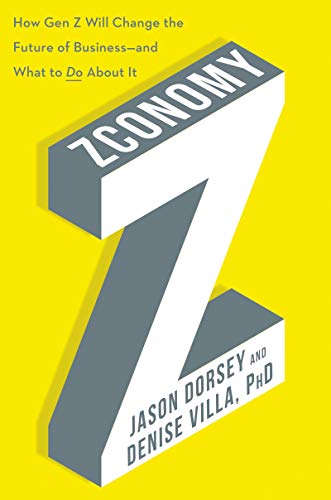
Today, a quick dive into a fascinating book: Zconomy, by Jason Dorsey and Denise Villa. Dorsey and Villa are the president and CEO, respectively, of the Center for Generational Kinetics (CGK). The insights in Zconomy are based on the authors’ extensive global research, presentations, and consulting work.

Gen Z’s expectations are so different because they are so different from other generations. They are the first to lead fully digital lives. They are being raised by parents affected by past events such as 9/11 and the Great Recession, as well as contemporary realities from the COVID-19 pandemic to online gaming, Brexit, and presidential politics.

They are connected to the world, and one another, across continents and across town using technology that for them has always been available. They have strong and vocal opinions about social issues from student load debt and gun control to equality and climate change. And for the first time in history, digital media has given a generation this young the power to instantly bolster (or derail) global brands, become activist, and influence how companies do business – sometimes with a single tweet, post, or cell phone video.

We’ve heard loud and clear from Gen Z that they are not Millennials 2.0.

Gen Z is older than most people think, with the oldest members already up to age twenty-four in 2020. This large, diverse, connected-from-birth generation is soon to be the fastest growing generation in the workforce.

To understand just how different Gen Z worldview are from even Millennials, take these two quick examples:

  • Gen Z does not remember 9/11. They learned about it in history class, from a parent recalling the experience, or on a YouTube video. As a result, Gen Z can’t recall the feeling of fear and uncertainty that came as this event was unfolding – which made it the defining moment of the Millennial generation.
  • Gen Z has come of age with the COVID-19 pandemic creating fear, uncertainty, vulnerability, and confusion. The pandemic has caused massive disruption in schools, work, travel, politics, family, and much more. While the long-term implications of the COVID-19 pandemic remain to be seen, it is already clear that this is the defining moment of the generation thus far.

With the pace of change and breakthroughs accelerating, the future in which Gen Z will navigate adulthood for the next fifty-plus years will be unlike any that previous generations experienced. 

Looking ahead twenty- and thirty-plus years, here are 10 Disruptive Trends the Center for Generational Kinetics thinks will likely influence Gen Z for decades to come:

  1. Car and Transportation Evolution
  2. Virtual Reality and Augmented Reality
  3. Aging Population and Generational Transition
  4. AI, IoT, Connected Devices, and Consumer Tech
  5. Workforce Automation
  6. Medical Breakthroughs
  7. Consumer Space Travel
  8. Global Challenges
  9. Blockchain
  10. College Transformation

All of the trends, breakthroughs, challenges, and innovations will dramatically shape and alter the beliefs and expectations of Gen Z. This will happen in a much deeper, faster, and more integrated way than when personal computers altered Gen X or smartphones connected Millennials or the web and social media bridged continents instantly.

For more information:


Inspired and adapted from Zconomy by Jason Dorsey and Denise Villa

How to Problem Solve with Design Thinking

Design isn’t just choosing the right images and fonts for your next website revision. It’s a problem-solving process that incorporates the needs of guests, team members, and partners in your mission. It’s a way of working that creates and refines real-world situations.

Design is the secret weapon of organizations that gives them a strategic advantage in figuring out what services their guests need and in defining the exact characteristics of every guest interaction. Design helps you understand how a guest accesses your website, what a guest is likely to do as they approach your campus, and gives you clues about creating a welcoming environment.

Design is the most important discipline that you’ve probably never heard of.

The right Guest Experience changes, implemented the right way, won’t just fall into your lap. You must actively design them. This requires learning – and then sticking to – the steps in a human-centered design process.

THE QUICK SUMMARY – Design Thinking for the Greater Good by Jeanne Liedtka, Randy Salzman, and Daisy Azer

Facing especially wicked problems, social sector organizations are searching for powerful new methods to understand and address them. Design Thinking for the Greater Good goes in depth on both the how of using new tools and the why. As a way to reframe problems, ideate solutions, and iterate toward better answers, design thinking is already well established in the commercial world. Through ten stories of struggles and successes in fields such as health care, education, agriculture, transportation, social services, and security, the authors show how collaborative creativity can shake up even the most entrenched bureaucracies―and provide a practical roadmap for readers to implement these tools.

The design thinkers Jeanne Liedtka, Randy Salzman, and Daisy Azer explore how major agencies like the Department of Health and Human Services and the Transportation and Security Administration in the United States, as well as organizations in Canada, Australia, and the United Kingdom, have instituted principles of design thinking. In each case, these groups have used the tools of design thinking to reduce risk, manage change, use resources more effectively, bridge the communication gap between parties, and manage the competing demands of diverse stakeholders. Along the way, they have improved the quality of their products and enhanced the experiences of those they serve. These strategies are accessible to analytical and creative types alike, and their benefits extend throughout an organization. This book will help today’s leaders and thinkers implement these practices in their own pursuit of creative solutions that are both innovative and achievable.

A SIMPLE SOLUTION

In today’s increasingly fast-paced and unpredictable environment, church leaders need to be involved in design thinking more than ever. Design is all about action, and churches too often get stuck at the talking stage.

Face it – despite all our planning and analyzing and controlling, the typical church’s track record at translating its rhetoric into results is not impressive.

Moments matter. And what an opportunity we miss when we leave them to chance!

  • All it takes is a bit of insight and forethought.
  • All it takes is for you to think like a designer.

One of the biggest contributions of design thinking is to hold us in the problem space long enough to develop the kind of deeper insights into the problem that foster more creative ideas later on.

Design thinking is a problem-solving approach with a unique set of qualities: it is human-centered, possibility driven, option focused, and iterative.

A learning mindset, empathetic understanding of stakeholders, and an experimental approach to solving problems is what design thinking’s methodology and tool kit are all about.

How is design thinking going to do this? By providing the tools to answer a simple series of questions:

    • What is? explores current reality.

    • What if? generates ideas.

    • What wows? finds the sweet spot.

    • What works? launches and learns.

These four questions build bridges to more innovative solutions via a systematic, data-driven approach to creativity. This might sound like an oxymoron, but we don’t believe it is. By breaking the process into four questions, potential design thinkers can explore the “how to” in a way that feels safe and structured to both leaders who think in details and those who thrive in innovation and creativity.

These strategies are accessible to analytical and creative types alike, and their benefits extend throughout an organization.

Jeanne Liedtka, Randy Salzman, and Daisy Azer Design Thinking for the Greater Good

A NEXT STEP

As a way to reframe problems, ideate solutions, and iterate toward better answers, design thinking shows how collaborative creativity can shake up even the most entrenched bureaucracies, providing a practical roadmap to innovative, achievable solutions.

Use the four-question design thinking process listed above, think of another future Guest Experience action you would like to implement, and write it on a chart tablet.

On four separate chart tablets, write the four questions. Spend at least thirty minutes discussing each question, and write down notes and highlights of each discussion on the appropriate chart tablet.

At the end of the discussion, select the top three items from each of the four questions. As a team, decide how you will proceed with this action, who will lead the effort, and when the target launch day is. Turn them loose on the “how.”


Part of a weekly series on 27gen, entitled Wednesday Weekly Reader

Regular daily reading of books is an important part of my life. It even extends to my vocation, where as Vision Room Curator for Auxano I am responsible for publishing SUMS Remix, a biweekly book “excerpt” for church leaders. Each Wednesday on 27gen I will be taking a look back at previous issues of SUMS Remix and publishing an excerpt.

>>Purchase SUMS Remix here<<

>> Purchase prior issues of SUMS Remix here<<