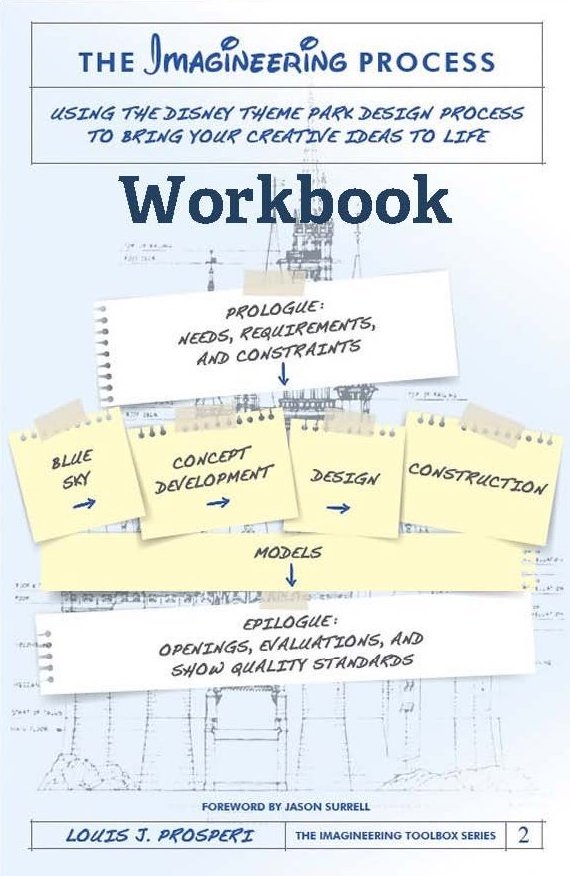
How to Deliver an Exceptional Guest Experience by Design

It is relatively easy to provide a great Guest Experience occasionally. You know, those big holiday events or other special occasions.

But in order to create an exceptional Guest Experience, it is vital that you do this every time.

The only way to achieve a consistently exceptional Guest Experience is if the experiences are designed.

To design something means that it is deliberate, not an accident or luck. Deliberate is a strong, proactive word. Stop and ask yourself these questions:

  • Is our Guest Experience process deliberate?
  • Did my team deliberately set out to create and deliver an exceptional Guest Experience?
  • Is the outcome of the Guest Experience one that we have proactively designed?

By observation, research, and onsite studies in organizations of all sizes and types across the country, in many cases the Guest Experience is not deliberate – it is something that just happens.

Guest Experience leaders care about their guests. Many leaders understand guests and have some insight into their experiences and needs. Often, though, these same leaders struggle to turn insight into action.

Design isn’t just choosing the right images and fonts for your next website revision. It’s a problem-solving process that incorporates the needs of guests, team members, and partners in your mission. It’s a way of working that creates and refines real-world situations.

Design is the secret weapon of organizations that gives them a strategic advantage in figuring out what services their guests need and in defining the exact characteristics of every guest interaction. Design helps you understand how a guest accesses your website, what a guest is likely to do as they approach your campus, and gives you clues about creating a welcoming environment.

Design is the most important discipline that you’ve probably never heard of.

The right Guest Experience changes, implemented the right way, won’t just fall into your lap. You must actively design them. This requires learning – and then sticking to – the steps in a human-centered design process.

THE QUICK SUMMARY – Outside In, by Harley Manning and Kerry Bodine

Customer experience is, quite simply, how your customers perceive their every interaction with your company. It’s a fundamental business driver. Here’s proof: over a recent five-year period during which the S&P 500 was flat, a stock portfolio of customer experience leaders grew twenty-two percent. 

In an age when customers have access to vast amounts of data about your company and its competitors, customer experience is the only sustainable source of competitive advantage. But how to excel at it? 

Based on fourteen years of research by the customer experience leaders at Forrester Research, Outside In offers a complete roadmap to attaining the experience advantage. It starts with the concept of the Customer Experience Ecosystem—proof that the roots of customer experience problems lie not just with customer-facing employees like your sales staff, but with behind-the-scenes employees like accountants, lawyers, and programmers, as well as the policies, processes, and technologies that all your employees use every day. Identifying and solving these problems has the potential to dramatically increase sales and decrease costs.

A SIMPLE SOLUTION

Organizations that want to produce a high-quality guest experience need to perform a set of sound, standard practices. Harley Manning and Kerry Bodine, in their book Outside In, have developed six high-level disciplines which can be translated into guest experiences: strategy, guest understanding, design, measurement, governance, and culture.

These disciplines represent the areas where organizations that are consistently exceptional at Guest Experiences excel.

Restating a comment from above, the only way to achieve a consistently exceptional Guest Experience is if the experiences are designed.

If you want to deliver an exceptional Guest Experience, you need to begin with the discipline of design.

The discipline of design is key because it lets organizations understand the current customer experience they provide, uncover opportunities for improvement, and track progress over time. It connects the dots starting with what needs to be done to improve customer experience, all the way to the benefits of what has been done.

The human-centered design process starts with research to understand guest needs and motivations. It’s all those activities in the discipline of understanding guests. Analysis is next – synthesizing the data into useful forms. The next phase is ideation, which is just what it sounds like – coming up with ideas. After that, it’s time to prototype – ranging from a simple redesigned guest survey to a full-scale mock-up of your typical guest experience on the weekend. Next, these prototypes are put into action with real people while you observe the results. Finally, you must document the features of the resulting product or service that has evolved.

The practices in the design discipline help organizations envision and then implement customer interactions that meet or exceed customer needs. It spans the complex systems of people, products, interfaces, services, and spaces that your customers encounter in physical locations, over the phone, or through digital spaces like websites and mobile apps.

Design spells the difference between a symphony orchestra performance and a garage band jam session. The orchestra performance is carefully arranged, rehearsed, and executed – just like the customer experience at top organizations. The jam session just sort of happens, with varying levels of quality – like what we’ve all encountered at companies we’ve stopped doing business with over time.

Design Practices

Follow a defined Guest Experience design process any time a new experience is introduced or an existing experience is changed in some way

Use guest understanding deliverables and insights to focus and define requirements for projects that affect Guest Experiences

Engage guests, team members, and partners as part of the experience design process

Use iterative ideation, prototyping, and evaluation as part of the experience design process

Identify the set of complex interdependencies among people, processes, and technologies that shape interactions with guests (the Guest Experience Ecosystem)

Harley Manning and Kerry Bodine, Outside In: The Power of Putting Customers at the Center of Your Business

A NEXT STEP

At your next Guest Experience team leader’s meeting, make the discipline of design the primary topic.

First, write the six words in bold from the first paragraph above (research, analysis, ideation, prototype, action and document) down the left side of a chart tablet.

Next, come up with a single Guest Experience action you are not currently doing but would like to implement in the next six months, writing the action on the top of another chart tablet.

Now, walk through each of the six steps, writing down ideas or actions needed for each step. At this stage, you don’t have to fully develop the proposed action – you are just creating a “design criteria list” for follow up.

After you have exhausted all ideas, go back and circle no more than three items under each step, representing the most important ones to do.

Identify one leader and two additional members from your team to take the proposed action and run with it. Using both the six steps and the five “Design Practices” noted above, they will recruit additional team members as needed to follow the actions as outlined, and bring a ready-to-proceed recommendation back to the larger team for a decision.

Excerpt taken from SUMS Remix 125, released August 2019.


Part of a weekly series on 27gen, entitled Wednesday Weekly Reader

Regular daily reading of books is an important part of my life. It even extends to my vocation, where as Vision Room Curator for Auxano I am responsible for publishing SUMS Remix, a biweekly book “excerpt” for church leaders. Each Wednesday on 27gen I will be taking a look back at previous issues of SUMS Remix and publishing an excerpt.

>>Purchase SUMS Remix here<<

>> Purchase prior issues of SUMS Remix here<<

Connect Better by Fast-Focusing on Listening

Many, if not most, leaders consider themselves good speakers. The basics are simple: leaders speak, their audience listens, and then they act on what was said.

Leaders also know that rarely happens, and that there’s really much more to it than that. While it may be easy to speak to groups of all sizes and on many diverse topics, one critical question remains: “Are we connecting with our audience?”

To fully connect with an audience, leaders need to understand “empathy.” While you may not equate the word empathy with excellent communication skills, it actually is the secret to connecting with your audience. 

When you are able to put yourself in another person’s shoes, and try to see things from their point of view, their world, and their perspective, you will have a greater chance at both reaching and connecting with them.

THE QUICK SUMMARY

You made a great point — but did anybody hear it?

Probably not, warns high-stakes communication expert Paul Hellman. The average attention span has dropped to 8 seconds.

So whether you’re presenting to a large audience, meeting one-on-one, talking on the phone, or even sending an email, you’ve got to engage others fast, before they tune you out, maybe forever.

Your challenge: to get heard, get remembered and get results.

Through fast, fun, actionable tips, You’ve Got 8 Seconds explains what works and what doesn’t, what’s forgettable and what sticks. With stories, scripts, and examples of good and bad messages, the book reveals three main strategies to get heard in a noisy world:

  • FOCUS: Design a strong message–then say it in seconds.
  • VARIETY: Make routine information come alive. 
  • PRESENCE: Convey confidence and command attention.


A SIMPLE SOLUTION 

People discover unseen opportunities when they have a personal and empathic connection with the world around them.

Dev Patnaik

How easy is it for you as a leader to imagine yourself in the place of those you lead? Do you intuitively understand the lives and stories of your audience? That may be made easier by the fact that your audience most likely “looks” like you in many areas – socially, economically, and spiritually to name a few. But what if your audience is different than you?

How can you connect with people who aren’t like you?

Yes, it is easier to connect with other people who are like us, but that doesn’t mean leaders can’t understand – and communicate – with people who are different from us.

Most messages, spoken or written, are designed from the speaker’s point of view. That’s upside down. Imagine you’re the audience. What would capture your attention?

The point is, your audience is probably not thinking about you. But to capture attention, you need to think about them. Be the audience.

Your audience, whether you are talking to 100 people at work or one person at home, has three questions, always the same.

Why should I listen (or read this)?

What exactly are you saying?

What should I do with this information?

To fast-focus your message, answer these three questions.

First Audience Question: Why Should I Listen

Fast-focus with a purpose statement.

A purpose statement is like a present. You immediately hook people with something they value. It’s a great way to state what you’re going to talk about and, more importantly, why. Why answers the audience’s question: “Why should we listen?”

Second Audience Question: What Exactly Are You Saying?

Fast-focus with your main message.

Third Audience Question: What Should I Do with This Information?

Fast-focus with a call to action.

A call to action spells out the next step. It’s usually about doing something. But if that doesn’t fit, the next stop could be to think something or feel something.

Paul Hellman, You’ve Got :08 Seconds

A NEXT STEP

Draw the following chart on a chart tablet.

With the chart and the following suggestions from author Paul Hellman, prepare your next presentation/message/communication with the Fast-Focus concepts.

  1. The Opening – The purpose statement is the hook that entices the audience to pay attention. The agenda statement that follows says how you’ll accomplish the purpose.
  2. The Body – If your audience could only remember one thing, what’s the one thing? Use a limited number of key points to develop the message.
  3. The Close – Close your presentation on a powerful note. What’s the next step? What should the audience do? If there’s nothing to do, then the call to action can also be what to think or what to feel.

Following the delivery of this presentation, pull together two-three associates and ask them to critique this presentation in terms of previous presentations on a similar topic. Listen with an open mind for possible areas of improvement.

Excerpt taken from SUMS Remix 129-3, released October 2019


Part of a weekly series on 27gen, entitled Wednesday Weekly Reader

Regular daily reading of books is an important part of my life. It even extends to my vocation, where as Vision Room Curator for Auxano I am responsible for publishing SUMS Remix, a biweekly book “excerpt” for church leaders. Each Wednesday on 27gen I will be taking a look back at previous issues of SUMS Remix and publishing an excerpt.

>>Purchase SUMS Remix here<<

>> Purchase prior issues of SUMS Remix here<<

Four Core Guest Experience Behaviors to Practice

First impressions are automatic – taken in and recorded by our senses, often registered for later recall. More often than not, they make an immediate impact on our decision to participate and to return – or not. We may not agree with it or not, but the consumer mentality of the world we live in has moved full force into our church world. Our churches don’t compete with the “world” so much as the experiences of the world.

As you live your life day in and out, you are living the life of a consumer.

  • Where do you consume?
  • Where do you shop?
  • Who provides service for you?
  • Most importantly, why?

You may stop at your favorite coffee shop for a good cup of coffee – and the conversations you have with the barista and the other regulars in the shop. Your supermarket always has good value and a wide selection of the food your family likes. Clothes from a particular shop just fit better – and the sales associates are always helpful with suggestions. The point is, you have established expectations of each place and the people who work there.

Is it any different for Guests and attendees at your church?

If your goal is to create a space and an experience that will positively impact people, you must first plan and evaluate it from the perspective of its quality. You start that process by examining the daily places and routines in the offices, retail, and recreation spaces of the people you are trying to reach. The homes they live in, the offices they work in and the stores they shop in all communicate a level of expectation they have for their space.

Close your eyes for a moment and think about the last time you truly had a great experience with a company as a consumer, an experience that captured your heart, soul, mind, and spirit. What about it was special? Call it “X” – that “je ne sais quoi” that makes something so special.

THE QUICK SUMMARY – Covert Cows and Chick-fil-A by Steve Robinson

The longtime chief marketing officer for Chick-fil-A tells the inside story of how the company turned prevailing theories of fast-food marketing upside down and built one of the most successful and beloved brands in America.

During his thirty-four-year tenure at Chick-fil-A, Steve Robinson was integrally involved in the company’s steady then explosive growth from 184 stores and $100 million in annual sales in 1981 to more than 2,100 stores and more than $6.8 billion in annual sales in 2015. As a member of the marketing team and as chief marketing officer, Robinson was both a witness and participant in the company’s remarkable development into an indelible global success. Now he shares the story of Chick-fil-A’s evolution into one of the world’s most beloved, game-changing, and profitable brands. From the creation of the “Eat Mor Chikin” campaign to the decision to stay closed on Sundays to the creation of the company’s corporate purpose, Robinson provides a front-row seat to the innovative marketing, brand strategies, and programs that created a culture customers describe as “Where good meets gracious.” 

Drawing on his personal interactions with the gifted team of company leaders, restaurant operators, and Truett Cathy himself, Robinson explains the important traits that built the company’s culture and have sustained it through recession and many other challenges. He also reveals how every aspect of the company’s approach reflects an unwavering dedication to Christian values and to the individual customer experience. Written with disarming candor and revealing storytelling, Covert Cows and Chick-fil-A is the never-before-told story of a great American success.

A SIMPLE SOLUTION

The famous “My pleasure” response of Chick-fil-A team members arose from an experience by founder Truett Cathy in 2000. In 2003, Truett and his son Dan co-wrote the following leadership message, entitled, “My Pleasure”:

“My Pleasure” is more than just an operating standard and more than just a personal request. “My Pleasure” is an expression from the heart where team members, Operators, or staff members literally show that they want to go the extra mile – that they truly care about the other person. They have enough value in the other person to exceed expectations.

It was a transformative moment, charting a course to a place where a warm greeting would infuse every Chick-fil-A restaurant and create a culture of genuine hospitality.

As we began the journey to create an entirely new service model without the constraints of the fast-food tradition, we asked customers “What makes you feel most cared for? What made you want to come back to Chick-fil-A?”

More than 90 percent of guests answered, “When someone smiles at me, looks me in the eye, and lets me know I’m being cared for and treated with excellence. That’s above and beyond what I expect at a fast-food restaurant.”

If these were the desires of our guests, then we needed to package them in a way that made them easy for team members to remember. So we created the Core 4:

Create eye contact.

Share a smile.

Speak with an enthusiastic tone.

Stay connected to make it personal.

These were the four behaviors we wanted team members to extend whenever they were engaging a guest in a restaurant. When we packaged the request that way, it was amazing to see how teachable it was. Team members got it. The requirements were not lost among the other requirements in the quality guide.

We didn’t want to stop at “smiling and eye contact” and “my pleasure,” so we explored what we might add to take us into the second mile, and we selected three additional behaviors:

Carry eat-in meals to the table.

Check in with guests for any needs.

Carry large orders, such as Chick-fil-A trays, to the car.

These simple, proactive behaviors became our “recipe for service.” As the name implies, this recipe consists of ingredients that are as critical as the ingredients in any of our menu items.

Steve Robinson, Covert Cows and Chick-fil-A

A NEXT STEP 

It’s time for a field trip! If you are lucky enough to have a Chick-fil-A restaurant nearby, take your team to lunch. As you prepare to go, instruct the team to be on the lookout for the specific behaviors described above.

If you are not located near a Chick-fil-A, take your team to another local restaurant. As you prepare to go, instruct the team to be on the lookout for specific behaviors mentioned above that may or may not be present.

After lunch, gather your team together for a debrief session. On a chart tablet, list comments by your teams during their experience. Underline the positive ones and circle the neutral or negative ones.

After everyone has had a chance to list their comments, lead a discussion about how the experience may prove instructive for developing your own “recipe for service.” On a separate chart tablet, list the ideas of your team that might comprise your “recipe.”

Review the list, and agree on no more than five actions that you will put into practice immediately. Assign a champion to create and deliver the “recipe” to your hospitality team leaders, and work with the leaders to implement across all teams.

After a six-week period of following the “recipe,” bring all the team leaders together to evaluate, and if necessary, revise the “recipe.” Continue to follow the “recipe” for the next six months, and revisit it again at the end of that period.

Excerpt taken from SUMS Remix 124-2, released August 2019.


Part of a weekly series on 27gen, entitled Wednesday Weekly Reader

Regular daily reading of books is an important part of my life. It even extends to my vocation, where as Vision Room Curator for Auxano I am responsible for publishing SUMS Remix, a biweekly book “excerpt” for church leaders. Each Wednesday on 27gen I will be taking a look back at previous issues of SUMS Remix and publishing an excerpt.
>>Purchase SUMS Remix here<<

>> Purchase prior issues of SUMS Remix here<<

Improve Your Ability to Connect with Others by Focusing Less on Yourself

Many, if not most, church staff leaders consider themselves good speakers. The basics are simple: leaders speak, their audience listens, and then they act on what was said.

Church leaders also know that rarely happens, and that there’s really much more to it than that. While it may be easy to speak to groups of all sizes and on many diverse topics, one critical question remains: “Are we connecting with our audience?”

To fully connect with an audience, leaders need to understand “empathy.” While you may not equate the word empathy with excellent communication skills, it actually is the secret to connecting with your audience. 

When you are able to put yourself in another person’s shoes, and try to see things from their point of view, their world, and their perspective, you will have a greater chance at both reaching and connecting with them.

THE QUICK SUMMARY – Simply Said: Communicating Better at Work and Beyond by Jay Sullivan

Simply Said is the essential handbook for business communication. Do you ever feel as though your message hasn’t gotten across? Do details get lost along the way? Have tense situations ever escalated unnecessarily? Do people buy into your ideas? It all comes down to communication. We all communicate, but few of us do it well. 

From tough presentations to everyday transactions, there is no scenario that cannot be improved with better communication skills. This book presents an all-encompassing guide to improving your communication, based on the Exec|Comm philosophy: we are all better communicators when we focus less on ourselves and more on other people. More than just a list of tips, this book connects skills with scenarios and purpose to help you hear and be heard. You’ll learn the skills to deliver great presentations and clear and persuasive messages, handle difficult conversations, effectively manage, lead with authenticity and more, as you discover the secrets of true communication.

Communication affects every interaction every day. Why not learn to do it well? This book provides comprehensive guidance toward getting your message across, and getting the results you want.

A SIMPLE SOLUTION

All leaders aspire to be better communicators. And most times, leaders feel that better communication starts with them. While not wrong, it would be a mistake to think that the focus needs to be on ourselves.

If we put the focus on what the other person is trying to gain from our exchange, we will do a better job communicating, because we will select more pertinent information, drill down to the desire level of detail, and make the information we are sharing more accessible to our audience.

If we want to improve our ability to connect with others, to understand them and to be understood more clearly, the easiest and most effective way to do so is to focus less on ourselves and more on the other person.

This is the single most significant differentiator we can apply to our communication skills to improve our effectiveness.

Your message to the world is, of necessity, your message connecting you to the world.

Your Content: the substance of what you want to convey.

Your Oral Communication Skills: the way you convey your substance.

Your Written Communication Skills: the way you represent yourself when you’re not physically present.

Your Interactions: the settings in which you engage your audience, whether it’s an audience of one or one hundred or one thousand.

Your Leadership: the way you set the tone and relate to others.

Jay Sullivan, Simply Said: Communicating Better at Work and Beyond

A NEXT STEP

Set aside some time for personal reflection on your ability to connect with others by focusing less on yourself and more on the other person.

Using the five statements above, rate yourself on a scale of one to five, where one equals “I really need help in this area” and five equals “I am consistent in this area.”

Use the following suggestions from author Jay Sullivan to improve in each of the areas above in which you scored yourself anything less than a three.

Your Content

  • Convey a clear message
  • Tell engaging stories
  • Organize your content

Your Oral Communication Skills

  • Make the most of your body language
  • Listen to understand
  • Deliver from notes and visuals
  • Respond to questions

Your Written Communication Skills

  • Edit for clarity
  • Structure your documents
  • Create reader-friendly documents
  • Write emails that resonate

Your Interactions

  • Conduct effective meetings
  • Delegate successfully
  • Share meaningful feedback

Your Leadership

  • Lead others with inspiration and influence
  • Show vulnerability

Excerpt taken from SUMS Remix 129, released October 2019.


Part of a weekly series on 27gen, entitled Wednesday Weekly Reader

Regular daily reading of books is an important part of my life. It even extends to my vocation, where as Vision Room Curator for Auxano I am responsible for publishing SUMS Remix, a biweekly book “excerpt” for church leaders. Each Wednesday on 27gen I will be taking a look back at previous issues of SUMS Remix and publishing an excerpt.

>>Purchase SUMS Remix here<<

>> Purchase prior issues of SUMS Remix here<<

Encourage All Generations on Your Team to Connect Through Real Conversations

In 2020, 25 percent of the labor force will be over the age of 55 – and they’re not retiring anytime soon. These projections from the Bureau of Labor Statistics at the US Department of Labor indicate that not only will Baby Boomers continue to work alongside their current Generation X and Millennial colleagues, but that they will still be around when Generation Z joins the workforce.

The result? A clash of cultures that will require a new management approach.

Gone are the days when people entered the workforce as young adults, worked until their late 50s, and then moved off into retirement while younger generations took their place. Instead, the average retirement age has steadily been creeping up in recent decades as older employees – in particular, the Baby Boomers – stay in the workforce either by choice or by necessity.

Of course, the implications of the COVID-19 pandemic are still reverberating across home, work, and church settings, so everything is up for grabs!

Before we dive into the discussion, here’s a brief recap of just who comprises the generational cohorts mentioned above. While there’s no set standard, the following descriptions are generally accepted:

  • Baby Boomers – born in the years 1946-1964, numbering about 76 million people
  • Generation Xers – born in the years 1965-1980, numbering about 66 million people
  • Millennials – born in the years 1981-1997, numbering just over 83 million people
  • Generation Zers – born in the years 1998-present, numbering over 80 million and still growing

THE QUICK SUMMARY – You Can’t Google It! The Compelling Case for Cross-Generational Conversation at Work by Phyllis Weiss Haserot

Much of the learning, skills and perspective people of all ages need to succeed long-term in their careers is not found in data on the Internet, but rather in conversations and personal relationships with the people they work with.

Tech tools have trained us to search the Internet for answers to everything, but we can’t find most of the non-technical or non-data-based answers we seek there. Learning about perspectives, relationships and experiences comes best from conversations.

In most organizations there are three, four, or even five generations working together with differing expectations about how things are done and by whom. People of different generations are increasingly isolated physically, functionally, or emotionally from each other both by communication styles and media and lack of the perspective that would help them understand why people think and act as they do. You Can’t Google It! facilitates action to promote and foster cross-generational conversation in organizations on both the parts of management and the multi-generational teams that are increasingly the key to productivity, profitability and sustainability.

You Can’t Google It! is a tool to help organizations and individuals remove the stress, frustration, and negative energy that often arises from working with people of different generations, so they understand and are able to accomplish their common goals―faster and profitably. It is about the implications of different generations, and how to move towards closing that gap.

A SIMPLE SOLUTION

Author Phyllis Weiss Haserot pulls no punches in establishing the issue of cross-generational conversations:

  • As an established professional, do you question the work ethics of young employees and co-workers?
  • As a young professional, how do you deal with resistance to your ideas from Baby Boomers who think their experience and seniority mean they know it all?
  • Will your organization be threatened because key personnel will soon reach traditional retirement age?
  • Are you wondering how to transform intergenerational challenges into an asset for your organization?

Much of the learnings, skills, and perspectives that people of all ages need to succeed – especially in working with each other – are not found in data on the Internet but rather in conversations and personal relationships with the people they work with. The new multigenerational paradigm is meaningful cross-generational conversation.

GENgagementTM can be defined as the state of achieving harmony, mutual involvement and cooperation, flow, and ongoing absorption in work with people of different generations.

GENgagement means getting all of the generations to understand each other, their influences, and their worldview so they can work collaboratively, loyally, and productively.

It is integral to the mission of transforming workplaces into engaged and productive environments for solving problems and being great places to work. Equally important, it helps individuals and organizations develop closer rapport and loyalty bonds with clients and other external stakeholders – the bedrock of any mission-driven organization.

A satisfying and perennial recipe for GENgagement contains these ingredients as integral to the experience for all personnel:

Defining the big picture for everyone

Having a clear purpose and mission

Visioning – what achieving the mission and purpose will look like

Communicating the importance of each person’s role

Living a culture that respects the values of and promises to employees, clients, donors, alumni, etc. every day

Enabling multigenerational input to organization and and market strategy and service delivery

A sense of joy and continuing curiosity at work

Phyllis Weiss Haserot, You Can’t Google It! The Compelling Case for Cross-Generational Conversation at Work

A NEXT STEP

Distribute the following questions from author Phyllis Haserot to your team in advance. After they have had time to read through them, gather the team for an extended conversation about each question.

  1. Help me understand your perspective on work and the marketplace outside of our organization. What factors influence your worldview, the attitude you bring to your work, and your interactions with colleagues?
  2. What would you like to see changed about how our work is done, and how can you help make it more effective? How important is hierarch to you? When is years of experience very important in your role, and when are other factors equally or more important?
  3. What is getting in the way of a more productive and satisfying working relationship? How can I as your teammate help you learn how best to work with me?
  4. What would you say are your core values? Do you think they are significantly different from my generation’s core values? How can we jointly overcome intergenerational tensions?
  5. What strategies for impact and influence at work can we learn from each other?

Use these conversations as a springboard to ongoing cross-generational conversations as a regular part of the leadership development process in your organization.

Excerpt taken from SUMS Remix 127-3, released September 2019.


Part of a weekly series on 27gen, entitled Wednesday Weekly Reader

Regular daily reading of books is an important part of my life. It even extends to my vocation, where as Vision Room Curator for Auxano I am responsible for publishing SUMS Remix, a biweekly book “excerpt” for church leaders. Each Wednesday on 27gen I will be taking a look back at previous issues of SUMS Remix and publishing an excerpt.

>>Purchase SUMS Remix here<<

>> Purchase prior issues of SUMS Remix here<<

Act Now – It’s Time to Put Yourself in Your Own Story

Information overload.

You live it every day – Facebook, Twitter, LinkedIn, and Instagram. You’re more informed and connected than ever.

Yet, if you’re honest, you’re probably feeling more distracted than ever.

More lonely. More restless.

According to studies done by Barna Research:

  • 71% of people feel overwhelmed by the amount of information they need to stay up to date.
  • 36% of adults stop what they’re doing to check a text or message when it comes in.
  • 35% of adults think their personal electronics sometimes separate them from other people.

Being hyperlinked changes every aspect of our lives – and often, not for the better.

THE QUICK SUMMARY – Someday is Not a Day in the Week by Sam Horn

Are you:
• Working, working, working?
• Busy taking care of everyone but yourself?
• Wondering what to do with the rest of your life?
• Planning to do what makes you happy someday when you have more time, money, or freedom?

What if someday never happens? As the Buddha said, “The thing is, we think we have time.”

Sam Horn is a woman on a mission about not waiting for SOMEDAY … and this is her manifesto. Her dad’s dream was to visit all the National Parks when he retired. He worked six to seven days a week for decades. A week into his long-delayed dream, he had a stroke. Sam doesn’t want that to happen to you. She took her business on the road for a Year by the Water. During her travels, she asked people, “Do you like your life? Your job? If so, why? If not, why not?”

The surprising insights about what makes people happy or unhappy, what they’re doing about it (or not), and why…will inspire you to carve out time for what truly matters now, not later.

Life is much too precious to postpone. It’s time to put yourself in your own story. The good news is, there are “hacks” you can do right now to make your life more of what you want it to be. And you don’t have to be selfish, quit your job, or win the lottery to do them. Sam Horn offers actionable, practical advice in short, snappy chapters to show you how to get started on your best life ― now.

A SIMPLE SOLUTION

According to author Sam Horn, you don’t need to quit your job, win the lottery, or walk away from your responsibilities to make your life more of what you want it to be.

There are things you can do right here, right now, to be happier, healthier, and more fulfilled.

There are steps you can take to make your life more fulfilling.

It’s time to hack your life by tapping into proven best practices, expedite results and discover a shortcut to success.

Make your “one day” Day One.

The Ten Life Hacks are actions you can take to create a more fulfilling life, sooner, not later. Please note: These hacks are a framework, not a formula. 

LIFE HACK 1:  Evaluate Your Happiness History

LIFE HACK 2:  Generate a Today, Not Someday Dream

LIFE HACK 3:   Abdicate Outdated Beliefs and Behaviors

LIFE HACK 4:   Initiate Daily Actions that Move Your Life Forward

LIFE HACK 5:   Celebrate What’s Right with Life, Right Here, Right Now

LIFE HACK 6:   Affiliate with People Who Have Your Back and Front

LIFE HACK 7:   Integrate Your Passion and Profession

LIFE HACK 8:   Negotiate for What You Want, Need, and Deserve

LIFE HACK 9:    Innovate a Fresh Start

LIFE HACK 10: Relocate to Greener Pastures

Sam Horn, Someday is Not a Day in the Week

A NEXT STEP

According to author Sam Horn, the best way to make progress in making your “Someday” is to ask probing questions that prompt you to change – for good.

Listed below are sample questions for each of the ten Life Hacks listed above. Schedule at least thirty minutes a day for the next ten days, and reflect on the questions listed.

LIFE HACK 1: Evaluate Your Happiness History

Play hooky for a day.

  1. How would you spend your free day or afternoon? What would you do if the people you’re responsible for would be taken care of, and there would be no repercussions?
  2. What are three things you would not do on your day of hooky? Why?   

LIFE HACK 2: Generate a Today, Not Someday Dream

Put a date on the calendar.

  1. What would you like to experience or achieve by the end of this year? What is your Today, Not Someday dream? When will you launch it? What “do-date” did you put on your calendar?
  2. Now, start filling in the W’s … where, when, who, what, and why. Who will you discuss this with so they can help you fill in the blanks so your dream goes from vague to vividly clear?
  3. Where will you post your dream so it stays “in sight, in mind,” and you are constantly re-inspired to do what you said you wanted to do?

LIFE HACK 3: Abdicate Outdated Beliefs and Behaviors

Let it go, let it go, let it go.

  1. How do you feel when you walk into your home? Where would your home rate on the “Clutter (1) to Clean (10) Scale”? How does that affect you? Do you feel guilty, stressed, or frustrated with how things have piled up? Or do you feel proud and at peace with how well-designed, organized, and beautiful your space is?
  2. How much time do you spend cleaning, repairing, buying, renovating your stuff? Is that a source of enjoyment, a burden and chore, or something in between? Explain.
  3. Are you ready to downsize your home and/or release some belongings? How will you do that? Who else does this have an impact on? How will you negotiate this with them? What could you do with the resources that would be freed up when you have less to take care of?

LIFE HACK 4: Initiate Daily Actions that Move Your Life Forward

Honor the nudges, and connect the dots.

  1. Do you make room for whims? Why or why not? When was a time you honored a nudge and acted on your intuition? What happened as a result?
  2. Do you think this is a lot of hooey? Does your intellect override your instincts? Or, do you agree that if we have a sixth sense that alerts us to what’s wrong, we also have a sixth sense that alerts us to what’s right? What are your beliefs about this?
  3. How will you honor the instincts that have your best interests at heart? How will you connect the dots, act on “coincidences” that beat the odds, and align with congruent individuals and opportunities that “feel right”?

LIFE HACK 5: Celebrate What’s Right with Life, Right Here, Right Now

Get out of your head and come to your senses.

  1. When was the last time you saw something as if for the first or last time? Describe what happened and what it felt like.
  2. Do you have a busy, stressful life? What is the ongoing impact of rushing, rushing, rushing— and always feeling “an hour late and a dollar short”?
  3. Would you say you have “juice” in your camera? Do you look at the world with fresh eyes? When, where, and how will you get out of your head and come to your senses?

LIFE HACK 6: Affiliate with People Who Have Your Back and Front

Launch your ship in public.

  1. So, what is that venture you want to launch? Who has supported you, cheered you on? What have they done to help you achieve your goal and do what’s important to you?
  2. Who has cautioned you, told you (“ for your own good”) that what you want to do won’t work or isn’t a good idea? What impact has that had on you?
  3. How will you take your dream public and give others a chance to jump on your bandwagon? Will you create a vision board and/or host a Today, Not Someday party? Where did you post your vision so it stays “in sight, in mind”?

LIFE HACK 7: Integrate Your Passion and Profession

Don’t wait for work you love – create work you love.

  1. Do you love your job? Do you feel you’re adding value and contributing? How so?
  2. If you don’t find your work satisfying, why not? What talents or skills are you not having an opportunity to use or get credit for?
  3. What are your Four I’s? How could you leverage them into a paying career where you get paid to do what you’re good at? What is your next step? Will you visit crafts fairs to see how other people have turned a passion into a profession? Elaborate.

LIFE HACK 8: Negotiate for What You Want, Need, and Deserve

If you don’t ask, the answer’s always “No.”

  1. When is a time you asked for something you wanted – whether it was a promotion, project lead, or pay raise? How did you prepare? What was the result?
  2. When is a time you waited for someone to “do the right thing,” act on your behalf, or give you what you deserved? As Dr. Phil would say, “How’d that work for you?”
  3. What is a situation you’re unhappy with right now? Which of the Four A’s have you used? How will you alter the situation by using the Five P’s of Persuasion to increase the likelihood of improving this situation?   

LIFE HACK 9: Innovate a Fresh Start

Quit watering dead plants.

  1. Is the majority of your life out of your control and not to your liking? How so? Does this challenging time have a timeline? Can you “make your mind a deal it can’t refuse” so you are able to keep things in perspective?
  2. What do you currently do to maintain a positive perspective, to have something to look forward to in bleak times? How do you stay focused on what you can control?
  3. Are there dead plants you can stop watering? What can you quit that is compromising your quality of life? How can you innovate a fresh start if you are going through dark times to keep the light on in your eyes?   

LIFE HACK 10: Relocate to Greener Pastures

Come full circle.

  1. When was the last time you were in your hometown? What memories did it bring back? Did you reconnect with people that influenced you? Did it catalyze a new creative direction that could be a satisfying full-circle way to come home to who you truly are?
  2. What used to light you up but now feels like it might be a retreat or regression to “go back there”? Do you worry it’s thinking small instead of thinking big? Could it actually be you’re going “home” to who you are at your core, your best self?
  3. Do you agree that we can be “at home” wherever we are and that “home” is a mindset, not a location? Where do you feel most at home? 

Excerpt taken from SUMS Remix 126, released August 2019


Part of a weekly series on 27gen, entitled Wednesday Weekly Reader

Regular daily reading of books is an important part of my life. It even extends to my vocation, where as Vision Room Curator for Auxano I am responsible for publishing SUMS Remix, a biweekly book “excerpt” for church leaders. Each Wednesday on 27gen I will be taking a look back at previous issues of SUMS Remix and publishing an excerpt.
>>Purchase SUMS Remix here<<

>> Purchase prior issues of SUMS Remix here<<

Manage Yourself to Achieve True and Lasting Excellence

Tom Paterson, brilliant consultant for decades and creator of the StratOp strategic system for operating and growing your organization, passed away on September 3, 2019.

As a non-profit group, Auxano has the largest team of theologically trained, pastor-experienced facilitators in the country in the process developed by Paterson. Each of our Navigators feels the impact of the tools developed by Tom Paterson in their daily work with churches across the country.

To honor the legacy of Tom Paterson on the anniversary of his passing, this excerpt from SUMS Remix 128 is based on one of Paterson’s friend and collaborator Peter Drucker’s books.

THE QUICK SUMMARY – Managing Oneself by Peter Drucker

Peter Drucker is widely regarded as the father of modern management, offering penetrating insights into business that still resonate today. But Drucker also offers deep wisdom on how to manage our personal lives and how to become more effective leaders.

In these two classic articles from Harvard Business Review, Drucker reveals the keys to becoming your own chief executive officer as well as a better leader of others. “Managing Oneself” identifies the probing questions you need to ask to gain the insights essential for taking charge of your career, while “What Makes an Effective Executive” outlines the key behaviors you must adopt in order to lead. Together, they chart a powerful course to help you carve out your place in the world.


A SIMPLE SOLUTION

Tom Paterson was a long-time friend of Peter Drucker. Drucker often referred to Paterson as the “Process Practitioner.” In turn, Drucker was known as the “father of modern management.” Because of their friendship, the third excerpt of this SUMS Remix comes from Drucker’s thoughts on “Managing Oneself.”

According to Drucker, the concept of managing oneself is increasingly important as each one of us becomes solely responsible for the trajectory of our ever-longer careers.

He believed that only when you operate with a combination of your strengths and a disciplined self-knowledge could you achieve true and lasting excellence.

Most people think they know what they are good at. They are usually wrong. More often, people know what they are not good at – and even then more people are wrong than right. And yet, a person can perform only from strength. One cannot build performance on weaknesses, let alone on something one cannot do at all.

The only way to discover your strength is through feedback analysis. Whenever you make a key decision or take a key action, write down what you expect will happen. Nine or twelve months later, compare the actual results with your expectations. I have been practicing this method for 15 to 20 years now, and every time I do it, am surprised.

Practiced consistently, this simple method will show you within a fairly short period of time, maybe two or three years, where your strengths lie – and this is the most important thing to know. The method will show you what you are doing or failing to do that deprives you of the full benefits of your strengths. It will show you where you have no strengths and cannot perform.

Several implications for action follow from feedback analysis. First and foremost, concentrate on your strengths. Put yourself where your strengths can produce results.

Second, work on improving your strengths. Analysis will rapidly show where you need to improve skills or acquire new ones. It will also sow the gaps in your knowledge – and those can usually be filled.

Third, discover where your intellectual arrogance is causing disabling ignorance and overcome it. Far too many people – especially people with great expertise in one area – are contemptuous of knowledge in other areas or believe that being bright is a substitute for knowledge.

Peter Drucker, Managing Oneself

A NEXT STEP

Work through the following blind spot exercise to discover potential blind spots in your understanding of your strengths.

  1. On a chart tablet, write a list of your strengths (up to ten), and arrange them in order of your certainty of that strength. In other words, the strength you feel best reflects you should be number one, and so on.
  2. For each strength, write down and number elements that are assumptions or uncertainties.
  3. Think about what would happen (consequences or risks) if the assumptions for each strength were wrong or untrue. Write down and number the consequences and mark their impact as high, medium, or low.
  4. Count the number of assumptions/impact per strength. Select both the strength with the lowest score (least assumptions/impact) and the one with the highest score (most assumptions/impact).
  5. Select the three strengths with the highest score, and develop ideas on how you might reduce the assumptions and impact, and therefore make them stronger.

The above exercise adapted from “75 tools for Creative Thinking.”

Excerpt taken from SUMS Remix 128, released September, 2019.


Part of a weekly series on 27gen, entitled Wednesday Weekly Reader

Regular daily reading of books is an important part of my life. It even extends to my vocation, where as Vision Room Curator for Auxano I am responsible for publishing SUMS Remix, a biweekly book “excerpt” for church leaders. Each Wednesday on 27gen I will be taking a look back at previous issues of SUMS Remix and publishing an excerpt.
>>Purchase SUMS Remix here<<

>> Purchase prior issues of SUMS Remix here<<

Guiding Your Multigenerational Workplace Through Five Growth Precepts

In 2020, 25 percent of the labor force is projected to be over the age of 55 – and they’re not retiring anytime soon. These projections from the Bureau of Labor Statistics at the US Department of Labor indicate that not only will Baby Boomers continue to work alongside their current Generation X and Millennial colleagues, but that they will still be around when Generation Z joins the workforce.

The result? A clash of cultures that will require a new management approach.

Gone are the days when people entered the workforce as young adults, worked until their late 50s, and then moved off into retirement while younger generations took their place. Instead, the average retirement age has steadily been creeping up in recent decades as older employees – in particular, the Baby Boomers – stay in the workforce either by choice or by necessity.

Before we dive into the discussion, here’s a brief recap of just who comprises the generational cohorts mentioned above. While there’s no set standard, the following descriptions are generally accepted:

  • Baby Boomers – born in the years 1946-1964, numbering about 76 million people
  • Generation Xers – born in the years 1965-1980, numbering about 66 million people
  • Millennials – born in the years 1981-1997, numbering just over 83 million people
  • Generation Zers – born in the years 1998-present, numbering over 80 million and still growing

How do you manage the workplace reality of having three or four different generations on your team?

THE QUICK SUMMARYGenerations at Work: Managing the Clash of Boomers, GenXers, and GenYers in the Workplace by Ron Zemke, Claire Raines, and Bob Filipczak

Written for all who are struggling to manage a workforce with often incompatible ethics, values, and working styles, Generations at Work looks afresh at the root causes of professional conflict and offers practical guidelines for navigating multigenerational differences.

By laying bare the most common causes of conflict – including the Me Generation’s frustration with GenYers’ constant desire for feedback and the challenges facing GenXers sandwiched between these polarities – the book offers practical, spot-on guidance for managing the differences with consideration to each generation’s unique needs.

Along with the authors’ insights for managing a workforce with different ways of working, communicating, and thinking, the book offers in-depth interviews with members of each generation, tips on best practices from companies successfully bridging the generation gap, and a mentorship field guide to help you support the youngest members of your team–tools, which are the key to helping your workforce interact more positively with one another and thrive in today’s wildly divergent workplace culture.

A SIMPLE SOLUTION

According to the authors of Generations at Work, today’s workplace contains the conflicting voices and views of the most age- and value-diverse workplace the world has known since our great-great-great-grandparents abandoned field and farm for factory and office. At no time in our history have so many and such different generations with such diversity been asked to work together shoulder to shoulder, side by side, and cubicle to cubicle.

While there have certainly been multiple generations employed in the same organization before, they were mainly separated from each other by the hierarchy of a manufacturing-oriented economy. Senior (older) employees – mostly white and male – worked in the head office or were top management positions in key parts of the company. Middle-aged employees tended to be in middle management or high-skill, seniority-protected trade jobs. The youngest, newest, and physically strongest were on the factory floor or endured time in specific trainee slots that would lead, over time, to middle management – at best.

Among all the groups mentioned above, contact was primarily horizontal; with people like themselves, or at best, one level up or down the chain of command. Mingling among the generations, if and when it happened at all, was significantly influenced by formality and protocol.

Today’s workplace is totally different. The old pecking order, hierarchy, and shorter work life spans that kept a given generational cohort isolated from others no longer exist or they exist in a more permeable manner.

An unfortunate outcome of this shift is the likelihood of intergenerational conflict: differences in values, views, and ways of working, talking, and thinking that set people in opposition to one another, and challenge organizational best practices.

While generational differences have existed for, well, generations, what’s different is that this new generation gap is a four-way divide. The once “natural” flow of resources, power, and responsibilities from older to younger has been dislocated by changes in life expectancy, increases in longevity and health, as well as changes in lifestyle, technology, and knowledge.

Life for every generation has become increasingly nonlinear, unpredictable, and uncharitable.

Generational differences can be a source of creative strength and a source of opportunity, or a source of stifling stress and unrelenting conflict. Understanding generational differences is critical to making them work for the organization and not against it.

Accommodate employee differences

With employee retention at or near the top of the list of organizational “must meet” measures, the most generationally friendly organizations treat their employees as they do their customers. They learn all they can about them, work to meet their specific needs, and serve them according to their unique preferences. Each generation’s icons, language, and precepts are acknowledged, and language is used that reflects generations other than those “at the top.”

Create choices

Generationally friendly companies allow the workplace to shape itself around the work being done, the customers being served, and the people who work there.  They recognize that people from a mix of generations have differing needs and preferences, and they design their human resources strategies to meet varied employee needs. “Change” is not so much the name of a training seminar or a core value listed somewhere in their mission statement as it is an assumed way of living and working.

Operate from a sophisticated management style

Generationally friendly managers don’t have time for BS, although they are tactful. They give those who report to them the big picture, with specific goals and measures, and then they turn their people loose – giving them feedback, rewards, and recognition as appropriate.

Respect competence and initiative

Generationally friendly organizations assume the best of people. They treat everyone, from the newest recruit to the most seasoned employee, as if they have great things to offer and are motivated to do their best. It is an attitude that can become a self-fulfilling prophecy.

Nourish initiative

Generationally friendly organizations are concerned and focused, on a daily basis, with making their workplaces magnets for excellence. They know that keeping their people is every bit as important in today’s economy as finding and retaining customers. Therefore, they offer lots of training, from one-on-one coaching opportunities to interactive online training to an extensive and varied menu of classroom courses. They encourage lateral movement within the organization and have broadened assignments.

Ron Zemke, Claire Raines, and Bob Filipczak, Generations at Work: Managing the Clash of Boomers, GenXers, and GenYers in the Workplace

A NEXT STEP

Set aside time at a future leadership team meeting to review your organizational structure in terms of the five initiatives listed above.

On five separate chart tablets, write one phrase each as listed above across the top. Draw a vertical line down the center of each chart tablet, and write the words, “Positive” and “Negative” on either side of the line.

Discuss with your team how each one of the five initiatives are demonstrated in your organization in both positive and negative terms.

After your discussion is concluded, decide how you will celebrate the positive actions and correct the negative actions.

Excerpt taken from SUMS Remix 127-1, released September 2019.


Part of a weekly series on 27gen, entitled Wednesday Weekly Reader

Regular daily reading of books is an important part of my life. It even extends to my vocation, where as Vision Room Curator for Auxano I am responsible for publishing SUMS Remix, a biweekly book “excerpt” for church leaders. Each Wednesday on 27gen I will be taking a look back at previous issues of SUMS Remix and publishing an excerpt.

>>Purchase SUMS Remix here<<

>> Purchase prior issues of SUMS Remix here<<

Fight Information Overload by Going Minimal

Information overload.

You live it every day – Facebook, Twitter, LinkedIn, and Instagram. You’re more informed and connected than ever.

Yet, if you’re honest, you’re probably feeling more distracted than ever.

More lonely. More restless.

According to studies done by Barna Research:

  • 71% of people feel overwhelmed by the amount of information they need to stay up to date.
  • 36% of adults stop what they’re doing to check a text or message when it comes in.
  • 35% of adults think their personal electronics sometimes separate them from other people.

Being hyperlinked changes every aspect of our lives – and often, not for the better.

THE QUICK SUMMARY – Digital Minimalism: Choosing a Focused Life in a Noisy World by Cal Newport

Minimalism is the art of knowing how much is just enough. Digital minimalism applies this idea to our personal technology. It’s the key to living a focused life in an increasingly noisy world.

In this timely and enlightening book, the bestselling author of Deep Work introduces a philosophy for technology use that has already improved countless lives.

Digital minimalists are all around us. They’re the calm, happy people who can hold long conversations without furtive glances at their phones. They can get lost in a good book, a woodworking project, or a leisurely morning run. They can have fun with friends and family without the obsessive urge to document the experience. They stay informed about the news of the day, but don’t feel overwhelmed by it. They don’t experience “fear of missing out” because they already know which activities provide them meaning and satisfaction.

Now, Newport gives us a name for this quiet movement, and makes a persuasive case for its urgency in our tech-saturated world. Common sense tips, like turning off notifications, or occasional rituals like observing a digital Sabbath, don’t go far enough in helping us take back control of our technological lives, and attempts to unplug completely are complicated by the demands of family, friends and work. What we need instead is a thoughtful method to decide what tools to use, for what purposes, and under what conditions.

Drawing on a diverse array of real-life examples, from Amish farmers to harried parents to Silicon Valley programmers, Newport identifies the common practices of digital minimalists and the ideas that underpin them. He shows how digital minimalists are rethinking their relationship to social media, rediscovering the pleasures of the offline world, and reconnecting with their inner selves through regular periods of solitude. He then shares strategies for integrating these practices into your life, starting with a thirty-day “digital declutter” process that has already helped thousands feel less overwhelmed and more in control.

Technology is intrinsically neither good nor bad. The key is using it to support your goals and values, rather than letting it use you. This book shows the way.

A SIMPLE SOLUTION

While many leaders believe in the power of digital platforms, and recognize the importance of various specific applications, a growing number of those same leaders feel as though their current relationship with technology is unsustainable – to the point that if something doesn’t change soon, they will reach a breaking point.

According to author Cal Newport, people don’t succumb to screens because they’re lazy, but instead billions of dollars have been invested to make this outcome inevitable.

It seems we have stumbled backward into a digital life we didn’t sign up for.

My research on digital minimalism has revealed the existence of a loosely organized “attention resistance movement,” made up of individuals who combine high-tech tools with disciplined operating procedures to conduct surgical strikes on popular attention economy services – dropping in to extract value, and then slipping away before the attention traps set by those companies can spring shut.

The tactics below have proved successful in shunting aside relentless efforts to capture your attention.

Delete Social Media from Your Phone

The smartphone versions of social media sites are much more adept at hijacking your attention than the versions accessed through a web browser on your laptop or desktop computer. Because you always have your phone with you, every occasion becomes an opportunity to check your feeds. If you’re going to use social media, stay far away from the mobile versions of these services, as they pose a significantly bigger risk to our time and attention. This practice suggests you remove all social media apps from your phone. You don’t have to quit these services, you just have to quit accessing them on the go.

Turn Your Devices Into Single-Purpose Computers

The sentiment that temporarily blocking features of a general-purpose computer reduces its potential is common for tools that do just that. It’s also flawed: it represents a misunderstanding of computation and productivity that benefits the large digital attention economy conglomerates much more than the individual users that they exploit. As many have discovered, the rapid switching between different applications tends to make the human’s interaction with the computer less productive in terms of the quality and quantity of what is produced. This practice of blocking might at first seem overly aggressive, but what it’s actually doing is bringing you back closer to the ideal of sing-purpose computing that’s much more compatible with our human attention systems.

Use Social Media Like a Professional

Social media professionals approach these tools differently than the average user. They seek to extract large amounts of value for their professional and (to a lesser degree) personal lives, while avoiding much of the low-value distortion these services deploy to lure users into compulsive behavior. Their disciplined professionalism, in other words, provides a great example for any digital minimalist looking to join the attention resistance. To a social media pro, the idea of endlessly surfing your feed in search of entertainment is a trap (these platforms have been designed to take more and more of your attention) – an act of being used by these services instead of using them to your own advantage.

Embrace Slow Media

To embrace news media from a mind-set of slowness requires first and foremost that you focus only on the highest-quality sources. Breaking news, for example, is almost always much lower quality than the reporting that’s possible once an event has occurred and journalists have had time to process it. Similarly, consider limiting yourself to the best of the best when it comes to selecting individual writers you follow. Another important aspect of slow news is the decisions you make regarding how and when this consumption occurs. The key to embracing Slow Media is the general commitment to maximizing the quality of what you consume and the conditions under which you consume it.

Dumb Down Your Smartphone

Declaring your freedom from you smartphone is probably the most serious step you can take toward embracing the attention resistance. Dumbing down your phone, of course, is a big decision. Convincing yourself that a dumb phone can satisfy your need so that its benefits outweigh its costs is not necessarily easy. Indeed, it might require a leap of faith – a commitment to test life without a smartphone to see what it’s really like.

Cal Newport, Digital Minimalism: Choosing a Focused Life in a Noisy World

A NEXT STEP

According to author Cal Newport, if you are exhausted by your “digital device addiction,” it’s not only possible to say, “No More,” it’s actually not that hard.

Set aside some time (without your phone!) to review the following five suggestions listed above. For each, make a Pro/Con list for what it would mean to your life if you took that action.

Review the list, and make a decision to embrace at least one of the actions for the next week.

After the week has passed, reflect on what taking that action meant to you, in terms of time gained, relationships grown, etc.

Consider another action to undertake, and follow the same suggestions.

At the end of one month’s experiments, talk with your spouse or a close colleague who would have noticed the changes in your routine and its results. What do they have to say?

Excerpt taken from SUMS Remix 126-1, released September 2019.


Part of a weekly series on 27gen, entitled Wednesday Weekly Reader

Regular daily reading of books is an important part of my life. It even extends to my vocation, where as Vision Room Curator for Auxano I am responsible for publishing SUMS Remix, a biweekly book “excerpt” for church leaders. Each Wednesday on 27gen I will be taking a look back at previous issues of SUMS Remix and publishing an excerpt.

>>Purchase SUMS Remix here<<

>> Purchase prior issues of SUMS Remix here<<

Seven Trends of the New Retirement Mindset

Many leaders view retirement – whether a few years or a few decades away – as a finish line.

But increasingly these leaders, especially for those who are closer to retirement, are finding that being too young to retire but too old to find a job has become a critical issue.

Will Heath, Succession Specialist, writes in his upcoming book, “There comes a point in every ministry leader’s life when their greatest contribution and source of influence shifts from the performance of tasks to protection and mentoring.”

In other words, retirement isn’t the last great thing a leader does. It is the gateway to a leader’s greatest season of influence.

We may live ten years longer than our parents and may even work twenty years longer, yet power is moving to those ten years younger.

Are leaders in this age group facing a decades long “irrelevancy gap”?

THE QUICK SUMMARYI’m Not Done, by Patti Temple Rocks

When it comes to discrimination in the workplace, we’ve come a long way as a society. But there’s still one systemically ignored form of discrimination that happens all the time, and it affects everyone: ageism. 

Ageism is real. It’s widespread, insidious, and up until now, it’s been largely hidden, due to the low rate of reporting from those who are pushed out of their jobs when they reach a certain age. With the largest demographic America has ever seen–baby boomers–now experiencing age discrimination at work, it’s time to talk about this deeply hurtful and bad-for-business practice.

In I’m Not Done, Patti Temple Rocks takes a deep dive into ageism in the workplace–what it looks like, how it harms people and businesses alike, and how business leaders can get on the right side of the issue. Patti’s story, and the stories of those like her, creates a powerful declaration and a movement to stop this last remnant of workplace discrimination in its tracks: #I’mNotDone!

A SIMPLE SOLUTION

Imagine a world where there is no longer a preconceived notion about what age someone becomes irrelevant or undervalued. What if, like every other form of inclusion, you were valued just because you were valuable?

Imagine a world where nobody feels the pressure to leave an organization before they are ready to leave, and age is taken off the table as a marker for retirement.

Older employees offer a wealth of value. They are, quite literally, a treasure to any organization. They have life experiences and work experiences that can absolutely meld with youth and new ideas and technologies. Imagine an organization that leveraged this experience and wisdom, that blended its workforce into a truly diverse, agile, intelligent, cohesive and kind organization.

What if you put as much thought into the end of your career as you did in the beginning, and it didn’t have to be kept a secret until the day you gave notice?

There are more older Americans in the workplace than ever before. And they’re accomplishing more than any generation before them. Because older workers are staying in their careers longer, a new paradigm is emerging. Here are seven key trends I see in the new Baby Boomer mindset.

The Wise Boomer

Boomers don’t see themselves as old, in either mind or body. They want to be appreciated for the knowledge and skills they’ve gained over a lifetime, and want to contribute in meaningful ways, including the ability to pass along their wisdom and life experience.

Sixty is (Really) the New Fifty

Boomers are intent on re-inventing aging in their own fun-loving image, going back to school, launching businesses, and running marathons. They don’t know the concept of “age-appropriate,” and they still feel great.

The “I Got This” Attitude

Long defined by their independent, trailblazing approach to life, Boomers are resistant to receiving support that threatens their autonomy. Their Millennial children don’t always understand this.

What Retirement?

Boomers look at retirement completely differently from previous generations. Boomers like having an impact in every way they can, and will be as creative as they need to be in finding opportunities.

No Moving Truck Required

Many Boomers are choosing to stay closer to home to remain connected to others – particularly their children and grandchildren, so they can stay active in their lives. They are also totally comfortable jumping on a plane and finding an Airbnb when they crave a little sunshine.

Constantly Connected

Boomers are readily adapting technology and using social media just as much as younger generations do. In fact, they are much more likely to share, advocate, and influence others online.

Proud…Just Not Always Out Loud

While Boomers are often justifiably proud of how young they look, feel, and act, sometimes that results in an effort, conscious or otherwise, to disguise their actual age.

Patti Temple Rocks, I’m Not Done

A NEXT STEP

Almost all ambitious young people spend a lot of time thinking and talking about the early stages of their career. Most don’t give a single thought to managing the tail end of their career. That’s a shame, because navigating the last ten years of a career can be even more difficult than the first ten.

It doesn’t matter what your age is now – the fact is, at some point you will “retire” from working. The seven trends above are both instructive for Baby Boomers rapidly approaching retirement – and younger leaders whose retirement may be years away.

Real magic happens when organizations make a concerted effort to incorporate age into their diversity initiatives. When a team is made up of younger “digital natives” who grew up on the Internet and social media, along with more senior employees who have decades of industry experience, there is a synergy of talents and abilities. Everyone learns from one another. That combination of wisdom, experience, and youth is powerful.

If you are lucky to serve on an age-diverse team, set aside some time in a future team meeting to discuss the seven trends listed above, both as a present reality and a future event.

Excerpt taken from SUMS Remix 122-1, released July 2019


Part of a weekly series on 27gen, entitled Wednesday Weekly Reader

Regular daily reading of books is an important part of my life. It even extends to my vocation, where as Vision Room Curator for Auxano I am responsible for publishing SUMS Remix, a biweekly book “excerpt” for church leaders. Each Wednesday on 27gen I will be taking a look back at previous issues of SUMS Remix and publishing an excerpt.

>>Purchase SUMS Remix here<<

>> Purchase prior issues of SUMS Remix here<<