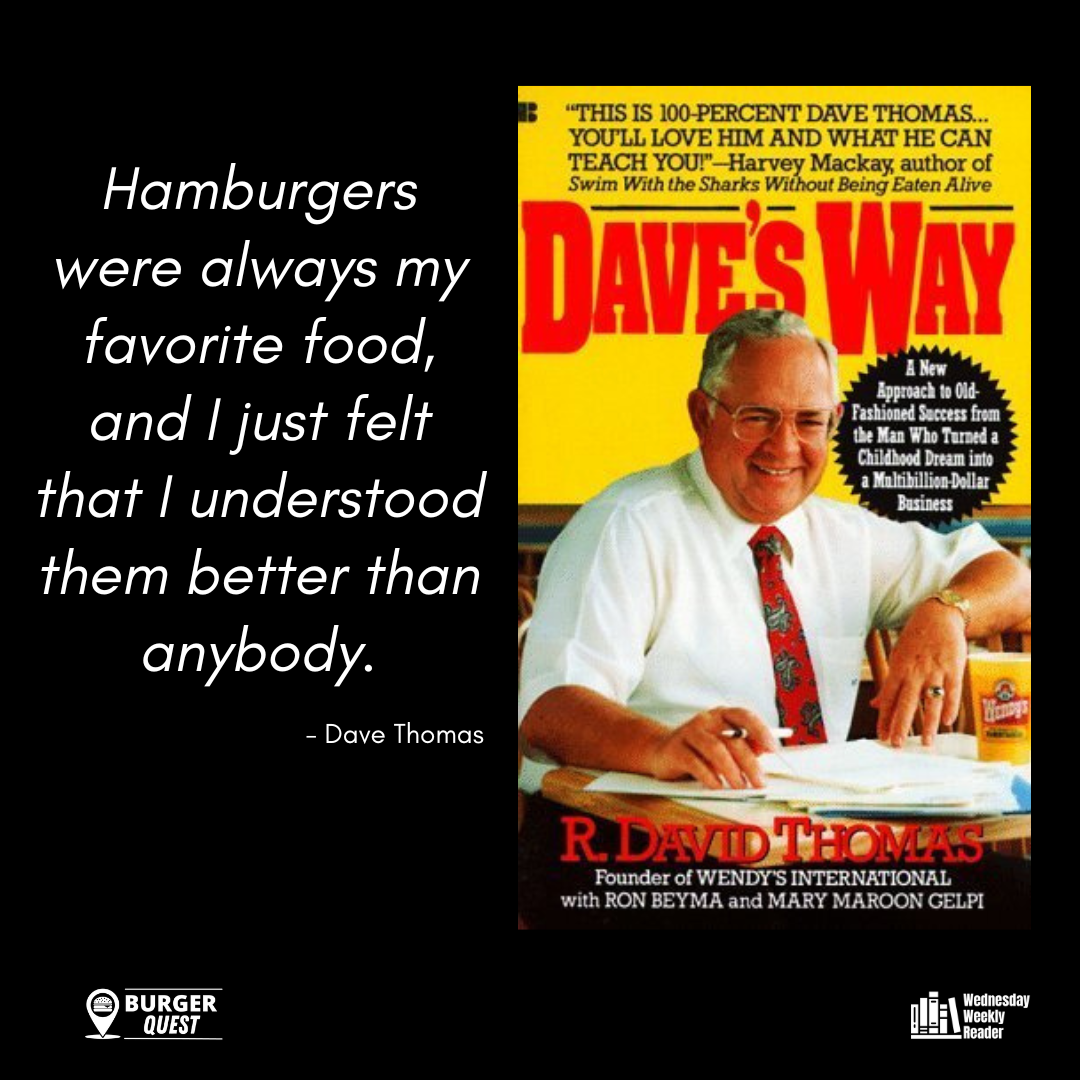
In his autobiography, Dave’s Way, Dave Thomas shows how you can succeed in life through hard work, integrity and humility. From his early years as a busboy, to his days in the army and throughout his career at Wendy’s, he was always motivated to make something of himself. His passion for fresh, never frozen beef, laid the foundation for turning Wendy’s into more than just a restaurant chain, but creating opportunities for millions of people to share in his dream.
Arguably one of the greatest restaurateurs who ever lived, the book is full of advice on how to run a successful business, operate a customer-focused restaurant and market your company with honesty. Dave’s success in business is outshined only by his belief in giving back to others, making him a role-model philanthropist. Dave’s Way is wonderful guide for anyone looking to succeed in life. His old-fashioned American values still hold true today as an inspiration and roadmap to others.
In the ever-evolving world of fast food, where giants like McDonald’s and Burger King dominate the landscape, there exists a humble and unassuming yet remarkable story of success and innovation. It’s the story of Dave’s Way, as chronicled by the legendary R. David Thomas, the man who founded Wendy’s and revolutionized the fast-food industry.
In the book Dave’s Way, Thomas invites readers on a gastronomic journey that spans a lifetime of culinary passion and innovation. Through vivid storytelling, he provides a unique glimpse into the genesis and growth of Wendy’s, a chain that would become an iconic part of American culture.
Imagine the backdrop: It’s the late 1960s, a time when fast-food joints were all about efficiency and cost-cutting. But Dave Thomas, a man with a genuine love for food and a relentless pursuit of quality, envisioned something different. Picture a small, red-roofed restaurant, where the scent of freshly cooked hamburgers wafts through the air, tantalizing the senses of passersby. It’s here that Dave’s Way takes root.
Thomas’s culinary philosophy was simple yet revolutionary. He believed in using fresh, never-frozen beef for his burgers—a stark departure from the frozen patties that were the industry standard. His commitment to quality meant that every burger patty was cooked to order, ensuring a juiciness and flavor that set Wendy’s apart.
In Dave’s Way, Thomas details the challenges he faced in convincing suppliers and competitors to embrace his vision. With eloquent prose, he describes the countless hours spent perfecting the Wendy’s menu, from the iconic square hamburgers to the innovative baked potatoes topped with an array of delectable choices.
The reader is transported to a time when fast food was transformed into a dining experience. Imagine the cozy interior of a Wendy’s restaurant, with its warm, inviting ambiance. Customers savored their meals at tables adorned with fresh flowers, a testament to Dave’s commitment to making fast food feel more like a home-cooked meal.
Thomas’s journey wasn’t without setbacks, and Dave’s Way doesn’t shy away from the trials he faced. From financial struggles to the relentless pursuit of excellence, readers witness the determination and grit that defined his character. It’s as if you’re sitting with Dave himself, listening to his stories, feeling his passion for food, and understanding his unwavering belief in doing things the right way.
As Dave’s Way unfolds, it’s impossible not to be drawn into the narrative. The reader gains a deep appreciation for the man who introduced the concept of the “drive-thru” window to fast food, revolutionizing the industry yet again. “Dave’s Way” became a way of life for his employees, who he treated like family, fostering a culture of pride and dedication that still defines Wendy’s today.
In the end, Dave’s Way is more than a book about fast food; it’s a testament to the power of vision, perseverance, and a love for culinary excellence. It’s the story of a man who believed that fast food could be both convenient and delicious, and who, against all odds, turned that belief into a reality.
As you close the book, you can almost taste the juicy burgers, feel the warmth of the freshly baked potatoes, and hear Dave’s voice echoing through the years, reminding us all to do things “Dave’s Way” – with passion, commitment, and a relentless pursuit of quality.
Part of a regular series on 27gen, entitled Wednesday Weekly Reader
During my elementary school years one of the things I looked forward to the most was the delivery of “My Weekly Reader,” a weekly educational magazine designed for children and containing news-based, current events.
It became a regular part of my love for reading, and helped develop my curiosity about the world around us.
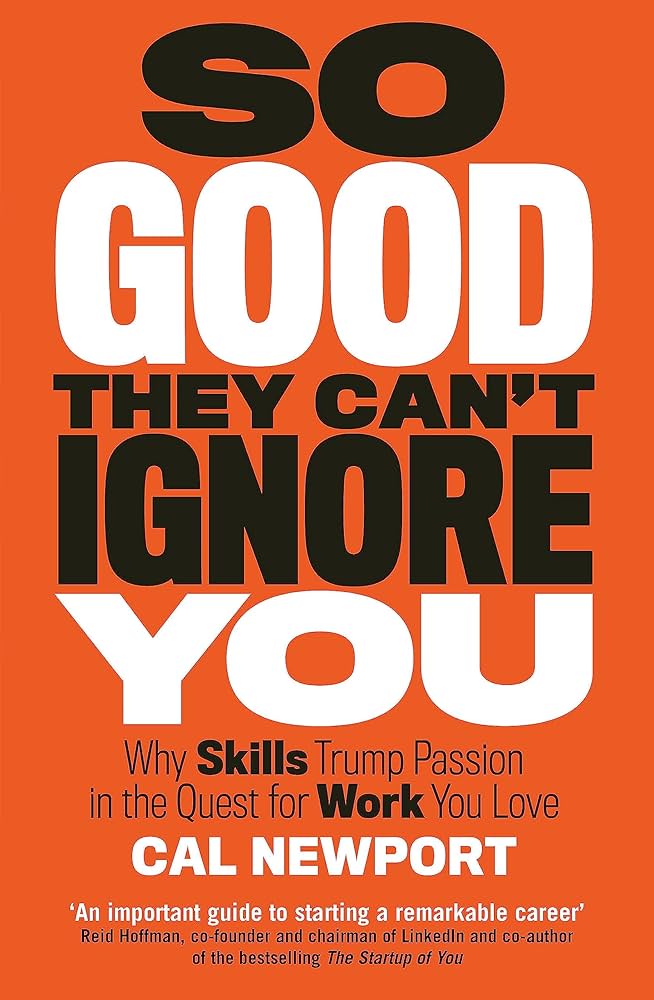
Cal Newport’s clearly-written manifesto flies in the face of conventional wisdom by suggesting that it should be a person’s talent and skill – and not necessarily their passion – that determines their career path.
Newport, who graduated from Dartmouth College (Phi Beta Kappa) and earned a PhD. from MIT, contends that trying to find what drives us, instead of focusing on areas in which we naturally excel, is ultimately harmful and frustrating to job seekers.
The title is a direct quote from comedian Steve Martin who, when once asked why he was successful in his career, immediately replied: “Be so good they can’t ignore you” and that’s the main basis for Newport’s book. Skill and ability trump passion.
Inspired by former Apple CEO Steve Jobs’ famous Stanford University commencement speech in which Jobs urges idealistic grads to chase their dreams, Newport takes issue with that advice, claiming that not only is this advice Pollyannish, but that Jobs himself never followed his own advice.
From there, Newport presents compelling scientific and contemporary case study evidence that the key to one’s career success is to find out what you do well, where you have built up your ‘career capital,’ and then to put all of your efforts into that direction.
So Good They Can’t Ignore You by Cal Newport is a thought-provoking book that explores the relationship between passion and career success.
Cal Newport challenges the conventional wisdom that one should follow their passion to find a fulfilling career. Instead, he argues that passion is something you develop over time by becoming exceptionally good at what you do. Newport introduces the concept of “career capital,” which refers to the skills, knowledge, and expertise you acquire in your field. He suggests that building career capital should be the primary focus, as it allows you to gain more control over your career and find work that you’re passionate about.
The book is organized into several chapters, each discussing key principles for building a fulfilling career. Newport emphasizes the importance of deliberate practice, developing rare and valuable skills, and seeking out “stretch” projects that challenge your abilities. He also encourages readers to adopt a craftsman mindset, which involves a dedication to continuous improvement and excellence in their work.
So Good They Can’t Ignore You offers a refreshing perspective on career development that is highly relevant to my goal of becoming a “modern elder” who guides and nurtures younger generations. Newport’s book is well-organized, providing a clear and systematic framework for achieving career success.
Newport’s emphasis on deliberate practice and skill development aligns with my interest in voracious reading and continuous learning. It values good arguments over mere authority, providing a well-reasoned approach to career development.
The book’s central premise – that passion follows expertise and not the other way around – provides a valuable perspective for those looking to excel in their careers and provide guidance to younger generations. It encourages professionals to focus on acquiring the skills and knowledge that make them indispensable, which is essential in the role as a mentor.
In summary, So Good They Can’t Ignore You by Cal Newport is an insightful and actionable book that provided unique and valuable insight on my journey to becoming a “modern elder.” It provides a strategic approach to career development and personal growth that is both comprehensive and practical.
Part of a regular series on 27gen, entitled Wednesday Weekly Reader
During my elementary school years one of the things I looked forward to the most was the delivery of “My Weekly Reader,” a weekly educational magazine designed for children and containing news-based, current events.
It became a regular part of my love for reading, and helped develop my curiosity about the world around us.
Flameout: The Rise and Fall of Burger Chef by John P. McDonald is a captivating culinary tale that delves into the dramatic story of one of America’s once-prominent fast-food chains. McDonald meticulously traces the journey of Burger Chef, from its humble beginnings as a regional favorite to its eventual decline and disappearance from the fast-food landscape. Through vivid storytelling and in-depth research, he unravels the complex factors that led to the flameout of this iconic brand.
The narrative opens with a vivid portrayal of the burger-scented streets of Indianapolis in the 1950s, where Frank and Donald Thomas embarked on their fast-food venture. McDonald immerses readers in the nostalgic ambiance of the first Burger Chef restaurant, with its eye-catching “Big Shef” sandwich and cheerful service. The reader can almost taste the crispy fries and refreshing shakes, evoking memories of an era when Burger Chef was synonymous with quality and innovation.
As the book unfolds, McDonald masterfully recounts the meteoric rise of Burger Chef, its expansion into a national chain, and its pioneering marketing strategies. He paints a picture of an era when Burger Chef’s flame-broiled burgers were a symbol of wholesome family dining, and the chain’s catchy jingle echoed through television screens across the nation.
Yet, Flameout is not just a story of success but a cautionary tale of the challenges faced by the fast-food industry. McDonald explores the internal conflicts, management decisions, and changing consumer preferences that contributed to the brand’s ultimate decline. He discusses the fierce competition with industry giants like McDonald’s and Burger King, which made it increasingly difficult for Burger Chef to maintain its foothold.
Flameout: The Rise and Fall of Burger Chef is a bittersweet literary banquet that offers readers a taste of the rise and fall of an American culinary icon. John P. McDonald’s writing is akin to the fading aroma of a once-beloved dish, evoking nostalgia for a time when Burger Chef held a special place in the hearts and stomachs of many.
McDonald’s meticulous research and attention to detail shine throughout the book. He crafts a narrative that not only documents the history of Burger Chef but also provides valuable insights into the broader dynamics of the fast-food industry. Readers gain a deeper understanding of the challenges faced by businesses striving to compete in a rapidly evolving market.
The book’s strength lies in its ability to humanize the story, presenting the highs and lows through the perspectives of the people involved. McDonald’s portrayal of the Thomas brothers and other key figures in Burger Chef’s history adds depth to the narrative, making it a compelling character-driven story.
Flameout serves as a reminder that even iconic brands can experience a fall from grace, and it prompts readers to reflect on the ever-changing culinary landscape. It’s a story of nostalgia, business strategy, and the enduring allure of the American fast-food experience.
In conclusion, Flameout: The Rise and Fall of Burger Chef is a must-read for anyone intrigued by the interplay of history, culture, and cuisine in the world of fast food. McDonald’s storytelling takes readers on a journey through time, allowing them to savor the flavors of Burger Chef’s past while contemplating the lessons it offers for the present and future of the culinary industry.
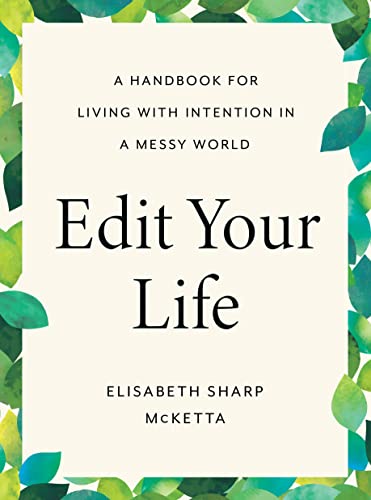
We can – with a little thought, an open mind, and a willingness to try a few simple simple changes – edit our needs to their essentials, revisit and reprioritize our values, then figure out how best to go on. An inspiring guide to focusing on what matters most in life—and hitting delete on what doesn’t.
Elisabeth Sharp McKetta, Edit Your Life
Life is noisier, messier, and more complicated than ever. In our quest to keep up, we can lose sight of what we care about most, and instead try to do it all – with mixed results.
In this beautiful call to examine and edit our lives, writer Elisabeth Sharp McKetta shares eight simple ways to cut through the clutter, drama, and overwhelm of modern life to live with more intention and joy. Inspired by her own experiments with reprioritizing, tiny house living, and finding the right balance of work and family time, Edit Your Life brings together personal narrative and practical takeaway, with inspiring results.
Whether you’re pivoting, downsizing, relocating, or just ready to have more time and energy for the people and activities you love most, this engaging and practical guide will bring you on a journey of exploration and reflection – and point you toward the life you truly want to live.
Editing is an act of change, involving asking questions about what something currently is and what it should be. Whether it’s a book, a relationship, a kitchen, or a parenting philosophy, the principles of editing remain the same. The term “life-edit” signifies the application of these principles to life.
Editing is a skill that helps us see things clearly and involves looking and looking again, exploring skills that transcend the specifics of individual lives. Use life-editing principles to rethink how you spend your time, regardless of the circumstances. Reflect on your own life, acknowledging that while the details may vary, everyone is striving to live a life that is worthy of them.
Life often undergoes involuntary edits due to external or internal changes, including both gain and loss. Crisis situations force people to reevaluate their lives. However, proactive life-editing is a way to take an active role in shaping one’s life around what matters most. It encourages clarity, grit, self-respect, resourcefulness, and joy in this quest.
The best time to edit is not just in response to crises but whenever one’s life feels out of alignment. Waiting to edit carries the risk of regret, as one may wish for a different life. It also leads to disengagement, reducing life to a checklist of tasks, resulting in a sense of claustrophobia and guilt for neglecting essential aspects.
Regardless of when and where you are in life, the time to edit is now, especially if you are contemplating how to make your life better.
Here are some life editing guidelines from author Elisabeth Sharp McKetta, each a chapter in her book:
Examine Your Life – A framework for looking with fresh eyes at your ordinary days: to understand what your life needs to be and to edit in the right direction, without accidentally changing something that works well.
Ask: What is it? Looking closely
Ask: What could it be? Identifying the moonshot
Ask: What is needed? Claiming what’s necessary and discarding what’s not
Edit Your Life – Avenues for making lasting changes according to what feels right and true to your life today, whether you are editing for clarity and ease, for growth, or for a greater sense of abundance.
Edit for clarity: Setting guardrails with love
Edit for growth: Respecting the seasons
Edit for generosity: Adding to the green
Enjoy Your Life – Simple ways to enjoy the ordinary days and accept the exceptions: to trust that eating time is over for this particular season, and to feel content with your here and how.
Enjoy the Ordinary Days: Organizing in orbits
Accept the Exceptions: Leaving margins and keeping perspectives
Editing paves a way for you to connect deeply with yourself and the choices you have made. Editing ensures self-trust: that you will not regret the part you played in your own life.
Elisabeth Sharp McKetta
Part of a regular series on 27gen, entitled Wednesday Weekly Reader
During my elementary school years one of the things I looked forward to the most was the delivery of “My Weekly Reader,” a weekly educational magazine designed for children and containing news-based, current events.
It became a regular part of my love for reading, and helped develop my curiosity about the world around us.
Burger King’s founder Jim McLamore gives us a backstage pass to the making of Burger King, an American success story and an important part of burger culture history.
Here is the “Burger King’s” own fascinating account of how he launched and built a billion-dollar empire from humble beginnings and helped change the way the world eats; how he challenged arch rival McDonald’s; the many times he nearly failed; and the surprising inspiration for the Whopper campaign that arrived just in time to save Burger King from going ketchup-side down.
McLamore is always candid, outspoken, and totally engaging – whether he is talking about the embarrassing “Herb the Nerd” campaign (the advertising fiasco that briefly replaced “Have it your way”) – or discussing his problems with Pillsbury top management after they bought Burger King.
Candid, too, is his account of the real story behind the fierce – and still ongoing – competition between Burger King and McDonalds. In remarkable contrast, you will also read the story of the warm personal relationship between McLamore and McDonald’s CEO Ray Kroc.
The Burger King is at once an endearing self-portrait of a true American original and a rare insider’s look at why America eats the way it does. It’s an epic tale of an industry giant who, through his devotion to his company and community, let billions of people “have it their way.”
Above all, it’s a story that could only be this well-told by the Burger King himself.
In the realm of fast-food royalty, one name stands out prominently, conjuring images of flame-grilled perfection and a crown-wearing monarch: Burger King. The saga of this iconic fast-food empire is brilliantly chronicled in The Burger King: Jim McLamore and the Building of an Empire by James W. McLamore, the co-founder of the brand himself. In this delectable narrative, readers are invited to savor the journey of innovation, resilience, and burger brilliance.
Picture a post-World War II America, where diners and drive-ins reigned supreme. It’s a time of burgeoning car culture, where the freedom of the open road meets the allure of a hearty, satisfying meal. Into this scene strides Jim McLamore, a man whose vision and passion for great burgers would forever change the fast-food landscape.
As you turn the pages of The Burger King, you’ll find yourself transported to the vibrant Miami of the 1950s, where Jim McLamore and his partner, David Edgerton, embarked on a culinary adventure. Their dream? To create a burger joint that would deliver not just a meal but an experience. You can almost smell the tantalizing aroma of sizzling beef patties as they describe their early experiments with the flame-grilling technique – a groundbreaking innovation that would set Burger King apart.
The book captures the spirit of entrepreneurship, from the humble beginnings of the first “Insta-Burger King” location in Miami to the eventual evolution into the renowned Burger King brand. Readers gain insights into the challenges faced by McLamore and his team as they navigated the competitive fast-food landscape.
The narrative artfully depicts the birth of the Whopper, the crown jewel of Burger King’s menu. Imagine the first bite into a flame-grilled, juicy patty topped with fresh lettuce, tomatoes, onions, and the signature King’s own “special sauce.” It’s a sensory experience that changed the fast-food game forever. The Burger King vividly recounts the meticulous development and launch of this iconic burger, underscoring Jim McLamore’s unwavering commitment to quality and flavor.
Jim McLamore’s vision extended beyond the food. He recognized the importance of branding and marketing in the fast-food industry. The book takes readers on a journey through the creation of the memorable “Have It Your Way” slogan, which invited customers to customize their burgers to their heart’s content. It’s as if you’re in the room with McLamore, witnessing the birth of a marketing strategy that would become a cornerstone of Burger King’s identity.
But The Burger King doesn’t shy away from the challenges and adversities faced by the brand. It recounts the ups and downs, including changes in ownership and market competition. Yet, through it all, Jim McLamore’s resilience and dedication to the Burger King vision shine brightly, a testament to his enduring commitment to quality and customer satisfaction.
As you finish the book, you’ll find yourself with a newfound appreciation for the man behind the crown and the enduring legacy he left in the world of fast food. The story of The Burger King is not just about hamburgers; it’s a tale of entrepreneurial spirit, innovation, and a relentless pursuit of excellence—a legacy that continues to captivate taste buds and hearts worldwide.
With each page turned, you’ll savor not only the flavors of a Whopper but also the enduring legacy of Jim McLamore, the man who built an empire one delicious burger at a time.
To stay eager, to connect, to find interests in the everyday, to noice what everybody else overlooks – these are vital skills and noble goals. They speak to the difference between looking and seeing, between hearing and listening, between accepting what the world presents and noticing what matters to you.
In pursuit of becoming a modern elder, I’m working on the development of foundational principles that contribute to such a journey.
The first of those was Noticing.
Modern elders are encouraged to become first-class noticers in order to make the unconscious conscious. They are encouraged to become more fully aware of themselves and others. Noticing (or “awareness”) is a key wisdom skill for making personal changes, and a foundational principle of a modern elder.
Modern elders are encouraged to use the previously mentioned skill of noticing/awareness for a “great midlife edit.” What could you edit out of your life so that you can edit in something more inspiring and purpose-filled?
The first step on that journey is realizing there is much that could be edited from this noisy world we live in.
Information overload.
You live it every day – Facebook, Twitter, LinkedIn, and Instagram. You’re more informed and connected than ever.
Yet, if you’re honest, you’re probably feeling more distracted than ever.
More lonely. More restless.
According to studies done by Barna Research:
71% of people feel overwhelmed by the amount of information they need to stay up to date.
36% of adults stop what they’re doing to check a text or message when it comes in.
35% of adults think their personal electronics sometimes separate them from other people.
Being hyperlinked changes every aspect of our lives – and often, not for the better.
This trifecta of books will look at solutions that will help you begin to understand the concepts of Editing.
THE QUICK SUMMARY
Minimalism is the art of knowing how much is just enough. Digital minimalism applies this idea to our personal technology. It’s the key to living a focused life in an increasingly noisy world.
In this timely and enlightening book, the bestselling author of Deep Work introduces a philosophy for technology use that has already improved countless lives.
Digital minimalists are all around us. They’re the calm, happy people who can hold long conversations without furtive glances at their phones. They can get lost in a good book, a woodworking project, or a leisurely morning run. They can have fun with friends and family without the obsessive urge to document the experience. They stay informed about the news of the day, but don’t feel overwhelmed by it. They don’t experience “fear of missing out” because they already know which activities provide them meaning and satisfaction.
Now, Newport gives us a name for this quiet movement, and makes a persuasive case for its urgency in our tech-saturated world. Common sense tips, like turning off notifications, or occasional rituals like observing a digital Sabbath, don’t go far enough in helping us take back control of our technological lives, and attempts to unplug completely are complicated by the demands of family, friends and work. What we need instead is a thoughtful method to decide what tools to use, for what purposes, and under what conditions.
Drawing on a diverse array of real-life examples, from Amish farmers to harried parents to Silicon Valley programmers, Newport identifies the common practices of digital minimalists and the ideas that underpin them. He shows how digital minimalists are rethinking their relationship to social media, rediscovering the pleasures of the offline world, and reconnecting with their inner selves through regular periods of solitude. He then shares strategies for integrating these practices into your life, starting with a thirty-day “digital declutter” process that has already helped thousands feel less overwhelmed and more in control.
Technology is intrinsically neither good nor bad. The key is using it to support your goals and values, rather than letting it use you. Digital Minimalism shows the way.
A SIMPLE SOLUTION
While many leaders believe in the power of digital platforms, and recognize the importance of various specific applications, a growing number of those same leaders feel as though their current relationship with technology is unsustainable – to the point that if something doesn’t change soon, they will reach a breaking point.
According to author Cal Newport, people don’t succumb to screens because they’re lazy, but instead billions of dollars have been invested to make this outcome inevitable.
It seems we have stumbled backward into a digital life we didn’t sign up for.
My research on digital minimalism has revealed the existence of a loosely organized “attention resistance movement,” made up of individuals who combine high-tech tools with disciplined operating procedures to conduct surgical strikes on popular attention economy services – dropping in to extract value, and then slipping away before the attention traps set by those companies can spring shut.
The tactics below have proved successful in shunting aside relentless efforts to capture your attention.
Delete Social Media from Your Phone The smartphone versions of social media sites are much more adept at hijacking your attention than the versions accessed through a web browser on your laptop or desktop computer. Because you always have your phone with you, every occasion becomes an opportunity to check your feeds. If you’re going to use social media, stay far away from the mobile versions of these services, as they pose a significantly bigger risk to our time and attention. This practice suggests you remove all social media apps from your phone. You don’t have to quit these services, you just have to quit accessing them on the go.
Turn Your Devices Into Single-Purpose Computers The sentiment that temporarily blocking features of a general-purpose computer reduces its potential is common for tools that do just that. It’s also flawed: it represents a misunderstanding of computation and productivity that benefits the large digital attention economy conglomerates much more than the individual users that they exploit. As many have discovered, the rapid switching between different applications tends to make the human’s interaction with the computer less productive in terms of the quality and quantity of what is produced. This practice of blocking might at first seem overly aggressive, but what it’s actually doing is bringing you back closer to the ideal of sing-purpose computing that’s much more compatible with our human attention systems.
Use Social Media Like a Professional Social media professionals approach these tools differently than the average user. They seek to extract large amounts of value for their professional and (to a lesser degree) personal lives, while avoiding much of the low-value distortion these services deploy to lure users into compulsive behavior. Their disciplined professionalism, in other words, provides a great example for any digital minimalist looking to join the attention resistance. To a social media pro, the idea of endlessly surfing your feed in search of entertainment is a trap (these platforms have been designed to take more and more of your attention) – an act of being used by these services instead of using them to your own advantage.
Embrace Slow Media To embrace news media from a mind-set of slowness requires first and foremost that you focus only on the highest-quality sources. Breaking news, for example, is almost always much lower quality than the reporting that’s possible once an event has occurred and journalists have had time to process it. Similarly, consider limiting yourself to the best of the best when it comes to selecting individual writers you follow. Another important aspect of slow news is the decisions you make regarding how and when this consumption occurs. The key to embracing Slow Media is the general commitment to maximizing the quality of what you consume and the conditions under which you consume it.
Dumb Down Your Smartphone Declaring your freedom from your smartphone is probably the most serious step you can take toward embracing the attention resistance. Dumbing down your phone, of course, is a big decision. Convincing yourself that a dumb phone can satisfy your need so that its benefits outweigh its costs is not necessarily easy. Indeed, it might require a leap of faith – a commitment to test life without a smartphone to see what it’s really like.
According to author Cal Newport, if you are exhausted by your “digital device addiction,” it’s not only possible to say, “No More,” it’s actually not that hard.
Set aside some time (without your phone!) to review the following five suggestions listed above. For each, make a Pro/Con list for what it would mean to your life if you took that action.
Review the list, and make a decision to embrace at least one of the actions for the next week.
After the week has passed, reflect on what taking that action meant to you, in terms of time gained, relationships grown, etc.
Consider another action to undertake, and follow the same suggestions.
At the end of one month’s experiments, talk with your spouse or a close colleague who would have noticed the changes in your routine and its results. What do they have to say?
THE QUICK SUMMARY
Have you bought into the lie that success constantly requires more, more, and more? To achieve success, you must do more, work more hours, take on more projects, and accept more responsibilities?
If so, you’re probably experiencing a roller coaster ride of mixed results – being on top of the world one moment and crashing to earth at lightning speed the next.
The Success Lie was written for you. You recognize the gap between where you are now and your highest potential, but don’t want to sacrifice your sanity to get there. Janelle Bruland has built a formidable bridge over that gap, proving that you can be successful in the business world and maintain balance in your personal life without constantly feeling stressed and overwhelmed.
You know that everything in life is a result of the choices you’ve made, yet you’re wondering if you’re making the right choices. The proven strategies in this book will show you how to step away from the modern world’s path to success and create a life of significance – one where you are loving your work and making a positive impact.
Determine what’s truly important to you and then live by those values.
Recognize what’s gotten in the way of your success and take transformational steps to increase mindfulness, improve your skills, and become a better (and happier) version of yourself.
Discover strategies to eliminate over-work, overcommitment, and overwhelm.
Take back your life! Stop allowing societal pressures to tell you what matters. Get back on the path to fulfillment and do it your way! Reduce stress, enjoy peace of mind, and create the life you have always wanted.
Don’t buy into the lie anymore. You have the choice.
A SIMPLE SOLUTION
Who doesn’t love saying “yes”? The look of gratitude or relief on the face of the person who asked lifts us up – at least in the short run.
However, the more we say “yes” to, the more we will be asked. It’s a trait of a successful person; frequent participation often brings additional asks.
High achievers are driven and want to accomplish things, and are therefore often caught up in doing more and more. However, if we aren’t careful, we will miss out on the very things that matter the most to us.
Everything you say “yes” to means saying “no” to something else.
Here are the top five items I have learned to say “no” to:
1. The opportunities that come up that I’m not completely passionate about. When we choose to participate in something, we should be excited to be involved, not doing it out of guilt or obligation.
2. The things that are not aligned with my core values and priorities. To stay true to our values, our words, behavior, and actions must be in line with our beliefs.
3. To those requests that are not in my wheelhouse. Often, we are asked to do things that truly belong on someone else’s “to do” list. Be sure to pass on those, or delegate them to a more appropriate person.
4. To the things that drain me of energy. Our time should be spent on activities that we enjoy and give us energy, not deplete it.
5. To relationships that are unhealthy. We will never be our best if we are constantly having to lift ourselves up from interactions with unsupportive or negative people. Eliminate these relationships.
To have the successful life you desire, you must be disciplined to say “no” more than you say “yes.”
Author Janelle Bruland developed the following exercise to challenge leaders to “Just Say No.” Set aside an hour of uninterrupted time to complete it. In order to focus on our top priorities, giving them all of our attention and energy, it is important to evaluate what we need to say “no” to. Evaluate yourself in the following areas:
What commitments have I made that I am not excited about? These may be things that are past their time, or that you committed to out of obligation.
Is there anything I am involved in that is not aligned with my core values and priorities? If so, they should be eliminated.
What things am I adding to my “to-do” list that are not in the area of my strengths? These items should be delegated.
What activities am I involved in that drain me of energy? These should be removed from my priority list.
Am I involved in relationships that are unhealthy? These should be carefully evaluated and repaired or eliminated.
THE QUICK SUMMARY
Are you:
• Working, working, working?
• Busy taking care of everyone but yourself?
• Wondering what to do with the rest of your life?
• Planning to do what makes you happy someday when you have more time, money, or freedom?
What if someday never happens?
Sam Horn is a woman on a mission about not waiting for SOMEDAY… and this is her manifesto. Her dad’s dream was to visit all the National Parks when he retired. He worked six to seven days a week for decades. A week into his long-delayed dream, he had a stroke.
Sam doesn’t want that to happen to you. She took her business on the road for a Year by the Water. During her travels, she asked people, “Do you like your life? Your job? If so, why? If not, why not?”
The surprising insights about what makes people happy or unhappy, what they’re doing about it (or not), and why…will inspire you to carve out time for what truly matters now, not later.
Life is much too precious to postpone. It’s time to put yourself in your own story. The good news is, there are “hacks” you can do right now to make your life more of what you want it to be. And you don’t have to be selfish, quit your job, or win the lottery to do them. Sam Horn offers actionable, practical advice in short, snappy chapters to show you how to get started on your best life now.
A SIMPLE SOLUTION
According to author Sam Horn, you don’t need to quit your job, win the lottery, or walk away from your responsibilities to make your life more of what you want it to be.
There are things you can do right here, right now, to be happier, healthier, and more fulfilled.
There are steps you can take to make your life more fulfilling.
It’s time to hack your life by tapping into proven best practices, expedite results and discover a shortcut to success.
Make your “one day” Day One.
The Ten Life Hacks are actions you can take to create a more fulfilling life, sooner, not later. Please note: These hacks are a framework, not a formula.
LIFE HACK 1: Evaluate Your Happiness History
LIFE HACK 2: Generate a Today, Not Someday Dream
LIFE HACK 3: Abdicate Outdated Beliefs and Behaviors
LIFE HACK 4: Initiate Daily Actions that Move Your Life Forward
LIFE HACK 5: Celebrate What’s Right with Life, Right Here, Right Now
LIFE HACK 6: Affiliate with People Who Have Your Back and Front
LIFE HACK 7: Integrate Your Passion and Profession
LIFE HACK 8: Negotiate for What You Want, Need, and Deserve
According to author Sam Horn, the best way to make progress in making your “Someday” is to ask probing questions that prompt you to change – for good.
Listed below are sample questions for each of the ten Life Hacks listed above. Schedule at least thirty minutes a day for the next ten days, and reflect on the questions listed.
LIFE HACK 1: Evaluate Your Happiness History
Play hooky for a day.
How would you spend your free day or afternoon? What would you do if the people you’re responsible for would be taken care of, and there would be no repercussions?
What are three things you would not do on your day of hooky? Why?
LIFE HACK 2: Generate a Today, Not Someday Dream
Put a date on the calendar.
What would you like to experience or achieve by the end of this year? What is your Today, Not Someday dream? When will you launch it? What “do-date” did you put on your calendar?
Now, start filling in the W’s … where, when, who, what, and why. Who will you discuss this with so they can help you fill in the blanks so your dream goes from vague to vividly clear?
Where will you post your dream so it stays “in sight, in mind,” and you are constantly reinspired to do what you said you wanted to do?
LIFE HACK 3: Abdicate Outdated Beliefs and Behaviors
Let it go, let it go, let it go.
How do you feel when you walk into your home? Where would your home rate on the “Clutter (1) to Clean (10) Scale”? How does that affect you? Do you feel guilty, stressed, or frustrated with how things have piled up? Or do you feel proud and at peace with how well-designed, organized, and beautiful your space is?
How much time do you spend cleaning, repairing, buying, renovating your stuff? Is that a source of enjoyment, a burden and chore, or something in between? Explain.
Are you ready to downsize your home and/or release some belongings? How will you do that? Who else does this have an impact on? How will you negotiate this with them? What could you do with the resources that would be freed up when you have less to take care of?
LIFE HACK 4: Initiate Daily Actions that Move Your Life Forward
Honor the nudges, and connect the dots.
Do you make room for whims? Why or why not? When was a time you honored a nudge and acted on your intuition? What happened as a result?
Do you think this is a lot of hooey? Does your intellect override your instincts? Or, do you agree that if we have a sixth sense that alerts us to what’s wrong, we also have a sixth sense that alerts us to what’s right? What are your beliefs about this?
How will you honor the instincts that have your best interests at heart? How will you connect the dots, act on “coincidences” that beat the odds, and align with congruent individuals and opportunities that “feel right”?
LIFE HACK 5: Celebrate What’s Right with Life, Right Here, Right Now
Get out of your head and come to your senses.
When was the last time you saw something as if for the first or last time? Describe what happened and what it felt like.
Do you have a busy, stressful life? What is the ongoing impact of rushing, rushing, rushing— and always feeling “an hour late and a dollar short”?
Would you say you have “juice” in your camera? Do you look at the world with fresh eyes? When, where, and how will you get out of your head and come to your senses?
LIFE HACK 6: Affiliate with People Who Have Your Back and Front
Launch your ship in public.
So, what is that venture you want to launch? Who has supported you, cheered you on? What have they done to help you achieve your goal and do what’s important to you?
Who has cautioned you, told you (“for your own good”) that what you want to do won’t work or isn’t a good idea? What impact has that had on you?
How will you take your dream public and give others a chance to jump on your bandwagon? Will you create a vision board and/or host a Today, Not Someday party? Where did you post your vision so it stays “in sight, in mind”?
LIFE HACK 7: Integrate Your Passion and Profession
Don’t wait for work you love – create work you love.
Do you love your job? Do you feel you’re adding value and contributing? How so?
If you don’t find your work satisfying, why not? What talents or skills are you not having an opportunity to use or get credit for?
What are your Four I’s? How could you leverage them into a paying career where you get paid to do what you’re good at? What is your next step? Will you visit crafts fairs to see how other people have turned a passion into a profession? Elaborate.
LIFE HACK 8: Negotiate for What You Want, Need, and Deserve
If you don’t ask, the answer’s always “No.”
When is a time you asked for something you wanted – whether it was a promotion, project lead, or pay raise? How did you prepare? What was the result?
When is a time you waited for someone to “do the right thing,” act on your behalf, or give you what you deserved? As Dr. Phil would say, “How’d that work for you?”
What is a situation you’re unhappy with right now? Which of the Four A’s have you used? How will you alter the situation by using the Five P’s of Persuasion to increase the likelihood of improving this situation?
LIFE HACK 9: Innovate a Fresh Start
Quit watering dead plants.
Is the majority of your life out of your control and not to your liking? How so? Does this challenging time have a timeline? Can you “make your mind a deal it can’t refuse” so you are able to keep things in perspective?
What do you currently do to maintain a positive perspective, to have something to look forward to in bleak times? How do you stay focused on what you can control?
Are there dead plants you can stop watering? What can you quit that is compromising your quality of life? How can you innovate a fresh start if you are going through dark times to keep the light on in your eyes?
LIFE HACK 10: Relocate to Greener Pastures
Come full circle.
When was the last time you were in your hometown? What memories did it bring back? Did you reconnect with people that influenced you? Did it catalyze a new creative direction that could be a satisfying full-circle way to come home to who you truly are?
What used to light you up but now feels like it might be a retreat or regression to “go back there”? Do you worry it’s thinking small instead of thinking big? Could it actually be you’re going “home” to who you are at your core, your best self?
Do you agree that we can be “at home” wherever we are and that “home” is a mindset, not a location? Where do you feel most at home?
Part of a regular series on 27gen, entitled Wednesday Weekly Reader
During my elementary school years one of the things I looked forward to the most was the delivery of “My Weekly Reader,” a weekly educational magazine designed for children and containing news-based, current events.
It became a regular part of my love for reading, and helped develop my curiosity about the world around us.
From blue sky ideation, to pencil on paper, to digital models, to plaster and paint, Imagineers build dreams. They never say “never,” and the sky is not the limit. That quest has created a new art form and a new kind of artist, one whose canvas is the world itself and whose tools are whatever it takes to turn that world into a fantastic, enveloping story.
Leslie Iwerks, “The Imagineering Story”
The books in my Disney library are a valuable resource for my ongoing quest in learning the story of Walt Disney and the “kingdoms” he created; kingdoms that continue to expand in the 57 years since his passing.
But even books have limitations…
You can dream, create, design, and build the most wonderful place in the world…but it requires people to make the dream a reality.
Walt Disney
Over the years I have been fortunate to make friends among Disney Cast Members, both current and past. A handful of those friends have been Imagineers, and as you may imagine, they are amazing storytellers, creative geniuses, and innovative to the core.
So…learning more about Imagineering? Sign me up – literally!
When the news that a new steaming service called Disney+ was coming in the fall of 2019, I was delighted – so much, that I signed up for a 3-year subscription as soon as they became available.
When the initial programming schedule was released, and included the 6-part series “The Imagineering Story,” I was ecstatic – it was among the first programs I watched on the new service.
When the book The Imagineering Story was announced, I was literally stopped what I was doing and pre-ordered the book.
There’s really no secret about our approach. We keep moving forward – opening new doors and doing new things – because we’re curious. And curiosity keeps leading us down new paths. We’re always exploring and experimenting…we call it Imagineering – the blending of creative imaginational and technical know-how.
The book goes deep into the personalities, stories, and adventures of the men and women who brought create magic around the world.
More than just the theme parks (though that would have been awesome enough), every resort hotel, shop and business setting, cruise ship, and entertainment setting exists largely through the men and women of Disney Imagineering.
The Imagineering Story greatly expands the award-winning filmmaker Leslie Iwerks’ narrative of the fascinating history of Walt Disney Imagineering.
The entire legacy of Walt Disney Imagineering is covered from day one through future projects with never-before-seen access and insights from people both on the inside and on the outside. So many stories and details were left on the cutting room floor for the series – this book allows an expanded exploration of the magic of Imagineering.
Every one of the 731 pages was filled with stories that brought the Disney Experience alive.
The experience of Disney – primarily in the theme parks, but now expanded to other resorts, retail shops, and cruise ships – can be traced back to Walt Disney. His untimely death in 1966 could have left a void in the creativity of the Disney empire.
But I believe his greatest act of genius had its origins in 1952, as he began to pull together veterans of film and animation work for a special project that came to be known as Disneyland.
That group of versatile animators and art directors was the foundation of a group that came to be called the Imagineers.
Out of this group, Disney historian Tim Hauser reflects, “came the theories, aesthetics, design, and engineering of Disneyland; the advancement of three-dimensional storytelling; the development of robotic techniques in Audio-Animatronics; and the perpetuation of an ‘architecture of reassurance’ as inspired by Walt Disney’s personal sense of optimistic futurism.”
Today Walt Disney Imagineering remains the design, development, and master-planning branch of company, with over 140 disciplines working toward the common goal of great stories and creating great places.
Walt Disney wanted Disneyland to be essentially a movie that allows you to walk in and join in the fun. Imagineers – many whom had worked with Walt Disney since the 1930s – literally brought those movies to life with their multiple disciplines. He knew from his filmmaking experience that story was everything to the audience. Disney knew he must immerse the theme park guest in living storytelling scenarios.
Designing the Guest’s experience is what Walt Disney’s Imagineers came to call “the art of the show,” a term that applies to what the Imagineers did at every level, from the broadest conceptual outlines to the smallest details, encompassing visual storytelling, characters, and the use of color.
Walt Disney realized that a visit to an amusement park could be like a theatrical experience – in a word, a show. Walt saw that the Guests’ sense of progressing through a narrative, of living out a story told visually, could link together the great variety of attractions he envisioned for his new kind of park. While traveling through their stories, Guests would encounter, and even interact with, their favorite Disney characters, and who would be transformed, as if by magic, from their two-dimensional film existence into this special three-dimensional story world.
As designers, the Imagineers create spaces – guided experiences that take place in carefully structured environments, allowing the Guests to see, hear, smell, touch, and taste in new ways. In effect, Imagineers transform a space into a story place.
Ultimately, the Imagineers gave Guests a place to play, something Walt believed that adults needed as much as children. The design of the Imagineers gives power to the Guests’ imagination, to transcend their everyday routine. Walt Disney insisted that Guests should “feel better because of” their experiences in Disney theme parks, thus establishing the art of the show.
For the Imagineers, that meant considering everything within and relating to the parks as design elements. To build effective story environments and assure Guest comfort, the designers realize that they always had to assume the Guests’ position and point of view, and just as Walt did, to take the Guests’ interests to heart and defend them when others didn’t think it mattered.
It is up to the designers to provide Guests with the appropriate sensory information that makes each story environment convincing. This means that design considerations go beyond the attractions themselves to the service and operations staff, transportation, restaurants, shops, rest rooms – even the trash cans.
Everything Begins With a Story
Storytelling has played a vital role in our survival – allowing us to share information, knowledge, and values from generation to generation. Story is the medium through which we receive our early learning as to right and wrong, good versus evil, reward and punishment, social values, etc.
We respond to storytelling. It engages our attention; no matter how old we get, who doesn’t love a good story?
Understanding this, Walt Disney utilized a technique in the early days of his cartoon films that helped illustrate the flow and continuity of stories – the storyboard.
Storyboards are tools that allowed Walt and his artists to envision a film prior to production. It allowed his team to have a shared vision of the story they were telling and how it would unfold. As a bonus to driving the creative development, it also offered a cost-effective way to experiment with a film early on, so that when production began, costs could be minimized.
Decades later, the tradition of storyboards continues on, though it has long expanded past just films. At Walt Disney Imagineering, rides, shows, and films for Disney’s theme parks around the world are the objects of regular storyboarding.
For each ride, show, or attraction, a logical story sequence is created. Almost every aspect of a project is broken sown into progressive seen sketches, called storyboard panels, that reflect the beginning, middle, and end of a Guest’s park experience.
The boards are eventually covered with every written thought, idea, and rough sketch the Imagineers can come up with.
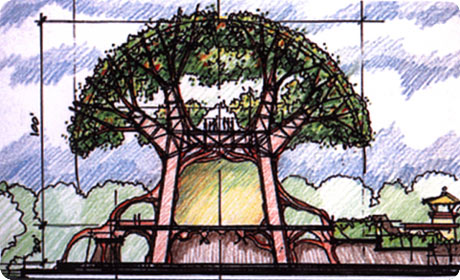
Starting with brainstorm sessions, the Imagineer’s first thoughts, ideas, images, and feelings about the story they are creating are captured on note cards and quick sketches. For example, here’s an early sketch of Animal Kingdom’s Tree of Life:
courtesy Disney Imagineering
The beauty of the Tree is matched by its engineering marvels as well. It is a massive structure, towering 145 feet into the air with a full canopy of natural-looking leaves, enclosing a 420-seat theater and meeting all building codes, including withstanding 145 mph winds. The engineering feats accomplished, it was time for the Imagineering team of sculptors to create the magnificent bark of the tree – which is actually representations of animals. That process alone took almost a full year.
courtesy Orlando Sentinel
One of the most amazing pieces of art ever created by Disney’s Imagineers, it is beautiful and meaningful, and captures the essence of Animal Kingdom at a glance. It’s a poetic statement of the majesty of nature, the stunning diversity of animals, and our respect for our place in the world. As you approach the tree and the animal forms begin to reveal themselves, it becomes clear that there is almost no tree at all. That tree is the animal kingdom.
The experience of viewing the Tree of Life is like looking for animals in the clouds. The longer you look, the more you see – maybe even all 325 of them! This effect is the result of very careful planning during the design phase with the use of storyboards.
The storyboards are worked, re-worked, rearranged, and edited until the story is strong and clear. Only then will production proceed – with stunning results:
At Walt Disney Imagineering, everything they do revolves around the story – and storyboards have remained an essential tool in helping them tell the story.
That is the power of story – it is an experience that enables us to escape to another world, to be captivated and be in the moment.
The secret to Disney magic that the Imagineers bring to life is in the story!
Recently celebrating their 70th anniversary, the Imagineers have delivered – time and time again. To date, the Imagineers have built twelve theme parks; dozens of resort hotels; 5 cruise ships with two more under construction; 2 water parks; and ongoing development in existing parks and Disney properties around the world.
The Imagineers bring the Disney magic alive.
The Imagineering Story brings the Imagineers to life.
I have a hard time ranking the books in my Disney library – but The Imagineering Story is going to be in my all-time Top Ten from now on, and a highly-recommended book for anyone who wants a deeper understanding of the creative genius (and occasionally weirdness) of that special and unique blend of artists and engineers who took the dreams of one man, Walt Disney, and brought them to life.
Walt was a storyteller above all. Walt didn’t write the stories but he envisioned them. He told stories better than anyone else around and he got the people around him to turn his stories into movies and theme park attractions.
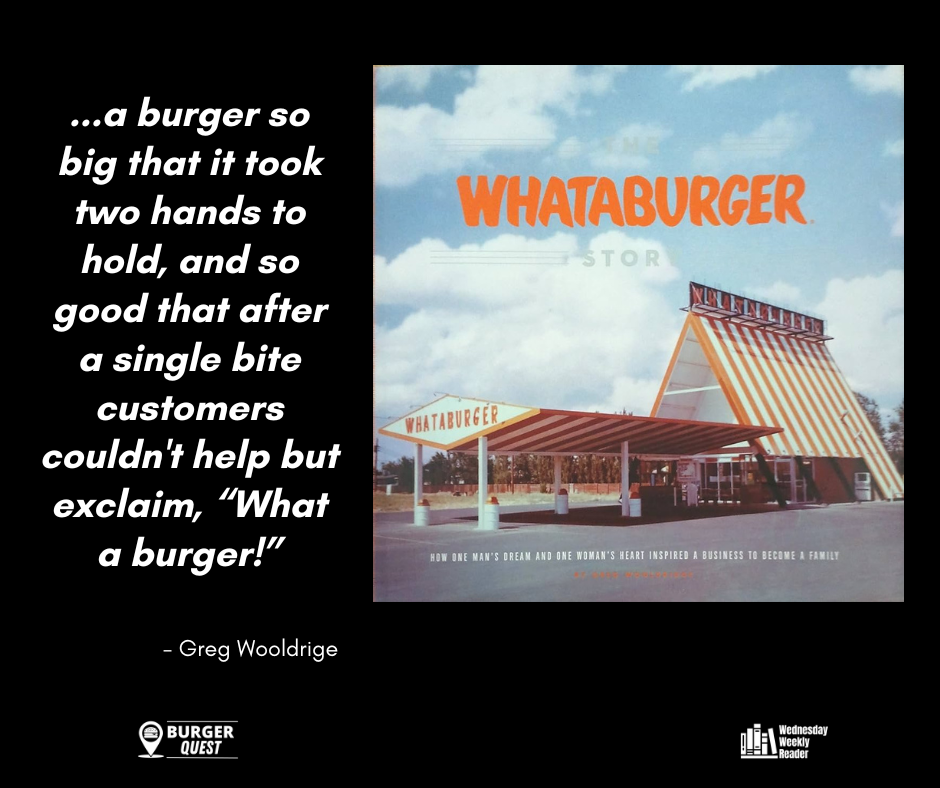
In 1950, an adventurous and determined entrepreneur named Harmon Dobson had a bold idea: to serve a burger so big that it took two hands to hold, and so good that after a single bite customers couldn’t help but exclaim, “What a burger!” He named his humble burger stand, located on Ayers Street in Corpus Christi, Texas, “Whataburger.”
The golden age of drive-ins and American automobiles was just getting started back on August 8, 1950, when Harmon Dobson opened Whataburger #1. This tiny burger stand offered something people had never seen: a burger that was so big, they had to hold its five-inch bun with two hands. It was an instant success, and Harmon began to expand the business to other markets. In 1955, Harmon married Grace Williamson and became Whataburger’s “First Couple.” Together, they raised three children: Hugh, Lynne and Tom. By the end of the decade, Harmon would open Whataburger #21 in Pensacola, Florida. It was the first Whataburger restaurant outside the state of Texas.
During the next 50+ years, over 800 Whataburger restaurants were opened, spanning every state from Arizona to Florida, but the most by far in it’s home state of Texas. Ask any Texan – born or transplanted – and they will all have a Whataburger story, recalled with fondness and good enough to make your mouth water.
The Whataburger Story by Greg Wooldridge is a gastronomic adventure that chronicles the journey of a beloved Texas-based fast-food chain that transcended regional boundaries to become a national icon. The book takes readers on a savory exploration, delving into the origins, growth, and enduring success of Whataburger. Wooldridge intertwines the story of this iconic burger joint with the family values and entrepreneurial spirit that shaped its foundation.
The narrative opens with a vivid glimpse into the early days of Whataburger, where the aroma of freshly grilled beef patties permeated the air. Readers are transported to the small, humble Corpus Christi location, where Harmon Dobson’s vision came to life. With colorful anecdotes and historic photographs, Wooldridge paints a portrait of a man with a passion for burgers and an unwavering commitment to quality.
As the book unfolds, readers witness the expansion of Whataburger’s distinctive orange and white-striped A-frame buildings, which became synonymous with the brand. The story unfolds like a well-seasoned recipe, blending entrepreneurial perseverance, community engagement, and a dash of Texan hospitality that sets Whataburger apart.
The Whataburger Story is a delightful journey through time and taste, a must-read for fans of good food and American entrepreneurship. Greg Wooldridge brings to life the legacy of Harmon Dobson and the enduring success of Whataburger with a captivating narrative that leaves readers craving not just the famous burgers but also the heartwarming culture that the brand embodies.
Wooldridge’s storytelling is akin to the sizzle of a Whataburger patty on the grill, evoking the essence of a bustling 1950s diner. The narrative seamlessly weaves together the history, the people, and the flavors that have made Whataburger an integral part of American fast-food culture.
One of the book’s triumphs is its ability to delve beyond the burger and give readers a glimpse into the values that have driven Whataburger’s growth. The focus on family, community involvement, and employee care adds layers of depth to the story, making “The Whataburger Story” not just a culinary history but a heartwarming tale of the American dream.
Wooldridge captures the essence of Whataburger’s appeal, from its distinctive architecture to its timeless menu offerings. The narrative invites readers to taste the love and care that has gone into every Whataburger creation, leaving a lingering aroma of nostalgia and Texas pride.
In conclusion, The Whataburger Story is a literary feast that serves up a generous helping of history, culture, and delectable burgers. For anyone with a fondness for Whataburger or a craving for a well-told entrepreneurial tale, this book is a fulfilling treat. It’s a reminder that behind every iconic fast-food brand is a story, and in Whataburger’s case, it’s a story seasoned to perfection with the flavors of family, perseverance, and great taste.
In today’s world, the acceleration of megatrends – increasing longevity and the explosion of technology among many others – are transforming life as we now know it.
In The Perennials, bestselling author of 2030 Mauro Guillén unpacks a sweeping societal shift triggered by demographic and technological transformation. Guillén argues that outmoded terms like Boomers, Gen X, Millennials, and Gen Z have long been used to pigeonhole us into rigid categories and life stages, artificially preventing people from reaching their full potential. A new postgenerational workforce known as “perennials” – individuals who are not pitted against each other either by their age or experience – makes it possible to liberate scores of people from the constraints of the sequential model of life and level the playing field so that everyone has a chance at living a rewarding life. Guillén unveils how this generational revolution will impact young people just entering the workforce as well as those who are living and working longer.
This multigenerational revolution is already happening and Mauro Guillén identifies the specific cultural, organizational and policy changes that need to be made in order to switch to a new template and usher in a new era of innovation powered by the perennials.
The Future Belongs to Perennials: Perennials – individuals defying age stereotypes – are shaping the future across various aspects of life. The aging population, with longer life expectancies, is gaining prominence in the workforce, consumption, and social influence. Retirement is evolving into a period of learning, freelancing, and flexible employment. Technology and a perennial mindset are opening new opportunities for active seniors.
Reducing Intergenerational Friction: Breaking away from the traditional sequential model of life reduces conflicts between generations. More elderly people working lessens the tax burden on the young and fosters intergenerational collaboration. Lifelong learning also promotes better understanding between age groups.
Transforming the Global Economy: Multi-generational households and workplaces are revolutionizing society. They reduce poverty, revolutionize real estate, aid childcare and elderly care, and boost productivity through mentorship and diversity. This shift can address pension financing issues and enhance GDP growth potential.
Leveling the Playing Field: A post-generational society with perennial values can combat ageism and provide equal access to essentials like education, healthcare, employment, and housing. It offers opportunities for those who face setbacks in the traditional life model.
Evolving Work and Careers: The future of work includes multi-generational environments, multiple careers, and lifelong learning. Technology assists in managing work-life balance. Adapting to this change requires developing skills for effective collaboration with technology and enhancing social, negotiation, teamwork, and emotional intelligence skills.
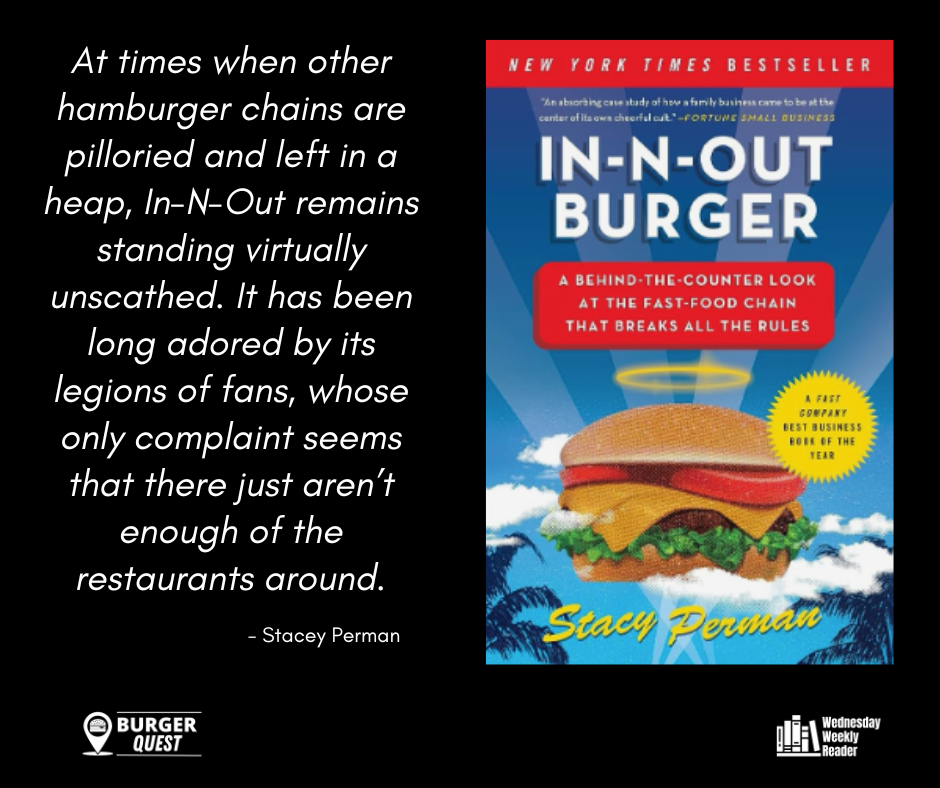
A behind-the-counter look at the fast-food chain that breaks all the rules, Stacy Perman’s In-N-Out Burgeris the New York Times bestselling inside story of the family behind the California-based hamburger chain with a cult following large enough to rival the Grateful Dead’s. A juicy unauthorized history of a small business-turned-big business titan, In-N-Out Burger was named one of Fast Company magazine’s Best Business Books of 2009, and Fortune Small Business insists that it “should be required reading for family business owners.
Stacy Perman’s In-N-Out Burger is a savory literary treat that delves deep into the history, culture, and enduring allure of a fast-food phenomenon that has captured the hearts and taste buds of millions. In this meticulously researched book, Perman uncovers the intriguing story behind the success of In-N-Out Burger, weaving together a narrative that is as satisfying as the restaurant’s legendary Double-Double.
With a captivating blend of storytelling and investigative journalism, Perman brings to life the journey of the Snyder family, the visionary founders of In-N-Out Burger. From the humble beginnings of a single drive-thru in Southern California to its iconic status as a cultural icon, the book traces the brand’s evolution with a focus on the values that have set it apart.
One of the book’s strengths is its ability to capture the essence of In-N-Out’s food philosophy. Perman not only describes the flavors and freshness of the menu items but also peels back the curtain on the restaurant’s commitment to quality. The meticulous attention to detail, from the sourcing of ingredients to the preparation methods, reflects the family’s dedication to serving an exceptional burger experience. This attention to craft resonates with food enthusiasts who seek more than just a quick meal.
Perman also delves into the brand’s fascinating culture, which sets In-N-Out apart in an industry often characterized by rapid turnover and uniformity. The author explores how the company’s dedication to its employees, simple menu, and classic aesthetic have created a loyal following that spans generations. This deep-rooted connection between In-N-Out and its customers is a testament to the company’s ability to maintain its authenticity while expanding into a rapidly changing fast-food landscape.
While In-N-Out Burger is a captivating read that offers a wealth of insight into the brand’s journey, there are a few moments where the narrative can feel overly detailed, potentially overwhelming readers who are looking for a more concise overview – but not for burger lovers! Additionally, a broader exploration of the brand’s challenges and controversies could have added a more balanced perspective to the story. [Note: Lynsi Snyder, granddaughter of In-N-Out founders and now president, is releasing her book The Ins and Outs of In-N-Out in October – a review will becoming here shortly thereafter!]
In conclusion, In-N-Out Burger by Stacy Perman is a flavorful journey through the history and ethos of a fast-food legend. Perman’s writing skillfully captures the essence of what makes In-N-Out Burger a beloved institution, resonating with both loyal fans and those who are curious about the stories behind their favorite comfort foods. For anyone with a fondness for a well-crafted burger and a desire to understand the behind-the-scenes magic of a successful culinary enterprise, this book is a satisfying and enlightening read.















 27gen.com