
There was a distinct, technical shift on the fiction shelves of bookstores in the early 1980s. It was an era when the Cold War hung over our collective consciousness like a low, gray Atlantic cloud, and a new breed of fiction was emerging to chart its subterranean depths.
If the metaphors are bringing a nautical image to mind, they’ve achieved their purpose.
While finishing graduate school and getting started in a new job, my “relaxing” reading was spent hunting down the early masterpieces of the techno-thriller genre – those dense, meticulously detailed novels where the technology was as much a character as the men operating it.
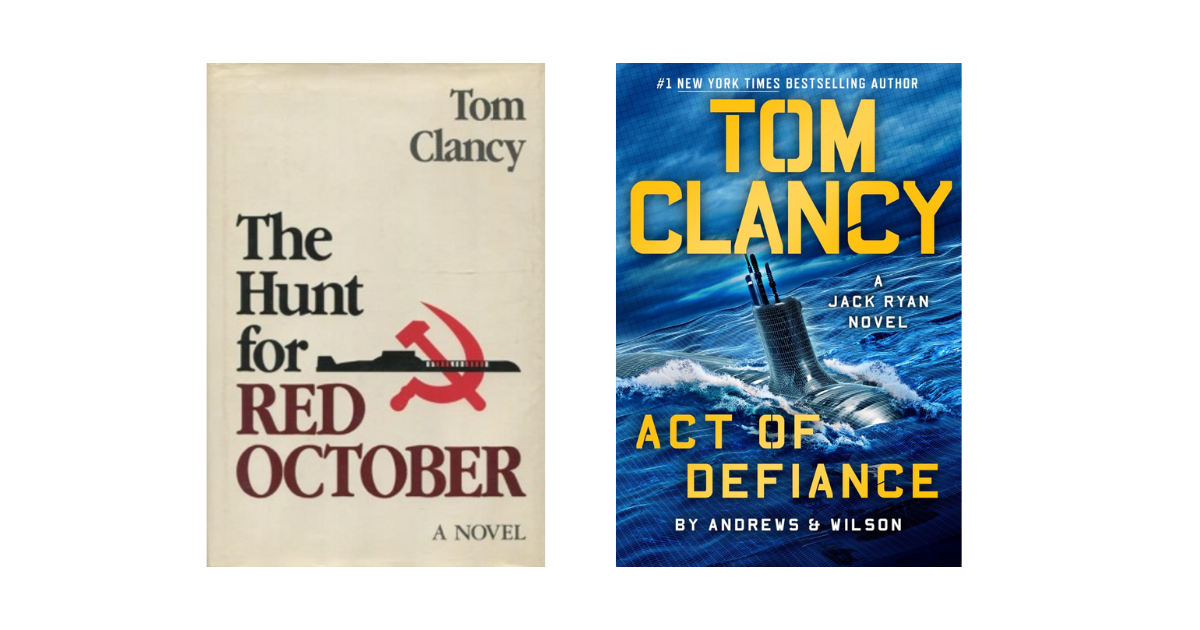
When Tom Clancy burst onto the scene, he didn’t just join the fray; he redefined it. From that autumn in 1984 when I first cracked open a hardback copy of The Hunt for Red October, I was hooked. For nearly three decades, I eagerly bought every work Clancy put his name to, building a dedicated Clancy library that stood intact right up until his passing in 2013.
Yet as many of you who shared that particular passion, the years that followed were disappointing. The subsequent novels released under the family estate umbrella, penned by a revolving door of franchise continuators, lacked that vital spark. They felt like carbon copies of carbon copies – hollowed out, formulaic, and missing the authentic, heavy-metal weight of Clancy’s original vision. I checked them out of the library, but read them with waning enthusiasm.
I eventually stopped looking at, and checking out, the novels under the “Tom Clancy” name.
Then came a rainy day during a recent vacation. On a grocery trip to complete our food stocks for the week, I idly scanned a disorganized bargain shelf. There, tucked between forgotten paperbacks, was a copy of Act of Defiance by Brian Andrews and Jeffrey Wilson. Published in 2024 to mark the forty-year anniversary of Jack Ryan’s debut, it didn’t look like much at first glance and I almost overlooked it. But the names and bios of the authors caught my eye; both are Navy veterans, a detail that usually guarantees at least a baseline of structural accuracy.
I pulled it down, opened to the first page, and within just a few minutes realized I had a brand new vacation read. I was flung straight back to 1984, transported into the freezing, pressurized hulls of the North Atlantic. It was a sensation I hadn’t felt in over a decade: the authors had delivered on Clancy’s original premise and the genuine ghost of Marko Ramius was whispering through the pages.
The Blueprint of a Revolution
To understand why this accidental discovery felt so profound, you have to look closely at what made The Hunt for Red October an architectural marvel of popular fiction. Clancy’s plot was elegantly simple yet agonizingly tense.
Captain First Rank Marko Ramius, a brilliant, grieving Lithuanian commander within the Soviet Navy, takes the crown jewel of the Soviet fleet – a heavily modified Typhoon-class submarine named the Red October – and turns her toward the American coast. His weapon isn’t a payload of ballistic missiles, but the ship itself. Equipped with a revolutionary, silent “caterpillar drive,” the vessel is capable of sneaking past the SOSUS underwater listening grids undetected. Ramius isn’t looking to spark an apocalypse; he is looking for an exit from a rotting totalitarian empire, carrying a hand-picked crew of officers who have burned their bridges behind them.
The brilliance of the book lies in how Clancy handles the escalation. The Soviet Union cannot afford to let its ultimate secret slip into Western hands, nor can it stomach the humiliation of a high-ranking defection. So, they send their entire Atlantic Fleet into a frenzied search-and-rescue masquerade, telling the Americans that Ramius is a rogue madman intent on launching a preemptive strike.
Enter Jack Ryan.
In 1984, Ryan wasn’t the veteran statesman or the action hero he eventually became in later books and film adaptations. He was a young, somewhat vulnerable CIA analyst with a bad back, an eye for detail, and a deep understanding of historical motivations. By reading the subtle patterns of Soviet naval movements and analyzing Ramius’s personal history, Ryan realizes the unimaginable truth: the Soviet captain is trying to surrender. The narrative turns into a multi-layered chess match, culminating in the control room of the USS Dallas under the command of Bart Mancuso, where a brilliant young sonar technician named Jonesy filters out the ocean’s noise to hear the impossible heartbeat of a silent ship.
The Mirror Across Forty Years
What Andrews and Wilson have accomplished in Act of Defiance is not a lazy rehash, but a brilliant structural inversion of Clancy’s original blueprint. The novel opens with a prologue set precisely in 1984, introducing Dimitri Gorov, a Soviet naval architect who tries to barter the secrets of the Red October to the West, only to find that Ramius has already delivered the prize. This prologue serves as the anchor for a modern narrative that takes place forty years later.
Dimitri’s son Konstantin Gorov has grown up to become a radicalized, fiercely ideological Russian Captain First Rank. He commands the Belgorod, an incredibly sophisticated, stealth-modified Oscar II submarine operating under the shadow of a rogue military cabal within a fractured, volatile modern Russia.
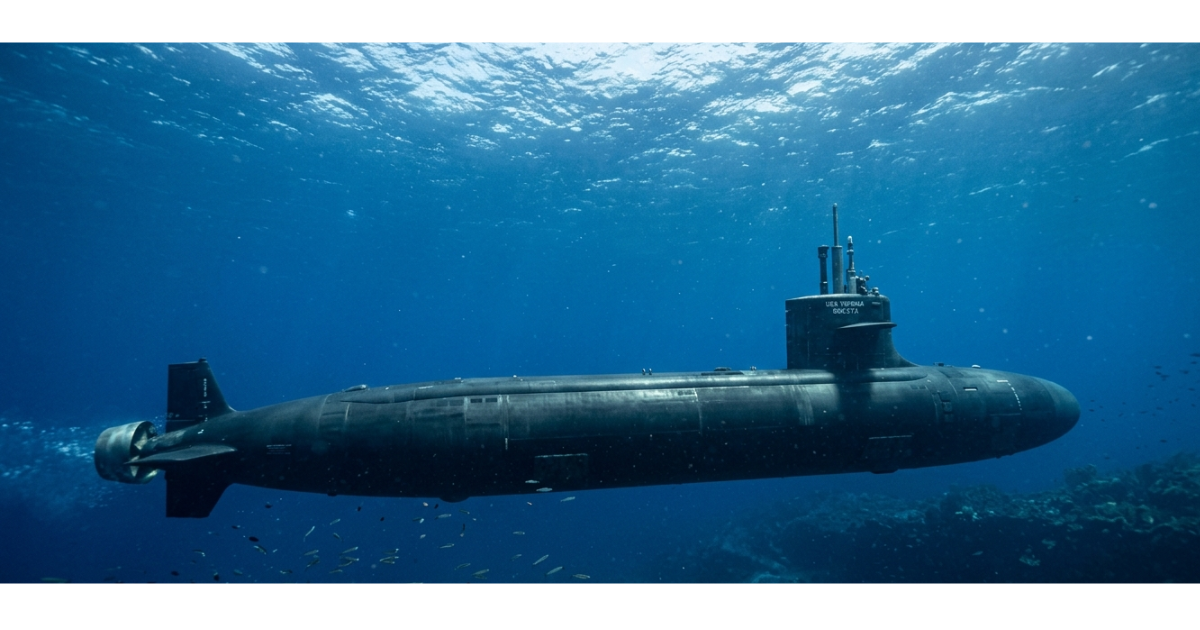
Here is where the authors show their literary craftsmanship. Where Ramius used a silent submarine to escape a totalitarian regime in the name of peace, Konstantin Gorov uses his silent vessel to execute a terrifying act of geopolitical vengeance. His goal is to execute a devastating rogue strike on the American Atlantic Fleet base at Norfolk using autonomous nuclear torpedoes, framing the disaster in a way that forces a hardline regime change back home in Moscow. The engine of the plot is flipped: it is no longer an individual fleeing tyranny, but a rogue fragment of an old empire striking back at the modern world.
The symmetry deepens with the protagonist. Decades have passed, and Jack Ryan now occupies the Oval Office, burdened by the macro-political weight of an unstable world. The analytical heavy lifting falls to his youngest daughter, Naval Intelligence Lieutenant Kathleen “Katie” Ryan.
In a beautiful homage to her father’s origins, Katie is the one who spots minuscule anomalies in satellite imagery and maritime data that her senior colleagues dismiss. She doesn’t conquer her adversaries with physical bravado; she defeats them by doing what her father did forty years ago – putting herself inside the mind of a Russian captain, deciphering his personal history, and charting his path through the dark trenches of the Atlantic.
- The Technological Threat: Clancy explored the dawn of mechanical silence via the Red October’s caterpillar drive. Andrews & Wilson masterfully update this to the digital era, focusing on the Belgorod’s autonomous underwater drones and cyber-warfare capabilities.
- The Analytical Legacy: Jack Ryan’s 1984 deduction was based on psychological profiling and geopolitical intuition. In 2024, Katie Ryan combines that same psychological acumen with modern satellite reconnaissance and high-frequency data streams.
- The Scope of Conflict: While the original masterpiece remained a localized, claustrophobic naval chess match, the modern sequel expands the canvas, weaving the submarine hunt with global black-ops missions led by franchise veterans John Clark and Ding Chavez.
The Resonance of Truth
Why does Act of Defiance succeed where so many other post-2013 Clancy extensions failed? The answer lies in the pacing and the profound respect for technical realism. Andrews and Wilson understand that a great techno-thriller doesn’t move at the frantic speed of a modern Hollywood action film. It moves with the deliberate, heavy momentum of a capital ship. They take their time building the technical foundations, explaining the physics of water pressure, the intricacies of modern sonar arrays, and the terrifying isolation of undersea command. The sentences vary naturally – brief, sharp commands during moments of tactical crisis alternating with longer, contemplative paragraphs that explore the historical weight resting on the shoulders of these characters.
More importantly, the book captures the emotional core of the original Ryanverse. It recognizes that the most compelling conflicts are not between faceless nations, but between individuals burdened by history. The interactions between President Jack Ryan and his daughter are handled with an understated gravity. There is no cheap melodrama, only the quiet understanding of two people who share the same analytical curse and the same profound sense of duty.
Seeing John Clark and Ding Chavez in covert action again immediately brings back those characters from the early novels, matured in the decades since but losing none of their stealthy efficiency in completing the most impossible missions.
For those of us who have spent decades tracking the literature of the Cold War and its modern echoes, finding a book like this on a bargain shelf is a rare gift. It reminds us that while authors pass away and empires crumble, a perfectly constructed narrative framework can endure across generations. Andrews and Wilson didn’t just write a sequel; they proved that the literary traditions born in the early 1980s still have the power to grip us, hold us under, and leave us breathless for the next chapter.
Their contribution to the Ryanverse begins with this singular gripping sequel of sorts, and continues with two other novels. When I return from vacation, you can be sure I will be looking to complete this triple play. I also plan to look into the other stories and adventures written by Andrews and Wilson.
I hope to be pleasantly surprised!

Part of a regular series on 27gen, entitled Wednesday Weekly Reader.
During my elementary school years one of the things I looked forward to the most was the delivery of “My Weekly Reader,” a weekly educational magazine designed for children and containing news-based current events.
It became a regular part of my love for reading, and helped develop my curiosity about the world around us.
 27gen.com