Glazed Greatness: The Delicious Lessons of Krispy Kreme and Dunkin’

Most Fridays you will find a post here dealing with my journey to becoming a Modern Elder. That journey is based around four concepts: experience, wisdom, curiosity, and adaptability.

Today I’m linking that train of thought to the fact that it is National Donut Day, and the common thread will be found in reviewing the histories of two of the largest and best-known donut chains in the U.S. – Krispy Kreme and Dunkin’ – for leadership principles.

The source of information on these companies comes from two books: Making Dough: The 12 Secrets Ingredients of Krispy Kreme’s Sweet Success (2004) and Around the Corner to Around the World: A Dozen Lessons I Learned Running Dunkin’ Donuts (2020). In addition, I dropped in on three local donut shops in the last week, culminating in a trip to the Krispy Kreme corporate headquarters in Charlotte, NC, and their flagship store.

It turns out that there is a great deal you can learn from donuts.
Mention the words “Krispy Kreme” and people start licking their lips. The company inspires such loyal customer devotion that new store openings routinely cause traffic jams and attract widespread media attention.

With its iconic green and red logo, tantalizing “Hot Now” sign, and melt-in-your-mouth original glazed recipe, Krispy Kreme has become a beacon of joy and indulgence in a world often sorely lacking in both.

More than eight decades after the first doughnut was handed to a customer in Winston-Salem, North Carolina, Krispy Kreme has grown into one of the world’s most beloved brands.

How has Krispy Kreme managed to build such a successful brand and business, especially since it spends no money on advertising? What does the future hold for this unique corporation? And what can other businesses do to emulate Krispy Kreme’s amazing accomplishments?

“Making Dough: The 12 Secret Ingredients of Krispy Kreme’s Sweet Success” offers an insightful exploration into the rise and success of Krispy Kreme, one of America’s most beloved doughnut brands. Authored by Kirk Kazanjian and Amy Joyner, the book provides a comprehensive narrative that intertwines business strategies, company culture, and personal anecdotes to unveil the key elements that contributed to Krispy Kreme’s rapid growth and enduring appeal.

The book is structured around twelve core principles that the authors identify as fundamental to Krispy Kreme’s achievements. These “secret ingredients” are not merely business tactics but also embody the ethos and values that the company espouses. Each chapter delves into one of these principles, supported by interviews with key figures, historical context, and detailed case studies.

  1. Mix good taste with show business
  2. Be picky about your partners
  3. Make good use of your time and resources
  4. Expand and protect your brand
  5. Think big, but grow carefully
  6. Be a guerrilla marketer with a soft touch
  7. Maintain high standards
  8. Harness the power of technology
  9. Give back to the community
  10. Select, train, and treat your employees well
  11. Build on your success
  12. Keep them coming back

Making Dough provides an entertaining and informative business history of a beloved American brand. The authors appear to have extensively researched Krispy Kreme and gained insights from interviews with executives, franchisees, analysts and others. 

The book’s central core of “12 secret ingredients” provides a useful framework for understanding Krispy Kreme’s success and keeps the storytelling engaging. At times this device was a bit contrived or oversimplified the company’s actual history, but overall it highlights important elements that made Krispy Kreme stand out.

Making Dough is an easy, interesting read with lessons applicable to many businesses – not just a niche story for doughnut lovers. Readers will find an inspiring entrepreneurial and branding success story with insights into franchising, experiential retail, building customer loyalty, and managing growth. 

However, since the book was published in 2004, it doesn’t cover Krispy Kreme’s later struggles, including accounting scandals, over expansion, and various leadership departures.

In summary, Making Dough is a worthwhile read for anyone interested in Krispy Kreme’s history, retailing, franchising or brand-building – just keep in mind it covers a limited time period in the company’s history.

Filled with interesting anecdotes and fascinating facts, Making Dough tells the compelling true story of a company that has managed to maintain a wholesome, small-town image, while achieving phenomenal success through a mixture of customer loyalty, high product standards, technological advancements, and community involvement.

Making Dough shows you how Krispy Kreme’s delectable delights rose to the top and continue to tempt the world. Pour yourself a tall glass of cold milk, grab a napkin (or six), and get ready to discover why, when it comes to donuts, there’s just no beating the OG (Original Glazed, that is) as it comes hot off the line.
Step right up and grab a front-row seat, folks, because we’re about to take a deep dive into the sugary, caffeine-fueled world of Dunkin’, the coffee and donut juggernaut that’s been keeping America running for over seven decades. From its humble beginnings as a single coffee shop in Quincy, Massachusetts, to its current status as a global breakfast behemoth with over 12,000 locations worldwide, Dunkin’ has been serving up smiles and satisfying cravings with its iconic pink and orange logo. 

But what’s the secret sauce behind this donut dynasty? How did a simple coffee and pastry shop become a cultural phenomenon, inspiring everything from wedding cakes to sneaker collaborations? Is it the mouth-watering aroma of freshly brewed coffee that lures in bleary-eyed commuters every morning? The dizzying array of colorful, creative donut flavors that make your taste buds do a happy dance? The warm, friendly atmosphere that makes you feel like you’re part of one big, donut-loving family?
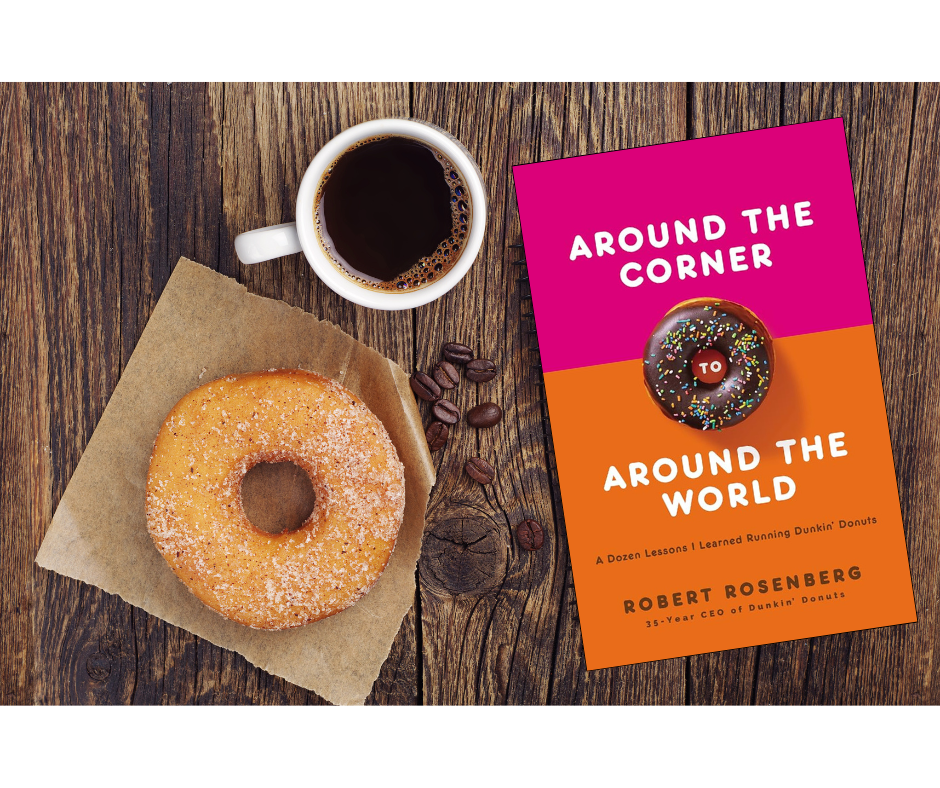
Around the Corner to Around the World: A Dozen Lessons I Learned Running Dunkin’ Donuts by Robert Rosenberg is an enlightening memoir and business guide from the former CEO of Dunkin’ Donuts. Rosenberg recounts his experiences and shares the wisdom he gained during his 35-year tenure leading the company. The book is structured around twelve key lessons, each encapsulating essential insights and strategies that contributed to Dunkin’ Donuts’ evolution from a regional chain to a global powerhouse.

  1. Leadership is paramount.
  2. Family Businesses pose unique challenges.
  3. Quality matters.
  4. Effective planning process.
  5. Importance of striking the right balance between exploitation and experimentation.
  6. The tasks and character of an effective CEO.
  7. The importance of trust and mood in coordinating action.
  8. The exceptional benefits of franchising.
  9. Innovate – test – iterate.
  10. Alignment is critical.
  11. Pick and groom a successor.
  12. Transferable lessons for a life well-lived.

Around the Corner to Around the World offers a candid and engaging look at the challenges and triumphs of running an iconic American business. Rosenberg’s storytelling is straightforward, insightful, and often humorous. He doesn’t sugarcoat his own mistakes or the difficulties Dunkin’ faced.

The book is more than just a corporate history. Rosenberg uses his experience to draw out broader lessons about leadership, entrepreneurship, branding, and adapting to change. Many of these lessons, like the importance of hiring talent, fostering innovation, and understanding your own strengths and weaknesses, will resonate with business leaders in any industry.

At the same time, the book provides a fascinating inside look at the evolution of Dunkin’ Donuts. Rosenberg offers detail on key decisions and turning points, like the creation of Munchkins, the introduction of bagels, and the shift away from a wholesale model. He’s honest about the missteps, like ill-fated attempts to expand to Europe and California.

One minor critique is that the 12-lesson structure can feel a bit forced at times. Some lessons overlap or could be combined. Additionally, those looking for a tell-all may be disappointed. While candid, Rosenberg focuses more on business lessons than personal gossip. Finally, though published in 2020, the time period covered ends in 1998 and thus lacks all the changes made in the last two decades.

Overall, Around the Corner to Around the World is an insightful, engaging read for anyone interested in business leadership, entrepreneurship, or the history of an iconic American brand. Rosenberg comes across as a sincere, savvy leader who played a pivotal role in Dunkin’s success.

Around the Corner to Around the World will make you want to grab a cup of your favorite Dunkin’ brew, sit back, and get ready to discover why America truly “Runs on Dunkin’.” But be warned: by the time you finish reading, you might just find yourself craving a Boston Kreme or a Munchkin (or a dozen).


In the ever-evolving landscape of business and entrepreneurship, the enduring success of Krispy Kreme and Dunkin’ Donuts serves as a testament to the power of unwavering commitment, strategic innovation, and a deep understanding of customer desires. These doughnut dynasties have not only satiated our collective sweet tooth but have also imparted invaluable lessons on branding, leadership, and the art of building a dedicated following. As we savor the insights gleaned from their remarkable journeys, we are reminded that true greatness often lies in the simplest of pleasures – a warm, freshly baked doughnut and a cup of coffee shared with loved ones. In a world of ever-changing trends, the timeless allure of these doughnut empires reminds us that sometimes, the sweetest things in life are the ones that never go out of style.


In your donut appetite is still not satisfied, here’s few more articles to fill you up!


Donut Nostalgia: A Journey from Childhood Treats to Adult Indulgences

From the moment we walk into a donut shop and smell the tantalizing aroma of the dough rising, then watching the process of ingredients becoming a finished product, and finally sinking our teeth into a soft, sugary donut, these sweet treats become an integral part of our lives, weaving themselves into the fabric of our memories.

As we journey through childhood, adolescence, and adulthood, donuts remain a constant companion, reminding us of life’s simple pleasures and the joy of sharing experiences with others.

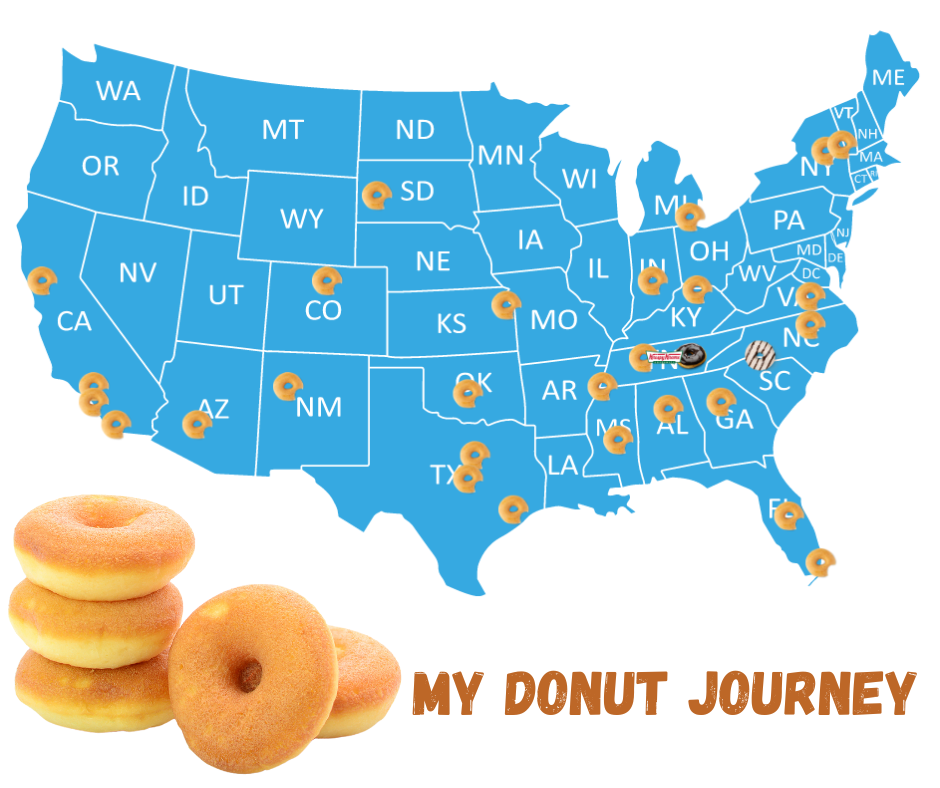
For many of us, childhood memories are synonymous with weekend trips spent at the local bakery, eagerly pointing to our favorite donut behind the glass display case. The warm, sugary aroma would fill the car on the ride home, tempting us to sneak a bite before arriving at our destination. My earliest recollection of donuts is connected to Krispy Kreme, both as a special part of a trip to downtown Nashville, TN for a visit to the bakery there, and to those same donuts being served as a part of the annual Thanksgiving breakfast at our church. On the map below, you can find the Krispy Kreme logo sandwiched in between two other notable bites. Later on, shopping, doctor’s visits, or similar trips to the the nearby town would often included a stop at the donut shop, where we would savor the soft, fluffy texture and sweet glaze, a moment of pure bliss.

As I grew older and entered high school and college, donuts remained a staple in my life. During high school years, donuts were not a regular part of our weekly “hanging out” but were still looked forward to. In college, late-night study sessions were made more bearable by the cry of “Let’s go to Ralph’s!” – a 24-hour donut shop located minutes from our school. Our studies soon forgotten, each person debated the merits of their favorite flavor. Jelly-filled or chocolate-frosted? Classic glazed or sugar-sprinkled? The choices were endless, and the arguments passionate. Even going on 50 years later, conversations with college friends inevitably – and quickly – turn to a Ralph’s story. On the map below, that memory is marked with a chocolate donut.

Following college into graduate school and part-time work, donuts became a part of both campus and work life. Entering the workforce, I discovered that donuts had a special place in office culture. The excitement of “Donut Fridays” would ripple through the office, as coworkers bonded over their shared love of these sweet treats.

During the ensuing decades of life, with children of my own, the familiar special stops at a donut shop became a part of our family rituals. As I recalled from my own childhood, a donut is amazing therapy for the (imagined) trauma of a doctor’s visit. With four children, I was able to benefit greatly from their experiences!

In the last decade, as my work travels took me all over the country, my donut fondness took on a whole new meaning. As a part of my consulting work, I traveled to dozens of churches for weekend visits, and I took advantage of those trips to indulge in some of the best independent or small chain donut shops across the country. On the map below, the glazed donuts with a bite out are a representative sample of the most memorable of those shops.

These road trips and adventures were incomplete without discovering hidden gem donut shops in towns, the perfect “prep snack” for a long day of consulting work. In times of stress and deadlines, the soothing ritual of a donut provided a moment of comfort and indulgence, a brief escape from the demands of life.

Now, as I have grown (slowly) more health-conscious, I’ve learned to balance my donut cravings with a healthy lifestyle, savoring the occasional treat with mindfulness and appreciation. With my birthday, National Donut Day, and Father’s Day falling into a three-week period, you can bet I’ve temporarily shelved the “healthy lifestyle” for a quick visit (or two) to our local donut shop, Jelly Donuts. Marked with a chocolate striped donut on the map above, each bite from one of their donuts magically transports me back in time.

Throughout life’s stages, donuts have remained a constant source of comfort, nostalgia, and connection. They have been present at some of my most memorable moments, from childhood parties to college adventures and family celebrations. The enduring appeal of donuts lies not only in their delightful taste and texture but also in their ability to bring people together, creating lasting memories and shared experiences.

As I look back on my donut-filled journey, it’s amazing to realize how these simple treats have played a significant role in shaping my life. They have been a sweet companion through the years, reminding me to savor life’s little pleasures and to cherish the moments I have shared with others.

On the day before National Donut Day (June 7 this year), and the next time you bite into a soft, sugary donut, take a moment to reflect on the memories it evokes and the joy it continues to bring, one delicious bite at a time.


If you liked this post, check these out:

and of course, a baker’s dozen donut books!

Glazed, Frosted, and Sprinkled: Getting Ready for National Donut Day

Though I certainly enjoyed donuts throughout my childhood, a single book is responsible for the fondness I have for them as an adult.

Books will do that to you.

Like many things in my life, this fondness all came about because of a book: Homer Price.  I have great memories of reading one of the stories in the book about Homer and Uncle Ulysses and the automatic doughnut machine.

 I remembered the image of doughnuts stacked on the counter, shelves, and stools with more coming out of the machine every minute.

I didn’t realize at the time how a book about donuts could be linked to so much more in life.

THE DOUGHNUTS takes place in the 1940’s when an uncle of a boy named Homer opens a luncheonette. Uncle Ulysses, much to the chagrin of his wife Agnes, is a man fond of new-fangled gadgets and has installed a doughnut making machine in his restaurant.

One evening, while Homer is visiting his uncle’s restaurant, Uncle Ulysses leaves Homer in charge of putting the finishing touches on the doughnut machine while he stops by the barber shop. Homer works on the machine and is soon visited by an “advertising man” who stops by for coffee and a doughnut.

While the man waits for the doughnut machine to begin working, a wealthy woman enters the restaurant. She asks Homer if she can mix up the doughnut batter for him, takes off her diamond bracelet, and sets to work. 

Soon the doughnut machine is working – too well! Homer cannot stop the doughnuts from popping out of the machine! Her job finished, the woman leaves and Homer and the advertising man look for places to store the doughnuts.

Homer and the man put their heads together and come up with a scheme to sell the doughnuts “2 for 5 cents” in order to be rid of them. Eventually, the wealthy woman returns, claiming to have left her bracelet in the restaurant.

Shortly, it becomes evident that the bracelet must be in one of the thousands of doughnuts. Homer has an idea! He makes a sign offering one hundred dollars for anyone who can find the bracelet. It doesn’t take long for the doughnuts to be gobbled up and the bracelet to be found.

The end of the story finds Uncle Ulysses trying to explain to skeptical Aunt Agnes why there are tons of crumbs from dozens of doughnuts left on the restaurant counter!

Trivia Note: Have you ever seen the short film The Doughnuts, based on the story above?


As I recall, the copy of Homer Price I had as a boy came from that wonderful invention designed to sell books to eager young readers like me: the Scholastic Book Fair. Not only could I order books, but our classroom benefited too by receiving books for our in-room library. Sadly, many years later when my kids were in elementary school, the Book Fair was less focused on books and more on junk. That’s another story for another time.

What’s the big deal with a child’s book published in 1943, read by a first grade teacher to her class in 1964, bought by a second grader as soon as he could in 1965, and fondly remembered almost sixty years later?

Regular readers of this website know that reading and books are a big deal to me. Introduced by my schoolteacher mother, encouraged by my daily reader father, and nurtured over the years by teachers and professors, it’s not too far off the mark to say these images explain the big deal about reading:

Books have the power to ignite the imagination and foster creativity in children. This imaginative capacity can carry over into adulthood, allowing individuals to approach challenges with creative problem-solving skills and innovative thinking. Seeing this image, and reading about Homer’s dilemma and ultimate solution planted a seed in me: sometimes the best way out of a jam is to sit and think first, and then act on the solution that comes to you.

Reading from an early age has been linked to improved cognitive abilities, such as better language skills, broader vocabulary, enhanced critical thinking, and stronger analytical capabilities. These cognitive benefits persist into adulthood, enabling individuals to process information more effectively and think more critically. Putting together a disassembled donut machine, then making it work so well that Homer had to come up with an idea to get rid of all those donuts – that’s critical thinking!

Children who cultivate a love for reading at an early age are more likely to maintain a curiosity and thirst for knowledge throughout their lives. Books become a gateway to continuously learning new things, exploring different perspectives, and expanding their horizons. Homer’s curiosity got him into the problem, and willingness to continue thinking got him out of it.

I could go on, but I hope you get the point: While not everyone who loved reading as a child maintains that passion into adulthood, those who do often find that their early love of books has profoundly shaped their intellectual, emotional, and personal development in enduring ways.

All from a child’s book about a runaway donut machine…

…which is where I now hope to make the connection for you!


It’s that time of year again when the sweet, doughy aroma of fresh donuts fills the air and Americans come together to honor one of the nation’s most beloved breakfast treats. Friday, June 7th marks National Donut Day 2024, a delicious holiday that pays homage to the humble yet iconic donut. This is an annual recognition, falling on the first Friday of June each year.

With roots tracing back to World War I, when Salvation Army “Lassies” fried donuts in soldiers’ helmets as a morale-boosting treat, National Donut Day has become an annual tradition that transcends generations. This year’s celebration promises to be even sweeter, with donut shops and bakeries across the country rolling out their finest creations to mark the occasion.

From the classic glazed to the creative cronut, the donut landscape has evolved dramatically over the decades, reflecting the changing tastes and culinary adventurousness of American consumers. Gourmet donut boutiques have taken the humble pastry to new heights, adorning them with artisanal ingredients like small-batch jams, craft chocolates, and hand-torched meringues.

At the same time, the nostalgia for simpler pleasures remains strong, with long lines still forming at old-fashioned donut counters for pillowy yeast-raised rings and sugar-dusted cake donuts. After all, there’s something undeniably comforting about biting into a fresh, warm donut that instantly transports you back to childhood.

There are several reasons why donuts have become such a beloved and popular food in American culture:

  • Convenience and portability: Donuts are easy to eat on-the-go, making them a convenient breakfast or snack option for people with busy lifestyles.
  • Nostalgia and comfort food: Donuts evoke a sense of nostalgia and comfort for many Americans, reminding them of childhood memories, family gatherings, or neighborhood donut shops.
  • Variety and customization: Donuts come in an endless array of flavors, glazes, toppings, and fillings, allowing for personalization and catering to diverse tastes.
  • Indulgence and treat: Donuts are often seen as an indulgent treat or reward, satisfying cravings for something sweet and decadent.
  • Cultural significance: Donuts have become deeply ingrained in American culture, with events like National Donut Day and the association with coffee breaks and diners.
  • Accessibility and affordability: Donuts are widely available and relatively inexpensive, making them an accessible indulgence for people from various socioeconomic backgrounds.
  • Marketing and branding: Major donut chains like Dunkin’ Donuts and Krispy Kreme have successfully marketed and branded their products, contributing to the popularity of donuts.
  • Versatility: Donuts can be enjoyed at any time of day, from breakfast to dessert, and can be served on various occasions, from casual gatherings to special events.

The combination of convenience, indulgence, nostalgia, variety, and cultural significance has made donuts a quintessential American food that appeals to a broad range of consumers and has become deeply embedded in the country’s culinary landscape.

This year, celebrate National Donut Day by indulging in your favorite fried confection, whether it’s an old reliable or an Instagram-worthy gourmet creation. Share one with a loved one over a steaming cup of coffee, or treat your office mates to a box of assorted delights.

However you choose to commemorate the occasion, take a moment to appreciate the humble donut and its rich place in American culture and history. From the battlefields of World War I to the modern artisanal bakeries, the donut has proven its enduring appeal and cemented its status as an iconic American comfort food.

So grab a napkin and prepare to get deliciously sticky – it’s almost National Donut Day, and the only acceptable response is to treat yourself to a sugary, doughy delight – and a good book!


The rings of batter kept right on dropping into the hot fat, and the automatic gadget kept right on turning them over, and the other automatic gadget kept right on giving them a little push, and the doughnuts kept right on rolling down the little chute just as regular as a clock can tick – they just kept right on a comin’, an’ a comin’, an’ a comin’, an’ a comin’.

Uncle Ulysses