
From blue sky ideation, to pencil on paper, to digital models, to plaster and paint, Imagineers build dreams. They never say “never,” and the sky is not the limit. That quest has created a new art form and a new kind of artist, one whose canvas is the world itself and whose tools are whatever it takes to turn that world into a fantastic, enveloping story.
Leslie Iwerks, “The Imagineering Story”
The books in my Disney library are a valuable resource for my ongoing quest in learning the story of Walt Disney and the “kingdoms” he created; kingdoms that continue to expand in the 57 years since his passing.
But even books have limitations…
You can dream, create, design, and build the most wonderful place in the world…but it requires people to make the dream a reality.
Walt Disney
Over the years I have been fortunate to make friends among Disney Cast Members, both current and past. A handful of those friends have been Imagineers, and as you may imagine, they are amazing storytellers, creative geniuses, and innovative to the core.
So…learning more about Imagineering? Sign me up – literally!
When the news that a new steaming service called Disney+ was coming in the fall of 2019, I was delighted – so much, that I signed up for a 3-year subscription as soon as they became available.
When the initial programming schedule was released, and included the 6-part series “The Imagineering Story,” I was ecstatic – it was among the first programs I watched on the new service.
When the book The Imagineering Story was announced, I literally stopped what I was doing and pre-ordered the book.
There’s really no secret about our approach. We keep moving forward – opening new doors and doing new things – because we’re curious. And curiosity keeps leading us down new paths. We’re always exploring and experimenting…we call it Imagineering – the blending of creative imaginational and technical know-how.
Walt Disney

The Imagineering Story continues the behind-the-scenes journeys first revealed in the books Walt Disney Imagineering: A Behind the Dreams Look at Making the Magic Real (1995) and its sequel Walt Disney Imagineering: A Behind the Dreams Look at Making MORE Magic Real (2010).
The book goes deep into the personalities, stories, and adventures of the men and women who brought create magic around the world.
More than just the theme parks (though that would have been awesome enough), every resort hotel, shop and business setting, cruise ship, and entertainment setting exists largely through the men and women of Disney Imagineering.
The Imagineering Story greatly expands the award-winning filmmaker Leslie Iwerks’ narrative of the fascinating history of Walt Disney Imagineering.
The entire legacy of Walt Disney Imagineering is covered from day one through future projects with never-before-seen access and insights from people both on the inside and on the outside. So many stories and details were left on the cutting room floor for the series – this book allows an expanded exploration of the magic of Imagineering.
Every one of the 731 pages was filled with stories that brought the Disney Experience alive.
The experience of Disney – primarily in the theme parks, but now expanded to other resorts, retail shops, and cruise ships – can be traced back to Walt Disney. His untimely death in 1966 could have left a void in the creativity of the Disney empire.
But I believe his greatest act of genius had its origins in 1952, as he began to pull together veterans of film and animation work for a special project that came to be known as Disneyland.
That group of versatile animators and art directors was the foundation of a group that came to be called the Imagineers.
Out of this group, Disney historian Tim Hauser reflects, “came the theories, aesthetics, design, and engineering of Disneyland; the advancement of three-dimensional storytelling; the development of robotic techniques in Audio-Animatronics; and the perpetuation of an ‘architecture of reassurance’ as inspired by Walt Disney’s personal sense of optimistic futurism.”
Today Walt Disney Imagineering remains the design, development, and master-planning branch of company, with over 140 disciplines working toward the common goal of great stories and creating great places.
Walt Disney wanted Disneyland to be essentially a movie that allows you to walk in and join in the fun. Imagineers – many whom had worked with Walt Disney since the 1930s – literally brought those movies to life with their multiple disciplines. He knew from his filmmaking experience that story was everything to the audience. Disney knew he must immerse the theme park guest in living storytelling scenarios.
Designing the Guest’s experience is what Walt Disney’s Imagineers came to call “the art of the show,” a term that applies to what the Imagineers did at every level, from the broadest conceptual outlines to the smallest details, encompassing visual storytelling, characters, and the use of color.
Walt Disney realized that a visit to an amusement park could be like a theatrical experience – in a word, a show. Walt saw that the Guests’ sense of progressing through a narrative, of living out a story told visually, could link together the great variety of attractions he envisioned for his new kind of park. While traveling through their stories, Guests would encounter, and even interact with, their favorite Disney characters, and who would be transformed, as if by magic, from their two-dimensional film existence into this special three-dimensional story world.
As designers, the Imagineers create spaces – guided experiences that take place in carefully structured environments, allowing the Guests to see, hear, smell, touch, and taste in new ways. In effect, Imagineers transform a space into a story place.
Ultimately, the Imagineers gave Guests a place to play, something Walt believed that adults needed as much as children. The design of the Imagineers gives power to the Guests’ imagination, to transcend their everyday routine. Walt Disney insisted that Guests should “feel better because of” their experiences in Disney theme parks, thus establishing the art of the show.
For the Imagineers, that meant considering everything within and relating to the parks as design elements. To build effective story environments and assure Guest comfort, the designers realize that they always had to assume the Guests’ position and point of view, and just as Walt did, to take the Guests’ interests to heart and defend them when others didn’t think it mattered.
It is up to the designers to provide Guests with the appropriate sensory information that makes each story environment convincing. This means that design considerations go beyond the attractions themselves to the service and operations staff, transportation, restaurants, shops, rest rooms – even the trash cans.
Everything Begins With a Story
Storytelling has played a vital role in our survival – allowing us to share information, knowledge, and values from generation to generation. Story is the medium through which we receive our early learning as to right and wrong, good versus evil, reward and punishment, social values, etc.
We respond to storytelling. It engages our attention; no matter how old we get, who doesn’t love a good story?
Understanding this, Walt Disney utilized a technique in the early days of his cartoon films that helped illustrate the flow and continuity of stories – the storyboard.
Storyboards are tools that allowed Walt and his artists to envision a film prior to production. It allowed his team to have a shared vision of the story they were telling and how it would unfold. As a bonus to driving the creative development, it also offered a cost-effective way to experiment with a film early on, so that when production began, costs could be minimized.
Decades later, the tradition of storyboards continues on, though it has long expanded past just films. At Walt Disney Imagineering, rides, shows, and films for Disney’s theme parks around the world are the objects of regular storyboarding.
For each ride, show, or attraction, a logical story sequence is created. Almost every aspect of a project is broken sown into progressive seen sketches, called storyboard panels, that reflect the beginning, middle, and end of a Guest’s park experience.
The boards are eventually covered with every written thought, idea, and rough sketch the Imagineers can come up with.
Starting with brainstorm sessions, the Imagineer’s first thoughts, ideas, images, and feelings about the story they are creating are captured on note cards and quick sketches. For example, here’s an early sketch of Animal Kingdom’s Tree of Life:
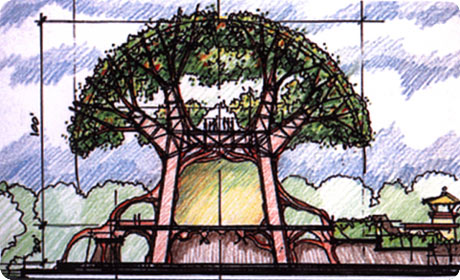
The beauty of the Tree is matched by its engineering marvels as well. It is a massive structure, towering 145 feet into the air with a full canopy of natural-looking leaves, enclosing a 420-seat theater and meeting all building codes, including withstanding 145 mph winds. The engineering feats accomplished, it was time for the Imagineering team of sculptors to create the magnificent bark of the tree – which is actually representations of animals. That process alone took almost a full year.

One of the most amazing pieces of art ever created by Disney’s Imagineers, it is beautiful and meaningful, and captures the essence of Animal Kingdom at a glance. It’s a poetic statement of the majesty of nature, the stunning diversity of animals, and our respect for our place in the world. As you approach the tree and the animal forms begin to reveal themselves, it becomes clear that there is almost no tree at all. That tree is the animal kingdom.

The experience of viewing the Tree of Life is like looking for animals in the clouds. The longer you look, the more you see – maybe even all 325 of them! This effect is the result of very careful planning during the design phase with the use of storyboards.
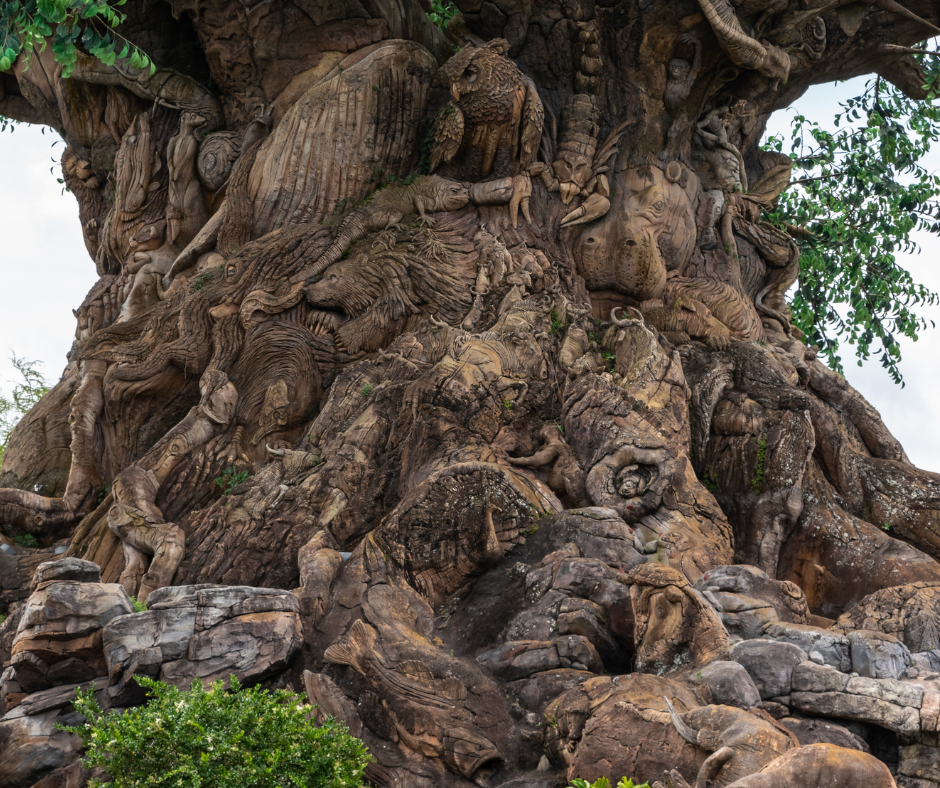
The storyboards are worked, re-worked, rearranged, and edited until the story is strong and clear. Only then will production proceed – with stunning results:
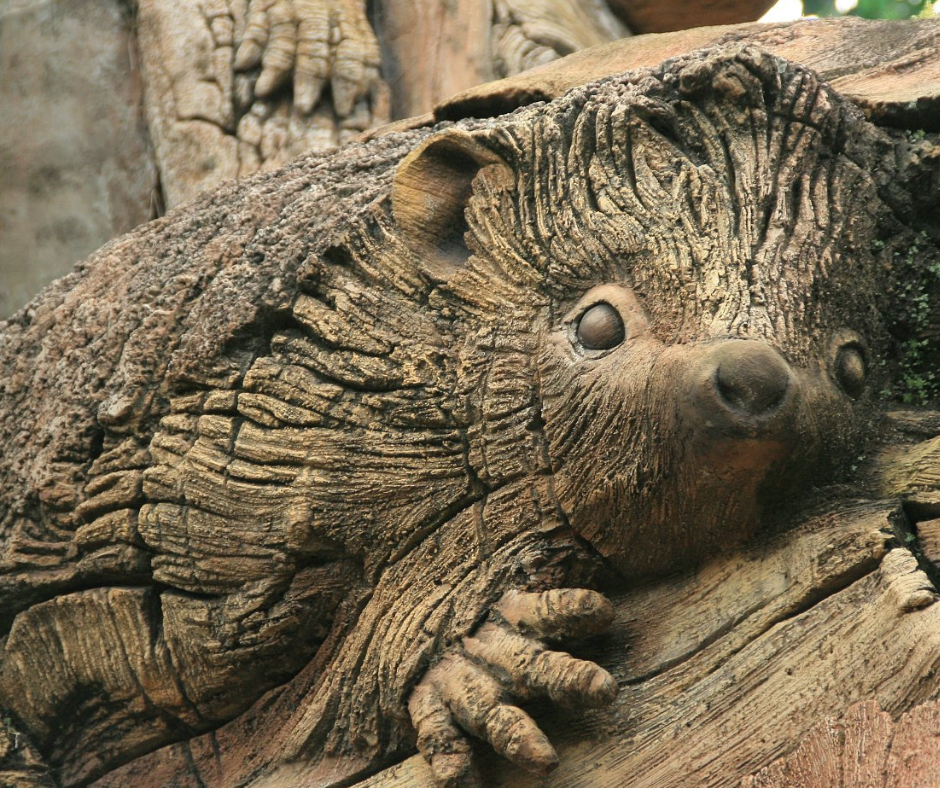
At Walt Disney Imagineering, everything they do revolves around the story – and storyboards have remained an essential tool in helping them tell the story.
That is the power of story – it is an experience that enables us to escape to another world, to be captivated and be in the moment.
The secret to Disney magic that the Imagineers bring to life is in the story!

Recently celebrating their 70th anniversary, the Imagineers have delivered – time and time again. To date, the Imagineers have built twelve theme parks; dozens of resort hotels; 5 cruise ships with two more under construction; 2 water parks; and ongoing development in existing parks and Disney properties around the world.
The Imagineers bring the Disney magic alive.
The Imagineering Story brings the Imagineers to life.
I have a hard time ranking the books in my Disney library – but The Imagineering Story is going to be in my all-time Top Ten from now on, and a highly-recommended book for anyone who wants a deeper understanding of the creative genius (and occasionally weirdness) of that special and unique blend of artists and engineers who took the dreams of one man, Walt Disney, and brought them to life.
Walt was a storyteller above all. Walt didn’t write the stories but he envisioned them. He told stories better than anyone else around and he got the people around him to turn his stories into movies and theme park attractions.
Imagineer X. Atencio
References
- The Imagineering Story
- Walt Disney Imagineering: A Behind the Dreams Look at Making Magic Real
- Walt Disney Imagineering: A Behind the Dreams Look at Making More Magic Real
- Designing Disney: Imagineering and the Art of the Show
- The Imagineering Field Guide to Disney’s Animal Kingdom
- and more from my 475+ volume Disney library!


 27gen.com