The Laws of Connection: A Deep Dive into Human Relationships

Social connection is as essential for our health and happiness as a balanced diet and regular exercise. It reduces our risk of stroke, heart disease, and Alzheimer’s. It enhances our creativity and adds years to our life span. Yet many of us struggle to form strong and meaningful bonds – and the problem lies not with our personalities but with a series of cognitive biases that stop us from fulfilling our social potential.
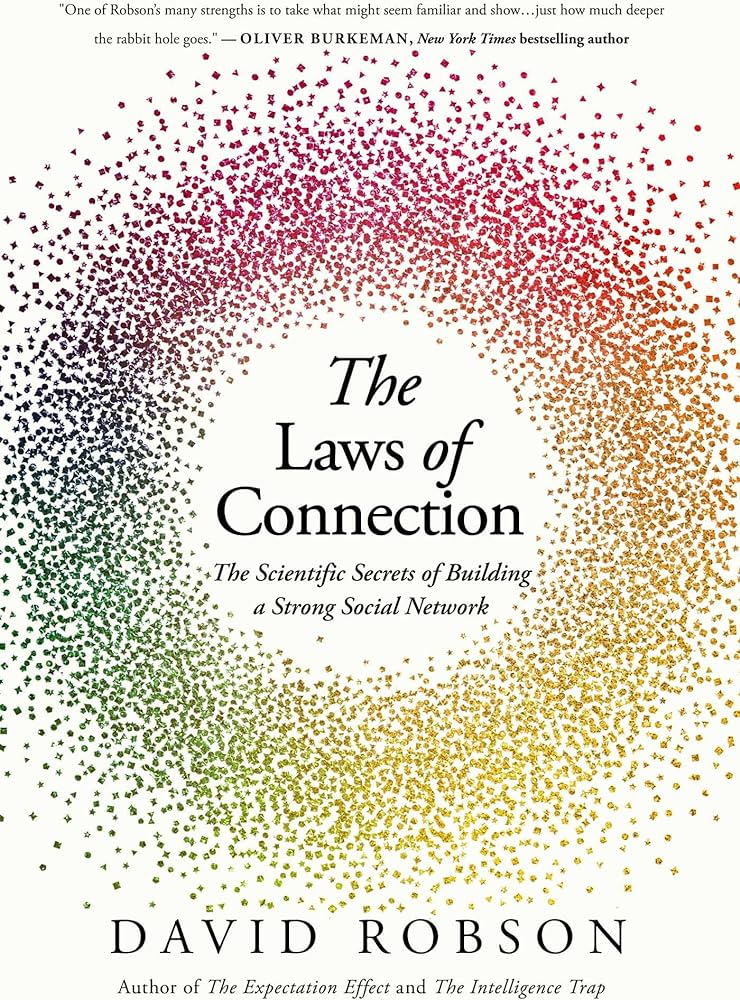
In The Laws of Connection, award-winning science writer David Robson describes the psychological barriers that lead us to keep others at a distance and offers evidence-based strategies to overcome them.

Drawing on philosophy, neuroscience, and cutting-edge psychology, Robson introduces readers to new concepts such as the liking gap, the novelty penalty, the fast-friendship procedure, the beautiful mess effect, and the Japanese art of amae (a Japanese term used to describe acting like a spoiled child). Whether we are shy or confident, introvert or extrovert, we can all build deeper relationships. The Laws of Connection shows us how.


David Robson’s The Laws of Connection is a captivating exploration of the science behind human relationships. Drawing on a wealth of psychological research, Robson delves into the cognitive biases and social barriers that can hinder our ability to connect with others. The book offers a compelling argument that strong social connections are essential for our well-being, challenging the notion that our personality traits are fixed determinants of our social success.

At the heart of Robson’s argument is the idea that our thought processes and behaviors play a crucial role in shaping our relationships. He introduces various cognitive biases that can inadvertently sabotage our social interactions. For instance, the “liking gap” refers to our tendency to underestimate how much others like us, while the “novelty penalty” suggests that we may be less likely to form bonds with people who are too similar to us.

The book also explores the concept of the “beautiful mess effect,” which highlights the importance of embracing imperfections in our relationships. Rather than striving for idealized connections, Robson argues that it is often the messy, imperfect moments that strengthen our bonds.

In addition to cognitive biases, Robson discusses the social barriers that can hinder our ability to connect with others. These barriers include fear of rejection, lack of self-confidence, and cultural differences. The book provides practical strategies for overcoming these challenges and fostering deeper connections.

One of the key themes in The Laws of Connection is the power of intentional connection. Robson emphasizes that building strong relationships requires effort and conscious attention. He introduces techniques such as the “fast-friendship procedure” and the “disclosure reciprocity effect” to help readers forge deeper bonds with others.

The fast-friendship procedure involves asking a series of personal questions to create a sense of intimacy and connection. The disclosure reciprocity effect suggests that we are more likely to open up to others if they first share personal information with us.

Throughout the book, Robson provides compelling examples and anecdotes to illustrate his points. He draws on research from various fields, including psychology, sociology, and neuroscience, to support his arguments.

Here are Robson’s Laws of Connection:

  1. Be consistent in your treatment of others. Avoid becoming a stressful frenemy.
  2. Create a mural understanding with the people you met.
  3. Ignore superficial similarities and instead focus on your internal world, and the peculiar ways that your thoughts and feelings coincide. Trust that others, on average, will like you as much as you like them, and be prepared to practice your social skills to build your social confidence.
  4. Check your assumptions; engage in ‘perspective/getting rather than ‘perspective-taking’ to avoid egocentric thinking and misunderstandings.
  5. In conversation, demonstrate active attention, engage in self-disclosure, and avoid the novelty penalty, to build mutual understanding and contribute to the merging of our minds.
  6. Praise people generously, but be highly specific in your words of appreciation.
  7. Be open about your vulnerabilities, and value honesty over kindness (but practice both, if possible).
  8. Do not fear envy. Disclose your successes but be accurate in your statements and avoid comparing yourself to others. Enjoy ‘confelicity’.
  9. Ask for help when you need it, in the expectation that your pleas for support can build a stronger long-term bond.
  10. Offer emotional support to those in need, but do not force it upon them. Validate their feelings while providing an alternative perspective on their problems.
  11. Be civil and curious in disagreements; show interest in the other side’s viewpoint; share personal experiences; and translate your opinions into their moral language.
  12. For your wellbeing, choose forgiveness over spite. Look at the big picture in arguments. Ensure your apologies define the offense, take responsibility for your actions, and express regret. Have faith that people can change for the better.
  13. Reach out to the people who are missing in your life. Let them know that they are still a part of your thoughts.

Overall, The Laws of Connection is a thought-provoking and informative book that provides valuable insights into the science of human connection. It is a must-read for anyone interested in improving their relationships and understanding the psychological factors that influence our social interactions.

Beyond its practical applications, the book also offers a deeper understanding of the human condition. Robson’s exploration of the science of connection sheds light on the fundamental need for social connection and the ways in which we can cultivate meaningful relationships.

The Laws of Connection is a valuable resource for anyone seeking to improve their social lives and build stronger relationships. It offers practical strategies, thought-provoking insights, and a deeper understanding of the science behind human connection


Part of a regular series on 27gen, entitled Wednesday Weekly Reader.

During my elementary school years one of the things I looked forward to the most was the delivery of “My Weekly Reader,” a weekly educational magazine designed for children and containing news-based current events.

It became a regular part of my love for reading, and helped develop my curiosity about the world around us.


Connections that Heal: Exploring the Power of Social Health

Exercise. Eat a balanced diet. Go to therapy. Most wellness advice is focused on achieving and maintaining good physical and mental health. But Harvard-trained social scientist and pioneering social health expert Kasley Killam reveals that this approach is missing a vital component: human connection.

Relationships not only make us happier, but also are critical to our overall health and longevity. Research shows that people with a strong sense of belonging are 2.6 times more likely to report good or excellent health. Perhaps even more astonishingly, people who lack social support are up to 53% more likely to die from any cause. Yet social health has been overlooked and under-appreciated – until now.

Just as we exercise our physical muscles, we can strengthen our social muscles. Weaving together cutting-edge science, mindset shifts, and practical wisdom, Killam offers the first methodology for how to be socially healthy. An antidote to the loneliness epidemic and an inspiring manifesto for seeing wellbeing as not only physical and mental, but also social, The Art and Science of Connection is a handbook for thriving.


The Art and Science of Connection will transform the way you think about each interaction with a friend, family member, coworker, or neighbor, and give you the tools you need to live a more connected and healthy life – whether you are an introvert or extrovert, if you feel stretched thin, and no matter your age or background. Along the way, Killam will reveal how a university student, a newlywed, a working professional, and a retired widow overcame challenges to thrive through connection – and how you can, too.


In our quest for optimal health, we often focus on physical fitness and mental wellbeing. We diligently count our steps, monitor our sleep, eat nutritious foods, and practice mindfulness. While these practices are undoubtedly beneficial, they overlook a crucial component of our overall health: social connection. This often-neglected aspect, known as social health, is emerging as a vital factor in our longevity, happiness, and overall quality of life.

What is Social Health?

Social health refers to the dimension of our wellbeing that stems from our relationships and interactions with others. It encompasses our ability to form and maintain meaningful connections, feel supported and valued within our communities, and navigate social institutions effectively. Unlike physical and mental health, which have long been recognized as essential components of wellbeing, social health has remained largely under-explored and under-appreciated.

The Alarming Decline in Social Connections

Recent decades have witnessed a concerning trend in social health across many societies. In the United States, for instance:

  • The percentage of people with ten or more close friends has dropped by 20% over the past 30 years.
  • Time spent alone has increased by an average of 24 hours per month over the past two decades.
  • Participation in community activities has fallen by nearly 20% in the last ten years.
  • A 2019 national survey revealed that about half of adults felt that no one knew them well.

This trend isn’t limited to the US. Globally, hundreds of millions of adults go for weeks without speaking to family or friends, and a significant portion of the world’s population lacks anyone to turn to for help.

The Health Implications of Social Disconnection

The consequences of this social disconnection are far-reaching and severe. Research has shown that lack of social connection can:

  • Increase the risk of stroke by 32%
  • Raise the risk of dementia by 50%
  • Elevate the risk of early death by 29%

These statistics underscore the critical role that social connections play in our physical and mental health. In fact, strong social ties are as essential to our wellbeing as proper nutrition and regular exercise.

The Balance of Social Health

It’s important to note that social health isn’t just about quantity; quality matters too. An overwhelming amount of social interaction or unfulfilling connections can be equally detrimental. Many people struggle with finding the right balance, whether they’re introverts drained by excessive social obligations, extroverts spread too thin, or individuals grappling with the pressures of social media.

Recognizing the Crisis

The decline in social health, coupled with rising hate crimes, escalating polarization, and eroding trust between individuals, amounts to nothing less than a public health emergency. Recognizing this crisis, some governments and international organizations are taking action. The UK and Japan have appointed ministers for loneliness, while the World Health Organization has established a global Commission on Social Connection.

The Path Forward: Understanding and Improving Social Health

Author Kasley Killam has spent over a decade studying the concept of social health, building on the foundational work of scholar Robert D. Russell. In her book, The Art and Science of Connection, Killam offers a comprehensive exploration of social health and provides practical strategies for improvement.

The book is structured in three parts:

  1. Evaluating personal social health and understanding its importance
  2. Practical steps to enhance social health and navigate challenges
  3. Examining social health in various contexts, from neighborhoods to national policies

Killam’s work serves as both a guide for individuals seeking to improve their social wellbeing and a call to action for society to prioritize connection and community.

Practical Steps to Improve Social Health

While the concept of social health may seem abstract, there are concrete steps we can take to improve it:

  • Evaluate your current social connections and identify areas for improvement.
  • Make a conscious effort to maintain and deepen existing relationships.
  • Seek out new connections through community activities, shared interests, or volunteer work.
  • Practice active listening and empathy in your interactions.
  • Balance your social interactions with alone time for self-reflection and recharging.
  • Limit excessive or unfulfilling social media use in favor of more meaningful in-person interactions.
  • Address conflicts and misunderstandings promptly and constructively.
  • Cultivate a sense of belonging within your community.

A Call for a Social Health Movement

Killam’s book is more than just a self-help guide; it’s a manifesto for a movement centered on the practice of social health. The author argues that this concept should not be confined to academic discussions but should be embraced and experienced by everyone, woven into the fabric of our society.

By recognizing social health as an essential component of overall wellbeing, alongside physical and mental health, we can work towards creating a more connected, resilient, and healthy society. This shift in perspective has the potential to not only improve individual lives but also address broader societal issues such as loneliness, polarization, and community breakdown.

As we continue to navigate an increasingly complex and often isolating world, prioritizing our social health becomes more crucial than ever. By fostering meaningful connections, building supportive communities, and recognizing the profound impact of our social ties, we can unlock a powerful tool for enhancing our overall health, happiness, and longevity. It’s time to bring social health to the forefront of our personal and collective wellbeing strategies.


Part of a regular series on 27gen, entitled Wednesday Weekly Reader.

During my elementary school years one of the things I looked forward to the most was the delivery of “My Weekly Reader,” a weekly educational magazine designed for children and containing news-based current events.

It became a regular part of my love for reading, and helped develop my curiosity about the world around us.

The Art of Cultivating Community: Finding Meaning in Everyday Interactions

You want more. You want to belong to a community that looks out for each other. You believe in your bones we don’t have to live detached, distracted, and divided. The question is, How?

Shannan Martin invites you into deeper connection through simple resets, such as:

Open Door > Perfect Décor. We invite others in, seeking to connect, not impress.

Familiar > Fussy. We serve tacos and pizza like the feasts they are, because fancy is overrated.

Tender > Tough. We greet the world with our hearts exposed and our guards down.

Packed with street-level practices and real-talk storytelling, Start with Hello is your field guide for a life of security, camaraderie, and joy. There is no step too small.


We rely on various figures in our lives to guide us: pastors, priests, and spiritual advisors for matters of faith, doctors and therapists for physical and mental health, and teachers for a wide range of skills, from writing poetry to driving. Yet, there’s a significant gap in our education when it comes to building community. We’re not taught that it’s something we actively create with our own hands, tender hearts, and time. The process isn’t broken down for us, and the tools aren’t readily provided. It might seem like community effortlessly forms for some lucky individuals, leaving the rest of us feeling like we’re missing something.

In Start With Hello, Shannan Martin makes it very clear that she doesn’t offer solutions for anyone’s personal struggles; that’s not the purpose of her book. She still grapples with everyday challenges like lack of sleep or motivation, parenting dilemmas, and domestic disagreements. But what she does confidently share is how profoundly her life has been enriched by living closely connected with others. It’s one of the most genuine truths she has discovered – a truth that has reshaped her worldview and sense of self.

In many ways, Martin’s journey has brought her back to the simplicity and authenticity of her childhood, where quirks and letdowns were expected. It’s also been about discarding the loneliness narrative and embracing a fresh start, akin to opening a new notebook filled with possibilities. She readily shares here missteps, often by overanalyzing and trying too hard. She learned that genuine connections can’t be forced; they thrive on mutual solace and safety.

Martin is discovering how to take the lessons learned and cultivate them, acknowledging that imperfections can serve as fertile ground for growth. Honesty, humility, and humor are invaluable companions on her journey, as is a childlike imagination that dares to believe in better possibilities.

Authentic relationships don’t come with expiration dates; they unfold gradually, enriched by the seemingly insignificant moments. Every interaction holds potential, even if it’s as simple as exchanging a wave with a passing acquaintance. Over time, these small gestures can blossom into meaningful friendships, built on shared experiences and genuine understanding.

Don’t underestimate the power of a genuine connection. You may never bake that perfect coffee cake for your neighbor, but a chance encounter could lead to profound conversations and lasting bonds. It’s all about embracing the kind of person who values human connection and isn’t afraid to extend a friendly greeting.

Start With Hello is organized into the following sections:

  • Awake > Asleep
  • Windows > Mirrors
  • Listening > Talking 
  • Open Door > Perfect Décor
  • Familiar > Fussy 
  • Complexity > Comfort
  • Tender > Tough
  • Practice > Preach
  • Roots > Wheels 
  • Empathy > Everything

In addition to being filled with personal, heart-warming (and sometimes heart-wrenching) stories, each section closes with an “assignment” if you will; a practical action to put both feet and heart to what you’ve just read. Here’s one example from Martin’s section Windows > Mirrors:

The next time you need help, ask for it. This is hands-down my favorite, most foolproof tip for building relationships with the people near you. As we are people taught to solve our own problems, this humble practice cuts to the heart of who we think we want to be. But remember, interdependence is the goal here. Independence is overrated, not to mention lonely. A world where we rely on each other is better, brighter, and safer.

Like everything else worth doing, it will take some practice. Start small. Run next door and ask if they’ll grab your mail while you’re gone for the weekend. Cross the hall and ask for an egg. 

Before running out to buy a small appliance or yard tool that won’t get a lot of use, see if someone nearby has one you could borrow.

The best part? Though this isn’t about keeping score, it can be fun to find creative ways to repay the favor. (I recommend a hefty slice of whatever you baked with that borrowed egg.) 

Showing up needy sets the tone for a life of ordinary connectedness. You go first, and others will follow.

Connection is a circle, not a straight line. From attentiveness to empathy to hope, each feeds the others. I’m convinced staring at something small and beautiful might be the best way to survive this startling world.

Shannan Martin

From Curiosity to Connection: Building Belonging in Daily Interactions

Discover the secret to flourishing in an age of division: belonging. In a world filled with discord and loneliness, finding harmony and happiness can be difficult. But what if the key to unlocking our potential lies in this deceptively simple concept? Belonging is the feeling of being a part of a group that values, respects, and cares for us―a feeling that we can all cultivate in even the smallest corners of social life. 

In Belonging: The Science of Creating Connection and Bridging Divides, Stanford University professor Geoffrey L. Cohen draws on his own and others’ groundbreaking scientific research to offer simple, concrete solutions for fostering a sense of belonging. These solutions can generate surprisingly significant and long-lasting benefits.

Small but powerful actions can bolster belonging―actions such as encouraging people to reflect on their core values before they face a challenge or expressing belief in someone’s capacity to reach a higher standard. A wide range of innovative approaches have been found to boost achievement at work and at school, bridge political divides, reduce prejudice, and even contribute to overall health. Rigorously tested in diverse arenas―from classrooms to disadvantaged neighborhoods to iconic Silicon Valley companies―these methods offer a path forward in these demanding times. 

Belonging is a compelling read for all who yearn for a more connected world, whether you’re a manager or employee, an educator or student, a parent or caregiver, or simply someone seeking to make the most out of every moment you spend with others. Packed with actionable insights and specific strategies, this book offers hope and practical guidance, serving as both an inspiration and a roadmap to creating a world of inclusion, understanding, and empathy.

The science of situation-crafting provides valuable insights into our ability to cultivate a sense of connection and belonging in our lives. This situational literacy empowers us to face challenges that may threaten our sense of belonging. Here’s a core set of practices derived from Belonging that will provide insights to actively build belonging in our daily interactions.

1. Ask Questions and Listen: Appreciating the depth of individuals’ experiences through genuine curiosity is a powerful bond builder. By actively seeking perspectives and understanding people’s circumstances, we can provide more meaningful support and strengthen connections.

2. Give Your Perspective: Sharing our own stories and perspectives complements the need to understand others. Articulating the reasons behind our views can prevent stereotyping. Expressing dissent should be done with courtesy, signaling intent and allowing others the space to accommodate diverse viewpoints.

3. Be Polite: Politeness, a universal protocol, signifies respect for others. Simple acts like not interrupting, using “please” and “thank you,” and apologizing when necessary contribute to recognizing the belonging of others.

4. Affirmation: Creating opportunities for individuals to express themselves and feel valued is crucial. Affirmation goes beyond vapid praise, focusing on allowing people to share their commitments and values, reinforcing their sense of self.

5. Avoid Authoritarian Language: Acknowledging diverse perspectives by expressing ambivalence and actively learning about opposing views builds rapport. Signaling intentions before giving critical feedback fosters an atmosphere of concern and respect instead of dictation.

6. Use the Nonverbal Channel: Nonverbal cues such as nodding, smiling, and making eye contact convey interest and respect. However, authenticity is key, as coming across as fake can be counterproductive. Genuine nonverbal expressions enhance bonding.

7. Handle Yourself with Care: Being in the right mental and emotional state is crucial for meaningful interactions. Cultivating personal belonging allows us to navigate social situations thoughtfully, especially in challenging times, avoiding conformity to harmful stereotypes and norms.

8. Craft Your Situations with Care: Recognizing the entanglement of our identity with our environment, we can actively self-craft by situation-crafting. Acting as gatekeepers for social influences, cultivating a rich social life, and staying true to our values contribute to fostering belonging.

Conclusion

Building belonging is an ongoing practice that requires awareness and dedication. By incorporating these core practices into our daily lives, we can create positive interactions and strengthen connections. Small gestures and moments of connection have lasting effects, inspiring and empowering both ourselves and others. Let us embrace the magic of situation-crafting to make every situation a little better for everyone involved.


Part of a regular series on 27gen, entitled Wednesday Weekly Reader.

During my elementary school years one of the things I looked forward to the most was the delivery of “My Weekly Reader,” a weekly educational magazine designed for children and containing news-based, current events.

It became a regular part of my love for reading, and helped develop my curiosity about the world around us.

Beyond Comfort Zones: The Power Strangers Hold from Random Encounters to Life-Changing Moments

In our cities, we stand in silence at the pharmacy and in check-out lines at the grocery store, distracted by our phones, barely acknowledging one another, even as rates of loneliness skyrocket. Online, we retreat into ideological silos reinforced by algorithms designed to serve us only familiar ideas and like-minded users. In our politics, we are increasingly consumed by a fear of people we’ve never met. But what if strangers—so often blamed for our most pressing political, social, and personal problems—are actually the solution?

In The Power of Strangers, Joe Keohane sets out on a journey to discover what happens when we bridge the distance between us and people we don’t know. He learns that while we’re wired to sometimes fear, distrust, and even hate strangers, people and societies that have learned to connect with strangers benefit immensely. Digging into a growing body of cutting-edge research on the surprising social and psychological benefits that come from talking to strangers, Keohane finds that even passing interactions can enhance empathy, happiness, and cognitive development, ease loneliness and isolation, and root us in the world, deepening our sense of belonging. And all the while, Keohane gathers practical tips from experts on how to talk to strangers, and tries them out himself in the wild, to awkward, entertaining, and frequently poignant effect.

The Power of Strangers by Joe Keohane is a thought-provoking exploration of the impact that interactions with strangers can have on our lives. Keohane delves into the psychology of how we perceive and connect with people we don’t know, emphasizing the influence strangers have on our decision-making and behavior.

The book takes readers on a journey through various aspects of human connection, from the significance of chance encounters to the role of strangers in shaping our opinions and beliefs. Keohane skillfully weaves together anecdotes, scientific research, and real-world examples to illustrate the profound ways in which strangers shape our experiences.

One of the strengths of the book is its ability to challenge preconceived notions about strangers, highlighting both the positive and negative aspects of these interactions. Keohane argues that embracing the power of strangers can lead to personal growth, expanded perspectives, and unexpected opportunities.

The writing is engaging and accessible, making complex psychological concepts accessible to a broad audience. Keohane’s exploration of the subject matter is both thorough and detailed, aligning with your preference for detailed explanations.

In summary, The Power of Strangers offers a compelling perspective on the often-overlooked influence that strangers have on our lives. It encourages readers to reevaluate their perceptions and appreciate the richness that comes from engaging with those outside our immediate circles.


Part of a regular series on 27gen, entitled Wednesday Weekly Reader.

During my elementary school years one of the things I looked forward to the most was the delivery of “My Weekly Reader,” a weekly educational magazine designed for children and containing news-based, current events.

It became a regular part of my love for reading, and helped develop my curiosity about the world around us.

Connect Better by Fast-Focusing on Listening

Many, if not most, leaders consider themselves good speakers. The basics are simple: leaders speak, their audience listens, and then they act on what was said.

Leaders also know that rarely happens, and that there’s really much more to it than that. While it may be easy to speak to groups of all sizes and on many diverse topics, one critical question remains: “Are we connecting with our audience?”

To fully connect with an audience, leaders need to understand “empathy.” While you may not equate the word empathy with excellent communication skills, it actually is the secret to connecting with your audience. 

When you are able to put yourself in another person’s shoes, and try to see things from their point of view, their world, and their perspective, you will have a greater chance at both reaching and connecting with them.

THE QUICK SUMMARY

You made a great point — but did anybody hear it?

Probably not, warns high-stakes communication expert Paul Hellman. The average attention span has dropped to 8 seconds.

So whether you’re presenting to a large audience, meeting one-on-one, talking on the phone, or even sending an email, you’ve got to engage others fast, before they tune you out, maybe forever.

Your challenge: to get heard, get remembered and get results.

Through fast, fun, actionable tips, You’ve Got 8 Seconds explains what works and what doesn’t, what’s forgettable and what sticks. With stories, scripts, and examples of good and bad messages, the book reveals three main strategies to get heard in a noisy world:

  • FOCUS: Design a strong message–then say it in seconds.
  • VARIETY: Make routine information come alive. 
  • PRESENCE: Convey confidence and command attention.


A SIMPLE SOLUTION 

People discover unseen opportunities when they have a personal and empathic connection with the world around them.

Dev Patnaik

How easy is it for you as a leader to imagine yourself in the place of those you lead? Do you intuitively understand the lives and stories of your audience? That may be made easier by the fact that your audience most likely “looks” like you in many areas – socially, economically, and spiritually to name a few. But what if your audience is different than you?

How can you connect with people who aren’t like you?

Yes, it is easier to connect with other people who are like us, but that doesn’t mean leaders can’t understand – and communicate – with people who are different from us.

Most messages, spoken or written, are designed from the speaker’s point of view. That’s upside down. Imagine you’re the audience. What would capture your attention?

The point is, your audience is probably not thinking about you. But to capture attention, you need to think about them. Be the audience.

Your audience, whether you are talking to 100 people at work or one person at home, has three questions, always the same.

Why should I listen (or read this)?

What exactly are you saying?

What should I do with this information?

To fast-focus your message, answer these three questions.

First Audience Question: Why Should I Listen

Fast-focus with a purpose statement.

A purpose statement is like a present. You immediately hook people with something they value. It’s a great way to state what you’re going to talk about and, more importantly, why. Why answers the audience’s question: “Why should we listen?”

Second Audience Question: What Exactly Are You Saying?

Fast-focus with your main message.

Third Audience Question: What Should I Do with This Information?

Fast-focus with a call to action.

A call to action spells out the next step. It’s usually about doing something. But if that doesn’t fit, the next stop could be to think something or feel something.

Paul Hellman, You’ve Got :08 Seconds

A NEXT STEP

Draw the following chart on a chart tablet.

With the chart and the following suggestions from author Paul Hellman, prepare your next presentation/message/communication with the Fast-Focus concepts.

  1. The Opening – The purpose statement is the hook that entices the audience to pay attention. The agenda statement that follows says how you’ll accomplish the purpose.
  2. The Body – If your audience could only remember one thing, what’s the one thing? Use a limited number of key points to develop the message.
  3. The Close – Close your presentation on a powerful note. What’s the next step? What should the audience do? If there’s nothing to do, then the call to action can also be what to think or what to feel.

Following the delivery of this presentation, pull together two-three associates and ask them to critique this presentation in terms of previous presentations on a similar topic. Listen with an open mind for possible areas of improvement.

Excerpt taken from SUMS Remix 129-3, released October 2019


Part of a weekly series on 27gen, entitled Wednesday Weekly Reader

Regular daily reading of books is an important part of my life. It even extends to my vocation, where as Vision Room Curator for Auxano I am responsible for publishing SUMS Remix, a biweekly book “excerpt” for church leaders. Each Wednesday on 27gen I will be taking a look back at previous issues of SUMS Remix and publishing an excerpt.

>>Purchase SUMS Remix here<<

>> Purchase prior issues of SUMS Remix here<<