Following the Tracks of History: October on the Road

As an amateur historian researching the pivotal role of Charlotte and Mecklenburg County, NC, in the American Revolution (see series here), a single historical thread kept pulling me away from all the activities and toward the migration route that made that history possible: The Great Wagon Road. This discovery, with its echoes of countless family journeys, has launched me into an October on the Road – a deeply personal historical pilgrimage that traces the dusty path of colonial pioneers from Pennsylvania south into the Carolinas.

While in reality it was a rough, difficult-to-travel dirt path, it was an 18th-century “superhighway,” a lifeline for tens of thousands of colonial pioneers – predominantly Scots-Irish and German immigrants – who fled the crowded, expensive lands around Philadelphia. In search of cheaper land and new opportunities, they packed their lives into sturdy Conestoga wagons and headed south, opening up the backcountry of Maryland, Virginia, North Carolina, South Carolina, and Georgia to permanent settlement. The Great Wagon Road didn’t just move people; it transplanted cultures, languages, and political ideals, directly setting the stage for the Revolutionary fervor I’ve been researching in North Carolina.

Appropriately, it was a book that inspired my final decision to hit the road!

The Road That Made America: A Modern Pilgrim’s Journey on the Great Wagon Road, is a modern, first-person account following the original path of the Great Wagon Road. James Dodson, whose own ancestors took the road, blends personal narrative with historical research to explore the road’s enduring legacy. The book highlights the strategic importance of the route during major conflicts like the French and Indian War and the American Revolution, and it discusses how the towns along the way became incubators of early American industry. It is a poignant and well-written narrative, and I highly recommend it for readers interested in the early years of America as populations moved away from the east coast into the interior of the country.

From History to Heritage: An Adams Family Mystery

The historical context of the Great Wagon Road has, by sheer coincidence, merged seamlessly with a recently renewed focus on my own Adams family genealogy. Building upon the dedicated work of my niece Amanda, I’ve been pursuing the timeless questions we often ask when thinking of our ancestors: Who were they? Where did they come from? How did they get here?

My “October on the Road” is now a double-barreled journey of discovery: one focused on the road’s strategic historical significance, and the other on solving the enduring mystery of my 2nd great-grandfather, John Washington Adams. The path beyond him is currently fractured into two intriguing, yet conflicting, ancestral branches:

  1. The German Branch: Historical records suggest one line of my ancestors arrived in Philadelphia in the early 1700s from Germany. They spent several generations building a life in Pennsylvania before joining the southern flow on the Great Wagon Road, eventually settling around Salisbury, NC, before finally heading over the mountains into Tennessee. This is the line most directly tied to the wagon road’s main migratory period.
  2. The Puritan Branch: Another set of historical records points to an arrival of Adams ancestors nearly a century earlier, placing my American lineage beginning in 1621 at Plymouth, MA. This branch remained in New England for six generations before a later move to Maryland, and then continuing the westward/southward push toward Tennessee.

This road trip is my chance to travel the ground these families would have walked, to breathe the air of the places they named, and perhaps, to find the subtle geographic clues that can reconcile or confirm one of these diverging family narratives.

The Journey: Following the Faint Tracks

An already-planned fall road trip with Anita now has a consciously revised itinerary, transforming a week in the beautiful Shenandoah Valley into a dedicated pursuit of the Great Wagon Road. Our journey begins where the pioneers did – in the former colonial heartland of Pennsylvania – and will trace the route through West Virginia, Virginia, and into North Carolina.

Northbound Starting Points and Key Stops:

The road’s path is marked by the towns that sprang up to service the steady stream of travelers, and our itinerary will hit the major historical anchors:

  • Pennsylvania: The journey begins at the source, near Philadelphia, before entering major hubs like Lancaster and York, where wagons were outfitted and supplies purchased.
  • Maryland: The route continues through Hagerstown, a key trading hub settled by German immigrants like my potential ancestors.
  • Virginia’s Shenandoah Valley: This days-long segment will immerse us in the heart of the journey. We’ll travel through historic towns like Winchester, Staunton, and Lexington, observing how the fertile land drew in settlers and sustained the immense movement. This region is critical, as it’s where the road begins to fan out – the point where the Wilderness Road branched off towards the Cumberland Gap, and where the main track continued south towards the Carolinas.

The Southern Destination: Old Salem, Salisbury and Charlotte

After the week-long segment depicted above, my “October on the Road” will continue with multiple day trips throughout North Carolina – the destination of one of my Adams family branches.

  • Salisbury: This town is a primary destination, as it was a major terminus for settlers from Pennsylvania and the likely settling point for my German ancestors before they made their final move west to Tennessee. Its growth was directly tied to the lifeblood of the Great Wagon Road.
  • Winston-Salem: We will visit the Moravian Settlements (focusing on Old Salem), which served as a critical, well-organized cultural and economic hub along the road, demonstrating the German religious influence on the southern backcountry.
  • Charlotte: Finally, I’ll arrive home in the region that initiated this journey. Charlotte, and by extension Mecklenburg County, benefited immensely from the road, which facilitated the explosive growth that made it a significant political and economic force by the time of the Revolution – the very history I set out to document.

This October, I won’t just be reading maps and records; I’ll be experiencing the figurative road itself. I’m seeking the resonance between the grand scale of colonial migration and the intimate story of my own family, hoping to see evidence of the Adams name not just on a ledger, but on the very land they crossed. This trip promises to transform the Great Wagon Road from a historical reference into a living, ancestral pathway.


Part of a series on 27gen, entitled Wednesday Weekly Reader.

During my elementary school years one of the things I looked forward to the most was the delivery of “My Weekly Reader,” a weekly educational magazine designed for children and containing news-based current events.

It became a regular part of my love for reading, and helped develop my curiosity about the world around us.

The First Flame of Freedom: The Spirit of 1775 Lives in This Lost Novel of the South

We’ve come to the conclusion of a 5-part series of books about Mecklenburg County and Charlotte, NC during the years immediately preceding, and carrying through, the American Revolution – roughly 1765-1783. The final book – also the oldest, published in 1940 – is a work of fiction – but one that in my opinion provides an often missing part of understanding history.

Historical fiction serves as a vital bridge between past and present, transforming distant events and forgotten voices into vivid, accessible narratives that resonate with contemporary readers. Through the careful weaving of documented facts with imaginative storytelling, this genre breathes life into history’s dry statistics and dates, allowing us to experience the emotional truths of bygone eras through the eyes of characters who feel authentically human.

More than mere entertainment, historical fiction cultivates empathy by immersing readers in the struggles, triumphs, and daily realities of people from different times and cultures, fostering a deeper understanding of how historical forces shape individual lives. By illuminating the universal themes that connect us across centuries – love, loss, courage, and the pursuit of justice – historical fiction reminds us that while circumstances may change, the fundamental human experience remains remarkably constant, offering both perspective on our present challenges and hope for our shared future.

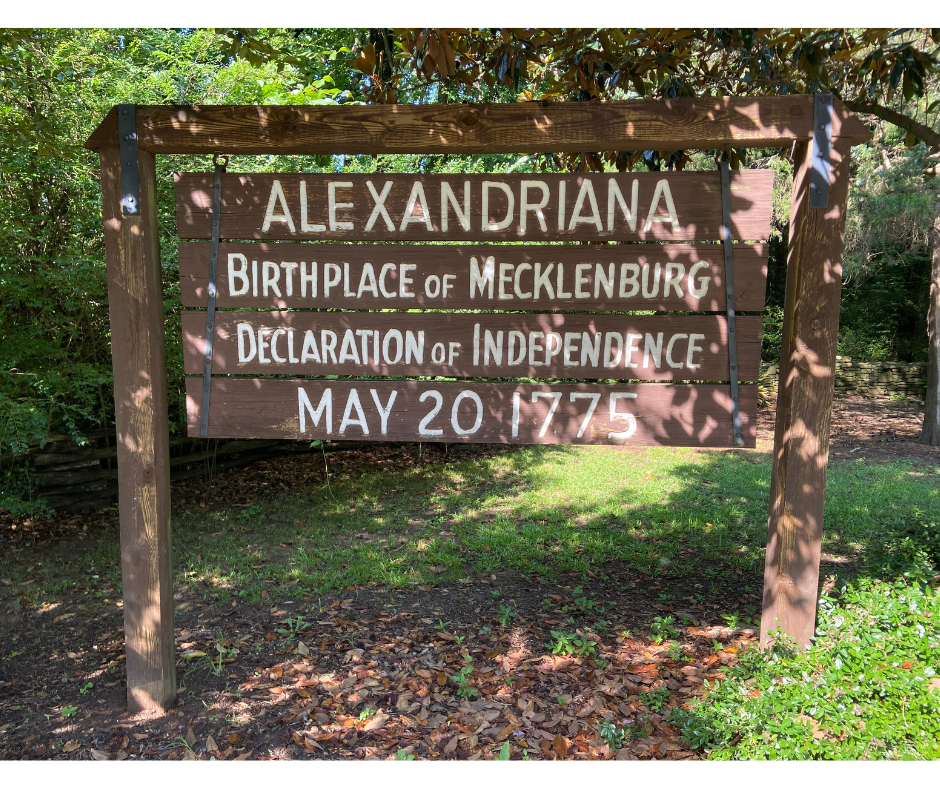
In Alexandriana, LeGette Blythe crafts a sweeping, nostalgic, and quietly patriotic novel that vividly resurrects colonial North Carolina on the eve of the American Revolution. First published in 1940, Alexandriana is both a regional romance and a work of historical fiction grounded in the lore surrounding Mecklenburg County’s bold – if disputed – claim to be the first American community to declare independence from Britain.

Though largely forgotten in modern literary circles, Blythe’s work deserves fresh attention, not only for its historical significance but for the way it captures a uniquely Southern imagination rooted in land, lineage, and the lingering hope of liberty.

Set in the early 1770s, Alexandriana follows the fictional life of David Barksdale, a spirited young man growing up on the prosperous John McKnitt Alexander plantation near present-day Charlotte. Named “Alexandriana”, the home stands as a symbol of frontier civility and classical refinement in a still-wild land. The novel follows Barksdale’s involvement in many events and battles both preceding and throughout the years of the American Revolution. His persona reflects the emerging tide of revolutionary thought sweeping the Carolina backcountry.

The novel opens in a world still ruled by British custom, Anglican orthodoxy, and class hierarchy. Barksdale is a “bound” boy – a form of apprenticeship. Throughout the years of the novel he grows from a shy boy to an educated young man. His father figure, John McKnitt Alexander, is depicted as the literal center of revolutionary thought in the county – secret meetings with fellow patriots, rumors of rebellion, and, eventually, involvement in what will be known as the Mecklenburg Declaration of Independence.

Barksdale’s personal journey mirrors the broader political transformation of the region. He is shown to be sympathetic to the cause of liberty from the outset, influenced by Alexander’s passion, the injustices he witnesses under British rule, and the writings of well-known “revolutionaries” of the time. When war finally breaks out, Alexandriana becomes both a sanctuary and a battleground: a place where love, loss, and loyalty are all tested.

As the revolution accelerates, the novel becomes more dramatic. Skirmishes erupt. Families are torn apart by divided allegiances. Barksdale himself faces danger and heartbreak, from almost being hung as a traitor by English soldiers to escaping capture when lured by a forbidden love. As the novel proceeds, almost every historical figure involved in the battles in and around the Charlotte area are introduced and developed. Signers of the Mecklenburg Declaration of Independence, Regulators, English commanders – even a young Andrew Jackson (from nearby Waxhaws) is fleshed out and brought to real life. The novel ends on an bittersweet note: independence is achieved, but at a great personal and communal cost. Alexandriana, both the homestead and the idea it represents, survives – but not without scars. Barksdale, now a young man, leaves his home of many years to marry the young woman introduced in the opening pages and teased throughout as beyond his reach.

LeGette Blythe, a North Carolina native and journalist, imbues Alexandriana with a deep affection for the region and its lore. The novel is richly atmospheric, with rolling descriptions of Carolina pine forests, rustic taverns, and parlor rooms filled with candlelight and the scent of a log fire. Blythe’s prose leans toward the romantic, evoking a wistful tone that matches the novel’s reverence for a lost world.

One of the novel’s most compelling strengths is its ability to humanize history. Rather than simply recount events like the the rumored May 20, 1775 declaration or the Mecklenburg Resolves, Blythe roots these moments in lived experience – arguments around supper tables, furtive whispers in barns, and agonizing decisions between loyalty and conscience. Barksdale’s coming-of-age arc gives readers an intimate view of how revolutions aren’t just fought on battlefields, but also in hearts and homes.

That said, the novel is unapologetically idealistic. Alexandriana itself is portrayed almost as an Eden – lush, orderly, cultured – run by benevolent landowners whose relationships with enslaved people are depicted in overly sentimental, unrealistic terms. As with many works of mid-20th-century Southern fiction, the institution of slavery is conspicuously softened. Though enslaved characters appear in the novel, they are relegated to the margins, rarely given full interior lives or moral agency. This romanticization reflects the blind spots of its time and warrants critical scrutiny by modern readers.

The same can be said for gender. While Barksdale’s two love interests are strong and thoughtful protagonists by the standards of the era, their agency is still circumscribed by patriarchal expectations. Their intellectual awakening is real, but their fates is ultimately tied to romantic and domestic fulfillment. Nevertheless, within these constraints, Blythe offers moments of genuine psychological insight. Barksdale’s internal struggle – between security and self-determination, decorum and defiance – feels authentic and earned.

Blythe’s historical detail is generally accurate, though he takes creative liberties to dramatize local legend. The Mecklenburg Declaration, which remains a subject of historical debate, is treated as fact in the novel. Yet this act of myth-making is part of the novel’s charm. Blythe isn’t trying to write academic history; he’s offering a literary defense of a community’s heroic self-conception. In doing so, he elevates local memory to the level of national meaning.

Alexandriana is a novel deeply rooted in time and place. While some of its portrayals are dated, its core themes – political awakening, the price of conviction, and the tension between tradition and transformation – remain relevant. For readers interested in Southern history, American independence, or the complexities of heritage and identity, Alexandriana offers a compelling, if imperfect, window into the birth of a nation from the Carolina frontier.

Like the homestead at its center, the novel is a blend of beauty and contradiction – elegant yet flawed, stirring yet shadowed. It invites both admiration and critique. And in that, perhaps, lies its enduring value.


Part of a regular series on 27gen, entitled Wednesday Weekly Reader.

During my elementary school years one of the things I looked forward to the most was the delivery of “My Weekly Reader,” a weekly educational magazine designed for children and containing news-based current events.

It became a regular part of my love for reading, and helped develop my curiosity about the world around us.


Note: Header art ©Dan Nance; LeGette Blythe photo  ©Charlotte Mecklenburg Library

Stirring The Hornet’s Nest: A Unique Look at the American Revolution in the South

When I first began this short series, I intended to limit it to the environs of Mecklenburg County and Charlotte, NC during the years immediately preceding, and carrying through, the American Revolution – roughly 1765-1773. The series covers five books, with the most recent publication first (2023), and then going back over seven decades to 1940.

Almost immediately my research brought up a much repeated phrase: the hornet’s nest – attributed to Lord Cornwallis in referring to the stubborn and insistent fighting of North Carolina militia in the battle of Charlotte on September 26, 1780. While the battle itself was relatively insignificant in the larger scheme of things, that phrase aptly describes the spirit and determination of the North Carolina people leading up the Revolution.

So, when I discovered The Hornet’s Nest, I was eager to open it and read about the story taking place in…

Georgia?


When most people think of Jimmy Carter, they envision the 39th President of the United States, Nobel Peace Prize winner, and humanitarian icon. What they might not expect is a novelist capable of crafting a gripping historical thriller that transports readers to the brutal realities of the Revolutionary War. Yet that’s exactly what Carter accomplishes in “The Hornet’s Nest,” a sweeping historical novel that demonstrates his remarkable versatility as a storyteller and his deep understanding of American history. The book is the first work of fiction by a President of the United States.

Set in the Georgia backcountry during the Revolutionary War, Hornet’s Nest follows the fictional Pratt family as they navigate the treacherous landscape of colonial America’s fight for independence. The story centers on Ethan Pratt, a young surveyor who finds himself torn between his Quaker upbringing and the violent realities of war. When British forces threaten his community and family – first in North Carolina, then in Georgia, Ethan must decide whether to maintain his pacifist beliefs or take up arms against the Crown.

Carter’s intimate knowledge of Georgia’s history and geography shines through every page. The author, himself a Georgia native, brings an authentic voice to the colonial South that feels both historically accurate and emotionally resonant. His descriptions of the untamed wilderness, the harsh realities of frontier life, and the complex political allegiances of the time create a vivid backdrop that immerses readers in the period.

Hornet’s Nest is a work of historical fiction – the first in this series, but not the last! And the title, as noted above, is a quite common phrase when referring to the North Carolina’s American Revolution story, as you will see next week.

Character Development and Narrative Strength

What sets Hornet’s Nest apart from typical historical fiction is Carter’s nuanced approach to character development. Ethan Pratt is no stereotypical hero; he’s a conflicted young man struggling with moral complexities that have no easy answers. His evolution from peaceful surveyor to reluctant participant in violence reflects the broader transformation of American society during this pivotal period.

The supporting characters are equally well-developed. Epsey, Ethan’s strong-willed wife, represents the often-overlooked perspective of women during the Revolutionary War. Her intelligence and resilience challenge contemporary gender expectations while remaining true to the historical context. The British officers, Native American allies, and colonial militia members are portrayed with complexity rather than as one-dimensional villains or heroes.

Carter’s background as a former president brings a unique perspective to the political machinations of the war. He understands the delicate balance of power, the importance of alliances, and the way personal relationships can influence historical events. This political acumen elevates the novel beyond simple adventure story into a thoughtful examination of how ordinary people navigate extraordinary circumstances.

Historical Authenticity and Research

The novel’s historical accuracy is one of its greatest strengths. Carter clearly conducted extensive research into the Revolutionary War’s Southern Theater, often overlooked in favor of more famous Northern battles. He brings to life the brutal partisan warfare that characterized the conflict in Georgia and the Carolinas, where neighbor fought neighbor and traditional rules of warfare often dissolved into chaos. In fact, some historians refer to this as America’s first “Civil War” as patriots often battled Tories – while from the same area and often related as family.

The author’s attention to detail extends beyond major historical events to include the daily realities of colonial life. From the tools used by surveyors to the political tensions between different religious groups, Carter creates a world that feels lived-in and authentic. His descriptions of Native American customs and British military procedures demonstrate a commitment to historical accuracy that scholarly readers will appreciate.

About the title – it seems that Carter applied the term “hornet’s nest” (first used in the early 1700s and already in colloquial use, symbolizing a source of trouble or agitation) to an area designated by the patriots fighting the British in Georgia as a place of safety. In the book, it was an area of several separated forts with good trails connecting them along with maximum natural protection from impassable creeks, swamps, and hills. Since the story does not include the battle of Charlotte, it would seem that Carter utilized author’s license to appropriate the “hornet’s nest” phrase for the book title and action scenes throughout.

Themes and Relevance

Beneath its adventure narrative, Hornet’s Nest explores themes that resonate beyond its historical setting. The tension between idealism and pragmatism, the cost of violence even in just causes, and the complexity of moral decision-making during wartime all speak to contemporary concerns. Carter’s experience as a peacemaker and his Christian faith inform his nuanced treatment of these themes without overwhelming the story.

The novel also examines the often-forgotten diversity of the Revolutionary War era. Carter includes perspectives from various social classes, ethnic groups, and religious backgrounds, creating a more complete picture of colonial American society than many historical novels provide. This inclusive approach reflects both good historical practice and the author’s lifelong commitment to human rights.

Literary Merit and Accessibility

While Carter may be better known for his political and humanitarian work, Hornet’s Nest demonstrates genuine literary talent. His prose is clear and engaging, never sacrificing readability for literary pretension. The pacing effectively balances action sequences with character development and historical context, keeping readers engaged throughout the novel’s substantial length.

The dialogue feels natural and period-appropriate without being overly archaic or difficult to follow. Carter strikes the right balance between historical authenticity and modern accessibility, making the novel appealing to both serious historical fiction readers and those seeking an entertaining adventure story.

Hornet’s Nest stands as a testament to Jimmy Carter’s remarkable range of talents. While it may not revolutionize the historical fiction genre, it offers a compelling, well-researched, and thoughtfully written exploration of a crucial period in American history. The novel succeeds both as an entertaining adventure and as a serious examination of the moral complexities inherent in violent conflict.

For readers interested in the Revolutionary War, Southern history, or simply well-crafted historical fiction, Hornet’s Nest provides a satisfying reading experience. It reminds us that history is made not just by famous generals and politicians, but by ordinary people facing extraordinary circumstances with courage, conviction, and humanity.

Carter’s transition from statesman to novelist proves that great leaders often possess the storytelling ability that helped shape their public success. Hornet’s Nest is a worthy addition to the historical fiction canon and a fascinating glimpse into the creative mind of one of America’s most respected public figures.

While the majority of the book veered outside my intended scope of the Charlotte, NC area, I found it a thoroughly fascinating account of the little-known battles and everyday lives of colonists in the times leading up to, and through, the American Revolution.


Part of a regular series on 27gen, entitled Wednesday Weekly Reader.

During my elementary school years one of the things I looked forward to the most was the delivery of “My Weekly Reader,” a weekly educational magazine designed for children and containing news-based current events.

It became a regular part of my love for reading, and helped develop my curiosity about the world around us.


Note: Header art by ©Dan Nance

Unearthing America’s First Declaration: A Revolutionary Precedent

Going back in time (by date of book publication), today’s WWR article is a continuation of the events in and around Charlotte and Mecklenburg County, NC preceding and during the American Revolution. Though I hadn’t intended to make a series out of it, the source material and local connections are just too fascinating!

Last week’s introduction was Who’s Your Founding Father, published by David Fleming (2023). Today’s article dives into The First American Declaration of Independence? by Scott Syfert (2014).


Background: According to the traditional account, Colonel Thomas Polk summoned representatives from each militia company in Mecklenburg County to meet at the Charlotte courthouse on May 19, 1775. As delegates gathered, news arrived of the previous month’s battles at Lexington and Concord, inflaming anti-British sentiment. The representatives elected Abraham Alexander as chairman and John McKnitt Alexander as secretary.

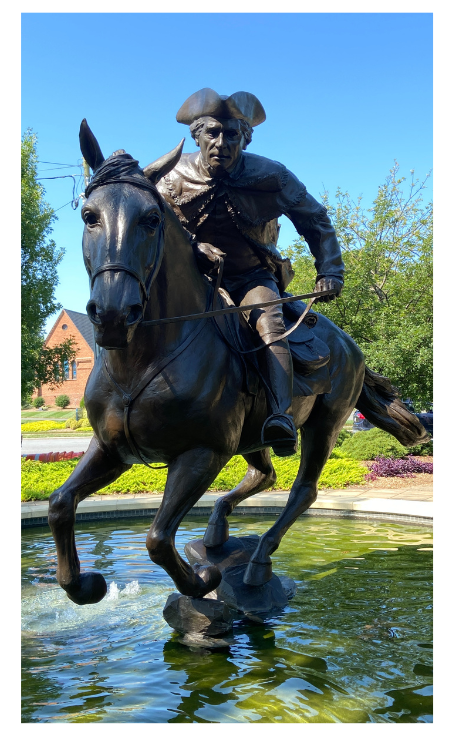
A three-man committee drafted four resolutions, with the most significant declaring that “we the citizens of Mecklenburg county, do hereby dissolve the political bands which have connected us to the Mother Country, and hereby absolve ourselves from all allegiance to the British Crown” and asserting that the county’s inhabitants were “free and independent.” Captain James Jack was then tasked with carrying this declaration to the Continental Congress in Philadelphia.

Scott Syfert’s meticulously researched book tackles one of American history’s most enduring mysteries: Did residents of Mecklenburg County, North Carolina, declare independence from Great Britain on May 20, 1775 – more than a year before the Continental Congress adopted the Declaration of Independence? This controversy, which has captivated historians and patriots for over two centuries, receives its most comprehensive treatment in Syfert’s balanced and engaging analysis.

Syfert, a Charlotte-based attorney and historian, aims to elevate the significance of the this action, arguing for its rightful place as a precursor to the more widely recognized Philadelphia Declaration of 1776.

The First American Declaration of Independence delves into a pivotal, yet often overlooked, moment in American history: the Mecklenburg Declaration of Independence. For anyone interested in the true origins of American independence and the often-complex narratives that shape our understanding of the past, Syfert’s book offers a compelling and thought-provoking read.

At the heart of Syfert’s argument is the assertion that the citizens of Mecklenburg County, North Carolina, took a radical, unprecedented step on May 20, 1775. Just weeks after the battles of Lexington and Concord, and a full year before the Continental Congress adopted its Declaration, a committee in Charlotte reportedly declared their independence from Great Britain. The “MeckDec”, as it came to be known, allegedly renounced allegiance to the Crown, established local self-governance, and called for the formation of a provisional government. 

The book begins by establishing the cultural and political backdrop that would make such an early declaration plausible. Syfert traces the settlement of Mecklenburg County by Scots-Irish Presbyterians who carried deep-seated grievances against British authority. These settlers had endured religious persecution in Ireland and continued to face discrimination in the American colonies, where their Presbyterian faith marked them as outsiders. He explores the local political landscape, the influence of key figures, and the prevailing sentiments that made such a declaration not only possible but, in the eyes of its proponents, necessary.

The author demonstrates how these grievances intensified when the British Privy Council in London voided colonial legislation that had granted the Mecklenburg settlers the right to establish Queen’s College and allowed their ministers to perform legal marriages. This betrayal, following their support of royal governor William Tryon against the Regulator movement in 1771, further alienated the community from British rule.

One of the book’s greatest strengths lies in Syfert’s rigorous approach to historical evidence. The Mecklenburg Declaration has long been shrouded in controversy, with some historians dismissing it as a fabrication or a misremembered account. Syfert confronts these doubts head-on, presenting a wealth of primary and secondary sources to bolster his claims. He examines contemporary newspaper accounts, personal testimonies, and official records, carefully dissecting the arguments for and against the Declaration’s authenticity. While acknowledging the challenges posed by the loss of original documents (reportedly destroyed in a fire around April 1800), Syfert builds a strong circumstantial case, drawing connections between various pieces of evidence that, when viewed collectively, suggest the MeckDec was indeed a genuine expression of revolutionary sentiment. His detailed analysis of the language used, comparing it to other revolutionary documents of the era, further strengthens his position, highlighting the striking similarities in tone and intent to later declarations of independence.

Beyond the historical detective work, Syfert’s narrative is remarkably engaging. He avoids the dry, academic tone that can sometimes plague historical texts, instead adopting a style that is both accessible and passionate. He brings the figures of 1775 Mecklenburg to life, allowing readers to understand the courage and conviction required to defy a powerful empire. The book is not just a chronological account of events; it’s an exploration of the motivations, fears, and aspirations of ordinary people caught in extraordinary times. Syfert skillfully weaves together local anecdotes with broader historical trends, demonstrating how the specific circumstances in Mecklenburg County mirrored, and perhaps even influenced, the larger movement towards American independence.

However, it is important to note that the debate surrounding the Mecklenburg Declaration’s authenticity continues among historians. While Syfert presents a compelling case, readers should be aware that his interpretation is not universally accepted. Some scholars maintain that the “Mecklenburg Declaration” was either a later misremembering of the less radical “Mecklenburg Resolves” (which called for local governance but not outright independence) or a complete fabrication. Syfert addresses these counter-arguments, but the book ultimately serves as a powerful advocate for the Declaration’s legitimacy. This ongoing scholarly discussion, far from detracting from the book, actually enhances its value, as it encourages readers to critically engage with historical evidence and consider multiple perspectives.

Scott Syfert’s The First American Declaration of Independence is an essential read for anyone seeking a deeper understanding of the American Revolution. It is a testament to the power of local initiative and the diverse origins of the independence movement. Syfert’s meticulous research, combined with his engaging narrative style, makes a strong case for the Mecklenburg Resolves as a significant, albeit controversial, milestone in the journey towards American self-governance. Whether one fully accepts the Declaration’s authenticity or remains skeptical, Syfert’s work undeniably enriches our appreciation for the complex tapestry of events that led to the birth of the United States. It challenges conventional narratives and reminds us that the seeds of liberty were sown in many places, by many hands, long before the grand pronouncements of Philadelphia.


A Note to Readers About Today’s (and many other) Wednesday Weekly Reader Articles
Today’s article – as well as many others you will read here – are based on the concept of synoptical reading. I first became aware of, and practiced, this type of reading in graduate school in the early 1980’s. Though intended primarily for scholarly reading, over the years I have found it also quite enjoyable for reading of all kinds, especially reading for the pure pleasure of reading.

Think of synoptical reading as the ultimate book conversation – it’s what happens when you gather multiple authors around the same topic and let them hash it out. Mortimer Adler and Charles Van Doren called this the highest form of reading in their classic How to Read a Book, and for good reason. Instead of just absorbing what one author tells you, synoptical reading involves collecting different books on the same subject and playing intellectual detective, looking for patterns, contradictions, and those “aha!” moments when seemingly unrelated ideas suddenly click together.

It’s like being a moderator at a debate where the participants wrote their arguments decades or even centuries apart. You’re not just reading – you’re orchestrating a dialogue between minds, asking tough questions, and building something new from the collision of different perspectives. This approach becomes incredibly powerful because it reveals how ideas evolve over time, exposes the blind spots that individual authors might miss, and often leads to insights that none of the original writers could have reached alone. In our current world of endless information streams, synoptical reading is less about consuming more content and more about becoming a thoughtful curator who can weave together the best thinking on complex topics into something genuinely illuminating.

Learn more about syntopical reading.


Part of a regular series on 27gen, entitled Wednesday Weekly Reader.

During my elementary school years one of the things I looked forward to the most was the delivery of “My Weekly Reader,” a weekly educational magazine designed for children and containing news-based current events.

It became a regular part of my love for reading, and helped develop my curiosity about the world around us.


Note: Header art by ©Dan Nance

Beyond Washington’s Shadow: Rediscovering the Southern Campaign of the American Revolution

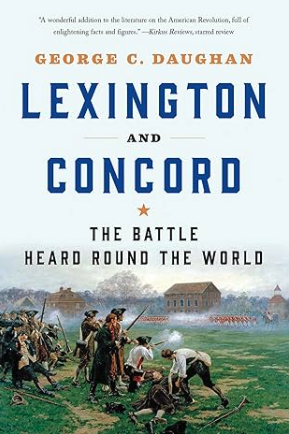
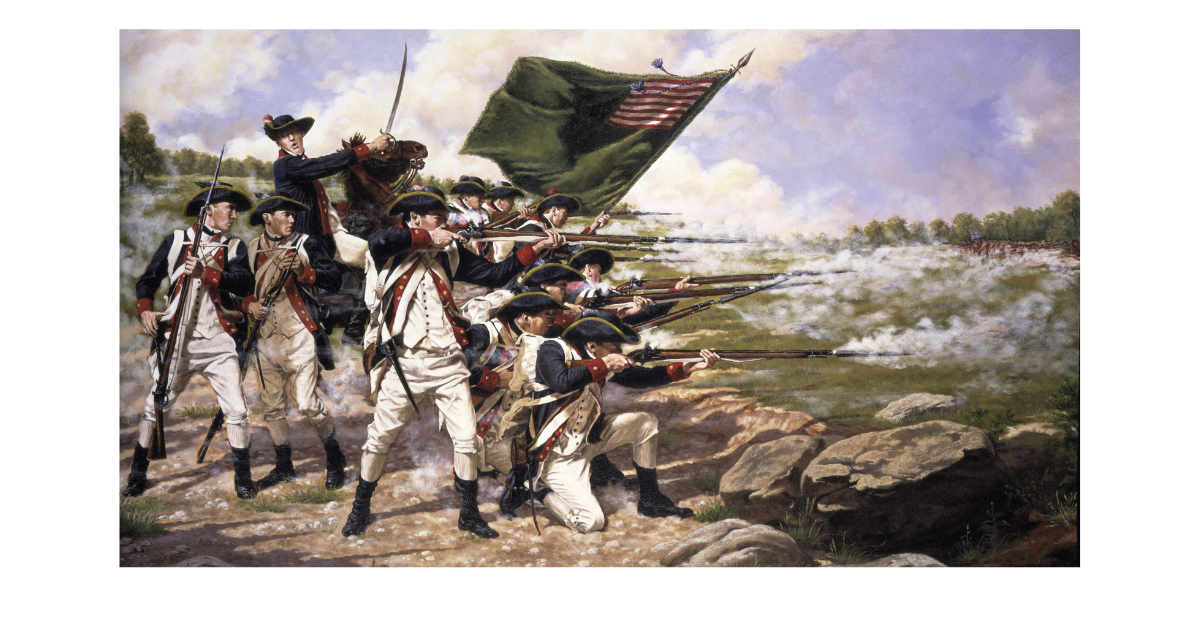
The famous battles that form the backbone of the story put forth of American independence – at Lexington and Concord, Brandywine, Germantown, Saratoga, and Monmouth – while crucial, did not lead to the surrender at Yorktown.

It was in the three-plus years between Monmouth and Yorktown that the war was won.

Alan Pell Crawford’s riveting new book,This Fierce People, tells the story of these missing three years, long ignored by historians, and of the fierce battles fought in the South that made up the central theater of military operations in the latter years of the Revolutionary War, upending the essential American myth that the War of Independence was fought primarily in the North.

Weaving throughout the stories of the heroic men and women, largely unsung patriots – African Americans and whites, militiamen and “irregulars,” patriots and Tories, Americans, Frenchmen, Brits, and Hessians, Crawford reveals the misperceptions and contradictions of our accepted understanding of how our nation came to be, as well as the national narrative that America’s victory over the British lay solely with General George Washington and his troops.


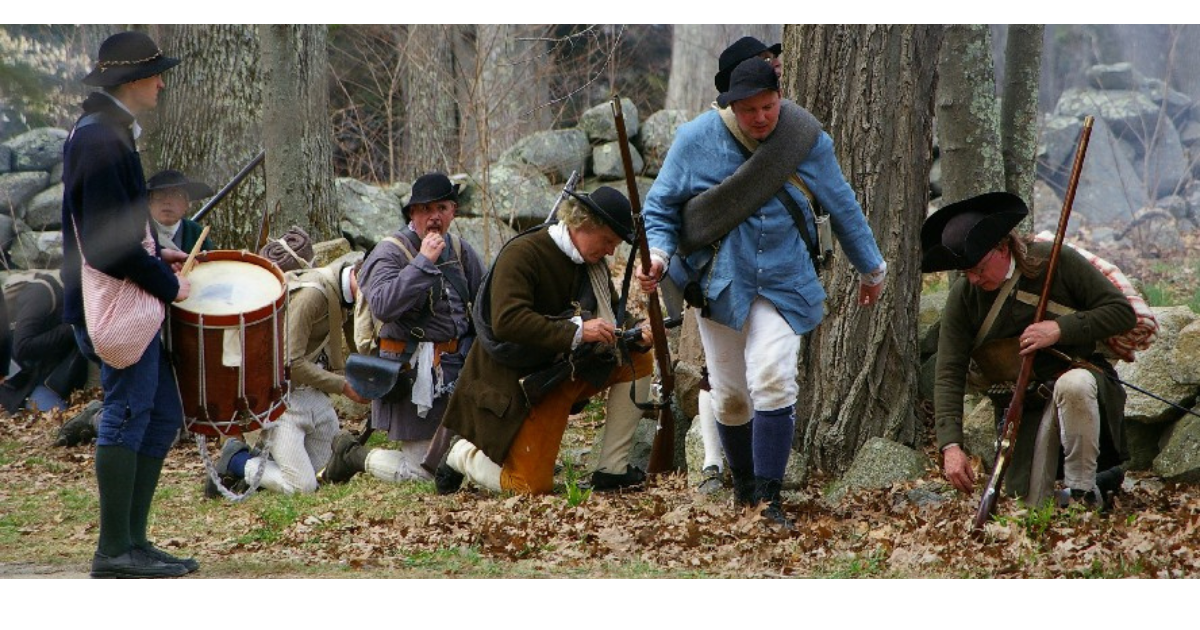
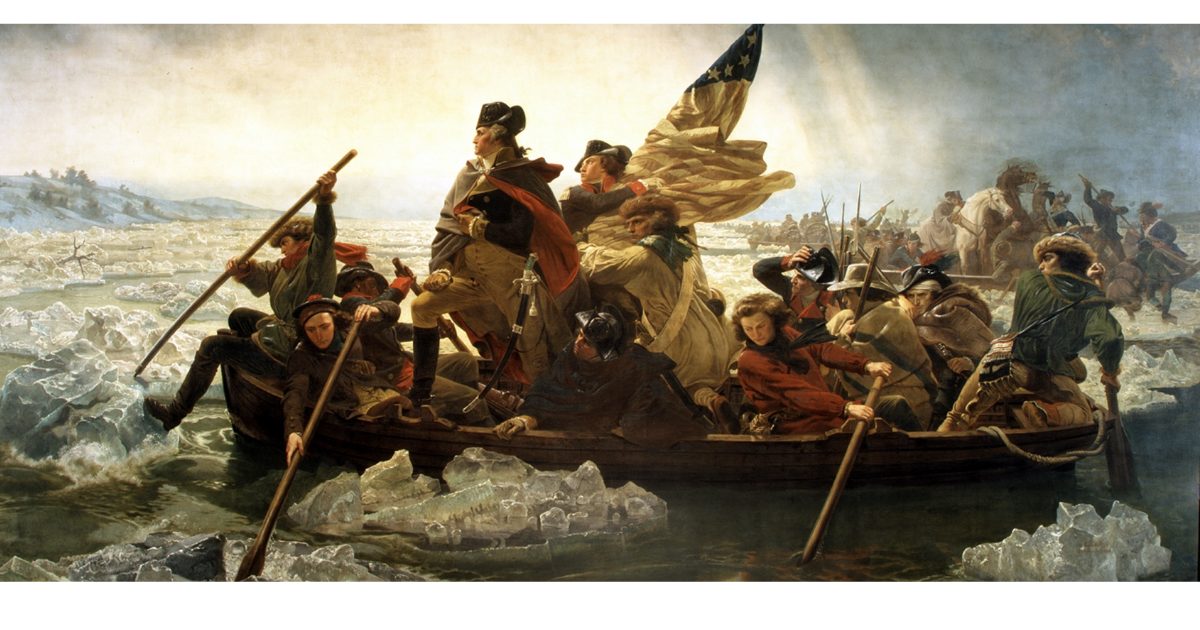
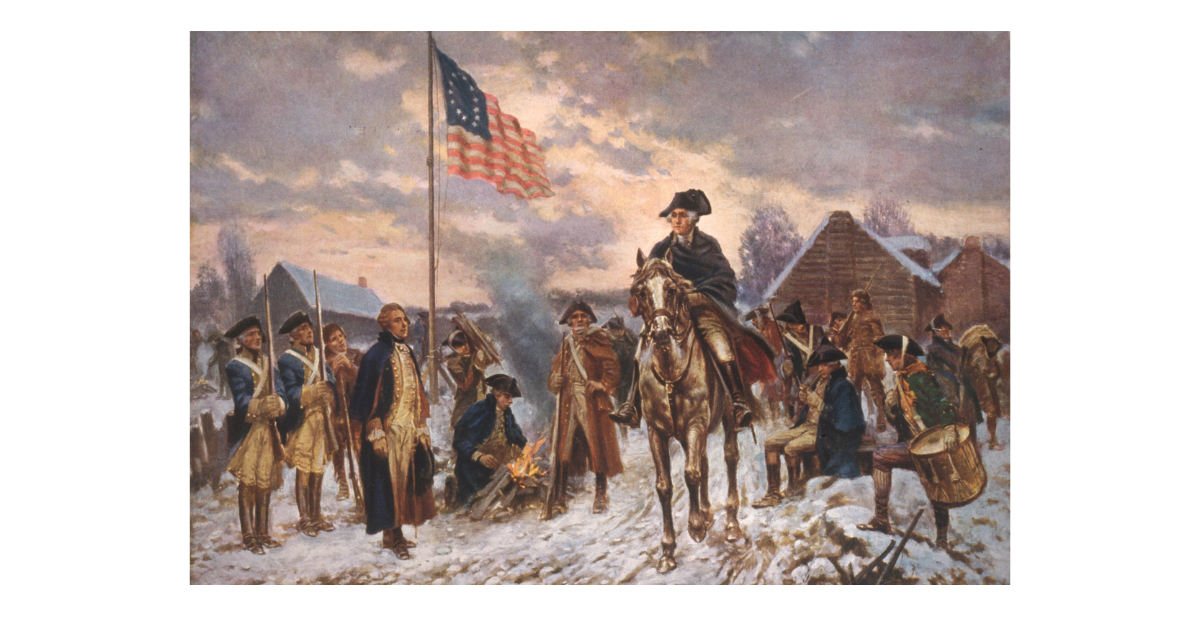
The American Revolutionary War holds a revered place in the nation’s collective memory, often depicted as a heroic struggle led by George Washington against the mighty British Empire. This narrative, deeply ingrained in American culture, typically focuses on the war’s northern theater, highlighting iconic moments such as the battles of Lexington and Concord, Bunker Hill, Washington’s crossing of the Delaware, and the harsh winter at Valley Forge. However, this perspective, while stirring, presents an incomplete and potentially misleading account of the conflict that birthed a nation.

The Washington-Centric Narrative

The dominance of this northern-focused, Washington-centric narrative can be traced back to the early years of the republic. Biographies of George Washington, such as Parson Weems’s The Life of George Washington (1808) and John Marshall’s similarly titled work (1838), played a significant role in shaping public perception. These accounts, naturally centered on Washington’s experiences, emphasized events in which he was directly involved or closely associated. This trend continued with Washington Irving’s five-volume biography in 1855, further cementing the focus on the northern theater of the war.

Even contemporary histories written in the early 19th century, such as those by William Moultrie (1802) and Henry “Light Horse Harry” Lee III (1812), which provided valuable insights into other aspects of the war, never achieved the widespread readership of the Washington biographies. Additionally, early histories of the young nation, like that of Mercy Otis Warren (1805), were often written by New Englanders, inherently biasing the narrative towards events in that region.

The Overlooked Southern Campaign

This established narrative, however compelling, overlooks a crucial fact: much of the war, including some of its most decisive battles, took place in the South. The events that ultimately forced the British to surrender at Yorktown in 1781 largely occurred in the southern states, far from Washington’s direct command. Ironically, Washington himself did not cross the Potomac until the late summer of 1781, more than three years after the last major battle in the North at Monmouth.

The southern campaign of the Revolutionary War is rich with dramatic events and compelling figures that deserve recognition. Battles such as Camden, Kings Mountain, and Cowpens played critical roles in shaping the war’s outcome, yet they remain unfamiliar to many Americans. The war in the South was not just a conflict between American Continentals and British redcoats; it was also a brutal civil war between “partisans” fighting for independence and their “loyalist” neighbors, marked by fierce battles, skirmishes, and acts of domestic terrorism.

Factors Contributing to the Oversight

Several factors have contributed to the relative neglect of the southern campaign in popular and academic histories:

  1. Early Historiography: The earliest accounts of the war, primarily biographies of Washington, naturally focused on his direct experiences in the northern theater.
  2. Regional Bias: Many early histories were written by New Englanders, leading to a focus on events in that region.
  3. Civil War Legacy: In the aftermath of the Civil War, historians were reluctant to celebrate the contributions of southerners to the Revolutionary War, given the recent conflict.
  4. Loyalty Concerns: Even in the early years of the republic, the presence of loyalist elements in the South during the Revolutionary period made some historians wary of emphasizing the region’s role.
  5. Slavery: Perhaps most significantly, the fact that many southern Revolutionary leaders and soldiers were slaveholders has made modern historians hesitant to celebrate their contributions to the cause of independence.

The Complexity of the Southern Theater

The southern campaign of the Revolutionary War presents a complex and sometimes uncomfortable narrative. It involves slaveholders fighting for their own liberty while denying it to others, a contradiction that was apparent even to contemporaries. Samuel Johnson famously asked, “How is it that we hear the loudest yelps for liberty from the drivers of negroes?”

This complexity extends to the involvement of African Americans in the war. They fought on both sides of the conflict and, when denied the opportunity to fight, served as laborers and servants. The record of slavery and abolitionism during this period is not as straightforward as later generations might wish. There were abolitionists in the South and slaveholders in the North, including such notable figures as Benjamin Franklin and Alexander Hamilton.

Some southern leaders, including Thomas Jefferson and Henry Laurens, acknowledged the moral wrongness of slavery, viewing it as a violation of the very values for which the Revolution was fought. However, they remained compromised by their continued ownership of slaves and inability to devise practical plans for abolition.

The Need for a More Complete History

Despite these complexities – or perhaps because of them – it is crucial to reassess and more fully incorporate the southern campaign into our understanding of the Revolutionary War. Doing so does not require diminishing Washington’s role or the significance of the northern campaign. Indeed, it can enhance our appreciation of Washington’s leadership, particularly his ability to recognize and trust the abilities of commanders like Nathanael Greene and Daniel Morgan to conduct the war in the South.

A more complete history of the Revolutionary War would reveal that the South had its own “embattled farmers” and “citizens in arms,” its own heroic figures like the “Molly Pitchers” of northern lore. It would acknowledge the civil war aspect of the conflict in the South, with its attendant brutality and complexity. It would also grapple with the uncomfortable truth that many of the southern leaders fighting for independence were themselves slaveholders, some even slave traders.

The standard narrative of the American Revolutionary War, focused primarily on Washington and the northern theater, while inspiring, fails to capture the full scope and complexity of the conflict that gave birth to the United States. By expanding our view to include the crucial southern campaign, we can gain a more nuanced and accurate understanding of the war, its participants, and its legacy.

This broader perspective allows us to appreciate the contributions of often-overlooked figures and regions to the cause of independence. It also forces us to confront the contradictions and moral complexities inherent in the Revolutionary period, particularly regarding the institution of slavery. While it may be uncomfortable to acknowledge that many of those fighting for liberty were themselves denying it to others, it is essential for a full and honest reckoning with our nation’s history.

As we continue to seek a “usable past” in the story of the American Revolution, we must strive for a narrative that encompasses the full geographical and moral landscape of the conflict. Only by doing so can we truly understand the origins of our nation and the ongoing struggle to live up to its founding ideals.


Part of a regular series on 27gen, entitled Wednesday Weekly Reader.

During my elementary school years one of the things I looked forward to the most was the delivery of “My Weekly Reader,” a weekly educational magazine designed for children and containing news-based current events.

It became a regular part of my love for reading, and helped develop my curiosity about the world around us.