Beyond Signs: Decoding the World of Navigation in “The Wayfinding Handbook”

A recent experience by my wife and I highlighted the always present question when you need to go to a new place – how do I get there from here?


Going to the hospital – as a patient, family member, or even just to visit someone – is almost always guaranteed to make you uneasy when it comes to finding your way to your destination. Hospitals are typically complex, multilevel facilities – often built over a span of decades, which means they may have multiple entrances, building styles, and floor levels.

How do you help people find their way in a hospital – or in any other place – or in YOUR place?

People throughout history have gravitated to town centers, market squares, and public places to buy and sell products. Even houses of worship, once set apart as a literal sanctuary from the fray, now sit side by side with busy commercial centers, libraries, schools, restaurants, and residential complexes.

Over time, cities, spaces, complexes and buildings fill up with information, markers, and symbols. Sometimes the results are helpful, but the effect can also be ugly or chaotic, or both. The challenge is to enhance a space – public, commercial, or private – by finding order in chaos without destroying character.

Enter wayfinding.

Great wayfinding systems employ explicit signs and information as well as implicit symbols and landmarks that together communicate with accuracy and immediacy. Over the last thirty years, wayfinding design has matured to become an essential component of buildings and spaces, helping make sense of a sometimes overwhelming task: getting from here to there.

Wayfinding design provides guidance and the means to help people feel at ease in their surroundings.

David Gibson, The Wayfinding Handbook
Where am I? What can I do here? Where can I go from here? How do I get out of here?

Consciously or not, we ask such questions every day as we navigate the places and spaces of our lives.

Whether we find ourselves in a museum, hospital, airport, mall, or street in an unfamiliar city, we depend on systems of visual, audible, and tactile cues not only to lead the way, but also to keep us safe. They are the fundamental questions of wayfinding – a process that encompasses both the experience of choosing a path within a built environment and the set of design elements that aid in such a decision.

Not long ago, the professional practice of wayfinding design simply involved devising sign systems. Today, the field is much broader and continues to expand to address technological developments – kinetic media, GPS systems, web connectivity, smart materials – as well as cultural changes in areas such as branding and environmental awareness. Similarly, a cross-disciplinary familiarity with graphic, architectural, landscape, interior, industrial, and information design has become an essential requirement of twenty-first-century wayfinding design.

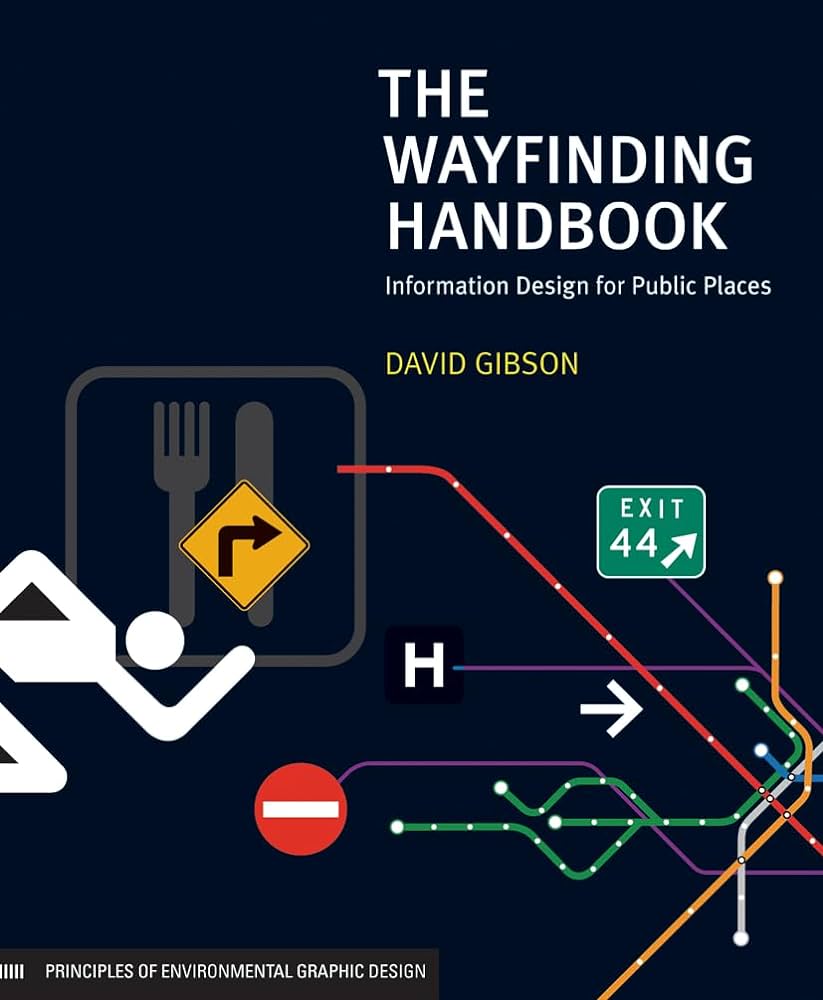
The Wayfinding Handbook by professional wayfinding designer David Gibson draws on more than thirty years of experience collaborating with architects, planners, developers, managers, and civic leaders to offer an insider’s view of this rapidly evolving discipline. Using real-life examples, Gibson illustrates the way type, color, mapmaking, dimensional forms, material selection, and new media are used to create effective wayfinding systems.

The Wayfinding Handbook is a complete guide to the discipline, from planning and design to practical considerations, such as setting up teams and managing projects. “Other Voices” sidebars, presented throughout the book, reveal the opinions of experts who plan, manage, and shape wayfinding projects. A comprehensive bibliography and gallery of resources round out what is likely to become the go-to resource for students, professionals, or anyone charged with designing peoplefriendly, universally accessible environments.


The Wayfinding Handbook by David Gibson is a comprehensive guide that delves into the intricate art of wayfinding – the science and design of helping people navigate through spaces efficiently. The book covers various aspects of this field, providing insights into signage, environmental cues, and user experience. 

Gibson starts by exploring the historical evolution of wayfinding, tracing its roots and development over time. He then delves into the psychology of navigation, emphasizing the importance of understanding how individuals perceive and interpret spatial information. The author skillfully combines theory with practical applications, offering a well-rounded approach suitable for both novices and professionals in design, architecture, and urban planning.

One notable strength of the book lies in its inclusion of case studies and real-world examples, illustrating successful wayfinding solutions and analyzing their effectiveness. This practical dimension enhances the reader’s understanding and provides valuable insights for implementing similar strategies in diverse contexts.

Gibson’s writing style is accessible, making complex concepts in wayfinding easily understandable. The book is highly organized, progressing logically from foundational principles to advanced topics. Each chapter builds upon the previous, creating a cohesive learning experience.

As someone deeply interested in hospitality and the user experience, I appreciated how The Wayfinding Handbook aligned with my passion for creating welcoming environments. The book not only addresses the functional aspects of wayfinding but also recognizes its role in enhancing the overall experience of spaces, especially with respect to all things hospitality.

In conclusion, The Wayfinding Handbook by David Gibson is a valuable resource for anyone involved in the design and use of physical spaces. Its blend of theory, practical examples, and a user-centric approach makes it a recommended read for professionals and enthusiasts alike.


Part of a regular series on 27gen, entitled Wednesday Weekly Reader.

During my elementary school years one of the things I looked forward to the most was the delivery of “My Weekly Reader,” a weekly educational magazine designed for children and containing news-based, current events.

It became a regular part of my love for reading, and helped develop my curiosity about the world around us.
The Real Work: Navigating Mastery Across Diverse Disciplines

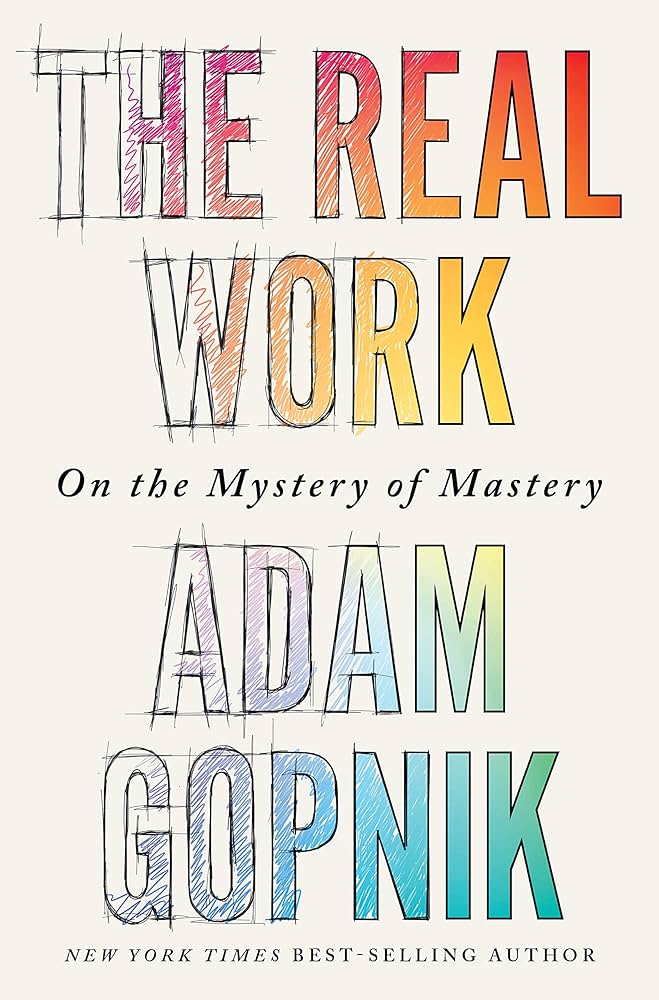
For decades now, Adam Gopnik has been one of our most beloved writers, a brilliantly perceptive critic of art, food, France, and more. But recently, he became obsessed by a more fundamental matter, one he had often meditated on in The New Yorker: How do masters learn their miraculous skill, whether it was drawing museum-ready art or baking a perfect sourdough loaf? How could anyone become so good at anything? There seemed to be a fundamental mystery to mastery. Was it possible to unravel it?

In The Real Work – the term magicians use for the accumulated craft that makes for a great trick – Gopnik becomes a dedicated student of several masters of their craft: a classical painter, a boxer, a dancing instructor, a driving instructor, and others. Rejecting self-help bromides and bullet points, he nevertheless shows that the top people in any field share a set of common qualities and methods. For one, their mastery is always a process of breaking down and building up – of identifying and perfecting the small constituent parts of a skill and the combining them for an overall effect greater than the sum of those parts. For another, mastery almost always involves intentional imperfection – as in music, where vibrato, a way of not quite landing on the right note, carries maximum expressiveness. Gopnik’s simplest and most invigorating lesson, however, is that we are surrounded by mastery. Far from rare, mastery is commonplace, if we only know where to look: from the parent who can whip up a professional strudel to the social worker who – in one of the most personally revealing passages Gopnik has ever written – helps him master his own demons.

Spirited and profound, The Real Work will help you understand how mastery can happen in your own life – and, significantly, why each of us relentlessly seeks to better ourselves in the first place.

Adam Gopnik explores the concept of mastery across various skills such as drawing, dancing, and driving. Using the term “real work” from stage magicians, Gopnik delves into the meticulous craftsmanship and technical expertise required to make a great magic trick truly outstanding. He emphasizes that the one credited with achieving the “real work” isn’t necessarily the inventor but the one who masters every detail of its execution.

Structured around Gopnik’s interactions with practitioners of different crafts, the book unfolds as a celebration of human flaws. Three key themes emerge:

  • Mastery is the gradual assembly of fragments into a harmonious whole.
  • Mastery is about humanity, not perfection, appreciating the vulnerability within virtuosity.
  • Mastery is found in real lives, not abstract life rules.

Gopnik becomes an apprentice in various disciplines, from drawing to driving, to grasp the essence of mastery. He discusses the slow process of carpentering fragments, emphasizing the importance of learning each small step. Mastery, he argues, is not about impressing the public but about a democratic achievement that we all can attain.

The author explores drawing with a realist artist, magic with renowned magicians, and driving with an instructor who emphasizes relaxation. Through these experiences, Gopnik weaves in reflections on representational art, childhood, aging, and the intricate balance between learned virtuosity and unique vulnerability.

The book takes a poignant turn as Gopnik addresses the limited time we have on Earth, emphasizing that mastery is not transcendent but deeply personal. He contends that what truly matters is not impressing the masses but achieving mastery for ourselves and a few close individuals. In Gopnik’s view, mastery is democratic and attainable by all, a reflection of our varied and capable selves.


Part of a regular series on 27gen, entitled Wednesday Weekly Reader.

During my elementary school years one of the things I looked forward to the most was the delivery of “My Weekly Reader,” a weekly educational magazine designed for children and containing news-based, current events.

It became a regular part of my love for reading, and helped develop my curiosity about the world around us.

From Curiosity to Connection: Building Belonging in Daily Interactions

Discover the secret to flourishing in an age of division: belonging. In a world filled with discord and loneliness, finding harmony and happiness can be difficult. But what if the key to unlocking our potential lies in this deceptively simple concept? Belonging is the feeling of being a part of a group that values, respects, and cares for us―a feeling that we can all cultivate in even the smallest corners of social life. 

In Belonging: The Science of Creating Connection and Bridging Divides, Stanford University professor Geoffrey L. Cohen draws on his own and others’ groundbreaking scientific research to offer simple, concrete solutions for fostering a sense of belonging. These solutions can generate surprisingly significant and long-lasting benefits.

Small but powerful actions can bolster belonging―actions such as encouraging people to reflect on their core values before they face a challenge or expressing belief in someone’s capacity to reach a higher standard. A wide range of innovative approaches have been found to boost achievement at work and at school, bridge political divides, reduce prejudice, and even contribute to overall health. Rigorously tested in diverse arenas―from classrooms to disadvantaged neighborhoods to iconic Silicon Valley companies―these methods offer a path forward in these demanding times. 

Belonging is a compelling read for all who yearn for a more connected world, whether you’re a manager or employee, an educator or student, a parent or caregiver, or simply someone seeking to make the most out of every moment you spend with others. Packed with actionable insights and specific strategies, this book offers hope and practical guidance, serving as both an inspiration and a roadmap to creating a world of inclusion, understanding, and empathy.

The science of situation-crafting provides valuable insights into our ability to cultivate a sense of connection and belonging in our lives. This situational literacy empowers us to face challenges that may threaten our sense of belonging. Here’s a core set of practices derived from Belonging that will provide insights to actively build belonging in our daily interactions.

1. Ask Questions and Listen: Appreciating the depth of individuals’ experiences through genuine curiosity is a powerful bond builder. By actively seeking perspectives and understanding people’s circumstances, we can provide more meaningful support and strengthen connections.

2. Give Your Perspective: Sharing our own stories and perspectives complements the need to understand others. Articulating the reasons behind our views can prevent stereotyping. Expressing dissent should be done with courtesy, signaling intent and allowing others the space to accommodate diverse viewpoints.

3. Be Polite: Politeness, a universal protocol, signifies respect for others. Simple acts like not interrupting, using “please” and “thank you,” and apologizing when necessary contribute to recognizing the belonging of others.

4. Affirmation: Creating opportunities for individuals to express themselves and feel valued is crucial. Affirmation goes beyond vapid praise, focusing on allowing people to share their commitments and values, reinforcing their sense of self.

5. Avoid Authoritarian Language: Acknowledging diverse perspectives by expressing ambivalence and actively learning about opposing views builds rapport. Signaling intentions before giving critical feedback fosters an atmosphere of concern and respect instead of dictation.

6. Use the Nonverbal Channel: Nonverbal cues such as nodding, smiling, and making eye contact convey interest and respect. However, authenticity is key, as coming across as fake can be counterproductive. Genuine nonverbal expressions enhance bonding.

7. Handle Yourself with Care: Being in the right mental and emotional state is crucial for meaningful interactions. Cultivating personal belonging allows us to navigate social situations thoughtfully, especially in challenging times, avoiding conformity to harmful stereotypes and norms.

8. Craft Your Situations with Care: Recognizing the entanglement of our identity with our environment, we can actively self-craft by situation-crafting. Acting as gatekeepers for social influences, cultivating a rich social life, and staying true to our values contribute to fostering belonging.

Conclusion

Building belonging is an ongoing practice that requires awareness and dedication. By incorporating these core practices into our daily lives, we can create positive interactions and strengthen connections. Small gestures and moments of connection have lasting effects, inspiring and empowering both ourselves and others. Let us embrace the magic of situation-crafting to make every situation a little better for everyone involved.


Part of a regular series on 27gen, entitled Wednesday Weekly Reader.

During my elementary school years one of the things I looked forward to the most was the delivery of “My Weekly Reader,” a weekly educational magazine designed for children and containing news-based, current events.

It became a regular part of my love for reading, and helped develop my curiosity about the world around us.

Beyond Comfort Zones: The Power Strangers Hold from Random Encounters to Life-Changing Moments

In our cities, we stand in silence at the pharmacy and in check-out lines at the grocery store, distracted by our phones, barely acknowledging one another, even as rates of loneliness skyrocket. Online, we retreat into ideological silos reinforced by algorithms designed to serve us only familiar ideas and like-minded users. In our politics, we are increasingly consumed by a fear of people we’ve never met. But what if strangers—so often blamed for our most pressing political, social, and personal problems—are actually the solution?

In The Power of Strangers, Joe Keohane sets out on a journey to discover what happens when we bridge the distance between us and people we don’t know. He learns that while we’re wired to sometimes fear, distrust, and even hate strangers, people and societies that have learned to connect with strangers benefit immensely. Digging into a growing body of cutting-edge research on the surprising social and psychological benefits that come from talking to strangers, Keohane finds that even passing interactions can enhance empathy, happiness, and cognitive development, ease loneliness and isolation, and root us in the world, deepening our sense of belonging. And all the while, Keohane gathers practical tips from experts on how to talk to strangers, and tries them out himself in the wild, to awkward, entertaining, and frequently poignant effect.

The Power of Strangers by Joe Keohane is a thought-provoking exploration of the impact that interactions with strangers can have on our lives. Keohane delves into the psychology of how we perceive and connect with people we don’t know, emphasizing the influence strangers have on our decision-making and behavior.

The book takes readers on a journey through various aspects of human connection, from the significance of chance encounters to the role of strangers in shaping our opinions and beliefs. Keohane skillfully weaves together anecdotes, scientific research, and real-world examples to illustrate the profound ways in which strangers shape our experiences.

One of the strengths of the book is its ability to challenge preconceived notions about strangers, highlighting both the positive and negative aspects of these interactions. Keohane argues that embracing the power of strangers can lead to personal growth, expanded perspectives, and unexpected opportunities.

The writing is engaging and accessible, making complex psychological concepts accessible to a broad audience. Keohane’s exploration of the subject matter is both thorough and detailed, aligning with your preference for detailed explanations.

In summary, The Power of Strangers offers a compelling perspective on the often-overlooked influence that strangers have on our lives. It encourages readers to reevaluate their perceptions and appreciate the richness that comes from engaging with those outside our immediate circles.


Part of a regular series on 27gen, entitled Wednesday Weekly Reader.

During my elementary school years one of the things I looked forward to the most was the delivery of “My Weekly Reader,” a weekly educational magazine designed for children and containing news-based, current events.

It became a regular part of my love for reading, and helped develop my curiosity about the world around us.

Reading Between the Ears: Synoptical Reading, Leadership, and the Magic of Disney

Reading is a passion I treasure, and one that I am thankful my father instilled in me.

I love (and practice) the 4 different levels of reading as espoused by Mortimer Adler in his great book, How to Read a Book, but I really like to latch onto a topic and practice synoptical reading. Also known as comparative reading, it is where many books are read, and placed in relation to one another and to a subject about which they all revolve.

For many years, an ongoing topic of synoptical reading has been about Walt Disney (the man) and the “kingdom” he founded.

Under the watchful eye of Engineer Mickey, here’s my new stack of Disney reading that I’m kicking off 2024:

  • The Art of Walt Disney (Disney 100 Celebration Edition)
  • Disney Book of Maps: A Guide to the Magical Worlds of Disney Animation
  • Drawing 100 Years of Disney Wonder
  • The Disney Book (Disney 100 Edition)
  • Hyperion Historical Alliance Annual 2023
  • Disney 100 Storybook Collection
  • Disney, Culture, and Curriculum
  • Disneyland Historical Highlights: 1954-1972
  • The Mouse That Roared
  • Disney Magic: Business Strategy You Can Use at Work and Home

A wonderful collection of older books recently acquired, revised editions celebrating Disney’s 100th anniversary, and brand new works, these books will provide hours of amazing insight into the Disney story.

With these acquisitions, my Disney library is approaching 500 volumes, dating from 1939 to current releases – and I’m still actively researching the subject, regularly discovering new authors and books.

I get it, I really do. Some people think that using anything associated with Walt Disney and the company he created, as it exists today, to illustrate practices for leaders - especially church leaders -is wrong.

I respectfully disagree.

Churches need to look at sources of excellence in any area that can help them fulfill their mission and vision.

In the area of Hospitality and Guest Experiences, there are many great organizations that excel at customer service or guest services. Most of them learned it from a single source.

There is only one organization, in my opinion, that consistently delivers exceptional Guest Experiences, continually upping their game.

That organization is the Walt Disney Company.

Another objection I often hear: “Sure, Disney does a good job; they have a bazillion dollars to spend on keeping Guests happy.” Yes, they do – and I’ve contributed my own share to that bazillion!

But I encourage you to look beyond what you see to the PRINCIPLE behind the action or practice, and more often than not you will find something that you can apply in your organization.

In other words, Excellence Scales.

That’s why I’m reading these books!

#wednesdayweeklyreader #disney #books #bookstagram #reading


Part of a regular series on 27gen, entitled Wednesday Weekly Reader.

During my elementary school years one of the things I looked forward to the most was the delivery of “My Weekly Reader,” a weekly educational magazine designed for children and containing news-based, current events.

It became a regular part of my love for reading, and helped develop my curiosity about the world around us.

From Drive-Thru to Cultural Icon: The Story Behind In-N-Out Burger

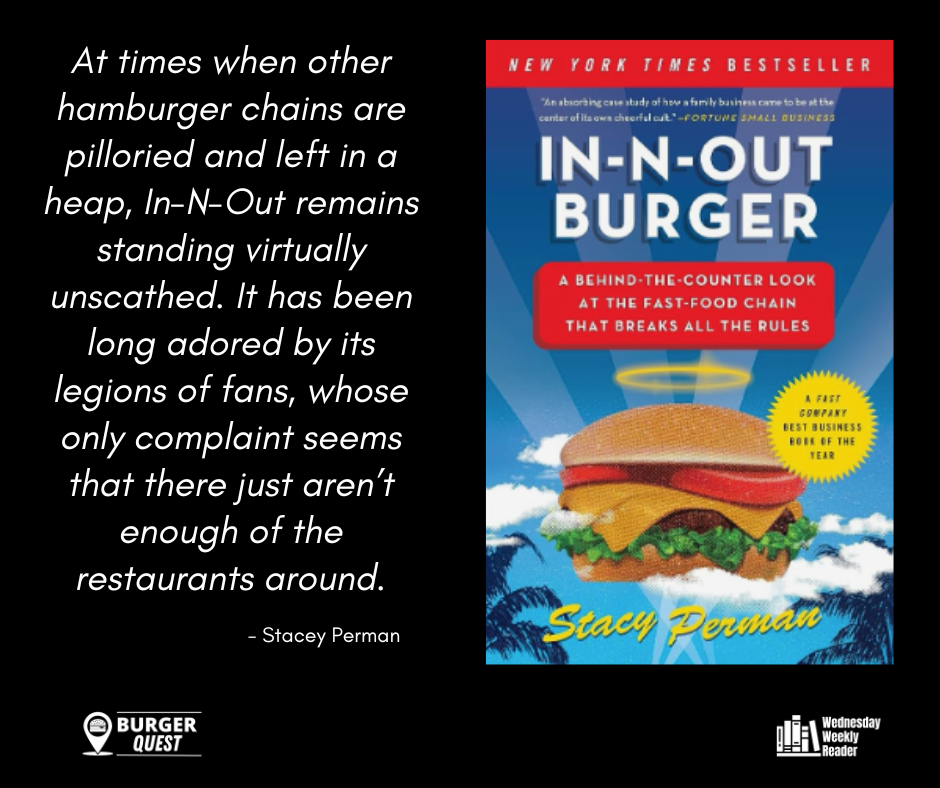
A behind-the-counter look at the fast-food chain that breaks all the rules, Stacy Perman’s In-N-Out Burger is the New York Times bestselling inside story of the family behind the California-based hamburger chain with a cult following large enough to rival the Grateful Dead’s. A juicy unauthorized history of a small business-turned-big business titan, In-N-Out Burger was named one of Fast Company magazine’s Best Business Books of 2009, and  Fortune Small Business insists that it “should be required reading for family business owners.

Stacy Perman’s In-N-Out Burger is a savory literary treat that delves deep into the history, culture, and enduring allure of a fast-food phenomenon that has captured the hearts and taste buds of millions. In this meticulously researched book, Perman uncovers the intriguing story behind the success of In-N-Out Burger, weaving together a narrative that is as satisfying as the restaurant’s legendary Double-Double.

With a captivating blend of storytelling and investigative journalism, Perman brings to life the journey of the Snyder family, the visionary founders of In-N-Out Burger. From the humble beginnings of a single drive-thru in Southern California to its iconic status as a cultural icon, the book traces the brand’s evolution with a focus on the values that have set it apart.

One of the book’s strengths is its ability to capture the essence of In-N-Out’s food philosophy. Perman not only describes the flavors and freshness of the menu items but also peels back the curtain on the restaurant’s commitment to quality. The meticulous attention to detail, from the sourcing of ingredients to the preparation methods, reflects the family’s dedication to serving an exceptional burger experience. This attention to craft resonates with food enthusiasts who seek more than just a quick meal.

Perman also delves into the brand’s fascinating culture, which sets In-N-Out apart in an industry often characterized by rapid turnover and uniformity. The author explores how the company’s dedication to its employees, simple menu, and classic aesthetic have created a loyal following that spans generations. This deep-rooted connection between In-N-Out and its customers is a testament to the company’s ability to maintain its authenticity while expanding into a rapidly changing fast-food landscape.

While In-N-Out Burger is a captivating read that offers a wealth of insight into the brand’s journey, there are a few moments where the narrative can feel overly detailed, potentially overwhelming readers who are looking for a more concise overview – but not for burger lovers! Additionally, a broader exploration of the brand’s challenges and controversies could have added a more balanced perspective to the story. [Note: Lynsi Snyder, granddaughter of In-N-Out founders and now president, is releasing her book The Ins and Outs of In-N-Out in October – a review will becoming here shortly thereafter!]

In conclusion, In-N-Out Burger by Stacy Perman is a flavorful journey through the history and ethos of a fast-food legend. Perman’s writing skillfully captures the essence of what makes In-N-Out Burger a beloved institution, resonating with both loyal fans and those who are curious about the stories behind their favorite comfort foods. For anyone with a fondness for a well-crafted burger and a desire to understand the behind-the-scenes magic of a successful culinary enterprise, this book is a satisfying and enlightening read.


Still hungry?

Burgerology: The Art and Science of the Perfect Patty

Flipping History: How McDonald’s Shaped the Hamburger’s Popularity

Indulging in Burger Bliss: A Quest for Culinary Perfection

White Castle: The Trailblazing Pioneer of Fast Food

Bite Into Tradition: The Best Loved Regional Burger Chains in the Country

Burger Beast Unleashed: The Ultimate Tribute to Burgers in Sef Gonzalez’ Book

Sink Your Teeth into “The Hamburger”: A Culinary Journey by Josh Ozersky

Burger Magic: Exploring the Universal Fascination Behind America’s Favorite Dish

My Quest for the Perfect Hamburger: A Literary, Culinary, and Arbitrary Journey in Pursuit of America’s Iconic Delight

A Tantalizing Top of the Stack, Made to Order

Before Burger Quest

Flipping History: How McDonald’s Reshaped the Hamburger’s Popularity

Few entrepreneurs can claim to have radically changed the way we live, and Ray Kroc is one of them. His revolutions in food-service automation, franchising, shared national training, and advertising have earned him a place beside the men and women who have founded not only businesses, but entire empires. But even more interesting than Ray Kroc the business man is Ray Kroc the man. Not your typical self-made tycoon, Kroc was fifty-two years old when he opened his first franchise. In Grinding It Out, you’ll meet the man behind McDonald’s, one of the largest fast-food corporations in the world with over 36,000 stores around the globe.

Irrepressible enthusiast, intuitive people person, and born storyteller, Kroc will fascinate and inspire you on every page.


The growth of McDonald’s worldwide continues to astonish. In tough financial times, McDonald’s proved that ingenuity, trial and error, and gut instinct were the keys to building a service business the entire world has come to admire.

McDonald’s has been a trendsetter in advertising, focusing on different demographics as well as the physically disabled. McDonald’s created McJobs, a program that employs both mentally challenged adults and senior citizens. And because its franchisees have their fingers on the pulse of the marketplace, McDonald’s has evolved successfully with the health food revolution, launching dozens of new products and moving toward environmentally safe packaging and recyclable goods.

Inspiring, informative, and filled with behind-the-scenes stories, McDonald’s: Behind the Arches offers an irresistible look inside a great American business success.

In the heart of modern American culture, few icons shine as brightly as the golden arches of McDonald’s. The fast-food giant’s rise from humble beginnings to global dominance has been chronicled in two seminal books, Grinding It Out by Ray Kroc and McDonald’s: Behind the Arches by John F. Love. These accounts not only shed light on the company’s history and key figures but also highlight its profound impact on the culinary landscape and the popularity of the hamburger in America.

A Journey Forged in Determination: Ray Kroc’s Perspective

Ray Kroc, the man responsible for transforming McDonald’s into a worldwide phenomenon, provides an intimate view of the company’s early days in his memoir Grinding It Out. Kroc’s tenacity and entrepreneurial spirit were instrumental in taking a single burger stand in San Bernardino, California, and turning it into an empire that would revolutionize the fast-food industry.

Kroc’s recounting of his collaboration with the McDonald brothers and the development of the Speedee Service System underscored his commitment to efficiency and consistency. This innovation laid the foundation for McDonald’s ability to serve quality food quickly—a concept that would define fast food for generations to come.

McDonald’s: Behind the Brand with John F. Love

In McDonald’s: Behind the Arches, John F. Love delves into the fascinating journey of the company, exploring its inception, evolution, and the personalities that shaped its trajectory. Love’s meticulous research provides a well-rounded picture of the McDonald brothers, Ray Kroc, and their individual contributions to the brand.

The book reveals how the iconic branding of McDonald’s, including the golden arches and memorable slogans, played a pivotal role in establishing the chain’s identity. McDonald’s was not just selling food; it was selling a consistent experience—a concept that was revolutionary in the fast-food landscape.

Culinary Innovations that Redefined Fast Food

Both books emphasize McDonald’s culinary innovations that transformed the food industry. The introduction of the assembly line-inspired kitchen, which expedited the preparation process while maintaining quality, set new standards for efficiency in the food sector. This innovative approach paved the way for uniformity in taste and presentation, regardless of location.

Moreover, Grinding It Out and McDonald’s: Behind the Arches highlight the strategic introduction of iconic menu items, such as the Big Mac and Happy Meal. These additions not only catered to evolving consumer preferences but also solidified McDonald’s role as a trendsetter within the fast-food arena.

The Hamburger: A Symbol of American Fast Food Culture

The hamburger, a quintessentially American creation, underwent a transformation in the hands of McDonald’s. By perfecting the art of the burger, streamlining the cooking process, and ensuring consistent taste, McDonald’s effectively popularized the hamburger across the nation.

The standardized approach to crafting hamburgers at McDonald’s contributed to the widespread recognition of the sandwich as a quick, convenient, and satisfying meal option. This cultural shift elevated the hamburger’s status from a simple fast-food choice to an enduring symbol of American culinary culture.

Shaping Culinary History and Beyond

Ray Kroc’s Grinding It Out and John F. Love’s McDonald’s: Behind the Arches provide invaluable insights into the evolution of McDonald’s, from its innovative culinary techniques to its cultural impact on American dining habits. Through meticulous research and engaging storytelling, these works illuminate the indelible mark McDonald’s has left on the world of food and business, forever altering how we view the hamburger and fast food.


Still hungry?

Indulging in Burger Bliss: A Quest for Culinary Perfection

White Castle: The Trailblazing Pioneer of Fast Food

Bite Into Tradition: The Best Loved Regional Burger Chains in the Country

Burger Beast Unleashed: The Ultimate Tribute to Burgers in Sef Gonzalez’ Book

Sink Your Teeth into “The Hamburger”: A Culinary Journey by Josh Ozersky

Burger Magic: Exploring the Universal Fascination Behind America’s Favorite Dish

My Quest for the Perfect Hamburger: A Literary, Culinary, and Arbitrary Journey in Pursuit of America’s Iconic Delight

A Tantalizing Top of the Stack, Made to Order

Before Burger Quest

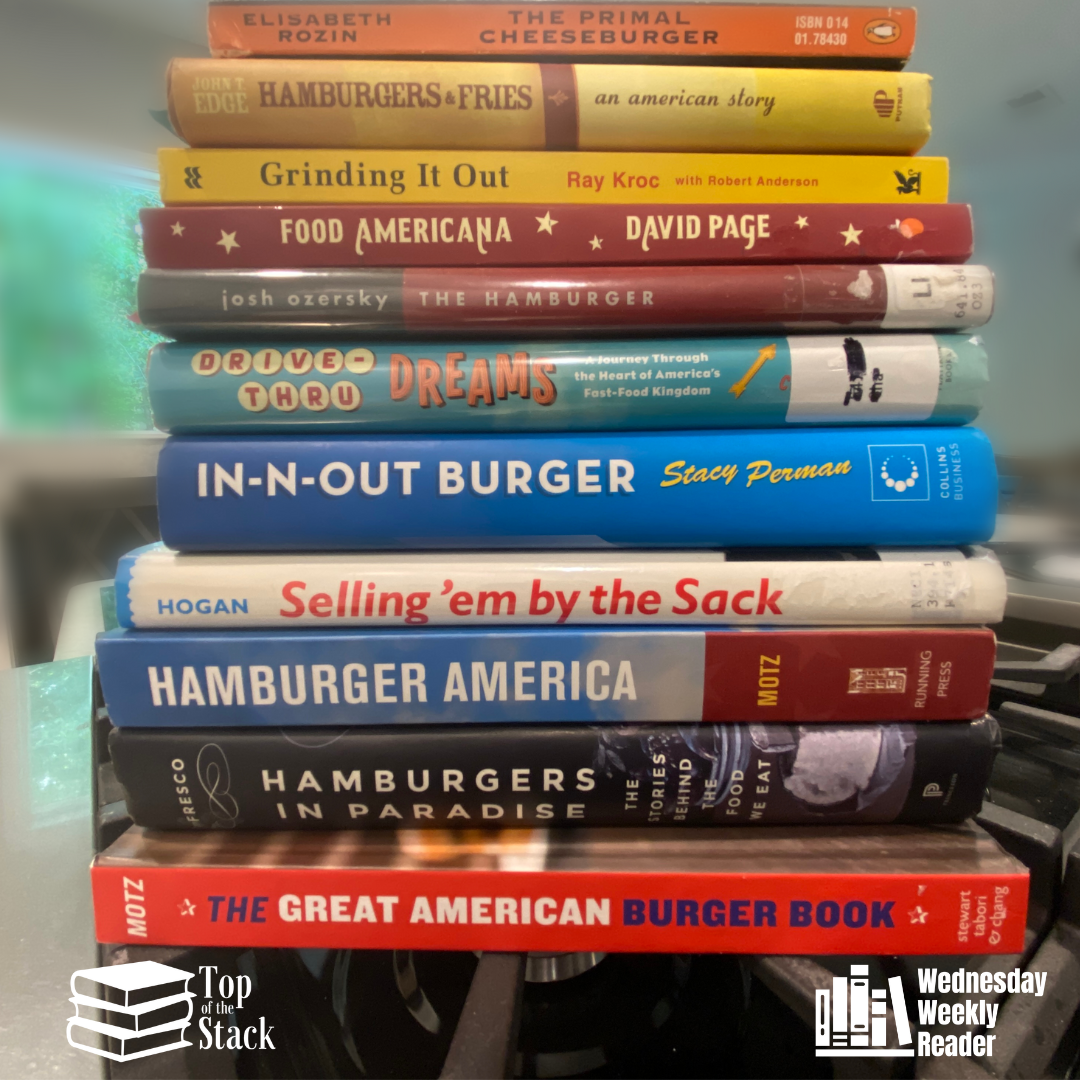
A Tantalizing Top of the Stack, Made to Order!

The announcement is coming Friday 6/30, but here’s a teaser.

To capture the complexity of even simple things requires looking at it from multiple angles, the first of which is literarythe writing, study, or content of literature about the object in question.

Of course you knew I would begin there.

The stack you see in the image is my beginning point, but I have no doubt my journey will uncover additional delicious delights about the humble hamburger…

… and that’s just in books!

Pull up a chair, slide into the booth, sit at the lunch counter – let the #BurgerQuest begin!