Growing Connections Through Technology

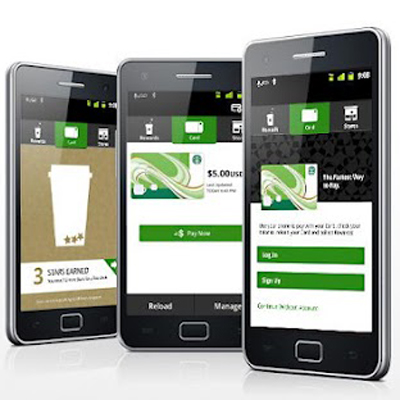
I’m writing this post sitting in an airport, waiting on my flight. I drove to the airport from my client’s location, navigating via my smart phone. Along the way, I was updated by the airline with a flight time change. Arriving at the airport, I checked in with a boarding pass on my phone. Waiting for the flight, I checked email, websites, and participated in a conference call – all on my mobile phone.

Mobile technology has changed the world, and that includes ChurchWorld.

courtesy mobilecommercedaily.com

courtesy mobilecommercedaily.com

In Leading the Starbucks Way, organizational consultant Joseph Michelli uses two years of research with dozens of leaders in the Starbucks organization to develop five actionable principles that forge emotional connections that drive innovation, grow new business product lines, and foster employee and customer loyalty. These principles are “brief and clear, and put the customers, products, and experiences at the purposeful center of Starbucks.”

Leadership Principle #4: Mobilize the Connection

This principle looks at how Starbucks strengthens the relationships formed in Starbucks stores and extends them into the home, office, and supermarket experiences of customers. It also examines how Starbucks leaders leverage technology to integrate a multichannel relationship with their customer base.

Great leaders continually seek to leverage the options that are emerging through technology and to position their businesses on social platforms more effectively and strategically.     – Joseph Michelli, Leading the Starbucks Way

ChurchWorld Application

  1. How would you assess your success in forging a digital connection of trust and relevance?
  2. Do you have a multi-pronged and integrated strategy concerning digital and mobile solutions?

Two key elements in the Starbucks social media strategy are authenticity and interesting content. Starbucks is committed to making friends, not offers. They feel that Twitter and Facebook are about connecting – there are more appropriate settings for selling and closing.

ChurchWorld Application

  1. How strategic are your decisions concerning the social media platforms through which your brand will engage?
  2. Have you dedicated resources to commit time to thinking about the platform that fits your organization and guest and member interfaces?

Technology will serve our mission, and we will deploy our strategies to engage our partners and customers wherever they spend their time. We will seek to stay relevant to them and uplift them through human connection.     – Alex Wheeler, vice president, Starbucks Global Digital Marketing

SBFacebookpage

A few of the highlights of this principle:

  • Twitter and Facebook approaches should focus on consistent but not overwhelming levels of communication, delivered for the purpose of connecting.
  • No matter the size of the organization, its leaders should designate someone to be in charge of social media strategy.
  • Technology is powerful when you view it as a way to enhance the human connection rather than seeing it as inevitably leading to impersonalization.
  • Technology should not be provided for “users,” but instead should be seen as a tool for serving and connecting with your “people” and your “Guests.”


Part 7 of a series in the 2013 GsD Fall Term

Leading the Starbucks Way: Information, Insights, and Analysis Needed to Create a High-Performance Guest-Oriented Organization

inspired by and adapted from Leading The Starbucks Way, by Joseph Michelli

Print


Listening is an Active Verb

At Starbucks, listening is synonymous with connecting, discovering, understanding, empathizing, and responding.     – Joseph Michelli, Leading the Starbucks Way

The benefits of this type of listening fuel the entrepreneurial and adaptive spirit of a brand that could have easily lost its nimbleness as a result of its growth and scale.

courtesy 360degreefeedback

courtesy 360degreefeedback

According to organizational consultant Joseph Michelli, many leaders are either too busy to listen or are more interested in speaking. As a result, listening intently, regularly, and respectfully to team members separates the great leader from the good one.

In the Starbucks organization, listening takes many forms. While leaders listen informally at an individual or team level, Starbucks also has a formalized department that consistently listens for the needs and engagement level of partners.

Virgil Jones, director, Partner Services at Starbucks, notes:

Our team conducts surveys, focus groups, and continuously takes a pulse on our partner population. Within that department, the most important thing I do on a daily basis is listen to our partners. The second most important thing I do is continue to touch base with our partners and adjust, because with the way technology is advancing, the things that are hot, interesting, and engaging with our partners today is going to be completely different 18 months from now.

Michelle Gass, president, Starbucks Europe, Middle East, and Africa, like many other Starbucks senior leaders, demonstrates a different kind of regular and personal listening that fuels partner engagement. Her approach comes in the form of “listening tours.” According to Michelle:

I travel across my region regularly and conduct listen tours and roundtable meetings. These are informal meetings where we spend about 90 minutes paying attention to the thoughts, needs, and ideas of those we serve. While listening is important, taking swift action to elevate experiences is essential. These tours are an ongoing process of connection and discovery, not an event.

Michelli adds:

In many ways, when leaders demonstrate formal and informal listening, they not only engage employees but also gain access to information that helps them stay relevant to the needs and observations of their team members.

ChurchWorld Application

  1. Do you practice regular, scheduled “listening tours” with your front-line team members?
  2. What are your systematic approaches to other types of leadership listening?
  3. How do you complete the listening cycle (what actions do you take to inform your team members that they have been “heard”?)

Are you really listening to your teams? What are you hearing? Most importantly, what are you doing?

Part 5 of a series in the 2013 GsD Fall Term

Leading the Starbucks Way: Information, Insights, and Analysis Needed to Create a High-Performance Guest-Oriented Organization

inspired by and adapted from Leading The Starbucks Way, by Joseph Michelli

Print

How Are You Making Deposits in Your Customers’ “Reservoir of Trust”?

Leaders at companies like Starbucks have found ways to maintain strong emotional bonds with their customers and achieve their business objectives despite a landscape of heightened consumer empowerment and corporate cynicism. At the center of these sustained emotional bonds is a leadership principle that I refer to as “Love to Be Loved.”     – Joseph Michelli, Leading the Starbucks Way

Somewhere along your education journey, you were probably exposed to Abraham Maslow’s Hierarch of Needs: physiological, safety, belongingness and love, esteem, and self-actualization. According to Maslow, basic survival requirements take precedence over more evolved social and transformational needs.

According to organizational consultant Joseph Michelli, Maslow’s theory is also relevant to understanding the perceptions of customers of your organization. Theorists and researchers at the Gallup Corporation have defined a hierarchy of customer perceptions that escalate from low levels to full customer engagement.

In the Gallop model, the first hurdle a company must face is the question, “Are you competent?” If you are to ensure a more secure relationship with your customers, they must be able to address the second question, “Can I predict that this company will demonstrate fairness and consistency in the way it delivers products and experiences?” A positive answer to that question demonstrates the company operates with integrity. Being perceived as having integrity established the opportunity for customers to experience a heightened level of emotional engagement – “pride.” Customer pride comes when your organization is viewed as a positive force in your customers’ lives or in the lives of others they care about. The pinnacle of Gallup’s customer engagement hierarchy is passion. The customer feels your organization is perfect for him, and he can’t live without it.

Trust is the gateway emotion on a journey to greater levels of engagement.

Based on Michelli’s observations, Starbucks leaders strive to demonstrate morality in their actions by making deposits in their stakeholder’s reservoir of trust (a phrase coined by CEO Howard Shultz). This is accomplished by:

  1. Empathetically looking at business decisions through the lens of humanity
  2. Communicating straightforward intent, acknowledging shortcomings, and keeping promises
  3. Balancing the competing interests of stakeholders
  4. Creating operational systems and quality improvement processes to deliver a consistently reliable product
  5. Establishing training and empowering partners to deliver service recovery

ChurchWorld Application

  1. Based on the hierarchical stages of customer engagement discussed above, but transferred into the world of Guest Experiences at your church, how do most of your Guests, attenders, and team members perceive your organization? Are you “competent” at what you do? Do your team members display a sense of “pride” in serving in ministry? Does your organization have a sense of “integrity” as recognized by your community – even those who have no connection to your church? Finally, is a sense of “passion” displayed by constituents – even to a degree that their lives are enriched because of their connection to your organization?
  2. How well does your organization “make deposits in the reservoir of trust” for your stakeholders? How would you grade yourself in each of the areas listed above?

SB Barista group

How Starbucks Moves Forward with Greater Levels of Engagement

  • A team approach to product development and implementation, along with rigorous testing, leads to earning trust through consistency.
  • Partners are trained and developed to create inspired moments by defining those service behaviors that should “always” or “never” occur at Starbucks.
  • From the earliest training, partners are provided with the resources and autonomy to resolve customer complaints or concerns.
  • The only way to become beloved is to be loving.

Michelli makes this closing point:

Customers who make extremely strong emotional connections with a company actually perceive their preferred brands as extensions of their personality and integrate the brands into their rituals, lifestyle, and identity.

Part 4 of a series in the 2013 GsD Fall Term

Leading the Starbucks Way: Information, Insights, and Analysis Needed to Create a High-Performance Guest-Oriented Organization 

inspired by and adapted from Leading The Starbucks Way, by Joseph Michelli

Print

What Kind of Experience Do You Want Your Guests to Have?

Unlike many other places that sell coffee, Starbucks builds the equity of our brand through the Starbucks Experience. It comes to life every day in the relationship our people have with our customers. By focusing again on the Starbucks Experience, we will create a renewed level of meaningful differentiation and separation in the market between us and others who are attempting to sell coffee.  – Starbucks CEO Howard Schultz, speaking about the priority of the customer Experience as a part of Starbucks Transformation Agenda

3 Aspects of Starbucks Customer Experience Excellence

Starbucks leaders:

  • Define and communicate the desired and unique Starbucks Experience
  • Select individuals with the requisite talent to deliver that experience consistently
  • Train partners on the key pillars necessary to engage customers regularly

The worthy customer experience ideals at Starbucks are expressed in the company’s mission statement and are supported by the principles of how this mission is lived out everyday – principles like the following:

Our Customers – When we are fully engaged, we connect with, laugh with, and uplift the lives of our customers – even if just for a few moments. It starts with the promise of a perfectly made beverage, but our work goes far beyond that. It’s really about human connection.

Our Stores – When our customers feel this sense of belonging, our stores become a haven, a break from the worries outside, a place where you can meet with friends. It’s about enjoyment at the speed of life – sometimes slow and savored, sometimes faster. Always full of humanity.

SB customers

Organizational consultant Joseph Michelli, in his new book Leading the Starbucks Way, writes that these principles are “brief and clear, and put the customers, products, and experiences at the purposeful center of Starbucks.”

Many organizations orient new team members by teaching them the tasks to be performed on the job but fail to educate them on service excellence skills and/or the experience that they want those team members to deliver. At Starbucks, initial skills training quickly moves into content like “Customer Service Basics” and the “Starbucks Experience.”

A great example is a process tool called the “Store Walk Through”, where the new team members move through the café environment observing and recording important aspects that a customer is likely to encounter on their journey from arrival through departure. These customer perspective walks occur once per shift at each store.

Another helpful tool provided by Starbucks leaders is a defined service vision that describes what needs to be achieved during service experiences. Additionally, it provides four customer service behaviors that help partners understand how the customer service vision is to be accomplished.

The Starbucks customer vision statement reads “We create inspired moments in each customer’s day.” To accomplish this objective, partners are encouraged to focus on the following customer service behaviors:

  • Anticipate
  • Connect
  • Personalize
  • Own

According to Michelli, by providing the desired destination and ways to arrive there, you help your teams develop exceptionally strong bonds with customers that powerfully differentiate your organization from the competition.

ChurchWorld Application

  1. If asked, what percentage of your Guest Experience team members could articulate your Guest Experience vision or the way you want Guests to feel as a result of the experiences they have while at your campus?
  2. Develop a process tool in which your team members literally walk through the entire Guest Experience at your campus from the perspective of a Guest. Debrief the training. Make it a regular part of your team training.
  3. Do you know what your Guests are expecting when they come to your campus? Are your Guest Experience team members knowledgeable enough about Guest expectations to anticipate and deliver an extraordinary experience?

Michelli continues to develop the exceptional customer experience by outlining additional competencies that world-class service providers exhibit:

  • The ability to maximize customer engagement through environmental design
  • Integration of key sensory factors
  • A capacity to listen and adapt your Guest Experience to meet the changing wants, needs, and desires of your customers

While many leaders look for ways to improve experiences by adding elements to the environment, the best outcomes often come from the removal of negative cues that distract from a memorable experience.     – Joseph Michelli

ChurchWorld Application

  1. Assume the persona of one of your key targets – say, a young single professional. Walk key leaders of your team through your typical Guest Experience, observing through the eyes of your identified persona. What elements of clutter or confusion stand out? What can be done to clean up these experience detractors?
  2. Repeat the same exercise, this time choosing a completely different persona. Are there different areas of clutter or confusion? If so, how will you rectify them?
  3. For a real challenger, repeat this exercise with as many key target groups as you can identify. List all the areas of clutter and confusion and take action on repeated areas immediately.
  4. With your Guest Experience leadership team, conduct a sensory audit of your organization. What are the strengths, weaknesses, and opportunities? What sights, sounds, smells, and tactile elements do your Guests experience throughout their journey at your campus? 

A couple of important “Connecting Points” by Michelli:

People can copy your products and your services, but seldom can they build the powerful connections with customers that emerge from the well-designed experiences that you deliver.

Whether it is connecting the design of your physical space to your company’s mission, vision, and values; strengthening efficiencies to improve the customer experience, or adding sensory elements, successful customer experience enhancements have one unifying component: the need to execute the details.

How will you move your Guest Experiences from “replicable and consistent” to “magical and unique”?

Part 3 of a series in the 2013 GsD Fall Term

Leading the Starbucks Way: Information, Insights, and Analysis Needed to Create a High-Performance Guest-Oriented Organization

inspired by and adapted from Leading The Starbucks Way, by Joseph Michelli

Print

When Good is not Good Enough, It’s Time to Lead Your Team to “Savor and Elevate”

“Savor and Elevate” is a business principle that emphasizes the importance of maximizing enthusiasm for the products, services, and experiences your company provides.      Joseph Michelli, Leading the Starbucks Way

To achieve Starbuck’s mission “to inspire and nurture the human spirit – one person, one cup and one neighborhood at a time,” leaders at Starbucks crafted a set of principles to be lived daily, the first of which involves passion for:

 Our coffee. It has always been, and will always be, about quality. We’re passionate about ethically sourcing the finest coffee beans, roasting them with great care, and improving the lives of people who grow them. We care deeply about this; our work is never done.

 Starbucks leaders have produced diverse tools to help Starbucks partners develop or deepen a genuine product passion.

One of those tools is a coffee education that reflects a 70/20/10 growth and development approach. Based on research on how people integrate and utilize new information, new baristas at Starbucks receiver approximately:

  • 70 percent of their initial coffee education through on-the-job experience and hands-on practice
  • 20 percent of their training through the feedback and mentorship from their peers, learning coach, and store management
  • 10 percent of their training from an online modularized curriculum
courtesy coffeeconcepts.com

courtesy coffeeconcepts.com

At intervals during the certification training and development process, new partners must pass a knowledge test and demonstrate to their store manager skill competency in tasks such as preparing a cappuccino.

A person can become passionate not only about the coffee itself, but also about the artistry involved in its creation.

If a barista only goes through the motions of pouring espresso, if he or she does not care, then Starbucks has lost the essence of what we set out to do 40 years ago: inspire the human spirit.    – Howard Schultz, Starbucks CEO

ChurchWorld Application:

  1. What is your Guest Experience Team’s overall level of passion in serving your Guests and attenders? How does it compare to the passion levels at the best service providers you have encountered in the marketplace?
  2. Have you built-in Guest Experience knowledge and passion from the beginning of your team member’s involvement?
  3. What first impressions do you create for new team members? Do they experience what you hope they provide?

While the opportunity for developing a passion for coffee and the artistry of its preparations is built into the formative learning experiences of Starbucks new hires, the company’s leadership understands that this passion is reinforced, sustained, and deepened through corporate celebration and communication rituals, immersive learning opportunities, and core business strategy. Michelli elaborates:

Authentic corporate rituals are powerful ways to create a common bond, inspire commitment and innovation, and build an integrated and effective culture.

Rather than providing messages that solely describe the “what” and “how” of your products, listen for and share stories that will help connect your people to the nuances of your products and/or special aspects of the customer journey.

Leaders at Starbucks have crafted way to immerse staff members in enriched learning experiences that create opportunities for product passion. They have also found ways to spark master of product knowledge by relying on an intrinsic sense of accomplishment that comes from advanced learning and the ability to teach others.

Evaluate every strategy to ensure that it aligns with your core values, reinforces your purpose, and stimulates continue progress toward your aspirations.

Increased visit frequency, wider product penetration, greater customer engagement, consistent product sell-through, and employee pride and professional development are enviable by-products of igniting the passion of your team members.

Growing research evidence indicates that “knowledgeable employees” is one of the top items on the wish list for customers today.

Imagine what knowledgeable and passionate employees can do, not only for your customers, but also for the morale and enthusiasm associated with your organization.

ChurchWorld Application:

  1. Examine the habits, rituals, and messages that you employ in your Guest Experience ministry. Are they facilitating emotional connections, a sense of community, and passion for excellence?
  2. How to you capture and share stories of your Guest Experiences team members that help connect them to Guests, one another, and the vision of your church?
  3. How are you incorporating Guest Experience mastery and social recognition into your team training programs?

Part 2 of a series in the 2013 GsD Fall Term

Leading the Starbucks Way: Information, Insights, and Analysis Needed to Create a High-Performance Guest-Oriented Organization

inspired by and adapted from Leading The Starbucks Way, by Joseph Michelli

Print


The Leadership Lessons of Starbucks

A man sits alone at lunch in his favorite Starbucks store and tells a green apron-clad Starbucks barista that the store is his midday refuge, noting, “At Starbucks, you are nice to me, you remember me, and you seem genuinely grateful that I am here.” – from Leading the Starbucks Way

Stories like this exemplify a company whose leaders establish a compelling vision and manifest behaviors that culminate not only in product sales but also in powerful, loyalty-rich human connections.

Here’s my personal Starbucks “Aha” story:

On a cold January day over six years ago, I was at “my” Starbucks for an hour’s worth of quiet study, accompanied by a White Chocolate Mocha and a warm Apple Fritter. I settled into a comfortable seat, observing the friendly, welcoming interactions between the baristas behind the counter and their customers as they walked in. I didn’t know I was in for Guest Experience 101.

While I was observing the barista’s interactions with customers, a young mother and her 3 year-old daughter came into the store. As they were walking in the door, the barista came out from behind the counter, said hello to the mom, then knelt down in front of the daughter, calling her by name and engaging in a conversation for several minutes – all while other customers continued to come into the store. The store was well staffed, so no one was held up by the barista’s actions. A seemingly small gesture? Maybe so, but it sparked a single question in me, one that I am still seeking the answer to today:

What would it take for churches to have the same kind of passion and enthusiasm in greeting their Guests?

That fleeting interaction between a barista and a Guest launched a journey that continues to expand into new territory. It’s only appropriate, though, to come back to Starbucks for new insights and applications for Guest Experiences in ChurchWorld.

One of the best-recognized and admired brands in the world, Starbucks singlehandedly transformed the ordinary delivery of coffee into a cultural phenomenon – a result of the company’s exemplary leadership practices.

Joseph Michelli, author of the bestseller The Starbucks Experience, explains that the international success of Starbucks begins with a promise: to inspire and nurture the human spirit – one person, one cup, and one neighborhood at a time.

Michelli offers a perspective on the leadership principles that drove the iconic coffee company’s resurgence from serious setbacks during the economic downturn – one of the few turnaround stories of this time. The foundation of the turnaround was a Transformation Agenda (For more about this turnaround, see Starbucks CEO Howard Schultz’s book Onward; you can read some excerpts from it in a series of posts beginning here).

Here’s a list of Starbucks’ Transformation Agenda in seven bold moves:

  1. Be the undisputed coffee authority
  2. Engage and inspire our partner
  3. Ignite the emotional attachment with our customers
  4. Expand our global presence – while making each store the heart of the local neighborhood
  5. Be the leader in ethical sourcing and environmental impact
  6. Create innovative growth platforms worthy of our coffee
  7. Deliver a sustainable economic model

Those seven moves resulted in 13 consecutive quarters of global comparable store sales growth greater than 5%. Today, there are over 200,000 people serving more than 60 million weekly customers who frequent more than 18,000 stores in more than 60 countries worldwide.

Starbucks had positioned itself for enduring profitability and brand respect.

For his latest book Leading the Starbucks Way, author Michelli conducted over two years of research, with uninhibited access to leaders and partners at all levels of the company. More than 500 hours of interviews and research produced the following five leadership principles:

  1. Savor and elevate
  2. Love to be loved
  3. Reach for common ground
  4. Mobilize the connection
  5. Cherish and challenge your legacy

In this series of posts focusing on these five principles, I want to encourage you to accompany Michelli as he asks questions like these – but translated for ChurchWorld application:

  • How do leaders at Starbucks strategically and tactically steward the company’s products and people to build customer engagement, loyalty, advocacy, and even brand love?
  • How to these leaders model and inspire excellence in product delivery, the creation of moments of authentic service, and enterprise-wide appreciation for the importance of shareholder value, and a contagious demonstration of social conscience?
  • How do Starbucks partners expand relationships beyond the café environment?
  • How does Starbucks leverage technology to enhance customer experiences?
  • What does Starbucks do to customize offerings to address local desires around the globe?

As a ChurchWorld leader, I hope you realize that by changing just a few words in the questions above, you will have an excellent guide for your own journey of discovery.

Part 1 of a series in the 2013 GsD Fall Term

Leading the Starbucks Way: Information, Insights, and Analysis Needed to Create a High-Performance Guest-Oriented Organization

inspired by and adapted from Leading The Starbucks Way, by Joseph Michelli

Print

GsD Fall Semester Starts Monday, September 16

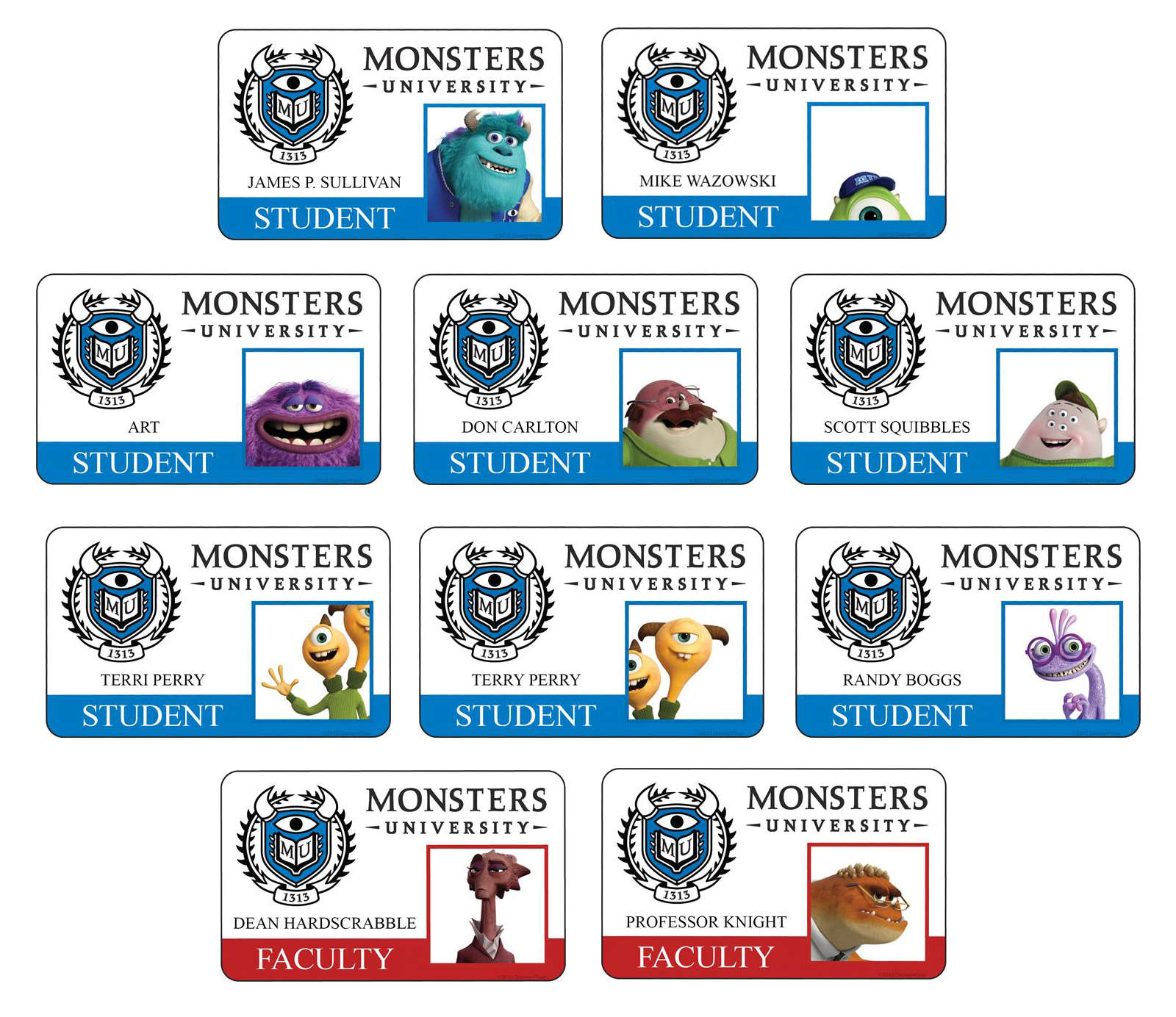
…and you don’t even need an ID card!

MU-IDcards monsteruniversitywallpaper.com

courtesy monsteruniversitywallpaper.com

Guestology – the art and science of knowing and understanding your guests – is a term originated by Bruce Laval of the Walt Disney Company.

The use of Doctor of Guestology, or GsD, is a tongue-in-cheek acknowledgment that organizations that really want to understand and deliver a WOW Guest Experience need to study the best practices and principles in use today, and then adapt them to the context of their own environment.

Foundational classes were offered this past Spring and Summer terms. Need to do some “catch-up” learning over the weekend? Check out the course material already covered this year here.

It’s time to dive into some advanced studies:

  • Leading the Starbucks Way: Information, Insights, and Analysis Needed to Create a High-Performance Guest-Oriented Organization
  • Practicum: Exploring the Five Tactical Areas of Customer Amazement at Ace Hardware
  • Guest Experience Design 101: Unpacking the Mind-set, Techniques, and Vocabulary of Design Thinking for the Guest Experience
  • Exploring New Dimensions of Guest Experiences: Beyond 3D

Class begins Monday September 16 at 8 AM…

…don’t be late!

Invisible Design

It’s a home run for me: the September issue of Wired magazine features a section on experience and design thinking.

courtesy wired.com

courtesy wired.com

Here are a few select quotes – a paragraph, 2 sentences, and a phrase:

The Wright brothers didn’t invent powered, manned flight. By the end of the 19th century, daredevils around the world had already put motors on gliders and launched themselves into the air. Technically these machines could fly—they just tended to crash afterward. But the Wright brothers created a plane that people could actually control, with an effective steering system that let pilots maneuver the craft in midair and land safely. They may not have invented powered flight, but they brought it into the realm of human experience. They designed it.

Design doesn’t just make things beautiful, it makes them work.

The next great challenge for design: weaving the threads of technology, information, and access seamlessly and elegantly into our everyday lives.

carefully designed experiences appear invisible

Read the stories here.

Today.

How will you apply invisible design in your organization?

Disney’s Imagineers: Designing the Total Guest Experience

Designing the Guest’s experience is what Walt Disney’s Imagineers came to call “the art of the show,” a term that applies to what the Imagineers did at every level, from the broadest conceptual outlines to the smallest details, encompassing visual storytelling, characters, and the use of color.

Today is eighth and concluding session of Summer Term II of the 2013 GsD program with Applied Guestology 201, a review of some of the leading organizations who deliver exemplary Guest Experiences with application to ChurchWorld.

As I conclude this brief look at Applied Guestology 201, it’s only fitting to come full circle to where we started: Walt Disney and the worlds he created.

The Imagineers design intention is always to give satisfaction to the guest.

John Hench, Imagineering genius and Disney team member for 60+ years

Walt Disney realized that a visit to an amusement park could be like a theatrical experience – in a word, a show. Walt saw that the Guests’ sense of progressing through a narrative, of living out a story told visually, could link together the great variety of attractions he envisioned for his new kind of park. While traveling through their stories, Guests would encounter, and even interact with, their favorite Disney characters, and who would be transformed, as if by magic, from their two-dimensional film existence into this special three-dimensional story world.

As designers, the Imagineers create spaces – guided experiences that take place in carefully structured environments, allowing the Guests to see, hear, smell, touch, and taste in new ways. In effect, Imagineers transform a space into a story place.

Ultimately, the Imagineers gave Guests a place to play, something Walt believed that adults needed as much as children. The design of the Imagineers gives power to the Guests’ imagination, to transcend their everyday routine. Walt Disney insisted that Guests should “feel better because of” their experiences in Disney theme parks, thus establishing the art of the show.

For the Imagineers, that meant considering everything within and relating to the parks as design elements. To build effective story environments and assure Guest comfort, the designers realize that they always had to assume the Guests’ position and point of view, and just as Walt did, to take the Guests’ interests to heart and defend them when others didn’t think it mattered.

It is up to the designers to provide Guests with the appropriate sensory information that makes each story environment convincing. This means that design considerations go beyond the attractions themselves to the service and operations staff, transportation, restaurants, shops, rest rooms – even the trash cans.

Initially, the Imagineers used the knowledge gained from their experience in films, but they soon found that their Guests themselves would teach them what they most needed to know about theme park design and operation.

To design most effectively for Guests, the Imagineers learned that they had to observe them up close, waiting in lines with them, going on attractions with them, even eating with them. The Imagineers paid attention to Guests’ patterns of movement and the ways in which they expressed their emotions. They were able to get an idea of what was going on in their minds.

When designers see Guests in their natural states of behavior, they gain a better understanding of the space and time Guests need in a story environment.
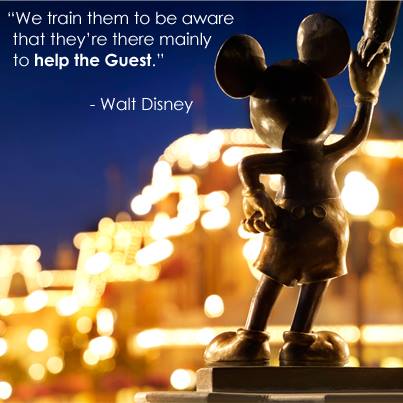
WD Guest quote DI

Disney Imagineer Marty Sklar, who retired in 2009 as the only Disney employee to have participated in the opening of all eleven theme parks around the world, is noted for many things, but one of the most cherished has to be his creation of “Mickey’s Ten Commandments.”

During his 54-year career, Sklar was involved in all facets of the theme parks – from concepts to design to operations. Along the way, he developed, refined and practiced key principles of leadership based on what he learned from Walt Disney and other Disney Legends, especially designer John Hench. He crystalized these “learnings” into the first of what he called Mickey’s Ten Commandments:

  1. Know your audience – Identify the prime audience for your attraction or show before you begin design
  2. Wear your Guests’ shoes – Insist that your team members experience your creation just the way Guests do
  3. Organize the flow of people and ideas – Make sure there is a logic and sequence in our stories and the way Guests experience them
  4. Create a wienie (visual magnet) – Create visual “targets” that will lead Guests clearly and logically through your facility
  5. Communicate with visual literacy – Make good use of color, shape form, texture – all the nonverbal ways of communication
  6. Avoid overload – create turn-ons – Resist the temptation to overload your audience with too much information and too many objects
  7. Tell one story at a time – Stick to the story line; good stories are clear, logical, and consistent
  8. Avoid contradictions – maintain identity – Details in design or content that contradict one another confuse an audience about your story or the time period it takes place in
  9. For every once of treatment, provide a ton of treat – Walt Disney said you can educate people, but don’t tell them you’re doing it. Make it fun!
  10. Keep it up! (Maintain it) – In a Disney park or resort, everything must work. Poor maintenance is poor show!

Exceeding Guests’ expectations is Disney’s Guest Service strategy, and paying attention to every detail is the tactic by which it is accomplished.

Class dismissed.


Application for ChurchWorld

Really? If you are involved in Guest Services at your church in any capacity, and can’t see the immediate and powerful application of Mickey’s Ten Commandments to your own Guest Services process, may I kindly suggest you are serving in the wrong ministry area?

Be Our Guest” has been the invitation to Disney visitors long before the song from Beauty and the Beast became a box office hit.

It underscores an important element in the Disney vocabulary, that customers are not referred to as such, but rather as Guests. In the Disney nomenclature, the word “Guest” is capitalized and treated as a formal noun.

What’s the difference between treating someone like a visitor, and treating someone like a Guest?

The obvious analogy is that we do things differently when we bring Guests into our home. We clean up the house. We dress up. We prepare something special to eat. We host them. We take care of their real needs.

Disney expects Guests

At Disney theme parks around the world, they expect Guests – and plan to exceed their Guests’ expectations every time. What about you?

Are you expecting Guests?

Recommended Reading for this session:

Designing Disney: Imagineering and the Art of the Show, John Hench

Dream It, Do It: My Half-Century Creating Disney’s Magic Kingdoms, Marty Sklar

(for a complete reading list, see The Essential Guest Experience Library)

Guestology – the art and science of knowing and understanding your guests – is a term originated by Bruce Laval of the Walt Disney Company. The use of GsD is a tongue-in-cheek acknowledgment that organizations that really want to understand and deliver a WOW Guest Experience need to study the best practices and principles in use today, and then adapt them to the context of their own environment.

the GsD (Doctor of Guestology) journey: 2nd Term Summer 2013


Enterprise: Driving Customer Loyalty

Enterprise Rent-A-Car founder Jack Taylor understood that if you are able to put a fresh twist on the otherwise ordinary, people are more likely to choose your product or service without even looking at the competition, because they know it will make for a better overall experience.

Today is seventh session of Summer Term II of the 2013 GsD program with Applied Guestology 201, a review of some of the leading organizations who deliver exemplary Guest Experiences with application to ChurchWorld.

Enterprise has long been doing business very differently than everyone else.  Jack Taylor started what became Enterprise Rent-A-Car on the lower level of a St. Louis Cadillac dealership in 1957 – originally as a leasing business.

In the early 1960s, the car rental industry was dominated by a few national brands with offices located almost exclusively at airports. Jack had no interest in competing in the traditional car rental industry. His interest in car rentals developed when he noticed his customers asking about getting cars just for a day or two, to serve as loaners for out-of-town guests or replacements when their own vehicles were being serviced. Seeing an opportunity, Jack launched a rental car division in 1963.

Enterprise Rent-A-Car took a much different approach from the competition. Instead of operating at airports, Enterprise built a reputation as the home-city car rental company. It was a place you could turn to when your car was in the shop or you wanted to take a weekend trip without putting miles on your own car. With the demand growing in this untapped market, Enterprise quietly earned a leadership position in the neighborhood car rental segment.

Over the years, Enterprise continued to do business differently: pioneering the concept of picking up customers and bringing them to their waiting vehicle, expanding into fleet services, retail used car sales, truck rentals, and hourly car sharing. They also buy their cars directly from automakers instead of leasing them.

In 2007, Enterprise seized the opportunity for expansion by acquiring Alamo Rent A Car and National Car Rental. Overnight, the company’s market share at airports would nearly quadruple. Jack’s son Andy, now leading the company, saw a unique opportunity to bring Enterprise’s expertise in delivering exceptional customer service to two brands serving extremely different target markets.

Today Enterprise Holdings is the industry leader – and their focus is still on delivering excellent customer service.

Enterprise

Kirk Kazanjian, a leading authority on customer service, has spent a lot of time studying Enterprise to uncover principles they have developed over the years to drive loyalty in their customers and team members. His new book, Driving Loyalty, provides tangible advice that organizations can use to enhance the customer experience. Here’s a summary of the chapter “Delivering Dazzling Service”:

  1. Ask customers how they feel about you through regular surveys
  2. Conduct surveys in person or by phone, keep the questions to a minimum, offer a satisfaction scale of no more than 1 to 5, and conclude with an opportunity to provide open-ended feedback.
  3. If you have more than one location, remember that the secret to building customer loyalty is consistency from one office to another
  4. Always strive for complete satisfaction, since customers who are only somewhat satisfied are for less likely to do business with you again
  5. Hold employees accountable for exceeding customer expectations by tying bonuses in with customer service scores
  6. Look up and make eye contact with customers, and use their names as much as possible to crate an instant connection
  7. Realize that sometimes less can be more when delivering a good service, since a high-touch approach isn’t appropriate in every situation
  8. Before customers leave, be sure to ask how they liked your service, what you could have done to make the experience better, and if there was a misstep, how you can make it up to them
  9. Empower all employees at all levels to make accommodations to satisfy customers without requiring additional approval, since it’s essential to address any issues immediately to prevent anyone leaving your business angry or upset
  10. Look for way to continually enhance the customer experience at each moment of truth in the Cycle of Service
  11. Remember that good customer service is about the simple things, such as showing an interest in your customers, anticipating their needs, making them feel special, being proactive with information, and communicating clearly
  12. If you want your team to excel at dazzling your customers, you need to train them well and on a regular business
  13. Don’t gouge customers by overcharging or adding on extra fees
  14. Be where your customers need you most, especially in difficult times
  15. Show empathy with your customers, particularly when they are unhappy, in order to build a lasting bond
  16. Try to resolve any disputes in person or over the phone, not through written communication
  17. Use behavioral interviewing techniques to identify those employees best suited to deliver great service

Application for ChurchWorld

If you lead the Guest Services team at your church, or involved in Guest Services in any form or fashion, you may be asking yourself “What could I learn about Guest Services from a car rental company?”

Let me answer that by looking at just one item from the list above: Look for way to continually enhance the customer experience at each moment of truth in the Cycle of Service.

Every interaction with your Guests consists of a series of “moments of truth.” Each moment represents a specific opportunity that you have to make an impression.

  • What are the moments of truth for your church?
  • Have you made a list of them?
  • Did you realize they start well before an individual physically comes to your campus?
  • Did you know that in many cases, a Guest has made a determination whether or not to return to your church before the worship service has even begun?
  • Do you understand that Guests view moments of truth differently depending on the circumstances they find themselves in at the moment?
  • Do you know that it is possible to train your team members to recognize and be proactive in meeting Guests needs?

That’s a sample of what your church Guest Services Team can learn from Enterprise.

It’s time you took the keys to great Guest Services out for a drive.

Recommended Reading for this session:

Driving Loyalty, Kirk Kazanjian

(for a complete reading list, see The Essential Guest Experience Library)

Guestology – the art and science of knowing and understanding your guests – is a term originated by Bruce Laval of the Walt Disney Company. The use of GsD is a tongue-in-cheek acknowledgment that organizations that really want to understand and deliver a WOW Guest Experience need to study the best practices and principles in use today, and then adapt them to the context of their own environment.

the GsD (Doctor of Guestology) journey: 2nd Term Summer 2013