Disney at 100: The Lifelong Partnership of Walt and Roy Disney

My brother Walt and I first went into business together almost a half-century ago. And he was really, in my opinion, truly a genius – creative, with great determination, singleness of purpose and drive; and through his entire life he was never pushed off his course or diverted to other things.

Roy Disney, at the Dedication of Walt Disney World, October, 1971

The year 2023 marks a momentous occasion for Disney enthusiasts and fans of the magical world of animation and entertainment. It’s the 100th anniversary of the Disney Company, a celebration that invites us to take a journey through time and rediscover the remarkable story of two brothers who forever changed the landscape of the entertainment industry: Walt Disney and Roy Disney.

As we explore the extraordinary partnership of Walt and Roy Disney, we’ll look at highlights of their shared vision, unwavering dedication, and the remarkable accomplishments that define their legacy.

From the earliest days of their lives in the bustling city of Chicago, Illinois, to the groundbreaking achievements that revolutionized animation and theme parks, the story of Walt and Roy Disney is a tale of creativity, innovation, and the power of collaboration. Together, they laid the foundation for a global entertainment empire that continues to enchant and inspire generations of dreamers and believers.

Join me on this journey as we unravel the tale of the Disney brothers whose partnership laid the foundation for a magical world where dreams come true. Through the highs and lows, triumphs and challenges, their story is a testament to the enduring spirit of innovation and the belief that anything is possible when you have a dream and someone to share it with.

Childhood and Early Years

In the heart of the bustling city of Chicago, Illinois, in the early years of the 20th century, two brothers were born who would go on to change the face of entertainment forever. Walter Elias Disney, known to the world as Walt, and his younger sibling Roy Oliver Disney, came into the world with an innate curiosity and a shared passion for art and animation.

Shared Upbringing

The Disney brothers grew up in a modest household, where their father, Elias Disney, worked as a carpenter, and their mother, Flora Disney, nurtured their creative spirits. It was within the confines of this supportive and nurturing family that the seeds of their future dreams were sown. 

From an early age, it was clear that Walt and Roy possessed a unique bond. Being eight years older, he would often push the infant Walt in a carriage along the streets of their home. Even after a move from Chicago to a farm in Marceline, MO in 1906, the brothers remained close. Having three older brothers, Walt was mature for a seven-year old, and Roy treated him as an equal, rather than a pesky little brother. 

When the two older brothers left the family farm to strike out on their own, and with their father Elias weakened by illness, the responsibility of keeping up the farm fell to Roy. It was too much for a boy who was also attending high school, so the Disney family sold the farm and moved into a small house in Marceline, primarily so the three children (Roy, Walt, and sister Ruth) could finish school.

In 1910, the family moved to Kansas City, with Elias becoming a newspaper distributor – and drafting his sons Roy and Walt to make deliveries in the early hours before school began and late afternoon, after school had been dismissed. These long hours of shared work were an foreshadowing of the partnership that continued throughout the remainder of their lives.

Separate Paths

After graduation from high school and working a few odd jobs, Roy settled into the world of banking as a teller. Walt’s love of drawing since boyhood deepened throughout his school years. Walt often came to see Roy because he wanted a quarter or half-dollar for paper to draw on. That pattern became the story of their lives: Roy providing the money for Walt’s artistic endeavors.

As the U.S. began its involvement in WWI, Roy enlisted in the Navy, serving for two years. Back in Kansas City, Elias Disney grew dissatisfied with the newspaper business, and moved his family back to Chicago. Walt finished high school in Kansas City, then moved to Chicago for a brief time, before convincing his reluctant parents to allow him to volunteer for the Red Cross and go the the battlegrounds of Europe. 

When the war ended in 1919, Roy returned to Kansas City and his job as a bank teller. Walt, drawn innately by the bond he had with Roy, also settled in Kansas City. He announced he had decided to make a career out of his passion: he would become an artist.

The Birth of the Disney Brothers’ Animation Ventures

In the years that followed, the Walt began to experiment with animation techniques, driven by his insatiable curiosity and an eagerness to bring drawings to life. He embarked on a series of jobs that helped him hone his craft. After a few setbacks, he borrowed money from friends and family and launched “Laugh-O-Gram Films.” After some initial success, Walt had overextended Laugh-O-Gram, and it went bankrupt. Desperate, he reached out to his older brother for advice through a series of letters and telegrams.

Roy had not been well since his return from the Navy; he was diagnosed with tuberculosis, and sent to a series of veterans’ hospitals in New Mexico and Arizona to recuperate. After some recovery, he moved to California and began a hunt for a job. After a few small jobs, he suffered a relapse from TB and entered the VA hospital in Los Angeles. Receiving disability payments, he would often reply to Walt’s letters with a $20 bill enclosed – because he knew Walt needed the money.

Upon the failure of Laugh-O-Gram, Walt received a letter from Roy encouraging Walt to leave Kansas City. The next day, Walt boarded a train to join his older brother Roy in California.

Founding of Disney Brothers Studio

In the early 1920s, as the world was on the brink of a new era, Walt and Roy Disney were about to embark on an adventure that would forever change the course of entertainment history. It was a time of boundless creativity and innovation, and the Disney brothers were poised to be at the forefront of it all.

From Humble Beginnings to Ambitious Dreams

The Disney brothers had come a long way from their modest upbringing in Chicago. In 1923, with a few sketches from the Kansas City days, an old camera, and an unyielding determination to succeed, they founded Disney Brothers Studio in Hollywood, California. Staring in their uncle’s garage, they soon moved to rented rooms behind an realtor.

The inception of Disney Brothers Studio marked the birth of what would eventually become The Walt Disney Company. At this early stage, the company was a small animation studio with big dreams. Walt Disney, the visionary and creative force behind the operation, had a clear vision for what he wanted to achieve: to create innovative and captivating animated content that would transport audiences to magical worlds.

The Complementary Roles of Walt and Roy

One of the hallmarks of the Disney brothers’ partnership was the way in which they complemented each other’s strengths. Walt was the dreamer, the artist, and the storyteller. He had a knack for creating beloved characters like Mickey Mouse and crafting unforgettable narratives. Meanwhile, Roy was the pragmatist, the financial wizard, and the one who kept the studio afloat during challenging times.

Roy’s role in the early days of Disney Brothers Studio cannot be overstated. While Walt poured his heart and soul into the creative process, Roy handled the business side of things. He secured contracts, managed budgets, and ensured that the studio had the financial stability to continue its groundbreaking work. Roy forsook banking work and a hospital bed, where he was recuperating from tuberculosis contracted during wartime, to start as the cameraman, bookkeeper, and even cel washer for a time at the little animation studio. Without Roy’s steady hand guiding the company, Walt’s creative visions might never have seen the light of day.

Alice Comedies

Walt’s experimentation of putting a live person into an animated cartoon was a success, and soon the brothers had a contract to move forward. Eventually, they produces a series of 56 Alice shorts over the next three and a half years, each one becoming more popular than the previous one. With the success of the Alice comedies, the brothers moved into an all new and larger studio in 1926.

Oswald

In 1927, the debut of Walt and Roy’s first true cartoon star, Oswald the Lucky Rabbit, furthered their creative accolades and reputation. Oswald appeared in a series of 26 silent cartoons, but the Disney Brothers Studio lost the rights to Oswald through a contract dispute with the distributor.

The Debut of Mickey Mouse and a Turning Point

In 1928, Disney Brothers Studio faced a critical turning point. The studio had experienced some success with its Oswald series, but in the same dispute in which they lost Oswald, they lost almost all their animators. Returning to California from New York City with the bitter news, Walt telegraphed Roy:

LEAVING TONIGHT STOPPING OVER KC ARRIVE HOME SUNDAY MORNING SEVEN THIRTY DON’T WORRY EVERYTHING OK WILL GIVE DETAILS WHEN ARRIVE—WALT

Walt later told the story of coming up with the character of Mickey Mouse on that long and painful ride from NYC. It was the creation of Mickey Mouse in the groundbreaking short film Steamboat Willie that catapulted them to fame. There were actually two earlier Mickey Mouse cartoons – Plane Crazy and The Gallopin’ Gaucho – but Steamboat Willie was the first cartoon with sound. Mickey Mouse quickly became a cultural phenomenon, capturing the hearts of audiences around the world.

Steamboat Willie was not only the first synchronized sound cartoon but also the birth of a global icon. It showcased Walt’s innovative spirit and Roy’s ability to navigate the evolving landscape of the film industry. Together, they had struck gold.

A World of Imagination Unveiled

By the late 1920s into the 1930s, Disney Brothers Studio had firmly established itself as a leader in animation. With beloved characters like Mickey Mouse capturing the hearts of audiences, the studio was poised for growth. Walt Disney’s unceasing creativity gave birth to a world of imagination, as he introduced a cavalcade of new characters and storytelling techniques.

The Silly Symphonies series allowed for experimentation in animation, paving the way for innovations like the multiplane camera, which added depth and dimension to their films. Each new release was a testament to Walt’s artistic vision, while Roy, always the financial steward, ensured the studio’s continued financial success.

Snow White

Buoyed by the success of his animation projects, Walt brought to life a dream he had held onto since 1917 – a full-length animated feature film, Snow White. Taking three years to produce, requiring great financial sacrifice, and despite the derision of Hollywood, it opened to tremendous acclaim on December 21, 1937. 

Because of the long development process, there was time to contract licensees during production (Roy’s idea) and Snow White marked the first time a complete licensed merchandise campaign was in place upon a film’s release. Additionally, a 3-record set of recordings from the film became the first feature-film soundtrack release – before the word “soundtrack” was used.

The success of Snow White provided resources for the construction of a new, state-of-the art studio in Burbank, and by October 1940 the Disneys’s new studio was ready to usher in a new generation of filmmaking advancements.

The Disney Magic Expands to Television

In 1950 the Disney brothers expanded their reach into television. While other Hollywood studios ignored the rise of television, Walt and Roy embraced it. They saw the medium as a new platform for storytelling – one which allowed him to communicate directly to audiences. 

Over the years, shows like The Mickey Mouse Club and Walt Disney’s Wonderful World of Color brought Disney’s magic into living rooms across America. Once again, Walt’s storytelling prowess and Roy’s financial management were the perfect recipe for success.

These television programs not only showcased beloved Disney characters but also provided a platform for Walt to share his insatiable curiosity and passion for education and innovation. This commitment to learning and growth would become a cornerstone of the Disney legacy.

In addition, it was the partnership with the fledgling ABC network that allowed the seed money and loan backing for a project that had been on Walt Disney’s heart since boyhood – an amusement park.

Challenges and the Birth of Disneyland

As the Disney brothers reached the 1950s, they faced a monumental challenge that would test their partnership like never before: the construction of Disneyland. The idea of a theme park where families could step into the enchanting world of Disney was a bold one, but it also came with enormous financial risk.

Walt’s boundless creativity and Roy’s financial acumen were never more critical. Roy’s relentless pursuit of funding secured the necessary resources for Disneyland to become a reality. On July 17, 1955, Disneyland opened its gates, and the world was forever changed. The Disney brothers had created a place where dreams came true, and it was an immediate success.

Walt Disney World

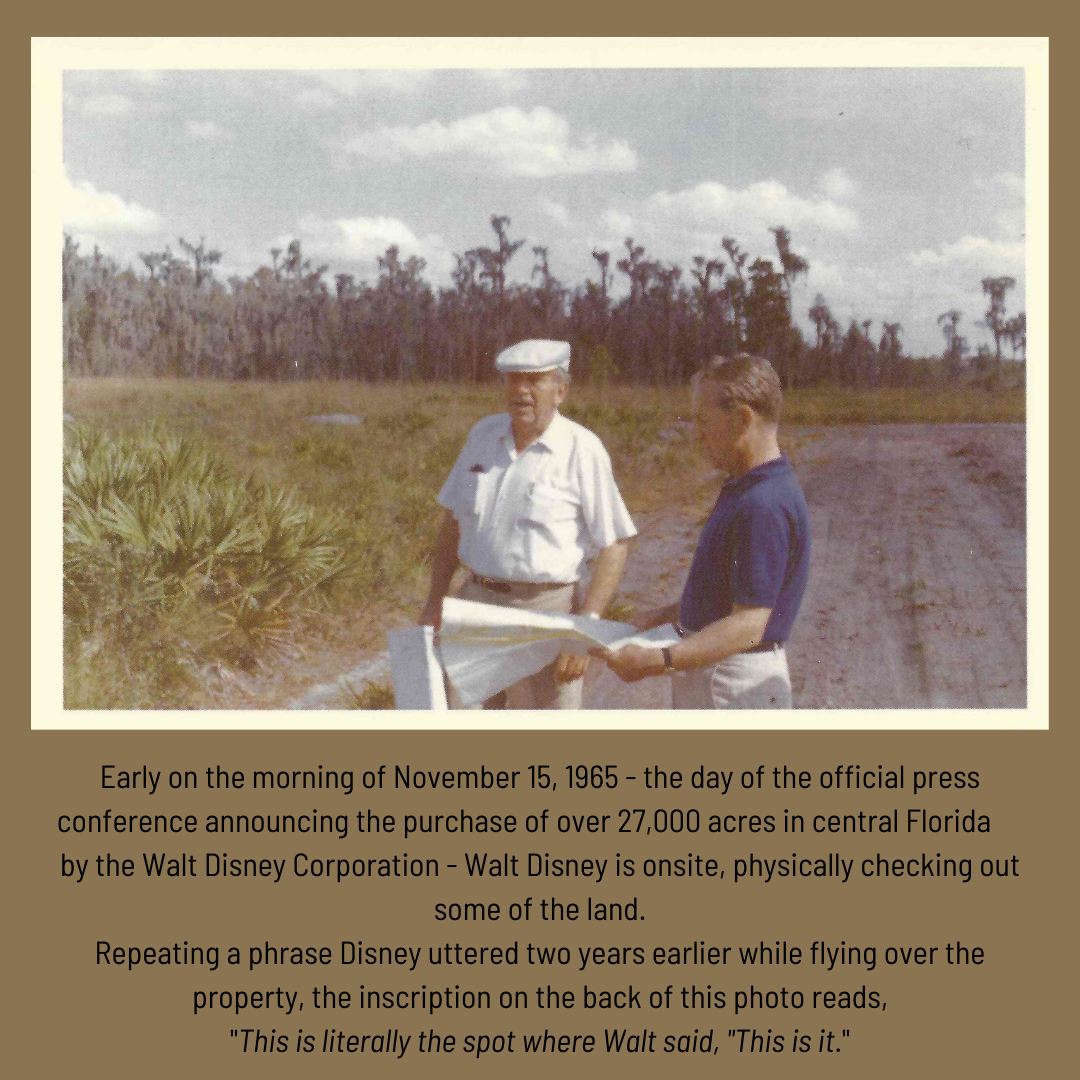
By the mid-1960s, with the critical and commercial success of Disneyland, and bolstered by Disney’s expanding innovation in attractions, Walt and Roy know that the Disney entertainment empire was ready to leave the comfort of sunny California and head east. Beginning with secret research and land acquisition, their eventual target was central Florida near Orlando, and the “Florida Project” was formally announced in 1965.

The Disney brothers’ decision to begin on an entertainment destination the likes of which the world had never seen would change the faces of themed entertainment and international tourism forever.

With a blank canvas of over 27,000 acres, by 1971 Walt Disney World had become the largest private construction project in U.S. history, with more than 8,000 workers onsite at the peak of activity.

But first it had to cross a tragic hurdle: the death of Walt Disney in December 1966. This would be the ultimate – and final – test of the siblings’ bond, and Rory charged on in deference to his late brother’s wishes. Adhering to Walt’s guiding principles, Roy postponed his own retirement and devoted all his energy to what he insisted should be call Walt Disney World.

The Lasting Legacy of Walt and Roy Disney

The story of Walt and Roy Disney is a tale of two brothers whose dreams transcended generations. As we venture into the final chapter of our exploration, we pay homage to their enduring legacy—a legacy that continues to enchant, inspire, and unite people from all corners of the globe.
The End of an Era and the Beginning of a New Chapter

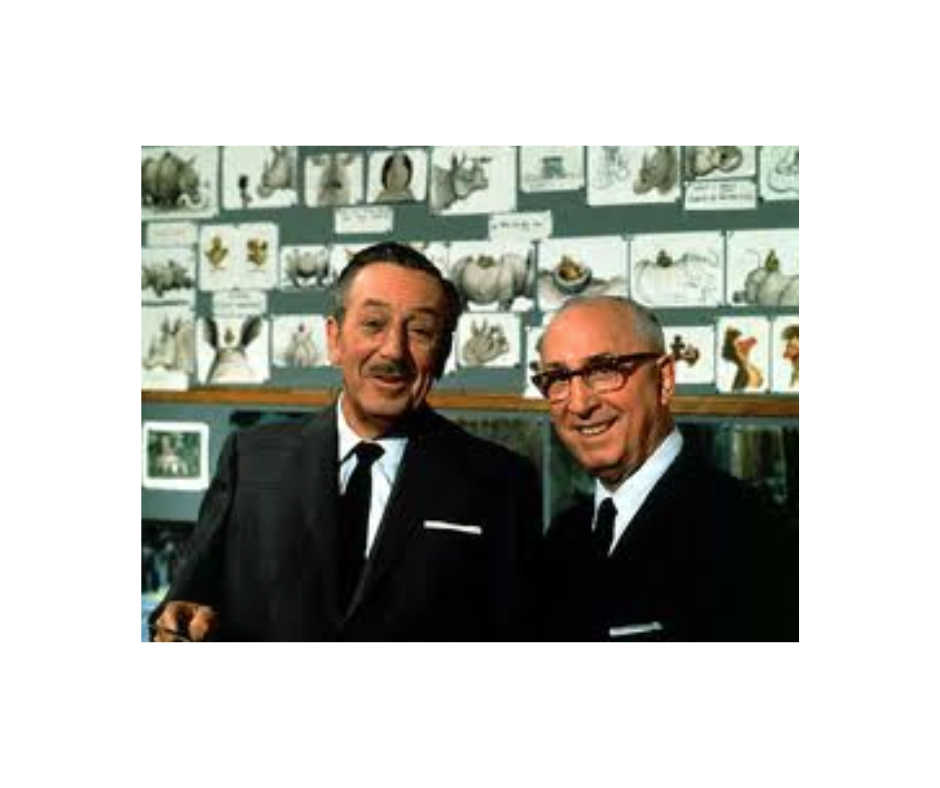
The passing of Walt Disney in 1966 marked the end of an era. Walt’s creative genius had been the driving force behind Disney Brothers Studio, and his absence left a void that seemed impossible to fill. However, Roy Disney, ever the steadfast partner, stepped into the spotlight once more to ensure that Walt’s vision would live on.

Roy took on the role of CEO of The Walt Disney Company, guiding it through the completion of projects Walt had initiated, including the opening of Walt Disney World in Florida in October 1971. His dedication to his brother’s dreams never wavered, and his leadership was instrumental in preserving Walt’s legacy.

Roy’s Final Act

In December 1971, just months after Walt Disney World opened its gates in Florida, Roy Disney passed away. His departure marked the end of an era for Disney, but it also signaled the beginning of a new chapter. The magic that Walt and Roy had conjured together continued to shine brightly, enchanting visitors and fans alike.

Walt Disney World, with its vast array of attractions and immersive experiences, became a testament to the enduring spirit of the Disney brothers. It was a place where dreams could come true, where imagination had no limits, and where the legacy of Walt and Roy Disney thrived.

A World of Imagination Lives On

In the grand tapestry of entertainment history, the names Walt and Roy Disney occupy a place of honor and reverence. Their extraordinary partnership leaves a legacy that  spans a century of creativity and innovation and has shaped the way we experience and imagine the world. As we conclude the journey through their remarkable story, we celebrate the enduring influence of the Disney brothers.

The Boundless Creativity of Walt Disney

Walt Disney, the visionary, was a relentless dreamer. His imagination knew no limits, and he had the remarkable ability to turn the ordinary into the extraordinary. From the creation of Mickey Mouse to the development of groundbreaking animation techniques, Walt was a true pioneer.

His passion for storytelling, artistry, and innovation not only defined Disney’s early years but also set a standard that continues to drive the company’s creative endeavors. Walt’s words, “It’s kind of fun to do the impossible,” still resonate as a call to dream big and never give up on the pursuit of one’s vision.

The Stewardship of Roy Disney

Roy Disney, the steady hand, was the unsung hero behind the scenes. His financial acumen and unwavering support allowed Walt’s dreams to become a reality. Time and again, Roy ensured that the company had the resources it needed to grow and flourish.

Roy’s commitment to preserving his brother’s vision, even after Walt’s passing, exemplifies the strength of their partnership. His leadership and dedication during challenging times underscore the importance of resilience and the power of believing in a shared dream.

A Century of Dreams Realized

In commemorating the 100th anniversary of the Disney Company, we pay tribute to the Disney brothers’ everlasting influence. Their legacy continues to inspire generations, ignite the flames of creativity, and remind us that, with courage and imagination, all our dreams can come true.

The Disney brothers’ story is a testament to the power of dreams, the magic of storytelling, and the enduring spirit of partnership. It is a legacy that will continue to enchant, inspire, and unite people around the world for generations to come.

From the early days of animation to the creation of theme parks and a global brand that bears their name, their story is a example of the enduring magic of imagination and the belief that, in the words of Walt Disney himself, “All our dreams can come true if we have the courage to pursue them.”


Walt used to say that Disneyland would never be finished, and it never will. I like to think, too, that Walt Disney’s influence will never be finished; that through his creations, future generations will continue to celebrate what he once described as “that precious, ageless something to every human being which makes us play with children’s toys and laugh at silly things and sing in the bathtub and dream.”

Roy Disney

I always go and check with my brother. Always. But I don’t always agree with him. Roy had faith in me. I think that Roy has done a lot of things against his better judgment because he felt that I wanted to do it. Most of our arguments and disagreements I think have been because Roy has felt that he had to protect me.

Walt Disney

References

Disney at 100: How Passion Launched a Dream

On October 16, 2023, the Walt Disney Company will celebrate its 100th Anniversary. Today kicks off a series in recognition of this event – a series looking into the characteristics that have made the Walt Disney Company a beacon of innovation and imagination, enchanting audiences of all ages with its timeless stories, beloved characters, and groundbreaking achievements.

Some of the articles have existed before and been refreshed for this series; others are brand new. In either case, I hope you will enjoy reading about the dreamers, the believers, and the magic-makers who have brought us a century of enchantment.


To say that Walt Disney was merely a train enthusiast understates the extent to which his life was intertwined with railroading. In Walt’s case, his small-scale fascination led to a full-scale kingdom.

Michael Broggie, Walt Disney’s Railroad Story

With love of Disney history, I’m always grateful to visit Disney properties and immerse myself in the stories and culture of Walt Disney and the “kingdoms” he began. During one multi-day visit to California, I had the opportunity to visit Disneyland several days, experiencing both the familiar and new perspectives.

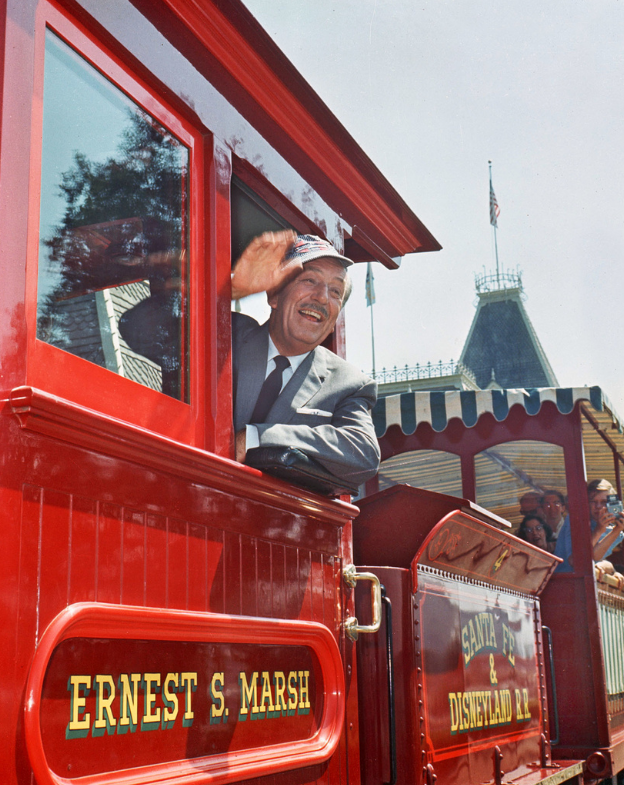
Take this image, for example:

In talking with current Cast Members, Tour Guides, and former Imagineers, various stories were given as to the origin of Disneyland:

  1. It was Walt Disney’s fascination with trains, beginning as a boy, that led him to first create a scale model railroad in his backyard. Not satisfied, he begin to develop an ever-growing park that would include a railroad. When Disneyland opened in 1955, the first object you saw approaching the park was a train station, and a 5/8 scale railroad encircled the park.
  2. Saturday’s were “Daddy’s Day,” and Walt often took his daughters to play in nearby parks. While sitting on a bench in Griffith Park, Walt imagined what a park would look like that would allow both parents and children to be immersed in a story-rich, safe, clean park.
  3. Fascinated by miniatures, Walt began a hobby of crafting extremely detailed miniature items, building entire rooms filled with objects that were not only beautiful to look at, but fully functional. He envisioned a place to display these miniatures so that people from all over the country could enjoy them.
  4. By the late 1940’s-early 1950’s, Walt had grown tired of making animated pictures, and even his recent venture into live-action motion pictures left him dissatisfied. He imagined a place were people could actually be a part of a story, immersed in all the rich details that a “theme park” could provide.

What is the true origin of Disneyland?

I believe that all of the above contributed to the creation of Disneyland. And the common denominator of all of them?

Passion.

I want it to look like nothing else in the world. And it should be surrounded by a train.

Walt Disney

The creation story of Disneyland, the first “theme” park in the world and the model for all Disney parks to follow, is somewhat clouded.

Depending on who is telling it, or even when it is told, the origins of Disneyland can start with a park bench, model making, boredom, or a boyhood fascination with trains.

There is a measure of truth to all of them. It is certain is that all of these influences in the life of Walt Disney contributed to the resulting creation.

Personally, I lean toward Walt’s love of trains as the primary inspiration for Disneyland.

As a bona fide Disney fan, focusing on the history of the man and the company that bears his name (especially from the late 1920s to the mid-1960s), I can trace “railroad” stories from Walt (and about Walt) that reinforce this.

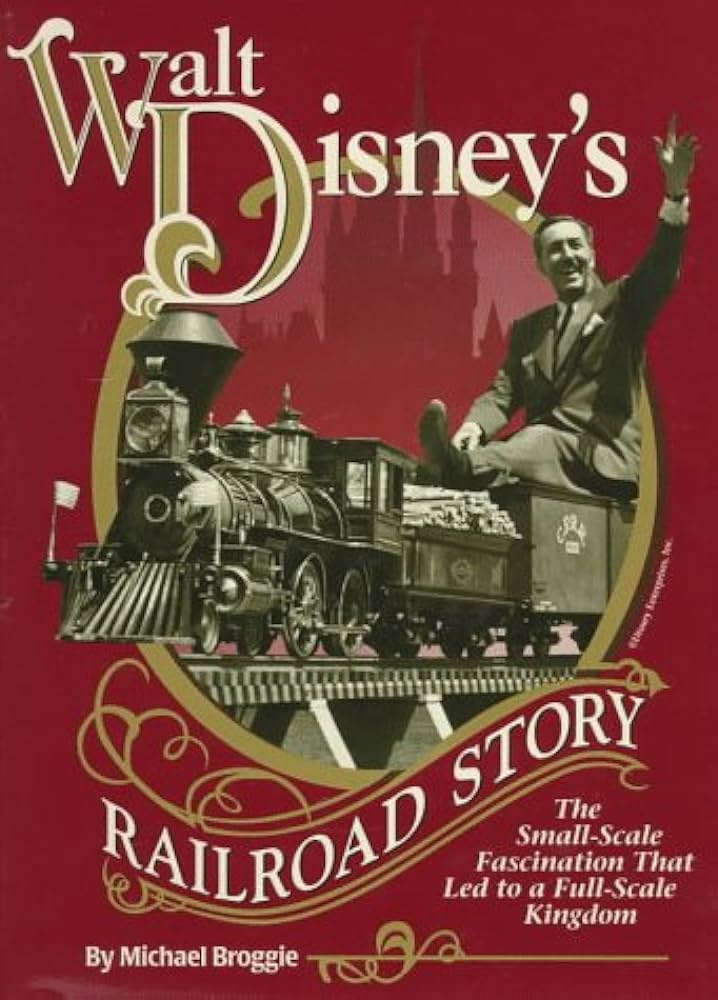
Those railroad stories could (and do) fill several books – the best of which is Walt Disney’s Railroad Story, by Michael Broggie.

It’s a fascinating book, and when the author knew of Walt Disney as “Uncle Walt,” and had the enviable role as a teenager to assist Walt in the operation of the Carolwood Pacific Railroad (Disney’s personal, rideable miniature railroad in the backyard of his home), you know the stories are going to be memorable, filled with detail, and a fascinating read.

You see, Michael Broggie’s father Roger E. Broggie was a precision machinist who joined the Disney Studios in 1939. Broggie’s accomplishments at the studio were wide-ranging, but in the early 1950s he was promoted to the head of the Disney Studios’ Machine Shop, where he became a transportation specialist. 

And where did he fine-tune the skills needed to create all the unique transportation vehicles found at Disneyland and later at Walt Disney World?

In building Walt Disney’s backyard railroad…

On the Carolwood Pacific Railroad.

The Carolwood Pacific Railroad (CPRR) was a 7 1/4-inch gauge ridable miniature railroad run by Walt Disney in the backyard of his home in the Holmby Hills neighborhood of Los Angeles, California. 

It featured the Lilly Belle, a 1:8-scale live steam locomotive named after Disney’s wife, Lillian Disney, and built by the Walt Disney Studios’ machine shop. The locomotive made its first test run on December 24, 1949. It pulled a set of freight cars, as well as a caboose that was almost entirely built by Disney himself. 

It was Disney’s lifelong fascination with trains, as well as his interest in miniature models, that led to the creation of the CPRR. The railroad, which became operational in 1950, was a half-mile long and encircled his house. The backyard railroad attracted visitors to Disney’s home; he invited them to ride and occasionally drive his miniature train.

With the creation of a personal railroad, Disney’s next step could only be designing and building the real thing.

Research into the earliest development of Disney’s “park” reveals a constant: the presence of a railroad with a steam engine pulling cars that people could ride in.

So, any visit to a Disney theme park for me must include a ride on the Disney Railroad.

Unfortunately, on my last visit to Walt Disney World on the occasion of its 50th anniversary on October 1, 2021, the railroad had been out of commission since 2018 for the pandemic-delayed construction of the TRON Lightcycle Run, a new attraction coming to the Magic Kingdom. The train tracks have been rerouted through the Lightcycle attraction inside a tunnel as shown in this concept art.

I knew any surprise announcement that the train would be running on October 1 was unlikely, but it wasn’t until I rode the People Mover early that morning and saw the view of the dismantled train tracks, plainly visible where they would run through the future Lightcycle Run attraction, that the disappointment set in.

In the meantime, the train was available as the perfect backdrop for a memorable photo at different places in the park. Just before Christmas 2022, it began to run again.

For me, “the perfect backdrop” of a static display is a far cry from the swaying motion of the train as it leaves the station and begins to circle the park…

..the way Walt Disney dreamed about it from the time he was a young boy…

…until he made it happen.


It all begins with dreams.

Walt Disney

References

How Environmental Immersion Leads to Creative Inspiration

One can be inspired by research as well as immersed in it for inspiration.  Rhonda Counts, Show Producer, Walt Disney Imagineering Florida

How you do research is dependent upon where you are in the process. Disney’s Imagineers value the story’s intent and the importance of being surrounded with or immersed in the story’s environment.

Here’s an example of creative immersion from one of my past projects:

As you can see, there was a definite pirate’s theme going on in part of my office. It’s both from previous work and new work in process at the time. I’ve used the theme of the “Pirates of the Caribbean” storyline – both the attraction and the movies – to develop training resources and presentations in the area of Guest Experiences.

Specifically, I created a tool – the Guest Experience Compass. And how better to demonstrate it, than using Jack Sparrow’s compass? I also created the Guest Experience Code – and based it on the storyline of the Pirates Code. Of course, both of these tools had to be introduced and used by a pirate – the Navigator – in a fully immersive learning environment. The result?

As a result of my pirate “adventure,” I created a series of Guest Experience learning activities lasting from a half day to two days.

And it doesn’t stop with pirates.

There’s the fact that my office is, in fact, a Disney museum (a title given by my granddaughter).

rva-office-db-3

It’s continually changing as I acquire new books and other “resources” that help my inspiration.

DisneyVerticalTowers091922

It’s no secret that I am a Disney fanatic of the first degree! I had an early start in the 60s, both from watching “The Wonderful World of Disney” and benefiting from my father, who as a Gulf gasoline dealer received many promotional tie-ins from Disney movies.

My first actual in-person experience took place as a rising senior in high school during the summer of 1975, when my high school band was privileged to march in America on Parade, one of Disney’s salutes to America’s Bicentennial. I didn’t know it at the time, but looking back with minors in history at both the undergraduate and graduate level, that was an important event.

You must also add to that mix over 100 days of staying in Disney properties (both land and sea) in the last 12 years. Friends know that I can’t go long in almost any conversation without weaving in a personal Disney experience to illustrate a point.

Finally, it’s anchored by the Disney library of over 450 books (and growing!) noted above: I am literally immersed in all things Disney. As I research and work on various projects – especially Hospitality – I find great inspiration through the many resources at hand. My immersion is not limited to the visual and tactile – at any given time, the soundtrack of a Disney movie, or the background music from one of Disney’s theme parks is playing in the background.

Here’s how Disney Imagineers recommend immersion into an environment:

Select a project that you want to immerse yourself in. Make a list of all the elements of the project and find samples (the larger the better) that represent these elements. Find a place in your surroundings to display the samples so you can immerse yourself in them.

For example, if you wanted to fix up a vintage car, surround yourself with large detailed pictures of its original interior and exterior, very large color samples for its seat cushions, dashboard, etc., and exterior paint job, pictures of various locations you would drive to, and of course, spray the space with new car scent.

Research leads to inspiration.

And now, to visually introduce (and tease a new project in the works):

CreativeHospitalityWorkshop

More to come!


part of a series of ideas to help shape and tone your creative muscles

Inspired and adapted from The Imagineering Workout

written by The Disney Imagineers

Celebrating 100 Years of Magic: New Disney Books Arrive

For 100 years, the Walt Disney Company’s passion has been storytelling. From one generation to the next, the greatest stories live forever.

The Walt Disney Company will mark its 100th anniversary in 2023, timed to its founding by Walt Disney and Roy O. Disney on October 16, 1923. The year 2023 will celebrate the journey and storytelling of Disney’s creative visionaries across the decades, as well as the fans and families who have brought Disney into their hearts to create cherished memories during the past 100 years.

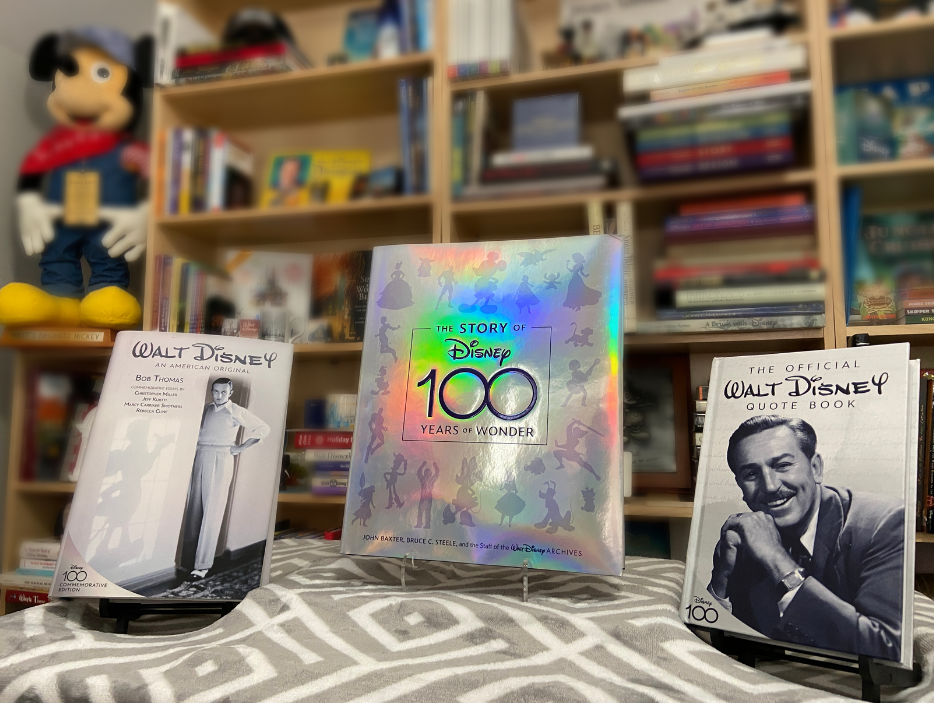
And of course, I will kick off my personal version of that celebration with three new Disney history books, just released for the occasion.

The Story of Disney 100 Years of Wonder

As part of the festivities, this must-have coffee table book showcases the company’s history and rich legacy – past, present, and future – through vibrant voices and rare Disney concept art and photographs.

On October 16, 1923, Walt Disney and his brother Roy founded what we now know to be The Walt Disney Company. Walt’s passion and vision continues to inspire creative development across the company. As a result, Disney characters – and their stories – have touched the lives of generations of fans. They encourage a belief that dreams really can come true.

As the official companion to the touring exhibition by Walt Disney Archives and SC Exhibitions, The Story of Disney: 100 Years of Wonder serves as a treasure trove for pop culture enthusiasts, artists, art collectors, and Disney fans.

Walt Disney: An American Original

This must-have biography tells the story of Walt Disney’s life – told as no other book can!

Walt Disney is an American hero. From Mickey Mouse to Disneyland, he changed the face of American culture. His is a success story like no other: a man who developed animated film into an art form and made a massive contribution to the folklore of the world.

After years of research, respected Hollywood biographer Bob Thomas produced a definitive biography of the man behind the legend of Disney: the unschooled cartoonist from Kansas City who when bankrupt on his first movie venture and developed into the genius who produced unmatched works of animation, and ultimately was the creative spirit of an international entertainment empire that has enchanted generations.

Complete with a collection of rare photographs, Walt Disney: An American Original is a fascinating and inspirational work that captures the spirit of Walt Disney.

This Commemorative Edition includes new:

  • introductions from Jeff Kurtti and Marcy Carriker Smothers
  • a 32-page photo insert with rare behind-the-scenes photos
  • endnotes to add further context and connect Walt’s story to today

The Official Walt Disney Quote Book

This special edition quote book showcases insights from Walt Disney, along with rare Disney photographs.

Walt Disney once said, “There is more treasure in books than in all the pirates’ loot on Treasure Island and at the bottom of the Spanish Main. . . .” Never has this been truer than within these pages.

This collection of quotations from the co-founder of The Walt Disney Company ranges from the well-known to the obscure, but all are assured to entertain, enlighten, and inspire. His words have been gleaned from publications, productions, and interviews over the breadth of his amazing career. Some are simple nuggets of homespun wisdom, while others are statements of knowledge gained while he crafted the enchanting films, televisions shows, and unparalleled experiences that are so beloved by audiences the world over.

The Official Walt Disney Quote Book has been compiled for anyone eager to learn more about a man who had such an incredible, positive impact on his own time and on the future yet to be – Walt Disney, the Showman of the World.


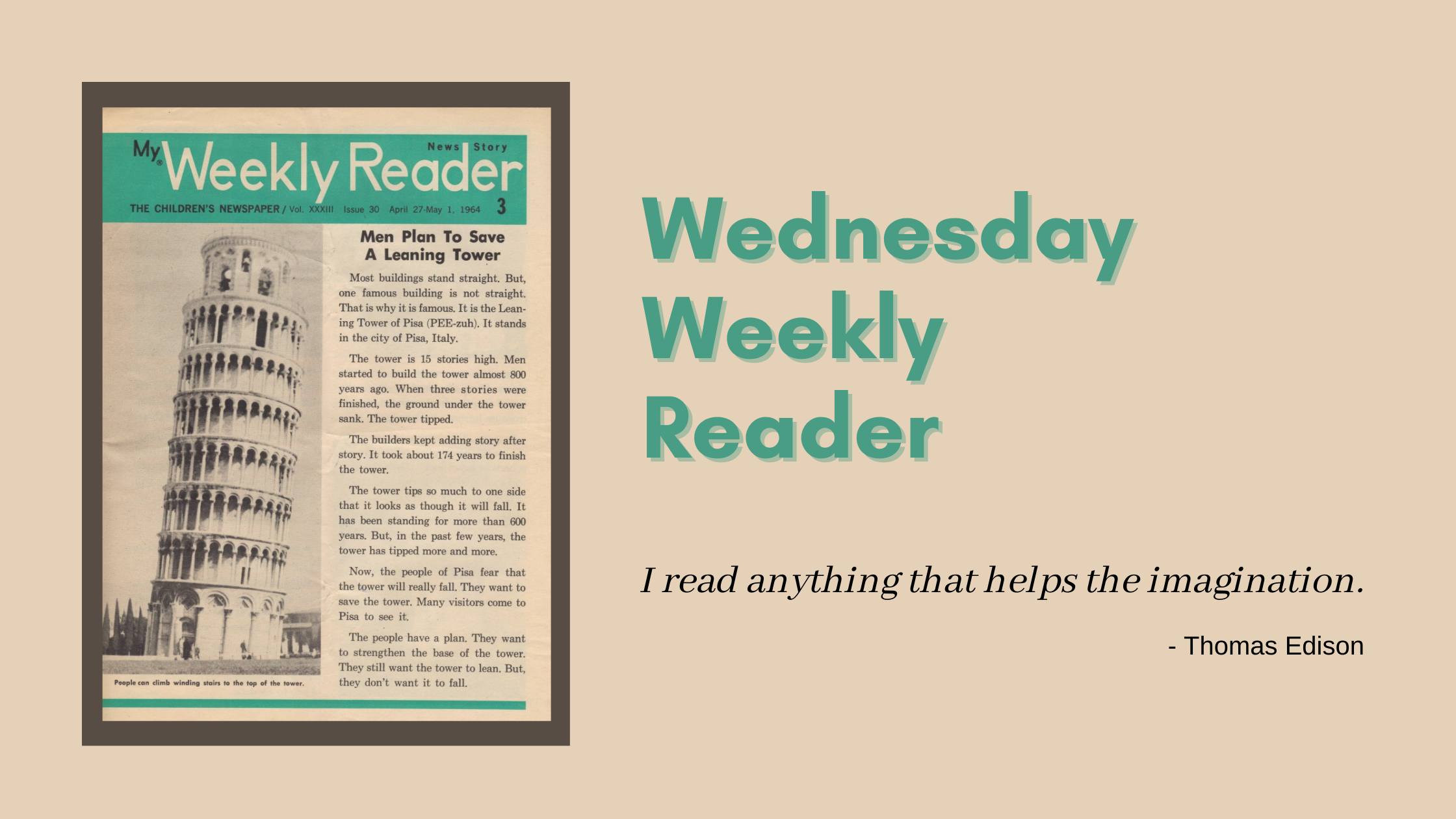
Part of a regular series on 27gen, entitled Wednesday Weekly Reader

During my elementary school years one of the things I looked forward to the most was the delivery of “My Weekly Reader,” a weekly educational magazine designed for children and containing news-based, current events.

It became a regular part of my love for reading, and helped develop my curiosity about the world around us.

American History: Understanding the American People by Understanding Disney History

I’ve alway loved learning about history – in particular, American history. In addition to the hundreds of books I’ve read over the years, both my undergraduate and graduate degrees are accompanied by a minor in history.

My love of American history was set in motion by virtue of the fact that I was born in the spring of 1958, thus placing me in the high school graduating class of 1976 – the 200th celebration of America’s declaration of independence from England.

There were many activities from that senior year that hold a special place in my mind, but the one near the top involves Disney – and serves as a great connection to this week’s Wednesday Weekly Reader.

Disney Theme Parks and America’s National Narratives takes a public history approach to situating the physical spaces of the Disney brand within memory and identity studies.

For over 65 years, Disney’s theme parks have been important locations for the formation and negotiation of the collective memory of the American narrative. Disney’s success as one of America’s most prolific storytellers, its rise as a symbol of America itself, and its creation of theme parks that immerse visitors in three-dimensional versions of certain “American” values and historic myths have both echoed and shaped the way the American people see themselves. 

Like all versions of the American narrative, Disney’s vision serves to reassure us, affirm our shared values, and unite a diverse group of people under a distinctly American identity – or at least, it did. 

The book shows how the status Disney obtained led the public to use them both as touchstones of identity and as spaces to influence the American identity writ large. This volume also examines the following:

  • How Disney’s original cartoons and live-action entertainment offerings drew from American folk history and ideals
  • How their work during World War II cemented them as an American symbol at home and abroad
  • How the materialization of the American themes already espoused by the brand at their theme parks created a place where collective memory lives
  • How legitimization by presidents and other national figures gave the theme parks standing no other entertainment space has
  • How Disney has changed alongside the American people and continues to do so today.

The book explores how five specific factors have worked in concert over time to transform Disney’s theme parks from simple amusement parks to places where the collective memory of the American narrative is shaped.


My Disney experience during the 60s – early 70s was limited to television and movies. But when 1975 rolled around, something magical happened.

Disney’s “America on Parade” was a unique parade at Disneyland and Walt Disney World from 1975-1976, honoring the United States of America on the occasion of its bicentennial anniversary in 1976.

I was a senior in high school that year – the class of ’76. Many activities planned for that class year revolved around celebrating the Bicentennial.

And this happened…

During the parade, recorded marching music playing from speakers in the floats was mixed with the same melodies played by live bands Disney had invited from high schools across the country.

The Mount Juliet High School “Band of Gold” was invited to participate in America on Parade.

Marching down Main Street, playing some of the music I love best – now that was something special.


As the Walt Disney Company celebrates its 100th anniversary this year, a look back at both the life of Walt Disney and the company he founded are intertwined with the concepts, images, and spirit of America.

Walt Disney had a deep love and respect for America:

Actually, if you could see close in my eyes, the American flag is waving in both of them and up my spine is growing this red, white, and blue stripe.

As author Bethanee Bemis states in her book, “Disney theme parks are some of the foremost places where the nation consumes its collective memory of the American Experience, where they see many of the stories and cultural myths that make up the American national narrative.”

Disney is in the business of selling memories. Not just memories of family vacations, but memories of stories from American history.

Bethanee Bemis

According to Bemis, “Walt Disney was not the first to use history to inspire his storytelling nor the first to turn history into a physical experience. He was, however, the first to use a brand that had itself already become symbolic of a nation’s history to create that physical experience.”

Disney Theme Parks and America’s National Narratives is a scholarly work (the author is a museum specialist at the National Museum of American History at the Smithsonian) that is an important addition to the collective body of Disney history.

This book will be of interest to students and scholars of history, media, cultural studies, American studies and tourism – and of course, Disney nerds like me.


Part of a regular series on 27gen, entitled Wednesday Weekly Reader

During my elementary school years one of the things I looked forward to the most was the delivery of “My Weekly Reader,” a weekly educational magazine designed for children and containing news-based, current events.

It became a regular part of my love for reading, and helped develop my curiosity about the world around us.

Delivering Disney Magic: Dick Nunis, Walt’s Apprentice

If you read about the origins and development of Disneyland in the early 1950s leading up to its opening in July 1955, the well-known names start with Walt and Roy Disney, followed by a small-but-influential group of Disney studio team members who used their imaginative talents to transfer ideas from the screen to reality.

Of course, that is an important part of the history of Disney – we wouldn’t have the parks without their creative brilliance.

But it’s one thing to create a place like Disneyland, and a whole other thing to run a place like Disneyland.

During the final, frenzied weeks of construction leading to opening day on July 17, 1955, the name Dick Nunis appears in the history of Disneyland – a new college graduate, hired to be a “gofer” for Van Arsdale France, who created the first orientation and training program for employees.

Nunis had met Walt Disney several years before (Walt’s daughter Diane was a classmate of Nunis, and was dating her husband-to-be Ron Miller, a teammate of Nunis’ at USC). That memorable first encounter included a ride on “The Carolwood Pacific Railroad” – a miniature train with over 1/2 mile of track circling Walt Disney’s home (one of the four foundational origin stories of Disneyland, but that’s for another day).

That train ride with Walt Disney foreshadowed the future of Dick Nunis, as he progressed from a gofer to chairman of Walt Disney Attractions, a forty-four year career at Disney on the operations side of the parks. 

Walt’s Apprentice: Keeping the Disney Dream Alive is the memoir of Disney Legend Dick Nunis. It is a warm personal reminiscence of learning directly from Walt Disney for 12 years, followed by more than 30 years devoted to championing his vision and standards as the Disney empire grew.

The story covers Disney’s highlights, including the 1960 Winter Olympics, 1964-1965 New York World’s Fair, and the development and opening of Disneyland, Walt Disney World, Epcot, Tokyo Disneyland and Disneyland Paris. 

Unlike other Disney books, this story is told from the perspective of operations rather than Imagineering. It touches on decisions that defined the guest experience and Disney’s reputation for quality in areas ranging from capacity and people-moving, training, delivering a consistent “good show,” food service, and more.

This first-person narrative is presented as a series of wide-ranging vignettes. Some vignettes focus on personal, character-shaping events, such as the injury that ended his collegiate football career. Other stories touch on national events, such as Nikita Khrushchev’s derailed visit to Disneyland, the decision to close the park following the assassination of John F. Kennedy, and Ronald Reagan’s assistance in expediting the visa process for cast members staffing the Epcot World Showcase. Few people have enjoyed a life so immersed in Disney magic.

These stories share that magic through the memories of one of the original doers and dreamers.

In my personal research and study of the history of the Disney company, I had long noticed the name of Dick Nunis and the many contributions he made at each stage of his Disney career.

When I learned that the long-rumored book from Nunis was being published, it went to the top of my list.

It did not disappoint!

As one of a very few individuals still alive who worked closely with Walt Disney, Walt’s Apprentice chronicles how Nunis learned directly from Walt Disney for a dozen years, then spent the next thirty years devoted to championing Walt’s vision and standards as Disney grow into a worldwide enterprise, “creating happiness” for young and old alike.

If you want to read a first-person narrative on Disney with a focus on the operational side, Walt’s Apprentice is a must.


Part of a regular series on 27gen, entitled Wednesday Weekly Reader

During my elementary school years one of the things I looked forward to the most was the delivery of “My Weekly Reader,” a weekly educational magazine designed for children and containing news-based, current events.

It became a regular part of my love for reading, and helped develop my curiosity about the world around us.

Disney’s Missed Opportunity at the 50th Anniversary Celebration of Walt Disney World

My recent trip to Walt Disney World for the kickoff of its 50th Anniversary celebration was a special time all the way round. My wife and I were joined by my daughter and son-in-law for 5 days and four nights of non-stop fun, food, and memories.

With a solid passion for Disney history, I was certainly an outlier of the tens of thousands who began lining up at the gates as early as 4 a.m. on October 1. (Note: I didn’t line up that early – my wife and I walked over from the Contemporary Resort at a much more respectable 7:30 a.m.).

Unlike the majority of Guests there, I wasn’t driven to acquire the large assortment of special anniversary merchandise (more to come on this in a future post).

I was there to celebrate an extraordinary achievement of the vision of Walt Disney, culminating in the efforts of thousands of team members for over six years: the creation of Walt Disney World.


The realtime thoughts and images of the 50th Anniversary kickoff were documented on my Instagram account.

I will continue to unpack that day here as well as on Guest Experience Design.

Even with all the good memories, I did have one major disappointment. I even knew it was coming, but was hoping for a last-minute big surprise.

Alas, it didn’t materialize.

Most of the crowd present at Magic Kingdom didn’t even miss it, which is sad.

Because without this one attraction, Disney parks as we know them wouldn’t exist.

And in my opinion, this “miss” for me was indicative of a bigger miss throughout the day.

I want it to look like nothing else in the world. And it should be surrounded by a train.

Walt Disney

The creation story of Disneyland, the first “theme” park in the world and the model for all Disney parks to follow, is somewhat clouded.

Depending on who is telling it, or even when it is told, the origins of Disneyland can start with a park bench, model making, boredom, or a boyhood fascination with trains.

There is a measure of truth to all of them. It is certain is that all of these influences in the life of Walt Disney contributed to the resulting creation.

Personally, I lean toward Walt’s love of trains as the primary inspiration for Disneyland.

His small-scale fascination led to a full-scale kingdom.

Michael Broggie, Walt Disney’s Railroad Story

As a bona fide Disney fan, focusing on the history of the man and the company that bears his name (especially from the late 1920s to the mid-1960s), I can trace “railroad” stories from Walt (and about Walt) that reinforce this.

Those railroad stories could (and do) fill several books – the best of which is Walt Disney’s Railroad Story, by Michael Broggie.

It’s a fascinating book, and when the author knew of Walt Disney as “Uncle Walt,” and had the enviable role as a teenager to assist Walt in the operation of the Carolwood Pacific Railroad (Disney’s personal, rideable miniature railroad in the backyard of his home), you know the stories are going to be memorable, filled with detail, and a fascinating read.

You see, Michael Broggie’s father Roger E. Broggie, was a precision machinist who joined the Disney Studios in 1939. Broggie’s accomplishments at the studio were wide-ranging, but in the early 1950s he was promoted to the head of the Disney Studios’ Machine Shop, where he became a transportation specialist. 

And where did he fine-tune the skills needed to create all the unique transportation vehicles found at Disneyland and later at Walt Disney World?

In building Walt Disney’s backyard railroad.

On the Carolwood Pacific Railroad.

The Carolwood Pacific Railroad (CPRR) was a 7 1/4-inch gauge ridable miniature railroad run by Walt Disney in the backyard of his home in the Holmby Hills neighborhood of Los Angeles, California. 

It featured the Lilly Belle, a 1:8-scale live steam locomotive named after Disney’s wife, Lillian Disney, and built by the Walt Disney Studios’ machine shop. The locomotive made its first test run on December 24, 1949. It pulled a set of freight cars, as well as a caboose that was almost entirely built by Disney himself. 

It was Disney’s lifelong fascination with trains, as well as his interest in miniature models, that led to the creation of the CPRR. The railroad, which became operational in 1950, was a half-mile long and encircled his house. The backyard railroad attracted visitors to Disney’s home; he invited them to ride and occasionally drive his miniature train.

With the creation of a personal railroad, Disney’s next step could only be designing and building the real thing.

Research into the earliest development of Disney’s “park” reveals a constant: the presence of a railroad with a steam engine pulling cars that people could ride in.

So, any visit to a Disney theme park for me must include a ride on the Disney Railroad.

Unfortunately, at Walt Disney World, the railroad has been out of commission since 2018 for the pandemic-delayed construction of the TRON Lightcycle Run, a new attraction coming to the Magic Kingdom in 2022. The train tracks have been rerouted, through the Lightcycle attraction inside a tunnel, according to information released by Disney in concept art.

I knew that any surprise announcement that the train would be running on October 1 was unlikely, but it wasn’t until I rode the People Mover early that morning and saw the view of the dismantled train tracks, plainly visible where they would run through the future Lightcycle attraction, that the disappointment set in.

In the meantime, the train is available as the perfect backdrop for a memorable photo at different places in the park.

For me, “the perfect backdrop” of a static display is a far cry from the swaying motion of the train as it circles the park.

The way Walt Disney dreamed about it from the time he was a young boy…

…until he made it happen.


This (somewhat) detailed explanation of a personal miss for me highlights a bigger missed opportunity for Disney during the opening days of their 18-month long celebration of the 50th Anniversary of Walt Disney World –

Disney seems to be forgetting where it came from, and therefore, is struggling to determine where it is going.

Happy 80th Birthday, Fantasia!

Fantasia is a 1940 American animated film produced by Walt Disney and released by Walt Disney Productions on November 13, 1940. It is the third Disney animated feature film, and consists of eight animated segments set to pieces of classical music conducted by Leopold Stokowski, seven of which are performed by the Philadelphia Orchestra. Music critic and composer Deems Taylor acts as the film’s emcee, providing a live-action introduction to each animated segment.

Disney settled on the film’s concept in 1938 as work neared completion on The Sorcerer’s Apprentice, an elaborate Silly Symphonies short designed as a comeback role for Mickey Mouse, who had declined in popularity. As production costs grew higher than what it could earn, Disney decided to include the short in a feature-length film with other segments set to classical pieces. The soundtrack was recorded using multiple audio channels and reproduced with Fantasound, a pioneering sound reproduction system that made Fantasia the first commercial film shown in stereophonic sound.

Of course, I have several books about the movie, published in 1940.

This is THE book of Fantasia – Walt Disney’s new full-length feature production. Just as the movie Fantasia represents an entirely new departure in the art of the motion picture, this book is a unique publishing venture. It is the first Disney book designed for adults, the first comprehensive record of Walt Disney’s revolutionary contribution to contemporary art – painting in motion.

Fantasia is a sort of symphony between book covers – a new and exhilarating form of entertainment for the printed page – conceived by Walt Disney and worked out by him in collaboration with a distinguished company of writers, artists, and musicians.

In a profession that has been an unending voyage of discovery in the realms of color, sound, and motion, Fantasia represents our most exciting adventure.  At last, we have found a way to use in our medium the great music of all times and the flood of new ideas which it inspires.      

Walt Disney

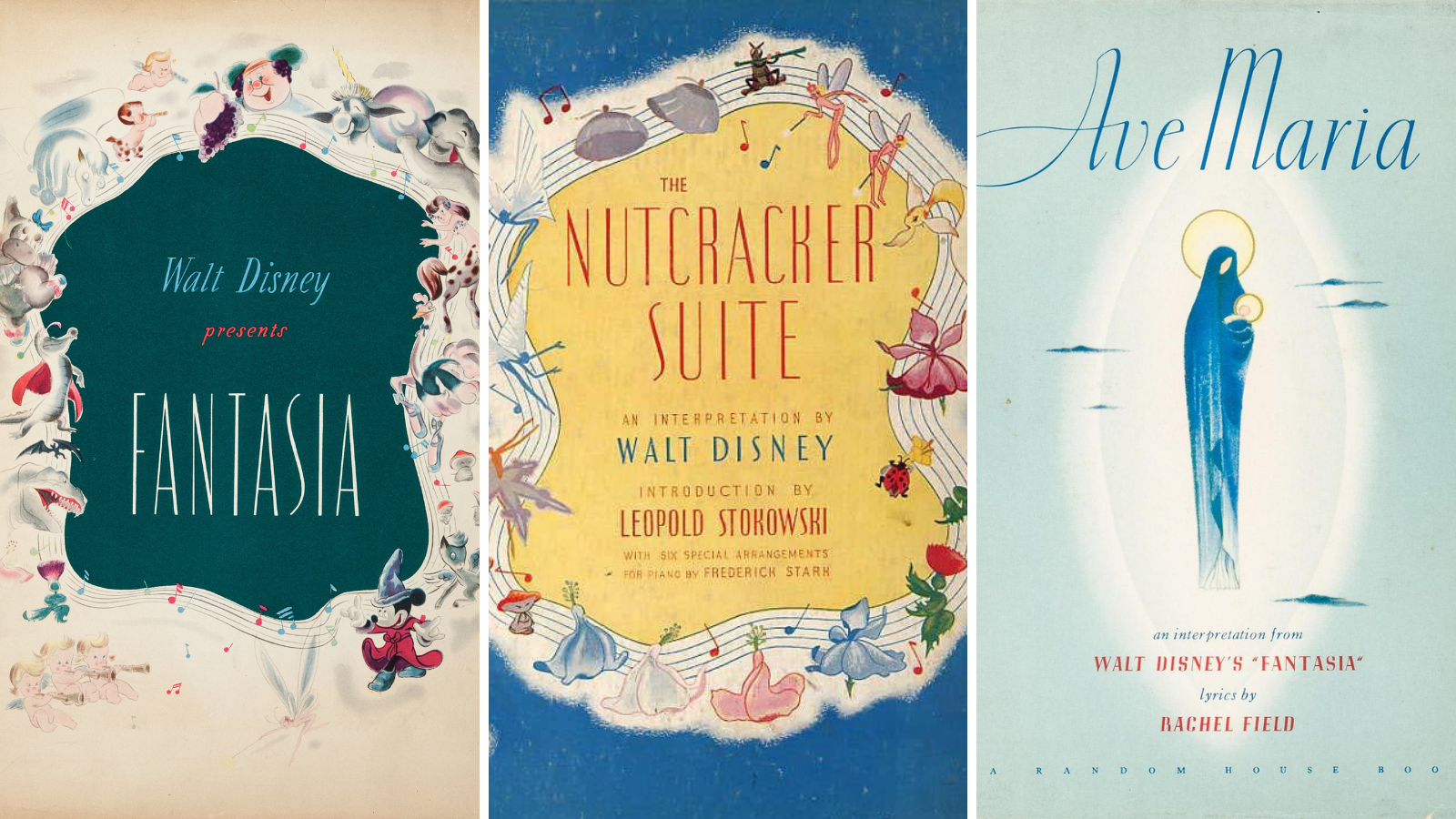
Here are the other 1940 books about Fantasia: the movie premier booklet, and several books about individual pieces within the movie.

My favorite part of Fantasia, though, is The Sorcerer’s Apprentice. As noted above, it was originally intended to be a Silly Symphony animation short to revive interest in Mickey Mouse. Instead, it became the centerpiece of Fantasia, and the Mickey Mouse character most-recognized of all time.

A 1940 book released with the film

Every time I visit a Walt Disney property where Sorcerer Mickey “lives,” I stop by for a quick visit.

My last visit in early February 2020

Sorcerer Mickey has been very visible around the world over the years: character appearances (as above), park attractions (Mickey’s PhilharMagic, Fantasmic, Mickey and the Magical Map, Starlight Dreams, the World of Color), and video games. His most recent feature film appearance was a cameo in Ralph Breaks the Internet.

My personal favorite appearance of Sorcerer Mickey was in the logo of Walt Disney Imagineering from 1986 – 2019.

With the launch of Disney+ and a greatly-increased interest in Imagineering through the series, The Imagineering Story, Sorcerer Mickey was dropped from the logo design.

Tonight I’ll be watching Fantasia to celebrate its 80th birthday – and of course, who do they choose to illustrate the movie?

Mulan – Reimagined

When Disney’s animated musical action adventure film Mulan came out in 1998, our daughter Amy was 10 years old. I’m not sure what exactly it was in the movie that captivated her, but Mulan became (and remains) her favorite Disney character. I’m pretty sure we wore out at least one VHS tape, and various pieces of artwork and figurines that she has collected over the years can be found all over her house.

So it was no surprise that when Disney announced in 2015 that a live-action version of Mulan was in the works, Amy was both excited – and a little skeptical. After all, since Disney began producing live-action remakes of their animated classics in 1994, it’s been a pretty hit-or-miss proposition. Some have been pretty good, some have been so-so.

And the 2020 version of Mulan?

ABSOLUTELY. STUNNING.


Wait a minute – it’s not coming out till Friday, September 4 on Disney+ Premier Access, you say.

You’re right – but I saw Mulan in a theater on March 11!

I can say that because Amy and I are among the few hundred people who have actually seen Mulan – before it’s scheduled premier on March 27 – and subsequent reschedulings – were all derailed by the COVID-19 pandemic.

Here’s how it happened…

On March 11, I took a quick trip to Raleigh, NC, where I met Amy for an afternoon movie – the first public showing of Mulan, a preview for Gold members of D23, Disney’s fan club. It was shown following the annual meeting of the Walt Disney Company’s stockholders.

I had been looking forward to the movie’s release on March 27 (I already had tickets), and had intentionally not read or watched a lot about it online. So, my expectations were neutral, reserving judgment until I had a chance to see it in person.

When the VP of D23 introduced the movie, I think it was his words that set the tone and pretty much sum up the approach that made this so successful.

“We’re so excited to unveil Walt Disney’s reimagining of the animated classic.”

Not a remake.

The following comments may contain slight spoilers, so read at your own risk.

  • If you really liked the musical aspect of the 1994 version, you won’t find any of the songs that garnered significant praise and won several industry awards in the new movie.
  • If you liked Mushu, the ancestor’s guardian wonderfully voiced by Eddie Murphy, you won’t find  the character anywhere in the new movie.
  • If you liked the character of Li Shang and the developing romance and implied marriage with Mulan, you won’t find it happening in the new movie.

There’s more, but I think you get the point.

The 2020 version of Mulan is not a remake of the 1998 version of Mulan – and that’s what makes it a marvelous movie; in Disney terms, a reimagining.

  • There’s no songs, but there are musical themes from those songs, along with dialog references.
  • There’s no Mushu, but there is a delightful surprise “guardian” introduced early on who makes regular, timely appearances.
  • There’s no Li Shang, but a couple of different characters more than make up for his absence.

I could go on, but I won’t. I’m not a critic (thank goodness), but I know a good movie when I see one.

One that has a vibrant story, identifiable characters you want to root for (and against), emotional twists, action-packed choreography, and amazing production design.

The soon-to-be-released live action Mulan is all that, and more.


I pre-ordered a multi-year subscription for Disney+ when it was first announced last year. I have added the Premier Access to Mulan, and will be watching it with my wife on Friday September 4.

Yeah, it will be coming to Disney+ in December as a part of the regular programming.

Doesn’t matter.

The reimagining of Mulan is worth it.

Dreamers Live Beyond Themselves in Order to Make Dreams Come True

Even for those of you that don’t follow the Walt Disney Company regularly, the news coming out of Anaheim, CA from the biannual gathering of Disney fans called D23 has been nonstop since last Friday. Even though the event ended Sunday night, recaps, opinions, and second-guessing continues today – and probably will throughout this week and beyond.

With intellectual properties like Disney Studios, theme parks and resorts, and the studios of Pixar, Star Wars, Marvel, and now most of Fox, the entertainment giant is continuing to grow beyond expectations.

D23 was three days of seemingly nonstop announcements about the upcoming movies from all the studios mentioned above, new attractions at theme parks world-wide, new partnerships, and the unveiling of Disney+, the streaming service that will launch November 12. Artists, actors, and people normally behind-the-scenes were onstage everywhere at the Anaheim Convention Center, each presentation seeming to outshine the previous one.

I’m not even going to attempt to unpack everything that happened at D23 – there are much better sources for that.

Instead, I want to leave you with a couple of images – courtesy of Disney – and a quote by Walt Disney:

If you don’t know what these represent:

  • The top image is a representation of four “neighborhoods” coming to Epcot – a transformation of the park in every sense of the word.
  • The image on the lower right is a new statue of Walt Disney what will occupy “Dreamer’s Point,” a transition from Spaceship earth to the rest of the reimagined Epcot.
  • The quote in the lower left is from Walt Disney, part of a longer statement about Epcot he made in October 1966 – only two months before his death.

Think about that.

While Walt Disney was totally immersed in the building of Disneyland in California, and led in the acquisition of the thousands of acres that would become Walt Disney World in Florida, he never saw the first shovel of dirt turned, much less the completion of any part of Walt Disney World.

The EPCOT he dreamed of was not the Epcot Center that opened in 1982; all of the work done in major upgrades since then – and including this projected “transformation” – are not going to make that happen.

But the dream did not die with the dreamer.

His vision of ‘a new Disney world’ outside of Orlando, Florida, especially his concept of Epcot, was so strongly a personal, life-summing statement that many believed the dream might die with Walt. Not so. For in addition to the fantasy empire Walt had created, he had also built a unique organization.

– Richard Beard, Walt Disney’s EPCOT

Led by Walt’s older brother Roy, who postponed his retirement, the talents of the entire Disney organization went ahead with the Florida project.

Because that’s what dreamers do…

…they dream, and make sure there is a team who understands and lives the dream, and will keep it going.

So that’s what Epcot is: an experimental prototype community that will always be in a state of becoming. It will never cease to be a living blueprint of the future…

– Walt Disney


Will your dream live beyond you?