In The Neighboring Church: Getting Better at What Jesus Said Matters Most, authors Rick Rusaw and Brian Mavis challenge the contemporary church to shift its focus from attractional models to incarnational ministry, emphasizing the profound impact of simply loving our neighbors. Drawing from their experiences at LifeBridge Christian Church, they argue that the most effective way to embody the Great Commandment – to love God and love our neighbors as ourselves – is not through elaborate programs but through genuine, everyday engagement with those around us.
The book stems from a simple yet powerful realization: author Brian Mavis’s neighbors were uninterested in attending a traditional church service but were open to exploring faith in the context of their own relationships and homes. This experience illuminated a crucial insight: many people are longing for authentic connection and a tangible expression of God’s love in their daily lives, something that can often be missed within the walls of a church building.
Rusaw and Mavis contend that the church has inadvertently created a culture where members are primarily focused on internal activities and programs, leaving little margin for meaningful interaction with their immediate neighbors. They advocate for a “neighboring” movement, where Christians are equipped and encouraged to intentionally build relationships with the people who live, work, and socialize near them. This isn’t about turning every interaction into an evangelistic opportunity but rather about cultivating genuine care and concern for the well-being of those in our sphere of influence. It’s about making “neighbor” a verb.
The authors highlight that being a good neighbor transcends organized church initiatives. It’s about noticing needs, offering practical help, sharing life, and extending hospitality. They emphasize that this approach mirrors Jesus’s own ministry, which was deeply rooted in relational engagement within communities. By prioritizing neighboring, the church can become less of an institution people attend and more of a network of individuals actively embodying Christ’s love in their respective neighborhoods.
The Power of Home Hospitality
A cornerstone of the “neighboring” philosophy presented in the book is the practice of home hospitality. Opening our homes is portrayed not as an obligation but as a powerful tool for building bridges, fostering connection, and demonstrating the love of Christ in a tangible way. It moves beyond formal entertaining and focuses on creating welcoming spaces where authentic relationships can flourish.
Here are five key applications of home hospitality, as inspired by the principles in The Neighboring Church:
Building Relational Bridges: Inviting neighbors into your home, whether for a meal, coffee, or just a casual visit, creates opportunities for deeper connection beyond surface-level interactions. It allows you to learn about their lives, families, joys, and struggles in a relaxed and personal setting. For instance, hosting a neighborhood barbecue can be a simple way to break the ice and foster a sense of community.
Demonstrating Practical Care: Home hospitality can be a means of offering practical support. This could involve providing a meal for a neighbor who is sick, offering childcare for a single parent, or simply being a listening ear over a cup of tea. These acts of service, offered within the context of a welcoming home, can be incredibly impactful.
Sharing Life and Faith Naturally: Opening your home provides a natural environment for sharing your life, including your faith, without pressure or formality. As relationships deepen, opportunities may arise to speak about what is important to you in a genuine and relatable way. For example, sharing a meal and conversation can organically lead to discussions about values and beliefs.
Creating a Sense of Belonging: For those who may feel isolated or marginalized, being welcomed into a home can be a powerful experience of belonging. It communicates value and worth, demonstrating that they are seen and cared for. Inviting a new family in the neighborhood for dinner can help them feel more integrated into the community.
Modeling Hospitality for Others: When we practice home hospitality, we model this behavior for our families and those around us. It teaches the importance of generosity, openness, and valuing relationships. Children who grow up in hospitable homes are more likely to extend hospitality to others.
Taking the Next Steps
Embracing the principles of The Neighboring Church and the practice of home hospitality is a journey, not a destination. Here are some practical next steps you can take:
Know Your Neighbors: Start by intentionally getting to know the people who live closest to you. Learn their names, their interests, and some of their story. A simple conversation while getting the mail or tending your garden can be a starting point.
Initiate Simple Interactions: Look for opportunities for small acts of kindness and connection. This could be offering help with yard work, bringing over baked goods, or simply stopping for a brief chat.
Open Your Door: Consider simple ways to extend hospitality in your home. This doesn’t require a perfect house or elaborate meals. Start with inviting one or two neighbors over for coffee, tea, or a casual meal.
Be Present and Listen: When you do open your home, focus on being present with your guests, listening attentively to their stories, and showing genuine interest in their lives.
Be Consistent and Patient: Building authentic relationships takes time and consistency. Don’t be discouraged if initial efforts don’t yield immediate deep connections. Continue to be open and available to your neighbors.
Encourage Your Church Community: Share the ideas from “The Neighboring Church” with your church leaders and fellow members. Explore ways your church can collectively encourage and equip people to be better neighbors. This could involve small group discussions, sharing stories of neighboring, or organizing neighborhood-focused service projects.
The Neighboring Church offers a compelling vision for a church that is deeply connected to its community, one relationship at a time. By prioritizing the simple yet profound act of loving our neighbors, expressed in practical ways like home hospitality, we can move beyond programs and truly embody the love of Christ in the world around us, transforming our neighborhoods and ourselves in the process.
In some corner or horizontal space of nearly every book lover’s home sits a tower of possibilities – a stack of unread books that grows with each passing week, defying gravity and good intentions alike. This is the TBR pile: “To Be Read,” a physical manifestation of literary ambition that stands as both promise and gentle rebuke.
Since I’m an overachiever – if only in this area – in my house, particularly my office, there are multiple TBR piles.
The Anatomy of a TBR Pile
The typical TBR pile is a fascinating ecosystem of its own. At its foundation rests the ambitious purchases – perhaps a weighty classic one has been meaning to tackle for years, or the award-winner your friends are talking about. The middle section often contains gifts from well-meaning friends and relatives who correctly identified the recipient as a reader but perhaps missed the mark on genre preferences. The middle section for me also contains my spur-of-the-moment volumes from the new section at my library. Finishing out my TBR pile are the “Top of the Stack” – either impulse buys, those books acquired during moments of weakness at bookstore sales or the latest weekly “holds” from my library searches.
What makes a TBR pile unique to each reader is not just its content but its organization – or delightful lack thereof. Some bibliophiles maintain meticulously categorized stacks sorted by genre, publication date, or reading priority. Others embrace chaos theory, allowing their collection to exist as a jumbled monument to literary possibility where the next read might be determined by whichever volume happens to be most accessible when the current book is finished.
As a firm adherent to the “both/and” philosophy, I utilize both of the above: some TBR piles have definite themes and organization; others are a haphazard collection at best.
The Weekly TBR Pilgrimage
As a dedicated reader, my local Charlotte Mecklenburg library branch serves as both sanctuary and hunting ground. Weekly visits become ritual, a sacred appointment kept regardless of weather or competing engagements. Long written in stone in my calendar is a weekly “Lunch & Learn” – an early morning library visit followed by lunch at Big Bitez Grill. These excursions follow predictable patterns: the return of last week’s borrows, the browsing of new arrivals, and finally, the inevitable checkout of more volumes than one could reasonably expect to finish before their due date. Luckily, on almost all checkouts, up to three renewals take place automatically. Best of all, there are no overdue fines!
An example would be last week’s library visit, when I picked up seven books about J.R.R. Tolkien’s works about Middle-earth. As depicted in the image below, they are this week’s “Top of the Stack” which I am reading through at the moment. Most likely, all of these books will eventually be acquired and become part of my Tolkien library.
While I have a long history of library visits going back to my childhood, library visits have evolved beyond merely walking the physical stacks. I arrive with a carefully curated hold list of titles gleaned from topic-specific searches, online reading groups, literary podcasts, and social media recommendations. The library’s computer system becomes a treasure map, leading to searching online and then reserving volumes I want to check out.
TBR and the Quest for Synoptical Reading
Among the most ambitious readers exists a practice known as synoptical reading – the art of reading multiple books on the same subject to develop a more comprehensive understanding. This approach transforms the solitary act of reading into something resembling academic research, with books in conversation with one another through the mind of their reader. Of the four types of reading, this is by far my favorite.
A TBR pile built around synoptical reading takes on a different character. Instead of random accumulation, these collections grow with purpose. One might find three biographies of the same historical figure, offering different perspectives on a single life. Or perhaps a stack of novels from the same literary movement, each illuminating different facets of a shared aesthetic. Science books examining competing theories, philosophy texts in direct dialogue with one another – the synoptical TBR pile becomes a curated symposium waiting to happen.
Library visits for the synoptical reader involve strategic searches through subject headings and cross-references. What began as interest in a single volume often expands into the exploration of an entire subject area, with each new discovery adding another title to the ever-growing list.
Truth be told, several of my TBR piles contribute to my individual libraries. Largest, of course, is my Disney library – 500+ volumes and growing. Beyond that are several that have origins and applications in my former work: Guest Experiences (315 ); First Place Hospitality (203 ); and SUMS Remix (576 ). Other examples of my smaller synoptic libraries include Bridges (14), Shepherding (17 ), author Stephen Hunter (26), and the Burger Quest (24 ). There are more, but you get the point: for me, TBR is almost equivalent to synoptical reading.
The Psychology of the Unread
There’s a particular joy in acquiring books that exists independently from the pleasure of reading them. The Japanese term tsundoku describes the habit of buying books and letting them pile up unread, and many bibliophiles recognize themselves in this gentle accusation. This has been wrongly applied to me – if I buy it, or even check it out from the library, it’s going to be read.
A healthy TBR pile serves as a buffer against the unthinkable – the prospect of having nothing new to read. It stands as a promise of adventures yet to come, of knowledge not yet acquired but tantalizingly within reach. Each unread book represents potential rather than failure, a conversation waiting to happen between author and reader.
Yet there’s also the guilt. The reproachful spines of books purchased with enthusiasm but subsequently neglected. The nagging awareness that at current reading speeds, one might need several lifetimes to complete even the existing collection, let alone new additions.
Finding Peace with the Pile
I would like to think that I am becoming a wise bibliophile, having made peace with my TBR piles, understanding that some books may remain a long-delayed read, and that’s perfectly acceptable to me. The pile serves purposes beyond mere pre-reading storage: it’s a physical manifestation of intellectual curiosity, a declaration of reading intentions, and sometimes simply office decor that accurately reflects my personality and interests.
Weekly library visits continue regardless, new books are still acquired, and synoptical reading projects are still planned with enthusiasm. The TBR pile grows and occasionally contracts, but never disappears entirely. And in this constant state of literary potential energy waits the true joy of the book lover’s life – not just in the reading, but in the anticipation of all those worlds waiting to be explored, one opened cover at a time.
Part of a regular series on 27gen, entitled Wednesday Weekly Reader.
During my elementary school years one of the things I looked forward to the most was the delivery of “My Weekly Reader,” a weekly educational magazine designed for children and containing news-based current events.
It became a regular part of my love for reading, and helped develop my curiosity about the world around us.
From the humble beginnings of a whistling steamboat to the sprawling, immersive worlds of modern theme parks, the Walt Disney Company has masterfully woven music into the very fabric of its storytelling. As an amateur Disney historian dedicated to understanding all the many facets of the enduring legacy of Walt Disney as well as a music lover, I can attest that music has been far more than a mere accompaniment; it’s the very heartbeat of the Disney brand, a powerful tool for emotional connection and brand building that has resonated across generations.
My personal connection to Walt Disney and music go back to Mary Poppins, the first Walt Disney movie I can remember seeing in a theater in 1964. An amazing visual feast, it also contains the earliest Walt Disney music from my memories.
Mary Poppins was produced as a full-scale musical, and the musical talents of the lyric and song writers (Bob and Dick Sherman) and the arranger (Irwin Kostal) paired beautifully with the voice of actress Julie Andrews to become the quintessential Walt Disney film. Critic Leonard Maltin commented that “Every song in the film suits its context perfectly and conveys emotions and ideas otherwise unexpressed in the dialogue.”
From my perspective even 61 years later, Mary Poppins represents the best of what Walt Disney and the entire Disney studio create with its magical blend of story, animation, live action, and of course, music.
What made the music of Disney’s movies so magical?
In this Wednesday Weekly Reader, I’m going to look at the magic of Disney music through the pages of three books:
The Musical World of Walt Disney presents the stories behind the music of Disney films, television productions, and other entertainment projects – how the songs were composed, why certain songs were created, the role that music played within the films, and a look at the people responsible for the classic words and music.
Whether you have played, sung, whistled, or even hummed any of the memorable Disney songs, you’ll enjoy takin a trip through Disney’s musical world.
The colorful illustrations and photographs of classic Disney characters included in the book will take on new meaning as the evolution of the music is traced throughout the years of Disney film production.
Here’s your ticket to the magical kingdom of Disney music; – a book that why entire family will enjoy as you explore the fascinating Musical World of Walt Disney.
In Music in Disney’s Animated Features James Bohn investigates how music functions in Disney animated films and identifies several vanguard techniques used in them. In addition, he also presents a history of music in Disney animated films, as well as biographical information on several of the Walt Disney Studios’ seminal composers.
The popularity and critical acclaim of Disney animated features truly is built as much on music as it is on animation. Beginning with Steamboat Willie and continuing through all of the animated features created under Disney’s personal supervision, music was the organizing element of Disney’s animation. Songs establish character, aid in narrative, and fashion the backbone of the Studios’ movies from Snow White and the Seven Dwarfs through The Jungle Book and beyond.
Bohn underscores these points while presenting a detailed history of music in Disney’s animated films. The book includes research done at the Walt Disney Archives as well as materials gathered from numerous other facilities. In his research of the Studios’ notable composers, Bohn includes perspectives from family members, thus lending a personal dimension to his presentation of the magical Studios’ musical history. The volume’s numerous musical examples demonstrate techniques used throughout the Studios’ animated classics.
Songs written for Disney productions over the decades have become a potent part of American popular culture. Since most Americans first discovered these songs in their youth, they hold a special place in one’s consciousness.
The Disney Song Encyclopedia describes and discusses hundreds of famous and not-so-famous songs from Disney films, television, Broadway, and theme parks from the 1930s to the present day. Over 900 songs are given individual entries and presented in alphabetical order. The songwriters and original singers are identified, as well as the source of the song and other venues in which it might have been used over the years. Notable recordings of the song are also listed.
But most important, the song is described and what makes it memorable is discussed. This is not a reference list but a true encyclopedia of Disney songs. The book also contains a preface describing the criteria for selecting the songs, a glossary of song terms, a list of all the Disney songs and their sources, a songwriter’s directory in which every song by each composer/lyricist is listed, a bibliography, a guide to recordings and DVDs of Disney productions, and an index of people and titles.
Walt Disney, a man of profound intuition and artistic vision, understood the transformative power of sound. In Steamboat Willie (1928), the synchronized clanging and jaunty melodies weren’t just a novelty; they were a revelation. They imbued the animated world with a sense of life and immediacy, forging a direct emotional link with the audience. This early innovation set the stage for Disney’s unwavering commitment tomusical excellence, a commitment that has consistently placed music at the forefront of its creative endeavors.
Interestingly, Walt Disney had no formal musical training. He was primarily a cartoonist and filmmaker who recognized something profound: music could breathe life into animation. “There’s a terrific power to music,” Disney once told his staff “You can run these pictures and they’d be dragging and boring, but the minute you put music behind them, they have life and vitality they don’t get in any other way.” This understanding led him to devote significant attention to the musical aspects of his productions, despite his lack of technical musical knowledge.
Walt Disney possessed an uncanny ability to know exactly what style of music would enhance a particular scene. He encouraged his animators to study music, recognizing its natural rhythms as fundamental to creating compelling animation. Two of his legendary “nine old men,” Frank Thomas and Ollie Johnston, noted that music was “undoubtedly the most important addition” to any production, giving it “integrity, style, emphasis, meaning and unity.”
Music is undoubtedly the most important addition that will be made to the picture. It can do more to bring a production to life, to give it integrity, style, emphasis, meaning and unity, than any other single ingredient. With the surge of a full orchestra, there will be bigness and majesty and soaring spirits; with a nervous, fluttering melody line on a single instrument, or pulsating drumbeats, there will be agitation, apprehension, suspicion. Music can build tension in commonplace scenes or ease it in ones that have become visually too frightening.
Frank Thomas and Ollie Johnston, “Disney Animation: Illusion of Life”
Walt’s appreciation for music was so complete that he built entire films around it. Fantasia stands as perhaps his most ambitious musical project, challenging his animators to create visual interpretations of classical masterpieces. Under his guidance, Disney composers and songwriters continually pushed boundaries, developing innovative techniques for synchronizing music with animation – methods still used throughout the film industry today.
This pioneering spirit extended beyond mere technical achievements. Disney’s music typically carried messages of hope and touched universal human emotions. As one Disney songwriter observed, Walt’s most successful films “had heart” and “would reach out and touch one of our human emotions.” This emotional resonance helped ensure that Disney films weren’t just for children but rather touched the child in everyone.
The Disney musical tradition has continued to evolve long after Walt’s time. In the 1990s, the company successfully transitioned to Broadway, beginning with Beauty and the Beast and followed by critical successes like The Lion King. Simultaneously, home video and DVD releases brought Disney music directly into households worldwide, further cementing these songs in popular culture.
Even rival animators acknowledged Disney’s musical innovations. Chuck Jones of Warner Brothers fame noted that “practically every tool we use today was originated at the Disney studio.” Disney films didn’t simply evolve gradually – they made quantum leaps that took both animation and film music to new heights.
Walt Disney once wrote, “I cannot think of the pictorial story without thinking about the complementary music which will fulfill it.” As film historian Leonard Maltin observed, music wasn’t merely “a key ingredient” of Walt Disney’s success – it was “the foundation” of it. Though he couldn’t read music or play an instrument, Disney possessed an innate musicality and understood intuitively how music could enhance storytelling.
This emotional resonance is a cornerstone of the Disney brand. By tapping into universal emotions like love, loss, joy, and hope, Disney music creates a shared experience that transcends cultural and linguistic barriers. When a child hears “A Whole New World” from Aladdin, they are not simply listening to a song; they are transported to a realm of wonder and possibility. This emotional connection fosters a sense of loyalty and affection for the Disney brand, creating lifelong fans who carry these cherished memories with them.
The strategic use of music in live-action films further reinforces this brand identity. While the transition from animation required a more nuanced approach, Disney successfully adapted its musical legacy for a new medium. The live-action Beauty and the Beast (2017) not only honored the beloved animated score but also expanded upon it, creating a richer, more immersive musical experience. The power of these musical revivals is immense, each song an emotional touchstone to preexisting beloved works, therefore enforcing brand loyalty, and the emotional response.
In the theme parks, music becomes an integral part of the immersive experience. From the nostalgic melodies of Main Street, U.S.A., to the adventurous themes of Adventureland, music is carefully curated to transport guests to different worlds. Attractions like “it’s a small world” rely on music to create a sense of unity and shared experience, while the “Grim Grinning Ghosts” theme from “The Haunted Mansion” adds a playful layer of spookiness to the ride. This careful orchestration of sound enhances the storytelling, creating a sense of wonder and excitement that leaves a lasting impression.
The reach of Disney music extends beyond the confines of its films and parks, permeating popular culture. Iconic songs have been covered by countless artists, featured in numerous films and television shows, and used to evoke emotions in countless everyday moments. This ubiquity reinforces the Disney brand as a cultural touchstone, a symbol of magic and emotional resonance.
In essence, music is the emotional glue that binds the Disney experience together. It’s the key that unlocks the door to imagination, the force that amplifies the joy, and the language that speaks to the heart. This unwavering commitment to musical excellence has been instrumental in building the Disney brand into a global icon, a symbol of magic and emotional connection that will continue to resonate for generations to come.
This musical magic continues to resonate today, providing an experience that’s accessible to people of all ages around the world. To experience Disney is, fundamentally, to experience music.
Part of a regular series on 27gen, entitled Wednesday Weekly Reader.
During my elementary school years one of the things I looked forward to the most was the delivery of “My Weekly Reader,” a weekly educational magazine designed for children and containing news-based current events.
It became a regular part of my love for reading, and helped develop my curiosity about the world around us.
A friend once asked me to define a true reader. Of course, I answered with a quote from a book:
I went on to share the source of the book, The Reading Life, by C.S. Lewis, and I want to share it here.
The revered teacher and bestselling author reflects on the power, importance, and joy of a life dedicated to reading books in this delightful collection drawn from his wide body of writings.
More than fifty years after his death, intellectual and teacher C. S. Lewis continues to speak to readers, thanks not only to his intellectual insights on Christianity but also his wondrous creative works and deep reflections on the literature that influenced his life. Beloved for his instructive novels including The Screwtape Letters, The Great Divorce, and The Chronicles of Narnia as well as his philosophical books that explored theology and Christian life, Lewis was a life-long writer and book lover.
Cultivated from his many essays, articles, and letters, as well as his classic works, The Reading Life provides guidance and reflections on the love and enjoyment of books. Engaging and enlightening, this well-rounded collection includes Lewis’ reflections on science fiction, why children’s literature is for readers of all ages, and why we should read two old books for every new one.
A window into the thoughts of one of the greatest public intellectuals of our time, this collection reveals not only why Lewis loved the written word, but what it means to learn through literature from one of our wisest and most enduring teachers.
C.S. Lewis’ The Reading Life is a carefully curated collection of his thoughts, essays, and correspondence about the art and joy of reading. Compiled posthumously from various sources, including letters, lectures, and previously published works, this volume offers readers a glimpse into the literary mind of one of the 20th century’s most influential Christian thinkers and writers.
The collection opens by establishing Lewis’s deeply personal relationship with books from childhood. Far from presenting reading as merely educational, Lewis reveals it as transformative and essential to his intellectual and spiritual formation. He recounts being “baptized” into the world of Norse mythology as a child, describing the profound way certain texts awakened his imagination and shaped his worldview.
Lewis distinguishes between different types of reading experiences throughout the collection. He contrasts what he calls “literary” reading – where one engages with a text for its inherent aesthetic qualities and transformative potential – with reading merely for information or distraction. Lewis argues passionately that the former holds greater value, allowing books to change us rather than merely entertaining or informing us.
One of the collection’s strengths is Lewis’s discussion of how to approach literature. He advocates for reading with receptivity and openness, suggesting that truly experiencing a book requires temporarily setting aside our own prejudices and assumptions. Lewis emphasizes that good reading involves surrender – allowing ourselves to be led by the author rather than imposing our interpretations from the outset.
Lewis also explores the relationship between reading and moral development. While he rejects the simplistic notion that reading “good” books automatically makes one virtuous, he acknowledges literature’s capacity to expand our moral imagination and help us understand perspectives beyond our own limited experience. His nuanced view recognizes literature’s power without overstating its moral effects.
The collection addresses practical aspects of reading as well. Lewis offers insights on rereading, suggesting that revisiting books is essential to truly understanding them. He discusses the value of reading older works, arguing that they provide necessary perspective to counter the cultural blindness of our own era. Lewis also tackles the sometimes intimidating prospect of reading “the classics,” providing encouraging advice for approaching difficult texts.
What makes The Reading Life particularly compelling is Lewis’s voice – erudite but accessible, passionate but reasoned. His writing exudes both intellectual rigor and childlike wonder. Whether discussing medieval literature or children’s stories, Lewis conveys the same infectious enthusiasm for the written word.
The collection’s most profound sections explore reading as a spiritual practice. Lewis suggests that literature can prepare us for divine encounters by awakening longing and helping us recognize beauty. While never suggesting that books replace religious experience, he positions them as potential conduits for transcendence.
Lewis’ Christian worldview and his literary preferences tend toward the classical and medieval. As such, some may find his perspectives on modern literature limited by his own historical context and personal taste. Additionally, the collection’s posthumous assembly means some thematic repetition occurs across selections.
The Reading Life is ultimately a celebration of literature’s capacity to expand our consciousness. Lewis portrays reading not as escapism but as a means of encountering reality more fully. Through books, he suggests, we can transcend the limitations of our individual perspective and experience the world through different eyes.
For those who already appreciate Lewis’s work, this collection provides valuable insights into the literary influences that shaped his thought. For newcomers, it offers an accessible introduction to Lewis’s brilliant mind and his approach to literature. For all readers, it serves as a compelling reminder of why we read and how books can transform our lives.
In an age of digital distraction and superficial content consumption, Lewis’s reflections on deep, attentive reading feel especially relevant. The Reading Life invites us to reconsider our relationship with books and challenges us to read not merely for information or entertainment but for transformation. It reminds us that the true value of reading lies not in the quantity of books we consume but in how deeply we allow them to shape us.
We want to see with other eyes, to imagine with other imaginations, to feel with other hearts, as well as with our own.
C.S. Lewis
Part of a regular series on 27gen, entitled Wednesday Weekly Reader.
During my elementary school years one of the things I looked forward to the most was the delivery of “My Weekly Reader,” a weekly educational magazine designed for children and containing news-based current events.
It became a regular part of my love for reading, and helped develop my curiosity about the world around us.
As a longtime researcher of on the history of Walt Disney (the man), it’s fascinating to consider how an attraction he developed can serve as a lens through which to examine societal concepts, particularly those surrounding aging. I recently discovered a book that explored that concept, drawing on the themes present in Walt Disney’s Carousel of Progress.
But before we get into that book in this week’s Wednesday Weekly Reader, you’ve got to understand the background of the Carousel of Progress.
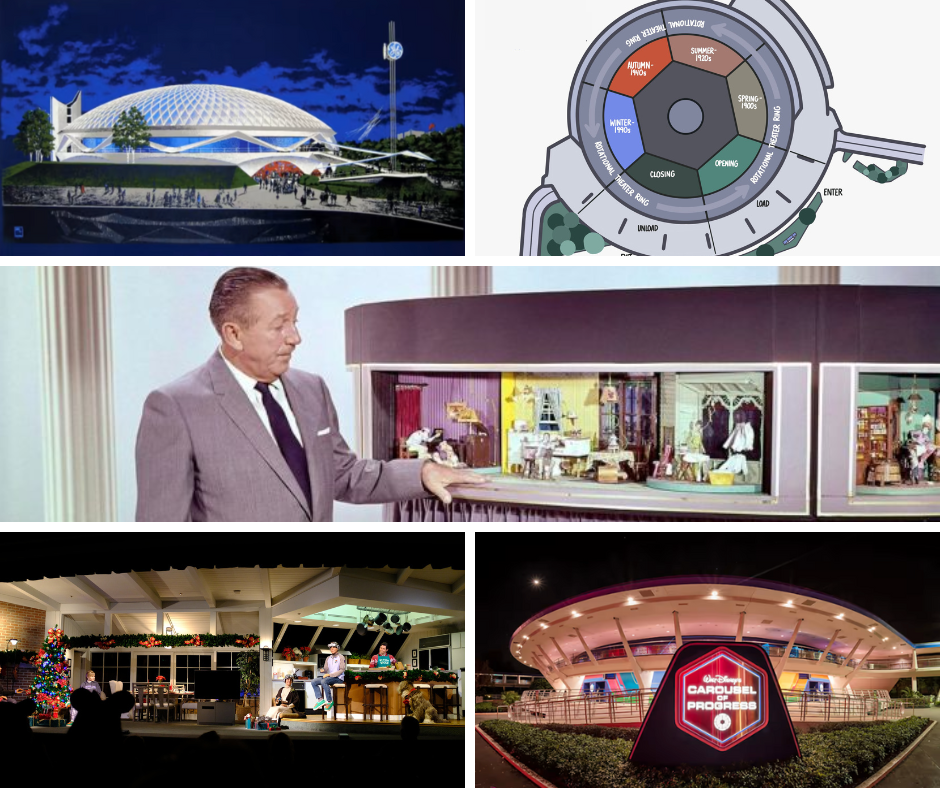
Walt Disney’s Carousel of Progress, a classic attraction found in the Magic Kingdom’s Tomorrowland, presents a unique perspective on the evolution of American life through the 20th century. Through its rotating stages, the attraction showcases how technological advancements have transformed the daily lives of a typical American family over four time periods. While ostensibly a celebration of progress, the Carousel of Progress also inadvertently offers a compelling metaphor for understanding evolving concepts of old age in the United States.
Walt Disney originally conceived concepts that became the show in 1958 as part of a new area at Disneyland Park in California called Edison Square. When the concept was abandoned, the idea was reimagined, eventually opening under the name “Progressland” at the 1964-65 New York World’s Fair in the General Electric Pavilion.
With the classic song “There’s a Great Big Beautiful Tomorrow” by the Academy Award®-winning team of brothers Richard and Robert Sherman, the show was an instant hit. Following its success, the show moved to Disneyland Park and opened in 1967 as the Carousel of Progress. In 1973 it was closed and moved to Walt Disney World in Orlando.
In 1975, the attraction opened in Magic Kingdom park where it was rewritten and restaged with a new theme song, “The Best Time of Your Life.”
In the true spirit of progress, the show was reworked in 1994 to its initial incarnation with the original theme song intact – as a tribute to nostalgia.
The Carousel of Progress holds the record as the longest-running stage show in the history of American theater. It is one of the oldest attractions in the Walt Disney World Resort, and the oldest attraction at Walt Disney World to have been worked on by Walt Disney.
Despite its undeserved reputation of being outdated and boring, I have liked the Carousel of Progress since I unknowingly rode the attraction the year it opened in 1975; I was part of the year-long celebration of America’s Bicentennial that Walt Disney World staged beginning that summer, called “America on Parade.”
As a rising high school senior who had limited time in the park, the Carousel of Progress – along with Space Mountain, Pirates of the Caribbean, and the Haunted Mansion were the four attractions I rode that day. Space Mountain aside (vertigo), those are the same attractions I’ve made sure to go on during every visit to the Magic Kingdom over the ensuing years.
Accordingly, I’ve remained interested in each of those attractions, and when any of them pop up in unexpected and unusual conversations almost 50 years later, I naturally explore them more!
The Carousel of Progress, Walt Disney’s animatronic celebration of technological advancement, takes visitors on a journey through the American century beginning in the late 1800s. We join a ‘typical” family as only Hollywood of the early 1960s can conceive: they navigate the wonders of electricity, household appliances, and eventually voice-activated home systems, all while the patriarch cheerfully reminds us that “there’s a great big beautiful tomorrow shining at the end of every day.”
This attraction embodies America’s once-unwavering faith in the marriage of capitalism and technology – a belief that progress was inevitable, linear, and universally beneficial. As audiences rotate from scene to scene, they witness how innovation solves yesterday’s problems while creating greater comfort, leisure, and prosperity.
But what happens when the carousel stops spinning? When progress falters, or when we discover that technological advancement hasn’t delivered on its promises for vast segments of society?
This is the territory author James Chappel explores in his provocative new work Golden Years: How American Invented and Reinvented Old Age. Utilizing Disney’s attraction as a metaphor in his introduction, Chappel examines how Americans have conceptualized progress over decades. Unlike Disney’s optimistic portrayal, however, Chappel interrogates the gap between the promised future and our lived reality, particularly in how we care for our aging population – a demographic conspicuously absent from Disney’s vision of perpetual youth and boundless opportunity (even though, interestingly, the “aged” are present in each scene of the Carousel of Progress).
Beginning with the 1935 passage of the Social Security Act, Americans were sold on the idea of old age: what it was, and what is was for. The core idea was simple. Older people, while distinct in capacities and purposes from younger ones, had a meaningful place in the world. They ought to be valued and respected, and they deserved security and dignity even if they were no longer participating in the waged labor force. Older people, in short, belonged on the Carousel.
James Chappel, Golden Years
The Narrative of Progress
The attraction’s core theme is “progress,” a concept deeply ingrained in American culture. Each scene depicts a more technologically advanced era, highlighting the conveniences and comforts that new inventions bring. This unwavering focus on forward momentum reflects a societal tendency to equate “good living” with constant advancement.
In the context of aging, this can translate to a cultural pressure to remain “productive” and “modern,” often leading to the marginalization of those who cannot keep pace with rapid technological change.
The Shifting Landscape of “Modern Life”
The Carousel of Progress illustrates how the definition of “modern life” has drastically shifted over time. What was considered cutting-edge in the early 20th century is now quaint and nostalgic.
Similarly, societal perceptions of aging have evolved. Older generations have witnessed profound transformations in technology, social norms, and lifestyles. This creates a generational divide, where the experiences and perspectives of older adults may be perceived as “outdated.”
Nostalgia and the Idealized Past
The attraction evokes a sense of nostalgia, romanticizing the past while simultaneously celebrating the future. This nostalgic element can be seen as a reflection of how society often views aging, with a tendency to idealize youth and earlier life stages.
This can also create a difficult situation, where older people are seen as living in the past, and not properly living in the present.
Technological Integration and Isolation
While showing the benefits of technology, it can be argued that it also shows how technology can isolate people. Modern scenes show people more and more focused on individual devices.
This can be a big problem for the elderly, where technology can be a barrier, and also where the use of technology can cause social isolation.
In essence, the Carousel of Progress, with its optimistic portrayal of technological advancement, mirrors the complex and often contradictory attitudes towards aging in American society. It highlights the tension between celebrating progress and grappling with the challenges of a rapidly changing world. By examining this beloved attraction through the lens of social commentary, the hope is to gain a deeper understanding of how cultural narratives shape our perceptions of aging.
On farms and in factories, Americans once had little choice but to work until death. As the nation prospered, a new idea was born: the right to a dignified and secure old age. That project has benefited millions, but it remains incomplete – and today it’s under siege.
In Golden Years, historian James Chappel shows how old age first emerged as a distinct stage of life and how it evolved over the last century, shaped by politicians’ choices, activists’ demands, medical advancements, and cultural models from utopian novels to The Golden Girls. Only after World War II did government subsidies and employer pensions allow people to retire en masse. Just one generation later, this model crumbled. Older people streamed back into the workforce, and free-market policymakers pushed the burdens of aging back onto older Americans and their families. We now confront an old age mired in contradictions: ever longer lifespans and spiraling health-care costs, 401(k)s and economic precarity, unprecedented opportunity and often disastrous instability.
As the population of older Americans grows, Golden Years urges us to look to the past to better understand old age today—and how it could be better tomorrow.
Golden Years is a fascinating account of the history of old age in modern America, showing how we created unprecedented security for some and painful uncertainty for others.
Golden Years: How Americans Invented and Reinvented Old Age by James Chappel offers a comprehensive examination of the evolving perceptions and policies surrounding aging in the United States. Chappel, a historian at Duke University, delves into the socio-political, economic, and cultural factors that have shaped the experience of old age over the past century.
In the late 19th and early 20th centuries, many Americans worked until they were physically unable, with little to no financial support in their later years. The introduction of the Social Security Act in 1935 marked a pivotal shift, providing a safety net that acknowledged the right to a secure and dignified retirement. However, Chappel points out that these benefits were initially designed for a specific demographic: middle-class, married, white couples. Notably, agricultural and domestic workers, many of whom were African American, were excluded from these early provisions.
The mid-20th century saw the rise of the term “senior citizens,” reflecting a societal shift towards viewing older adults as active and engaged members of the community. This era witnessed the expansion of programs like Medicare and Medicaid, further solidifying support for the elderly. Cultural representations, such as the 1985 television show “The Golden Girls,” mirrored and influenced these changing attitudes by portraying older women leading vibrant, independent lives.
However, Chappel highlights that the landscape of aging underwent significant changes towards the end of the 20th century. The shift towards privatization, exemplified by the introduction of IRAs and 401(k) plans, placed more responsibility on individuals to secure their own retirement. This move, coupled with rising healthcare costs and longer life expectancies, has led to increased financial insecurity among older adults.
Chappel also addresses the disparities that persist within the aging population. For instance, older Black Americans have often faced discriminatory practices in nursing homes and have been disproportionately affected by policies that did not account for their unique challenges. Activists like sociologist Jacquelyne Jackson have worked to bring these issues to light, advocating for policies that recognize and address the specific realities confronting older Black individuals.
In the contemporary context, Chappel observes a dilution of collective advocacy for older adults. Organizations such as AARP have shifted focus towards commercial ventures, potentially at the expense of robust policy advocacy. This evolution raises concerns about the future of Social Security and the adequacy of support systems for an aging population.
Golden Years is not only a captivating historical account but also a call to action. Chappel urges policymakers and society at large to reconsider how aging is approached, emphasizing the need for inclusive and sustainable models that ensure dignity and security for all older adults, regardless of race or socioeconomic status.
As individuals, and as a nation, we are all getting older. We will be making decisions together about how to shape the gray future. And in doing so, it might help to understand a good deal more about the gray past.
Chappel’s work offers a nuanced exploration of the transformation of old age in America. By weaving together historical analysis with cultural insights, Golden Years provides readers with a deeper understanding of the challenges and opportunities that come with an aging society. It serves as a timely reminder of the importance of equitable policies and the collective responsibility to support individuals as they age.
Part of a regular series on 27gen, entitled Wednesday Weekly Reader.
During my elementary school years one of the things I looked forward to the most was the delivery of “My Weekly Reader,” a weekly educational magazine designed for children and containing news-based current events.
It became a regular part of my love for reading, and helped develop my curiosity about the world around us.
The modern world is a machine of a thousand invisible habits, forming us into anxious, busy, and depressed people. We yearn for the freedom and peace of the gospel, but remain addicted to our technology, shackled by our screens, and exhausted by our routines. But because our habits are the water we swim in, they are almost invisible to us. What can we do about it?
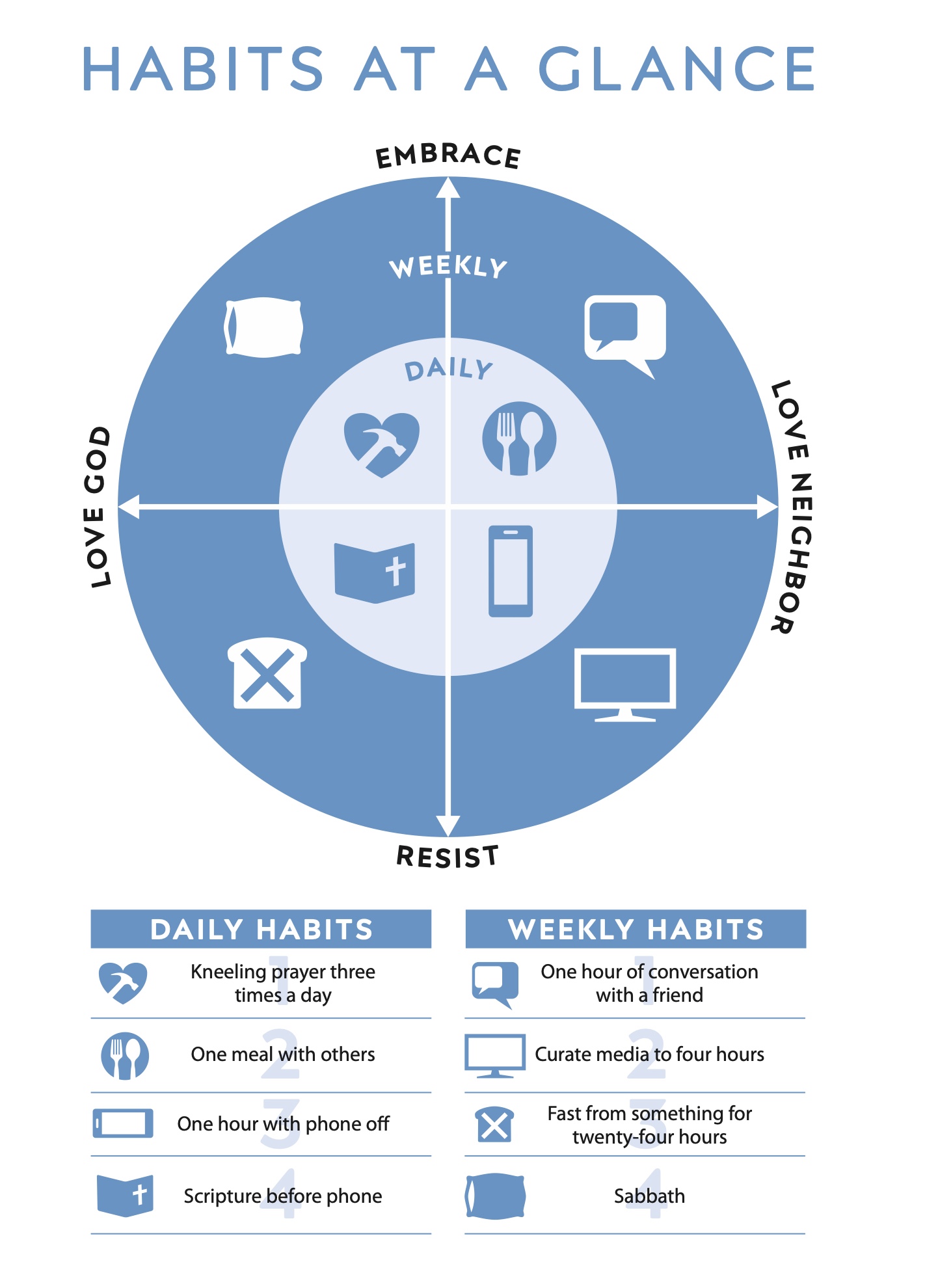
The answer to our contemporary chaos is to practice a rule of life that aligns our habits to our beliefs. The Common Rule offers four daily and four weekly habits, designed to help us create new routines and transform frazzled days into lives of love for God and neighbor. Justin Earley provides concrete, doable practices, such as a daily hour of phone-less presence or a weekly conversation with a friend.
These habits are “common” not only because they are ordinary, but also because they can be practiced in community. They have been lived out by people across all walks of life – businesspeople, professionals, parents, students, retirees – who have discovered new hope and purpose. As you embark on these life-giving practices, you will find the freedom and rest for your soul that comes from aligning belief in Jesus with the practices of Jesus.
The Common Rule: Habits of Purpose for an Age of Distraction by Justin Whitmel Earley is a compelling exploration of how intentional, life-giving habits can counteract the chaos and distraction of modern life. Earley, a lawyer and former missionary, shares his personal journey of achieving career success while experiencing profound personal collapse. His anxiety attacks and insomnia led him to recognize that despite his intentions to live a meaningful life, his actual habits were creating the opposite result. This crisis prompted him to study monastic traditions and develop his own “common rule” of practices to realign his daily life with his deeper values.
Overview
The book is built around the idea that habits shape our loves, and our loves shape our lives. Modern technology and culture have created default habits that pull us toward distraction, isolation, and shallow engagement with the world. The book proposes that by adopting intentional “common rules” of daily living, we can reshape our lives toward purpose, community, and spiritual depth.
In an era where distraction, busyness, and digital overwhelm dominate, Earley argues that forming intentional habits or “common rules” can reorient our focus toward God, community, and holistic well-being. In The Common Rule, he introduces a set of four daily and four weekly habits designed to create a framework for a more meaningful, God-centered life.
The Need for a Rule of Life
Drawing inspiration from monastic traditions, particularly St. Benedict’s Rule, Earley contends that modern people need their own structured rule of life – not to burden themselves but to provide a path toward freedom. Without deliberate habits, he argues, people unintentionally fall into harmful routines dictated by technology, consumerism, and workaholism.
The Four Daily Habits
Kneeling Prayer (Three Times a Day) – This practice anchors the day in prayer, helping individuals start, pause, and end their day with God. It reorients priorities and builds reliance on divine wisdom rather than self-sufficiency.
One Meal with Others – In a culture that values productivity over relationships, sharing a meal fosters community and meaningful conversation, reminding individuals that they are not meant to live in isolation.
One Hour with Phone Off – Constant connectivity breeds anxiety and distraction. By intentionally turning off devices for at least one hour a day, people reclaim their attention and presence for God, loved ones, and personal reflection.
Scripture Before Phone – Instead of starting the day with emails, news, or social media, prioritizing Scripture ensures that the first words absorbed each day come from God, shaping one’s heart and mind.
The Four Weekly Habits
One Hour of Conversation with a Friend – Deep friendships require time and intentionality. Prioritizing a dedicated hour for conversation fosters relationships that provide encouragement and accountability.
Curate Media to Four Hours – Media consumption, if unchecked, can shape desires in unhealthy ways. Limiting intake to four hours per week encourages mindful engagement rather than passive consumption.
Fast from Something for Twenty-Four Hours – Whether fasting from food, social media, or entertainment, this practice cultivates discipline and reminds individuals of their dependence on God rather than worldly comforts.
Sabbath Rest – Setting aside one day for true rest, worship, and delight counteracts the relentless demands of productivity culture and restores a sense of peace and trust in God’s provision.
Impacts and Takeaways
Earley weaves biblical wisdom and practical application throughout the book, illustrating how habits serve as a form of spiritual formation. He emphasizes that these disciplines are not about legalism but about cultivating a life ordered around love for God and others. He also acknowledges the challenges of habit formation and encourages grace and flexibility in the journey.
The Common Rule has resonated with readers seeking practical ways to live more intentionally in a distracted age. The book is a timely guide for those feeling overwhelmed by the pace of modern life. By establishing small but intentional habits, individuals can cultivate a more grounded, relational, and spiritually rich existence. Earley’s personal testimony of transformation underscores the book’s core message: meaningful change is possible when we surrender our routines to God’s greater purpose.
Earley’s book is a practical and deeply encouraging resource for anyone seeking to live with greater intention and purpose. The Common Rule offers a tangible way to resist the drift of busyness and distraction, instead building a life of love, presence, and faithfulness. For those longing to reclaim their time, attention, and relationships, these habits provide a simple yet profound roadmap to a flourishing life.
Part of a regular series on 27gen, entitled Wednesday Weekly Reader.
During my elementary school years one of the things I looked forward to the most was the delivery of “My Weekly Reader,” a weekly educational magazine designed for children and containing news-based current events.
It became a regular part of my love for reading, and helped develop my curiosity about the world around us.
In a world that increasingly celebrates busyness and equates worth with productivity, John Mark Comer’s The Ruthless Elimination of Hurry is a timely and profound counterargument. This spiritual formation book, published in 2019, challenges the modern obsession with speed and efficiency by proposing a radical yet simple solution: slow down.
Through personal anecdotes, theological insights, and practical wisdom, Comer explores how the contemporary culture of hurry is not just exhausting us physically but impoverishing us spiritually. His work serves as both a cultural critique and a practical guide for those seeking to escape the crushing weight of an overcommitted, overscheduled life.
Is it possible that our productivity could actually be increased by first slowing down?
That was the question nagging pastor and author John Mark Comer. Outwardly, he appeared successful. But inwardly, things weren’t pretty. So he turned to a trusted mentor for guidance and heard these words:
“Ruthlessly eliminate hurry from your life. Hurry is the great enemy of the spiritual life.”
It wasn’t the response he expected, but it was – and continues to be – the answer he needs. Too often we treat the symptoms of toxicity in our modern world instead of trying to pinpoint the cause. A growing number of voices are pointing at hurry, or busyness, as a root of much evil.
Within the pages of this book, you’ll find a fascinating roadmap to staying emotionally healthy and spiritually alive in the chaos of the modern world.
A SIMPLE SOLUTION
According to author John Mark Comer, the new normal of hurried digital distraction is robbing us of the ability to be present:
Present to God.
Present to other people.
Present to all that is good, beautiful, and true in our world.
Even present to our own souls.
The noise of the modern world makes us deaf to the voice of God, drowning out the one input we most need.
Whatever you call them: habits, practices, or spiritual disciplines are how we follow Jesus. How we adopt His lifestyle. How we create space for emotional health and spiritual life.
John Mark Comer
And like all habits, they are a means to an end. The end is life to the full with Jesus. The end is to spend every waking moment in the conscious enjoyment of Jesus’ company, to spend our entire lives with the most loving, joyful, peaceful person to ever live.
Silence and solitude
Here’s to tomorrow morning, six o’clock. Coffee, the chair by the window, the window by the tree. Time to breathe. A psalm and story from the Gospels. Hearing the Father’s voice. Pouring out my own. Or just sitting, resting. Maybe I’ll hear a word from God that will alter my destiny; maybe I’ll just process my anger over something that’s bothering me. Maybe I’ll feel my mind settle like untouched water; maybe my mind will ricochet from thought to thought, and never come to rest. If so, that’s fine. I’ll be back, same time tomorrow. Starting my day in the quiet place.
Sabbath
If your story is anything like mine, Sabbath will take you a little while to master. After all, Shabbat is a verb. It’s something you do. A practice, a skill you hone. To begin, just set aside a day. Clear your schedule. Turn off your phone! Say a prayer to invite the Holy Spirit to pastor you into His presence. And then? Rest and worship. In whatever way is life giving for your soul. And something happens about halfway through the day, something hard to put language to. It’s like my should catches up to my body. Like some deep part of me that got beat up and drowned out by meetings and email and Twitter and relational conflict and the difficulty of life comes back to the surface of my heat. I feel free. And at the end of the day when I turn my phone back on and reenter the modern world, I do so slowly. And, wow, does that ever feel good.
Simplicity
The goal isn’t just to declutter your closet or garage but to declutter your life. To clear away the myriad of distractions that ratchet up our anxiety, feed us an endless stream of mind-numbing drivel, and anesthetize us to what really matters. To follow Jesus, especially in the Western world, is to live in that same tension between grateful, happy enjoyment of nice, beautiful things, and simplicity. And when to err on the side of generous, simple living. The truth is you can be happy right here, right now, “through Christ who strengthens me,” meaning through investing your resources in ongoing relational connections to Jesus. Right now you have everything you need to live a happy, content life; you have access to the Father. To His loving attention.
Slowing
The basic idea behind the practice of slowing is this: slow down your body, slow down your life. If we can slow down both our minds and bodies – the pace at which we think and the pace at which we move our bodies through the world – maybe we can slow down our souls to a pace at which they can “taste and see the the Lord is good.” John Ortberg and Richard Foster both label this emerging practice the spiritual discipline of “slowing.” Ortberg defined it as “cultivating patience by deliberately choosing to place ourselves in positions where we have to wait. There’s more to life than an increase in speed. Life is right under our noses, waiting to be enjoyed.
Comer’s writing style is engaging and relatable, blending historical Christian wisdom with contemporary cultural analysis. He draws from diverse sources, including the Desert Fathers, Eugene Peterson, and modern psychology, while maintaining an accessible tone that feels like a conversation with a wise friend.
The book’s strengths lie in its practical applications and Comer’s vulnerability about his own struggles. He doesn’t just theorize about slowing down; he provides concrete steps and real-world examples. His insights about how technology and social media contribute to our collective hurry sickness are particularly astute.
What makes this book stand out is its timing and relevance. In an era where burnout is endemic and anxiety levels are soaring, Comer’s message feels prophetic. He’s not just addressing individual wellness but diagnosing a broader cultural malady.
The book succeeds in making a compelling case that hurry is not just a scheduling problem but a spiritual one. It challenges readers to consider how their pace of life affects their spiritual and emotional wellbeing, relationships, and overall quality of life.
For those feeling overwhelmed by the pace of modern life, “The Ruthless Elimination of Hurry” offers both a theoretical framework for understanding their condition and practical tools for making changes. While the solutions Comer proposes are radical by modern standards, he makes a convincing argument that such radical measures are exactly what we need.
The book is ultimately a call to countercultural living, suggesting that the path to a meaningful life might not be found in doing more faster, but in doing less slower.
A NEXT STEP
John Mark Comer believes that unlike other types of habits, the practices of Jesus aren’t just exercises for your mind and body to grow their willpower muscle and cultivate character. They are far more: they are how we open our minds and bodies to a power far beyond our own and effect change.
The four disciplines listed above may seem like a strange way to become more productive, but in the sugar-rush of the busy lives we are leading, slowing down will actually help you become better at what you do.
Toward which of the four disciplines are you feeling led by the Holy Spirit? What is one step to take today?
Part of a regular series on 27gen, entitled Wednesday Weekly Reader
During my elementary school years one of the things I looked forward to the most was the delivery of “My Weekly Reader,” a weekly educational magazine designed for children and containing news-based, current events.
It became a regular part of my love for reading, and helped develop my curiosity about the world around us.
Along with early and ongoing encouragement from my parents – especially my father – reading was established as a passion in my life that I was happy to continually learn from, share with my children, and watch them share with their children.
Few toys have captured the imagination of generations quite like LEGO®. What began as a small Danish company’s venture into wooden toys in the 1930s transformed into one of the most iconic and beloved building systems in history. In 1958, the modern LEGO® brick was patented, introducing an interlocking system that allowed for limitless creativity and construction. Over the decades, LEGO® has expanded beyond simple bricks, incorporating robotics, architecture, and even real-world engineering principles – making it a staple in both childhood playrooms and professional design studios.
But LEGO® isn’t just for kids. The fascination with these small, colorful bricks extends to adults, engineers, artists, and educators alike. From intricate cityscapes to working mechanical models, LEGO® serves as both a creative outlet and an educational tool, encouraging problem-solving, spatial reasoning, and hands-on learning. The act of “playing” with LEGO® fosters patience, perseverance, and the ability to see failure as a step toward success—valuable lessons in any field, especially engineering.
This brings us to The LEGO® Engineer, a book that dives into the real-world applications of LEGO® as a tool for understanding complex engineering concepts. Whether you’re a lifelong LEGO® enthusiast (like our entire family!) or someone curious about the mechanics behind structures and machines, this book explores how LEGO® models can demonstrate principles of physics, architecture, and design in an accessible, engaging way. Take a closer look at The LEGO® Engineer, its key insights, and what it can teach us about the intersection of creativity and engineering.
In The LEGO® Engineer, you’ll explore how some of humanity’s greatest feats of engineering work, from towering skyscrapers to powerful rockets to speeding bullet trains. Then follow step-by-step instructions to build these marvels with LEGO® bricks as you experience the world of engineering in a fun new way.
How do diesel and electric engines work together to drive massive freight trains? How does a container ship’s bow shape contribute to its fuel efficiency? How do cable-stayed bridges distribute weight differently than suspension bridges? You’ll learn the answers to these engineering questions and more as you build your way through over 30 models, all designed by LEGO® expert Jeff Friesen. Understanding the engineering principles behind these structures will not only help you better appreciate the world around you, but will also help you make your own LEGO® builds more realistic.
The LEGO® Engineer by Jeff Friesen is an engaging and visually captivating exploration of engineering principles through the lens of LEGO® building. Friesen, a renowned LEGO® artist and photographer, takes readers on a journey through real-world engineering marvels, breaking down complex mechanical and structural concepts into stunning LEGO® models. The book features step-by-step instructions for building a variety of engineering-inspired LEGO® creations, from bridges and skyscrapers to locomotives and futuristic vehicles. Each model is accompanied by explanations of the engineering principles that make these structures work in real life, making the book an educational resource as well as an inspiration for builders of all ages.
Divided into sections based on different fields of engineering – including civil, mechanical, and aerospace engineering – The LEGO® Engineer blends creativity with technical insight. Whether showcasing the suspension systems of trains or the aerodynamics of high-speed transport, the book presents each topic with clear visuals and concise, engaging explanations.
The LEGO® Engineer is a fantastic addition to the world of LEGO® books, especially for those interested in the intersection of creativity and STEM (Science, Technology, Engineering, and Mathematics). Friesen masterfully balances fun and education, making engineering concepts accessible to LEGO® enthusiasts, students, and even professional engineers looking for a unique way to visualize mechanics.
Here are a few things that stand out in the book:
Stunning Visuals: The photography in this book is exceptional, making it a pleasure to browse even if you don’t plan to build every model.
Clear Explanations: Engineering principles are broken down in an easy-to-understand manner, making the book suitable for beginners while still offering depth for more advanced readers.
Step-by-Step Instructions: The book includes detailed guides for building various LEGO® models, encouraging hands-on learning.
Inspiration for Creativity: Even beyond the provided models, the book sparks ideas for custom LEGO® creations based on real-world engineering challenges.
A couple of items that only the nerdiest LEGO® builder might take issue with:
Limited to Smaller Builds: While the models are impressive, they are relatively small in scale. Readers looking for large, intricate builds may need to expand on Friesen’s concepts themselves.
Not a Deep Engineering Textbook: While the explanations are insightful, this book is more of an introduction to engineering principles rather than an in-depth technical guide.
The LEGO® Engineer is a must-read for LEGO® fans, aspiring engineers, and educators looking to make STEM topics more engaging. Jeff Friesen has crafted a book that is both visually stunning and intellectually stimulating, proving that LEGO® is much more than a toy – it’s a tool for learning, innovation, and creativity. Whether you’re a seasoned builder or a newcomer looking to expand your skills, this book is an inspiring addition to any LEGO® library.
For Baby Boomers who grew up with simple LEGO® brick sets (like me), Gen Xers who marveled at the first themed sets and minifigures, and Millennials who witnessed the rise of LEGO® Technic, Mindstorms, and epic licensed collections (our four kids and their spouses), LEGO® has been a constant source of creativity and connection across generations. Now, as Gen Z and Generation Alpha (our 11 grandchildren) discover the endless possibilities of LEGO® play, families have the opportunity to share not just a toy, but a legacy of imagination, problem-solving, and innovation.
The LEGO® Engineer is a testament to this enduring magic – bridging the past, present, and future by showing how something as simple as interlocking plastic bricks can teach complex engineering concepts, fuel curiosity, and bring generations together in the shared joy of building. Whether you’re revisiting LEGO® as an adult or introducing your grandchildren to its wonders, this book serves as a reminder that LEGO® is more than just a pastime – it’s a gateway to creativity, learning, and lifelong discovery.
Part of a regular series on 27gen, entitled Wednesday Weekly Reader.
During my elementary school years one of the things I looked forward to the most was the delivery of “My Weekly Reader,” a weekly educational magazine designed for children and containing news-based current events.
It became a regular part of my love for reading, and helped develop my curiosity about the world around us.
How many Americans having ‘surfed’ all the apps and bored by it all, wouldn’t like to slip on a jacket and walk down to the corner and have a beverage with the neighbors? Ah, but we’ve made sure there’s nothing on the corner but another private residence…indeed, nothing at all within easy walking distance.
Ray Oldenburg
In our rush to embrace technological convenience, we often overlook the inherent value of effort and meaningful human connection. While tech leaders champion their innovations as time-saving solutions that eliminate friction and connect the globe, this perspective fails to recognize that some of life’s most rewarding experiences require investment and intentionality. The correlation between effort and meaning suggests that by constantly seeking the path of least resistance, we may be sacrificing depth for convenience, whether in our personal relationships, professional interactions, or broader sense of community.
Do we still need physical places like grocery stores, restaurants, and office buildings? Or will the “Replacement Economy” led by the tech titans and retail giants wipe out these venues in their rapid ascent to unicorn status?
What about museums, universities, and performing arts venues? Considering the power of technology today, can’t we replace these relics with faster, cheaper, and more efficient online tools, apps, and AI?
Through engaging storytelling, human behavior insights, and proven design techniques, Kevin Kelley – an attention architect and cofounder of Shook Kelley, a strategic design firm that pioneered the field of “convening”—unfolds why physical places are essential to civil society, business, and community.
In Irreplaceable, he reveals what it takes for brick-and-mortar establishments to attract an audience and maintain a competitive edge in our increasingly digital world, whether you’re a:
–Retail leader or institutional manager trying to attract people to your offering while keeping the disruptors at bay
–Student of design who values social facilitation over object-oriented design
–Concerned citizen worried about the loss of community and civility
Irreplaceable offers a welcomed antidote to the anti-human digital future crushing our main streets and infiltrating every corner of our lives. It provides a comprehensive roadmap for creating human experiences that have the power to convene and bring friends, neighbors, and strangers together in prosocial environments in ways the digital replacements can’t replicate.
In an era where digital giants seem poised to dominate every aspect of our lives, Kevin Kelley’s Irreplaceable arrives as a compelling argument for the enduring importance of physical spaces. This thoughtful exploration of place-making couldn’t be more timely, as communities worldwide grapple with the erosion of traditional gathering spaces and the social connections they foster.
Kelley structures his book in four well-crafted parts, beginning with a fascinating examination of public markets’ historical role in civilization. Rather than merely waxing nostalgic, he introduces the concept of the “Bonfire Effect” – a framework for understanding why certain spaces naturally draw people together. This opening section also proposes a practical middle ground between funders and designers, acknowledging the real-world tensions in creating successful public spaces.
The second part of the book delves into the psychology of space, exploring how humans perceive and interact with their environment. Kelley’s analysis of why certain spaces energize while others deplete is particularly insightful, offering readers a new lens through which to view their daily environments. His discussion of how physical spaces influence emotional responses and social behavior is both fascinating and practical.
In the book’s third section, “How to Build Your Own Bonfire,” Kelley shifts from theory to practice, providing a comprehensive system for innovation in place-making. His choice to use grocery stores as a primary example proves surprisingly effective – these ubiquitous spaces serve as perfect case studies for understanding human behavior and spatial design. The author convincingly demonstrates how principles learned from supermarket design can inform spaces as diverse as office parks and symphony halls.
The final section may be the book’s most valuable contribution, as it addresses how these principles can be applied with limited resources. Through case studies of a struggling urban district and an unfashionable restaurant chain, Kelley proves that effective place-making isn’t solely the domain of luxury developments or well-funded institutions.
What sets Irreplaceable apart is its clear-eyed assessment of current challenges. Kelley acknowledges the formidable advantages of digital giants like Amazon in terms of price, variety, and convenience. However, rather than admitting defeat, he argues persuasively that physical spaces can compete on different terms – through joy, surprise, and social connection. This isn’t just wishful thinking; he provides practical frameworks for achieving these goals.
The book’s timing is particularly relevant as communities worldwide grapple with increasing polarization and the decline of traditional gathering spaces. Kelley makes a compelling case that the loss of physical meeting places contributes significantly to our current social tensions, though he refreshingly avoids both nostalgia and technological determinism in his analysis.
While the book excels in many areas, some readers might wish for more detailed case studies of successful implementations of Kelley’s principles. Additionally, the focus on commercial and institutional spaces occasionally leaves questions about how these ideas might apply to purely public spaces like parks and plazas.
Despite these minor limitations, Irreplaceable offers valuable insights for a wide range of readers – from business owners and urban planners to architects and community leaders. It’s also surprisingly relevant for parents and educators interested in how physical environments affect learning and social development.
Irreplaceable is more than a design book; it’s a roadmap for creating and maintaining spaces that matter in an increasingly digital world. Kelley’s message is ultimately hopeful: while online platforms may dominate commerce and communication, they cannot replicate the fundamental human experiences that well-designed physical spaces provide. This book offers both the theoretical framework and practical tools needed to ensure these spaces remain truly irreplaceable in our communities.
For anyone concerned with the future of public spaces, community building, or the intersection of physical and digital experiences, Irreplaceable is essential reading. It reminds us that in our rush to embrace digital convenience, we must not forget the irreplaceable value of physical places where human connections flourish.
Organizations around the world are plagued by staff burnout, high turnover, and low morale.
How do you turn this around?How do you make things better?
Changing how we work can feel overwhelming. Like trying to budge an enormous boulder, we’re stifled by the gravity of the way we’ve always done things. And we spend so much time fighting fires -and fighting colleagues – that we lack the energy to shift direction.
But with the right strategy, we can move the boulder.
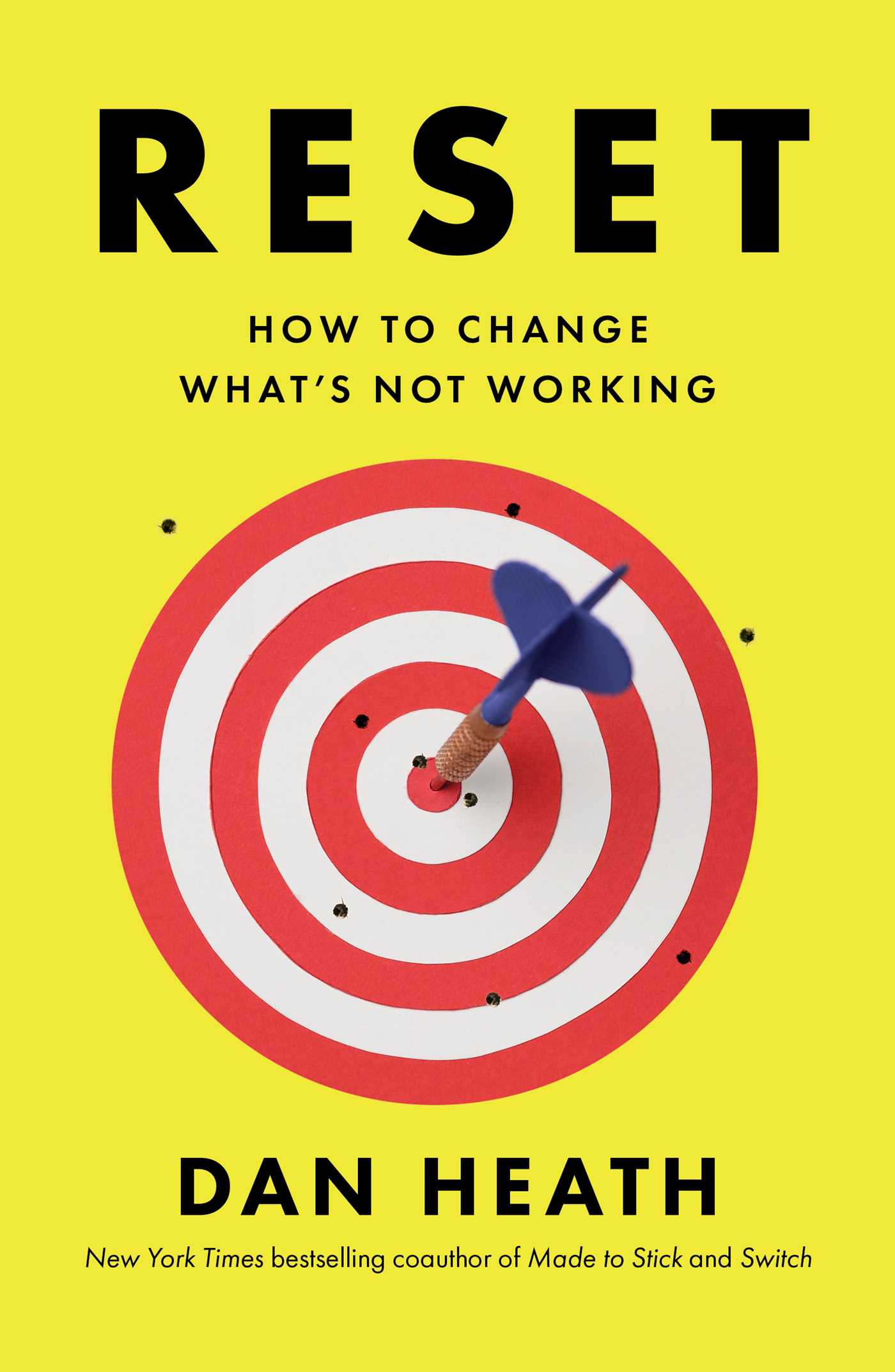
In Reset, Dan Heath explores a framework for getting unstuck and making the changes that matter. The secret is to find “leverage points”: places where a little bit of effort can yield a disproportionate return. Then, we can thoughtfully rearrange our resources to push on those points.
Heath weaves together fascinating examples, ranging from a freakishly effective fast-food drive-thru to a simple trick from couples therapy to an inspirational campaign that saved a million cats.
In Reset, you’ll learn:
-Why the feeling of progress can be your secret weapon in accelerating change
-How leaders can uncover and stop wasteful activities
-Why your team’s motivation is often squandered—and how to avoid that mistake
-How you can jumpstart your change efforts by beginning with a “burst”
The book investigates mysteries: Why the middle is the roughest part of a change effort. Why inefficiency can sometimes accelerate progress. Why getting “buy-in” is the wrong way to think about change.
What if we could unlock forward movement – achieving progress on what matters most – without the need for more resources? The same people, the same assets…but dramatically better results. Yesterday, we were stuck. Today, we reset.
When organizations and individuals find themselves stuck in unsatisfactory situations, the natural instinct is often to push harder or work longer hours. However, as revealed in Reset from Heath’s extensive research spanning over two and a half years, meaningful change requires a more nuanced approach than simply applying more force to existing problems.
Through 240 interviews across various industries, combined with insights from psychology and successful transformation methodologies, Heath developed a clear framework for breaking free from stagnation. The key lies not in working harder, but in working smarter through strategic intervention points.
Think of being stuck as facing a massive boulder blocking your path. No amount of direct force will move it – you need leverage. This metaphor captures the essence of the reset process: identifying precise points where minimal effort can yield maximum results, known as Leverage Points.
However, finding these Leverage Points requires methodical investigation. There are five primary methods for uncovering them.
Direct observation of work processes can reveal inefficiencies that aren’t apparent from a distance.
Examining alternative routes to your ultimate goal might uncover easier paths forward.
Studying your own success stories can highlight replicable winning strategies.
Identifying the primary constraint holding you back helps focus efforts where they matter most.
Taking a holistic view of the system often reveals unexpected opportunities for intervention.
But identifying Leverage Points is only half the battle. The other crucial element is Restacking Resources – redirecting your existing assets, time, and energy toward these strategic pressure points. This process isn’t about finding additional resources; it’s about making smart trade-offs with what you already have.
The challenge lies in the fact that most resources are already committed to ongoing operations. No team member believes their current work is pointless, making it difficult to redirect efforts elsewhere.
This is where six specific strategies come into play:
Beginning with an intense focused burst of effort.
Eliminating wasteful activities.
Shifting resources from low-value to high-value work.
Tapping into intrinsic motivation.
Empowering team members to lead change.
Accelerating feedback loops for faster learning.
What makes this approach particularly powerful is its alignment with human psychology. Research by Teresa Amabile and Steven Kramer, involving over 12,000 diary entries from 238 employees across seven companies, revealed a fascinating insight: the single most powerful motivator in the workplace is making progress on meaningful work. On employees’ best days, 76% involved achieving progress, while only 13% involved setbacks. Surprisingly, only 5% of managers recognized progress as a primary motivator, ranking it last among potential motivational factors.
This “progress principle” becomes a powerful ally in the reset process. Once you start moving the boulder – even slightly – the psychological boost from that progress creates positive momentum that can help sustain the change effort. It transforms the daunting task of organizational change from an exhausting push against resistance into a more natural flow of continuous improvement.
As with his previous books (see here, here, and here), Heath uses real-world examples to demonstrate the effectiveness of this approach across diverse situations: from turning around struggling libraries and companies to revitalizing hospital operations and even improving personal relationships. The framework has proven adaptable to various contexts, whether addressing operational inefficiencies, customer satisfaction, employee engagement, or strategic direction.
The process challenges several common assumptions about organizational change. It suggests that seeking “buy-in” might be the wrong approach to change management. It reveals that inefficiency can sometimes accelerate progress, and that people often overestimate their understanding of the systems they work within. Perhaps most importantly, it demonstrates that the middle phase of any change effort is typically the most challenging – a insight that helps teams prepare for and push through the inevitable rough patches.
The beauty of this Reset framework lies in its simplicity: find the right leverage points and realign resources to apply pressure there. While the concept is straightforward, the execution requires careful analysis, strategic thinking, and willingness to make difficult trade-offs. However, the rewards are worth the effort: breaking free from unproductive patterns, experiencing forward momentum where there was once stagnation, and regaining a sense of agency over seemingly intractable situations.
This approach offers hope to anyone feeling stuck in a rut, whether personally or professionally. It provides a practical pathway to change that doesn’t rely on heroic efforts or unlimited resources, but rather on smart targeting of effort and strategic reallocation of existing assets. By understanding and applying these principles, individuals and organizations can transform themselves from spinning their wheels to moving purposefully toward their goals.
In a future post, I will be unpacking Reset in terms of how I am applying it in my personal life. Stay tuned!
Part of a regular series on 27gen, entitled Wednesday Weekly Reader.
During my elementary school years one of the things I looked forward to the most was the delivery of “My Weekly Reader,” a weekly educational magazine designed for children and containing news-based current events.
It became a regular part of my love for reading, and helped develop my curiosity about the world around us.