Burger Magic: Exploring the Universal Fascination Behind America’s Favorite Dish

Delicious, versatile, and universally adored, certain dishes possess an undeniable charm that transcends cultural boundaries. Among these culinary wonders stands a true icon – the hamburger.

The hamburger, with its simple yet irresistible combination of a juicy patty, fresh toppings, and a soft bun, has achieved unparalleled popularity and a universal appeal that has captured the hearts and palates of people worldwide.

Let’s embark on a brief, mouthwatering exploration, uncovering the reasons behind the universal appeal of this beloved dish.

Versatility: A Burger for Every Palate

Hamburgers offer a delightful canvas for customization, making them appealing to a wide range of taste preferences. With classic beef patties as a foundation, the burger caters to diverse diets and culinary choices. With an array of toppings, sauces, and condiments, individuals can create personalized flavor profiles, ensuring a burger for every palate.

Comfort Food Connection

The universal appeal of the hamburger lies in its ability to evoke feelings of comfort and nostalgia. As a quintessential comfort food, the burger offers a familiar and satisfying experience. Whether it brings back childhood memories of backyard barbecues or conjures visions of casual outings with loved ones, the burger taps into a collective sentiment of warmth and familiarity.

Convenience and Accessibility

In our fast-paced world, convenience plays a significant role in the universal appeal of the hamburger. As a handheld delight, it provides a quick and easy meal option, ideal for busy individuals on the go. Furthermore, hamburgers are widely accessible, available at a range of establishments, from fast-food joints to gourmet burger restaurants, ensuring everyone can savor their deliciousness.

Cultural Cross-Pollination

The hamburger’s universal appeal can be attributed to its adaptability to different cultures and cuisines beyond its American roots. From fusion flavors to regional variations, the burger has seamlessly integrated itself into various culinary traditions worldwide. This cultural cross-pollination has expanded its appeal, making it a beloved dish in diverse communities and enhancing its global popularity.

Social Bonding and Shared Experiences

Hamburgers have a remarkable ability to bring people together, fostering social connections and shared experiences. Whether enjoyed at backyard barbecues, family gatherings, or friendly outings, burgers create moments of togetherness and joy. The act of sharing a delicious burger encourages conversations, laughter, and the forging of lasting memories.

The Perfect Combination of Flavors and Textures

One of the key factors behind the universal appeal of hamburgers is the harmonious blend of flavors and textures they offer. The juicy patty, complemented by crisp toppings, melty cheese, and a soft bun, creates a symphony of taste and mouthfeel. The balance between savory, tangy, and sweet notes satisfies the palate and leaves a lasting impression.

Pop Culture and Media Influence

Hamburgers have become cultural icons, portrayed in movies, television shows, and advertisements, further enhancing their universal appeal. The representation of mouthwatering burgers in popular media creates a sense of desire and anticipation, sparking the craving to indulge in this beloved dish. Additionally, the influence of social media and food blogging has propelled burger culture, fueling the excitement and engagement surrounding hamburgers.

The Last Bite

The universal appeal of the hamburger can be attributed to a multitude of factors that converge to create an irresistible dining experience. From its versatile nature and comforting familiarity to its ability to foster social connections and adapt to various cultures, the hamburger has captured the hearts and taste buds of individuals worldwide. As an emblem of culinary delight, it continues to unite people, transcend borders, and evoke a shared passion for exceptional flavors. The universal love for the hamburger stands as a testament to its enduring appeal and its position as a timeless favorite in culinary culture. So, the next time you sink your teeth into a juicy, flavorful burger, savor the taste and appreciate the reasons behind its universal appeal – a culinary masterpiece that brings people together and celebrates the joy of good food.


Still hungry?

My Quest for the Perfect Hamburger: A Literary, Culinary, and Arbitrary Journey in Pursuit of America’s Iconic Delight

A Tantalizing Top of the Stack, Made to Order

Before Burger Quest

The Power of Sacrifice: Why Independence Day Holds Deeper Meaning

I have always loved history. Not many accounting majors have a minor in US History; the same goes for a Masters in Administration and Communication with a minor in Baptist History. But of all the history periods, I think the American Revolution is my favorite.

This time of the year – July 4th – is a time to read the Declaration of Independence, sections of the Federalist Papers, and Common Sense.

IST-IS162RM-00000177-001

For me, Independence Day now carries a different meaning.

My son is in the Air Force. He’s been deployed twice in his career to date.

While my father and father-in-law both served in WWII and the years afterwards, and several cousins were in Viet Nam, somehow it’s all very personal now.

America celebrates 247 years as a nation this July 4th, even though the independence we celebrate was not settled for another seven years after the signing of the Declaration of Independence. In the many years since we have gone through a devastating civil war, numerous regional wars, two World Wars, a Cold War, and a global war on terror that has no country but untold numbers of faces.

It seems that to have peace you must have war.

I pray for my son every day, for safety as he performs his duty. I know that he has been trained and prepared to do his best, and give his all, for his family and his country. While it is a sacrifice he is prepared to make daily, I hope he never has to.

Hundreds of thousands of men and women have made that sacrifice since 1776, and continue to do so to this day.

So when you celebrate freedom this July 4th, never forget the price others have paid.


How to Lead Your Church to Leverage the Everyday Moments of Their Life to Share the Gospel

Just for fun, ask this question to a group of church leaders: Is an attractional model of ministry or incarnational emphasis more effective? Then sit back, as a vigorous discussion is sure to follow.

Attractional ministry implies that the church’s basic strategy for reaching the lost revolves around getting “seekers” or the “unchurched” into the church building. Once inside, the opportunity to present the gospel defines the primary opportunity for evangelism. This is often known as an “invest and invite” approach.

In contrast, the incarnational emphasis of a missional mindset focuses on living and sharing the gospel “where life happens.” The emphasis is placed on the church “disassembling” itself for the primary work of evangelism in the nooks and crannies of everyday life.

In the attractional mode, big church buildings are important, and the church gathered is the consummation of evangelism. In the incarnational mode, fluid and flexible communities of faith are important; the church scattered is the consummation of evangelism. A common rally-cry against the attractional model is that the church should be measured by its sending capacity, not its seating capacity.

The missional reorientation described above represents an important shift in focus from methodology to identity.

This issue of SUMS Remix looks at solutions that will help you understand that distinction, and equip the church to leverage everyday moments in their lives to share the gospel: 

Sending is not something you do, but being sent is something you are.

SUMS Remix 82, released December 2017


My Quest for the Perfect Hamburger: A Literary, Culinary, and Arbitrary Journey in Pursuit of America’s Iconic Delight

Embarking on a culinary quest, particularly in search of the perfect hamburger, is not merely a gastronomic endeavor but a personal journey fueled by passion, curiosity, and a desire for culinary exploration. 

There’s also the irresistible aroma of a hamburger grilling, soon to be followed by grabbing it with both hands and biting into an explosion of texture and taste.

Today I’m beginning a periodic series on the quest for the ultimate hamburger, reflecting on personal experiences, and expressing it through the following three lenses:

Literary – the writing, study, or content of literature about the hamburger

Culinary – of or for cooking hamburgers, both by restaurants and in my home

Arbitrary – based on random choice or my personal whims

It’s the official launch of #BurgerQuest!

Hamburgers are a mouthwatering delight, captivating the hearts and taste buds of Americans for generations. These simple yet irresistible sandwiches have achieved an unparalleled status in American cuisine, representing a delectable blend of flavors, convenience, and cultural significance. 

Beyond their culinary appeal, hamburgers have woven themselves into the fabric of American society, symbolizing shared experiences, nostalgia, and the American dream. 

Why burgers, and why now?

My earliest memories of hamburgers are at the Dairy Queen in Mt. Juliet, just a couple of doors down from my aunt and uncle’s house on Highway 70. Run by the Shaver’s, it was always a treat to walk across the Church of Christ parking lot, order burgers and fries, and take them back to my aunt and uncle’s backyard to eat them.

Visiting downtown Nashville to eat at Krystal’s was memorable for more than just the experience of those little square hamburgers that even a child could eat in just a couple of bites. On one such trip, running ahead of my parents at a crosswalk, I ran into the back of a car that had run the red light. I was not injured, and the car kept going. We still got the hamburgers.

In Madison, a suburb of Nashville, I can remember going to my first McDonald’s – no inside seating, but there were picnic tables under the golden arches that were more advertising than architecture.

Upon acquiring my driver’s license in 1974, and working at my dad’s gas station (Adams Gulf) after school and on Saturdays, one of my favorite work assignments outside the station was to drive the three miles to the Superburger in Mt. Juliet and get my dad’s favorite order: “one of those burgers with everything on it, and an order of onion rings, too.” That order was ingrained in my mind, and both items are still among my favorite meals (but I’m a lot more choosy about my onion rings!).

Also with a driver’s license and a car (1956 Candy Red Oldsmobile) and a group of friends who stuck together since childhood was the drive in the other direction, away from MJ toward Nashville, to Hermitage Hills and the “new” McDonald’s – a regular trip almost every Sunday night after church in high school.

There are many more, but you get the point:

Nostalgia and childhood memories triggered at least one reason for the #BurgerQuest.

How many recollections of family outings, backyard barbecues, or special occasions are centered around hamburgers in your memories?

It may be one of the stronger reasons driving the quest for the perfect burger: the desire to recreate those cherished moments and flavors.

But it’s not the only one…


Launching the quest for the perfect hamburger is a deeply personal and multi-faceted journey. It is driven by a myriad of motivations, from nostalgia and personal experiences to culinary curiosity, inspiration, and a desire for creative expression. 

As I begin this quest with my own unique perspectives, tastes, and influences, I hope you enjoy this path of culinary discovery with me. Through this journey of passion and dedication, I looking forward to the joy of exploring the vast and delicious world of hamburgers AND also connecting with others who share their love for this iconic dish. 

Leave your memories and stories in the comments!

A Tantalizing Top of the Stack, Made to Order!

The announcement is coming Friday 6/30, but here’s a teaser.

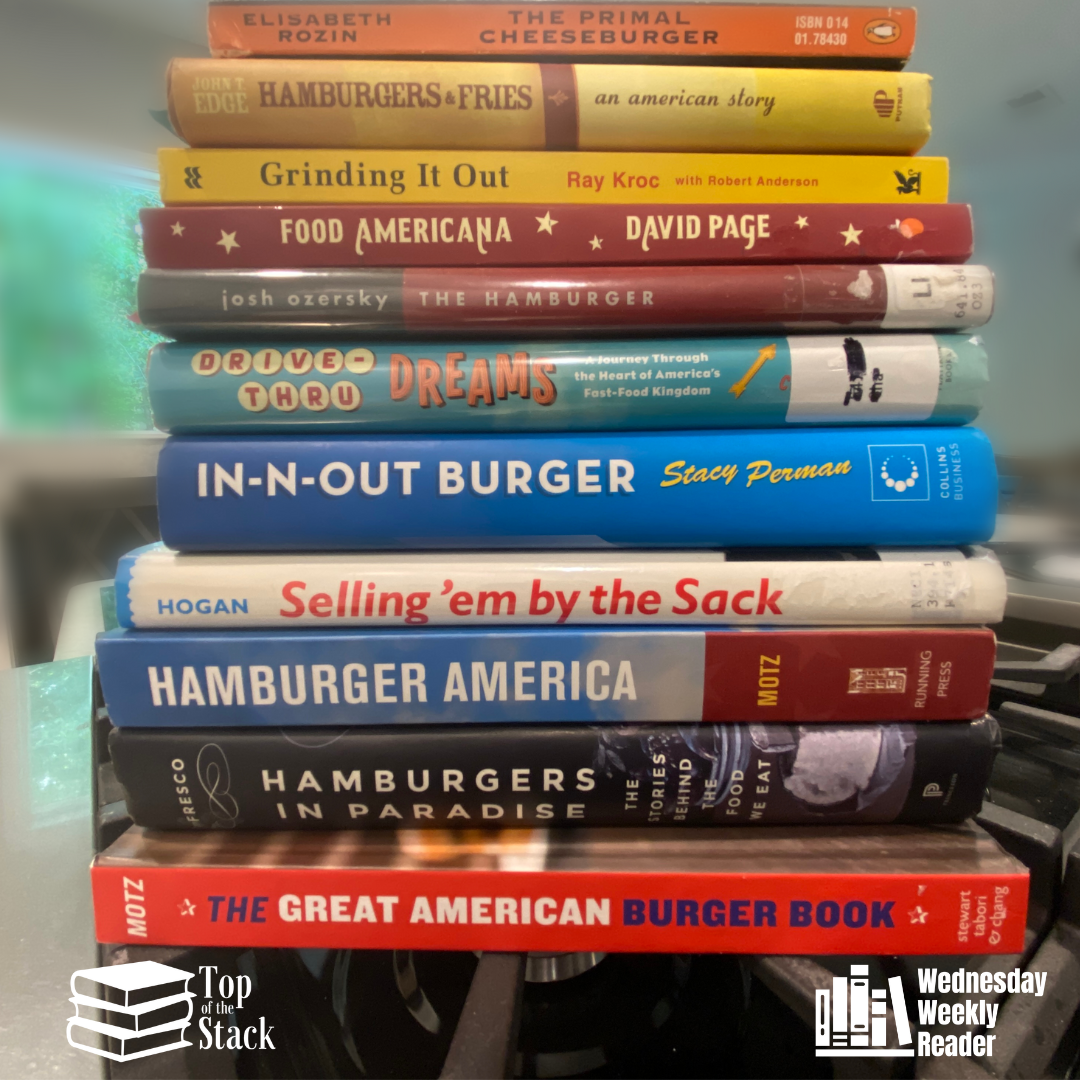
To capture the complexity of even simple things requires looking at it from multiple angles, the first of which is literarythe writing, study, or content of literature about the object in question.

Of course you knew I would begin there.

The stack you see in the image is my beginning point, but I have no doubt my journey will uncover additional delicious delights about the humble hamburger…

… and that’s just in books!

Pull up a chair, slide into the booth, sit at the lunch counter – let the #BurgerQuest begin!


Listening for a Connection

One of the best ways to make connections with other people is by closing your mouth and opening your ears.

That’s right – Listening.

And that often starts with paying attention.

Here’s an earlier post on “paying attention” that fits right into that concept.

So, assuming you are paying attention to your surroundings, how do you enter into a conversation that will help you connect better with people around you?

Surprisingly, one of the most important tools that you need to develop in your communication skills is not your mouth. It is those two things on either side of your head.

Use your ears more than your mouth in a conversation, and become an active listener.

The most basic explanation of active listening is that is is the kind of listening that involves the use of one’s full concentration. The goal of this type of listening is to understand the person delivering the message.

Active listening is a skill which you have to develop over time, constantly practice, and fine tune along the way.

Here’s a tool developed by Dave Ping to help you listen to other people and establish a better connection with them.

Whether you’re talking with a relative, a neighbor, a friend, or a co-worker, the more you know about the person’s likes, dislikes, anxieties, and hopes, the easier it will be to connect with his or her world to establish, and then grow, a relationship.

Download the form above, and use it to listen and observe, filling in the blanks as you think the other person would.

Any answers you don’t know can serve as opportunities to listen more and to grow in your relationship.


Wisdom is Developed Only in Experience

Out in the open wisdom calls aloud, she raises her voice in the public square; on top of the wall she cries out, at the city gate she makes her speech. (Proverbs 1:20–21, NIV)


Wisdom invites people to learn from her, but she does so not from the ivory tower but outside, in the public square and public places of the city. Wisdom is developed only in experience. No matter how hard they study, the graduates of medical school, law school, and business school will become truly wise in their fields only out in the open, that is, in real-life experience. 

Proverbs is not an “inspirational” book with statements that immediately jump off the page at you. Wisdom cannot be conveyed by a series of TED talks or “executive briefings.” It is inaccessible to people too busy for its method. It comes through first with experience and then with deep, honest reflection on that experience. 

The journey from the Proverbs of Solomon to the writings of Socrates (via his student Plato) is not as strange as one might seem:

Wisdom is humility, accepting that we know very little or nothing at all

Socrates describes this conclusion when he states “I am wiser than that man. Neither of us probably knows anything worthwhile; but he thinks he does when he does not, and I do not and do not think I do”. Socrates is considered the wisest man in Athens by the Oracle, because instead of assuming he possesses wisdom, he accepts that wisdom is often unattainable and that we should instead continuously pursue new and truer knowledge. (from Plato’s Apology)

Socratic wisdom, then, is humility: a recognition of your own ignorance.

To continually move past this ignorance, the Socratic method uses questions to examine the values, principles, and beliefs of students in a dialogue, not a one-sided monologue by the teacher.

Wisdom emerges only as we ask thought-provoking, searching questions: 

  • When did I last see this illustrated in my life or someone else’s? 
  • Where do I need to practice this? 
  • How would my life be different if I did? 
  • What wrong thinking and attitudes result when I forget this? 

Jesus, often spoke in parables and answered questions with other questions, trying to get us to reflect, think, and grow in wisdom (Matthew 13:10; Luke 20:4; John 16:29). 

What has happened to you recently that was significantly good or difficult? Have you reflected on it with others to learn wisdom from it?

I’m reminded of a wise saying by my father: 

It’s okay to be ignorant – it just means you haven’t learned something yet. Just don’t be stupid – stupid is terminal.

Doc Adams

My journey to becoming a Modern Elder is all about reciprocity. 

Giving and receiving. Teaching and learning. Speaking and listening. 

Everyone gets older, but not everyone gets elder.

The first just happens (if you’re lucky and healthy). The other you have to earn.


Adapted from God’s Wisdom for Navigating Life by Tim and Kathy Keller, and Wisdom@Work by Chip Conley

Does Your Church Realize that Jesus REALLY Meant That They Should Love Their Neighbors?

Hearing that Jesus had silenced the Sadducees, the Pharisees got together. One of them, an expert in the law, tested Him with this question: “Teacher, what is the greatest commandment in the Law?”

Jesus replied: ‘Love the Lord your God with all your heart and with all your soul and with all your mind. This is the first and greatest Commandment. And the second is like it: Love your neighbor as yourself. All the Law and the Prophets hang on these two commandments.’

Matthew 22:34-40, NIV

What about the Parable of the Good Samaritan in Luke’s gospel?

Which of these three do you think was a neighbor to the man who fell into the hands of robbers?”

The expert in the law replied, “The one who had mercy on him.”

Jesus told him, “Go and do likewise.

Luke 10:25-37

Do you think that Jesus meant we should love our actual neighbors – those who live next door, behind us, or across the hall?

We may live in the most connected time in world history, but as a society we are as isolated as we have ever been. People drive alone to work, sit alone in an office, eat alone, drive home alone, and watch TV alone, all while our neighbors are doing the same thing.

Implicit in the Great Commandment is the admonition to break out of that isolation and walk across our yard or down the hall and make a connection to our neighbors – those who live closest to us.

This issue of SUMS Remix looks at solutions that will help you connect with and love your neighbors, and lead your church to do the same. The solutions include: 

Imagine people who love one another enough that they will not allow any need to go unmet, that they will be truthful enough to confront and encourage each other no matter what the cost. Picture a community that collectively finds joy even in the midst of tragedy. 

This is what happens when you love your actual neighbor.

Communities and cities can be transformed by the simple obedience of a small group of Christ followers who put others’ needs above their own.

Love your neighbors.

Lead your church to do the same.

SUMS Remix 63, released March 2017


10 Years Ago, the Adams Family Pizza Quest Came to an End…

Pizza may not fit your definition of comfort food, but it comes close in our family.

A semi-tradition for many years in our family has been Friday Night Pizza and a movie, usually consisting of whatever local pizza store (almost always one of the national chains) had the best deal going on. On the same trip, we would go by the video store and pick up a DVD to watch.

Netflix and then Amazon Prime changed part of the equation, but the pizza part remained intact.

As the years went by and our family dwindled, pretty soon it was just Anita and I – functional empty nesters, as our youngest son was a full-time culinary student and worked in a restaurant, or was out with friends. Along with that change came a realization that there were a lot of pizza restaurants in and around Charlotte – 371 by my count on Urban Spoon in 2011. I pondered (and my wife Anita humored me): what if we go out for pizza on Friday nights, and try a different place every time?

Thus was born the Adams Family Pizza Quest.

pizza

Beginning in early 2011, I led the Adams Family Pizza Quest, a weekly pursuit of the quintessential pizza. My family and I  (well, mostly me; the rest just humored me) utilize a 5-slice rating system that measures menu selection, crust, base ingredients, toppings, overall pizza goodness and ambiance of the restaurant. I actually have a nerd version that has 35 points, but after a round of boos and garlic knots thrown in my direction I hastily retired it.

By late 2013, after almost three years of weekly excursions, only 1 pizza has earned 5 slices. That would be The Sicilian – Red sauce, sausage, cappicola, salami, oregano, basil, pecorino-romano and fontina – accompanied by an Italian Chopped Salad, from WaterStone Wood Fired Pizza in Lynchburg, VA. Anita and I stumbled on it by accident, walking downtown along the river.

Several others have earned 4 1/2 slices, many have earned 4, and a lot have earned 3. We’ve only encountered a few 2 slices, and in all honestly, not a single 1 slice rating (maybe we just naturally steered away from those joints).

Our favorite Charlotte pizza place is Zio’s Casual Italian off Providence Road. It was one of our early discoveries, earning a strong 4 3/4 slices; somehow we have found our way back there several times, taking friends who haven’t heard of it.

Other top restaurants are Mama Ricotta’s, Luisa’s Brick Oven, The Brickhouse Tavern, and Tony Sacco’s Coal Oven.

I could go on, but I won’t, as the Adams Family Pizza Quest comes to a close (sort of). After over 100 different visits in the greater Charlotte area, and a few across the country, my sense of adventure for pursuing the perfect pie has waned. Mind you, my taste for pizza hasn’t – I’m sure we will still be eating pizza on a regular basis.

It’s time for new adventures…

Stay tuned…

Welcome home! Exploring First Place Hospitality

Recently I celebrated my 65th birthday! But it’s also the re-birth of an endeavor I’ve been working on over the past few years…

For many years, I’ve been passionate about Guest Experiences – particularly those in a church setting. While I consider that to be a critical part of welcoming people into a church setting, I’ve felt unsettled – like there was “more to the story” of hospitality.

For the last few years, a growing place in my heart has been thinking about Guest Experiences in the setting of the home.

A part of 27gen is going to explore First Place Hospitality – and it just what it sounds like.

Hospitality in your home, your “first place.”

Come on in!

If we take the Great Commandment literally, we must open our eyes and our hearts to love the people on the street where we live. The act of loving our actual neighbors is one of the simplest and yet most powerful things that we can do to make an impact in our world. 

The solutions to the problems in our neighborhoods can’t be found in governmental programs or getting more people to come to your church.

The solution is with people just like you in your neighborhood.

The solution is to get back to the basics of what Jesus commanded: Love God and love your neighbors.

Think of it as First Place Hospitality – building bridges to your neighbors in your “First Place,” your home.

Look for the most recent posts for BookNotes, Deeper Dives, Tools, or Home Hospitality Network features – new every Monday!