A Round Look at the Hole History: The Donut’s Journey Through America

From their simple beginnings to their status as a beloved treat, donuts have an undeniably sweet spot in American history. These delicious rings of fried dough have evolved from a simple snack to an icon of comfort food culture. As we embark on this sugary journey in anticipation of the upcoming National Donut Day on Friday, June 7, let’s explore the fascinating history of donuts in America.

A quick note: the spelling of doughnut and donut will be used interchangeably depending on the use from the source. No matter how you spell it, the taste is what matters!

Early Beginnings: Dutch Influence and the “Olykoek”

The story of the doughnut in America begins with Dutch settlers in the early 18th century. They brought with them recipes for “olykoeks,” which translates to “oil cakes”—a simple concoction of dough balls fried in pork fat. These early versions were not the perfect rings we know today but rather crude, often heavy balls of dough with a slightly raw center. 

In Glazed America: A History of the Doughnut, author Paul R. Mullins notes that these early doughnuts were enjoyed by families and communities during social gatherings, highlighting their role as a communal treat long before they became a commercial product.

The Invention of the Hole: A Delicious Innovation

The iconic donut hole was purportedly invented in 1847 by a young American sailor named Hanson Gregory. Frustrated with the undercooked centers of traditional donuts, Gregory had the brilliant idea of punching a hole in the middle, ensuring even cooking throughout. This simple yet revolutionary change transformed the donut into the perfect ring-shaped confection we love today.

In his book Donuts: An American Passion, author John T. Edge explores this anecdote, emphasizing how Gregory’s practical solution paved the way for the modern donut. The innovation allowed for consistent texture and easier mass production, which would become crucial as donuts entered the commercial sphere.

World War I: Donuts on the Front Lines

Donuts gained further prominence during World War I, thanks to the Salvation Army “Doughnut Lassies.” These brave women served donuts to soldiers on the front lines, providing a taste of home and boosting morale. The simple pleasure of a fresh donut offered comfort amidst the chaos of war.

A look at the history of the Salvation Army delves into this period, illustrating how the Doughnut Lassies not only fed the troops but also solidified the donut’s place in American culture. The soldiers returned home with a newfound appreciation for the treat, sparking a nationwide craving.

The Rise of the Donut Shop: Krispy Kreme, Dunkin’ and Beyond

The post-war era saw a boom in donut shops across America. Adolph Levitt began selling fried doughnuts from his bakery in 1920. Unable to keep up with the demand, he created a mechanical gadget in which the dough rings travelled along a channel overflowing with boiling oil and then once cooked, ascended a moving ramp before falling into a basket. In 1934, the World’s Fair in Chicago proclaimed donuts “the hit food of the Century of Progress,” propelling them into the culinary spotlight. Donuts were celebrated for their affordability, convenience, and deliciousness.

In 1937, in a rustic clapboard building on South Main Street in Winston-Salem, NC, Vernon Rudolph fried up the first original glazed Krispy Kreme doughnut. What began as a hole-in-the wall has blossomed into one of the world’s premier doughnut companies, a global cult icon and intriguing brand.  In March of this year, McDonald’s and Krispy Kreme announced a sweet update for doughnut fans everywhere: Fans will begin spotting Krispy Kreme doughnuts in their local McDonalds’s restaurants as part of a phased market rollout across the country.

Dunkin’ Donuts, founded in 1950 by William Rosenberg, played a pivotal role in popularizing donuts. With its focus on freshness and variety, Dunkin’ Donuts transformed the humble treat into a ubiquitous American staple. The brand’s catchy slogan, “America Runs on Dunkin’,” reinforced the donut’s role in daily life.

Modern Day: Gourmet Trends and Timeless Classics

Today, the donut landscape is more diverse than ever. Artisanal donut shops offer gourmet creations with unique flavors and high-quality ingredients, appealing to foodies and traditionalists alike. From bacon maple bars to matcha-glazed rings, modern donuts cater to a wide range of tastes and preferences.

Yet, despite these innovations, the classic glazed donut remains a favorite. Its simplicity and nostalgia evoke the essence of what makes donuts special: comfort, joy, and a touch of indulgence.

The history of donuts in America is a testament to their enduring appeal. From Dutch settlers to modern-day gourmet bakers, each era has contributed to the rich tapestry of donut lore. So next time you savor a donut, remember that you’re partaking in a delicious slice of American history.

In anticipation of National Donut Day coming up on Friday, June 7, here’s a baker’s dozen books from my library that will be a great addition to accompany your next sugary sweet donut snack:


Part of a regular series on 27gen, entitled Wednesday Weekly Reader.

During my elementary school years one of the things I looked forward to the most was the delivery of “My Weekly Reader,” a weekly educational magazine designed for children and containing news-based current events.

It became a regular part of my love for reading, and helped develop my curiosity about the world around us.


Building Trust and Empowering Teams: Lessons in Servant Leadership from Nehemiah

I’m continuing a brief series using the biblical story of Nehemiah as an excellent role model for a Modern Elder:


What makes a leader truly great? Is it their professional accomplishments, the might of their authority, or the strength of their power?

For the biblical figure Nehemiah, it was quite the opposite – his remarkable leadership flowed from a counterintuitive essence of service.

As an outcast Jew in the Persian empire, Nehemiah seemed an unlikely candidate to revive a nation. Yet through his steadfast faith, humility and sacrificial devotion to the people of Israel, Nehemiah embodied the purest model of servant leadership. His extraordinary story contains insights that modern leaders would be wise to emulate. From rallying a disheartened people around a seemingly impossible vision, to empowering each person’s role in the mission, to compassionately advocating for their needs – Nehemiah’s journey exemplifies the paradoxical principle that those who lead by serving others become the greatest leaders of all.

I hope you will be inspired and challenged in this brief look at the timeless practices of servant leadership through the life of Nehemiah.

Nehemiah exhibited characteristics of a servant leader, putting the needs of the people and the cause before his own interests.

How can this leadership style be effectively applied in contemporary contexts?

This question highlights Nehemiah’s embodiment of the servant leadership philosophy, which has gained significant attention in modern leadership theory and practice.

Here are some key actions that demonstrated Nehemiah’s servant leadership:

Prioritizing the Greater Good: Nehemiah’s actions were driven by a desire to serve the collective interests of his people and the cause of rebuilding Jerusalem, rather than personal gain or ambition. He demonstrated a selfless commitment to a greater purpose beyond himself.

Empowering and Developing Others: Servant leaders focus on empowering and developing their followers. Nehemiah delegated responsibilities and involved the people in the rebuilding efforts, fostering a sense of ownership and commitment to the cause.

Leading by Example: Nehemiah led by example, working alongside his people and sharing in their struggles and hardships. This hands-on approach earned him respect and credibility as a leader who was willing to sacrifice for the greater good.

Ethical and Moral Integrity: Servant leaders are guided by strong ethical and moral principles. Nehemiah’s leadership was grounded in his faith and commitment to doing what was right, even in the face of opposition and challenges.

Listening and Empathy: Effective servant leaders are attentive to the needs and concerns of their followers. Nehemiah demonstrated empathy and a willingness to listen to his people, which likely contributed to their support and commitment to the rebuilding efforts.

Humility and Selflessness: Servant leaders are characterized by humility and a focus on serving others rather than seeking personal glory or recognition. Nehemiah’s leadership style was marked by humility and a selfless dedication to the cause.

The term “servant leadership” was coined in 1970 by Robert K. Greenleaf in his essay “The Servant as Leader.” Greenleaf defined the servant leader as one who focuses primarily on the growth and well-being of people and the communities to which they belong. The servant leader puts meeting the needs of others as the highest priority.

At its core, servant leadership is a philosophy that inverts the traditional power pyramid of organizational leadership. Rather than people serving the interests of leaders, servant leaders exist to serve and meet the needs of their teams and organizations. The servant leader shares power, puts the needs of others first, and helps people develop and perform at their highest potential.

Here are the key principles of servant leadership:

Listening Intently to Understand: Servant leaders are great listeners who strive to fully understand people’s thoughts, feelings, goals and perspectives. They don’t just listen to respond, but to gain empathy and find ways to meet people’s needs. Through listening intently, they show care, respect and validate others.

Accepting People for Their Unique Talents : Servant leaders appreciate and respect people’s inherent worth and dignity as individuals. They don’t judge, but accept people for who they are, recognizing everyone has unique strengths, talents and room to grow. This creates an inclusive environment where people feel valued.

Providing Opportunities for Learning and Growth:The servant leader is a facilitator of personal and professional growth for those they lead. They provide tools, resources, mentoring and opportunities for skill development. Their goal is to nurture people’s abilities to ultimately build a more capable team.

Behaving Ethically to Build Trust: Servant leaders live by a strong moral code of integrity, honesty and ethical behavior. They aspire to always do the right thing to build trust with those they serve. Their consistency in keeping values builds confidence in their leadership.

Empowering and Giving Ownership: Rather than controlling or micro-managing, servant leaders empower people by giving them autonomy, allowing them to take ownership of projects and make decisions within their areas of responsibility. This breeds commitment and engagement.

Committing to Serving Others’ Needs: At the heart of servant leadership is the desire to understand and proactively meet the legitimate needs of those being led – whether they are team members, customers or communities. The servant leader is always looking for ways to help and enable people’s success.

Nehemiah embodied the heart of a servant leader in his pivotal role rebuilding the walls of Jerusalem.

Though granted immense authority by King Artaxerxes, Nehemiah did not lord his power over the people. Instead, he lived among them, feeling their struggles and sharing their burdens. With deep empathy, he rallied the dispersed Israelites around a united mission, empowering every family to resurrect their city’s defenses. Nehemiah rolled up his sleeves alongside the laborers, toiling just as hard and leading by humble example. When confronted by opposition, he remained steadfast yet diplomatic, anchored in his devotion to serving God and the people.

Nehemiah’s brand of servant leadership transformed the Israelites’ fear into a fierce determination that achieved the impossible. His concern for their safety, provision for their needs, and vision for their security as a nation flowed from Nehemiah’s core purpose – to serve a calling greater than himself.


#BobsBurgersandBooksBirthdayBash

If you’re looking to connect with me during the latter morning through early afternoon hours today, I’m on an extended lunch break…


Expressing the joys and delights of reading is a challenging endeavor. How can one adequately convey the multitude of pleasures that arise from the seemingly simple act of opening a book and immersing oneself in its pages? Many have tried to capture this experience over the centuries, with varying levels of success.

Here’s a couple of volumes that speak to that issue:

…and a few more:

Reading has been described in many ways – a selfish yet serene lifelong indulgence, a great gift, a moral enlightenment, more sweet, gracious, elevating and fortifying than any other activity. It has been called an intimate conversation with people across unseen generations, a home, a sustenance, an invincible companion, a pleasure beyond compare.

Ultimately, the pleasure each individual derives from reading is a highly personal experience. Despite the efforts of those who have attempted to define it for us, we must discover and understand the joys of reading for ourselves.

So, during my extended birthday lunch hour today, I’m stepping away from my recent successes in eating more healthy by enjoying the best burger in Charlotte with Anita (here we come, Brooks’ Sandwich House), followed by dropping in on two of my favorite independent bookstores, Julia’s Café & Books and Book Buyers.

When to Read
Mine is a simple system: I read from morning till bedtime, with breaks for my job, family, meetings with friends, exercise, household chores and periodic review of my life’s greatest blunders. On the days I don’t read, I write. As I say, it’s a simple system. Many people complain that they have no time for books, yet somehow they manage to spend three or more hours a day watching television or scrolling through social media on their phones. You pays your money and you takes your choice.


Michael Dirda, Washington Post, “10 Rules for Reading from Someone Who Does It for a Living”

Part of a regular series on 27gen, entitled Wednesday Weekly Reader.

During my elementary school years one of the things I looked forward to the most was the delivery of “My Weekly Reader,” a weekly educational magazine designed for children and containing news-based, current events.

It became a regular part of my love for reading, and helped develop my curiosity about the world around us.

Making the Table the Center of Your Home

What’s becoming clearer and clearer to me is that the most sacred moments, the ones in which I feel God’s presence most profoundly, when I feel the goodness of the world most arrestingly, take place at the table. The particular alchemy of celebrations and food, of connecting people and serving what I’ve made with my own hands, comes together as more than the sum of their parts.

Shauna Niequist

Bread & Wine is a collection of essays about family relationships, friendships, and the meals that bring us together.

This mix of Anne Lamott and Barefoot Contessa is a funny, honest, and vulnerable spiritual memoir. 

Bread & Wine is a celebration of food shared, reminding readers of the joy found in a life around the table. It’s about the ways God teaches and nourishes people as they nourish the people around them. It’s about hunger, both physical and otherwise, and the connections between the two.


From the beginning of the Bible, food has played a central role in many pivotal stories and events – like the forbidden fruit from the Tree of Knowledge, Esau trading his birthright for a meal, the miraculous provision of manna in the wilderness, Jesus turning water into wine at a wedding, and the Last Supper becoming the basis for centuries of Christian tradition. Food matters deeply, both then and now. 

However, the church has drifted away from emphasizing the physical acts of eating and cooking, preferring to focus solely on the mind, heart and soul. Meanwhile, modern society has pushed people towards artificial, mass-produced, sterile foods consumed hastily without appreciation. Many no longer see significance in the meals we eat and the act of gathering around the table.

But we should reclaim the importance of food and dining. For many, sharing a meal can be life at its richest. Rediscovering the spiritual meaning in what we eat, how we eat it, who we eat with, and where we eat can provide new profundity to our daily lives. The dinner table offers an opportunity to reconnect with something we have lost along the way.

Reading Bread & Wine should move you to bring back the table to the center of your home. Shauna Niequist’s challenge is to do just that.

She urges you to express your love to someone by inviting them over for dinner at 6 p.m. Open your door wide and welcome your loved ones into the inevitable chaos with open arms and laughter. Turn on the stove, chop ingredients, stir and season with unbridled love. Start with an onion and olive oil, then let your creativity flow into one of a million possible dishes. 

Gather your loved ones around your table and nourish them with love, honesty and the flavors and aromas that evoke cherished memories and the best stories of your lives. Invest yourself fully in the sacred bonds of friendship – God’s greatest evidence of His presence on earth. More than anything, Niequist implores us to come to the table, literally and metaphorically.

We don’t come to the table to fight, prove points or stir up conflict. We come because our hunger draws us there. We come with needs and an admission of our human fragility. The table is a great equalizer, a level playing field many seek. It’s a place where we can stop striving, remove our masks, and allow ourselves to be nourished like children. 

In a world that prides self-sufficiency and powering through needs, the table offers a safe space to rest in our vulnerability. It’s where we can let others attend to our needs. If a home is a body, the table is the heart – the sustaining center of life and health. 

Come to the table.


Organizational and Project Management Skills: Lessons from Nehemiah

I’m continuing a brief series using the biblical story of Nehemiah as an excellent role model for a Modern Elder:


Nehemiah demonstrated remarkable organizational and project management skills in coordinating the rebuilding efforts. What principles and practices can modern leaders draw from his approach?”

This question highlights Nehemiah’s abilities as an effective project manager and organizer, which were crucial to the successful completion of the daunting task of rebuilding the walls of Jerusalem. Here are some key points to consider:

Planning and Preparation: Nehemiah’s approach was marked by careful planning and preparation. He conducted a thorough assessment of the situation, gathered resources, and developed a comprehensive plan before starting the rebuilding process. Effective project management relies on meticulous planning and preparation.

Resource Allocation and Delegation: Nehemiah efficiently allocated resources, including materials, labor, and funds, to ensure the project’s progress. He also delegated responsibilities to different groups and families, leveraging their skills and strengths. Effective resource allocation and delegation are essential for successful project management.

Organization and Coordination: The rebuilding project involved coordinating the efforts of numerous people working simultaneously on different sections of the wall. Nehemiah’s organizational skills enabled him to oversee and coordinate these efforts effectively, preventing duplication of work and ensuring cohesion.

Time Management and Prioritization: Nehemiah recognized the urgency of the task and prioritized the rebuilding efforts accordingly. He set ambitious yet realistic timelines and ensured that the work progressed efficiently. Effective time management and prioritization are crucial for meeting project deadlines.

Risk Management and Contingency Planning: Nehemiah anticipated potential risks and challenges and implemented contingency plans to mitigate them. Risk management is a critical aspect of successful project management.

Monitoring and Adaptation: Nehemiah closely monitored the progress of the rebuilding efforts and was willing to adapt his approach as needed. Effective project managers must continuously monitor progress and make adjustments to address unforeseen circumstances or obstacles.

While Nehemiah’s approach shares many similarities with contemporary project management methodologies, it also reflects the unique challenges and circumstances of his time. Nonetheless, his principles of careful planning, effective resource management, and proactive risk mitigation remain timeless and applicable in modern project management contexts.


From Cocoa Beans to Cookie Jars: A Journey Through Chocolate Chip History

Which came first – the chocolate chip or the chocolate chip cookie?


Have you ever wondered how a single ingredient would change a recipe? If it weren’t for one curious baker, it would be hard to imagine where we would be without the invention of chocolate chips.

In 1937, Ruth Graves Wakefield of Whitman, Massachusetts must have been curious about what a little bit of chocolate would add to her cookies. While working at the Toll House Inn, she added cut-up chunks of a semi-sweet Nestle chocolate bar to a cookie recipe. The cookies were a huge success and in 1939 Wakefield signed an agreement with Nestle to add her recipe to the chocolate bar’s packaging. In exchange for the recipe, Wakefield received a lifetime supply of chocolateThe Nestle brand Toll House cookies were named for the Inn.

Nestle initially included a small chopping tool with the chocolate bars, too. Starting in 1941, Nestle and other competitors started selling the chocolate in chip or morsel form. For the first time, bakers began making chocolate chip cookies without chopping up the chocolate bar first. 

Chocolate chips originally came in semi-sweet. Later, chocolate producers began offering bittersweet, semi-sweet, mint, white chocolate, dark chocolate, milk chocolate, and white and dark swirled. Today, chips also come in a variety of other flavors that bakers and candy makers use creatively in their kitchens.

While cookies may be the first treat to come to mind, imagination is really the only thing limiting how chocolate chips can be used in baking and candy making. Even savory dishes feature chocolate chips in a variety of ways, too. Had Ruth Graves Wakefield never wondered what a few chopped up chunks of chocolate would be like in her baking, we wouldn’t even have chocolate chip cookies.  


And since it is Wednesday Weekly Reader, here’s a few books on the subject to whet your appetite…


Since Ruth Wakefield’s culinary breakthrough, chocolate chips have undergone a remarkable evolution. Manufacturers capitalized on the growing demand for chocolate chips, introducing standardized, mass-produced morsels available in an array of sizes, shapes, and flavors. Today, consumers can choose from a plethora of options, including milk chocolate, dark chocolate, and even vegan and allergen-free varieties.

Chocolate chips continue to play a versatile role in modern culinary landscapes, transcending traditional boundaries and finding their way into an array of sweet and savory dishes. From classic chocolate chip cookies and brownies to innovative creations like savory mole sauces and gourmet cheese plates, chocolate chips inspire creativity and experimentation in kitchens around the world.

The cultural significance of chocolate chips extends far beyond their practical use in recipes. These tiny morsels have permeated popular culture, appearing in literature, film, television, and advertising as symbols of joy, indulgence, and shared experiences. Furthermore, chocolate chips serve as ambassadors of culinary fusion, inspiring adaptations and variations in cuisines around the world.

The chocolate chip stands as a testament to the enduring power of culinary creativity and cultural exchange. From its humble beginnings to its current status as a beloved culinary staple, the chocolate chip has captured the hearts and taste buds of people around the world. As we savor each delicious bite, let us celebrate the timeless allure of the chocolate chip and the sweet pleasures it brings to our lives.


What is the best chocolate chip cookie you’ve ever had?

For me: my wife Anita has been tinkering over the years with a basic chocolate chip cookie recipe not far off the classic Toll House one, but using white chocolate chips, dried cherries, and almond flavoring, along with slight changes to the other ingredients and altering the cooking time (depending on whether they are primarily for our family, or for others).

I, of course, have the distinguished role of Official Cookie Taste Tester for every batch. When they are still warm from the oven, resting on the cooling racks, and accompanied by an ice-cold glass of milk…

Perfection.


Part of a regular series on 27gen, entitled Wednesday Weekly Reader.

During my elementary school years one of the things I looked forward to the most was the delivery of “My Weekly Reader,” a weekly educational magazine designed for children and containing news-based, current events.

It became a regular part of my love for reading, and helped develop my curiosity about the world around us.

The Art of Cultivating Community: Finding Meaning in Everyday Interactions

You want more. You want to belong to a community that looks out for each other. You believe in your bones we don’t have to live detached, distracted, and divided. The question is, How?

Shannan Martin invites you into deeper connection through simple resets, such as:

Open Door > Perfect Décor. We invite others in, seeking to connect, not impress.

Familiar > Fussy. We serve tacos and pizza like the feasts they are, because fancy is overrated.

Tender > Tough. We greet the world with our hearts exposed and our guards down.

Packed with street-level practices and real-talk storytelling, Start with Hello is your field guide for a life of security, camaraderie, and joy. There is no step too small.


We rely on various figures in our lives to guide us: pastors, priests, and spiritual advisors for matters of faith, doctors and therapists for physical and mental health, and teachers for a wide range of skills, from writing poetry to driving. Yet, there’s a significant gap in our education when it comes to building community. We’re not taught that it’s something we actively create with our own hands, tender hearts, and time. The process isn’t broken down for us, and the tools aren’t readily provided. It might seem like community effortlessly forms for some lucky individuals, leaving the rest of us feeling like we’re missing something.

In Start With Hello, Shannan Martin makes it very clear that she doesn’t offer solutions for anyone’s personal struggles; that’s not the purpose of her book. She still grapples with everyday challenges like lack of sleep or motivation, parenting dilemmas, and domestic disagreements. But what she does confidently share is how profoundly her life has been enriched by living closely connected with others. It’s one of the most genuine truths she has discovered – a truth that has reshaped her worldview and sense of self.

In many ways, Martin’s journey has brought her back to the simplicity and authenticity of her childhood, where quirks and letdowns were expected. It’s also been about discarding the loneliness narrative and embracing a fresh start, akin to opening a new notebook filled with possibilities. She readily shares here missteps, often by overanalyzing and trying too hard. She learned that genuine connections can’t be forced; they thrive on mutual solace and safety.

Martin is discovering how to take the lessons learned and cultivate them, acknowledging that imperfections can serve as fertile ground for growth. Honesty, humility, and humor are invaluable companions on her journey, as is a childlike imagination that dares to believe in better possibilities.

Authentic relationships don’t come with expiration dates; they unfold gradually, enriched by the seemingly insignificant moments. Every interaction holds potential, even if it’s as simple as exchanging a wave with a passing acquaintance. Over time, these small gestures can blossom into meaningful friendships, built on shared experiences and genuine understanding.

Don’t underestimate the power of a genuine connection. You may never bake that perfect coffee cake for your neighbor, but a chance encounter could lead to profound conversations and lasting bonds. It’s all about embracing the kind of person who values human connection and isn’t afraid to extend a friendly greeting.

Start With Hello is organized into the following sections:

  • Awake > Asleep
  • Windows > Mirrors
  • Listening > Talking 
  • Open Door > Perfect Décor
  • Familiar > Fussy 
  • Complexity > Comfort
  • Tender > Tough
  • Practice > Preach
  • Roots > Wheels 
  • Empathy > Everything

In addition to being filled with personal, heart-warming (and sometimes heart-wrenching) stories, each section closes with an “assignment” if you will; a practical action to put both feet and heart to what you’ve just read. Here’s one example from Martin’s section Windows > Mirrors:

The next time you need help, ask for it. This is hands-down my favorite, most foolproof tip for building relationships with the people near you. As we are people taught to solve our own problems, this humble practice cuts to the heart of who we think we want to be. But remember, interdependence is the goal here. Independence is overrated, not to mention lonely. A world where we rely on each other is better, brighter, and safer.

Like everything else worth doing, it will take some practice. Start small. Run next door and ask if they’ll grab your mail while you’re gone for the weekend. Cross the hall and ask for an egg. 

Before running out to buy a small appliance or yard tool that won’t get a lot of use, see if someone nearby has one you could borrow.

The best part? Though this isn’t about keeping score, it can be fun to find creative ways to repay the favor. (I recommend a hefty slice of whatever you baked with that borrowed egg.) 

Showing up needy sets the tone for a life of ordinary connectedness. You go first, and others will follow.

Connection is a circle, not a straight line. From attentiveness to empathy to hope, each feeds the others. I’m convinced staring at something small and beautiful might be the best way to survive this startling world.

Shannan Martin

Visionary Leadership: Lessons from Nehemiah

I’m continuing a brief series using the biblical story of Nehemiah as an excellent role model for a Modern Elder:

Today, I wanted to take a look at Nehemiah’s skill as a Visionary Leader. Nehemiah had a clear and specific vision – to rebuild the walls of Jerusalem. This singular focus allowed him to channel his energy and resources towards achieving that goal. Effective leaders often have a well-defined vision that guides their actions and decision-making.


Nehemiah recognized a need, took initiative, conceptualized a vision, devised a strategy, and rallied others to support his cause.

In his work Visionary Leadership, Burt Nanus defines a vision as a compelling future scenario for an organization, one that is both realistic and attractive. It serves as a beacon, guiding the organization towards a destination that surpasses its current state, promising greater success or desirability.

Nanus argues that a potent vision possesses the ability to galvanize action, igniting enthusiasm and prompting the mobilization of resources and talents to bring it to fruition. Effective leaders possess the ability to perceive opportunities beyond the present reality, focusing not only on the immediate concerns but also on future possibilities. This foresight distinguishes them as leaders, enabling them to prioritize what truly matters amidst competing demands.

According to Nanus, vision occupies a central role in leadership, acting as an essential tool for success. Biblical leaders, grounded in the belief of a divine guide, approach leadership with prayerful dependence on God’s guidance. They maintain an optimistic yet pragmatic outlook, aligning their vision with God’s purposes and stewarding resources accordingly.

However, they remain mindful of the need to uphold the integrity of their vision amidst external pressures and personal agendas. They guard against self-serving motives that may distort the vision and hinder the fulfillment of God’s intentions. For them, maintaining alignment with God’s purposes is paramount, ensuring that their leadership endeavors reflect divine guidance and contribute to His ultimate plan.

Nehemiah’s Approach to Communicating the Vision

Articulating the vision with clarity

Nehemiah clearly communicated the goal of rebuilding the walls of Jerusalem to restore its security and honor. He didn’t leave room for ambiguity, ensuring that everyone understood the purpose and significance of the project.

His vision was specific and actionable, providing a clear direction for the entire community to rally behind.

Inspiring others with his passion and commitment

Nehemiah’s personal dedication to the vision was evident in his words and actions. His passion for the well-being of Jerusalem and its people inspired others to join him in the endeavor.

He led by example, demonstrating his commitment through hard work, sacrifice, and unwavering faith in God’s providence.

Addressing doubts and concerns

Nehemiah acknowledged and addressed the doubts and fears of the people, reassuring them of God’s favor and protection throughout the project.

He listened empathetically to the concerns raised by various stakeholders and provided rational responses, instilling confidence and trust in his leadership.

Involvement of key stakeholders

Nehemiah strategically engaged with influential leaders and officials to garner support for his vision. He sought the backing of King Artaxerxes of Persia, as well as local authorities, to secure resources and permissions for the project.

By enlisting the support of key stakeholders, Nehemiah gained credibility and legitimacy for his leadership, enhancing the likelihood of success.

Nehemiah actively involved the entire community in the vision, rallying people from all walks of life to participate in the rebuilding efforts. He organized the population into teams based on their skills and proximity to different sections of the wall, maximizing efficiency and collaboration.

Through effective delegation and coordination, Nehemiah ensured that everyone contributed their talents and resources towards achieving the shared goal.

Overall, Nehemiah’s approach to communicating the vision exemplifies key principles of effective leadership, including clarity, inspiration, empathy, and stakeholder engagement. By skillfully articulating his vision and rallying widespread support, Nehemiah was able to mobilize a diverse community towards the successful completion of a monumental task.

Nehemiah’s Visionary Leadership Lessons 

Focused leaders operate from clarity of vision.

Empathic leaders are characterized by their sensitivity to existing needs even before being developing a vision to address them. 

Passionate leaders operate from a profound sense of duty and accountability. 

Prepared leaders enhance motivation, making leadership tasks more manageable.

Collaborative leaders derive greater satisfaction from empowering others rather than solely focusing on executing tasks themselves.

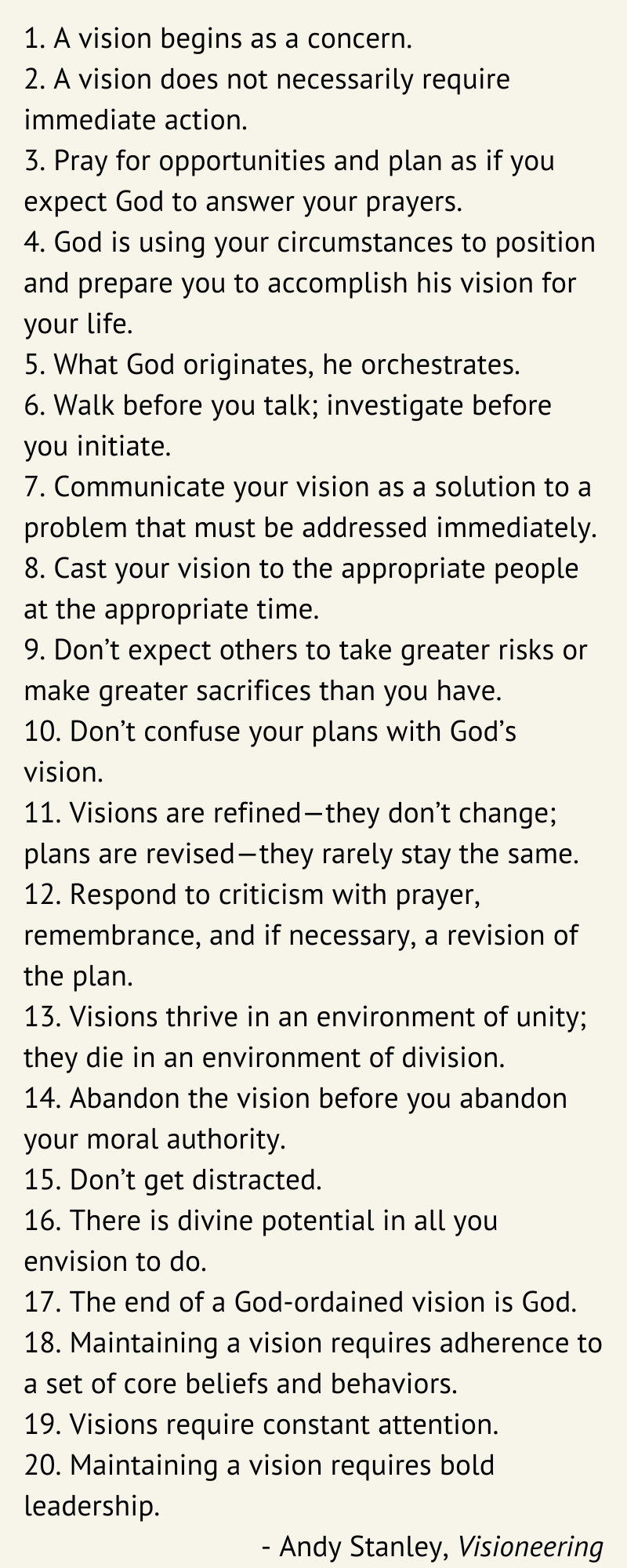
In his book Visioneering, Andy Stanley developed the following “building blocks” that leaders will find helpful as they pursue a vision for the organizations they lead.


Diving into the Culinary ABCs: A Whimsical Journey through America’s Food History

I’m always up for a refresher course on my ABCs and a history lesson, especially when food is involved…


An illustrated journey through the lore and little-known history behind ambrosia, Ipswich clams, Buffalo hot wings, and more.

This captivating and surprising tour of America’s culinary canon celebrates the variety, charm, and occasionally dubious lore of the foods we love to eat, as well as the under-sung heroes who made them. Every chapter, organized from A to Z, delves into the history of a classic dish or ingredient, most so common – like ketchup – that we take them for granted.

These distinctly American foods, from Blueberries and Fortune Cookies to Pepperoni, Hot Wings, Shrimp and Grits, Queso, and yes, even Xanthan Gum, have rich and complex back stories that are often hidden in plain sight, lost to urban myth and misinformation.

American Food: A Not-So-Serious History by Rachel Wharton (and illustrated by Kimberly Ellen Hall) digs deep to tell the compelling tales of some of our most ordinary foods and what they say about who we are – and who, perhaps, we are becoming.


Here’s an appetizer sampler of the delightful stories you will discover:

  • The likely African American origin of the original Buffalo wing, during a time when black restaurants received no mainstream press coverage.
  • The Native American roots of New Mexican green and red chile enchiladas, one of the earliest iconic dishes in the United States.
  • The spread of hero, hoagie, and submarine sandwiches along the eastern seaboard, facilitated by Italian longshoremen and black jazz players.
  • The intertwined history of fortune cookies with the internment of Japanese Americans in WWII, evidenced by a 70-year-old set of steam ovens in San Francisco.
  • The Mexican origin of queso, influenced by the fact that South Texas was once part of Mexico.
  • The likely contribution of an enslaved North Carolina cook named Ellen to the creation of ambrosia, a dish associated with the head of the Confederacy.
  • The roots of shrimp and grits in the cuisine of the Gullah-Geechee people of the Low Country’s barrier islands, rather than in Charleston.

As with many origin stories, you’ll have to take them with a grain of salt, as there are often competing (and unverifiable) versions to the birth of a beloved dish. But that’s part of the fun of food history – you can enjoy the results while happily disagreeing on the merits of the origins of the dish!


Part of a regular series on 27gen, entitled Wednesday Weekly Reader.

During my elementary school years one of the things I looked forward to the most was the delivery of “My Weekly Reader,” a weekly educational magazine designed for children and containing news-based, current events.

It became a regular part of my love for reading, and helped develop my curiosity about the world around us.

Building Bridges, Not Fences: Embracing Jesus’ Radical Call to Neighborliness

Somewhere along the way we drifted apart from our next-door neighbors, and now we’re not sure we can get back together again. We lack a clear vision for showing and sharing Jesus’ love with them and how his countercultural values might transform our neighborhoods, including us.

But just imagine. Imagine a neighborhood where people are connected rather than isolated, where wrongs are righted, where mercy brings fences down, and where we become agents in seeing God’s kingdom come.

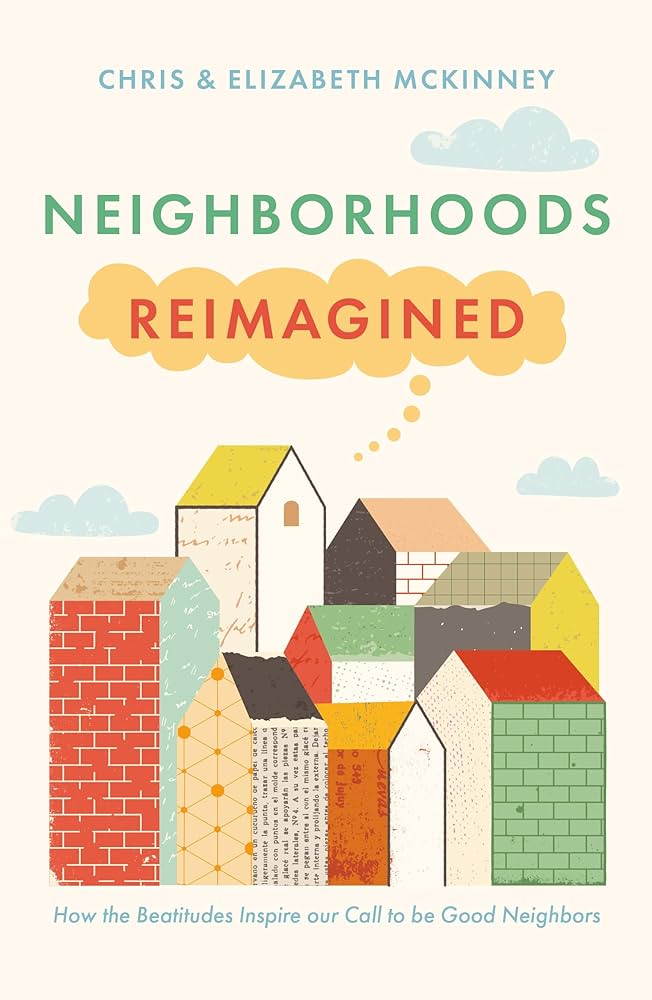
Believing the beatitudes are Jesus’ invitation into neighborhood flourishing, Neighborhoods Reimagined envisions how these upside-down values can turn our corners right-side-up.

Chris and Elizabeth McKinney never set out to write a book on neighboring (much less two – they released Placed for a Purpose in 2020). They were fine hunkering down like everyone else – except they were’t fine.

Their neediness prompted them to consider connecting with those in proximity, moving them from side-by-side strangers to acquaintances Over time, those casual connections evolved into deeper friendships that could bear weightier conversations.

In time, both Chris and Elizabeth became convinced that the Beatitudes were a “roadway Jesus gives for our flourishing and for living as salt and light in our dark and flavorless world.”


At some juncture, our societal relationship with our immediate neighbors underwent a significant shift. It wasn’t a sudden or intentional breakup; rather, it seemed to occur gradually, almost inadvertently. We might characterize it as mutual, though it was never explicitly acknowledged. Our lives became increasingly busy, our work more demanding, and in the midst of it all, we simply drifted apart, ultimately losing touch for years.

This divergence in neighborly connections is not just a feeling; it’s substantiated by data. A study conducted by Georgetown University in 2005 revealed that nearly half of Americans were unfamiliar with their neighbors. Thirteen years later, in 2018, this figure rose to 68 percent, indicating a substantial decline in neighborly acquaintance. Undoubtedly, the events of the post-2020 era have further exacerbated this trend.

While we claim there’s no animosity, the reality suggests otherwise. There exists a level of mistrust that has developed as our social bonds weakened. This erosion of trust has reached a point where a knock at the door can induce panic. We’ve responded by installing larger peepholes, sophisticated doorbells equipped with cameras, and smart speakers for added security.

Research validates these emerging trust issues. Surveys indicate that less than half of us trust our neighbors, with the youngest demographic, aged 18-29, exhibiting an even higher rate of distrust at 61 percent. Without the buffer of introductions and established relationships, navigating the differences between urban and suburban life becomes awkward, leading us to retreat to our inner circles and online tribes.

The current political and social climate exacerbates these divisions. Our entrenched viewpoints make it exhausting to entertain alternative perspectives. Political discourse, once casual, now feels fraught with tension, prompting the erection of metaphorical fences that inhibit meaningful interaction. In essence, societal norms seem to suggest that maintaining distance and minding our own business is preferable to engaging with neighbors.

Though we may not label our neighbors as adversaries, our collective indifference speaks volumes. Jesus highlighted this tendency in his parable of the Good Samaritan, illustrating how even the most religious individuals can neglect those they don’t truly care for. So, what’s the solution?

Jesus offers a radical alternative through his teachings in the Sermon on the Mount, particularly in the Beatitudes. These statements outline the qualities and blessings bestowed upon those who embody his vision. While applicable to all aspects of life, in Neighborhoods Reimagined, the McKinneys explore how applying the Beatitudes to our neighborhoods could foster significant change.

How could the Beatitudes turn your neighborhood upside down?

Chris and Elizabeth McKinney

Jesus presents a counter-cultural perspective, challenging conventional wisdom with a vision for a renewed humanity rooted in love and compassion. Though seemingly impractical, his teachings offer a transformative pathway for neighborhoods to thrive.

By embracing Jesus’ upside-down kingdom and embodying the Beatitudes, we can cultivate a renewed sense of community and neighborliness. Imperfect though we may be, the transformative power of Jesus’ teachings can reshape our neighborhoods, one relationship at a time.


I first met and talked with the McKinneys after the publication of their first book. Later we had additional conversations as they expanded their network and began a podcast. When I learned they were working on this book, I could not wait to dive into it – and it has surpassed my expectations! With a warm, personable writing style, Chris and Elizabeth invite the reader to pull up a chair and join them on their journey of living out the Beatitudes in their neighborhood, warts and all. I found the end of chapter Reflection and Discussion sections helpful to really let the content sink in and work out how I might apply it in my own neighboring journey. If you are ready to have your neighborhood turned upside down, by all means let Chris and Elizabeth come alongside of you through Neighborhoods Reimagined.