Watching the Scoreboard

Last night I was watching preseason Sunday Night Football – maybe not quite the real thing (the Panthers played their starters for the first half only; ditto with the Jets), but to the teams playing, it’s real enough. They’re out there to play well, help their team score, and be ahead at the end of the game.

Couldn’t you say some of the same things about the church?

Congregations have long measured success by “bodies, budgets, and buildings” – a record of attendance, the offering plate, and the square footage of facilities. But for growing, healthy churches, the scoreboard can’t stop there.

Maybe it’s time for a new scoreboard – one that reflects transformation, not just information.

LifeWay CEO Thom Rainer and LifeWay Research president Ed Stetzer led one of the most comprehensive studies of its kind to understand what sets “transformational churches” apart from others. In their book “Transformational Church“, they take us to the thriving congregations where truly changing lives is the standard.

As a part of my responsibilities with Auxano, I am working with LifeWay and their Church Partners network. Transformational Church has been an integral part of their work for the last two years, so I thought it appropriate to take a deeper look into the material.

After distilling down their research, Rainer and Stetzer found three principles that were common to transformational churches. These principles transformed people to look like Christ, congregations to act like the body of Christ, and communities to reflect the kingdom of God.

In the first of a multi-part post on the book, here is a brief overview:

Discern

Missionary Mentality – church understands the community and will minister in contextually appropriate ways to reach local people with the gospel

Embrace

Vibrant Leadership – leaders showing passion for God, His mission, and its transforming power on people

Relational Intentionality – deliberately connect with one another; accountability, encouragement, long-term relationships

Prayerful Dependence – natural disposition of communicating with God about the hope for transformation; dependence on prayer rather than a program for prayer

Engage

Worship – expectancy; knew something great was going to happen; trusted God to deliver transformation rather than the musicians to deliver a good show

Community – activity of joining lives together through ministry systems

Mission – God’s mission to make disciples of Christ and to engage the world as Jesus calls; understand disciplemaking as the normal sate of the Christian’s life

Stetzer and Rainer develop these three categories of transformation as a loop that can be entered at any point.

 Principles of the Loop

  1. Connecting to the loop – all three categories and seven elements are necessary parts for a transformational ministry, but churches can begin anywhere.
  2. Cathartic Experience – the change to a transformational mindset begins with a moment of decision that is beneficial and liberating.
  3. Convergence of Elements – churches with transformational disciplemaking allow for a free convergence of all the elements.

Tomorrow: Discern
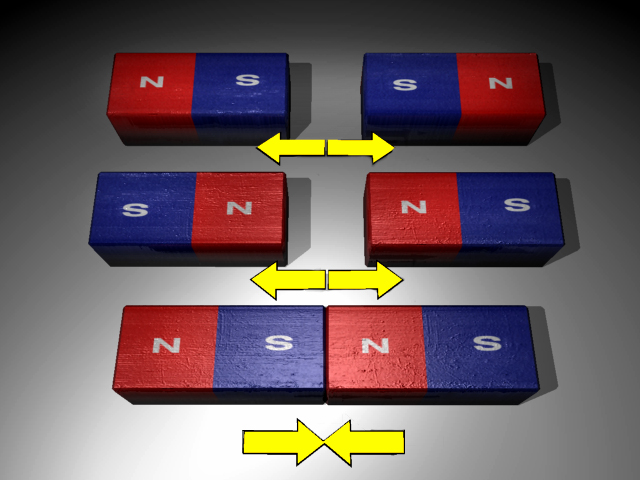
Do You Have a Magnetic Personality?

Careful about that… 

Some people just naturally draw others to them. What’s it take to be magnetic? John Maxwell suggests these characteristics as displayed in the life of Peter:

  • Confidence – Peter displayed poise and optimism as a communicator
  • Conviction – Peter knew where he was going and what he had to say
  • Connection – Peter focused not on himself but on others
  • Compassion – Peter exuded warmth and love

When Peter ended his message in Acts 2, everyone asked “What shall we do?” They felt motivated and ready to act. God used Peter’s charisma like a magnet.

Just remember that magnets have the unique properties to both attract and repel!

Over in 1 Kings 19, Ahab and Jezebel demonstrated some roadblocks to attracting people. Characteristics like:

  • Pride
  • Insecurity
  • Moodiness
  • Selfishness
  • Perfectionism
  • Cynicism

If you exhibit characteristics like these very long, you will find yourself repelling people from you.

I’m pretty sure that’s not exactly the type of magnetic personality you were thinking of.

What Shapes the Mind of Today’s Freshman…the Beloit Mindset List of the Class of 2016 is Out

Each August since 1998, Beloit College has released the Beloit College Mindset List, providing a look at the cultural touchstones that shape the lives of students entering college this fall.

Today, the Mindset List of the Class of 2016 was released.

The creation of Beloit’s former Public Affairs Director Ron Nief and Keefer Professor of the Humanities Tom McBride, authors of The Mindset Lists of American History: From Typewriters to Text Messages, What Ten Generations of Americans Think Is Normal, it was originally created as a reminder to faculty to be aware of dated references. It quickly became an internationally monitored catalog of the changing worldview of each new college generation.

Leaders – of all ages – need to understand what has shaped the lives of today’s entering college freshman class, those 18 year olds who:

  • Were born into cyberspace and therefore measure their output in the fundamental particles of life: bits, bytes, and bauds
  • Came to political consciousness during a time of increasing doubts about America’s future
  • Have never needed an actual airline “ticket”
  • Are the most tribal generation in history, and they despise being separated from contact with their friends

For those who cannot comprehend that it has been 18 years since this year’s entering college students were born, they should recognize that the next four years will go even faster, confirming the authors’ belief that “generation gaps have always needed glue.”

Here are a few nuggets from this year’s Mindset Class for the Class of 2016. You must read the entire list here!

For this generation of entering college students, born in 1994, Kurt Cobain, Jacqueline Kennedy Onassis, Richard Nixon, and John Wayne Gacy have always been dead.

  • They should keep their eyes open for Justin Bieber or Dakota Fanning at freshman orientation.
  • They have always lived in cyberspace, addicted to a new generation of “electronic narcotics.”
  • Bill Clinton is a senior statesman of whose presidency they have little knowledge.
  • There has always been football in Jacksonville but never in Los Angeles.
  • A significant percentage of them will enter college already displaying some hearing loss.
  • Star Wars has always been just a film, not a defense strategy.
  • They were too young to enjoy the 1994 World Series, but then no one else got to enjoy it either.
  • They know many established film stars by their voices on computer-animated blockbusters.
  • History has always had its own channel.
  • Point and shoot cameras are sooooo last millennium.

You can find the rest of the list here.

Read it now.

What Do You Do When It Rains at Your Church?

Working on the Guest Services Parking Team in the rain yesterday at Elevation Church’s Uptown Campus brought these thoughts to mind:

Rainy days, especially on Sundays and other days you have worship, can be a real challenge – for guests and for your regular attenders and members.

What do you do when it rains?

Maybe your facility has a covered drop-off area and it’s not much of a problem. Many churches don’t have that option. Now what?

Here are a few “rainy day thoughts” you might consider:

  • Make sure your parking team is dressed appropriately for the weather (unless it’s cold, simple ponchos work great)
  • Purchase a quantity of large golf umbrellas (with your logo!)
  • Recruit extra team members if possible to walk guests from the parking lot to the entrance, holding the umbrella for them
  • Or give them an umbrella to use walking from their car to the entrance
  • Coordinate with your greeter team the logistics of running umbrellas back and forth as needed
  • Reverse the process when the worship experience is over
  • Rain usually slows people down – plan for latecomers
  • Umbrellas left at the entrance can get tangled up in a mess pretty quickly; organize them neatly
  • Rain means wet floors, especially near entrances; alert the housekeeping/custodial crews so that the floors can be kept as dry as possible to prevent slips and falls
  • Rainy days mean visibility is less than optimum; have flashlights and directional lights available as needed
  • Rainy days are an opportunity to encourage your congregation to be servants; take a look at this post to see what I mean

That’s just a few ideas – what can you add to the conversation?

Old Ironsides

The War of 1812 brought us together as a nation, and left us with icons that remain symbols of our unity today – among them, the Star Spangled Banner and the USS Constitution.

Authorized for construction by George Washington, Constitution was one of the first six ships in our United States Navy. The world’s oldest commissioned warship afloat, it was during the War of 1812 that she earned her famous nickname, Old Ironsides.

Constitution‘s victories proved that we could defeat the best of Britain’s Navy and protect our national interests. The war established our country as one to be recognized, reckoned with and respected.

Today is the 200th anniversary of one of those victories, that against HMS Guerriere.  Here is the report of that battle from the Naval History and Heritage Command website:

The U.S. Frigate Constitution left Boston, Massachusetts, on 2 August 1812, bound for a raiding cruise off Nova Scotia, the Gulf of St. Lawrence and Newfoundland. Her Commanding Officer, Isaac Hull, was eager to find and fight one of the several Royal Navy frigates then active off North America, and on 18 August an American privateer informed him that one might be found further south. The next afternoon, some 400 miles southeast of the British base at Halifax, a sail was sighted that turned out to be HMS Guerriere, one of the frigates that had fruitlessly pursued Constitution off New York a month earlier.

Guerriere’s Captain, James R. Dacres, was also spoiling for a fight. Despite his ship’s disadvantages in number and size of guns, and number of crewmen, the long British tradition of victory in ship-to-ship combat against European enemies provided reasonable grounds for Dacres’ aggressive optimism. As Constitution approached on this windy, cloudy day, Guerriere began firing alternating broadsides that produced few hits and little damage. After one cannon ball bounced “harmlessly” off the side of the Constitution, a crew member is said to have yelled “Huzzah! Her sides are made of iron!”

The name “Old Ironsides” stuck, creating one of the most enduring legends in the history of U.S. military.

Constitution went on to defeat Guerriere; during the remainder of the War of 1812 she defeated 4 other British warships and captured many merchantmen as well. Following the war, Constitution remained in active service through the 1820’s.

Built in an era when a wooden ship had an expected service life of ten to fifteen years, Constitution was now thirty-one years old. The Secretary of the Navy requested a routine order for surveys of ships held in storage dockside. On 14 September 1830, an article appeared in the Boston Advertiser that erroneously claimed the Navy intended to scrap Constitution. Two days later, Oliver Wendell Holmes’ poem “Old Ironsides” was published in the same paper and later all over the country, igniting public indignation and inciting efforts to save “Old Ironsides” from the scrap yard.

Over the years since the 1830’s, Constitution has been restored many times. Constitution emerged from the most recent three-year repair period in November 2010. The restoration continued the focus toward keeping her 1812 appearance by replacing her upper sides so that she now resembles what she looked like after her triumph over HMS Guerriere. Constitution‘s crew and commanding officer, Commander Matt Bonner, are preparing for bicentennial observances of the War of 1812 and again will sail Constitution under her own power.

Constitution‘s stated mission today is to promote understanding of the Navy’s role in war and peace through educational outreach, historic demonstration, and active participation in public events. As a fully commissioned US Navy ship, her crew of 60 officers and sailors participate in ceremonies, educational programs, and special events while keeping the ship open to visitors year round and providing free tours. The officers and crew are all active-duty US Navy personnel and the assignment is considered special duty in the Navy.

I have always had an unwavering support for our military, which probably can be traced back to my father’s service in the Army Air Corps at the end of WWII as well as hearing stories from a neighbor who was a veteran of WWI. As a young boy, I had a particular fascination with the US Navy, reading and studying about it. Of all that history, the long and rich heritage of the USS Constitution has captivated me the most.

Old Ironsides is setting sail once again at 11:00 today in Boston Harbor on the 200th anniversary of one of her most significant victories, a proud symbol of freedom and the United States of America.

Mickey’s Ten Command-ments for the Setting

In yesterday’s post the concept of the “setting” at Disney was introduced. Going a little deeper, from the excellent guest services book Be Our Guest, Disney vice chairman Marty Sklar gave the following list of setting design principles:

  • Know your audience – before creating a setting, obtain a firm understanding of who will be using it
  • Wear your guest’s shoes – never forget the human factor; evaluate your setting from the guest’s perspective by experiencing it as a guest
  • Organize the flow of people and ideas – think of your setting as a story; tell that story in an organized, sequenced way
  • Create a visual magnet – a landmark used to orient and attract guests
  • Communicate with visual literacy – use the common languages of color, shape, and form to communicate through setting
  • Avoid overload – do not bombard guests with information; let them chose the information they want when they want it
  • Tell one story at a time – mixing multiple stories in a singe setting is confusing; create one setting for each big idea
  • Avoid contradictions – every detail and every setting should support and further your organizational identity and mission
  • For every ounce of treatment provide a ton of treat – give your guests the highest value by building an interactive setting that gives them the opportunity to exercise all of their senses
  • Keep it up – never get complacent and always maintain your setting

Around the Disney organization, these principles were known as “Mickey’s Ten Commandments for the Setting.” Whether it was a movie, a book, or a theme park, the Imagineers at Disney know the importance of setting as they told their stories.

What stories are your settings telling?

From Be Our Guest, by The Disney Institute

Everything Matters

All organizations, knowingly or unknowingly, build messages to their customers (Guests) into the settings in which they operate.

Consider these pairs:

  • A luxury car dealership and a used car lot
  • A theme park and a traveling carnival
  • A designer clothing retailer and an outlet store

In each pair, people are buying a similar product – cars, entertainment, and apparel. But in each case, the setting in which they buy these products is communicating a great deal about the quality of the products and services customers can expect, not to mention the price they are willing to pay.

The simple fact is that everything, animate and inanimate, speaks to customers.

The above words come from “Be Our Guest,” the fantastic customer service book published by The Disney Institute. Talk to me very long about Guest Services, and you will hear me talk about Disney – probably several times!

Yesterday it was about Process; today, it’s all about Place.  When you think about a physical setting, it’s appropriate to start at Disney and understand what they call “the magic of setting.”

Setting is the environment in which service is delivered to customers, all of the objects within that environment, and the procedures used to enhance and maintain the service environment and objects.

Components include:

  • Architectural design
  • Landscaping
  • Lighting
  • Color
  • Signage
  • Directional designs on flooring and wall coverings
  • Texture of floor surfaces
  • Focal points and directional signs
  • Internal and external detail
  • Music and ambient noise
  • Smell
  • Touch and tactile experiences
  • Taste

Quite a list, right? Remember that when considering Guest Services…

Everything matters.

From Be Our Guest, by the Disney Institute

It All Began With a Mouse…

The title of this post is actually a quote from Walt Disney himself, when asked to reflect upon the vast Disney empire shortly before his death in 1966. While Disneyland was successful, Disney World was 5 years from opening and EPCOT was just a few sketches on paper.

But Disney didn’t coin the term “Imagineer” for nothing.

The magic that Disney brought to the world was summed up in this phrase: “My business is making people, especially children, happy.” More than a statement, it was the basis for Disney’s mission as a business; it represented what the company stands for and why it exists. Changing just a little over the past 60 years, it is The Walt Disney Company’s service theme:

We create happiness by providing the finest in entertainment for people of all ages, everywhere

If you want to understand the “Process” of Guest Services, there is no better place to go than the Disney Company and look at their practical magic for creating the best known Guest experiences in the world.

Practical Magic

Disney has a simple definition for quality service – exceeding your guests’ expectations and paying attention to detail.

The Disney WOW! Factor is exceeding guests’ expectations

  • Paying close attention to every aspect of the guest experience
  • Analyzing that experience from the guest’s perspective
  • Understanding the needs and wants of the guest
  • Committing every element of the process to the creation of an exceptional experience

At Disney, the word Guest is always capitalized and treated as a formal noun.

Quality Service Cycle – the Practical Magic of Disney

  • Service theme – a simple statement, shared among all team members, that becomes the driving force of the service
  • Service standards – the criteria for actions that are necessary to accomplish the service theme
  • Service delivery systems – vehicles used to deliver service
  • Service integration – each element in the QSC combined to create a complete operating system

Sounds complicated, doesn’t it? It is, and should be – at least from your perspective. Spend a lot of time getting it right. Set up all the process you need to make it work. Implement your process. Evaluate it rigorously, and change it when necessary. Guestology, as Disney calls it, is both an art and a science.

But to the guest, it should all appear effortless.

The weekend’s coming – are you ready to welcome guests in your church?

From Be Our Guest, Revised Edition, by The Disney Institute


Puttin on The Ritz…

When it comes to refined service and exquisite hospitality, one name stands high above the rest: The Ritz-Carlton Hotel Company. With ceaseless attention to every luxurious detail, the company has set the bar for creating memorable customer experiences in world-class setting.

With unprecedented access to the company’s executives and staff, best-selling author and business consultant Joseph Michelli obtained the leadership secrets behind the company’s extraordinary success. In “The New Gold Standard,” Michelli takes an exclusive tour behind the scenes of The Ritz-Carlton and comes away with great reference work for church Guest Services Teams who want to learn and apply principles of a WOW! Experience to their own practices.

Michelli develops “5 Leadership Principles for Creating a Legendary Customer Experience” that you can explore in the book. I’ll take a look at those principles in a later post. First, here’s a quick look behind the brass lion that symbolizes excellence at the Ritz:

The Credo

  • The Ritz-Carlton is a place where the genuine care and comfort of our guests is our highest mission
  • We pledge to provide the finest personal service and facilities for our guest who will always enjoy a warm, relaxed, yet refined ambiance
  • The Ritz-Carlton experience enlivens the senses, instills well-being, and fulfills even the unexpressed wished and needs of our guests

The Three Steps of Service

  • A warm and sincere greeting, using the guest’s name
  • Anticipation and fulfillment of each guest’s needs
  • A fond farewell, giving a warm goodbye, and using the guest’s name

Service Values of Ritz-Carlton Staff

  • I build strong relationships and create Ritz-Carlton guests for life
  • I am always responsive to the expressed and unexpressed wishes and needs of our guests
  • I am empowered to create unique, memorable, and personal experiences for our guests
  • I understand my role in achieving the Key Success Factors, embracing community footprints, and creating the Ritz-Carlton mystique
  • I continually seek opportunities to innovate and improve the Ritz-Carlton experience
  • I own and immediately resolve guest problems
  • I create a work environment of teamwork and lateral service so that the needs of our guests and each other are met
  • I have to opportunity to continuously learn and grow
  • I am involved in the planning of the work that affects me
  • I am proud of my professional appearance, language, and behavior
  • I protect the privacy and security of our guests, my fellow employees, and the company’s confidential information and assets
  • I am responsible for uncompromising levels of cleanliness and creating a safe and accident-free environment

Gold standard indeed! These are priceless nuggets of truth that you can mine and put into practice in your Guest Services team immediately…

Why not start this week?

Utilizing the Power of the Lineup with Your Guest Services Team

It’s one thing to have a Credo, Three Steps of Service, and 12 Service Values like the Ritz-Carlton (see the post here for more details on these Gold Standards). Many businesses go through the exercise of defining key values or composing mission statements. They might even display them in their literature, or in imposing art displays on the corporate walls.

But how many business leaders understand the importance of regular and repetitive presentation of these core aspects of their business – not only to management, but also to their front-line staff?

Enter the “lineup” at Ritz-Carlton.

To truly appreciate the Ritz-Carlton leadership approach to repeated dissemination of the “Gold Standards” mentioned above, you would have to drop in on a section of the housekeeping staff as they prepare for their days work – or at the corporate headquarters – or in the kitchen of the fine restaurants that serve the hotel chain – or anywhere, and everywhere, throughout the entire organization.

You would observe that a meeting is taking place at the beginning of each shift. Not just any meeting, though: the leader in each group starts by sharing the Credo and talking about the importance of creating a unique guest experience. Another team member might share a guest story from a Ritz-Carlton hotel in another country. Another team member shares how what they do in their department helps create memorable guest experiences. Then a few quick announcements, special recognitions are given, and another team member closes the meeting with a motivational quote.

All in about 20 minutes.

Every day.

On every shift.

In every Ritz-Carlton hotel and office around the world.

The magic of the lineup involves the following:

  • Repetition of values – the core belief that values need to be discussed daily, and that values can’t be discussed enough
  • Common language – shared phrases across all tasks binds the team together
  • Visual symbols – The Credo is printed on a card that all team members carry at all times
  • Oral traditions – Personal, direct, and face-to-face communication makes a huge impact in a world increasingly dominated by e-mail, text, and voice messages
  • Positive storytelling – stories communicate life in a powerful and memorable way
  • Modeling by leaders – the active, daily presence of the leaders communicates the importance of the time together

What would “lineup” for each of your Guest Services teams do to preserve the core values, communicate the importance of everyone on the team, and provide momentum for the day’s activities?

Or how about this word for the process?

Alignment.