The Future is Always Now

Leaders create their own future.

That’s not an original thought, I just can’t recall who first said it.

I’m learning that families create their own future, too. One slice of that took place yesterday when my wife and I took our oldest son, his partner, their three-year old son, and my 18-year old son to Discovery Place KIDS in Huntersville for an afternoon’s fun – and learning. We thought that a ratio of five adults to one three-year old would be about right.

DPK is an interactive museum designed specifically for younger children. My grandson was won over the minute he walked in the door and saw a real fire truck just waiting for him to climb on board. From there it was a trip through the drive-through at the bank, the grocery store, a farm (tractor included), a rock-climbing wall, restaurant, brick factory, race car, auto shop, and on and on…

Two hours later but still going strong, he reluctantly left with Nina and GrandBob (with the promise we could come back). After our meal, it was back to full speed again, running and playing in our yard, then running down to the end of our cul-de-sac, racing his dad and kicking a ball. He got to meet a few neighbors, and a dog named Sam.

Back inside for cupcakes and ice cream (celebrating his dad’s 30th birthday) then he was ready to go again. By that time the long day was winding down, and they had a two-hour drive back home.

Reflecting on the day’s events, I thought about Jack, his mom and dad, his uncle, and at my wife and me. We weren’t looking at the future…

…the future is now.

The same thing is true in ChurchWorld. We aren’t preparing future leaders – they are among us now – and they are all ages: 18 years, 30 years, and yes, even three-year olds. My family outing at DPK was a perfect illustration of the tremendous opportunity we have at this moment for the church.

James Emery White, pastor of Mecklenburg Community Church, has a great post here. It speaks of the disconnect between 30 somethings in the church and their parents. That’s me, and that makes it personal.

The title of this blog – 27gen – comes from the 27 years separating the four generations of Adams males: my father, me, my son, and his son. That’s the lens through which I am constantly viewing the world, and one that I hope you enjoy dropping in on.

Today’s assignment: Take a look around you right now. Who is younger than you, and what can you learn from them? Who is older than you, and what can you learn from them? Now flip it: what can you do to help someone younger, and older, learn from you today?

The future is NOW!

(From a prior post on Mentoring while I’m on vacation)

Stories Convey Meaning

Stories are the most powerful delivery tool for information; more powerful and enduring than any other art form.

People love stories because life is full of adventure and we’re hardwired to learn lessons from observing change in others. Life is messy, so we empathize with characters who have real-life challenges similar to the ones we face. When we listen to a story, the chemicals in our body change, and our mind becomes transfixed.

Stories link one person’s heart to another. Values, beliefs, and norms become intertwined. When this happens, your idea can more readily manifest as reality in their minds.

Tell the story.

Adapted from Resonate, by Nancy Duarte

Change is…

Healthy.

Organizations are not alive in a literal sense – but they have to change and adapt in order to stay alive.

Nancy Duarte, writing in “Resonate,” talks about the life cycle of organizations – start-up, growth, maturity, and eventually decline. But it doesn’t have to be that way.

An organization should make continual shifts and improvements to stay healthy.

In order to do that well, leaders must excel at persuasion.

Movements are started, products are purchased, philosophies are adopted, subject matter is mastered – all with the help of persuasive presentations.

Presentations create a catalyst for meaningful change by using human contact in a way that no other medium can.

Go ahead – change the world.

The Guest Perspective

Along with Network Navigator Jeff Harris, I am onsite this weekend in Houston, TX, conducting Guest Perspective Evaluations for two clients. Jeff and I spent time Saturday cruising the communities around the two churches, conducting a “windshield survey” of the areas.  Even though we have also spent time in the digital world of Google Maps, it’s always great to see and experience first-hand the neighborhoods of the churches we are working with.

On my flight out from Charlotte early Saturday morning, I continued reading Andy Stanley’s newest book Deep and Wide. It’s a great book for a bunch of reasons, but I’m going to pull a few quotes out here for their relevance to what Jeff and I are doing today.

Every Sunday people walk onto your campus and determine whether or not they will return the following week before your preacher opens his mouth. And that’s not fair. But it’s true. The moral of the story: Environment matters.

Environments are the messages before the message. The messages your environments communicate have the potential to trump your primary message.

By the time I (Andy Stanley) stand up to deliver what is traditionally considered the message, everybody in our audience has already received a dozen or more messages.

The quality, consistency, and personal impact of your ministry environments define your church. To put it another way, your environments determine what comes to mind when people think about your church.

I think we should determine the messages our environments communicate. We should choose the messages before the message. It’s our responsibility to shape the way people view our local churches.

The moment a church, or even a group of leaders within a church, catches a vision for capturing the hearts and imaginations of those who consider themselves unchurched or dechurched, environments take on new significance.

The longer you’ve served where you are and the longer you’ve done what you are currently doing, the more difficult it will be for you to see your environments with the objectivity needed to make the changes that need to be made. The shorter version: Time in erodes awareness of.

Every one of your ministry environments is being evaluated every week. Based on that evaluation, some people choose not to return. Additionally, every volunteer and staff member is evaluating the success of his or her particular environment against some standard. If you don’t define what excellence looks like for your staff and volunteers, they will define it for themselves. And when you don’t like what you see, you will only have yourself to blame.

Stanley’s words are a powerful reminder of just how important your Guest Experience is.

I’ve got my talking points for the Guest Perspective Evaluation with the Executive Team:

Environment matters.

Time in erodes awareness of.

Those phrases, with several hundred images and about 5-7 minutes of video, will make for a very interesting time come Monday morning.

Compelling Environments: The 2012 Solomon Awards

Celebrating Innovation, Quality, and Service to Churches

The WFX Solomon Awards, presented by Worship Facilities Magazine, Worship Facilities Designer Magazine, and Church Production Magazine is the leading annual national award recognizing church building design across the full spectrum of church sizes and styles.

It’s been my privilege to serve on the WFX Advisory Council for the last five years, and part of my responsibility is participating in the judging of the Solomon Awards. I eagerly anticipate receiving the judging package each summer, because I know I will be looking at some of the best design and construction projects that are helping advance the message of Christ. Here is a brief summary of the winning projects:

Best Building ContractorVisioneering Studios, for Centerpoint Church in Murrieta, CA. Centerpoint Church recently moved to a green field site in the town of Murrieta. Realizing that they had outgrown the capacity of the modest building originally built, it was time to start the second phase with a larger auditorium and let the children grow in the original building.

Best Church Architect, 1-800 seats – CDH Partners, for St. Elmo UMC in Chattanooga, TN. St. Elmo UMC, located in a historic district, suffered a fire loss in 2009. Three exterior walls from the 1920s structure were preserved. An addition and rebuilding of the interior provided congregants with the best of both worlds: a new building within the historic walls of the original church.

Best Architect, 800+ seats – HH Architects, for the Family Life Center at Trietsch Memorial UMC in Flower Mound, TX. After experiencing the massive influx of refugees from Hurricane Katrina in 2005, and again from Hurricane Ike in 2008, Trietsch UMC commissioned not only an exciting space for their Youth program and for community Outreach, but also a certified Red Cross Shelter for future emergency needs.

Best Church Design: ExpansionHH Architects, for First Baptist Church Allen, TX Lobby and Children’s Building. HH Architects helped FBC Allen implement their vision of the 21st Century of unifying their existing campus of buildings reflecting their sixty year heritage  with the addition of a stunning new rotunda connector, and a Children’s Building designed for sustainability.

Best Church Design: New ProjectBLDD Architects, for the Betty and Kenneth Hawkins Centennial Chapel at Olivet Nazarene University. The Centennial Chapel provides a place for worship and outreach for one of the nation’s premier Christian universities. This 75,000 square-foot facility, with its 3,080 seat auditorium and large lobby/gathering space, accommodates a wide range of programs from music to lecture.

Best Church Design: RenovationLIVE Design Group, for Four One Five City Centre (Agape Church) in Laurel, MS. More than just a renovation project, the work of LIVE Design Group with Agape Church on their Four One Five City Centre project transformed an abandoned building into a thriving community center and growing church, while stimulating an exciting urban revitalization that has energized the entire town of Laurel.

Congregations to these congregations and the professional firms that helped them advance their mission through the built environment.


Compelling Environments: Next Generation Youth Spaces

Most church youth spaces have come a long way from the metal folding chairs in a basement that were once the norm. And while climbing walls and video game stations may be what comes to mind in cutting-edge ministry, here are some views from designers who are working with youth spaces across the country.

Worship Facilities Magazine (founder of WFX) writer Cathy Hutchison asked these questions:

What are in the future for youth ministry facilities that will have real traction and influence?

The trend is toward spaces that foster authenticity, both environmental and relational. They don’t want “fluff” in a lot of artificial theming, but rather timeless design that integrates – not alienates – them into the church. There is design sensitivity to lasting emotion (relationships) over temporary emotion (environments). We try to design spaces that foster lasting relationships. Sandy Gibbs, Church Development & Design, LS3P, Greenville SC

We see a difference based on where ministries are located geographically. We have pursued edgier area design like shared community spaces, but we still have requests to do things we’ve been doing for the past 18 years. A lot is about spending time with the youth pastors who know the culture and the kids. For some, the solution will be high-tech such as two-sided, large –screen video displays with games in high-definition. But we are finding the trend is toward communal…the living room or coffee-house feel. Richard Carver, founder and CEO of Little Mountain Productions in Tulsa, OK.

What new strategies have you seen in architecture for youth facilities that really work?

We are seeing churches do amazing things in sharing their resources for the community. The spaces are designed to meet community needs without imposing the “churchy feel.” Our main question to youth ministers is “Do you need 100% of the space 100% of the time?” Most often, the answer is “no,” allowing you to put more into less space,, resulting in greater allocation of resources. Ravi Waldon, Principle, Waldon Studio Architects, Columbia, MD.

What do you wish youth pastors knew about facilities?

Kids are in anticipation of down time. In many of the areas where we work, the kids are so busy. Select sports, high-pressure academics, and extracurricular activities – the youth are so busy that they need the space to unplug and unwind. Intentional space for community over distractions allows them to be who they really are and connect. Scott Nelson, Principle, HH Architects in Dallas, TX.

With technology evolving it is hard to say. Of all the ministries in the church, I think youth ministers in particular need to be on the edge of things. We want to make sure there are no obstacles in the way of evolving ministries. The success of the space is really about leadership. A great youth pastor can make marginal facilities work. It is the people who connect. Dave Benham, Principle, LS3P Architects, Greenville, SC.

Read more about these trends and look at examples here.

Compelling Environments

At Auxano, we have discovered that there are three dominant environments that every local church is attempting to create:

  • Worship environments
  • Connecting environments
  • Serving environments

Each one plays a significant role in transmitting and realizing the vision. Many times, these “environments” are figurative, and we are asking questions like “How does your vision integrate into your worship?” or “How well is your DNA transmitted through your volunteer small group leaders?”

But there is also a literal consideration to environment.

Today and the rest of the week, I will be posting about these literal environments. I am attending and speaking at the 10th Worship Facilities Expo and Conference in Atlanta, GA. In these few days dozens of presentations and a whole expo floor full of vendors will give a great “snapshot” of what the trends are in the environments of churches today – and for the future.

Communicate to Influence…

…write to inform.

Communication is about getting others to adopt your point of view, to help them understand why you’re excited (or sad, or optimistic or whatever else you are.) If all you want to do is create a file of facts and figures, then cancel the presentation and send in a report.

– Seth Godin

I’m headed to Atlanta GA today for the 2012 Worship Facilities Expo (WFX). I have been very fortunate and honored to have been a part of every WFX since it began in Nashville TN in 2005. Because WFX held two events in some years, this will be the 10th time I have made a presentation (or two – or three) at the event.

I would like to think I’ve come a long way in my communication style.

When I look back at that first presentation, I cringe. Not because of the topic or content – it was well received. I just remember it being a very dense verbal communication that was all one way – a classic data dump. Coupled with my rapid-fire delivery, (I was born in Nashville TN, but must have been vaccinated with a phonograph needle set at 78 rpm. Note – anyone under 30 reading this will have to check Wikipedia for the scoop on that) I’m surprised the audience remained upright.

But they did (I actually have proof – two of the participants that day were on the leadership team at Alliance Bible Fellowship, and we started a conversation that day that eventually led the church to pick me and my company (at the time) for a $5.6 million dollar, multi-phase construction project that is in its third phase at this writing). But I digress.

Our brains have two sides – an emotional right side and a logical left side. When you show up to speak to an audience, you can be sure they are showing up with both sides of their brains ready to be engaged. If you aren’t aware of the way you talk, the way you dress, your body language, and by the way, your content, you may be tuned out by the second slide of your PowerPoint or Keynote or Prezi.

You can wreck a communication process with lousy logic or unsupported facts, but you can’t complete it without emotion. Logic is not enough.

According to Seth Godin, a home run presentation is easy to describe: You put up a slide. It triggers an emotional reaction in the audience. They sit up and want to know what you’re going to say that fits with that image. Then, if you do it right, every time they think of what you said, they’ll see that image (and vice versa).

A presentation isn’t an obligation – it’s a privilege.

If you’re in Atlanta attending WFX, drop in on one of my presentations Wednesday 9/19 at 11 AM (The Servant Blueprint) in A313 or 3 PM (Selling Change) in A314.

As Andy Stanly says, I’d love the chance to challenge your mind in order to change your life.

Washington DC Walking Tour

I was in Washington DC for the “Greening America’s Congregations” Conference on September 13. The conference was held at the Executive Office Building next to the White House, and concluded with a reception at the National Cathedral that evening. As I am a history buff, I took advantage of being in DC by staying an extra day and taking a quick one-day walking tour of some of my favorite memorials and museums.

Here are just a few of my favorite photos:

The US Capitol


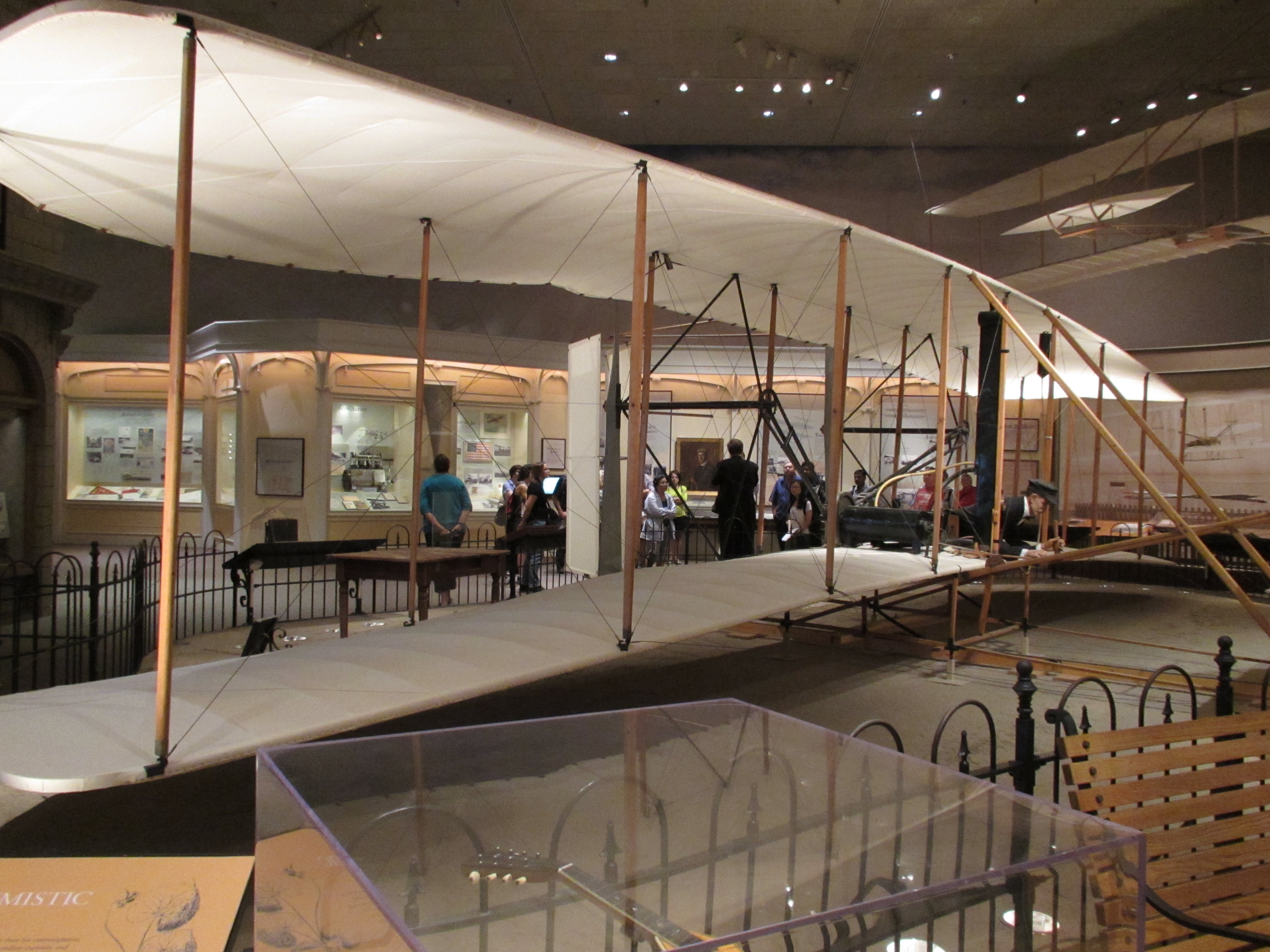
The Wright Brother’s First Airplane at the National Air & Space Museum


US Air Force Predator, Unmanned Aerial Vehicle – my son is a Sensor Operator on the updated version, the Reaper


US Capitol viewed through 2 of the 50 flags encircling the Washington Monument, being flown at half-staff in honor of the deaths of US Embassy staff


The Washington Monument and the Reflecting Pool


Wall of 4,048 gold stars at the WWII Memorial, each one representing 100 Americans who gave their lives for freedom


The Lincoln Memorial


A tribute left at the Viet Nam Memorial


President Obama flying from the White House on Marine One


Vision Clarity at the White House


Is Your Church Creation Care Aware?

Green is not the latest fashion color – it’s about becoming creation care aware.

I spent the day yesterday at the “Greening America’s Congregations” conference co-sponsored by the White House Office of Faith-Based and Neighborhood Partnerships and the Environmental Protection Agency. It was a stimulating, emotional, and deeply moving day.

The day began with a welcome by Joshua DuBois, Special Assistant to the President and Executive Director of the Office of Faith-Based and Neighborhood Partnerships.

Panel presentations throughout the day were made by representatives of the Christian, Jewish, and Islam faith traditions as well as Administration officials and faith-based environmental groups. The panel topics included:

  • Documenting Stewardship Achievements
  • Motivating Change Through Campaigns and Pledges
  • Stewardship in Our Faith Traditions

The closing call to action was given by Heather Zichal, Deputy Assistant to the President for Energy and Climate Change and Mara Vanderslice Kelly, Senior Policy Advisor and Deputy Director, White House Office for Faith-Based and Neighborhood Partnerships.

The call to action has three components:

  1. Initiate benchmarking for energy usage as a baseline measurement for efficiency improvements
  2. Reduce energy consumption by 20%
  3. Become an Energy Star Certified Congregation

These are challenging – but achievable goals. What’s your incentive as a church? Here’s just one example:

With congregations in the U.S. numbering over 370,000, and energy costs associated with these congregations estimated to be over 3 billion dollars, it only takes simple math to see that over $600 million dollars could be redirected to mission efforts in the communities if the 20% goal could be met.

Probably the most significant first step for any size congregation to take is to raise awareness of the possibilities. And there is not better place to begin than with the EPA’s Congregations division. Go to their website here for a wealth of information on how you can lead your congregation to become a “green church.”

For me, being green starts with a foundation of stewardship – being responsible for all the resources God has blessed us with. As a church consultant, I am committed to helping churches maximize their resources for the greatest ministry impact they can possibly have in their community. I believe that an important part of this challenge is to know how you can immediately improve your existing facilities to make them more energy-efficient and environmentally friendly. I also know that as you think about planning your next facility expansion, there are many benefits to thinking green.

Why should Your Church go Green?

  • Churches are community examples – people look to their houses of worship and their spiritual centers for guidance. What happens in these places can have a positive ripple effect across the region as homeowners, businesspeople, government workers and others help their own buildings to emulate the ethical example set by the local church.
  • All churches are good candidates for improvements – Most sanctuaries are large spaces used only periodically throughout the week. Something as simple as a programmable thermostat can save hundreds of dollars a year in utility bills. Most church offices are high-traffic, well-used areas where even small changes like weather stripping, Energy Star appliances, or compact fluorescent bulbs would make a huge difference.
  • Church buildings stand for something – Your building was built to the glory of God, the service of humanity, and the potential of the spirit. Inside these buildings we celebrate Creator and His creation. We build a community, the Church. We should be good stewards of all Creation, caring for the earth and one another.

Bottom line? If your church can be more EFFICIENT in its use of resources, then it will be more EFFECTIVE in its ministry endeavors. I encourage you to enter the dialogue about how your church can become a community leader in environmental issues. It really is getting easier to be green!