12 Best Books of 2012

Making a “Best of” list is always hard – it’s a very subjective process, driven by my personal tastes, professional needs, and plain curiosity.

I’ve always been a voracious reader – a cherished habit passed down to me by my late father. In the past year, though, I’ve been able to ramp it up considerably because of my role as Vision Room Curator.

It’s not only a pleasure to read, it’s part of my job description – how cool is that?

Even so, it’s also hard to narrow it a “Best of” list down: in 2012, my reading included:

  • 127 books checked out from my local library
  • 68 print books purchased
  • 31 books received for review
  • 75 digital books on my Kindle

I also perused dozens of bookstores on my travels, writing down 63 titles for future review and/or acquisition. There are also a lot of late releases just coming out that I don’t have time to take a look at – yet. Be that as it may, here is my list of my 12 favorite books published in 2012.

Outside In

  Outside In

Guest Experiences for ChurchWorld is my passion, and this book by Harley Manning and Kerry Bodine will provide churches a “go-to” manual for years to come


Deep and Wide

Deep and Wide

Andy Stanley and Northpoint Ministries have a solid model that all churches would do well to study – not to duplicate, but to understand how to impact your community for Christ.


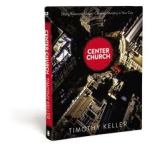
Center Church

Center Church

Tim Keller delivers a textbook for doing church; possibly the most important church theology/leadership/practical book in a decade


The Advantage

   The Advantage

Patrick Lencioni captures the concept of clarity (he uses the phrase “organizational health”) like no business thinker today


The Icarus Deception

   The Icarus Deception

Seth Godin’s most recent book is probably the most challenging personal one I’ve read – and that’s saying a lot!


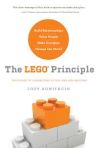
The Lego Principle

   The LEGO Principle

Joey Bonifacio writes in a simple, profound way about the importance of “connecting” in relationships that lead to discipleship


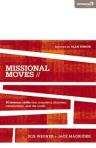
Missional Moves

   Missional Moves

Rob Wegner and Jack Magruder in a quiet, unassuming way, illustrate how Granger Community Church is transforming into a community of believers reaching their community – and the world.


Lead with a Story

Lead with a Story

Paul Smith delivers a powerful tool to enhance the leader’s skill in storytelling.


Design Like Apple

Design Like Apple

John Edson delivers a stunningly designed book that challenges the reader to understand and utilize Apple’s principles of design


Better Together

   Better Together

Church mergers (and closings) are going to be a huge event in the next decade; Jim Tomberlin and Warren Bird give an excellent resource on how to survive and thrive throughout the process.


Quiet

   Quiet

Susan Cain writes the book I’ve been waiting for over 30 years – because I am an introvert leader.


Midnight Lunch

   Midnight Lunch

Sarah Miller Caldicott delivers a powerful primer for collaborative teamwork.


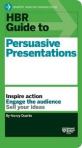
HBR Guide to Persuasive Presentations

   HBR Guide to Persuasive Presentations

Nancy Duarte is not just a great writer – she knows how to deliver a great presentation from the first idea to the final applause.


Okay, it’s not 12 – but it is a baker’s dozen!

Let’s see – there’s still over 2 weeks left in 2012 – plenty of time to find a good book – what do you recommend?

When You Find a Leader, You Find a Reader

Dr. Al Mohler is one of the most brilliant men I have ever met. He was a PhD student at the Southern Baptist Theological Seminary while I was pursing my Master’s degree there in the early 1980’s. Within a decade, he had returned to Southern as President, celebrating his 20th anniversary next year.

Dr. Mohler released a book this year entitled The Conviction to Lead. It contains 25 principles for leadership that matters. One of those principles is that “Leaders are Readers.”

The following is a compilation of the powerful truths of that statement, as taken from his book. I thought they were an appropriate inclusion in Reading Week 2012.

When you find a leader, you have found a reader. The reason for this is simple—there is no substitute for effective reading when it comes to developing and maintaining the intelligence necessary to lead. In all likelihood, your desk has a stack of books, magazines, and journals waiting to be read, and your briefcase is filled with reading materials. Leadership requires a constant flow of intelligence, ideas, and information. There is no way to gain the basics of leadership without reading.

Leading by conviction demands an even deeper commitment to reading and the mental disciplines that effective reading establishes. Why? Because convictions require continual mental activity. The leader is constantly analyzing, considering, defining, and confirming the convictions that will rule his leadership.

Leaders know that reading is essential, as it is the most important means of developing and deepening understanding. That is why leaders learn to set aside a significant amount of time for reading. We simply cannot lead without a constant flow of intellectual activity in our minds, and there is no substitute for reading when it comes to producing this flow.

The careful reader is not reading merely to receive data. The leader learns to invest deeply in reading as a discipline for critical thinking.

How to Read 

You are already a reader, but how can you hone that skill to your greatest benefit? Reading is like any other skill—most people are satisfied to operate at a low-level. For some, the skill of reading seems to come naturally, while others have to work hard to develop it. The key is to keep improving over a lifetime.

Your first concern is to read for understanding. If you don’t, reading will add little to your life and leadership abilities. Before you start to read a book, ask certain questions about it:

  • What kind of book is it?
  • How dense is the content?
  • What do you need to know about the author?
  • What is the purpose and subject matter of the book?
  • How did it end up on your reading list?

Develop your own rules and habits for reading. I like to start with the book’s cover and table of contents. The cover of a book used to be mostly for its protection, but now it contains a significant amount of information, ranging from a short biography of the author to the identification of the publisher. The table of contents, if well constructed, is like a map of the book. Reading is much more effective if the reader knows where the book is headed.

You should read a book or article only for what it is worth. If you find that the book is not contributing to your life and leadership, set it aside. The world is filled with books and other reading material. Is the book making you think? Do you find that it is sparking new thoughts and reflections as you read? If so, read on. If not, set it down and move on.

Learn to read critically. Reading is not merely an exchange of information and ideas. It is a conversation between the author and the reader. Argue with the book and its author when necessary, and agree and elaborate when appropriate.

Treat the book as a notepad with printed words. In other words, write in your books. Make the book your own by marking points of agreement and disagreement, highlighting particularly important sections of text, and underlining and diagraming where helpful. The activity of marking your books adds tremendously to the value of your reading and to your retention of its contents and your thinking.

Reading critically also means evaluating the author’s credibility and clarity of thought. Does the author have the credentials and authority to make these arguments or to present this information? Do the arguments meet the tests of truthfulness, honesty, and relevance? Are claims backed up with credible evidence and argumentation? These are all crucial questions any reader should ask of a book. A couple more include: What is the author’s purpose in writing this book? What do I hope to get out of the experience of reading this book?

Keep reading and developing the skill of reading over your lifetime.

What to Read

Think of reading like you think of eating. In other words, pay attention to your diet.

For the Christian, the highest reading priority is the Word of God. Our spiritual maturity will never exceed our knowledge of the Bible, which is an especially urgent principle for Christian leaders.

In terms of other reading, Christian leaders should read serious Christian books—books that contain spiritual health and deep thought. The leader’s reading diet should include books covering a range of subjects, though most of us will invest first in those books that are most relevant to our work and mission.

Expanding from there, the leader should learn to consult book reviews and notices in major newspapers, magazines, and online sources. Of course, friends recommend many of the books that will mean most to us. When leaders gather, books are usually part of the conversation.

Should leaders read fiction? This is where many leaders admit uncertainty, but the answer is surely yes. Leaders need to read fiction for enjoyment, for learning, and for context. Fiction is important because it allows the reader to enter into the times, life, and mind of someone else.

Novels and short stories are powerful units of narrative, telling a story with compelling force. While enjoying the story, leaders are also learning how to improve their own narrative presentation and communicative ability.

Leaders are ravenous consumers of historical biographies. Their natural instinct is to learn about leaders of the past in order to embrace their strengths and avoid their weaknesses. But the wise leader will range across the waterfront of disciplines, from history and economics to current events and politics. Add to this the expanding number of business and management titles published each year. No leader can read all of these, of course, but the best of the lot should be on the leader’s reading list.

What about newspapers, magazines, and newsletters? The capable leader knows that these are important as well. Even as printed newspapers suffer from circulation losses, they remain extremely influential and informative.

If newspapers represent the first level of report and analysis, then magazines, journals, and newsletters represent the second. The newsweeklies and major intellectual magazines are extremely influential in terms of popular culture.

In addition to keeping up with the news, leaders will also learn communication and writing skills from the best magazines and journals. The writing in these periodicals tends to be fresh and lively, intended to draw and keep the reader’s attention. That is the wise leader’s concern as well.

When to Read

There will never be enough time to read all that you want to read, or even all that you think you ought to read. Just keep reading. Set aside segments of time devoted to reading and grab every spare minute you can find. Keep reading materials with you at all times, or at least close at hand. Keep a stack of books ready for reading, and take a couple with you as you travel.

When possible, read when you can retain and think most productively. I have found it helpful to plan reading projects. Each year, I plan two or three of these, intending to pursue understanding on a specific issue or area of knowledge. Develop a short list of books in an area, and work your way through them. You will be amazed at how much you can cover in a year.

I also advise dividing your reading plan into three categories. First, books you must read. Second, books you should read. Third, books you want to read. Given a bit of honest thinking, you will have a good idea of how this breaks down for you. Once you have this structure in mind, you can plan the stewardship of your reading time accordingly.

Read With Discernment

Christian leaders learn to read with discernment drawn from our deepest convictions. Constant worldview analysis comes like a reflex as the leader develops the capacity and skill of spiritual discernment. Test everything you read by viewing it through the lens of biblical truth and your convictions. Know that your most faithful and productive thinking will often come as you are reading from an author with whom you disagree, even as you apply critical thinking and discernment. Those who would lead with conviction must read with conviction.


Next: My Favorite Books of 2012

Welcome to Readers Week, 2012!

This Might Work cover

Today kicks off an annual tradition: taking a look at why reading is important for leaders, hearing from leaders on reading, and announcing my version of the best books of 2012.

And there’s no better way to start it off with a little make that a lot of Seth Godin…

Yesterday I met our mailman at the door with a not too happy look on his face. In addition to the increased volume of holiday mail, he was straining to carry a large, heavy box – one I have been anticipating since mid-summer:

Seth Godin’s latest work, This Might Work, is a huge behemoth of a book weighing in at 15.4 pounds and measuring 15x11x3 inches. It contains Seth’s incomparable blog posts from 2006-2012, curated by his most avid follower, Bernadette Jiwa. Jiwa is an Australian writer and Seth’s only choice to undertake this Herculean task.

She succeeded.

Here is her choice for the opening page, from Seth’s blog on May 20, 2004:

Five years from now…

Assume that:

Hard drive space is free

Wifi like connections are everywhere

Connections speeds are 10 to 100 times faster

Everyone has a digital camera

Everyone carries a device that is sort of like a laptop, but cheap and tiny

The number of new products introduced every day is five times greater than now

Wal-Mart’s sales are three times as big

Any manufactured product that’s more than five years old in design sells at commodity pricing

The retirement age will be five years higher than it is now

Your current profession will either be gone or totally different
What then?

Classic Seth Godin…

Also in the package was Seth’s latest normal book, The Icarus Deception, due out on 12/31. Continuing with the theme he first introduced in Linchpin, Godin shows how we can thrive in an economy that rewards art, not compliance. He explains why true innovators focus on trust, remarkability, leadership, and stories that spread. And he makes a passionate argument for why you should be treating your work as art. A review will be coming soon!

In a few sentences above, this is why leaders read..

And why you should, too.

Next: Thomas Edison on Reading

Collaborative Innovation – Maybe Edison’s Best “Invention”

How do you define collaboration?

What made Thomas Edison so successful in creating collaborative innovation teams in his era? Sarah Miller Caldicott brings Edison’s collaboration approach to the 21st century in her new book Midnight Lunch.  Read step-by-step how Edison used collaboration to propel his teams to share their ideas in a uniquely collegial atmosphere, creating a competitive edge which became a hallmark of his laboratories.

Here’s a quick overview of the four-step process.

Step 1: Capacity

Build diverse teams of two to eight people.
What worked for Edison: To create the lightbulb, Edison’s team had to include chemists, mathematicians, and glassblowers.
Modern counterpart: Facebook’s small, collaborative coding teams.

Step 2: Context

After a mistake, step back and learn from it.
What worked for Edison: At age 22, he had his first flop–the electronic vote recorder, which legislators failed to adopt. From there, he changed his focus to the consumer.
Modern counterpart: At Microsoft, Bill Gates took intensive reading vacations each year.

Step 3: Coherence

When team members disagree, step in and make a decision.
What worked for Edison: Groundbreaking work in electricity isn’t easy to come by. Fights and frustration followed; overarching vision kept creation on track.
Modern counterpart: Whirlpool has “collaboration teams” to spark dialogue between departments.

Step 4: Complexity

When the market shifts, change your direction–or face the consequences.
What worked for Edison: It was the era of electricity. Inventors ignored that at their peril.
Modern counterpart: The implosion of Kodak, which failed to adapt to market changes.

What could your team learn from a “midnight lunch?”

Look at a Fast Company article here.

Get the book here.

Read more from Sara here.

Next: Part 1 of a 5-part series on Thomas Edison’s Five Competencies of Innovation. For an overview of the Five Competencies, go here.

Seven Strategic Questions Critical to Improving Your Church’s Guest Experience

Closing out the week with some great strategic questions developed by Beyond Philosophy, one of the world’s foremost experts in the Customer Experience. As has been the case all week, I have adapted these for Guest Experiences in ChurchWorld.

1. What Guest experience do you want to deliver?

Ask yourself this question. In most cases, churches cannot provide a clear answer. Everyone has an opinion, but nobody can identify what it is. This causes overlaps, gaps, lost opportunities and cost. Most Guest experiences are accidental. They “just happen.” Guest experiences – both good and bad – frequently occur because a church makes decisions without considering the consequences. The main challenge is to identify the ideal experience you want to offer your Guest; a Guest Experience Statement (GES) is the first step. A GES puts the ideal Guest experience into words.

2. What are the emotions you are trying to evoke?

More than half of a typical Guest experience is rooted in emotion. Guests are people, and people are driven by emotions. Emotions are the bedrock of existence, yet most churches miss this fact, allowing for half of their experience to be left to chance.

3. What drives and destroys value for your organization?

What drives or destroys Guest retention and Guest loyalty? Which parts of the Guest experience drive or destroy the most value for your organization? The Emotional Signature technique (from Beyond Philosophy) aids this process because it determines the most efficient way to allocate resources.

4. What do Guests really want?

What Guests say they want can be vastly different from what they value. Other Guests don’t even know what they want. To understand this you must get into the head of the Guest. The subconscious mind is the key that unlocks the real drivers of value to the Guest. Most Guest desires reside below the surface of conscious experience. Paradoxically, while Guests often struggle to articulate their desires, the cost of misjudging Guest desire is extremely high. An accurate gauge of Guest desire is of paramount importance. Once this is discovered you will be able to determine where to put your resources.

5. How Guest-centric is your organization?

Guest experience is a manifestation of your organization. If your church is program-centric, then you will offer a functional Guest experience. If your church is Guest-centric, then you will offer an interactive Guest experience. Changing the Guest experience means reorienting your church’s ministry strategy in a way that translates to Guest loyalty and retention gains.

6. What is your subconscious experience?

The subconscious experience incorporates all the elements of the Guest experience that are seen, felt, heard and processed by your subconscious mind. Do you know what kind of unintentional signals your church sends to your Guests? The subconscious experience is every bit as important as the rational experience and the emotional experience.

7. Is your Guest experience deliberate?

Have you deliberated over the experience you are providing to your Guests? Most experiences “just happen.” They are a consequence of many different decisions the church has made without understanding the impact or implications to the Guest. Your experience should be deliberate.

The way you answer these seven questions will determine the future direction of your Guest Experience.

Read more about Beyond Philosophy on their website here.

Are the Guest Experiences a “Natural” in Your Church?

Part 4 of a 4-part series exploring Beyond Philosophy’s Customer Experience Orientation, as applied to Guest Experiences in Church World

Natural Orientation – a church where focus on the Guest is total. It is very proactive and is naturally focused on the complete Guest Experience. In order to produce memorable and captivating Guest Experiences it uses specific senses to evoke planned emotions. Research shows that only about 2% of organizations exhibit a Natural Orientation.

In this orientation, the Guest Experience is in the church’s DNA. It does not have to consider what to do as it does it naturally. It understands the critical role that senses play and had deliberately built these into its guest Experience. It understands that Guests have sensory expectations and then uses the senses to creae captivating and memorable experiences. It involve the Guest in the design of the Guest Experience and has defined its own Guest Experience “recipe.” It is totally proactive to Guest demands and undertakes many activities, which event the Guest does not see, to build a great Guest Experience.

The Natural oriented church recognizes the amazing power of “stories” and “storytelling,” both inside the organization and outside, and it uses these to great effect to build its unique Guest Experience. Its leadership, and everyone in the organization, has been selected to meet its deliberate Guest Experience.

The culture of a Natural oriented church is aligned to the Guest Experience and is seen as an enabling tool. It uses theater as a method of producing consistency of its Guest Experiences. It has aligned the brand and its Guest Experience and one supports the other. It has very sophisticated methods of collecting Guest data, which it constantly uses to improve its Guest Experience.

Natural churches are masters of details. Each part of the Natural church has a measured focus on achieving the Guest Experience, and these include measurement of emotions and senses. The high-level journey of a Guest has been plotted into an experience map and the sublevels have also been defined. For the Natural church, details matter.

Traits of a Natural church:

  • Complete focus on the Guest
  • Focuses so much of the Guest Experience that it is in the church’s DNA
  • Deliberate Guest Experience and a clearly defined Guest Experience Statement
  • System built to improve the Guest Experience
  • Culture that is designed and aligned to the Guest Experience
  • Focused on depth of emotion
  • Consciously uses senses to provide a captivating experience
  • Recruits people who are good at acting
  • Integrated approach to the Guest
  • Understands Guest sensory expectations

For more information on this subject, check out Revolutionize Your Customer Experience by Colin Shaw, pp. 20-21; 148-160

You can also find more information at Beyond Philosophy’s website.


Here’s a recap of the previous orientations:

Now that you understand more about the four possible orientations of your church’s Guest Experience, what actions are you going to take? What are the obstacles in your way? How are you going to embed the changes needed in your organization?

Have You Achieved Enlightenment in Your Church’s Guest Experience?

Part 3 of a 4-part series exploring Beyond Philosophy’s Customer Experience Orientation, as applied to Guest Experiences in Church World

Enlightened Orientation – a church that has recognized the need for a holistic, coordinated, and deliberate approach to the Guest Experience. It is proactive in nature towards the Guest and orchestrates emotionally engaging Guest Experiences. It stimulates planned emotions. Research shows that approximately 22% of organizations exhibit an Enlightened Orientation.

The Enlightened church understands the importance of the Guest Experience and has thus achieved enlightenment. It has converted from being reactive to proactive to Guest demands. It has understood the critical nature of defining the Guest Experience it is trying to deliver. It has spent time discussing it at the senior team level and agreed on a Guest Experience statement which has been communicated to all team members. It realizes that over 50% of every Guest Experience is about emotions and therefore has embedded new processes into its Guest Experience, which are planned to deliberately evoke emotions. Enlightened churches recognize that Guests have emotional expectations, as well as physical expectations, and plan to exceed both.

The Enlightened church has formal methods to ensure that people spend time with the Guest. This applies from the most senior team leaders all the way through the organization. The leadership walks the talk and sets the standards regarding the Guest Experience.

The Enlightened church has taken actions to coordinate and align its Guest Experience. Typically, it has established a high-level leadership position (paid staff or volunteer) along with dedicated team leaders. It also seeks out team members who have an awareness of and demonstrated use of emotional capabilities. The Enlightened church has recognized that an organization’s culture impacts the Guest Experience.

There are a number of key things that change over at the crossover point from Transactional to Enlightened. A number of these are attitudinal, from reactive to proactive, from “inside out” to “outside in,” and from physical to “physical and emotions.”

The Enlightened church knows what emotions it is evoking at each stage of its interaction with a Guest. It has spent time in defining the emotion it wants to evoke, and it has planned these into the design of the Guest Experience.

An Enlightened church has a different attitude to the Guest from the Naïve or Transactional church. The Guest is very much in the lifeblood of the Enlightened church. It does things for the Guest without a second thought. It intuitively knows what to do.

What does an Enlightened church need to do to Revolutionize Their Guest Experience?

  • Consider the senses they are going to use
  • Build senses into the Guest journey mapping
  • Define how they are going to stimulate the senses
  • Look at using theater and entertainment as a method for providing a great Guest Experience
  • Provide training in acting techniques
  • Understand Guest sensory expectations
  • Gain real alignment of the people, the culture, and the Guest Experience
  • Look to create captivating and memorable Guest Experiences
  • Review processes regularly
  • Involve the Guest in designing

Next time: The Natural Orientation


For more information on this subject, check out Revolutionize Your Customer Experience by Colin Shaw, pp. 19-20; 127-147

You can also find more information at Beyond Philosophy’s website.

Are Your Church’s Guest Experiences Transactional in Nature?

Part 2 of a 4-part series exploring Beyond Philosophy’s Customer Experience Orientation, as applied to Guest Experiences in Church World 

Transactional Orientation – a church that focuses primarily on the physical aspects of the Guest Experience. It has recognized the importance of the Guest. However, its focus is rudimentary, as many aspects of the Guest Experience remain left to chance and are uncoordinated and “inside out.” Research indicates that approximately 67% of organizations exhibit a Transactional Orientation.

The Transactional oriented church understands some of the basics of the Guest Experience but still remains quite reactive to Guest demands. If has recognized that the Guest is quite important and it has made some changes to reflect this. The core of its operation is primarily around the physical aspects of Guest Experiences: a few special parking spots, maybe a welcome area, a few people greeting everyone. It is, in reality, still “inside out” and its Guest Experience is not deliberate, but just happens.

Organizationally, the Transactional church is often functionally siloed, with each silo treating the Guest in a different manner. Little information is shared across functions and Guests are forced into dealing with many different parts of the organization.

Typically, the senior leadership team in a Transactional church claims they are Guest focused but the words and deeds do not match. This contradiction is seen by team members throughout the organization – who then mimic the behavior.

Good intentions are no substitute for action; failure usually follows the path of least persistence.  – Anonymous

In the Transactional Church the brand and the actual Guest Experience are not aligned. “The Friendliest Church in Town” usually isn’t. A great deal of time is spent by the Transactional Church in building its brand image, but it has not gone that critical one stage further and defined how it will manifest itself in the Guest Experience.

The core of the Transactional church remains “inside out.” These churches do think Guests are important, which is a marked improvement from the Naïve church. However, they believe the Guest is still not as important as the organization is. Transactional churches remain primarily physically based and do not look at the emotions they should be evoking.

What does a Transactional church need to do to Revolutionize Their Guest Experience?

  • Understand that emotions play a key role in the Guest Experience
  • Start to enlist people with emotional awareness
  • Review processes so that they evoke the right emotions
  • Implement cross-silo communications to give a complete Guest view
  • Understand the importance of team member’s well being
  • Define the Guest Experience
  • Align the Guest Experience throughout the organization
  • Look at Guest’s emotional expectations
  • Build an overall Guest journey
  • Increase the time the senior leadership team spends with Guests

Next time: The Enlightened Orientation


For more information on this subject, check out Revolutionize Your Customer Experience by Colin Shaw, pp. 19; 108-125.

You can also find more information at Beyond Philosophy’s website.

Are You Providing a Naive Orientation in Your Church’s Guest Experience?

Part 1 of a 4-part series exploring Beyond Philosophy’s Customer Experience Orientation, as applied to Guest Experiences in ChurchWorld. 

Naïve Orientation – a church that focuses on itself to the detriment of the Guest. It is “inside-out” either through choice or because it doesn’t know what it should be doing. Research indicates approximately 9% of organizations exhibit a Naïve orientation.

Naïve churches focus on themselves rather than the Guest Experience. They are reactive to Guest demands. They believe their programs or processes are more important than the Guest. Their attitude with the Guest is one of “Take it or leave it.” Their processes are totally focused “inside out,” doing things for the benefit of members, rather than “outside in,” which is changing the church to meet Guests’ requirements.

The Naïve oriented church is typically a siloed organization and struggles between the silos is rife.

Churches are in this orientation either because they are:

  • Unaware what they should be doing to build a great Guest Experience. They are not deliberately trying to cause a poor Guest Experience; it is simply that they do not know what they do not know. They are unaware of the impact their actions have on their Guest Experience. By definition they have not spent time thinking through the implications of what they are doing. This typically indicates they believe something else is more important than Guest Experience. Typically, this is taking care of members’ needs first and foremost.
  • Aware of their orientation but simply don’t care as Guests are a nuisance, and seen as a means to an end.
  • In this orientation “by default.” This means the church knows is should be focused on the experience it gives its Guests but something else always gets in the way. Something else is deemed more important.

If a Guest Experience is provided at all by Naïve churches, it is entirely physical. They have either failed to realize that they are evoking emotions (usually negative) or don’t care that they are.

Naïve churches do not consider the Guest. Nearly all of their processes are designed on the basis of what is good and convenient for the church. This means the Guest has to fit around them.  This “inside out” behavior shows apathy at best towards Guests and disdain at worst.

In Naïve churches almost 100% of all measurement is around the internal functioning of the church, with almost no Guest measures. Only the physical aspects of the Guest Experience are measured by many Naïve churches, leaving emotions and senses unrecognized.

If you were to look at a Naïve church’s organizational structure, it would be focused around program or ministry groups. Meeting agendas typically have no mention of the Guest on the agenda.

What does a Naïve church need to do to Revolutionize Their Guest Experience?

  • Change their attitude to Guests
  • Put themselves in the Guest’s shoes and see what it feels like
  • Realize that emotions account for over half the Guest Experience
  • Define the Guest Experience they want to deliver
  • Move from reactive to proactive
  • Understand all the elements that ultimately affect the Guest Experience
  • Define a plan on how to move forward
  • Look at all Guest Touch Points and define where the biggest problems are
  • Treat your team members well

Next time: The Transactional Orientation

For more information on this subject, check out Revolutionize Your Customer Experience by Colin Shaw, pp. 18-19; 91-107.

You can also find more information at Beyond Philosophy’s website.

What is Your Guest Experience Orientation?

We can’t solve problems by using the same kind of thinking we used when we created them.   – Albert Einstein

Ongoing research by the customer experience group Beyond Philosophy has led to the discovery of a previously unidentified trend on how an organization is “oriented” around the customer to enable it to deliver a Great Customer experience.

To represent this discovery, Beyond Philosophy devised a groundbreaking model that enables organizations to understand where they are, and what they need to do to deliver a great Customer Experience. If the organization recognizes its current position it can clearly understand what it needs to do to “Revolutionize Its Customer Experience.

Graphically, the model looks like this:

Their research shows there are four distinct orientations organizations go through on their journey to enable them to deliver a great Customer Experience. They call this the Journey from Naïve to Natural.

The four orientations and a brief definition of each are as follows:

  • Naïve – an organization that focuses on itself to the detriment of the customer. It is “inside out” either through choice or because it doesn’t know what it should be doing.
  • Transactional – an organization that focuses primarily on the physical aspects of the customer experience. While it recognizes the importance of the customer, many aspects of the customer experience are left to chance and are uncoordinated or “inside out.”
  • Enlightened – an organization that has recognized the need for a holistic, coordinated, and deliberate approach to the customer experience. It is proactive in nature towards the customer and stimulates planned emotions.
  • Natural – an organization where focus on the customer is total. It is very proactive and is naturally focused on the complete customer experience. It uses specific senses to evoke planned emotions.

Their research also showed that organizations are distributed across the four orientations in the following percentages:

Naïve – 9%

Transactional – 67%

Enlightened – 22%

Natural – 2%

Why is this important to church leaders? The four orientations define how organizations are centered or oriented. It’s another way of talking about how your church is oriented to deliver a great Guest Experience.

How does this translate to Guest Experience in ChurchWorld?

The first step in delivering WOW! Guest Experiences is knowing where you are now. By answering the Where are we? question first, you will be in good shape to understand Why you are there, and What you need to do to move forward.

Tomorrow’s post will begin a 4-part series taking a closer look at each of these orientations, with specific application to Guest Experience in churches – like yours.