Efficiency – yes, Adaptability – no…

…Generation Flux to the rescue!

Fast Company’s February issue has a cover story and several articles about Generation Flux. Read yesterday’s post here for a quick summary. Better yet, go to the website here to read the whole article.

Need a little teaser? Here’s another quote from the lead article by editor Robert Safian:

The challenge they [traditional organizations] face is the same one staring down most of America, not to mention government, schools, and other institutions that have defined how we’ve lived. These organizations have structures and processes build for an industrial age, where efficiency is paramount but adaptability is terribly difficult.

Sound like any institution you know – say, ChurchWorld?

Dev Patnaik, cofounder and CEO of strategy firm Jump Associates adds the following:

In an increasingly turbulent and interconnected world, ambiguity is rising to unprecedented levels. That’s something our current systems can’t handle.

If ambiguity is high and adaptability is required, then you simply can’t afford to be sentimental about the past. Future-focus is a signature trait of Generation Flux. It is also an imperative for organizations that want to survive: Trying to replicate what worked yesterday only leaves you vulnerable.

Can I get an amen to that? 

Generation Flux

In our hypernetworked, mobile, social, global world, the rules and plans of yesterday are increasingly under pressure; the enterprises and individuals that will thrive will be those willing to adapt and iterate, in a disciplined, unsentimental way.

The above quote by Fast Company magazine editor Robert Safian is the introduction to the cover story on Generation Flux. That cover story, plus several other articles, are a great primer to introduce you to Generation Flux.

Generation Flux is less a demographic designation than a psychographic one: What defines GenFlux is a mindset that embraces instability, that tolerates – and even enjoys – recalibrating careers, business models, and assumptions. Not everyone will join Generation Flux, but to be successful, organizations and individuals will have to work at it.

Clarity evangelist Will Mancini, in a recent post, described five “tweaks” that ChurchWorld leaders need to practice in order to keep their ministry. They are just the kind of actions that Generation Flux can pull off.

Another powerful quote from Safian: “The vast bulk of our institutions – educational, corporate, political – are not built for flux. Few traditional career tactics train us for an era where the most important skill is the ability to acquire new skills.”

To his list above, add ChurchWorld. Then ask yourself, “What am I going to do about it?”


Capacity 2.0

First, there was capacity.

Then, there was expanding your capacity.

Now it’s time for Capacity 2.0.

Leaders (like you) in organizations (like yours) need to create a reason to collaborate and a platform to make it possible. When a diverse group of people with a unique blend of gifts and abilities comes together – and stays together – the results can be amazing.

What’s the Capacity 2.0 of the volunteers in your organization?


Wanted: Volunteers who are FAT

The most popular New Year’s resolution involves loosing weight, but that’s not the kind of FAT I’m talking about.

At the heart of volunteer expectations, you should find people who want to be FAT:

Faithful – a dual meaning here: faithful to service to God, and faithful in serving others through your organization

Available – again, a dual meaning: making yourself available to serve in the first place, and then making time to serve

Teachable – skill sets can be taught, but you have to start with a teachable spirit first.

When you have volunteers who are FAT, there’s no biggest loser – only winners all the way.

Organizational Physics

A team at rest tends to stay at rest.

Seth Godin, writing in “Linchpin“, states that forward motion isn’t the default state of any group of people, particularly groups with lots of people. Cynics and politics and coordination kick in and everything grinds to a halt.

In an old school, top-down factory model this isn’t really a problem. The owner controls the boss who controls the foreman who controls the worker. It’s a tightly linked chain, and things get done because there is cash to be made.

Most modern organizations are now far more fluid than this. Responsibility isn’t as clear, deliverables aren’t as measurable, and goals aren’t as cut and dried. So things slow down.

Sound familiar? Like maybe your church?

Enter the linchpin. Understanding that your job is to make something happen changes what you do all day. If you can only cajole, not force, if you can only lead, not push, then you make different choices.

In many organizations, but especially the church, you can’t say, “Get more excited and insightful or you’re fired.” No, the men and women who go beyond their job description (if any at all) to do the unexpected and out-of-the-ordinary do it because they were inspired to do so by a leader who isn’t even around when the team is at work.

Are you that kind of leader?


Establishing a Culture of Service

Yesterday’s post introduced what I have found to be the number one question I encounter in talking with leaders in ChurchWorld:

How do we discover/train/keep more volunteers in our church?

I have dozens of conversations with church leaders every week. In almost every conversation – no matter what the original topic – the question above comes up. Large or small, rural or urban or suburban, traditional or contemporary, denominational or non-denominational, the question is always being asked.

Yesterday I began a series of posts on the concept of volunteers in ChurchWorld. I introduced the topic with the first of two  articles written in 2009 for Church Solutions magazine. They were based on a unique experience I had at my church that summer – one that changed my perspective and trajectory. You can read the first one here. And here’s the second… 

Establishing a Culture of Service (originally written for Church Solutions magazine in August 2009)

If you took a poll of church leaders about some of their biggest problem areas in churches today, you are sure to find some variation of “we need more workers” in the top three. I grew up in the home of two very committed parents who served in a lot of different church positions over the years. As a young teenage believer, I helped out where I could. As a young married adult, my wife and I volunteered for numerous positions in our college and seminary churches. While serving in church staff positions for over 23 years, I also served in different volunteer capacities. When I transitioned into the role of a church consultant, I continued in volunteer roles in my church. As I look back over these decades of experiences, the need for more workers is a prominent and consistent memory.

What if it didn’t have to be that way?

A few weeks ago I wrote about Elevation Church in Charlotte NC and their efforts in enlisting volunteers for their kick-off Sunday in the fall. In that post, I noted the events of the day and posed a question: Where do I sign up? It wasn’t a rhetorical question, because my wife and I had already made the decision to serve on the volunteer staff at Elevation. Here is the rest of the story.

On that “No Show Sunday” Elevation had an additional 560 volunteers sign up. That was critical because on 8/23/09, the church opened their first permanent campus, added three new worship services at two campus locations, and upgraded the facilities at their third location, thus requiring the additional volunteers. In the two weeks before the opening and expansion, each of the campus locations had volunteer recognition and training events on-site. Each of the 4 areas of volunteering had a session with the team leader going over the responsibilities of that area. Volunteers were given the task of “shadowing” a position to see if that was indeed where they wanted to serve. Our team leaders emailed and called us before our first Sunday of service. A volunteer leader packet came in the mail. So it was no surprise that a whole new cadre of volunteer leaders were eagerly in place on the first day!

Some observations of my recent experiences at Elevation:

  • Does your church have a culture of service? Do you expect that everyone will serve somewhere, doing something? If not, why not?
  • Many times, all you have to do is ask. People want to serve; they just need permission from you!
  • Make sure you are ready for the response. If you asked for volunteers and got 50 or 100 or more, would you be ready for them?
  • Establish a training/shadowing process. Volunteers don’t need 4 weeks of intensive training before they serve; most can begin right away with a minimum amount of training, continuing to learn as they serve.
  • Do you have a process to keep up with volunteers, seeing how they are doing and challenging them to strive for more?
  • Do you celebrate the volunteers who serve in your church? You couldn’t pay them to do what they do, but it is nice to recognize their gifts of time and service throughout the year.
  • Is volunteering a high value for your church? Do your full-time staff positions recognize the crucial role volunteers serve and respond appropriately?

I have been fortunate to serve in dozens of volunteer leadership capacities over the past four decades, but I’m very grateful to be a part of a church that knows the value of volunteers, challenges us to go beyond ourselves, and do it all while serving our Lord.

What’s the culture of service like in your organization?


Church Leaders Are Always Asking This Question…

How do we discover/train/keep more volunteers in our church?

I have dozens of conversations with church leaders every week. In almost every conversation – no matter what the original topic – the question above comes up. Large or small, rural or urban or suburban, traditional or contemporary, denominational or non-denominational, the question is always being asked.

With that in mind, I wanted to visit the concept of volunteers in ChurchWorld. I’ll introduce the topic today and tomorrow with a couple of articles written in 2009 for Church Solutions magazine. They were based on a unique experience I had at my church that summer – one that changed my perspective and trajectory.

Volunteers-The Lifeblood of Your Church (originally published 8/9/2009 in Church Solutions magazine)

 What do you do when a church experience built on volunteers throws a “No Show Sunday”? That was the experience at all of Elevation Church’s (Charlotte NC) multiple campuses this weekend as the staff designed a unique service both to honor current volunteers and encourage new volunteers as Elevation (3 campus locations, 8 services) prepares to add their first permanent site this fall and increase the number of services at each location.

Initially crafted as a response to being “a one-man show”, the weekend services began with no greeters, no parking crew, or no signs all over the place – typical Elevation features. As a matter of fact, one of Elevation’s core values is honoring guests. Not this weekend! Participants walked in to the campus locations with only a single sign at the entrance: “Elevation Church worship today”. No welcome team of any kind. Only a couple of staff members checking in kids at the different children’s areas. No resource booth. No energetic music or hosts outside the worship center: just a single sign pointing out the printed lyric sheets. A bare stage with a couple of portable speakers and a single mic stand. At each location, a single worship leader came out and led the crowd in music printed on the sheets. 

When it was time for the sermon, Pastor Steven Furtick was onscreen as usual, with a simple greeting: “Welcome to the worst Sunday ever at Elevation Church!” What followed was a powerful message for the church today, based on Jesus’ first public miracle as recounted in John 2:1-11.

  • The wedding scene in John 2 reflected a time when guests received honor; today at many churches, guests show up and we have nothing prepared.
  • Jesus disassociated himself, deferring to another time. He owed nothing at the event, but gave everything. We, who owe everything, give nothing.
  • Mary’s “do whatever He tells you” gave us instructions for obedience.

I was reminded of a comment by Uptown campus pastor Larry Hubatka several weeks before: “You never get the full experience at Elevation until you volunteer.” I wrote it down, and it came back full force today in the absence of all volunteers.

Elevation Church is driven by volunteers: 1,860 volunteers are in the database. Each weekend over 860 volunteers work over 3,295 hour per week in the four broad areas of Family Services, Guest Services, Production, and Administration. 

The powerful close came when Furtick reminded the audience that when Jesus turned the water into wine, the only ones who witnessed the miracle were the servants. When you serve, you get to witness the power of God.

Where do I sign up?

(the numbers at Elevation have changed now – we have 7 campuses, twice as many volunteers, and are continually expanding – but the principle is the same)

Tomorrow: Establishing A Culture of Service


A Family Divided

Technology-wise, that is.

As a result of gifts and upgrades, my wife is now enjoying her iPad while my daughter Amy is happily using her iPhone 4s. My son and I are still in the land of the great unwashed, using PC laptops and standard smart phones. We guys think it is a girl conspiracy so that they can use Face Time to see and talk to one another more often. That’s fine with me, as long as I get an occasional word (and picture) in.

We soon found out that the iTechnology the girls owned had a very practical use.

This morning the girls colored their hair, and my daughter used the iPad to first find, and then save, a haircut she liked. They then proceeded to a salon and showed the stylist the image, which he promptly re-created for my daughter.

That’s a win.

11 Best Books of 2011

Continuing an annual tradition, the final posts of the year are devoted to the importance of reading (covered in yesterday’s post) and my best book list for the year.

Making a “Best of” list is always hard – it’s a very subjective process, driven by my personal tastes, professional needs, and plain curiosity. It’s also hard to narrow it down: in 2011, I checked out 107 books from my local library, purchased 91 print books, and downloaded 37 on my Kindle. I also perused dozens of bookstores on my travels, writing down 77 titles for future acquisition. There were also a lot of late releases that I just didn’t have time to take a look at. Be that as it may, here is my list of favorite books published in 2011.

The Zappos Experience, Joseph Michelli

Onward: How Starbucks Fought for Its Life Without Losing Its Soul, Howard Schultz

Great by Choice: Uncertainty, Chaos, and Luck – Why Some Thrive Despite Them All, Jim Collins and Morten Hansen

Be Our Guest: Perfecting the Art of Customer Service, 2nd Edition, Disney Institute

Brilliance by Design: Creating Learning Experiences that Connect, Inspire, and Engage,

Vicki Halsey

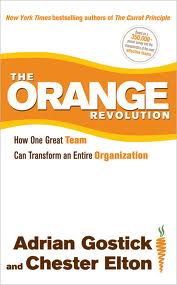
The Orange Revolution, Adrian Gostick and Chester Elton


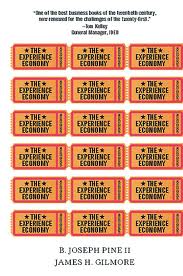
The Experience Economy, 2nd Ed, Joseph Pine and James Gilmore

Blah, Blah, Blah, Dan Roam


Missional Communities: The Rise of the Post-Congregational Church, Reggie McNeal

For the City: Proclaiming and Living Out the Gospel, Matt Carter and Darrin Patrick

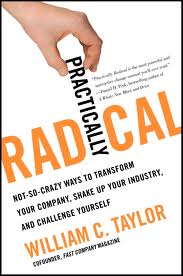
Practically Radical, William C. Taylor

That’s my list for 2011 – if you are unfamiliar with any of the books listed above, I encourage you to check them out.

The new year is just around the corner, and the book releases are lining up already – I wonder what the Best of 2012 list will look like a year from now?

Drinking from the Fire Hose

Everyone suffers from information overload in our society today. It’s a 24/7 world with smart phones, computers, instant news, colleagues, friends, and even family bombarding us. Information is essential to making intelligent decisions, but more often than not, it simply overwhelms us.

It’s like trying to drink from a fire hose.

Drinking from the FirehoseAuthors Christopher Frank and Paul Magnone, in their recent book Drinking from the Fire Hose, propose a simple solution: Learn how to ask the right question at the right time.

Whatever field you are in, asking smarter questions will expose you to new information, point you to connections between seemingly unrelated facts, and open new avenues of discussion with your colleagues.

Here are the seven questions that the authors think will help you bring a big-picture perspective to problems that often leave others buried in irrelevant details.

  • What is the Essential Business Question?
    • Asking the right question is the key to finding the indispensable answer in the mountain of information.
  • Where is your customer’s North Star?
    • Shift your view from company-centric to customer-centric.
  • Should you believe the Squiggly Line?
    • Question the validity of short-term data.
  • What surprised you?
    • Uncover hidden information and use it to change the dialogue.
  • What does the lighthouse reveal?
    • Identify the risks, barriers, and bridges that surround your business.
  • Who are your swing voters?
    • Drive growth, increase revenue, and boost satisfaction by looking at your existing customers in a new way.
  • What? So What? Now What?
    • Follow this easy-to-remember sequence of questions to effectively communicate results and inspire action.

Frank and Magnone illustrate these seven questions with real-life stories and applications that you will find helpful in surviving the deluge of data that is your life.