
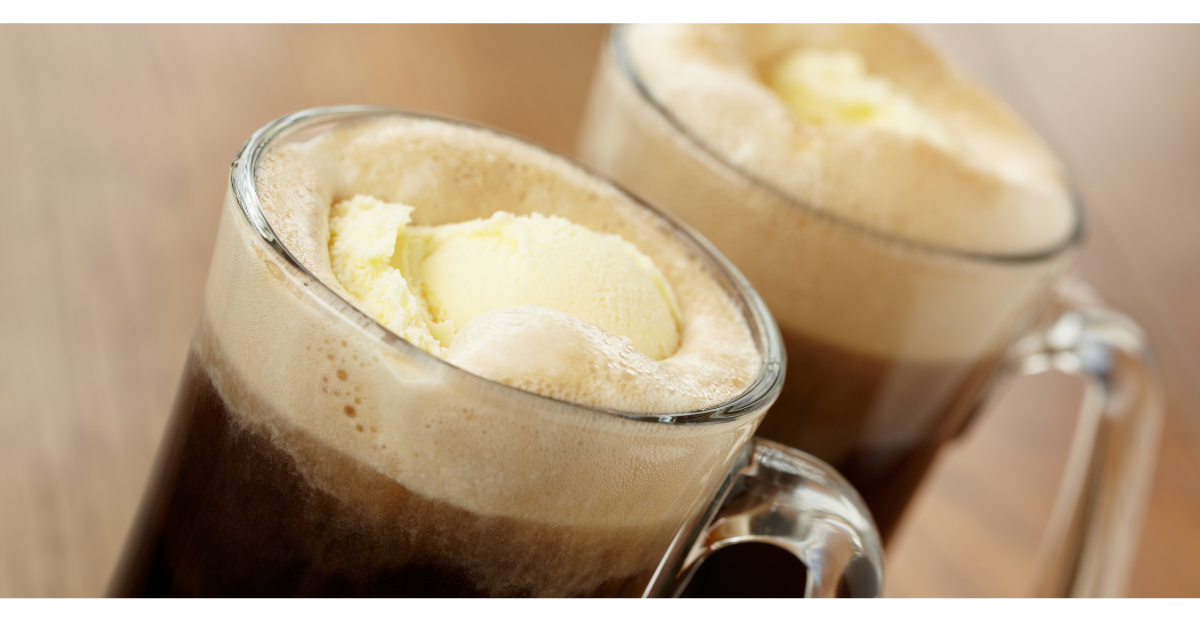
There is a distinct, short-lived musical performance that occurs every time you drop a scoop of vanilla ice cream into a heavy glass mug of root beer. It begins with a sharp hiss, moves immediately into a frantic, crackling fizz, and culminates in a rich, silent crescendo of thick, tan foam creeping over the glass rim. If you are of a certain age, or if you simply possess a deep affection for the more eccentric corners of American culinary history, that sound is pure nostalgia.
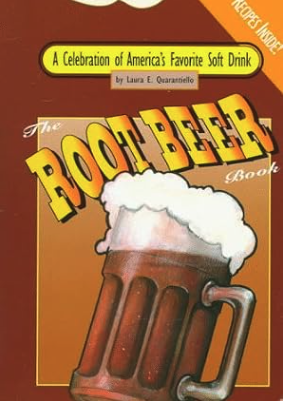
With National Root Beer Day upon us, it felt like the perfect moment to pull a slender, delightfully specific volume off the shelf: The Root Beer Book: A Celebration of America’s Best-Loved Soft Drink by Laura E. Quarantiello.
Originally published in 1997, this 96-page appreciation is exactly the kind of book I love to discover. It doesn’t take itself too seriously, yet it treats its subject with the historical dignity that a century-and-a-half-old American staple deserves. Quarantiello unpacks the drink’s journey from indigenous herbal remedy to nineteenth-century temperance miracle, offering recipes, trivia, and a tour through the golden age of soda fountain culture.
My own deep affection for this beverage, however, goes beyond mere historical curiosity; it is rooted in a strange, 2-year-long sensory journey that began during the height of the COVID-19 pandemic in 2020. Like millions of others, I woke up one morning to find my world entirely muted. The virus had struck my olfactory system, leaving me with a profound and disorienting loss of taste and smell. Suddenly, Coke tasted like bitter water, Mountain Dew was disgusting, and favorite meals were reduced to mere textures.
The science behind this phenomenon is fascinating, if frustrating. The virus doesn’t actually destroy the taste buds on your tongue; instead, it attacks the sustentacular cells – the crucial support cells in the nasal cavity that protect and nurture our olfactory sensory neurons. When these cells are compromised, the brain loses its ability to process aroma. Because up to 80% of what we perceive as flavor actually comes from our sense of smell, losing this connection flattens the culinary world completely. For months, eating was a chore.
But then came the breakthrough. On a whim, I cracked open a cold bottle of craft root beer, and my palate suddenly woke up. It turns out there is a reason root beer can pierce through that post-viral fog when other foods fail. Unlike a cola or a fruit soda, which relies on a single dominant flavor profile, an authentic root beer is a botanical powerhouse. It hits multiple sensory receptors simultaneously. The sharp, cooling sensation of wintergreen and mint triggers the trigeminal nerve – the nerve responsible for detecting chemical cold and irritation – which bypasses the damaged olfactory support cells entirely. Combined with the deep, pungent bite of anise, the earthy sweetness of licorice, and the warm, distinct spice of real vanilla, root beer delivers an overwhelming, multi-layered sensory assault. It was the only thing that actually tasted good, launching me into a quest to track down and taste every classic, regional root beer formulation I could find as my senses slowly mended. Over the next 18 months, I tasted over 20 different brands of root beer from around the country.
From childhood memories of Frostie and A&W Root Beers to college favorite IBC Root Beer (courtesy of my Brownsville friends) to many more, I revisited regional and national brands. Key to the process was a local hardware store (Blackhawk Hardware in Charlotte) that carried many brands I had never heard of. Factor in the readily-available brands from all over the country via Amazon, and I was in root beer heaven.
Ultimately, Hank’s Gourmet Root Beer proved to be one of my favorites – but the journey was definitely fun, and all of them were better than soft drinks! After about two years, my taste slowly begin to come back, and now most things taste normal. But I still like root beer – especially with a burger or a hot dog or a cold root beer float on a hot summer day.
To understand root beer, you have to understand that it is essentially a forest in a glass. Unlike cola, which relies heavily on the citrusy, caffeinated notes of the kola nut and traditional spice oils, authentic root beer is an agricultural tapestry. Historically, it was brewed from whatever bark, roots, and berries could be foraged from the forest floor. Early colonial settlers looked at the wilderness and saw an apothecary. They gathered sassafras root, sarsaparilla, birch bark, dandelion, wintergreen, wild cherry bark, ginger, and juniper.
When these ingredients were boiled down, sweetened with molasses or honey, and fermented with a bit of yeast, the result was a bubbling, slightly alcoholic “small beer.” It was consumed not for luxury, but for survival; the brewing process made the water safe to drink, and the herbs offered a rustic shot of vitamins to hardy souls clearing the early frontier.
The man who transformed this colonial survival potion into a commercial empire was a Philadelphia pharmacist named Charles Elmer Hires. As Quarantiello recounts, Hires was on his honeymoon in New Jersey in the early 1870s when his landlady served him an exceptionally delicious, deeply flavorful herbal tea made from gathered roots. Being an enterprising pharmacist, Hires begged for the recipe, took it back to his laboratory, and began tinkering.
His original plan was to market the dry, powdered blend of sixteen roots, barks, and berries as “Hires’ Herb Tea.” He envisioned it as a dry mix that housewives could buy for a few cents, boil at home, and serve to their families as a wholesome, purifying health tonic.
Fortunately for us, Hires had a friend named Russell Conwell – the founder of Temple University – who possessed a keen eye for marketing. Conwell looked at the target audience of rugged Pennsylvania miners, laborers, and farmers and gave Hires a crucial piece of advice: “They won’t drink tea. Call it beer.”
It was a stroke of genius. Renamed “Hires Improved Root Beer,” the drink made its grand public debut at the 1876 Philadelphia Centennial Exhibition. Hires poured cold, foaming glasses of his concoction for fairgoers sweltering under the summer sun. It was an instant sensation. By positioning a completely non-alcoholic drink as a “beer,” Hires pulled off a spectacular marketing double-play. He won over the hard-working working class who wanted a robust, refreshing drink that felt like a beer, while simultaneously earning the passionate backing of the Women’s Christian Temperance Union, who hailed it as the ultimate alternative to the saloon.
Quarantiello’s book shines brightest when she dives into the sheer variety of the root beer landscape that followed Hires’ success. The market exploded with competitors, each tweaking the botanical balance to create a distinct regional identity.
Think about the modern survivors of that boom. A&W, born at a roadside stand in Lodi, California, in 1919 to welcome home returning World War I veterans, leans heavily on a smooth, creamy vanilla profile. It was designed to be served in frosted glass mugs kept in a freezer until the exact moment of pouring. Contrast that with Barq’s, which arrived out of Biloxi, Mississippi, in 1898. Edward Barq’s formulation was sharp, bitey, relied on sarsaparilla rather than traditional sassafras, and – crucially – included caffeine, making it a distinct outlier in the root beer world. Then you have IBC, founded in St. Louis during the height of Prohibition, offering a rich, dark, traditional flavor that felt so much like a premium beverage they packaged it in amber glass bottles resembling beer.
Reading through Quarantiello’s collection of recipes and home-brewing tips reminds us that root beer is a living piece of Americana. It survived the mid-twentieth century shift toward homogenized, mass-produced colas because it remained fiercely local. 30 years after her book was published, walking down the soda aisle, dropping in a local brewery, or visiting a local hardware store often reveals small-batch, regional root beers brewed with pure cane sugar and local water.
If you want to truly honor National Root Beer Day as a reader and a culinary enthusiast, skip the plastic two-liter bottles. Find a brand packaged in glass. Look for one that proudly lists real wintergreen, anise, or licorice on the label. Pour it deliberately into a heavy, chilled glass mug, watch the tan foam rise to a magnificent, trembling head, and take a sip of a beverage that was born in American forests, perfected in Philadelphia pharmacies, and served at roadside drive-ins across a changing continent.
It is sweet, sharp, complex, and entirely our own. Happy reading, and happy sipping!

Part of a regular series on 27gen, entitled Wednesday Weekly Reader.
During my elementary school years one of the things I looked forward to the most was the delivery of “My Weekly Reader,” a weekly educational magazine designed for children and containing news-based current events.
It became a regular part of my love for reading, and helped develop my curiosity about the world around us.

