
March and April – The Gathering Storm
The Weight of a Single Year
In the winter of 1776, George Washington’s army was evaporating. Men were deserting by the hundreds, some leaving their shoes behind because they had none and the frozen ground was marginally easier to cross barefoot than in rotting cloth wrappings. Enlistments were expiring. Morale had collapsed. The most powerful military force on earth was hunting them through New Jersey, and the commander-in-chief of the Continental Army – a Virginia planter with no formal military education – was watching his revolution die in real time.
Now imagine the year 2026, when democratic institutions worldwide face pressures from within that would have seemed fantastical a generation ago. When the idea of ordinary citizens rising to defend something as abstract as self-governance feels, to many, dangerously romantic. When cynicism about the capacity of imperfect people to do extraordinary things has become something close to a civic religion.
This is exactly the moment to read David McCullough’s 1776.
The Storyteller’s Credentials
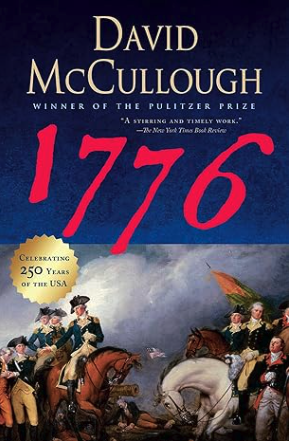
David McCullough published 1776 in 2005, at the height of his authority as America’s most beloved popular historian. He had already won two Pulitzer Prizes – for Truman (1992) and John Adams (2001) – and had become the rare scholar who could pack airport bookstores and university syllabi simultaneously. His voice, warm and unhurried, had narrated Ken Burns documentaries and presidential inaugurations. America trusted him.
That trust matters here, because McCullough was doing something quietly audacious with 1776. He was not writing a triumphalist narrative about destiny or providence. He was writing about failure, incompetence, luck, and the terrifying contingency of historical outcomes. He was writing, in other words, about how close everything came to not happening at all.
McCullough spent years in British archives alongside American ones, a methodological choice that shapes every page. The enemy in 1776 is not a cartoon villain. The British commanders – Howe, Cornwallis, the Hessian officers – emerge as intelligent, often reluctant professionals caught in their own institutional webs. This bilateral perspective was, in 2005, still somewhat unusual in popular American history. It remains one of the book’s most under appreciated gifts.
The Core Argument: Improbability as Revelation
The central interpretation 1776 offers is deceptively simple: the American Revolution did not succeed because it was inevitable or divinely ordained. It succeeded because of a staggering accumulation of human will applied at the precise moments when will was all that remained.
McCullough is not making a mystical argument. He is making a human one. Washington, in his telling, was not a marble demigod. He was a man who made catastrophic tactical errors – most notably the nearly fatal decision to defend New York against a vastly superior force – and who possessed the rarer, more complicated virtue of refusing to accept the conclusions those errors implied. The argument running underneath the entire narrative is that character, not genius, saved the revolution.
This plays out most powerfully in McCullough’s portrait of the retreat from Brooklyn Heights in August 1776, when Washington evacuated nine thousand men across the East River in a single night without the British discovering the operation until it was complete. There was fog. There were fishermen from Marblehead, Massachusetts who knew how to handle boats in the dark. There was luck. But there was also a commander who had decided, simply, not to quit – and soldiers who had decided the same.
As McCullough writes of Washington in these desperate months: “He was not a brilliant strategist or tactician, not a gifted orator, not an intellectual. At several crucial moments he had shown very poor judgment. But he had courage… He had a gift for inspiring loyalty in others, for evoking that most human of needs, the desire to measure up.”
That is the book’s thesis distilled to a sentence. The revolution was built not on brilliance but on the desire to measure up.
Passages That Stay With You
McCullough has a cinematographer’s eye. He renders the physical reality of 1776 – the cold, the mud, the stench of dysentery in the camps, the sound of British artillery – with a precision that never tips into gratuitous suffering. The horror is present but purposeful.
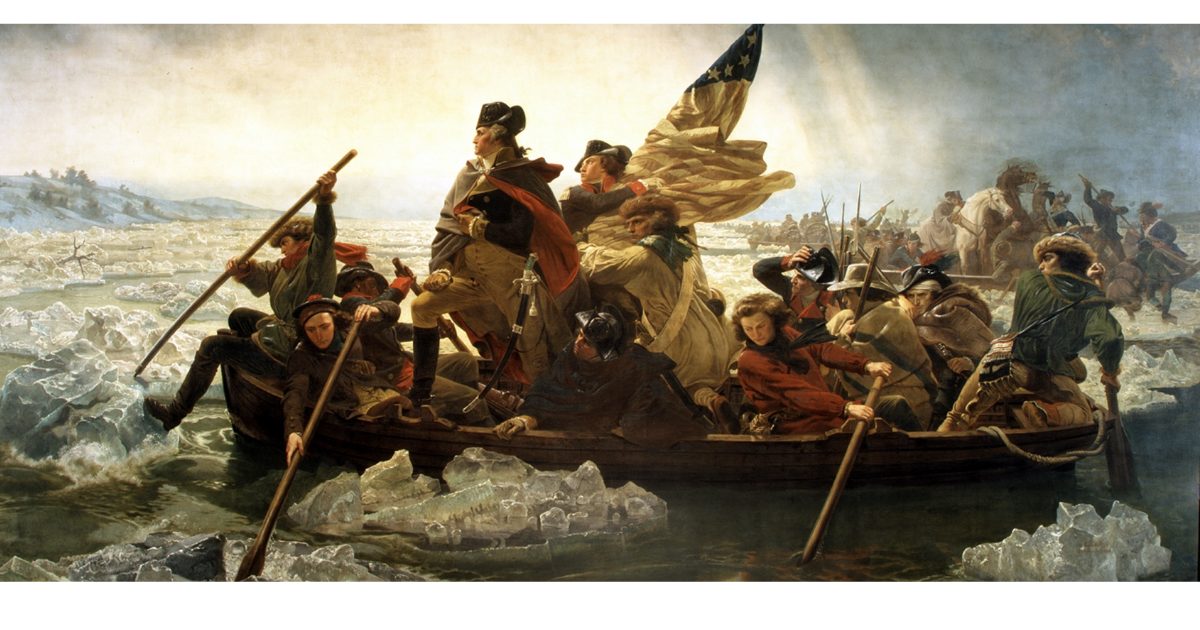
His account of the crossing of the Delaware on Christmas night, 1776 – history’s most famous boat ride, already mythologized beyond recognition by the time he wrote – is stripped of its theatrical gloss and returned to raw human ordeal. Men were soaking wet. The ice floes were dangerous. The operation was hours behind schedule. Colonel Henry Knox, the former Boston bookseller turned artillery commander, was bellowing orders from the riverbank in the freezing dark.
When Washington’s force finally reaches Trenton and routs the sleeping Hessian garrison, the victory reads not as destiny fulfilled but as the last, desperate, utterly improbable roll of a die that had every reason to come up wrong.
McCullough is equally vivid on the British side. His portrait of General William Howe – talented, cautious, perhaps deliberately slow in finishing off the rebels, perhaps still hoping for reconciliation – introduces the reader to one of history’s great counterfactuals. If Howe had pressed harder at Brooklyn, at Manhattan, in New Jersey, there is no further story to tell. That he did not is one of the accidents upon which the modern world rests.
In Dialogue with the Series
1776 arrives in this reading series after we have spent months in the literature of colonial struggle: the grinding institutional violence of plantation economies, the bureaucratic cruelties of imperial administration, the way ordinary people made sense of, and made space within, systems designed to diminish them.
Place 1776 beside Bernard Bailyn’s The Ideological Origins of the American Revolution and the contrast is immediate and instructive. Bailyn, working from pamphlets and broadsides rather than battle dispatches, argued that the revolution was first and foremost an ideological event – that colonists had constructed, from English Whig thought and radical dissenting tradition, a coherent and genuinely fearful worldview in which British policy looked like a deliberate conspiracy against liberty. Where Bailyn’s revolutionaries are intellectuals and polemicists, driven by ideas about power and corruption, McCullough’s are soldiers and commanders, driven by cold and exhaustion and the immediate problem of staying alive. Together the two books form a kind of stereoscope: Bailyn shows us why the revolution had to happen; McCullough shows us how it almost didn’t. Neither is fully comprehensible without the other.
The dialogue with Robert Middlekauff’s The Glorious Cause – the Oxford History of the United States volume covering the entire revolutionary war – is more of a scholarly conversation between neighbors. Middlekauff covers much of the same military terrain as McCullough, but at greater length and with a scholar’s attention to contingency across the whole arc of the conflict rather than a single pivotal year. Where Middlekauff is comprehensive, McCullough is concentrated. The trade-off is intensity: 1776 achieves a novelistic immediacy that no survey volume can sustain, but readers who finish it hungry for the larger strategic picture will find Middlekauff an essential next step. Notably, Middlekauff is considerably more attentive than McCullough to the experiences of ordinary soldiers — the rank and file whose motivations, suffering, and occasional mutinies shaped the war as surely as any general’s decision.
What We’ve Learned Since 2005
McCullough published 1776 before the wave of new scholarship that has substantially revised our picture of the revolutionary moment. In the two decades since, historians have deepened and complicated the story in several crucial directions.
The contribution of free and enslaved Black soldiers to the Continental Army – approximately five thousand men – has received far more rigorous attention than McCullough provides. Historians like Gary Nash and Alan Gilbert have documented how the revolution’s ideological commitments created, for a brief moment, genuine opportunities for Black men in the Continental ranks, opportunities the new republic would spend decades systematically closing.
Similarly, the role of Native American nations in the conflict – most siding with the British, some with the Americans, all navigating a catastrophe that the revolution’s outcome would accelerate – is largely invisible in 1776. The military history McCullough tells is real and important. But the full theater of the war was substantially wider than the Atlantic Seaboard campaigns he chronicles.
None of this diminishes 1776. It contextualizes it. McCullough was writing popular military history at a moment when that genre had particular constraints and conventions. He worked within them with exceptional craft. The corrections the last twenty years of scholarship offer are, in many ways, a tribute to the questions his work helped a broad audience learn to ask.
Why Read This in 2026
Here is what 1776 gives a reader in 2026 that cannot be easily found elsewhere: permission to take seriously the difficulty of the thing.
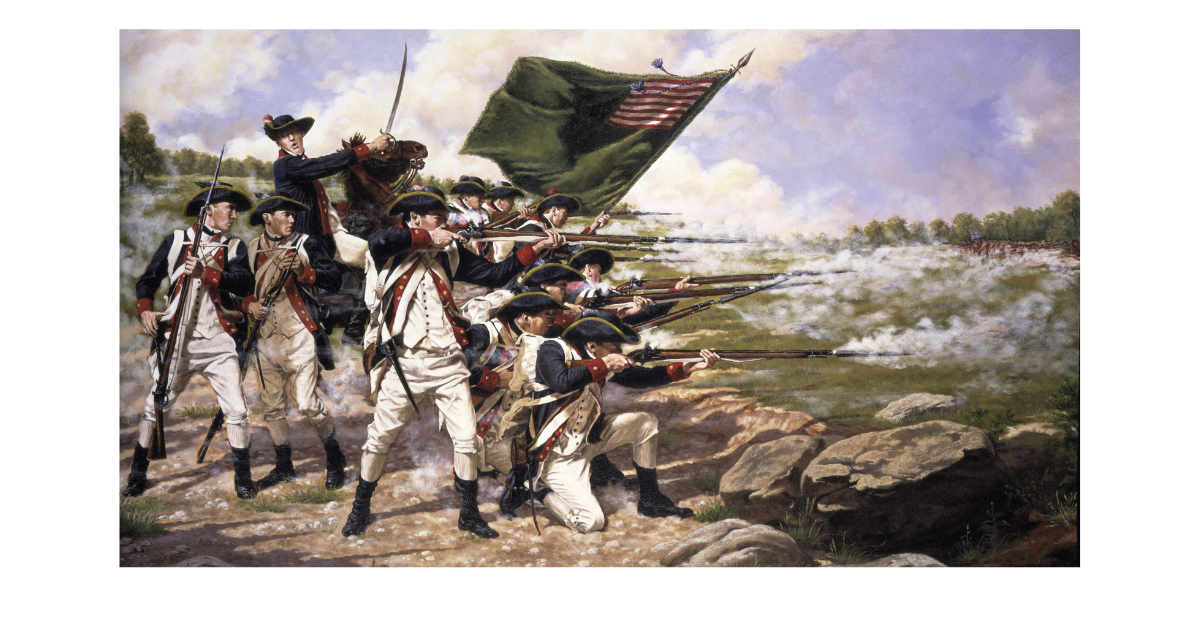
We live in an era saturated by both uncritical celebration of the founders and by equally uncritical dismissal of them. 1776 offers something harder to sustain – genuine attention to people trying to do something that had almost no precedent, under conditions of extreme adversity, without certainty that it would work, without knowing they would be remembered.
Washington, Knox, Nathanael Greene – the men at the center of this book – were making it up as they went. They were scared. They were sometimes wrong. They persisted anyway, not because history had written their victory in advance, but because the alternative was to stop.
That is not a comfortable message for a revolutionary moment. It is an honest one.
The colonial struggle for independence, which this series has examined through economic, social, and cultural lenses, had a military dimension that required ordinary people to stake their lives on outcomes that were genuinely uncertain. 1776 makes that uncertainty visceral. It reminds us that the world we inherited was not a foregone conclusion. It was a choice, made badly and imperfectly and sometimes heroically, by people who did not know how it would end.
In a year when the meaning of democratic self-governance is again, and urgently, in question, that reminder is not nostalgia. It is instruction.
A Note on This Series
This journey through Revolutionary history is as much about the evolution of historical understanding as the Revolution itself. History isn’t static – each generation reinterprets the past through its own concerns, asking different questions and prioritizing different sources. By reading these books in dialogue across 250 years, we’ll witness how scholarship evolves, how narratives get challenged, and how forgotten stories resurface.
This isn’t about declaring one interpretation “right” and another “wrong,” but appreciating the richness that emerges when multiple perspectives illuminate the same transformative moment. These books won’t provide definitive answers – history rarely does – but they equip us to think more clearly about how real people facing genuine uncertainty chose independence, how ideas had consequences, and how the work of creating a more perfect union continues. As we mark this anniversary, we honor the Revolutionary generation by reading deeply, thinking critically, and engaging seriously with both the brilliance and blind spots of what they created.

 27gen.com