It’s Hard to Go Wrong When You Follow the Advice of Dr. Seuss

One of my greatest passions is reading.

I developed this passion at an early age, and have continued to strengthen it over the years. In addition to being my passion, reading is also an important part of my role as Vision Room Curator at Auxano. In that role, I am responsible for publishing SUMS Remix every two weeks. SUMS Remix is a modified book summary in which I develop a solution to a common problem faced by church leaders from 3 different books. So, preparing SUMS Remix in 2018 alone means I have gone through over 100 leadership and organization development books to arrive at the 79 used in producing 26 issues this year.

Other parts of my role requires reading current trends books, used for social media posting and content writing.

Then there’s my passion area of Guest Experience, in which I am constantly researching customer service books for application for churches. I’m building The Essential Guest Experience Library.

And, as many readers know, I am a Disney Fanatic – which extends to building a Disney library, currently over 400 volumes and growing!

Finally, there’s just the pure pleasure of reading – an almost nightly hour or two in the late evening reading a wide range of books, both brand new and classics, fiction and nonfiction.

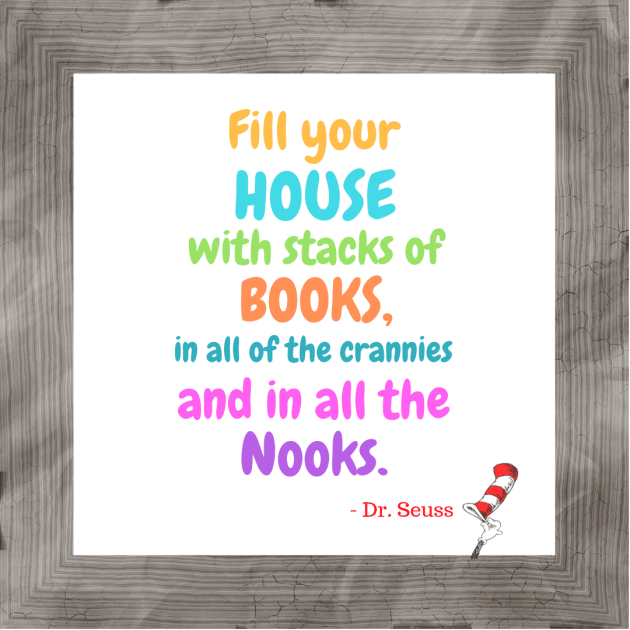
Add those 5 categories all together, and by the end of 2018 I will have “read” 191 books, pretty much following the advice of Dr. Seuss:
First, a disclaimer: I did not read all 191 cover to cover. With such an immense (and pleasurable) task in front of me, and knowing there is more to my job than reading, I have to resort to some method of finding out what an author is trying to say without reading the whole book. There’s a few dozen of that total in which I only read the “highlights,” following the methods below.

Here’s how I did it – and, of course it starts with a book!

How to Read a Book

Literally – that’s the name of a classic book by Mortimer Adler.  The first lesson of reading is to learn that you don’t need to “read” each book the same way. Here are Adler’s 4 levels of reading:

  • Elementary Reading – What does the book say?
  • Inspectional Reading – What is the book about?
  • Analytical Reading – What does the book mean?
  • Syntopical Reading – What does a comparison of books on the subject reveal?

Some books are only meant to be read at the first level; others are meant to be digested at some of the other levels. Know which is which!

To get the most out of a book in the least amount of time, try this strategy:

  • Read the title.
  • Read the introduction
  • Read the Table of Contents
  • Flip through the material, scanning the chapter titles and subheadings. Note the words that stand out as bold, different colors, underlined, or italicized.
  • Examine the illustrations, captions, charts and diagrams. Read the pull-quotes and sidebars.
  • Scan through the index looking for buzz words that interest you.
  • Read the first chapter.
  • Flip through the book and read the first sentence of each paragraph in each chapter. In a well written and edited book, the most important sentence containing the topic is usually the first sentence of the paragraph — but not always.
  • Read the last chapter. If there is an executive summary, read it.
  • Read any other information on the cover or dust jacket.

If the book captures your attention after doing the above tasks, then by all means dive right in!

The converse is true: if a book doesn’t capture your attention after a few attempts, stop reading it. Pick out another one on the topic – there are always more waiting for you!

With that caveat in mind, my “cover-to-cover” reading for 2018 was 127 books.

For the curious, like picking your favorite child (I have four), I don’t typically make a “Best of” list for the year. I find some value in almost every book I read, and for me, that’s good enough.

While the knowledge gained from reading is important, the real benefit is from the habit of reading. When you are continually reading, you condition your mind to keep taking in new knowledge. Your thinking remains fresh and sharp. Your brain is always churning on new ideas, looking for new connections it can make. Every day you pour in more ideas, which your brain must find a way to integrate into your existing knowledge base. Frequent reading fires up your neural activity, even during the periods when you aren’t reading.

Reading is a gift that you can unselfishly give yourself, one that truly keeps on giving. Why don’t you bless yourself and those around you by reading a new book in the first weeks of 2019, and sharing its wisdom with others?

Me? Well, I’m visiting one of my favorite bookstores tomorrow, I’ve got three books lined up for delivery via Amazon by the end of next week, and I’m headed to the library today to pick up another couple on reserve.

After all, you can’t read all day…

…if you don’t start in the morning!


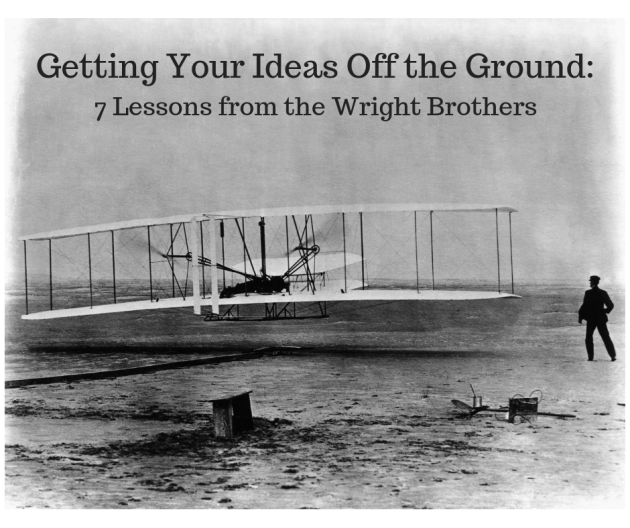
Getting Your Ideas Off the Ground: 7 Lessons from the Wright Brothers

On December 17, 1903, near Kitty Hawk, North Carolina, the Wright Flyer became generally accepted as the first powered, heavier-than-air machine to achieve controlled, sustained flight with a pilot aboard. 

Looking back over these 115 years from a personal viewpoint:

  • In 1903, my grandmother was 5 years old.
  • In 1953, my parents were married.
  • In 2003, the second of my four children began college.
  • Today, in 2018, all 14 of my immediate family have traveled by airplane. My Air Force grandkids, even at 5 and 8, have more frequent flyer miles than I do.

In the lifetime of my extended family, “flying” has come from non-existent to a routine afterthought.

The principles of flying even extend beyond our earth, to travel in space.

How did two men, in 1903, working essentially alone and with little formal scientific training, solve a problem so complex and demanding as heavier-than-air flight, which had defied better-known experimenters for centuries?

Certainly the brothers were talented, but the true answer also lies in their background and early experiences.

With no education beyond public schools, how did the the Wright brothers get past numerous obstacles the world’s other scientists hadn’t even begun to tackle?

In 2003, on the 100th anniversary of the first flight, Mark Eppler published The Wright Way, defining seven essential problem-solving principles the brothers used in accomplishing this enormous feat.

  • A passion for knowledge and information
  • An ability to argue through tough issues in search of truth
  • An ability to identify the hardest part of a problem, and the discipline to begin there
  • A talent for tactile and conceptual tinkering
  • An ability to conceptualize new (often radical) ideas, and the courage to consider them
  • A penchant for method and meticulous attention to detail
  • An ability to create infinitely more together than they could by themselves

On today’s 115th anniversary of the flight at Kitty Hawk, leaders should look at the above list and apply them to problems they are facing.

Applying these principles might just help you get your ideas “off the ground.”

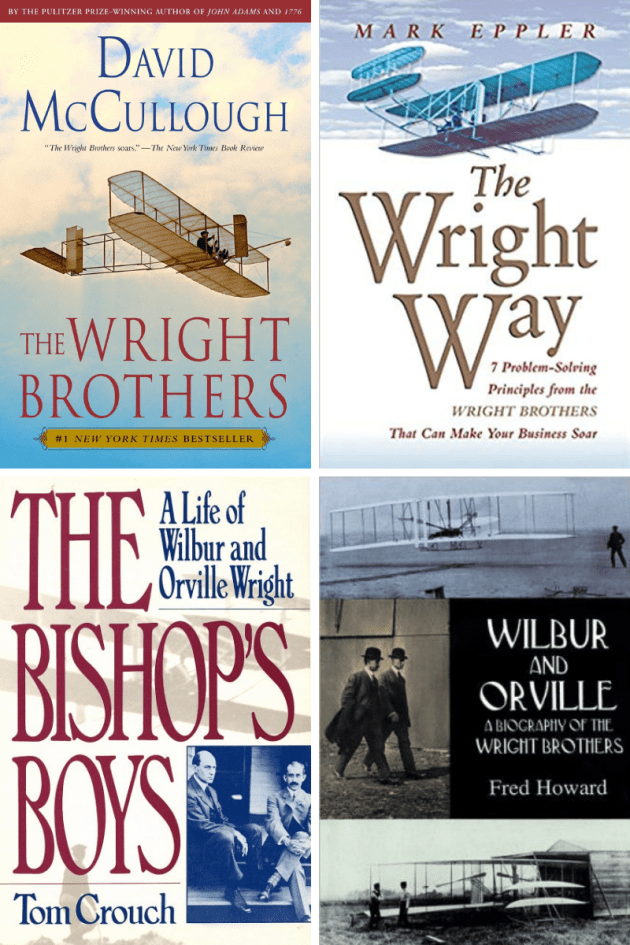
For additional information about the fascinating story of the Wright Brothers, here are four great books I recommend:


How to Communicate with Intentionality by Clarifying Your Message

“Scrambling to keep up and looking for ways to get their message heard, churches are creating more videos, designing more logos, printing more inserts, sending more emails, launching new apps and websites, posting more social media updates, and trying to write lots of captivating content.”

“Here’s what happens. The people they are trying to reach move further away just to survive the onslaught.”

The above paragraphs resonate from the introductory pages of Kem Meyer’s book “Less Chaos. Less Noise.” These words become a powerful reminder that today’s church faces a culture in which the difficulty of connecting with people has become an ever-changing proposition.

Every day, your church stewards thousands of moments of truth. Every time a member talks to a neighbor, someone drives by the church facility, a ministry e-mail goes out, a pastor’s business card is left on a desk, some interaction on behalf of the church has transpired. Every time these events happen, the church’s vision glows brighter or dims in the tiniest little increments.

The visionary leader cares too much about the message to let it just blow in the wind, unattended. Church leaders must be bold and relevant as they integrate vision into the all aspects of church communication. This can happen only with a tremendous amount of intentionality in the complex discipline of church communications.


THE QUICK SUMMARY – Building a StoryBrand by Donald Miller

Donald Miller’s StoryBrand process is a proven solution to the struggle business leaders face when talking about their businesses. This revolutionary method for connecting with customers provides readers with the ultimate competitive advantage, revealing the secret for helping their customers understand the compelling benefits of using their products, ideas, or services.

Building a StoryBrand does this by teaching readers the seven universal story points all humans respond to; the real reason customers make purchases; how to simplify a brand message so people understand it; and how to create the most effective messaging for websites, brochures, and social media.

Whether you are the marketing director of a multibillion dollar company, the owner of a small business, a politician running for office, or the lead singer of a rock band, Building a StoryBrand will forever transform the way you talk about who you are, what you do, and the unique value you bring to your customers.

A SIMPLE SOLUTION – Clarify your message

What is clarity really about? A synthesis of definitions brings clarity to the concept of clarity: it means being free from anything that obscures, blocks, pollutes, or darkens.

Being clear as a leader means being simple, understandable, and exact.

The leader helps others see and understand reality better. Leaders constantly bring the most important things to light: current reality and future possibility, what God says about it, and what we need to do about it.

Unfortunately, there is often a gap between the leader’s words and how followers receive the leader’s words. Like a dropped cell call, this is caused by various sources of disconnection and static between people, even if the leader is communicating clearly.

Like the bars that indicate signal strength on a cell phone, every leader has signal strength levels that distinguish perceiving, thinking, and communicating with others.

The effective leader must spend extra time bridging the gaps by practicing clarity with words.

Words sell things. And if we haven’t clarified our message, our customers won’t listen.

Nobody will listen to you if your message isn’t clear, no matter how expensive your marketing material may be.

Your customers have questions burning inside them, and if we aren’t answering those questions, they’ll move on to another brand. If we haven’t identified what our customer wants, what problem we are helping them solve, and what life will look like after they engage our products and services, we can forget about thriving.

What we think we are saying to our customers and what our customers actually hear are two different things. And customers make buying decisions not based on what we say but on what they hear.

We need a filter to minimize the noise. The essence of branding is to create simple, relevant messages we can repeat over and over so that we “brand” ourselves into the public consciousness.

Donald Miller, Building a StoryBrand

A NEXT STEP

Stories move us. They engage us. They inspire us. Stories give us examples of how to act – and how not to act. The best ones stay with us forever.

To clarify your message using stories, it will be helpful to follow the formula that author Donald Miller uses in his book Building a StoryBrand. Purchasers of the book will receive free access to an online tool, the StoryBrand BrandScript.

While you will not be able to use the powerful techniques in this brief overview, you can at least get an idea of how those techniques might be used in your setting.

Here is an overview:

Nearly every story you see or hear can be outlined as: A CHARACTER who wants something encounters a PROBLEM before they can get it. At the peak of their despair, a GUIDE steps into their lives, gives them a PLAN, and CALLS THEM TO ACTION. That action helps them avoid FAILURE and ends in SUCCESS.

In a team discussion, write the key words from the above statement down the left side of a chart tablet.

  • Character
  • Problem
  • Guide
  • Plan
  • Calls them to action
  • Failure
  • Success

Brainstorm the successful transformation you’re helping the average church member achieve by writing out ideas for each of the categories listed.

Discuss among your team how you can use the StoryBrand principles to clarify your church’s message through the telling of stories.

Every human being is already speaking the language of story, so when you begin using a story framework, you’ll finally be speaking their language.

Excerpt taken from SUMS Remix 81-1, issued December 2017.


Part of a weekly series on 27gen, entitled Wednesday Weekly Reader

Regular daily reading of books is an important part of my life. It even extends to my vocation, where as Vision Room Curator for Auxano I am responsible for publishing SUMS Remix, a biweekly book “excerpt” for church leaders. Each Wednesday on 27gen I will be taking a look back at previous issues of SUMS Remix and publishing an excerpt.

> >Purchase SUMS Remix here<<