
Today kicks off an annual tradition: taking a look at why reading is important for leaders, hearing from leaders on reading, and announcing my version of the best books of 2012.
And there’s no better way to start it off with a little make that a lot of Seth Godin…
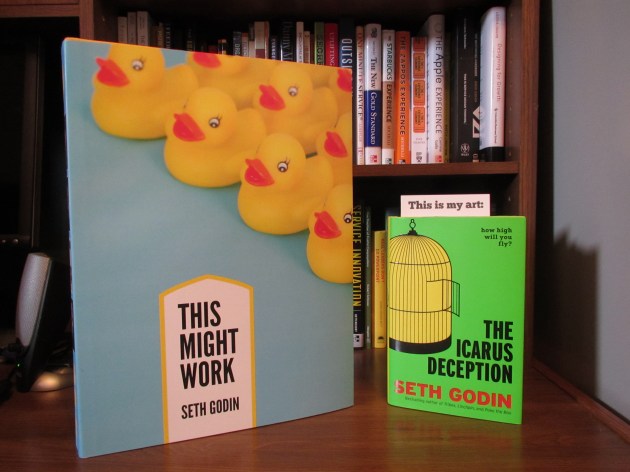
Yesterday I met our mailman at the door with a not too happy look on his face. In addition to the increased volume of holiday mail, he was straining to carry a large, heavy box – one I have been anticipating since mid-summer:
Seth Godin’s latest work, This Might Work, is a huge behemoth of a book weighing in at 15.4 pounds and measuring 15x11x3 inches. It contains Seth’s incomparable blog posts from 2006-2012, curated by his most avid follower, Bernadette Jiwa. Jiwa is an Australian writer and Seth’s only choice to undertake this Herculean task.
She succeeded.
Here is her choice for the opening page, from Seth’s blog on May 20, 2004:
Five years from now…
Assume that:
Hard drive space is free
Wifi like connections are everywhere
Connections speeds are 10 to 100 times faster
Everyone has a digital camera
Everyone carries a device that is sort of like a laptop, but cheap and tiny
The number of new products introduced every day is five times greater than now
Wal-Mart’s sales are three times as big
Any manufactured product that’s more than five years old in design sells at commodity pricing
The retirement age will be five years higher than it is now
Your current profession will either be gone or totally different
What then?
Classic Seth Godin…
Also in the package was Seth’s latest normal book, The Icarus Deception, due out on 12/31. Continuing with the theme he first introduced in Linchpin, Godin shows how we can thrive in an economy that rewards art, not compliance. He explains why true innovators focus on trust, remarkability, leadership, and stories that spread. And he makes a passionate argument for why you should be treating your work as art. A review will be coming soon!
In a few sentences above, this is why leaders read..
And why you should, too.
Next: Thomas Edison on Reading
 27gen.com