Are You a “Rested” Leader?

In our fast-paced, get-it-done-now culture, the fact is that almost everyone on your team could use some help in increasing their personal productivity. This pace has only been accelerating because of the COVID-19 pandemic and the resulting changes in our lives.

The very nature of ministry often makes the “I’ve gotten something done today” feeling elusive. For many church leaders, there are no edges to their work – it’s not easy to tell when the work is finished, because it really never is. Most of your team have at least half a dozen things they are trying to achieve right now – today! And a pastoral need could arise at any moment to make that to-do list completely irrelevant.

Is it possible that our productivity could actually be increased by first slowing down?

THE QUICK SUMMARY – Every Day Matters: A Biblical Approach to Productivity by Brandon D. Crow

True productivity is less about getting things done; it is more concerned with stewarding priorities, time, and resources wisely and faithfully in a way that honors God. In Every Day Matters Brandon Crowe provides an accessible and biblical understanding of productivity filled with practical guidance and examples.

Crowe draws insights from wisdom literature and the life and teaching of the Apostle Paul to reclaim a biblical perspective on productivity. He shows the implications for matters such as setting priorities and goals, achieving rhythms of work and rest, caring for family, maintaining spiritual disciplines, sustaining energy, and engaging wisely with social media and entertainment.

A SIMPLE SOLUTION

In the book of Genesis, we find the description of a seven-day week. On the first six of these days, God works. He begins by creating the universe, and as the week progresses, culminates His work of creation with man and woman.

As God’s week progressed, things got more complicated. After each of the first five days, God said, “Good.” After the pinnacle of his creation – Adam and Eve – God said, “Very good.”

But on the seventh day, God created the Sabbath, and whispered, “Holy.”

Up until this point, everything had been created out of nothing, but on the morning of the seventh day, God makes nothing out of something. Rest is brought into being.

The word Sabbath means “cease from working.” Resting one day a week by any name is holy – the point is to stop on that day and look for God.

Could it be that if we want to be our best, to be productive, we must do so from a day of rest?

To maintain an effective, productive lifestyle, you need rhythms of rest built into your schedule. Instead of working longer hours each day, you should aim to maximize your time devoted to working so that you have time to recover before the next day.

Brandon D. Crowe

Rest

One of the great productivity myths is that you can accomplish more by working longer hours and cutting back on sleep. But sleep cannot be cheated. You need various kinds of rest:

  • You need to get enough sleep each night.
  • You need breaks while you are working.
  • You need a weekly day of rest.
  • It’s wise to take time for an extended period of rest on a yearly basis – a vacation.

Refresh

In addition to sleep, you need recreation of down time in order to be refreshed. Not all rest, in other words, has to be sleeping. Sometimes resting from work means being alive in other ways. You need things to do when you’re not working that bring enjoyment, which ends up funneling into increased productivity when you are working. These are ways to decompress and unwind.

Despite your best intentions, you will not succeed in staying focused each day. You will fail. You will get distracted. Every day matters, but you will not be at your best every day. Do not be discouraged; each day is a new day, and each day is a new opportunity to move forward.

Repent

You should repent daily from your sins. This is not simply a matter of productivity, but a matter of pleasing God. You should constantly be examining your life to consider where you have sinned, and where you have sinned, you should repent and ask God to forgive you. A consistent review process will give you an opportunity to recognize and address negative habits.

Resolve

You also need to consistently renew your commitment to the most important things. Resolve to grow each day. As you identify areas that need improvement, recommit yourself anew each day to your vision and priorities. Each day is a new day for you to live by your priorities and do those things you know need to be done.

Brandon D. Crow, Every Day Matters: A Biblical Approach to Productivity

A NEXT STEP 

Author Brand Crowe developed the following action steps in the areas of Rest, Refresh, Repent, and Resolve. Set aside some time before the end of this week to review these, and resolve to begin implementing them next week.

  1. Track your sleep to determine how much sleep you need to function well.
  2. Determine what time you need to get up in the mornings for your personal routine, and resolve to go to bed sufficiently early to allow for your needed levels of sleep.
  3. Put away work related issues after your eventing shut-down rituals.
  4. Write down two to three activities you would like to do to provide refreshment. Begin to pursue these as you have opportunity.
  5. Resolve to take Sunday off from work to focus on worship and others.

Part of a regular series on 27gen, entitled Wednesday Weekly Reader

During my elementary school years one of the things I looked forward to the most was the delivery of “My Weekly Reader,” a weekly educational magazine designed for children and containing news-based, current events.

It became a regular part of my love for reading, and helped develop my curiosity about the world around us.

Along with early and ongoing encouragement from my parents – especially my father – reading was established as a passion in my life that I was happy to continually learn from, share with my children, and watch them share with their children.

Reading keeps our minds alive and growing.

Do You Understand the Nature of YOUR Crisis?

There are few certainties in ministry today. Unfortunately, one of them is the inevitability of a potential crisis occurring in our country, your community or even your church that could have a major effect on your congregation and even your reputation.

A crisis is an event, precipitated by a specific incident, natural or man-made, that attracts critical media attention and lasts for a definite period of time. Certainly, the COVID-19 pandemic qualifies.

But life is full of other types of disruptions, some seemingly minor in nature and others truly of a global scale. In between those two bookends are countless events that require leaders to be at the forefront in communicating to their organizations, the community, and the greater public.

When your church finds itself in the midst of a crisis, the ripple effects can disrupt lives and operations for the foreseeable future if public opinion is not properly addressed and stewarded.

Skillfully managing the perception of the crisis can determine the difference between an organization’s life or death. In the pitched battle between perception and reality, perception always wins.

There is a solution – you can prepare for the inevitable crisis by proactive actions that will help in preempting potential crises or help make them shorter in duration. Finding yourself in a crisis situation is bad; not being prepared when a crisis occurs is devastatingly worse.

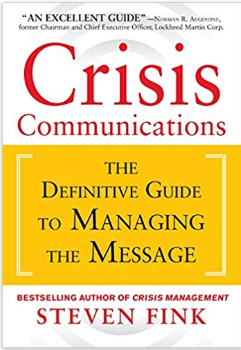
THE QUICK SUMMARY – Crisis Communications: The Definitive Guide to Managing the Message by Steven Fink

Skillfully managing the perception of the crisis determines the difference between a company’s life or death. Because in the pitched battle between perception and reality, perception always wins.

The inevitability of a crisis having a potentially major effect on your business and your reputation – at some point – is almost a guarantee. When your company finds itself in the midst of a crisis, the ripple effects can disrupt lives and business for the foreseeable future if public opinion is not properly shaped and managed.

Fortunately, there is a solution. Crisis communications and crisis management legend Steven Fink gives you everything you need to prepare for the inevitable—whether it’s in the form of human error, industrial accidents, criminal behavior, or natural disasters.

In this groundbreaking guide, Fink provides a complete toolkit for ensuring smooth communications and lasting business success through any crisis. Crisis Communications offers proactive and preventive methods for preempting potential crises. The book reveals proven strategies for recognizing and averting damaging crisis communications issues before it’s too late. The book also offers ways to deal with mainstream and social media, use them to your advantage, and neutralize and turn around a hostile media environment.

A SIMPLE SOLUTION

According to author Steven Fink, a good working definition of a crisis is any situation, that if left unattended, has the potential to:

  • Escalate the intensity
  • Damage the reputation or positive public opinion of the organization or its leadership
  • Interfere with the normal operations
  • Fall under close government or media scrutiny
  • Impact the organization’s financial well-being

Using the five-step list above as a pragmatic guide, the responsible leader will realize that what may not qualify as a minor crisis in one situation may actually threaten the existence of the organization in another.

So the question becomes, do you know what YOUR crisis is?

Before you can even begin to think about communicating during a crisis, there are three absolute imperatives that must be undertaken in any crisis situation.

Steven Fink

Identify your crisis

Isolate your crisis

Manage your crisis

IDENTIFY

How hard can it be to identify a crisis when it’s happening to your organization? Actually, it’s harder than you might think. Focus on identifying your crisis – the one with which you have to deal, the one over which you have some measure of control. Try to avoid distracting scenarios, of which there will be many.

In a crisis, especially a crisis with competing interests, the only person who is looking out for your organization’s reputation is you.

ISOLATE

Isolation might very well mean designating a crisis management team to deal exclusively with the crisis, with its members temporarily delegating their normal duties and responsibilities to others for the duration of the crisis. Ideally, this team would be isolated from the rest of the company, and hopefully, keep quiet about its progress until the appropriate time.

MANAGE

If you have properly identified and then successfully isolated the crisis, the actual management of the crisis is the easiest part (assuming you are a good manager to begin with). That’s because you will now be laser-focused on the specific task at hand, and once you’ve cleared away the distracting brush, your mission becomes crystal clear. When that occurs, making vigilant decisions – the epitome of good crisis management – is well within your grasp.

Steven Fink, Crisis Communications: The Definitive Guide to Managing the Message

A NEXT STEP 

While the COVID-19 crisis is certainly on everyone’s mind, it is truly a once-in-a-lifetime event, and “understanding” it in terms of the discussion above is beyond the scope of this exercise.

However, your organization likely has faced a crisis within the last year – a physical event, a natural disaster, or a personnel issue. No matter what the crisis, it was a disruption to your normal activities.

Using a past crisis, have your team walk through the three steps listed above. You are actually doing a post-mortem or after-action report: using a past event, evaluated through a new lens (the three steps above) to help prepare you for the next time you have a crisis.

Taking note of any actions you should have done, but didn’t, develop an action plan to make sure you do it the next time.


Part of a regular series on 27gen, entitled Wednesday Weekly Reader

During my elementary school years one of the things I looked forward to the most was the delivery of “My Weekly Reader,” a weekly educational magazine designed for children and containing news-based, current events.

It became a regular part of my love for reading, and helped develop my curiosity about the world around us.

Along with early and ongoing encouragement from my parents – especially my father – reading was established as a passion in my life that I was happy to continually learn from, share with my children, and watch them share with their children.

Reading keeps our minds alive and growing.

Leaders of Remote Teams Must Learn to Protect the Overachievers

Your team has probably been working remotely for a year or more now, and even as the country moves into fast-forward about “opening up”, it’s likely that remote work will continue in some form for the foreseeable future.

What may have been quick emergency actions like having the basic tools and defining remote processes is now moving toward a new normal.

To make it through the current crisis and return to that new normal, you and your team will need to be resilient. The good news is that leaders can help create the conditions that make this possible.

As Bryan Miles, CEO and cofounder of BELAY, a leading U.S.-based, virtual solutions company says:

“Productivity comes from people completing their tasks in a timely, professional, adult manner, not from daily attendance in a sea of cubicles and offices.”

How will you lead your team through both this changing tide and new reality?

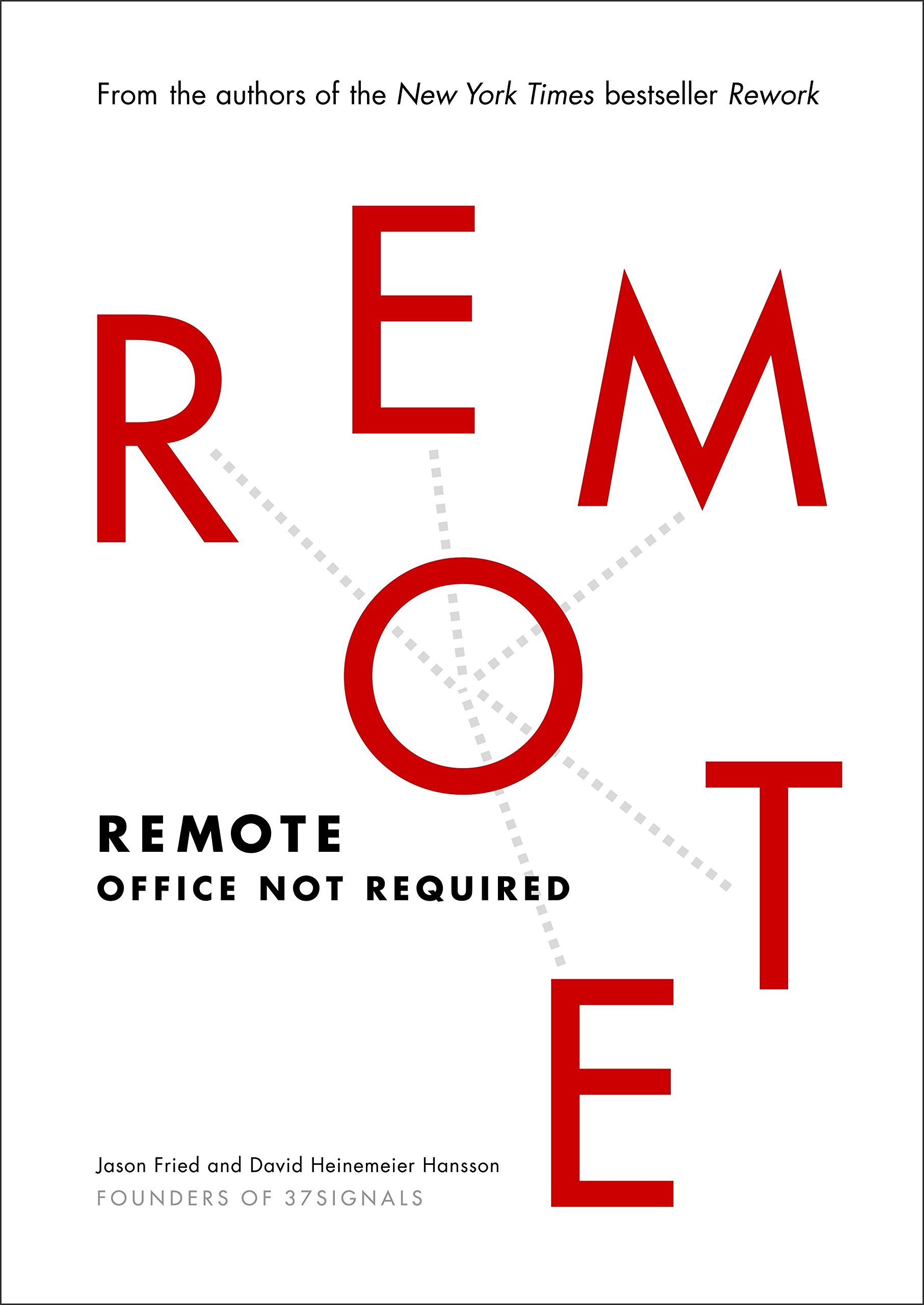
THE QUICK SUMMARYRemote: Office Not Required by Jason Fried and David Heinemeier Hansson

The “work from home” phenomenon is thoroughly explored in this illuminating book from bestselling 37signals founders Fried and Hansson, who point to the surging trend of employees working from home (and anywhere else) and explain the challenges and unexpected benefits. Most important, they show why – with a few controversial exceptions such as Yahoo – more businesses will want to promote this new model of getting things done.

The Industrial Revolution’s “under one roof” model of conducting work is steadily declining owing to technology that is rapidly creating virtual workspaces and allowing workers to provide their vital contribution without physically clustering together. Today, the new paradigm is “move work to the workers, rather than workers to the workplace.” According to Reuters, one in five global workers telecommute frequently and nearly 10 percent work from home every day. Moms in particular will welcome this trend. A full 60% wish they had a flexible work option. But companies see advantages too in the way remote work increases their talent pool, reduces turnover, lessens their real estate footprint, and improves the ability to conduct business across multiple time zones, to name just a few advantages. In Remote, authors Fried and Hansson will convince readers that letting all or part of work teams function remotely is a great idea–and they’re going to show precisely how a remote work setup can be accomplished.


A SIMPLE SOLUTION 

A common belief among managers contemplating remote work teams is the fear that their employees would slack off when out of the office and away from their watchful eyes.

The reality is that remote employees are more likely to overwork than underwork.

The employee who has passion and dedication to their work often has difficulty balancing their work and demands of their private lives when their work is being done in the spaces normally dedicated to private lives.

Leaders of remote teams must be aware of the signs of overwork, and intentionally work to prevent it.

Be on the lookout for overwork, not underwork.

If you’ve read about remote-work failures in the press, you might thing that the major risk in setting our people free is that they’ll turn into lazy, unproductive slackers. In reality, it’s overwork, not underwork, that’s the real enemy in a successful remote working environment.

Working at home and living there means there’s less delineation between the two parts of your life. You’ll have all your files and all your equipment right at hand, so if you come up with an idea at 9pm, you can keep plowing through, even if you already put in more than adequate hours from 7am to 3pm.

The fact is, it’s easy to turn work into your predominate hobby.

If work is all-consuming, the worker is far more likely to burn out. This is true even if the person loves what he does. Perhaps especially if he loves what he does, since it won’t seem like a problem until it’s too late.

It’s everyone’s job to be on the lookout for coworkers who are overworking themselves, but ultimately the responsibility lies with the managers to set the tone.

In the same way that you don’t want a gang of slackers, you also don’t want a band of supermen. The best workers over the long term are people who put in sustainable hours. Not too much, not too little – just right.

Jason Fried and David Heinemeier Hansson, Remote: Office Not Required

A NEXT STEP

As the leader of remote teams, how you practice working remotely will often set the pattern and practice of your team.

Using the following ideas from Work Together Anywhere, evaluate your own remote practices, and then determine how you will share the expectations with your team.

Motivation and Self-Discipline

  • Have a set routine
  • Dress like you’re going to work
  • Work in a space designated for work
  • Set a schedule and stick to it

Productivity

  • Experiment with time- and task-management methodologies and apps
  • Minimize multitasking; instead, focus on one thing at a time
  • Pace yourself to regulate your energy, maximizing your stamina and mental acuity
  • Make sure your workspace aids rather than hinders your productivity

Self-Care

  • Balance stints of productive, focused work with sufficient breaks that include movement.
  • Don’t forget to allow yourself the perks of remote working, like taking a break in your living room, or eating lunch on your patio
  • Combat the risk of loneliness by actively seeking social interaction both in person and online

Communication and Collaboration

  • Adopt a virtual-team mindset by trusting others to deliver the results they committed to while doing the same
  • Practice positive communication by being overtly friendly and assuming positive intent
  • Be reliable, consistent, and transparent: make sure your teammates know what you’re working on and how to reach you, within agreed upon guidelines

As Leaders of Remote Teams, We Need to Prioritize Outcomes, Others, and Ourselves

Your team has probably been working remotely for most of the last year now, and even as discussions about “opening up” begin to become more prevalent, it’s likely that remote work will continue in some form for the foreseeable future.

That’s the question Google is tacking with a new set of policies recently rolled out by the company’s CEO. They center around just three words:

Flexibility and Choice.

What may have been quick emergency actions like having the basic tools and defining remote processes is now moving toward a new normal.

To make it through the current crisis and return to that new normal, you and your team will need to be resilient. The good news is that leaders can help create the conditions that make this possible.

As Bryan Miles, CEO and cofounder of BELAY, a leading U.S.-based, virtual solutions company says:

“Productivity comes from people completing their tasks in a timely, professional, adult manner, not from daily attendance in a sea of cubicles and offices.”

How will you lead your team through both this changing tide and likely new normal?

THE QUICK SUMMARY – The Long-Distance Leader by Kevin Eikenberry and Wayne Turmel

As more organizations adopt a remote workforce, the challenges of leading at a distance become more urgent than ever. The cofounders of the Remote Leadership Institute, Kevin Eikenberry and Wayne Turmel, show leaders how to guide their teams by recalling the foundational principles of leadership.

The authors’ “Three-O” Model refocuses leaders to think about outcomes, others, and ourselves—elements of leadership that remain unchanged, whether employees are down the hall or halfway around the world. By pairing it with the Remote Leadership Model, which emphasizes using technology as a tool and not a distraction, leaders are now able to navigate the terrain of managing teams wherever they are.

Filled with exercises that ensure projects stay on track, keep productivity and morale high, and build lasting relationships, this book is the go-to guide for leading, no matter where people work.

A SIMPLE SOLUTION

Leadership has never been a simple task. Factor in the many complications of leading your team remotely, and it would seem that leadership difficulties have magnified exponentially.

According to author Kevin Eikenberry, “It may have always been lonely at the top, but now we’re literally, physically, by ourselves much of the time.”

Being a Long-Distance Leader may feel radically different from how you’ve led in the past, but the core part is still the same: you are a leader, first. 

Accept the fact that leading remotely requires you to lead differently.

What’s needed is a change in mindset from time-based working to results-based working, which calls for evaluating output rather than hours.

Kevin Eikenberry and Wayne Turmel

There are three areas of focus all leaders must recognize and use to reach their maximum success.  

  • Outcomes—you lead people with the purpose of reaching a desired outcome. 
  • Others—you lead with and through other people to reach those outcomes.
  • Ourselves—you can’t leave yourself out of this model. While leadership is about outcomes and other people, none of that happens without you whether you like it or not.

At the highest level, organizations exist to reach outcomes of one sort or another. As a Long-Distance Leader, this focus on outcomes is, if possible, even more important and can definitely be harder. There are three reasons for this difficulty:  

  • Isolation. When people are working remotely, they are likely alone more of the time, often leading to silos of the smallest nature – people acting as if they are a team of one, and forgetting how their outcomes are part of the larger whole.
  • Lack of environmental cues. Working from a home office or remote location, people do not receive the very clear clues and cues that reinforce the organizational focus.
  • (Potentially) less repetition of messages. Unless leaders consistently, and in a variety of ways, communicate and reiterate the goals and outcomes for the team, people may get lost in their own bubble.

Long-Distance Leaders must also focus on others. Here are seven reasons why: 

  1. You can’t do it alone anyway. Leadership is about the outcomes, but those must be reached through others.
  2. You win when they win. True and lasting victory comes from helping others win, too.
  3. You build trust when you focus on others. Focusing on others and showing them you trust them first will build trust with others.
  4. You build relationships when you focus on others. When you’re interested in, listen to and care about others, you build relationships.
  5. You are more influential when you focus on others. Since we can’t control people, only influence them, our focus on others will help be a positive influence.
  6. Team members are more engaged when you focus on them. People want to work with and for people who they know believe and care about them.
  7. You succeed at everything on “the list” when you focus on others. Whatever your to-do “list” contains, by focusing on others first, achieving that list will be more successful.

The great paradox of leadership is that it isn’t about us at all—as we have just said, fundamentally leadership is about outcomes and other people.

Finally, who you are, what you believe, and how you behave plays a huge role in how effectively you will do the other things. Here are three reasons why Long-Distance Leaders must focus on themselves:

  • Assumptions. You have assumptions about what it means to work remotely. We could give you the statistics that show teleworkers are more productive, but if you don’t believe that, or assume people are multitasking on non-work items while they are at work, you will operate based on that belief rather than the facts.
  • Intention is important, but not enough. Throughout this book we talk about being intentional with nearly everything. Here, though, the challenge lies in the gap between what you want and mean to do, and what you actually do.
  • Making a decision. As a long-distance leader, you will face many choices and have lots of ideas. But none of them will work until you decide to act.

Kevin Eikenberry and Gary Turmel, The Long-Distance Leader

A NEXT STEP 

Use the following questions by author Kevin Eikenberry to honestly evaluate how you are practicing the three “O” principles listed above: Outcomes, Others, and Ourselves.

  • What do you feel are the most important outcomes expected of you as a leader?  
  • How has working remotely impacted those outcomes for you and your people?  
  • What do you feel are the most important ways to focus on others in your organization?  
  • How has working remotely impacted that focus?  
  • How do you see yourself in your role as a leader?  
  • How has leading remotely impacted your beliefs and behaviors?

How to Unwrap the Power of a Beautiful Question

The most important thing business leaders must do today is to be the ‘chief question-asker’ for their organization.

– Dev Patnaik

Patnaik is quick to add, “The first thing most leaders need to realize is, they’re really bad at asking questions.”

A questioning culture is critical because it can help ensure that creativity and fresh, adaptive thinking flows throughout the organization.

By asking questions, we can analyze, learn, and move forward in the face of uncertainty. However, the questions must be the right ones; the ones that cut to the heart of complexity or enable us to see an old problem in a fresh way.

Nothing has such power to cause a complete mental turnaround as that of a question. Questions spark curiosity, curiosity creates ideas, and ideas lead to making things better.

Questions are powerful means to employ (read unleash) creative potential – potential that would otherwise go untapped and undiscovered.

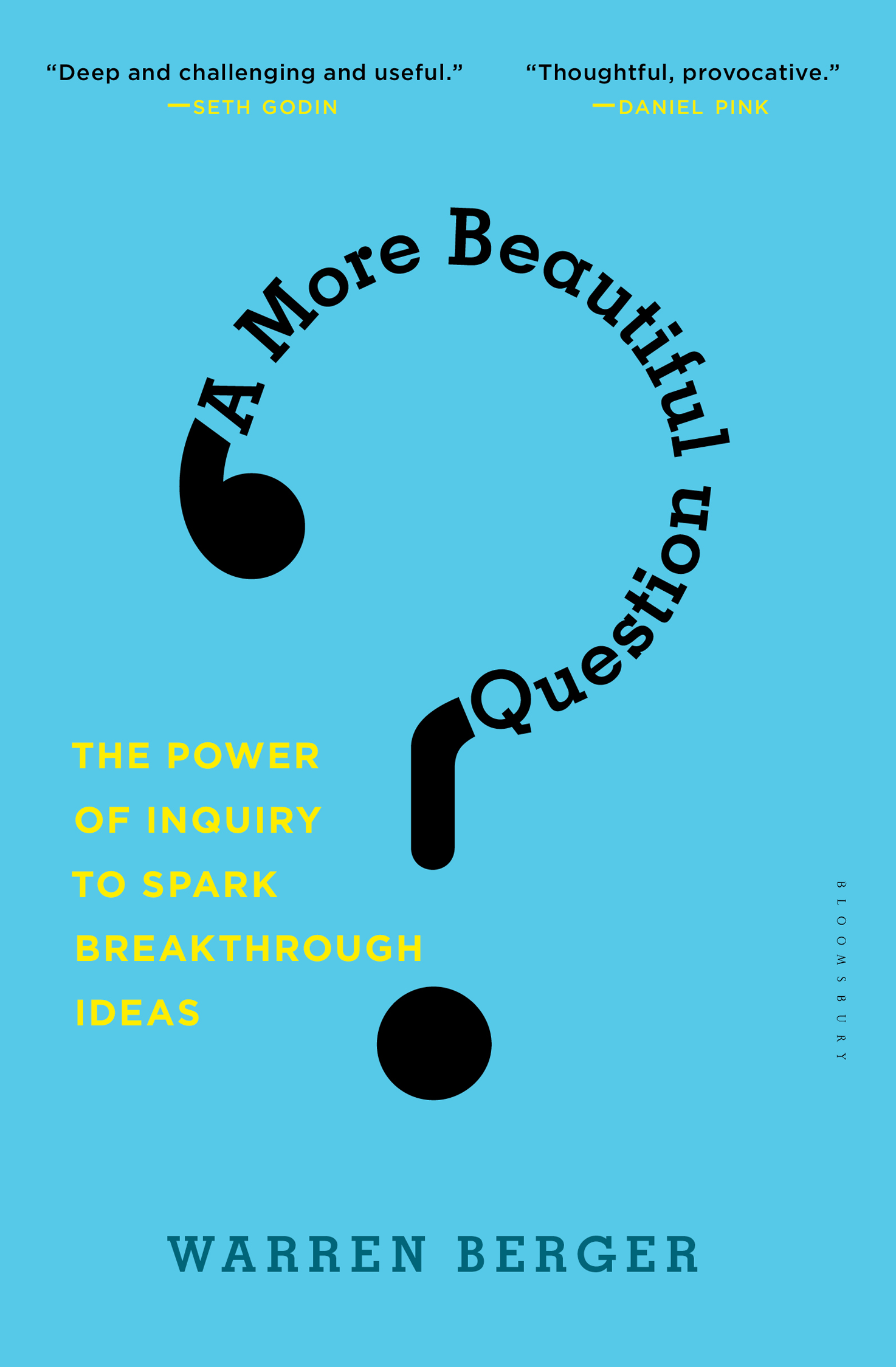
 THE QUICK SUMMARY – A More Beautiful Question: The Power of Inquiry to Spark Breakthrough Ideas by Warren Berger

In this groundbreaking book, journalist and innovation expert Warren Berger shows that one of the most powerful forces for igniting change in business and in our daily lives is a simple, under-appreciated tool–one that has been available to us since childhood. Questioningdeeply, imaginatively, “beautifully”–can help us identify and solve problems, come up with game-changing ideas, and pursue fresh opportunities. So why are we often reluctant to ask “Why?”

Berger’s surprising findings reveal that even though children start out asking hundreds of questions a day, questioning “falls off a cliff” as kids enter school. In an education and business culture devised to reward rote answers over challenging inquiry, questioning isn’t encouraged–and, in fact, is sometimes barely tolerated.

And yet, as Berger shows, the most creative, successful people tend to be expert questioners. They’ve mastered the art of inquiry, raising questions no one else is asking–and finding powerful answers. The author takes us inside red-hot businesses like Google, Netflix, IDEO, and Airbnb to show how questioning is baked into their organizational DNA. He also shares inspiring stories of artists, teachers, entrepreneurs, basement tinkerers, and social activists who changed their lives and the world around them–by starting with a “beautiful question.”


A SIMPLE SOLUTION 

With the constant change we face today, we may be forced to spend less time on autopilot, more time in questioning mode—attempting to adapt, looking to re-create careers, redefining old ideas about living, working, and retiring, reexamining priorities, seeking new ways to be creative, or to solve various problems in our own lives or the lives of others.

When we want to shake things up and instigate change, it’s necessary to break free of familiar thought patterns and easy assumptions.

We need to learn to ask beautiful questions.

A beautiful question is an ambitious yet actionable question that can begin to shift the way we perceive or think about something—and that might serve as a catalyst to bring about change.

The nonprofit sector, like much of industry, is inclined to keep doing what it has done—hence, well-meaning people are often trying to solve a problem by answering the wrong question.

People tend to approach and work through problems – processing from becoming aware of and understanding the problem, to thinking of possible solutions, to trying to enact those solutions. Each stage of the problem solving process has distinct challenges and issues—requiring a different mind-set, along with different types of questions. Expertise is helpful at certain points, not so helpful at others; wide-open, unfettered divergent thinking is critical at one stage, discipline and focus is called for at another. By thinking of questioning and problem solving in a more structured way, we can remind ourselves to shift approaches, change tools, and adjust our questions according to which stage we’re entering.

The Why stage has to do with seeing and understanding. The “seeing” part of that might seem easy – just open your eyes and look around, right? Not really. To ask powerful Why questions, we must:   

Step back.

Notice what others miss.

Challenge assumptions (including our own). 

Gain a deeper understanding of the situation or problem at hand, through contextual inquiry. 

Question the questions we’re asking. 

Take ownership of a particular question.

The What If stage is the blue-sky moment of questioning, when anything is possible. Those possibilities may not survive the more practical How Stage; but t’s critical to innovation that there be a time for wild, improbable ideas to surface and to inspire. If the word why has a penetrative power, enabling the questioner to get past assumptions and dig deep into problems, the words what if have a more expansive effect – allowing us to think without limits or constraints, firing the imagination.

The How stage of questions is where the rubber meets the road. It’s the point at which things come together and then, more often than not, fall apart, repeatedly. Reality intrudes and nothing goes quite as planned. to say it’s the hard part of questioning is not to suggest it’s easy to challenge assumptions by asking Why, or to envision new possibilities by asking What If. Those require difficult backward steps and leaps of imagination. But How tends to be more of a slow and difficult march, marked by failures that are alley to be beneficial – but don’t necessarily seem that way at the time.

Warren Berger, A More Beautiful Question: The Power of Inquiry to Spark Breakthrough Ideas

A NEXT STEP

According to author Warren Berger, when it comes to questioning, companies are like people: They start out doing it, then gradually do it less and less. A hierarchy forms, a methodology is established, and rules are set; after that, what is there to question?

In A More Beautiful Question, Berger lists a series of questions from consultant Keith Yamashita that leaders should consider. To arrive at a powerful sense of purpose, Yamashita says, organizations today need “a fundamental orientation that is outward looking”—so they can understand what people out there in the world desire and need, and what’s standing in the way. At the same time, leaders also must look inward, to clarify their core values and larger ambitions.

At a future team meeting, ask the following questions, and record all answers.

  • How is our mission best expressed in everyday life?
  • Which of our values are most relevant in this season? Which of our values is most aspirational?
  • What ministry or program is having the most impact? Which is having the least? Why?
  • What area of spiritual growth is most underdeveloped among our body?
  • What are we most excited about in the next year?
  • What is most important in the next 90 days?
  • What do we want to celebrate five years from now?
  • How will the results of this exercise change the direction of your organization?

To Help Solve Problems, Use Critical Thinking Skills

What’s at stake if teams do a poor job of solving problems? From a long list of potential answers, four stand out:

  • Lost time: Poor team problem solving simply burns more time. It may be more time in a meeting itself, because there were no collaboration guidelines. Perhaps it’s lost time outside of the meeting in hallway conversations, because ideas weren’t fully explored or vetted.
  • Dissipated energy: Poor team problem solving leaves questions unanswered and half-baked solutions in the atmosphere. We don’t know exactly where we stand or what we’ve decided. The thought of revisiting an unfinished conversation itself is an unwelcome burden.
  • Mediocre ideas: Poor team problem solving fortifies our weakest thinking. Innovation is something we read about but never experience. We cut-and-paste the ideas of others, because we don’t know how to generate our own. We traffic in good ideas and miss great ones.
  • Competing visions: Poor team problem solving invites an unhealthy drift toward independence. No one has the conscious thought that they have a competing vision. But in reality, there are differences to each person’s picture of their future. It’s impossible for this divergence not to happen if there is no dialogue.

So, how do you start to create the dynamic of collaborative problem solving?  

THE QUICK SUMMARY – Think Smarter: Critical Thinking to Improve Problem-Solving and Decision-Making Skills by Michael Kallet

Think Smarter: Critical Thinking to Improve Problem-Solving and Decision-Making Skills is the comprehensive guide to training your brain to do more for you. Written by a critical thinking trainer and coach, the book presents a pragmatic framework and set of tools to apply critical thinking techniques to everyday business issues. Think Smarter is filled with real world examples that demonstrate how the tools work in action, in addition to dozens of practice exercises applicable across industries and functions, Think Smarter is a versatile resource for individuals, managers, students, and corporate training programs.

Think Smarter provides clear, actionable steps toward improving your critical thinking skills, plus exercises that clarify complex concepts by putting theory into practice.

Learn what questions to ask, how to uncover the real problem to solve, and mistakes to avoid. Recognize assumptions your can rely on versus those without merit, and train your brain to tick through your mental toolbox to arrive at more innovative solutions. Critical thinking is the top skill on the wish list in the business world, and sharpening your ability can have profound affects throughout all facets of life. Think Smarter: Critical Thinking to Improve Problem-Solving and Decision-Making Skills provides a roadmap to more effective and productive thought.


A SIMPLE SOLUTION 

Have you ever heard a colleague utter the words, “I don’t have to time to think!” If you’re honest with yourself, you’ve probably said them yourself.

This cliche is at the center of problems for organizations around the world, regardless of their size and complexity.

The reality is, that thinking is the most important driver in problem-solving, decision-making, and creativity – no organization can do without it.

According to author Michael Kallet, thinking is the foundation of everything you do, but we rely largely on automatic thinking to process information, often resulting in misunderstandings and errors. Shifting over to critical thinking means thinking purposefully using a framework and toolset, enabling thought processes that lead to better decisions, faster problem solving, and creative innovation. 

Critical thinking is a purposeful method for enhancing your thoughts beyond your automatic, everyday way of thinking. It’a a process that uses a framework and a tool set.

Michael Kallet

The benefits of critical thinking result from changing the way you look at issues, organizing your thoughts, and incorporating others’ thoughts. It simulates new perspectives and prevents distorted views of a situation. As a result, your problem-solving and decision-making skills are enhanced.

The critical thinking process framework, which provides tools and techniques, consists of three components: clarity, conclusions, and decisions.

Clarity

The single most important reason why head scratchers – projects, initiatives, problem solving, decisions, or strategies – go awry is that the head scratcher itself – the situation, issue, or goal – isn’t clear in the first place. Clarity allows us to define what the issue, problem, or goal really is. 

Conclusions

After you are clear on what issue you must address, you have to figure out what to do about it. Conclusions are solutions and a list of actions (to-dos) related to your issue.

Decisions

Once you have come to a conclusion about what actions to take, you have to actually decide to take the action – and do it.

Most people combine conclusions and decisions when they’re asked about problem solving or decision making, saying, “I need to decide what to do.” However, it’s important to separate conclusions and decisions, because the thinking processed for each are very different.

The space around clarity, conclusions, and decisions is filled with discovery, information, and ideas. These three concepts include asking questions, exploring ideas, listening to responses, and conducting research.

Michael Kallet, Think Smarter: Critical Thinking to Improve Problem-Solving and Decision-Making Skills

A NEXT STEP

As noted in the Quick Summary above, author Michael Kallet has provided many tools and suggestions throughout Think Smarter that will help you grasp and apply the critical thinking process framework. Here is just one that most leaders practice daily, yet hardly think about: email.

Start critical thinking practice with inspecting and writing emails. Not only is this easy and good practice, but there’s also an important side advantage. Write your email; then before you hit Send, ask, “Is what I’m about to send clear? Could the recipient misinterpret what I’ve written?” You’ll reap three benefits from this.

First, you’ll find your emails are shorter, because clarity often takes fewer words.

Second, your thoughts will be clearer and better organized.

Third, and most important, your emails will be more easily understood, resulting in potentially huge productivity gains.

What happens if you send an unclear email to someone? The recipient will respond with a question, which you’ll then have to answer. The result is at least three emails generated instead of one. Going further, consider how many emails would be sent around if you copied five people on an unclear email. Even worse, what happens if you send an unclear email out, and instead of asking questions, people just start to do their own interpretations of your email.

Imagine the productivity gains of critically thinking about just your most important emails every day.

Effective Remote Leaders Practice the 10 Principles of the Future Manager

Your team has probably been working remotely for most of the last year now, and even as discussions about “opening up” begin to become more prevalent, it’s likely that remote work will continue in some form for the foreseeable future.

That’s the question Google is tacking with a new set of policies recently rolled out by the company’s CEO. They center around just three words:

Flexibility and Choice.

What may have been quick emergency actions like having the basic tools and defining remote processes is now moving toward a new normal.

To make it through the current crisis and return to that new normal, you and your team will need to be resilient. The good news is that leaders can help create the conditions that make this possible.

As Bryan Miles, CEO and cofounder of BELAY, a leading U.S.-based, virtual solutions company says:

“Productivity comes from people completing their tasks in a timely, professional, adult manner, not from daily attendance in a sea of cubicles and offices.”

How will you lead your team through both this changing tide and likely new normal?

THE QUICK SUMMARY – The Future of Work by Jacob Morgan

Throughout the history of business employees had to adapt to managers and managers had to adapt to organizations. In the future this is reversed with managers and organizations adapting to employees. This means that in order to succeed and thrive organizations must rethink and challenge everything they know about work.

The demographics of employees are changing and so are employee expectations, values, attitudes, and styles of working. Conventional management models must be replaced with leadership approaches adapted to the future employee. Organizations must also rethink their traditional structure, how they empower employees, and what they need to do to remain competitive in a rapidly changing world.  

This is a book about how employees of the future will work, how managers will lead, and what organizations of the future will look like.  

A SIMPLE SOLUTION

Like so many other things in the leader’s life, leading and managing your team has changed a great deal over the past few years. With exponential changes in technology driving new ways to “work,” it seems as change was the only constant.

Leaders may have refused these changes, or grudgingly accepted them, or even welcomed them. 

And then came COVID-19, and those changes which leaders may have resisted became the only way to move forward.

The future is here.

Managers of the future are going to have to challenge the traditional ideas of management and push back against the many business practices that are outdated and no longer relevant. they will have to adapt to the future employee, which means new ways of working and thinking about work. 

Jacob Morgan

Today with the advances in technology around the way we work, many employees can work from anywhere, anytime, and on any device. With the arrival of the COVID-19 pandemic and resulting “social distancing” requirements enacted by various levels of government, this was put into practice on a scale larger than ever before – and in a very short amount of time.

The technological framework may have been there, but where many are struggling is around the strategic approach to empower this change. The notion of working 9 to 5 in a cubicle and commuting to an office is dead.

In order to adapt, the future manager must understand and practice the following 10 principles:

  • Be a leader.
  • Follow from the front.
  • Understand technology.
  • Lead by example.
  • Embrace vulnerability.
  • Believe in sharing and collective intelligence.
  • Challenge convention and be a fire starter.
  • Practice real-time recognition and feedback.
  • Be conscious of personal boundaries.
  • Adapt to the future employee.

Jacob Morgan, The Future of Work

A NEXT STEP

How are you exhibiting the ten principles listed above as a leader of remote teams?

Set aside at least one hour to reflect on the list above, using the following thoughts by author Jacob Morgan:

Be a leader.

Do you exert control and manage work or inspire, engage, challenge, and lead your team? Why?

Follow from the front.

Do you work at removing roadblocks from the paths of employees to help them succeed, or do you lead from the top of your organization? Why?

Understand technology.

Do you try to stay aware of how new technologies can be leveraged to help empower your team, or are you slow to react to change? Why?

Lead by example.

Do you provide team support by providing resources and making an appearance, or do you change to meet new challenges and show everyone how you are changing? Why?

Embrace vulnerability.

Do you have the courage to show up and be seen, connecting with your team, or are you aloof and out-of-sight? Why?

Believe in sharing and collective intelligence.

Do you tap into the wisdom, experience, ideas, and knowledge of your team, or do you try to be the Lone Ranger Leader? Why?

Challenge convention and be a fire starter.

Do you practice and promote conventional ideas, taking things at face value, or are you curious and always seeking the “new”? Why?

Practice real-time recognition and feedback.

Do you follow a one directional flow of recognition and feedback on a periodic basis, or do you practice real-time, bi-directional feedback? Why?

Be conscious of personal boundaries.

Your team working remotely is always connected. Do you take advantage of this (even inadvertently) or do you know how to draw a firm line? Why?

Adapt to the future employee.

Our society was already in a fast-paced mode, and the current COVID-19 crisis has the potential for even more rapid change. Your team will have changing needs as an employee — are you changing as a leader to meet them? Why?

5 Ways to Utilize Questions as Leadership Tools

The most important thing business leaders must do today is to be the ‘chief question-asker’ for their organization.

– Dev Patnaik

Patnaik is quick to add, “The first thing most leaders need to realize is, they’re really bad at asking questions.”

A questioning culture is critical because it can help ensure that creativity and fresh, adaptive thinking flows throughout the organization.

By asking questions, we can analyze, learn, and move forward in the face of uncertainty. However, the questions must be the right ones; the ones that cut to the heart of complexity or enable us to see an old problem in a fresh way.

Nothing has such power to cause a complete mental turnaround as that of a question. Questions spark curiosity, curiosity creates ideas, and ideas lead to making things better.

Questions are powerful means to employ (read unleash) creative potential – potential that would otherwise go untapped and undiscovered.

SOLUTION – Utilize Questions as Leadership Tools

THE QUICK SUMMARY – Leading With Questions: How Leaders Find the Right Solutions by Knowing What to Ask by Michael J. Marquardt

Many leaders are unaware of the amazing power of questions. Our conversations may be full of requests and demands, but all too often we are not asking for honest and informative answers, and we don’t know how to listen effectively to responses. When leaders start encouraging questions from their teams, however, they begin to see amazing results. Knowing the right questions to ask―and the right way to listen―will give any leader the skills to perform well in any situation, effectively communicate a vision to the team, and achieve lasting success across the organization.

Thoroughly revised and updated, Leading with Questions will help you encourage participation and teamwork, foster outside-the-box thinking, empower others, build relationships with customers, solve problems, and more. Michael Marquardt reveals how to determine which questions will lead to solutions to even the most challenging issues. He outlines specific techniques of active listening and follow-up, and helps you understand how questions can improve the way you work with individuals, teams, and organizations.

Now more than ever, Leading with Questions is the definitive guide for becoming a stronger leader by identifying―and asking―the right questions.

A SIMPLE SOLUTION

Questioning is more important today than it was yesterday – and will be even more important tomorrow – in helping us figure out what matters, where opportunity lies, and how to get there. We’re all hungry for better answers. But first, we need to learn how to ask the right questions.

Asking more of the right questions reduces the need to have all the answers.

The better we as leaders become at asking effective questions and listening for the answers to those questions, the more consistent we and the people with whom we work can accomplish mutually satisfying objectives, be empowered, reduce resistance, and create a willingness to pursue innovative change.

Asking questions can be, and often is, a very simple process. When, however, you find that you are confronting a very difficult issue, and you want to plan things out ahead of time, it can be useful to follow a simple process.

Breaking the Ice

It is useful to start with casual questions to put people at ease and get them talking. A simple closed question (“Is this a good time to talk?”) can often get the ball rolling. Friendly, open-ended questions (“How’s your day been?”) can be used to encourage the other person to open up.

Setting the Stage

As you are setting the stage, you are framing the question by establishing the context and background for the conversation. Setting the stage is primarily bout you, not the other person. A learner mindset, not a judger mindset, is critical to getting free and honest answers and open conversation.

Asking Your Questions

When asking questions, keep your focus on the questioner and the question. The quality of the response is affected not only by the content of the question but also by its manner of delivery, especially its pace and timing. Remember that you are engaging in a conversation, not an interrogation, and you should be prepared to be questioned in turn as the conversation moves along.

Listening and Showing Interest in the Response

When you get a response, say “thank you.” This will increase the likelihood that you’ll get more and deeper answers the next time you ask. When your questioning respects people’s thought processes, you support their own questioning of long-held assumptions. To be an effective questioner, wait for the answer – don’t provide it yourself.

Following Up 

Someone who has openly and thoughtfully answered your questions deserves to know what you did the with information. The process will have to produce meaningful, positive change. By learning how to follow up efficiently and effectively in an extremely busy world, leaders will enable key stakeholders to see the positive actions that result from the input they were requested to provide.

Michael J. Marquardt, Leading With Questions: How Leaders Find the Right Solutions by Knowing What to Ask

A NEXT STEP 

By consciously adopting a learning mindset, we can become more open to new possibilities and ask questions more effectively.

Author Michael Marquardt provided the following suggestions to help you coach others and adopt a learning attitude:

  • Respond without judging the thoughts, feelings, or situations of other people.
  • Consider yourself a beginner, regardless of experience.
  • Avoid focusing on your own role and take the role of an outside observer, researcher, or reporter.
  • Look at the situation from multiple perspectives, especially your respondents’.
  • Look for win-win solutions.
  • Be tolerant of yourself and others.
  • Ask clarifying questions.
  • Accept change as a constant, and embrace it.

Spend a few minutes in prayer, asking God for wisdom and discernment in your own growth as a leader. After this time, re-read the above list, and decide which action should be a seven-day focus for you. Make a list of people and situations in which you can employ this action, and spend the next few days intentionally pursing growth in this area. Revisit the list in a week and repeat as necessary.

If You Want to Solve Your Problems, Change the Problems You Solve

What’s at stake if teams do a poor job of solving problems? From a long list of potential answers, four stand out:

  • Lost time: Poor team problem solving simply burns more time. It may be more time in a meeting itself, because there were no collaboration guidelines. Perhaps it’s lost time outside of the meeting in hallway conversations, because ideas weren’t fully explored or vetted.
  • Dissipated energy: Poor team problem solving leaves questions unanswered and half-baked solutions in the atmosphere. We don’t know exactly where we stand or what we’ve decided. The thought of revisiting an unfinished conversation itself is an unwelcome burden.
  • Mediocre ideas: Poor team problem solving fortifies our weakest thinking. Innovation is something we read about but never experience. We cut-and-paste the ideas of others, because we don’t know how to generate our own. We traffic in good ideas and miss great ones.
  • Competing visions: Poor team problem solving invites an unhealthy drift toward independence. No one has the conscious thought that they have a competing vision. But in reality, there are differences to each person’s picture of their future. It’s impossible for this divergence not to happen if there is no dialogue.

So, how do you start to create the dynamic of collaborative problem solving?  

THE QUICK SUMMARY – What’s Your Problem? To Solve Your Toughest Problems, Change the Problems You Solve by Thomas Wedell-Wedellsborg

Are you solving the right problems? Have you or your colleagues ever worked hard on something, only to find out you were focusing on the wrong problem entirely? Most people have. In a survey, 85 percent of companies said they often struggle to solve the right problems. The consequences are severe: Leaders fight the wrong strategic battles. Teams spend their energy on low-impact work. Startups build products that nobody wants. Organizations implement “solutions” that somehow make things worse, not better. Everywhere you look, the waste is staggering. As Peter Drucker pointed out, there’s nothing more dangerous than the right answer to the wrong question.

There is a way to do better.

The key is reframing, a crucial, underutilized skill that you can master with the help of this book. Using real-world stories and unforgettable examples like “the slow elevator problem,” author Thomas Wedell-Wedellsborg offers a simple, three-step method – Frame, Reframe, Move Forward – that anyone can use to start solving the right problems. Reframing is not difficult to learn. It can be used on everyday challenges and on the biggest, trickiest problems you face. In this visually engaging, deeply researched book, you’ll learn from leaders at large companies, from entrepreneurs, consultants, nonprofit leaders, and many other breakthrough thinkers.

It’s time for everyone to stop barking up the wrong trees. Teach yourself and your team to reframe, and growth and success will follow.

A SIMPLE SOLUTION

For almost all problems that leaders face, by the time the problem reaches them, someone has probably framed if for them.

  • Complaints about elevators? They’re old and slow – they need to be replaced.
  • Team problems? Do they blame failure on others? Do they resist following you? Do they lack passion?
  • Productivity issues? Do you always run out of time on projects? Lack the resources to complete the job?

Author Thomas Wedell-Wedellsborg wants you to look at problems like these differently, with two thoughts in mind.

First, the way you frame a problem determines which solutions you come up with. 

And, by shifting the way you see the problem – by reframing it – you can sometimes find radically better solutions.

Sometimes, to solve a hard problem, you have to stop looking for solutions to it. Instead, you must turn your attention to the problem itself – not just to analyze it, but to shift the way you frame it.

Thomas Wedell-Wedellsborg

Step 1 – Frame

This is the trigger for the process. In practice, it starts with someone asking, “What’s the problem we’re trying to solve?” The resulting statement – ideally written down – is your first framing of the problem.

Step 2 – Reframe

Reframe is where you challenge your initial understanding of the problem. The aim is to rapidly uncover as many potential alternative framings as possible. You can think of it as a kind of brainstorming, only instead of ideas, you are looking for different ways to frame the problem. This might come in the form of questions or in the form of direct suggestions.

There are five nested strategies to help find these alternative framings of the problem. Depending on the situation, you may explore some, all, or none of these:

  • Look outside the frame. What are we missing?
  • Rethink the goal. Is there a better objective to pursue?
  • Examine bright spots. Where is the problem not?
  • Look in the mirror. What is my/our role in creating this problem?
  • Take their perspective. What is their problem?

Step 3 – Move Forward

This closes the loop and switches you back into action mode. This can be a continuation of your current course, a move to explore some of the new framings you came up with, or both.

Your key task here is to determine how you validate the faming of your problem though real-world testing, making sure your diagnosis is correct. At this point, a subsequent reframing check-in may be scheduled as well.

Thomas Wedell-Wedellsborg, What’s Your Problem? To Solve Your Toughest Problems, Change the Problems You Solve

A NEXT STEP 

In addition to the wealth of resources provided by the author, he provides an excellent section of how to create multiple working hypotheses when considering how to reframe a problem.

To consider multiple working hypotheses is to simultaneously explore several different explanations for what might be going on. By doing this upfront, you inoculate yourself against the danger of a single perspective.

Choose a problem that you are facing or expect to face in the near future, and work through the following approach in reframing it:

  • Never commit to just one explanation up front.
  • Explore multiple explanations simultaneously until sufficient empirical testing has revealed the best choice.
  • Be open to the idea that the best fit may be a mix of several different explanations.
  • Be prepared to walk away if something better comes along later.

Begin addressing a problem by coming up with other viewpoints and solutions at the beginning so you can avoid falling in love with a bad idea. And remember that problems almost always have more than one solution.

Excerpt taken from SUMS Remix 142-2, released March 2020

8 Reasons Great Leaders Understand the Value of Questions

The most important thing business leaders must do today is to be the ‘chief question-asker’ for their organization. – Dev Patnaik

Patnaik is quick to add, “The first thing most leaders need to realize is, they’re really bad at asking questions.”

A questioning culture is critical because it can help ensure that creativity and fresh, adaptive thinking flows throughout the organization.

By asking questions, we can analyze, learn, and move forward in the face of uncertainty. However, the questions must be the right ones; the ones that cut to the heart of complexity or enable us to see an old problem in a fresh way.

Nothing has such power to cause a complete mental turnaround as that of a question. Questions spark curiosity, curiosity creates ideas, and ideas lead to making things better.

Questions are powerful means to employ – read “unleash” – creative potential – potential that would otherwise go untapped and undiscovered.

THE QUICK SUMMARY – – Good Leaders Ask Great Questions by John Maxwell

John Maxwell, America’s #1 leadership authority, has mastered the art of asking questions, using them to learn and grow, connect with people, challenge himself, improve his team, and develop better ideas. Questions have literally changed Maxwell’s life. 

In Good Leaders Ask Great Questions, he shows how they can change yours, teaching why questions are so important, what questions you should ask yourself as a leader, and what questions you should be asking your team.

Maxwell also opened the floodgates and invited people from around the world to ask him any leadership question. He answers seventy of them – the best of the best.

No matter whether you are a seasoned leader at the top of your game or a newcomer wanting to take the first steps into leadership, this book will change the way you look at questions and improve your leadership life.

A SIMPLE SOLUTIONGood Leaders Ask Great Questions by John Maxwell

Good questioners tend to be aware of, and quite comfortable with, their own ignorance.

The impulse is to keep plowing ahead, doing what we’ve done, and rarely stepping back to question whether we’re on the right path. On the big questions of finding meaning, fulfillment, and happiness, we’re deluged with answers—in the form of off-the-shelf advice, tips, strategies from experts and gurus. It shouldn’t be any wonder if those generic solutions don’t quite fit: To get to our answers, we must formulate and work through the questions ourselves. Yet who has the time or patience for it?

If you want to be successful and reach your leadership potential, you need to embrace asking questions as a lifestyle.

John Maxwell

You Only Get Answers to the Questions You Ask

There is a gigantic difference between the person who has no questions to help him/her process situations and the person who has profound questions available.

Questions Unlock and Open Doors That Otherwise Remain Closed

Successful leaders relentlessly ask questions and have an incurable desire to pick the brains of the people they meet.

Questions Are the Most Effective Means of Connecting With People

Before we communicate we must establish commonality, and the most effective way to connect with others is by asking questions.

Questions Cultivate Humility

If you are unwilling to be wrong, you will be unable to discover what is right.

Questions Help You to Engage Others in Conversation

Asking questions helps people know that you value them, and that, if possible, you want to add value to them.

Questions Allow Us to Build Better Ideas

Any idea gets better when the right people get a chance to add to it and improve it. Good ideas can become great ones when people work together to improve them.

Questions Give Us a Different Perspective

By asking questions and listening carefully to answers, we can discover valuable perspectives other than our own.

Questions Change Mindsets and Get You Out of Ruts

If you want to make discoveries, if you want to disrupt the status quo, if you want to make progress and find new ways of thinking and doing, ask questions.

Remember: good questions inform; great questions transform.

John Maxwell, Good Leaders Ask Great Questions

A NEXT STEP

On the top of four chart tablets, write the four phrases listed below:

  • Questions Help You to Engage Others in Conversation
  • Questions Allow Us to Build Better Ideas
  • Questions Give Us a Different Perspective
  • Questions Change Mindsets and Get You Out of Ruts

Review the explantation given for each in the excerpt above, and then spend 15 minutes with each question, listing as many questions under each category as you can.

At the end of the hour brainstorming session, review your lists, and circle the top three in each category.

Intentionally weave these questions in your conversations and discussions over the next two weeks, consciously noting how asking the questions changed the direction of the conversation (both positively and negatively).

At the end of this two-week period, evaluate how you can make questions a regular part of your leadership habits.