
It is through history that we learn who we are and how we got that way, why and how we changed, why the good sometimes prevailed and sometimes did not.
Stephen Ambrose, “To America”
Usually the word “history” elicits one of two responses: a glassy-eyed stare and memories of those required classes in school that were mind-numbing, or an excited look followed by the phrase “Did you know that…”
I, proudly, am guilty of the latter.
Not content to read and study “normal” history (both my undergraduate and graduate minors are in history), I also default to the obscure and strange. Who else would read books on the history of salt – or the history of dust – or the history of cod. Yes, cod. The little fish, that when salted, kept it edible for long sea voyages, allowing the “discovery” of the Americas by Europeans, among other uses (that’s a two-for-one use of history, in case you didn’t notice).
Leaders need to understand history, too.
In the bustling world of today, where we are constantly moving forward, it’s easy to overlook the treasure trove that lies behind us – our history. As a modern elder with a passion for learning and an insatiable curiosity, I firmly believe that history is not a dry, irrelevant subject but a vibrant tapestry of human experiences waiting to be explored. A journey through time into the immersive world of history AND understanding how it is crucial for our personal growth, societal development, and the generations that follow.
A Symphony of Senses
Say you wanted to learn about how bakers sold bread in the early development of the bakery as we know it today. You could discover the “facts” about it… But imagine standing on the cobbled streets of a medieval town, the scent of freshly baked bread wafting from the nearby bakery. The clatter of horse-drawn carriages and the chatter of townsfolk fill the air. This bakery did more than sold bread – it was the earliest “community center” in the town. This sensory immersion is what history can provide. It allows us to step into the shoes of our ancestors, experiencing their world through vivid descriptions and narratives. By understanding history, we awaken our senses to a world long gone, enriching our own lives in the process.
Emotional Time Travel
History is not just a collection of dates and events; it’s a window into the human experience. It lets us feel the triumphs and tribulations, the joys and sorrows of those who came before us. When we learn about the struggles of past generations, we gain perspective on our own challenges. It fosters empathy, connecting us on a deep emotional level with people who lived in vastly different times and circumstances.
Learning from Mistakes
One of the most valuable lessons history teaches us is that mistakes are part of the human experience. History is replete with errors in judgment and their consequences. As a modern elder, I understand the importance of learning from these mistakes. By studying history, we can avoid repeating the blunders of the past and pave the way for a brighter future.
Continuing to Learn While Guiding the Next Generation
My mission as a modern elder is to invest in other leaders, especially those younger than me, while at the same time continuing, even accelerating, my lifelong learning journey. I’ll be speaking more to this paradox in the next post. Understanding history equips us with the knowledge and wisdom to mentor and guide others. When we share the lessons of history with them, we empower them to make informed decisions and shape a better world.
The Power of Contrarian Ideas
History is a playground of diverse ideas, where conventional wisdom often gets challenged. As someone who values contrarian ideas, I appreciate the wealth of innovation and progress that emerges from questioning the status quo. History is a testament to the power of thinking differently and challenging established norms.
Embracing Technology
In today’s fast-paced world, technology plays a vital role in preserving and sharing history. Digital archives, virtual reality experiences, and interactive websites transport us back in time like never before. Embracing these technologies allows us to make history even more accessible and engaging for future generations.
Only by understanding the past can you ever hope to lead to the future.

History is a rock. Not an anchor to the past, but a bridge to the future.
In the journey of life, history is our compass, guiding us through the vast sea of human experiences. It engages our senses, deepens our emotions, and teaches us invaluable lessons. I implore you to embrace the beauty of history, for it is not a relic of the past but a beacon for the future. Let us pass down the torch of knowledge and understanding to the generations that follow, ensuring that the tapestry of history continues to enrich our lives. Together, we can unlock the boundless treasures of our past.
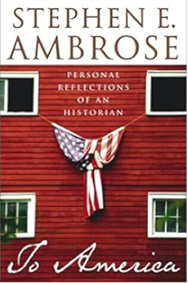
As a modern elder with an insatiable curiosity and a passion for history, I’ve had the pleasure of delving into countless books that illuminate the tapestry of our past. Among these volumes, To America by Stephen E. Ambrose is a very personal look at our nation’s history through the eyes of one of the twentieth century’s most influential historians. Here are some insights into this recommended work, highlighting its significance and the enduring lessons it imparts.
The Essence of To America
Stephen E. Ambrose, who was known for his narratives of American history, once again demonstrates this mastery in To America. This book serves as a testament to the author’s deep reverence for the United States and its rich history. Ambrose’s writing resonates with a sense of awe and admiration for the nation’s journey from its inception to modern times.
Historical Perspective
Ambrose’s storytelling prowess shines brightly as he takes readers on a chronological journey through pivotal moments in American history. His vivid descriptions and diligent research breathe life into the past, making history feel tangible. As a student of history, I appreciate his commitment to accuracy and detail, which brings authenticity to each page.
Themes of Resilience and Triumph
Throughout To America, Ambrose underscores the resilience of the American spirit. He skillfully narrates tales of triumph over adversity, from the struggles of the early colonists to the challenges faced by the nation during its formative years. Ambrose’s portrayal of historical figures and events is both insightful and inspiring, reminding readers of the enduring values that have shaped America.
Character Portraits
One of the book’s strengths is Ambrose’s ability to paint vivid portraits of key figures in American history. From George Washington’s steadfast leadership to the audacity of the Wright brothers, each character comes to life with their unique attributes and contributions to the American story. My personal favorite was his section on Theodore Roosevelt, one of America’s greatest presidents (and one whom I will be writing about in the future). Ambrose’s portrayal of these individuals humanizes history, making it relatable to readers of all backgrounds.
Relevance to Modern Times
As a modern elder, I believe that understanding history is essential for navigating the complexities of today’s world. Ambrose’s To America not only provides historical insights but also offers a lens through which we can better comprehend contemporary challenges and triumphs. It encourages readers to reflect on how the past continues to shape our present.
Conclusion
In To America, Stephen E. Ambrose weaves a masterful tapestry of American history that resonates deeply with those who, like me, are passionate about the past. This book is a testament to the enduring spirit of a nation built on resilience, innovation, and the pursuit of freedom. Ambrose’s meticulous research, evocative storytelling, and reverence for history make To America an essential read for anyone seeking a richer understanding of the United States and its remarkable journey.

Part of a regular series on 27gen, entitled Wednesday Weekly Reader
During my elementary school years one of the things I looked forward to the most was the delivery of “My Weekly Reader,” a weekly educational magazine designed for children and containing news-based, current events.
It became a regular part of my love for reading, and helped develop my curiosity about the world around us.


 27gen.com