
Reflections on Vacation Bible School while in the middle of serving as a leader for 17 2nd graders in our church’s Vacation Bible Extreme…
The screen door slams behind you, and for a second you’re not an adult anymore. You’re ten years old, walking down into the church basement, and the heat of June outside has been replaced by something cooler and a little damp. Elmer’s glue is drying on a stack of construction paper somewhere nearby. Someone is pouring orange Kool-Aid into plastic cups that will be reused all week. Fifty kids are trying to find their pew, and the noise of it all has a kind of rhythm you’d recognize anywhere.
If you grew up in a certain era, Vacation Bible School wasn’t just a week on the calendar. It was the event. You wore the shoes you didn’t mind ruining. You memorized verses for plastic trinkets you’d lose by August. And for five days, you belonged to something bigger than your own street.
A Different Kind of Summer
That world is mostly gone now. Summers today run on a tighter, more digital schedule. Kids scroll through algorithmic feeds before breakfast. Parents juggle remote work calls with the kind of logistical math that never quite balances. And underneath all that convenience sits something researchers keep coming back to: loneliness has become a genuine public health concern, for kids and adults alike. We have a dozen ways to send a message and almost no front porches left to send it from.
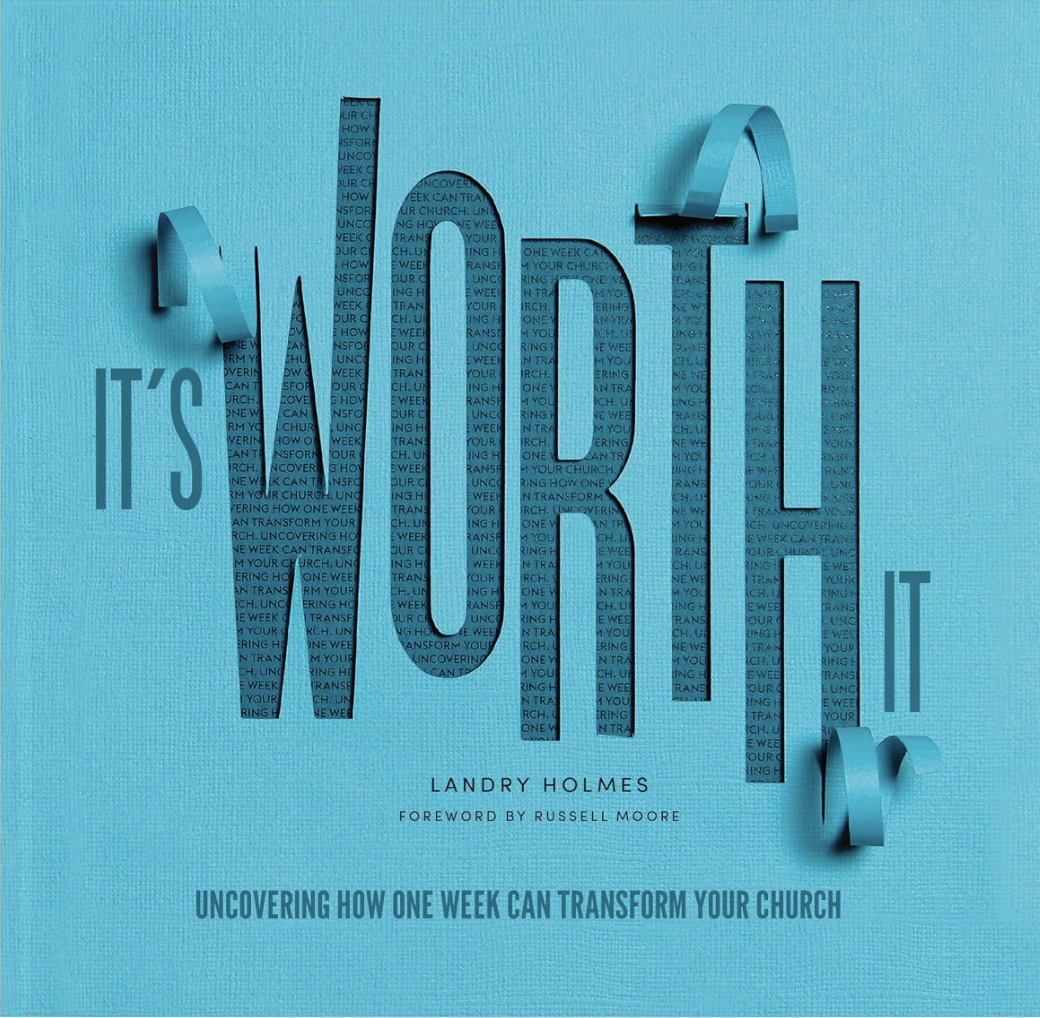
This is the gap Landry Holmes writes into in It’s Worth It. His argument is fairly direct: VBS isn’t a leftover from a simpler church era, waiting to be replaced by something sleeker and more online. A loud, chaotic week built around handmade theme sets and shared snacks is, if anything, exactly what a disconnected culture is hungry for – a real place, with real people, to belong to.
What the Numbers Actually Say
Every church budget meeting eventually lands on the VBS line item, and it’s easy to wince. Curriculum kits, paint for the stage sets, enough snacks to stock a small grocery aisle – the costs add up fast, and so does the volunteer exhaustion. Judge the program purely by how tired everyone looks on Thursday, and it can start to feel like an outdated tradition the church keeps funding out of nostalgia.
Holmes pushes back on that read using research from Lifeway. The data points in a pretty clear direction: VBS still outperforms nearly everything else on the church calendar as an evangelistic tool, even now.
A few numbers stand out. About half the children who show up to a church’s VBS – 51 percent, according to Lifeway Research – don’t have a regular church home. Meanwhile, 69 percent of American parents, whatever their own beliefs or church history, say they’d let their child attend a VBS at a church they don’t belong to, as long as a friend invited them personally. And looking back, nine out of ten adults who went to VBS as kids remember it fondly, with 89 percent saying it shaped their early faith in some real way.
Holmes sets those figures against a harder truth: 80 percent of churchgoers say they feel personally responsible for sharing their faith, yet more than 60 percent haven’t actually invited anyone to church or shared the gospel in the past six months. VBS closes that gap without requiring anyone to have an awkward one-on-one conversation. It gives the whole congregation a shared project instead of an individual burden, and for one week, the church stops waiting for the neighborhood to come find it.
Watching It From the Parking Lot
There’s a strange moment that hits every parent eventually: you’re no longer the kid receiving the ministry. You’re the one packing sunscreen, paying for gas, and watching the clock so you don’t miss drop-off.
As a kid, your only job was to show up and eat a popsicle-stick birdhouse into existence. As a parent, VBS week means rushed breakfasts – cold cereal, granola bars, the occasional drive-thru run – because the drop-off line closes at 9:00 sharp. Your backseat picks up a permanent layer of graham cracker crumbs and stray name tags. You spend most mornings nagging someone to put on real shoes and stop losing their team color band before they’ve even made it through the door.

And then the drive home happens, and something shifts. The exhaustion up front meets an explosion of energy in the back seat. They’re recounting the day’s skit in full detail, explaining how their team won at the glow stick game, belting out the theme song with hand motions you can see in the rearview mirror. Watching that, you stop thinking of the morning chaos as a cost. It starts to look more like the price of something you actually wanted to give them – a faith that exists outside your living room, in a community that’s theirs and not just yours.
The View From the Volunteer Side
If parenting through VBS week is a logistics problem, volunteering is closer to manual labor. By Wednesday night the adrenaline is gone and you’re running on coffee and whatever sense of purpose got you to sign up in the first place. You’re in a humid fellowship hall wrangling a dozen first-graders who seem to have discovered a new source of energy nobody told you about. Green marker doesn’t come off your hands easily. Glitter gets into your clothes and stays there through several wash cycles. Your voice goes scratchy from leading cheers over box fans that aren’t doing much.
Holmes makes the case, though, that this exhausting week does something most of the church year can’t: it breaks down the generational walls that quietly build up between Sundays. On a normal week, the retirees, the young parents, the college kids, and the high schoolers pass each other in the hallway and nod. During VBS, that distance disappears. A high school sophomore ends up shoulder-to-shoulder with you in a shaving cream fight from some game that got out of hand, both of you laughing too hard to care. Across the room, a church elder is patiently helping a six-year-old thread yarn through a cardboard cross.
It’s in those moments – sweaty, slightly ridiculous moments – that you actually see the church functioning the way it’s supposed to. Not in theory. In a craft room, with glue on the table and a six-year-old who needs help. And somewhere in there, watching the kids finally land the hand motions to a song they’ve heard fifty times that week, it hits you that someone did this same thing for you, years ago. Wore the costume, wiped the table, came back the next day. Now it’s your turn. Your feet hurt and you mean it when you say it was worth it.
The Part You Can’t Measure on the Last Day
When the closing program ends and the last family pulls out of the lot, the building goes quiet in a way that feels almost sacred. Volunteers walk the empty halls picking up stray name tags and bits of craft foam. The physical mess is easy to see. The actual impact isn’t.
It’s tempting to measure the week by what you can count – juice boxes gone through, dollars raised for missions, Wednesday’s attendance peak. But Holmes argues the real payoff doesn’t show up that fast. It shows up years later, in a college dorm room when someone’s faith gets challenged for the first time, or in a quiet stretch of adulthood when life gets heavier than expected. What surfaces in those moments is a memory: a church that rearranged itself for a week just for them, and a handful of adults who knew their names and meant it.
Holmes frames the payoff in eternal terms, which is a big claim, but it’s the claim the whole book is built on – that we’re not just running a kids’ program, we’re planting something that outlasts the summer it was planted in. In a culture that’s lonelier and more screen-bound every year, that’s not a small thing for a church to hold onto.
VBS, at its best, is one of the few weeks a year where a church actually looks like what it claims to be – messy, multigenerational, and genuinely glad you showed up. So when the planning meeting rolls around next fall and someone raises the cost and the exhaustion of it all, the honest answer is still the same one Holmes lands on:
It’s worth it.

Part of a regular series on 27gen, entitled Wednesday Weekly Reader.
During my elementary school years one of the things I looked forward to the most was the delivery of “My Weekly Reader,” a weekly educational magazine designed for children and containing news-based current events.
It became a regular part of my love for reading, and helped develop my curiosity about the world around us.

