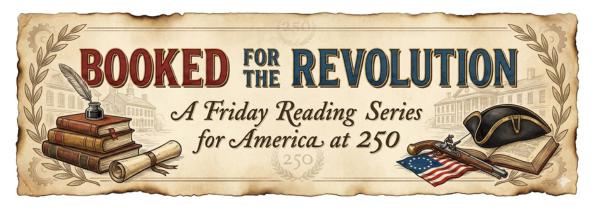
In The Making of the American Mind, Matthew Spalding recovers the deep roots of the Declaration of Independence by examining the influence of the Greeks and Romans, the Christian West, and the English constitutional tradition on the American mind. Reading through the Declaration clause by clause, he explores the rich history and profound significance of the document’s language and arguments. Spalding argues there is a powerful theology embedded in the Declaration that is more substantive than is commonly acknowledged.
July – The Document and Its Meaning, Part Four
On June 7, 1776, Richard Henry Lee rose before the Continental Congress and offered a resolution that would change the world: that the colonies are, and of right ought to be, free and independent states. The delegates did not vote immediately. They argued, they stalled, they worried. For all the passion behind the cause, most men in that chamber understood that independence was not simply a political act, it was a philosophical one. To sever ties with Britain, they would need more than muskets. They would need a reason grounded in something older and deeper than colonial grievance: a reason rooted in the nature of man himself.
Half a century later, Thomas Jefferson reflected that the Declaration he had drafted was not meant to be original. Its purpose, he wrote, was to place before mankind “the common sense of the subject” in terms “so plain and firm as to command their assent.” What Jefferson understood – and what generations of readers have since struggled to fully grasp – is that the Declaration’s power comes not from its novelty but from its inheritance. It is the summation of centuries of thought about God, nature, liberty, and the proper limits of government.
That is the subject Matthew Spalding takes up in The Making of the American Mind: The Story of Our Declaration of Independence, published in December 2025, just months before America’s semiquincentennial. With the nation preparing to mark 250 years of independence, Spalding arrives with both a chronicle and a commentary in a book that insists the Declaration cannot be understood without knowing the intellectual tradition that made it possible.
Author Context
Matthew Spalding is one of the most prominent conservative constitutional scholars working today. As the Kirby Professor in Constitutional Government and Dean of the Van Andel Graduate School of Government at Hillsdale College’s Washington, D.C., campus, he has spent decades teaching the principles of the American founding to a new generation of students and policymakers. His prior books – including We Still Hold These Truths: Rediscovering Our Principles, Reclaiming Our Future and his editorial work on The Heritage Guide to the Constitution – established him as a leading voice in the tradition that treats the founding documents not as historical relics but as living political philosophy.
His credentials extend beyond the academy. Spalding served as the executive director of the President’s Advisory 1776 Commission, which produced The 1776 Report in January 2021 – a counter-narrative to revisionist framings of the founding that generated significant public debate. He is also a Senior Fellow at the Claremont Institute and a senior academic advisor for the America250 commemorative projects.
All of this shapes the lens through which The Making of the American Mind is written. Spalding is not a detached academic chronicler. He is an advocate for a particular interpretation of the founding – one that emphasizes the coherence, integrity, and universal applicability of the Declaration’s principles. Readers should understand this context. It is also, for many, the book’s greatest strength: Spalding writes with the conviction of someone who believes the Declaration’s ideas still matter.
Core Argument
The book’s central thesis is contained in its title. The Declaration of Independence, Spalding argues, was not born in a moment of revolutionary excitement – it was the culmination of an “American mind” shaped over centuries by the Greeks and Romans, the Christian theological tradition, and the English constitutional heritage from Magna Carta through John Locke. To understand the Declaration’s words, you must first understand where they came from.
Spalding traces how the colonists entered the eighteenth century clinging to a Lockean understanding of rights as natural, pre-political, and inalienable – rights that no government could legitimately revoke. When Parliament’s doctrine of parliamentary supremacy began asserting that rights were instead a gift of legislation (Parliament giveth and Parliament taketh away, as Spalding memorably puts it), the philosophical rupture was inevitable. The Stamp Act of 1765, the Declaratory Act of 1766, and the Coercive Acts of 1774 were not just provocations – they were direct assaults on a constitutional worldview the colonists had held for generations.
The book proceeds through a clause-by-clause reading of the Declaration itself, unpacking the theological and philosophical weight of each phrase. Spalding shows how the language was carefully chosen and carefully revised: the famous shift from Jefferson’s draft phrase “sacred and undeniable” to the final “self-evident” was not cosmetic but conceptual, reinforcing the axiomatic status of the truths that followed. Similarly, the change from “rights inherent and inalienable” to “endowed by their Creator with certain unalienable rights” brought God into the document not as an abstract first principle but as the active source of all legitimate political authority.
In Spalding’s reading, the Declaration’s theology is its politics. Only God possesses absolute sovereignty; any earthly body – King or Parliament – that claims such authority transgresses natural law. This is the intellectual foundation on which the patriots stood.
Key Passages
Spalding’s prose is clear, confident, and built for persuasion. On the Declaration as the expression of a mature political tradition rather than a radical break:
The Declaration was not, contrary to popular belief, a particularly groundbreaking document. Jefferson’s genius lay in how clearly and eloquently he was able to capture and express what he himself later called ‘the American mind.’
On the philosophical stakes of the conflict with Britain:
Rights and liberties now were understood to be the result of legislative grant. In other words, Parliament giveth and Parliament taketh away.
And on the Declaratory Act of 1766, a passage that exemplifies Spalding’s skill at recovering the significance of overlooked history:
The Declaratory Act put the colonies on notice that the constitutional arrangement under which they were chartered and continued to operate no longer existed in England.
These are not flourishes but arguments. Spalding writes as a teacher who wants readers to understand, not merely to feel; his clarity of exposition is one of the book’s most valuable qualities.
Dialogue With Other Works
Read alongside the other books in this series, The Making of the American Mind occupies a distinctive and sometimes lonely position: it is the most philosophically ambitious and the least troubled by ambiguity.
Emily Sneff’s When the Declaration Was News approached the document from the perspective of print culture and public reception – how Americans in the late eighteenth century encountered, interpreted, and contested the Declaration’s meaning. Sneff’s work is fundamentally democratic in its orientation, tracing how meaning was made by ordinary readers and community newspapers, not just by learned statesmen. Spalding, by contrast, is concerned with the philosophical architecture that the founders themselves understood. The two books are complementary but operate on different registers: Sneff shows the Declaration as a living public text; Spalding shows it as the culmination of Western political thought.
Joseph J. Ellis’s Revolutionary Summer, which examined the military and political crises of 1776, provides useful narrative ballast to Spalding’s more philosophical enterprise. Ellis showed how contingent the whole project was – how close the Revolution came to collapse in those terrifying months after July 4th. Spalding acknowledges the drama but keeps his eye on the ideas. Where Ellis asks “How did they survive?” Spalding asks “What did they believe?”
Michael Auslin’s National Treasure, with its focus on the Declaration’s global resonance and democratic legacy, shares Spalding’s conviction that the document’s principles are universal and enduring. The two books make natural companions, though Auslin is more attuned to the Declaration’s complicated career in non-Western contexts, while Spalding remains primarily focused on the Anglo-American intellectual tradition that produced it.
Historical Reassessment
Published in December 2025, The Making of the American Mind is too recent to have accumulated a substantial scholarly reassessment. But the intellectual debates it enters are very much alive.
One of the book’s genuine vulnerabilities is its relative incuriosity about the Declaration’s polemical and propagandistic dimensions. When the document charges George III with seeking “the establishment of an absolute tyranny,” is that claim historically accurate? Spalding largely takes the indictment at face value. Yet even John Adams, who sat on the drafting committee, privately conceded he would not have called the king a tyrant “in disposition and nature,” finding the term too inflammatory for a document of such gravity. British historians have made similar points: George III never closed newspapers, arrested editors, or interned the leaders of the Boston Tea Party. The Declaration’s genius was partly rhetorical, and a fully honest accounting of the document should acknowledge the distance between its charges and the historical record.
This is not a fatal objection to Spalding’s project as the philosophical case for independence stands on its own, independent of whether every accusation in the grievance section was fair. But it is a gap that future readers and scholars will want to reckon with. The best books on the Declaration, including Pauline Maier’s American Scripture (examined earlier in this series), have been more willing to hold both the document’s nobility and its partisanship in view simultaneously.
The broader historical reassessment of the founding has also complicated the clean intellectual lineage Spalding traces. The “American mind” was never as unified as the Declaration suggests; it was forged in contest, shaped by exclusion, and contested even among the men who signed the document. Spalding knows this, but it is not his primary story.
Reader’s Value
In 2026, with America in the midst of its semiquincentennial celebrations, The Making of the American Mind arrives at precisely the right moment and for precisely the right reason. Millions of Americans will mark the anniversary with varying degrees of understanding of what, exactly, they are celebrating. Spalding’s book is one of the most accessible, rigorous, and genuinely instructive guides to the Declaration’s intellectual foundations available to general readers.
Whatever one thinks of Spalding’s politics or the tradition he represents, his core scholarly contribution is real: he recovers the deep intellectual background of the Declaration’s language in a way that most popular histories do not. To read this book is to understand why the phrase “Laws of Nature and of Nature’s God” is not rhetorical decoration but the load-bearing foundation of the entire argument. It is to understand why the word “self-evident” was chosen over “sacred,” and what that choice reveals about the kind of claim the founders were making. It is, in short, to read the Declaration as its authors intended it to be read – as a statement of political philosophy with roots in Aristotle, Augustine, Locke, and Sidney, not merely as a complaint against a particular king.
Readers who approach the book critically will find it most rewarding. Read in concert with the other books in this series, it supplies something none of the others quite does: a systematic account of the ideas that made the Declaration possible, and an argument that those ideas are worth understanding, defending, and transmitting to the next generation.
Abraham Lincoln, who appears near the end of the book, understood the Declaration as Jefferson’s act of embedding a universal truth in a revolutionary document – an “abstract truth, applicable to all men and all times,” as Lincoln put it in an 1859 letter, so embalmed in the text that it would serve as “a rebuke and a stumbling-block to the very harbingers of re-appearing tyranny and oppression.” That is the tradition Spalding is working in. Whether readers share his confidence or not, they cannot afford to be ignorant of it.
A Note on This Series
This journey through Revolutionary history is as much about the evolution of historical understanding as the Revolution itself. History isn’t static – each generation reinterprets the past through its own concerns, asking different questions and prioritizing different sources. By reading these books in dialogue across 250 years, we’ll witness how scholarship evolves, how narratives get challenged, and how forgotten stories resurface.
This isn’t about declaring one interpretation “right” and another “wrong,” but appreciating the richness that emerges when multiple perspectives illuminate the same transformative moment. These books won’t provide definitive answers – history rarely does – but they equip us to think more clearly about how real people facing genuine uncertainty chose independence, how ideas had consequences, and how the work of creating a more perfect union continues. As we mark this anniversary, we honor the Revolutionary generation by reading deeply, thinking critically, and engaging seriously with both the brilliance and blind spots of what they created.