How Leaders Can Make Thoughtful, Confident Decisions

Leaders must learn how to make the future in the midst of volatility, uncertainty, complexity, and ambiguity. It is hard to even think about the future if you are overwhelmed by the present, but that is exactly the time when foresight can be most practical. Looking to distant possibilities can provide new insight for the present.

Some leaders will judge too soon and draw simplistic conclusions while others will decide too late and pay a price for their lack of courage or inaction. Some will be overwhelmed by a sense of helplessness while others will become cynical and question everything around them.

Leaders need not be overwhelmed by the volatile world around them. They must have the skills to take advantage of those opportunities, as well as the agility to sidestep the dangers.

Leadership is more preparation than planning. Planning relies on predictability. But preparation helps leaders stay clear amid uncertainty. Planning assumes continuity; preparation equips leaders to be flexible enough to seize opportunity.
THE QUICK SUMMARY – Problem Solved, by Cheryl Strauss Einhorn

It can be messy and overwhelming to figure out how to solve thorny problems. Where do you start? How do you know where to look for information and evaluate its quality and bias? How can you feel confident that you are making a careful and thoroughly researched decision?

Whether you are deciding between colleges, navigating a career decision, helping your aging parents find the right housing, or expanding your business, Problem Solved will show you how to use the powerful Area Method to make complex personal and professional decisions with confidence and conviction.

Einhorn’s Area Method coaches you to make smarter, better decisions because it:

  • Recognizes that research is a fundamental part of decision-making and breaks down the process into a series of easy-to-follow steps.
  • Solves for problematic mental shortcuts such as bias, judgment, and assumptions.
  • Builds in strategic stops that help you chunk your learning, stay focused, and make your work, work for you.
  • Provides a flexible and repeatable process that acts as a feedback loop.Life is filled with uncertainty, but that uncertainty needn’t hobble us. Problem Solvedoffers a proactive way to work with, and work through, ambiguity to make thoughtful, confident decisions despite our uncertain and volatile world.

A SIMPLE SOLUTION

Leaders must learn to navigate the space between deciding too soon, or deciding too late, and lean toward action.

Careful reflection is critical in the decision-making process, so you don’t judge too prematurely and risk judging incorrectly.

On the opposite side, deciding too late is the classic mistake of those who love to study but have trouble getting around to deciding what to do with their research results.

Leaders need to lean toward action and not just lean back and ponder the dilemma they face.

One way to do that is to have a process that will help you and your team with an intentional decision-making process.

Decision-making is about ideas, but ideas aren’t enough. There is an important gap between having ideas and making good decisions about what to do with those ideas. Use the AREA Method to help navigate the decision process.

The first “A” stands for “Absolute,” which refers to primary, uninfluenced information from the sources at the center of your research and decision-making process.

The “R” stands for “Relative,” and refers to the perspectives of outsider around your research. It is secondary information, or information that has been filtered through sources connected to your subject.

The “E” stands for “Exploration” and “Exploitation,” and they are the twin engines of creativity – one is about expanding your research and the other is about depth. Exploration asks you to listen to other peoples’ perspectives by developing sources and interviewing. Exploitation asks you to focus inward, on you as the decision-maker, to examine how you process information, examining and challenging your own assumptions and judgment.

The second “A” stands for “Analysis,” and synthesized all of these perspectives, processing and interpreting the information you’ve collected.

Cheryl Strauss Einhorn, Problem Solved

A NEXT STEP

Work through the AREA decision-making process outlined above with your team by choosing a decision you are facing. Discuss the questions below, writing answers to each area on a separate chart tablet.

A – Absolute

  • What are the critical entities involved in this decision?
  • Who are the critical people at these entities? What is their involvement and impact?
  • What does it mean as it relates to your decision?

R – Relative

  • What information is available from outside sources concerning the factors of your decision?
  • Does the emerging story explain why and how these factors will affect your decision?
  • What are the source’s incentives or biases? How are they reflected in the stories told by the source?

E – Exploration

  • What kind of answers do I need to make the decision?
  • What do I want to find out and why?
  • How do I expect to use the information I gather?

E – Exploitation

  • How might you display your decisions “big picture” and or details?
  • Can you connect your new information to existing knowledge in a chart, table, or graph?
  • Can you craft questions that you still need answered?

A – Analysis

  • What could cause the decision to fail?
  • What actions might you take if one or several of the events that could cause failure begin to play out?
  • At what point might you need to reevaluate the decision?

By following the AREA Method, your team will be able to better articulate your path to success. The thoughtful, confident decisions, anchored in research, will help you articulate the what, why, and the how of your decision-making in ways that resonate with others.

Excerpt taken from SUMS Remix 76-2, issued September 2017.


Part of a weekly series on 27gen, entitled Wednesday Weekly Reader

Regular daily reading of books is an important part of my life. It even extends to my vocation, where as Vision Room Curator for Auxano I am responsible for publishing SUMS Remix, a biweekly book “excerpt” for church leaders. Each Wednesday on 27gen I will be taking a look back at previous issues of SUMS Remix and publishing an excerpt.

>>Purchase SUMS Remix here<<


Lessons From a Professional Kitchen: Excellence is the Result of a Series of Intentional Elements of Service

The dining experience at a four-star restaurant provides excellent lessons for hospitality in the church.

With one son who is the general manager of a restaurant that is part of a national restaurant chain and another who is the food services manager for a conference center, I have a serious interest in all things food. My waistline also shows that, but that’s another story.

During a visit to my older son’s house I was perusing his bookshelf and took a look at “On the Line“, about the famous New York restaurant Le Bernardin and Executive Chef Eric Ripert. It’s a well-written and beautifully photographed look at the inner workings of the world-famous restaurant.

It’s also full of great lessons for churches that want to have world-class Guest Experiences.

Your church will not be serving exquisite meals that diners pay big bucks for – but your church can learn that the meal is only a part of the total dining experience.

The Dining Experience

One of the things that diners remark upon after eating at Le Bernardin is that the service is almost invisible. By the end of the meal, you’ve been helped by as many as seven people, but you can’t quite identify them. Although friendly and available, they work out of your field of attention so that you can focus on the food, and companions, in front of you.

While it might seem effortless, it’s a rigorous ballet that requires training and focus. The men and women juggle a plethora of details in their heads while projecting an air of gracious calm.

We have to perform to give you an illusion of effortless perfection. For you to have the right food in front of you at the right time, excellent and at the right temperature, and obviously having clean china – all those little details you’d never think of are vital

– Eric Ripert


THE QUICK SUMMARY – On the Line, by Eric Ripert

Take one top New York restaurant, add danger, drama, and dialogue, toss in their best recipes, and you have a cooking classic.

How does a 4-star restaurant stay on top for more than two decades? In On the Line, chef Eric Ripert takes readers behind the scenes at Le Bernardin, one of just three New York City restaurants to earn three Michelin stars. Any fan of gourmet dining who ever stole a peek behind a restaurant kitchen’s swinging doors will love this unique insider’s account, with its interviews, inventory checklists, and fly-on-the-wall dialogue that bring the business of haute cuisine to life.

From the sudden death of Le Bernardin’s founding chef, Gilbert Le Coze, to Ripert’s stressful but triumphant takeover of the kitchen at age 29, the story has plenty of drama. But as Chef Ripert and writer Christine Muhlke reveal, every day is an adventure in a perfectionistic restaurant kitchen. Foodies will love reading about the inner workings of a top restaurant, from how a kitchen is organized to the real cost of the food and the fierce discipline and organization it takes to achieve culinary perfection on the plate almost 150,000 times a year.

A SIMPLE SOLUTION

The most visible part of a dining experience is the food placed on the table in front of the diner. However, that meal represents many people doing many different tasks, some hours ahead of the mealtime.

Excellence happens best when it’s not seen at all. Your meal should be relaxed and gracious, but it’s hard to imagine the military precision with which the dining room is run.

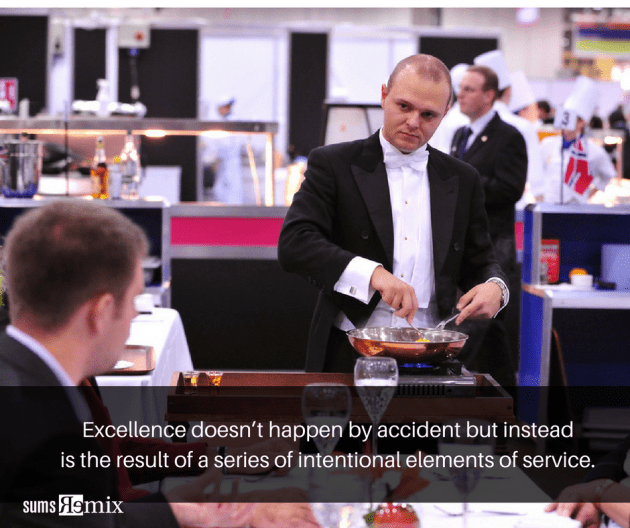
Excellence doesn’t happen by accident but instead is the result of a series of intentional elements of service.

The center of attention in a four-star restaurant may be the food, but it’s the service before, during, and after that creates the experience.

At Le Bernardin in New York City, the service is as much the creation of Executive Chef Eric Ripert as is his exquisite dishes. Along with the restaurant’s founder Maguy Le Coze, Ripert has created the elements of service that keep Le Bernardin at the top of its class.

Hiring– while they prefer staff with a two- or three- star background, they have been known to go with their gut instinct and hire the people they like, those that have the demeanor and willingness to please.

Training– the standard of perseverance and constant training is set at the top and carried throughout the organization. General manager David Mancini and Maître d’ Ben Chekroun want each hire to know what goes into every other job on the floor. The constant cross training that goes on enables the entire staff from the captains to the busboys to operate in a seamless, fluid manner.

Knowledge– The level of service expected by customers at Le Bernardin is matched and exceeded by the knowledge the staff constantly pursues. From the technical side (knowing the menu by heart, how each serving is prepared, the correct place settings, etc.) to the human aspect (learning to watch guests for clues, anticipating their needs), the staff is always learning.

Attitude– over the years the atmosphere has become less formal, but Le Bernardin’s staff will provide what you are looking for: to celebrate, to eat, to do business, to entertain the family. Their goal is for you to enjoy the experience and leave happy with a smile.

The Sixth Sense– Chekroun says that the ability to read a guest is the key to providing four-star service. “You can tell if someone is used to a four-star restaurant or it’s their first time. It’s our job to put them at ease no matter the situation. Intuition is very important on the floor – before a guest can ask “Where’s my waiter?” you must be there.”

Teamwork– At Le Bernardin, service is like the proverbial chain – a weak link will compromise the whole thing. Anyone on the chain, from the time you make a reservation till the moment you leave, can ruin the experience. It’s all about functioning as a team; even though the service is broken into sections, that’s merely strategic. The entire team is expected to understand the ebb and flow of the service and step in before needed.

Presentation– The hallmark of the food at Le Bernardin is the exquisite simplicity of the food, which calls for adding the final touch at the table. The sauces for the meal are served at the table, which provides several advantages: warmer service, better flavors, and eye-catching presentations.

Eric Ripert, On The Line

A NEXT STEP

Let’s step away from the elegance of Le Bernardin and visit your church. Is it too big a jump to imagine that your hospitality needs to have the same elements of service as a four-star restaurant?

List the seven elements of service noted above, each on a chart tablet page.

After reading the description for each one, brainstorm with your team how that element of service applies to your hospitality ministry.

For each of the seven elements, write one or more actions that your hospitality teams are currently doing that are working well. Ask the question “Is this good enough, or can we do better?” List the responses on the appropriate page.

Now go back to the seven elements, this time looking for areas that are either a total miss or sorely lacking. Ask the question “How can we make this better?” List the responses on the appropriate page.

Finally, review all of the actions you have listed. Circle the top three your team wants to pursue in each category, and assign responsibility and timelines for each.

In ninety days, reconvene your team, bring out the chart tablets, and update progress and results for each of the actions circled.

Excerpt taken from SUMS Remix 73-2, issued August 2017.


Part of a weekly series on 27gen, entitled Wednesday Weekly Reader

Regular daily reading of books is an important part of my life. It even extends to my vocation, where as Vision Room Curator for Auxano I am responsible for publishing SUMS Remix, a biweekly book “summary” for church leaders. Each Wednesday on 27gen I will be taking a look back at previous issues of SUMS Remix and publishing an excerpt there.


>> Purchase SUMS Remix here<<

How to Learn from 78 Books in a Year!

Today is a very special day – the 100th issue of SUMS Remix is being shipped to subscribers!


Allow me a moment to set the stage…

Contrary to popular predictions, the increased use of e-books and audio books has not diminished the reading of print books. According to Pew Research, about 67% of Americans have read a print book in the last year. Additional research shows that Americans as a group read an average of 12 books per year.

We want leaders like you to be above average in every way, and we want to give you the incentive to do that.

As a leader, you like to read. But with the pace of life, it’s hard to cover all of the bases when great new content is always coming at the speed of light. Now you can get the best book excerpt tool ever created. And it’s just for church leaders!

It’s called SUMS Remix.

Here is how we do it: We take a practical problem that church leaders face like, “Key leaders only think about their ministry area and not the entire organization.” We answer it by introducing you to a big idea from three books through a short excerpt from each, and then dial in on a specific solution to accompany each excerpt.

Therefore, you digest books through the lens of practical daily challenges. The sum total in one year is 78 book excerpts with 78 solutions, delivered every other week to your inbox.

Want to see what SUMS Remix looks like? Download this free sample used in the paragraph above.

The cost? Just $48 per year!

Subscribe today!

I’ve got to give a shout out to the SUMS Remix Team: Bryan Rose is our first-line reviewer, providing tweaks to the original draft. Andrea Kandler is our amazing grammar and style editor, making sure the words make sense. And Creative Director James Bethany turns the words and images into the sharp-looking final product readers have come to expect over the last four years.

What an awesome team!

Each issue of these 100 SUMS Remix has delivered:

  • Content that solves the challenges you face every day
  • More information in less time to find the best solutions
  • More credibility as well-read leader

Imagine receiving all of this, designed in a PDF that can be read in about 10 minutes, delivered straight to your inbox – every other week! Subscribe today to receive this amazing ministry tool.

SUMS Remix will revolutionize your leadership reading habits, provide immediate Go Ahead actions you can implement today, and give you readily accessible help in solving challenges you face every week.

Oh, and it will probably spur you to buy several of the books we excerpt – at least enough to keep you reading more than the “average” American!

Here’s to issue #101 – and beyond!


Today we may be celebrating the 100th issue of SUMS Remix, but I’ve been working ahead on the next eight issues through the end of the year – future issues that are being researched, written, and designed right now for you! Subscribe now to be a part of SUMS Remix!


Creating an EXCEPTIONAL Guest Experience, Part 1: The PLACE Where You Welcome Guests

At Auxano, we’ve walked with more than 500 churches through a process called the Guest Perspective Evaluation. And when they’re done, they all ask, “What’s next?”

Amazingly, most church leaders don’t actually have a plan they can use to improve their Guest Experience!

Ask them about their strategy and you’ll discover it boils down to this:

We’ll be friendlier.

It’s understandable. Church leaders are too busy on the weekend to actually understand what Guests see – and experience – to really know how to make things better. After all, your church is “friendly,” right? And that is all you need to have a good Guest Experience.

But why settle for good?

An exceptional Guest Experience ministry doesn’t have to be complicated. We recommend you execute on just three things:

  1. Place
  2. Process
  3. People

Focusing on these three things will allow you to welcome first time Guests, welcome back returning Guests, and create a culture of hospitality within your church that extends your ministry beyond your walls.

The catch?

Each of these three elements shares one requirement: paying attention to details.

It’s impossible to have an exceptional Guest Experience unless you pay attention to details.

This is such an important principle that we are devoting two issues of SUMS Remix to this concept. What is SUMS Remix? It’s one of the other great parts of my job: a “book summary” published every two weeks, with each issue listing excerpts from three books addressing a challenging problem leaders face.

For the first issue, we will look at the three components of an EXCEPTIONAL Guest Experience, with lessons from the world leader in Guest Experience – the Disney organization. The second issue will highlight lessons from another area of hospitality – the pro chef’s kitchen – on how churches can provide an EXCEPTIONAL Guest Experience.

The PLACE where you welcome Guests

THE QUICK SUMMARYOne Little Spark, by Marty Sklar

We’ve all read about the experts: the artists, the scientists, the engineers-that special group of people known as Imagineers for The Walt Disney Company. But who are they? How did they join the team? What is it like to spend a day in their shoes?
Disney Legend Marty Sklar wants to give back to fans and answer these burning questions. When Marty was president of Walt Disney Imagineering, he created a list of principles and ideals for the team, aptly named Mickey’s Ten Commandments. Using this code of standards as his organizational flow, Marty provides readers with insights and advice from himself and dozens of hands-on Imagineers from around the globe. It’s a true insider’s look like no other!

Note: This issue of SUMS Remix was already in production when I learned of the passing of Marty Sklar on Thursday, 7/27/17. Read more about Marty here.

A SIMPLE SOLUTION

Walt Disney had long dreamed of a place where people could be immersed in the stories and films his studio was producing. He began planning that place – which would become known as Disneyland – in the 1940s.

Even a genius like Walt Disney knew he could not create such a place by himself. In 1952, he began to assemble a team to help realize his dream. Beginning with some of his most trusted animators and art directors, they approached the creation of Disneyland in the same way as they would in an art project.

Since the people who designed and built Disneyland came from the animation side of the business, they treated its settings as integral and important parts of the park from the very first. Disneyland was going to be a living movie that its guests would experience by moving through it. And, as in animated films, to make that vision come to life, the audience had to have the opportunity to become totally immersed in the experience.

How does “Place” deliver an exceptional experience? The better question is, how does it not?

Walt Disney realized that a visit to an amusement park could be like a theatrical experience – in a word, a show. Walt saw that the Guests’ sense of progressing through a narrative, of living out a story told visually, could link together the great variety of attractions he envisioned for his new kind of park. While traveling through their stories, Guests would encounter, and even interact with, their favorite Disney characters, and who would be transformed, as if by magic, from their two-dimensional film existence into this special three-dimensional story world.

Marty Sklar, who retired from the Disney organization in 2009, led the planning and creative development of nine Disney parks around the world. Part of the Disney team since 1955, Sklar has a unique perspective on the ideation and creation of the magic of place, and the importance of attention to details all along the journey.

For me, these principles have formed the standard the Imagineers have used to create the Disney park experiences around the world. When we followed them closely, we created magic.

Know your audience – Identify the prime audience for your attraction or show before you begin design

Wear your Guests’ shoes – Insist that your team members experience your creation just the way Guests do

Organize the flow of people and ideas – Make sure there is a logic and sequence in our stories and the way Guests experience them

Create a wienie (visual magnet) – Create visual “targets” that will lead Guests clearly and logically through your facility

Communicate with visual literacy – Make good use of color, shape form, texture – all the nonverbal ways of communication

Avoid overload – create turn-ons – Resist the temptation to overload your audience with too much information and too many objects

Tell one story at a time – Stick to the story line; good stories are clear, logical, and consistent

Avoid contradictions – maintain identity – Details in design or content that contradict one another confuse an audience about your story or the time period it takes place in

For every once of treatment, provide a ton of treat – Walt Disney said you can educate people, but don’t tell them you’re doing it. Make it fun!

Keep it up! (Maintain it) – In a Disney park or resort, everything must work. Poor maintenance is poor show!

Marty Sklar, One Little Spark

A NEXT STEP

As designers, the Imagineers create spaces – guided experiences that take place in carefully structured environments, allowing the Guests to see, hear, smell, touch, and taste in new ways. In effect, Imagineers transform a space into a story place.

Ultimately, the Imagineers gave Guests a place to play, something Walt believed that adults needed as much as children. The design of the Imagineers gives power to the Guests’ imagination, to transcend their everyday routine. Walt Disney insisted that Guests should “feel better because of” their experiences in Disney theme parks, thus establishing the art of the show.

For the Imagineers, that meant considering everything within and relating to the parks as design elements. To build effective story environments and assure Guest comfort, the designers realized that they always had to assume the Guests’ position and point of view, and just as Walt did, to take the Guests’ interests to heart and defend them when others didn’t think it mattered.

It is up to the designers to provide Guests with the appropriate sensory information that makes each story environment convincing. This means that design considerations go beyond the attractions themselves to the service and operations staff, transportation, restaurants, shops, rest rooms – even the trash cans.

Initially, the Imagineers used the knowledge gained from their experience in films, but they soon found that their Guests themselves would teach them what they most needed to know about theme park design and operation.

When designers see Guests in their natural states of behavior, they gain a better understanding of the space and time Guests need in a story environment.

Using “Mickey’s Ten Commandments” list above as a guide, work with your team to evaluate your current “Place.”

Write the Ten Commandments phrases down the left side of a chart tablet. Next, draw two columns on the remaining space. Label the first column with a “+” and the second column with a “-“.

Using each of the Ten Commandment phrases, walk through your current environments, listing the ones that are working in the “+” column and the ones that are not working in the “-“ column.

After finishing your work, create an action plan to improve the environments in the “-“ column. Be sure to include a timeline and leader responsible for the work.


Are you expecting Guests this weekend? Beyond a simple “yes” or “no,” the extent to which you answer this question will go a long way in determining if your first-time Guests become second-time guests.

It’s all in the details.

Excerpt taken from SUMS Remix 72-1, issued August 2017.


Part of a weekly series on 27gen, entitled Wednesday Weekly Reader

Regular daily reading of books is an important part of my life. It even extends to my vocation, where as Vision Room Curator for Auxano I am responsible for publishing SUMS Remix, a biweekly book “summary” for church leaders. Each Wednesday on 27gen I will be taking a look back at previous issues of SUMS Remix and publishing an excerpt there.


>> Purchase SUMS Remix here<<

How to Understand GenZ’s Unique Personality

How can you be more effective about reaching and leading the generation after the Millennials?

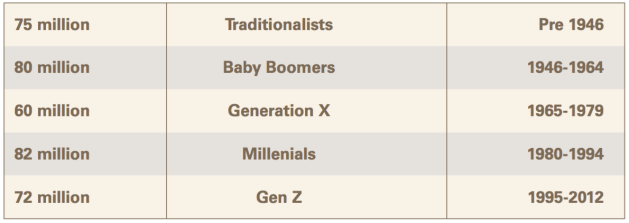
Born between 1995 and 2012, at 72.8 million strong, Gen Zers are making their presence known. It is the generation that is now collectively under the age of 25. They’re radically different from the Millennials, yet no one seems to have been talking much about them until recently.

While there has been a great deal of conversation about “fixing” the Millennial generation, we are in danger of missing the next generation as they step into the workplace – and leadership roles at our churches.

As a group, on one hand they have been notorious about dropping out from your church. On they other hand, they make up a significant part of both your ministry participants and prospects.

They are also beginning to step into very visible leadership roles in your church.

So what does Gen Z look like, and what does that mean for your church?

THE QUICK SUMMARY – David Stillman and Jonah Stillman, Gen Z @ Work

A generations expert and author of When Generations Collide and The M-Factor teams up with his 17-year-old son to introduce the next influential demographic group to join the workforce—Generation Z—in this essential study, the first on the subject.

Based on the first national studies of Gen Z’s workplace attitudes; interviews with hundreds of CEOs, celebrities, and thought leaders on generational issues; cutting-edge case studies; and insights from Gen Zers themselves, Gen Z @ Work offers the knowledge today’s leaders need to get ahead of the next gaps in the workplace and how best to recruit, retain, motivate, and manage Gen Zers. Ahead of the curve, Gen Z @ Work is the first comprehensive, serious look at what the next generation of workers looks like, and what that means for the rest of us.

A SIMPLE SOLUTION

In order to begin to understand Gen Z, you first need to put them into perspective with the rest of the population at large:


Then, there is the conundrum of what to call them. Words matter, and once attached, are hard to change. Each of the generations prior to Gen Z were named, and for various reasons, Gen Z seems to be the one most favored.

But don’t be mistaken – Gen Z is not a “label” to be applied to the millions of individuals born between 1995 and 2012, all with very unique differences. It’s a name – but it represents some very interesting characteristics.

A new generation is starting to hit our workforce, yet no one seems to be talking about it. Until now.

In order to pioneer a dialogue about what they will be like in the workplace, here are seven key traits of Gen Z

Phigital: Gen Z is the first generation born into a world where every physical aspect (people and places) has a digital equivalent.

Hyper-Custom: Gen Z has always worked hard at identifying and customizing their own brand for the world to know. Their ability to customize everything has created an expectation that there is an intimate understanding of their behaviors and desires.

Realistic: Growing up during the aftermath of 9/11, with terrorism part of everyday life, as well as living through a severe recession early on, has created a very pragmatic mindset when it comes to planning and preparing for the future.

FOMO: Gen Z suffers from an intense fear of missing out on anything. The good news is that they will stay on top of all trends and competition. The bad news is that Gen Z will always worry that they aren’t moving ahead fast enough and in the right direction.

Weconomists: From Uber to Airbnb, Gen Z has only known a world with a shared economy. Gen Z will push the workplace to break down internal and external silos to leverage the collective in new convenient and cost-effective ways.

DIY: Gen Z is the do-it-yourself generation. Having grown up on YouTube, which can teach them how to do just about anything, Gen Z believes that they can do just about anything themselves.

Driven: With parents who drilled into them that participation is not a real reward and that there are winners and losers, a recession that pulled the rug out from their predecessors, and a rate of change that is hard to keep up with, it is no wonder that Gen Z is one driven generation.

David Stillman and Jonah Stillman, Gen Z @ Work

A NEXT STEP

If you want to know more about Gen Z in your church, start at the source. Even with the wide range of ages, it would be informative to sit down with a group of Gen Zers and have a dialogue with them:

  • What do they like to do with free time?
  • Who is their favorite celebrity?
  • What kind of music and entertainment do they regularly listen to?
  • What brands do they like the best?
  • What apps do they use most on their phones?
  • What colleges do they want to go to, if at all?
  • What is most important to them right now?

Another goldmine of information on Gen Zers? Teachers! Take a few teachers out to lunch and ask them:

  • What do they see happening with this generation, as they become young adults and leaders in the world?
  • What were their biggest struggles in working with Gen Z?
  • What gaps do they see in current societal needs that Gen Zers may struggle with?
  • For those teachers who have been around awhile, what were the biggest differences between Gen Z and Millennials (born 1980-1994)?

Finally, take a look at the list of seven traits above. Which is most important to you in terms of ministry with Gen Z? Share that with your team and encourage them to be on the lookout for Gen Zers who have this trait, and how it can be used in your churches ministry.

On the flip side, take a look at the list again, looking for the least important trait. Recognizing that it may be important to others, dialogue with your team how this trait can be strengthened with the Gen Zers you minister with.

Excerpt taken from SUMS Remix #70-1, released July 2017.


Part of a weekly series on 27gen, entitled Wednesday Weekly Reader

Regular daily reading of books is an important part of my life. It even extends to my vocation, where as Vision Room Curator for Auxano I am responsible for publishing SUMS Remix, a biweekly book “summary” for church leaders. Each Wednesday I will be taking a look back at previous issues of SUMS Remix and publishing an excerpt here.


>> Purchase SUMS Remix here<<

Leaders Lead with Character

While the phrase “natural born leader” is often used, there’s really not scientific support for this phenomenon. In reality anyone could become a leader and everyone should grow as a leader.

To become a leader is to become a learner. Leadership is not a natural gifting but a set of abilities, and like any other skill set it is to be learned and improved.

Those who have chosen to take on or accept a leadership role must own their personal responsibility for developing their leadership ability.

THE QUICK SUMMARY – Integrity, by Henry Cloud

Integrity—more than simple honesty, it’s the key to success. A person with integrity has the ability to pull everything together, to make it all happen no matter how challenging the circumstances. Drawing on experiences from his work, Dr. Henry Cloud, a clinical psychologist, leadership coach, corporate consultant and nationally syndicated radio host, shows how our character can keep us from achieving all we want to (or could) be.

In Integrity, Dr. Cloud explores the six qualities of character that define integrity, and how people with integrity.

Integrity is not something that you either have or don’t, but instead is an exciting growth path that all of us can engage in and enjoy.


A SIMPLE SOLUTION – Lead with Character

Most people view integrity as an aspect of honesty. Integrity is adherence to code of ethics or set of values. It also involves how well our actions match our beliefs. It suggests a wholeness or coherence in our philosophies and values, in our public and private statements, and in our actions across a variety of situations.

In short, integrity is about character.

Character has components to it, or traits, and areas of functioning where it operates. Those contexts are the real places where our personhood and reality interface and results occur, either positive or negative.

Character = the ability to meet the demands of reality.

What I have tried to do is take aspects of character and put them into functions that tend to be different from each other, and therefore discrete, and at the same time, related to each other, and therefore integrated. If we have that combination, then we can focus on specific aspects of our makeup and, at the same time, be focusing on all of our makeup and getting it working together.

Let’s look at what those aspects of character are:

The ability to connect authentically (which leads to trust)

The ability to be oriented toward the truth (which leads to finding and operating in reality)

The ability to work in a way that gets results and finishes well (which leads to reaching goals, profits, or the mission)

The ability to embrace, engage, and deal with the negative (which leads to ending problems, resolving them, or transforming them)

The ability to be oriented toward growth (which leads to increase)

The ability to be transcendent (which leads to enlargement of the bigger picture of oneself)

Henry Cloud, Integrity

A NEXT STEP

Riders in London’s Underground (subway) are very familiar with the audible and visible warning to “mind the gap.” It’s a phrase issued to rail passengers to take caution while crossing the horizontal spatial gap between the train door and the station platform.

Maybe a more familiar use comes from the immortal wisdom of Rocky Balboa, when asked about what attracted him to his future wife, Adrian: “She’s got gaps, I got gaps. Together, we fill gaps.”

We all have gaps, especially when it comes to our character. Do not take this as a weakness, but instead think of it as chance to improve.

Look at the list of character traits above, and list them on a chart tablet. On a scale of “1” (I have little ability in this area) to “5” (I am very confident in this ability), assign yourself a number for each character trait.

The gap is our need and opportunity for growth.

For each character trait you scored between a 1 and 3, list actions you can take to advance the development of that trait to become a 4 or 5.

Excerpt taken from SUMS Remix 69-2, issued June 2017.


Part of a weekly series on 27gen, entitled Wednesday Weekly Reader

Regular daily reading of books is an important part of my life. It even extends to my vocation, where as Vision Room Curator for Auxano I am responsible for publishing SUMS Remix, a biweekly book “summary” for church leaders. Each Wednesday I will be taking a look back at previous issues of SUMS Remix and publishing an excerpt here.


>> Purchase SUMS Remix here<<

Leaders Get Calendared

Do you find yourself constantly running from one issue to the next without any margin in your life?

Do you feel like you are over-committed to such a degree that the truly important things have been slipping a little?

Do you wish for a reset button and dream of starting over someplace new, just like you did last time? (How did that work out for you?)

Many times we neglect the lasting work of ministry for the instant gratification of solving a problem or being the hero. The thing is, nobody wins when church activity replaces people development. Pastors, more than anyone, must learn to be disciplined to focus, and do only what only they can do.

THE QUICK SUMMARY – Kevin Kruse, 15 Secrets Successful People Know About Time Management

What if a few new habits could dramatically increase your productivity, and even 5x or 10x in key areas? What if you could get an hour a day to read, exercise, or to spend with your family?

New York Times bestselling author, Kevin Kruse, presents the remarkable findings of his study of ultra-productive people. Based on survey research and interviews with billionaires, Olympic athletes, straight-A students, and over 200 entrepreneurs—-including Mark Cuban, Kevin Harrington, James Altucher, John Lee Dumas, Pat Flynn, Grant Cardone, and Lewis Howes – Kruse answers the question: “What are the secrets to extreme productivity?”

A SIMPLE SOLUTION

Faced with a mountain of tasks to do and things to accomplish, most of us feel immediately better when we’ve put all of these things on a “to-do list.” And, there is some value in putting things to be done on paper (or digitally stored).

But that value is practically nothing unless you find a way to act upon that thing.

Highly successful people dont have a to-do list, but they do have a very well-kept calendar.

One of the most consistent actions you can take to get things done is to schedule time for them.

The simple act of scheduling tasks on your calendar – instead of writing them on a to-do list – will free your mind, reduce stress, and increase cognitive performance. There are several key concepts to managing your life using your calendar instead of a to-do list.

First, schedule a chunk of time for everything that is important to you; this is called “time blocking” or “time boxing.” Focus on those things that bring you closer to your goals each and every day.

Second, important items should be scheduled as early in the day as possible. As the day progresses, all kinds of things will come up, and you will find it hard to keep focused on the important things.

Third, dont cancel goals; reschedule them if necessary. When circumstances prevent keeping an important time-block, reschedule it, keeping it as a priority.

Fourth, treat your time-blocked calendar entries as if they were appointments with your doctor; they are that important. Don’t cave in on your self-scheduled appointments; they really are important!

When you master the practice of time-blocking – using your calendar instead of your to-do list – you can literally see your life’s priorities by looking at your weekly calendar.

Kevin Kruse, 15 Secrets Successful People Know About Time Management

A NEXT STEP

Utilizing a calendar is probably second nature to you, whether a digital calendar or a print calendar, or a combination of both. Even so, review the four concepts listed above and choose to implement them as a part of a two-week experiment.

Putting these concepts into use can transform your calendar into a powerful life-guiding tool.

Using the concepts above, make an effort over the next two weeks to put them into practice in your daily calendaring. By utilizing these concepts, you are in effect designing your ideal week with your priorities.

At the end of the two-week experiment, what changes have you noticed? What changes have those closest to you noticed?

Now challenge your team toward this same effort. Begin to celebrate calendaring success and measure the increased output and impact of your efforts.

Excerpt taken from SUMS Remix 68-2, issued June 2017.


Part of a weekly series on 27gen, entitled Wednesday Weekly Reader

Regular daily reading of books is an important part of my life. It even extends to my vocation, where as Vision Room Curator for Auxano I am responsible for publishing SUMS Remix, a biweekly book “summary” for church leaders. Each Wednesday I will be taking a look back at previous issues of SUMS Remix and publishing an excerpt here.


>> Purchase SUMS Remix here<<

Grow Your Leadership Skills – Lead with Influence

Do you know you are a leader, but need help growing your leadership skills?

While the phrase “natural born leader” is often used, there’s really not scientific support for this phenomenon. In reality anyone could become a leader and everyone should grow as a leader.

To become a leader is to become a learner. Leadership is not a natural gifting but a set of abilities, and like any other skill set it is to be learned and improved.

Those who have chosen to take on or accept a leadership role must own their personal responsibility for developing their leadership ability.

THE QUICK SUMMARY – Joseph Grenny, Kerry Patterson, et al, Influencer

Whether you’re a CEO, a parent, or merely a person who wants to make a difference, you probably wish you had more influence with the people in your life. But most of us stop trying to make change happen because we believe it is too difficult, if not impossible. We learn to cope rather than learning to influence.

From the bestselling authors who taught the world how to have Crucial Conversations comes the new edition of Influencer, a thought-provoking book that combines the remarkable insights of behavioral scientists and business leaders with the astonishing stories of high-powered influencers from all walks of life. You’ll be taught each and every step of the influence process–including robust strategies for making change inevitable in your personal life, your business, and your world. You’ll learn how to:

  • Identify high-leverage behaviors that lead to rapid and profound change
  • Apply strategies for changing both thoughts and actions
  • Marshal six sources of influence to make change inevitable

Influencer takes you on a fascinating journey from San Francisco to Thailand to South Africa, where you’ll see how seemingly “insignificant” people are making incredibly significant improvements in solving problems others would think impossible. You’ll learn how savvy folks make change not only achievable and sustainable, but inevitable. You’ll discover breakthrough ways of changing the key behaviors that lead to greater safety, productivity, quality, and customer service.

No matter who you are or what you do, you’ll never learn a more valuable or important set of principles and skills. Once you tap into the power of influence, you can reach out and help others work smarter, grow faster, live, look, and feel better–and even save lives. The sky is the limit . . . for an Influencer.

A SIMPLE SOLUTION

John Maxwell, arguably one of the most respected authorities on leadership, is well known for his definition of leadership as being influence – nothing more, nothing less.

It is a good start, but it is not adequate by itself.

David Burkas, executive coach, modifies Maxwell’s definition:

Leadership is the process of influencing others to work toward a mutually desired vision.

Leaders, then, recruit and influence followers to work together to make a shared vision reality.

At the end of the day, what qualifies people to be called “leaders” is their capacity to influence others to change their behavior in order to achieve important results.

Influencers are successful because they think intentionally about their ability to help others act in unprecedentedly effective ways. They think about influencing behavior, talk about it, and practice it.

Three keys that all influencers adhere to and that you can use to your own benefit:

Focus and measure. Influencers are crystal clear about the result they are trying to achieve and are zealous about measuring it.

Find vital behaviors. Influencers focus on high-leverage behaviors that drive results. More specifically, they focus on the two or three vital actions that produce the greatest amount of change.

Engage all six sources of influence. Influencers break from the pack by overdetermining change. Where most of us apply a favorite influence tool or two to our important challenges, influencers identify all of the varied forces that are shaping the behavior they want to change and then get them working for rather than against them. And now for the really good news. According to research, by getting six different sources of influence to work in their favor, influencers increase their odds of success tenfold. The six sources are:

  • Personal motivation – help them love what they hate

  • Personal ability – help them do what they can’t

  • Social motivation – provide encouragement

  • Social ability – provide assistance

  • Structural motivation – change their economy

  • Structural ability – change their space

Joseph Grenny, Kerry Patterson, et al, Influencer

A NEXT STEP

Review each of the three keys above by considering the following questions.

Influence begins when you focus and measure

  • Identify what you are really trying to accomplish
  • Create measures that focus your attention on this goal
  • Takes these measures frequently

Next, find vital behaviors

  • Identify two or three behaviors that will drive the majority of your change
  • Concentrate all your change efforts on these behaviors

Finally, engage all six sources of influence

  • Review the six sources of influence listed above
  • Which of these six sources are working against you?
  • How can you turn it from a negative into a positive source of influence?

Excerpt taken from SUMS Remix 69-1, issued June 2017


Part of a weekly series on 27gen, entitled Wednesday Weekly Reader

Regular daily reading of books is an important part of my life. It even extends to my vocation, where as Vision Room Curator for Auxano I am responsible for publishing SUMS Remix, a biweekly book “summary” for church leaders. Each Wednesday I will be taking a look back at previous issues of SUMS Remix and publishing an excerpt here.

Time Management Begins with Being Organized

Do you spend more time fighting fires than making disciples?

Do you find yourself constantly running from one issue to the next without any margin in your life?

Do you feel like you are over-committed to such a degree that the truly important things have been slipping a little?

Do you wish for a reset button and dream of starting over someplace new, just like you did last time? (How did that work out for you?)

Many times we neglect the lasting work of ministry for the instant gratification of solving a problem or being the hero. The thing is, nobody wins when church activity replaces people development. Pastors, more than anyone, must learn to be disciplined to focus, and do only what only they can do.

THE QUICK SUMMARY – Time Management Magic, by Lee Cockerell

During Lee Cockerell’s career at Disney as the Senior Operating Executive of Walt Disney World Resort, he led a team of 40,000 Cast Members (employees) and was responsible for the operations of 20 resort hotels, four theme parks, two water parks and the ESPN Sports Complex.

As you can imagine, Lee had to become a time management expert, first as a means of survival and then as a way to help others make the best use of their time. The time management secrets he developed have become one of his most requested corporate training lectures and are now available to you in this tell–all book.

A SIMPLE SOLUTION

Almost everyone you encounter feels that he or she has too much to handle and not enough time to get it all done. We may have a “better” life than earlier generations, but at what price? Increased stress levels? Growing frustration?

Our lives no longer have clear boundaries. Not only does it seem that our work and personal lives are always open-ended, the two are usually intertwined.

If our lives have changed, then it stands to reason that the old models and habits used to deal with life are insufficient, and need to change as well.

Most people are not overworkedthey are under-organized.

We need to figure out how to be more organized, so we can get all the urgent, vital, and important things done before it’s too late. I believe the average person can do 50 percent more than they are doing now, including all the right things, if they have an effective system for keeping their lives under control.

The number one excuse people use for not getting done what should be done is, “I did not have enough time.” It’s really nothing more than an excuse, since we all have exactly the same amount of time.

Time management is the act of controlling the events in your life.

A lot of people would reject that definition because they believe we can’t control the events in our lives, because so much of what we deal with every day springs up unexpectedly, seemingly out of nowhere.

Here are some practical tips that will give you a high level of control:

Surround yourself with great people – hire skilled people with passion for their work and a can-do attitude.

Train and educate – train your team thoroughly and educate them about every aspect of your operation, including values, philosophy, priorities, and mission.

Be crystal clear about your expectations – communicate your expectations with unambiguous clarity.

Anticipate and practice – think through all the things that can happen and practice how you will handle them.

Leave spaces in your calendar – pencil in free, uncommitted periods in your day, every day.

Do it now! – when something comes up that must be done, do it; don’t procrastinate.

Lee Cockerell, Time Management Magic

A NEXT STEP

Review Lee’s list of six practical tips listed above, and rank them from what you do best to what you do worst.

Starting at the bottom (the action that you are the worst at), make a specific effort for the next week to put that tip into practice. For example, if you don’t leave spaces in your calendar, take the time to create space each day in your calendar for the next week.

At the end of the week, take time to review the past week, and note how taking that action changed your daily routine. Was it for the better? How? Was it about the same? Did it make it worse? Ask yourself, “Is this something I need to make a regular part of my routine?”

After completing the “worst” of the six tips, go to the next one, and repeat the actions above for the next week. Repeat each one until you have completed all six.

At the end of six weeks, and having experimented with all six of the tips above, take time to review the process.

  • How has your daily routine improved?
  • Have others on your team noticed?
  • Which of the six tips are you planning to keep and make a part of your regular routine?
  • Which of the six didn’t work for you? Why?

Now repeat this exercise every six months as a reminder on the importance of organization.

Excerpt taken from SUMS Remix 68-1, released June 2017.


Part of a weekly series on 27gen, entitled Wednesday Weekly Reader

Regular daily reading of books is an important part of my life. It even extends to my vocation, where as Vision Room Curator for Auxano I am responsible for publishing SUMS Remix, a biweekly book “summary” for church leaders. Each Wednesday I will be taking a look back at previous issues of SUMS Remix and publishing an excerpt here.

How to Transform Conflict Through Communication

No matter how you define it, conflict is a serious issue that all church leaders face – all too often. You would think that a church “family” should be able to avoid conflict. But how often does your own biological family go through conflict of various intensities?

Your church family consists of hundreds or thousands of complex human relationships, all brought together under the banner of worshipping and serving God in this particular place and time.

You’ve invested yourself heavily in these relationships – as has everyone else to varying degrees. We all have expectations of each other – and when those are not met, the seeds of conflict are planted. Left unaddressed these small seeds can grow into a garden of weeds that choke out the healthy dialog needed to restore the relationship. The longer the situation goes untended, the greater the issue(s) magnify – until the weeds have taken over the garden and any hope of bearing fruit has been squeezed out entirely.

Is it possible to avoid conflict entirely? In a word, no. We’re too “human” to hope for that.

Can we transform and redeem conflict from a destructive force to one in which all parties come through the other side, better for the experience? In a word, yes. We’re children of a loving Father, and His love can see us through any level of conflict.

THE QUICK SUMMARY – Transforming Church Conflict by Deborah Van Deusen Hunsinger and Theresa F. Latini

With many pastors facing burnout and congregations suffering from internal divisions, there is a need for Christian resources that present concrete problem-solving techniques for handling conflict in the church.

This book offers practical skills and strategies that the authors have learned through years of studying nonviolent communication (NVC) as described in Marshall Rosenberg’s book, Nonviolent Communication: A Language of Life, and as developed by numerous NVC trainers all over the world.

Using real-world case studies and examples, Hunsinger and Latini helpfully guide pastors and lay leaders through effective and compassionate ways to deal with discord. These strategies include differentiating observations from evaluations, experiencing and expressing feelings, identifying and connecting with needs, and making requests rather than demands. By learning the basic skills of compassionate communication, church leaders can be empowered to transform, rather than merely manage, church conflict

A SIMPLE SOLUTION

One of the problems surrounding conflict in the church occurs when you look at the church as a singular organization. While it does exist that way in several aspects (legal entity, location, etc.) it really is made up of several different groups.

For example, many churches have the following three groups within the church:

  • The congregation
  • The governing board
  • The staff

Dealing with conflict the same way with all these groups is really an invitation to extend or worsen the conflict. For example, you could have a disaster simmering on the board and have a happy congregation and staff. It only takes a few dissatisfied staff members to disrupt the work of the board and congregation. Finally, it is all-too-possible to have congregational unrest even when the staff and board are working well together.

What’s the single similarity in all the situations described above?

Communication.

When we value the needs of others as well as our own, we can use the four basic skills of compassionate communication to gain mutual understanding and to fulfill as many core needs as possible within our human limits.

The four basic skills of non-violent communication template are: Observation, Feeling, Need, and Request. The OFNR template for learning compassionate communication is a useful tool for guiding our conversation, but it is not a formula for a particular way of speaking.

Observations describe what is available to our senses: what we can see, hear, touch, taste, or smell. They are specific to time and context. In making an observation, the aim is to describe what you have seen or heard as if a video camera were recording the incident.

We continually assess what is happening around us through our emotional capacities. Besides acting as a kind of radar for danger, our emotions are also closely tied to our thought.

We are motivated to act, speak, keep silent, and move toward or away from someone on the basis of our needs. Virtually everything we do (or chose not to do) is an attempt to meet a need. Thus, our needs are the source of our underlying motivation.

Once we have clarity about what we need, we can make a request that we believe will contribute to its being met. Requests are understood as gifts, not demands. They give us the opportunity to contribute to one another’s life.

Deborah Van Deusen Hunsinger and Theresa F. Latini, Transforming Church Conflict

A NEXT STEP

To understand and practice better communication among the three groups listed above, set aside time in a future leadership team meeting and work through the following exercise.

Using a current example of an ongoing situation in your church, create a separate chart tablet for the congregation, the governing board, and the staff.

Along the left margin, write the words Observation, Feeling, Need, and Request.

For each of the three groups, and using the descriptions of the OFNR communication skills above, discuss the situation from the vantage point of the particular group.

After you have completed all three charts, look for areas of similarity and difference.

Use the areas of similarity to promote unity, and use the areas of difference to work to an agreeable resolution.

Conflict may be inevitable, for after all we are all human. However, conflict can be preempted and lessened in both intensity and frequency.

Excerpt taken from SUMS Remix 66-3, issued May 2017


Part of a weekly series on 27gen, entitled Wednesday Weekly Reader

Regular daily reading of books is an important part of my life. It even extends to my vocation, where as Vision Room Curator for Auxano I am responsible for publishing SUMS Remix, a biweekly book “summary” for church leaders. Each Wednesday I will be taking a look back at previous issues of SUMS Remix and publishing an excerpt here.