Rooted Together: Relationship Wisdom from Aspens and Redwoods

The natural world often provides powerful metaphors for understanding human relationships. Two remarkable tree species – aspens and redwoods – offer particularly compelling lessons about connection, resilience, and growth. By examining how these trees thrive, we can gain insights into building and nurturing meaningful relationships.

Aspen Trees: The Power of Underground Connection

What appears to be a forest of individual aspen trees is actually a single living organism. Each “tree” is a stem sprouting from an extensive underground root system. This phenomenon, called a clonal colony, means that aspens are among the largest and oldest living organisms on Earth.

Lessons from Aspen Relationships:

Deep, Invisible Connections

Like aspen root systems, the strongest relationships often have connections that run deeper than what’s visible on the surface. The foundations of trust, shared history, and mutual understanding may not be apparent to outside observers but provide essential stability.

Collective Resilience 

When one aspen stem faces challenges—whether drought, disease, or fire—resources are redirected through the root system to support it. Similarly, healthy relationships involve stepping up during difficult times, offering emotional support, practical help, or simply presence when partners face hardship.

Growth Through Diversity 

Aspen colonies thrive by sending up stems of different ages and sizes. This diversity ensures the colony’s survival through varying conditions. Relationships flourish when we appreciate and leverage our differences rather than expecting uniformity.

Communication Networks 

Aspens share nutrients and chemical signals through their roots. This underground “conversation” helps the colony respond to threats and opportunities. Open, honest communication serves a similar purpose in human relationships, allowing for coordinated responses to life’s challenges.

Redwood Trees: The Strength of Community

Coastal redwoods, the world’s tallest trees, offer different but equally powerful relationship metaphors. Despite their immense height (potentially exceeding 350 feet), these giants have surprisingly shallow root systems. Their secret? The roots interlock with neighboring trees.

Lessons from Redwood Relationships:

Strength Through Interdependence 

Redwoods stay upright during storms because their roots intertwine with neighboring trees, creating a supportive network spanning acres. This teaches us that independence and interdependence aren’t mutually exclusive—the strongest individuals often have the most robust support networks.

Creating Protected Space 

Redwood groves create their own microclimate, capturing fog and moderating temperature. The interior of a redwood forest feels distinctly different from surrounding areas. Healthy relationships similarly create a “microclimate”—a safe space where both parties can thrive away from external pressures.

Patience and Longevity 

Redwoods can live over 2,000 years, growing steadily through centuries. This reminds us that meaningful relationships aren’t built overnight. The most rewarding connections develop through consistent care and attention over time.

Regenerative Capacity  

Redwoods can sprout new trees from fallen trunks or roots, demonstrating remarkable regenerative ability. Similarly, healthy relationships can recover from setbacks, sometimes growing stronger through the process of healing and renewal.

Cultivating Tree-Inspired Relationships

How can we apply these natural metaphors to strengthen our own relationships?

Nurture Root Systems – Just as trees invest energy below ground, invest in the invisible foundations of your relationships. Create shared experiences, develop trust through reliability, and establish meaningful traditions that strengthen your connections.

Practice Resource Sharing – Trees share nutrients through their roots, ensuring collective survival. In relationships, share your resources—whether time, emotional support, knowledge, or practical assistance—especially when your partner faces challenges.

Embrace Interdependence – Recognize that seeking support isn’t weakness but wisdom. Like redwoods interlocking roots, allow your support networks to bolster you, and offer the same to others.

Create Safe Environments – Just as tree canopies create protective microclimates, foster environments where vulnerability, authenticity, and growth are encouraged. Be intentional about creating spaces where relationships can flourish.

Take the Long View – Trees measure growth in decades, not days. Similarly, nurture your relationships with patience, recognizing that meaningful connections develop and deepen over time.



Aspen and redwood trees remind us that the strongest living things on our planet thrive not through isolation but through connection. Whether through the aspen’s hidden root system or the redwood’s interlocking network, these trees demonstrate that resilience comes through relationship.

By applying these natural metaphors to our own lives, we can build connections that weather storms, adapt to changing circumstances, and provide mutual support for decades to come. Like these magnificent trees, we grow stronger together than we ever could alone.
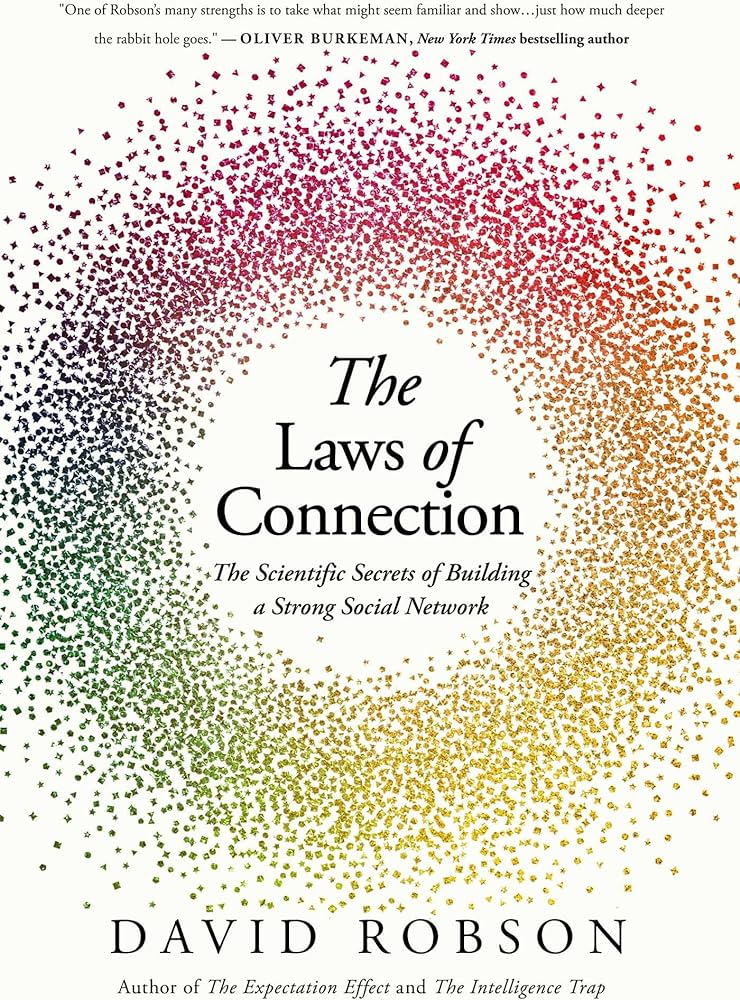
The Laws of Connection: A Deep Dive into Human Relationships

Social connection is as essential for our health and happiness as a balanced diet and regular exercise. It reduces our risk of stroke, heart disease, and Alzheimer’s. It enhances our creativity and adds years to our life span. Yet many of us struggle to form strong and meaningful bonds – and the problem lies not with our personalities but with a series of cognitive biases that stop us from fulfilling our social potential.

In The Laws of Connection, award-winning science writer David Robson describes the psychological barriers that lead us to keep others at a distance and offers evidence-based strategies to overcome them.

Drawing on philosophy, neuroscience, and cutting-edge psychology, Robson introduces readers to new concepts such as the liking gap, the novelty penalty, the fast-friendship procedure, the beautiful mess effect, and the Japanese art of amae (a Japanese term used to describe acting like a spoiled child). Whether we are shy or confident, introvert or extrovert, we can all build deeper relationships. The Laws of Connection shows us how.


David Robson’s The Laws of Connection is a captivating exploration of the science behind human relationships. Drawing on a wealth of psychological research, Robson delves into the cognitive biases and social barriers that can hinder our ability to connect with others. The book offers a compelling argument that strong social connections are essential for our well-being, challenging the notion that our personality traits are fixed determinants of our social success.

At the heart of Robson’s argument is the idea that our thought processes and behaviors play a crucial role in shaping our relationships. He introduces various cognitive biases that can inadvertently sabotage our social interactions. For instance, the “liking gap” refers to our tendency to underestimate how much others like us, while the “novelty penalty” suggests that we may be less likely to form bonds with people who are too similar to us.

The book also explores the concept of the “beautiful mess effect,” which highlights the importance of embracing imperfections in our relationships. Rather than striving for idealized connections, Robson argues that it is often the messy, imperfect moments that strengthen our bonds.

In addition to cognitive biases, Robson discusses the social barriers that can hinder our ability to connect with others. These barriers include fear of rejection, lack of self-confidence, and cultural differences. The book provides practical strategies for overcoming these challenges and fostering deeper connections.

One of the key themes in The Laws of Connection is the power of intentional connection. Robson emphasizes that building strong relationships requires effort and conscious attention. He introduces techniques such as the “fast-friendship procedure” and the “disclosure reciprocity effect” to help readers forge deeper bonds with others.

The fast-friendship procedure involves asking a series of personal questions to create a sense of intimacy and connection. The disclosure reciprocity effect suggests that we are more likely to open up to others if they first share personal information with us.

Throughout the book, Robson provides compelling examples and anecdotes to illustrate his points. He draws on research from various fields, including psychology, sociology, and neuroscience, to support his arguments.

Here are Robson’s Laws of Connection:

  1. Be consistent in your treatment of others. Avoid becoming a stressful frenemy.
  2. Create a mural understanding with the people you met.
  3. Ignore superficial similarities and instead focus on your internal world, and the peculiar ways that your thoughts and feelings coincide. Trust that others, on average, will like you as much as you like them, and be prepared to practice your social skills to build your social confidence.
  4. Check your assumptions; engage in ‘perspective/getting rather than ‘perspective-taking’ to avoid egocentric thinking and misunderstandings.
  5. In conversation, demonstrate active attention, engage in self-disclosure, and avoid the novelty penalty, to build mutual understanding and contribute to the merging of our minds.
  6. Praise people generously, but be highly specific in your words of appreciation.
  7. Be open about your vulnerabilities, and value honesty over kindness (but practice both, if possible).
  8. Do not fear envy. Disclose your successes but be accurate in your statements and avoid comparing yourself to others. Enjoy ‘confelicity’.
  9. Ask for help when you need it, in the expectation that your pleas for support can build a stronger long-term bond.
  10. Offer emotional support to those in need, but do not force it upon them. Validate their feelings while providing an alternative perspective on their problems.
  11. Be civil and curious in disagreements; show interest in the other side’s viewpoint; share personal experiences; and translate your opinions into their moral language.
  12. For your wellbeing, choose forgiveness over spite. Look at the big picture in arguments. Ensure your apologies define the offense, take responsibility for your actions, and express regret. Have faith that people can change for the better.
  13. Reach out to the people who are missing in your life. Let them know that they are still a part of your thoughts.

Overall, The Laws of Connection is a thought-provoking and informative book that provides valuable insights into the science of human connection. It is a must-read for anyone interested in improving their relationships and understanding the psychological factors that influence our social interactions.

Beyond its practical applications, the book also offers a deeper understanding of the human condition. Robson’s exploration of the science of connection sheds light on the fundamental need for social connection and the ways in which we can cultivate meaningful relationships.

The Laws of Connection is a valuable resource for anyone seeking to improve their social lives and build stronger relationships. It offers practical strategies, thought-provoking insights, and a deeper understanding of the science behind human connection


Part of a regular series on 27gen, entitled Wednesday Weekly Reader.

During my elementary school years one of the things I looked forward to the most was the delivery of “My Weekly Reader,” a weekly educational magazine designed for children and containing news-based current events.

It became a regular part of my love for reading, and helped develop my curiosity about the world around us.

Soft Skills, Strong Impact: Emotional Intelligence for Today’s Modern Elder

In the landscape of modern leadership and professional success, emotional intelligence (EI) has emerged as a critical skill set. For Modern Elders who bring a wealth of experience to the table, honing emotional intelligence can be the key to unlocking their full potential and maximizing their impact in today’s dynamic work environments.

Emotional intelligence, as defined by psychologist Daniel Goleman, encompasses self-awareness, self-regulation, motivation, empathy, and social skills. For Modern Elders, two aspects of EI (sometimes abbreviated EQ) are particularly crucial: self-awareness and empathy, along with the overarching skill of managing interpersonal relationships.

Self-Awareness: The Foundation of Emotional Intelligence

Self-awareness is the cornerstone of emotional intelligence. It involves a deep understanding of one’s own emotions, strengths, weaknesses, values, and motivations. 

For Modern Elders, self-awareness takes on added significance:

  • Recognizing Emotional Patterns: Years of experience allow Modern Elders to identify their emotional triggers and reactions. This awareness enables them to respond thoughtfully rather than react impulsively.
  • Understanding Biases: Self-aware Modern Elders can recognize and challenge their own biases, particularly those that may stem from generational differences.
  • Assessing Strengths and Limitations: A clear understanding of one’s capabilities allows Modern Elders to contribute most effectively and seek growth opportunities in areas of weakness.
  • Aligning Actions with Values: Self-awareness helps ensure that decisions and actions are in line with core values, fostering authenticity and integrity.

Cultivating self-awareness involves regular self-reflection, seeking feedback, and being open to constructive criticism. Mindfulness practices can also enhance self-awareness by promoting present-moment consciousness.

Empathy: The Bridge to Understanding

Empathy, the ability to understand and share the feelings of others, is a powerful tool for Modern Elders. It allows them to connect with colleagues across generational divides and foster inclusive, collaborative environments.

Key aspects of empathy for Modern Elders include:

  • Active Listening: Truly hearing what others are saying, without immediately jumping to advice-giving or problem-solving
  • Perspective-Taking: Making an effort to see situations from others’ viewpoints, particularly those of younger colleagues who may have different life experiences and priorities.
  • Cultural Sensitivity: Recognizing and respecting cultural differences in an increasingly diverse workplace.
  • Emotional Attunement: Picking up on unspoken emotional cues and responding appropriately.

Developing empathy often involves practicing active listening, asking open-ended questions, and making a conscious effort to understand diverse perspectives. For Modern Elders, sharing their own vulnerabilities can also create space for empathetic connections.

Managing Interpersonal Relationships: Where It All Comes Together

The ability to manage interpersonal relationships effectively is where self-awareness and empathy converge. This skill is crucial for Modern Elders, who often find themselves in mentoring roles or navigating complex team dynamics.

Key aspects of relationship management include:

  • Clear Communication: Articulating thoughts and expectations clearly, while also being open to feedback.
  • Conflict Resolution: Using emotional intelligence to navigate disagreements and find mutually beneficial solutions.
  • Mentoring and Coaching: Leveraging experience and empathy to guide and support others’ growth.
  • Building Trust: Consistently demonstrating reliability, integrity, and genuine care for others.
  • Adaptability in Communication Styles: Adjusting communication approaches to suit different individuals and situations.

Enhancing relationship management skills involves practicing assertive communication, developing conflict resolution techniques, and consistently working on building and maintaining trust.

The Modern Elder’s EI Advantage

Modern Elders have a unique advantage when it comes to emotional intelligence. Their years of experience provide a rich tapestry of emotional data to draw from, enhancing their ability to navigate complex interpersonal situations. Moreover, their life experience often brings a level of emotional maturity that can be invaluable in high-pressure or conflict-laden situations.

However, it’s important to note that emotional intelligence is not static – it can be developed and refined at any age. For Modern Elders, this means there’s always room for growth, whether it’s in becoming more attuned to the emotional needs of younger colleagues or adapting to new norms of emotional expression in the workplace.

Cultivating Emotional Intelligence

To enhance emotional intelligence, Modern Elders can:

  • Practice Self-Reflection: Regularly assess your emotional responses and their impacts.
  • Seek Feedback: Ask trusted colleagues for honest input on your interpersonal skills.
  • Read Widely: Explore literature on emotional intelligence and human behavior.
  • Practice Mindfulness: Engage in meditation or other mindfulness practices to increase self-awareness and emotional regulation.
  • Embrace Continuous Learning: Attend workshops or courses on emotional intelligence and leadership.

Emotional intelligence is a powerful tool in the Modern Elder’s arsenal. By cultivating self-awareness, empathy, and strong relationship management skills, Modern Elders can leverage their wealth of experience to become truly transformative leaders and mentors. In a world where technical skills can quickly become obsolete, the timeless value of emotional intelligence ensures that Modern Elders remain indispensable contributors to their organizations and communities.


Part Three in a SeriesFind the Introduction here, along with previously published articles.


Boundaries for Leaders: Results, Relationships, and being Ridiculously in Charge

In the end, as a leader, you are always going to get a combination of two things: what you create and what you allow.  – Henry Cloud

According to clinical psychologist and leadership consultant Henry Cloud, boundaries are made up of two essential things: what you create and what you allow.

A boundary is a property line. Boundaries for LeadersIt defines where your property line begins and ends. If you think about your home, on your property, you can define what is going to happen there and what is not.

As the leader of an organization – a small group, a team, a department, maybe even the whole organization – you are responsible for the boundaries of that organization:

  • The people you invite in
  • What the goals and purposes are going to be
  • What behavior is going to be allowed – and what isn’t
  • The culture
  • The agenda
  • The rules

The leaders’ boundaries define and shape what is going to be and what isn’t.

In Boundaries for Leaders, Dr. Cloud leverages his expertise of human behavior, neuroscience, and business leadership to explain how the best leaders set boundaries within their organizations–with their teams and with themselves–to improve performance and increase employee and customer satisfaction.

In a voice that is motivating and inspiring, Dr. Cloud offers practical advice on how to manage teams, coach direct reports, and instill an organization with strong values and culture.

Boundaries for Leaders contains seven leadership boundaries that set the stage, tone, and culture for a results-driven organization, including how to:

  • Help people focus their attention on the things that matter most
  • Build the emotional climate that drives brain functioning
  • Facilitate connections that boost energy and momentum
  • Create organizational thought patterns that limit negativity and helplessness
  • Identify paths for people to take control of the activities that drive results
  • Create high-performance teams organize around the behaviors that drive results
  • Lead yourself in a manner that protects the vision

Boundaries for Leaders is essential reading for executives and aspiring leaders who want to create successful companies with satisfied employees and customers, while becoming more resilient leaders themselves.


part of the BookNotes Series – brief excerpts from books I am currently reading