The Real Work: Navigating Mastery Across Diverse Disciplines

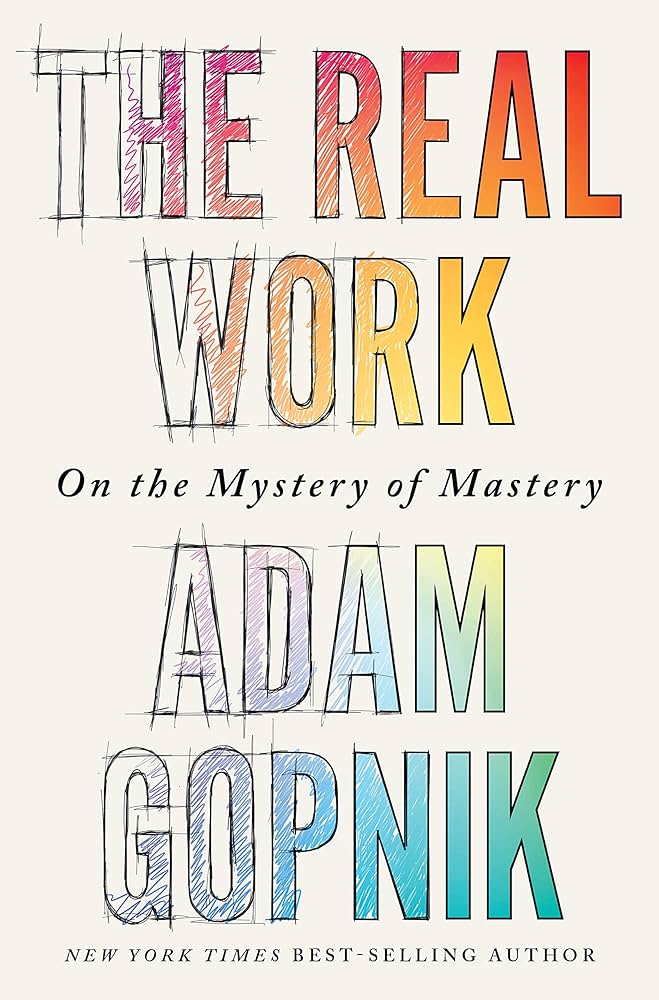
For decades now, Adam Gopnik has been one of our most beloved writers, a brilliantly perceptive critic of art, food, France, and more. But recently, he became obsessed by a more fundamental matter, one he had often meditated on in The New Yorker: How do masters learn their miraculous skill, whether it was drawing museum-ready art or baking a perfect sourdough loaf? How could anyone become so good at anything? There seemed to be a fundamental mystery to mastery. Was it possible to unravel it?

In The Real Work – the term magicians use for the accumulated craft that makes for a great trick – Gopnik becomes a dedicated student of several masters of their craft: a classical painter, a boxer, a dancing instructor, a driving instructor, and others. Rejecting self-help bromides and bullet points, he nevertheless shows that the top people in any field share a set of common qualities and methods. For one, their mastery is always a process of breaking down and building up – of identifying and perfecting the small constituent parts of a skill and the combining them for an overall effect greater than the sum of those parts. For another, mastery almost always involves intentional imperfection – as in music, where vibrato, a way of not quite landing on the right note, carries maximum expressiveness. Gopnik’s simplest and most invigorating lesson, however, is that we are surrounded by mastery. Far from rare, mastery is commonplace, if we only know where to look: from the parent who can whip up a professional strudel to the social worker who – in one of the most personally revealing passages Gopnik has ever written – helps him master his own demons.

Spirited and profound, The Real Work will help you understand how mastery can happen in your own life – and, significantly, why each of us relentlessly seeks to better ourselves in the first place.

Adam Gopnik explores the concept of mastery across various skills such as drawing, dancing, and driving. Using the term “real work” from stage magicians, Gopnik delves into the meticulous craftsmanship and technical expertise required to make a great magic trick truly outstanding. He emphasizes that the one credited with achieving the “real work” isn’t necessarily the inventor but the one who masters every detail of its execution.

Structured around Gopnik’s interactions with practitioners of different crafts, the book unfolds as a celebration of human flaws. Three key themes emerge:

  • Mastery is the gradual assembly of fragments into a harmonious whole.
  • Mastery is about humanity, not perfection, appreciating the vulnerability within virtuosity.
  • Mastery is found in real lives, not abstract life rules.

Gopnik becomes an apprentice in various disciplines, from drawing to driving, to grasp the essence of mastery. He discusses the slow process of carpentering fragments, emphasizing the importance of learning each small step. Mastery, he argues, is not about impressing the public but about a democratic achievement that we all can attain.

The author explores drawing with a realist artist, magic with renowned magicians, and driving with an instructor who emphasizes relaxation. Through these experiences, Gopnik weaves in reflections on representational art, childhood, aging, and the intricate balance between learned virtuosity and unique vulnerability.

The book takes a poignant turn as Gopnik addresses the limited time we have on Earth, emphasizing that mastery is not transcendent but deeply personal. He contends that what truly matters is not impressing the masses but achieving mastery for ourselves and a few close individuals. In Gopnik’s view, mastery is democratic and attainable by all, a reflection of our varied and capable selves.


Part of a regular series on 27gen, entitled Wednesday Weekly Reader.

During my elementary school years one of the things I looked forward to the most was the delivery of “My Weekly Reader,” a weekly educational magazine designed for children and containing news-based, current events.

It became a regular part of my love for reading, and helped develop my curiosity about the world around us.

Mastering Anything: A Strategic Guide to Continuous Learning Through Reading

On the journey to becoming a Modern Elder by developing specific skill sets, the last few posts have focused on “Mastery.” It should be no surprise that my first steps are to turn to books; in this case, Read to Lead by Jeff Brown and Jesse Wisnewski. I’ve written about it previously, but I want to take a closer look at Chapter 12, “The Key to (Nearly) Mastering Anything.”


In a world that evolves at a breakneck pace, staying ahead requires a proactive and strategic approach to learning. The process of mastering anything, as outlined in Jeff Brown and Jesse Wisnewski’s insights, involves a deliberate journey of purpose, focused study, and practical application. Let’s explore the key steps to (nearly) mastering any subject, ensuring personal and professional growth in an ever-changing landscape.

Avoiding Complacency

In the pursuit of mastery, complacency is the enemy. The authors stress that standing still can lead to falling behind, emphasizing the dynamic nature of the world we live in. It’s a call to action, urging individuals to break free from the status quo and embrace continuous progress.

Clarifying Your Purpose (Know Your Why)

The journey begins with a clear understanding of one’s purpose. Why embark on the study of a particular topic? Distinguishing between goals and purpose is crucial, and the authors advocate for persistent questioning until the root of one’s goals is uncovered.

Focusing on One Topic

Mastery requires focus. Selecting a specific topic to master sets the foundation for the learning journey. Clarity in choice becomes a guiding light, directing subsequent actions toward a singular objective.

Creating Micro-Goals

Breaking down the chosen topic into smaller, SMART goals is the next step. This process involves identifying components, conducting thorough research, and setting achievable milestones. The journey becomes more manageable when tackled one step at a time.

Creating Your Own Curriculum

Learning becomes intentional by selecting books that align with the identified components of the chosen topic. The authors suggest that reading multiple books on a subject can significantly enhance knowledge, positioning learners ahead of the curve.

Book Selection Tips

The process of selecting books is demystified with practical tips. From searching for popular titles to exploring works by familiar authors, the authors provide a roadmap for making informed choices. This ensures that the learning journey is both enjoyable and enriching.

Summarizing What You Read

Summarizing isn’t just a review; it’s an injection of jet fuel into the learning process. Scientifically proven to enhance retention, summarizing key points accelerates the absorption of knowledge, making it an essential step in the mastery journey.

Taking Action

Knowledge alone is insufficient. Practical application is the key to mastery. The authors highlight that books can’t take action for us; it’s an individual responsibility to translate acquired knowledge into tangible results.

Rinse and Repeat

Mastery is a continuous cycle. Applying what you’ve learned and then seeking new challenges keeps the journey dynamic. The process of selecting new topics and repeating the outlined steps ensures ongoing personal and professional growth.

Jeff Brown and Jesse Wisnewski’s strategic guide to (nearly) mastering anything provides a roadmap for those eager to navigate the ever-changing landscape of knowledge. By combining purpose, focus, and action, individuals can embark on a journey of continuous learning, staying relevant and resilient in the face of evolving challenges. The mastery process becomes not just a destination but a lifelong adventure of growth and discovery.

Inspired by Read to Lead by Jeff Brown and Jesse Wisnewski


Navigating the Modern Elder Path: A Guide to “What Got You Here Won’t Get You There”

America’s most sought-after executive coach shows how to climb the last few rungs of the ladder.

The corporate world is filled with executives, men and women who have worked hard for years to reach the upper levels of management. They’re intelligent, skilled, and even charismatic. But only a handful of them will ever reach the pinnacle – and as executive coach Marshall Goldsmith shows in this book, subtle nuances make all the difference. These are small “transactional flaws” performed by one person against another (as simple as not saying thank you enough), which lead to negative perceptions that can hold any executive back. 

Using Goldsmith’s straightforward, jargon-free advice, it’s amazingly easy behavior to change.

What’s holding you back? Your hard work is paying off. You are doing well in your field. But there is something standing between you and the next level of achievement. Perhaps one small flaw–a behavior you barely even recognize–is the only thing that’s keeping you from where you want to be.

Who can help? Marshall Goldsmith is an expert at helping global leaders overcome their sometimes unconscious annoying habits and attain a higher level of success. His one-on-one coaching comes with a six-figure price tag. But, in this audiobook, you get Marshall’s great advice without the hefty fee!

What is the solution? The Harvard Business Review asked Goldsmith, “What is the most common problem faced by the executives that you coach?” Inside, he answers this question by discussing not only the key beliefs of successful leaders, but also the behaviors that hold them back. He addresses the fundamental problems that often come with success – and offers ways to attack these problems. Goldsmith outlines twenty habits commonly found in the corporate environment and provides a systematic approach to helping you achieve a positive change in behavior.

What Got You Here Won’t Get You There by Marshall Goldsmith has been a highly relevant book for my journey of developing into a modern elder. The book focuses on personal and professional development, which aligns with my desire to invest in younger generations while continuing to learn.

Marshall Goldsmith, a renowned executive coach, delves into the challenges faced by successful individuals who aspire to reach even greater heights in their careers and personal lives. He emphasizes that the habits and behaviors that lead to initial success may become hindrances as one progresses. Goldsmith’s central message is that to continue growing and achieving, it’s essential to identify and eliminate destructive behaviors and foster positive ones.

The book provides a systematic framework for self-improvement, with a particular focus on interpersonal skills, leadership, and communication. Goldsmith identifies twenty common habits that can hold people back from reaching their full potential, including issues like not listening effectively, constantly providing unsolicited feedback, and undermining one’s own efforts through negative behaviors. He offers practical advice and strategies for addressing these habits.

What Got You Here Won’t Get You There is an outstanding guide for anyone looking to enhance their leadership and personal effectiveness. It offers actionable insights and real-world examples that can help professionals to develop as modern elders who provide mentorship to younger generations.

The book is highly organized and provides a clear structure for addressing each of the twenty habits. Goldsmith’s recommendations are practical and applicable, and he stresses the importance of getting honest feedback from colleagues, a practice that aligns with my interest in investing in younger generations.

Goldsmith values good arguments and practical solutions over mere authority, making this book a valuable resource for critical thinkers. It encourages self-reflection, which is essential for guiding and nurturing younger talent. Additionally, the book’s emphasis on the importance of continuous improvement and adaptation aligns the development of new technologies and contrarian ideas.

In summary, What Got You Here Won’t Get You There is an invaluable resource for those seeking to elevate their leadership skills and make a meaningful impact on the people they mentor. It offers a practical roadmap for self-improvement and aligns with my goal of becoming a modern elder who invests in the growth of younger generations.


Part of a regular series on 27gen, entitled Wednesday Weekly Reader

During my elementary school years one of the things I looked forward to the most was the delivery of “My Weekly Reader,” a weekly educational magazine designed for children and containing news-based, current events.

It became a regular part of my love for reading, and helped develop my curiosity about the world around us.


Mastery in Motion: A Perspective on Learning, Wisdom, and Legacy

In 2023, on the occasion of my 65th birthday,  I set out to document a journey – the journey to becoming a modern elder.

This journey has (and continues) to involve a lot of reading, pondering, observing, and application.

To some it may seem like building a bridge while crossing it (which it is), but that also defines the very nature of the journey!

I set out on the journey with these four broad categories to guide me: experience, wisdom, curiosity, and adaptation.

As I continue the journey, I’ve been working on characteristics that provide a framework for becoming a modern elder.

The first was Noticing. Modern elders are encouraged to become first-class noticers in order to make the unconscious conscious. Noticing (or “awareness”) is a key wisdom skill for making personal changes.

The second was Life Editing. Modern elders are encouraged to use the skill of noticing/awareness for a “life editing.” What must you edit out of your life so that you can edit in something more inspiring and purpose-filled?

Following a teaser post from a few days ago, it’s time to turn my attention to Mastery. 

Mastery. Modern elders are encouraged to understand and enrich their own mastery. What experience do you possess that might help someone a generation or two younger than you? What topic being discussed today excites you to the point of wanting to learn it? Ideally, your mastery taps into your wisdom and has your fingerprints all over it.

Every two years, find a subject you’re passionate about and become an expert on it. Management theorist Peter Drucker did this for the last 30 years of his life until he passed away in his mid-90s.

Chip Conley

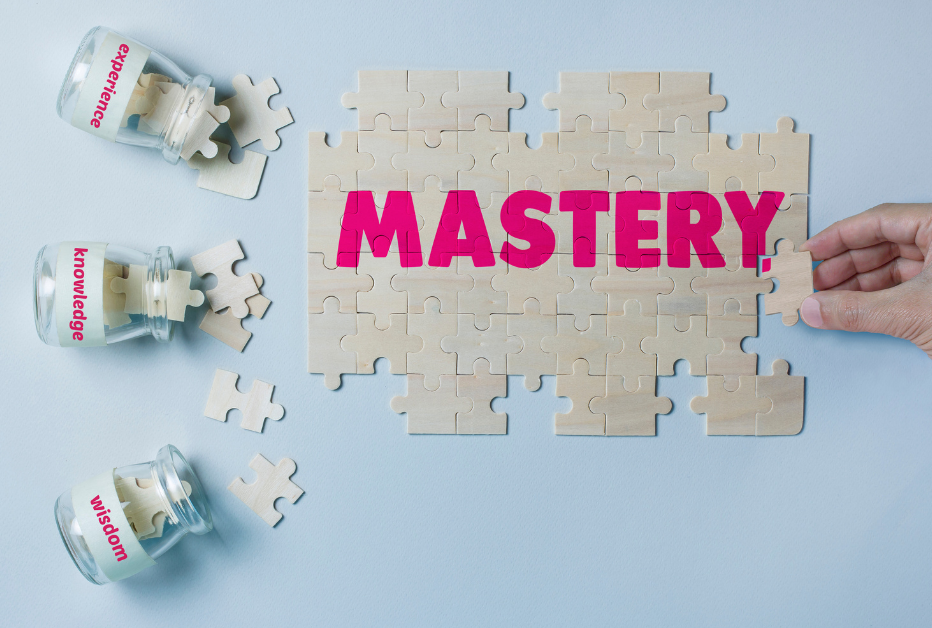
Mastery is a profound and timeless concept that has intrigued humanity for centuries. It signifies the pinnacle of expertise and skill in a particular domain or discipline, achieved through dedicated practice, learning, and a deep understanding of the subject matter. 

Because an important principle of becoming a modern elder must include someone who imparts wisdom to younger generations while continuing to learn, mastery is a compelling concept to explore. This introduction will provide an overview of what mastery entails and how it can be a guiding principle in the journey to becoming a modern elder.

A Lifelong Pursuit: Mastery is not a destination but a lifelong journey. It involves a commitment to continual improvement and growth. In the same way that the world around us is constantly changing, mastery is a dynamic process that evolves and develops over time.

Deliberate Practice: Achieving mastery requires more than just accumulating knowledge; it demands deliberate practice. This practice involves setting specific goals, seeking constructive feedback, and pushing the boundaries of your abilities. As you aim to invest in younger generations, deliberate practice can help you refine your mentoring skills and stay relevant in the fast-paced digital world.

Deep Knowledge: To be a master in any field, one must possess deep knowledge and understanding. While I have long practiced syntopical reading (hospitality in the home, the hospitality industry, and the history of Walt Disney are examples), a commitment to voracious reading in multiple areas aligns with this aspect of mastery. It’s about going beyond surface-level information and gaining a profound insight into your chosen areas of interest. A caution – it is not just knowledge for knowledge’s sake, but the applying the wisdom of what you’ve learned along the way.

Resilience and Perseverance: Mastery is often marked by setbacks and challenges. It’s crucial to develop resilience and the determination to overcome obstacles. This resilience is valuable not only in a personal journey but also as a “modern elder” guiding and motivating younger generations.

Legacy and Mentorship: Masters often become mentors, passing on their knowledge to the next generation. A desire to invest in younger generations resonates with this aspect of mastery. It involves not only imparting knowledge but also sharing the wisdom gained through years of experience (as noted in Deep Knowledge above). Mastery is not just about personal expertise but also about the profound impact it can have on those you mentor and the legacy you leave behind.

Adaptation and Innovation: The concept of mastery is not static. It involves staying open to new technologies, ideas, and approaches. As someone who values contrarian ideas and new technologies, I consider myself open to the mindset of someone who continually adapts and innovates.

In my recent reflections on the concepts of mastery, my concepts of schooling – from elementary all the way to post-graduate programs – are not an end point in discovery and learning, but a waypoint on the journey.

My “education” didn’t teach me what I needed to know as much as how I needed to learn.

On this journey towards mastery – viewed as a lifelong pursuit but only fully developed in later life – I am sure to encounter challenges, make discoveries, and evolve both personally and professionally. As noted previously, it combines an educational and vocational history with an insatiable curiosity for the benefit of those around me, especially younger generations. 

Do not think that what is hard for you to master is humanly impossible; and if it is humanly possible, consider it within your reach.

Marcus Aurelius