Level 3: Lead by Production

Definition of a Level 3 Leader: People follow you because of what you have done for the organization

…good leaders don’t just create a pleasant working environment. They get things done! That’s why they must move up to Level 3, which is based on results.

          John Maxwell, The 5 Levels of Leadership

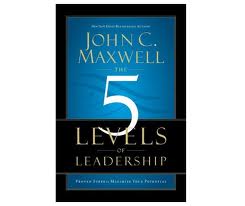
Today’s post is the third of a series of five that takes a closer look at John Maxwell’s latest book, The 5 Levels of Leadership. As indicated in the introduction to this series, “5 Levels” has been five years in the making. I’ve been in leadership development in ChurchWorld for over 30 years – and I’ve been looking for a resource like this. 

To whet your appetite and convince you to drop everything and get your own copy today, over this series I’m going to quote Maxwell’s top 3 points in each of five sections for each of the 5 Levels. In math shorthand, that’s 3 x 5 x 5. The product of that equation is a leadership development gold mine for you!

 Level 3 – Production

 The Upside of Production

  1. Leadership production gives credibility to the leader
  2. Leadership production models and sets the standard for others visually
  3. Leadership production brings clarity and reality to vision

 The Downside of Production

  1. Being productive can make you think you’re a leader when you’re not
  2. Productive leaders feel a heavy weight of responsibility for results
  3. Production leadership requires making difficult decisions

 Best Behaviors on Level 3

  1. Understand how our personal giftedness contributes to the vision
  2. Cast vision for what needs to be accomplished
  3. Begin to develop your people into a team

 Beliefs That Help a Leader Move Up to Level 4

  1. Production is not enough
  2. People are an organization’s most appreciable asset
  3. Growing leaders is the most effective way to accomplish the vision

 Guide to Growing Though Level 3

  1. Be the team member you want on your team
  2. Translate personal productivity into leadership
  3. Understand everyone productivity niche

Leading and influencing others becomes fun on this level. Success and productivity have been known to solve a lot of problems. On Level 3, leaders can become change agents. They can tackle tough problems and face thorny issues. They can make difficult decisions that will make a difference. They can take their people to another level of effectiveness. 

Tomorrow: Level 4 – People Development
Level 2: Lead by Permission

Definition of a Level 2 Leader: People follow you because they want to

The agenda for leaders on Level 2 isn’t preserving their position. It’s getting to know their people and figuring out how to get along with them. You can like people without leading them, but you cannot lead people well without liking them.

          John Maxwell, The 5 Levels of Leadership

Today’s post is the second of a series of five that takes a closer look at John Maxwell’s latest book, The 5 Levels of Leadership. As indicated in the introduction to this series, “5 Levels” has been five years in the making. I’ve been in leadership development in ChurchWorld for over 30 years – and I’ve been looking for a resource like this.

To whet your appetite and convince you to drop everything and get your own copy today, over this series I’m going to quote Maxwell’s top 3 points in each of five sections for each of the 5 Levels. In math shorthand, that’s 3 x 5 x 5. The product of that equation is a leadership development gold mine for you! 

Level 2 – Permission

The Upside of Permission

  1. Leadership permission makes work more enjoyable
  2. Leadership permission increases the energy level
  3. Leadership permission opens up channels of communication

The Downside of Permission

  1. Permission leadership appears too soft for some people
  2. Leading by permission can be frustrating for achievers
  3. Permissional leaders can be taken advantage of

Best Behaviors on Level 2

  1. Connect with yourself before trying to connect with others
  2. Develop a people-oriented leadership style
  3. Practice the golden rule

Beliefs That Help a Leader Move Up to Level 3

  1. Relationships alone are not enough
  2. Building relationships requires twofold growth
  3. Achieving the vision as a team is worth risking the relationship

Guide to Growing Through Level 2

  1. Be sure you have the right attitude toward people
  2. Connect with yourself
  3. Understand where you’re coming from

Moving up to Level 2 is an important development in leadership because that is where the followers give their supervisors permission to lead them. People change from being subordinates to followers for the first time, and that means there is movement. Leadership always means that people are going somewhere. They aren’t static. No journey, no leadership.

Tomorrow: Level 3 – Production

Level 1: Lead by Position

Definition of a Level 1 leader: People follow you because they have to

Positional leadership is based on the rights granted by the position and the title. Nothing is wrong with having a leadership position. Everything is wrong with using a position to get people to follow. Position is a poor substitute for influence.

          John Maxwell, The 5 Levels of Leadership

 Today’s post is the first of a series of five that takes a closer look at John Maxwell’s latest book, The 5 Levels of Leadership. As indicated in the introduction to this series, “5 Levels” has been five years in the making. I’ve been in leadership development in ChurchWorld for over 30 years – and I’ve been looking for a resource like this.

To whet your appetite and convince you to drop everything and get your own copy today, over the next five days I’m going to quote the top 3 points in each of five sections for each of the 5 Levels. In math shorthand, that’s 3 x 5 x 5. The product of that equation is a leadership development gold mine for you!

Level 1 – Position

The Upside of Position

1.       A leadership position is usually given to people because they have leadership potential

2.       A leadership position means authority is recognized

3.       A leadership position is an invitation to grow as a leader

The Downside of Position

1.       Having a leadership position is often misleading

2.       Leaders who rely on position to lead often devalue people

3.       Positional leaders feed on politics 

Best Behaviors on Level 1

1.       Stop relying on position to push people

2.       Trade entitlement for movement

3.       Leave your position and move toward your people 

Beliefs That Help a Leader Move Up to Level 2

1.       Titles are not enough

2.       People – not position – are a leader’s most valuable asset

3.       A leader doesn’t need to have all the answers

Guide to Growing through Level 1

1.       Thank the people who invited you into leadership

2.       Dedicate yourself to leadership growth

3.       Define your leadership

Position is a good starting place – but great leaders are not content to stay there. Moving up from Level 1 to Level 2 requires the greatest personal change from a leader. It requires a change of beliefs and attitudes toward other people and leadership. But here’s the truth: once you decide to include others in the leadership journey, you are well on your way to achieving success at the other levels.

Tomorrow: Level 2 – Permission

Getting a Handle on this Leadership Thing

A church leader I was having a conversation with the other day posed this question: “How can I develop leaders in my church?”

Talk about a loaded question!

The topic of leadership development is usually one of the top three categories of questions that ChurchWorld leaders ask when I am consulting with them. It was a question I always had in the 23+ years I served on a church staff; it’s been a recurring question over the last 7+ years I have been serving as a church development consultant. I also suspect it will be around as long as we have people in our churches!

I don’t have the definitive answer, but I do have an excellent resource on all things leadership: the wisdom and writings of John Maxwell. From his foundational service as a pastor to the founding of EQUIP, Maxwell’s leadership lessons have enlightened corporate CEOs, foreign government leaders, non-profit leaders – and countless ChurchWorld leaders just like you.

Maxwell’s latest book, The 5 Levels of Leadership, contains one of the most succinct answers to the question above. The Five Levels of Leadership:

  • Provides a clear picture of leadership
  • Defines leadership as a verb, not a noun
  • Breaks down leading into understandable steps
  • Provides a clear game plan for leadership development
  • Aligns leadership practices, principles, and values

Maxwell’s book is dedicated to understanding, and developing, the 5 Levels. Each section  gives you the opportunity to learn the upside – and downside of that level; the best behaviors for that level; the beliefs that help a leader move up to the next level, and how that level ties into Maxwell’s “Laws of Leadership.” Each section then concludes with a growth guide for that level.

Beginning tomorrow and continuing for the next 5 days, I will pull out the highlights of John Maxwell’s 5 Levels of Leadership in his own words. I hope that will entice you to pick up a copy and dive into on your own!

As for me, the next time a ChurchWorld leader asks “How can I develop leaders in my church?” I will simply pull out my Kindle and invite that leader for a discussion around the 5 Levels.

Tomorrow: Level 1 – Position


I’m Hungry

I love food. This love of food runs in, and through, my family. It began with my mother, a transplanted Midwesterner who adapted to Southern cooking in the mid 1950s and honed the craft with family and church for almost 60 years. It continues with two of my sons: the oldest, a restaurant chef and regional trainer with Outback; and the youngest, a first year student in Johnson and Wales University’s Culinary Arts/Food Service Management program.

And of course, I practice cooking when I can: old standby recipes that have become family favorites, new ones pulled from magazines or off the Web.  One look at me and you see I don’t miss too many meals!

Then there is the learning part: I read food magazines, culinary books, first person narratives about life in the industry, and so on. When I eat out, I focus on the food – and the people preparing and delivering it. It’s always instructive.

Beyond the simple love of food, I think that the food and culinary industry can be a great teacher as well. For instance, ChurchWorld leaders would be well advised to emulate chefs. They also would benefit from having a great “stock.” And of course leaders should use all their senses – just like a good chef does.

Over the next few days, I want to invite you on a food journey that focuses on leadership. I hope to uncover some new dishes, revisit some old classics, and hopefully give you some ideas that will help you create just the “menu” you need in your organization.

I suppose Bon Appetite! is too corny – but it rolls off the tongue, doesn’t it?

Wanted: Volunteers who are FAT

The most popular New Year’s resolution involves loosing weight, but that’s not the kind of FAT I’m talking about.

At the heart of volunteer expectations, you should find people who want to be FAT:

Faithful – a dual meaning here: faithful to service to God, and faithful in serving others through your organization

Available – again, a dual meaning: making yourself available to serve in the first place, and then making time to serve

Teachable – skill sets can be taught, but you have to start with a teachable spirit first.

When you have volunteers who are FAT, there’s no biggest loser – only winners all the way.

Good Cooking is Simply a Series of Problems Solved

The title of this post is actually a quote from one of the instructor chefs at the CIA’s cooking school. Author Michael Ruhlman, in “The Making of a Chef,” chronicles his time at the legendary cooking school, the oldest and most influential in America.

The comment came in response to a student’s unique suggestion of how to keep hollandaise sauce at just the right temperature to keep it from “breaking”. The chef had never thought of his idea, and encouraged him (and the rest of the class) to approach a problem from a unique angle (outside the box” thinking?).

This line of thought falls right into a post by Seth Godin entitled “Sell the Problem.” He noted that many business to business marketers tend to jump right into features and benefits, without taking the time to understand if the person on the other end of the conversation/call/letter believes they even have a problem.

The challenge is this: if your organization doesn’t think it has a  problem, you won’t be looking for a solution. You won’t wake up in the morning dreaming about how to solve it, or go to bed wondering how much it’s costing you to ignore it.

And so the marketing challenge is to sell the problem.

I’m passionate about helping churches thrive by turning challenges (problems) into opportunities. It’s very personal with me – I want to understand prospective clients so well that I know their situation almost as well as a leader or staff member. In fact, that statement, made a couple of years ago by a pastor, is one of the highlights of my career!

It’s my job to understand their problems.

When a prospect comes to the table and says, “we have a problem,” then you’re both on the same side of the table when it comes time to solve it.

All I have to do now is follow the recipe – a series of problems solved.