Perspective Shifting: How to See Every Challenge Through Fresh Eyes

In a world increasingly divided by rigid viewpoints and echo chambers, the ability to shift perspectives has become one of the most valuable skills a person can develop. Far from being wishy-washy or indecisive, perspective shifting represents a sophisticated form of mental agility that can transform how we navigate challenges, resolve conflicts, and lead others effectively.

Today’s article is the ninth of a 12-part exploration of the Modern Elder’s core competencies distilled from my 40+ year career journey. Perspective Shifting is the capacity to reframe challenges through multiple lenses based on diverse life experiences. The secret to thriving in life’s transitions is embracing the beginner’s mindset – starting fresh may seem counterintuitive, but novelty creates vivid memories and slows our perception of time, while flow states offer psychological pauses in aging. Curiosity becomes your compass, functioning like hunger to fuel dopamine-driven learning, especially “connective curiosity” that deepens relationships through genuine interest in others’ experiences. To stay curious, practice “vujá dé” – the opposite of déjà vu – by viewing familiar situations with fresh eyes and discovering extraordinary insights in ordinary moments through careful observation and openness to new perspectives.

The Foundation: How Diverse Life Experiences Create Unique Viewpoints

Every person carries a unique lens shaped by their accumulated experiences, cultural background, education, and personal struggles. A software engineer who grew up in rural poverty will approach problem-solving differently than one raised in suburban comfort. A parent managing work-life balance sees time constraints through different eyes than a single professional. A person who has overcome significant health challenges often develops a perspective on resilience that others may struggle to comprehend.

These diverse backgrounds aren’t just interesting biographical details – they’re the raw material for innovative solutions. When we recognize that each person’s viewpoint is both limited and valuable, we begin to understand perspective shifting not as abandoning our beliefs, but as temporarily borrowing someone else’s mental framework to expand our understanding.

The most effective leaders and problem-solvers are often those who have lived multiple lives: the executive who started in the mailroom, the doctor who was once a patient, the teacher who struggled as a student. They’ve developed what might be called “perspective fluency” – the ability to move fluidly between different ways of seeing the world.

Techniques for Seeing Challenges Through Multiple Frames

Perspective shifting begins with deliberate practice. One powerful technique is the “stakeholder walk-around,” where you systematically consider how each person affected by a situation might view it. When facing a budget cut, for instance, walk through the perspective of employees, customers, shareholders, and community members. What fears, hopes, and priorities would each group bring to the table?

Another effective method is temporal perspective shifting – viewing challenges through the lens of different time horizons. How would you see this problem if you only had one day to solve it versus one year? What would matter most if you were looking back on this situation five years from now? This technique often reveals that what feels urgent may not be truly important, and vice versa.

The “worst-case scenario” exercise can also unlock new perspectives. Instead of avoiding negative outcomes, deliberately explore them. What would happen if this project failed completely? What opportunities might emerge from apparent setbacks? This isn’t pessimism – it’s strategic thinking that prepares you for multiple futures.

Role reversal offers another powerful tool. If you’re a manager dealing with employee complaints, spend time genuinely imagining yourself in their position. What would your daily experience feel like? What information would you have access to, and what would remain hidden? This technique often reveals communication gaps and systemic issues that aren’t visible from the top.

Using Perspective Shifting in Conflict Resolution

When conflicts arise, most people become more entrenched in their positions. Perspective shifting offers a different path. Instead of fighting to prove your point, you become genuinely curious about understanding the other person’s viewpoint. This doesn’t mean agreeing with them – it means developing enough empathy to see how a reasonable person could hold their position.

In practice, this might sound like: “Help me understand what this situation looks like from your side” or “What am I missing about your experience that would help me see this differently?” These questions signal that you’re genuinely interested in understanding, not just waiting for your turn to speak.

Effective mediators often use perspective mirroring, where they reflect back each party’s viewpoint in a way that the other side can understand. They might say, “Sarah, it sounds like from your perspective, this deadline feels arbitrary and you’re worried about quality. Mike, you’re seeing this as a critical business commitment that affects client relationships. Both of you care about doing good work – you’re just weighing different risks.”

Teaching Perspective Skills to Teams

Building perspective-shifting capabilities across a team requires intentional cultivation. Start by creating psychological safety where people feel comfortable sharing their viewpoints without judgment. Regular “perspective rounds” in meetings, where team members briefly share how they see a situation, can normalize this practice.

Encourage devil’s advocate thinking by rotating who plays this role. When someone presents an idea, assign another team member to genuinely explore potential weaknesses or alternative approaches. Make this a constructive exercise focused on strengthening ideas rather than attacking them.

Cross-functional collaboration naturally builds perspective skills. When engineers work directly with customer service representatives, or when marketing teams spend time with product developers, they begin to understand different professional worldviews. Create structured opportunities for these interactions.

Story sharing sessions can also build empathy and perspective awareness. When team members share stories about their backgrounds, challenges they’ve overcome, or different cultural experiences, they build a reservoir of diverse perspectives to draw from when solving problems.

When to Hold Firm Versus Shift Perspective

Perspective shifting isn’t about becoming a chameleon who changes colors to match their surroundings. There are times when holding firm on your values and convictions is not only appropriate but necessary. The key is understanding the difference between core principles and preferred approaches.

Core values – like integrity, respect for human dignity, or commitment to quality – typically shouldn’t shift based on perspective. These represent your fundamental beliefs about right and wrong. However, your strategies for implementing these values might change dramatically based on new perspectives.

Hold firm when dealing with ethical violations, safety issues, or situations where compromise would violate your fundamental values. Be willing to shift perspective when exploring different approaches to shared goals, understanding why good people disagree, or finding creative solutions to complex problems.

The superpower of perspective shifting lies not in abandoning your viewpoint, but in developing the confidence and skill to temporarily step outside it. When you can see the world through multiple lenses while maintaining your core integrity, you become a more effective leader, collaborator, and problem-solver. In our complex, interconnected world, this ability to bridge different viewpoints may be one of the most crucial skills for creating positive change.

Relationships & Relevance: A Modern Elder’s Approach to Personal Branding & Networking

Over the past decade, the concept of a “Modern Elder” has emerged – a seasoned professional who combines years of experience with a commitment to ongoing learning and adaptation. As we wrap up the series exploring the essential skills for these Modern Elders, we arrive at our tenth installment: Personal Branding and Networking. This skill set is crucial for maintaining relevance, influence, and career momentum in an increasingly digital and connected world.

Understanding Personal Branding and Networking

Personal branding and networking are interconnected skills that can significantly impact a Modern Elder’s career trajectory. These competencies involve showcasing your unique value and building meaningful professional relationships in both traditional and digital spheres.

Personal branding and networking encompass two key components:

  1. Skill in articulating one’s value proposition
  2. Ability to build and maintain professional relationships, both online and offline

Let’s delve deeper into each of these aspects and their significance for Modern Elders.

Articulating One’s Value Proposition

In a competitive job market, the ability to clearly communicate your unique strengths is invaluable. For Modern Elders, articulating a compelling value proposition is the key to standing out and demonstrating the worth of their extensive experience.

A value proposition is a clear statement that explains how your unique blend of skills, experience, and insights can benefit others. For Modern Elders, this is particularly crucial as it helps to:

  • Differentiate yourself: In a job market that often favors youth, a well-crafted value proposition highlights the unique advantages of your extensive experience.
  • Stay relevant: By continually refining your value proposition, you demonstrate your ability to adapt and remain valuable in changing times.
  • Guide career decisions: A clear understanding of your value helps in choosing opportunities that best align with your strengths and goals.

Strategies for Articulating Your Value Proposition

Crafting an effective value proposition requires introspection, strategic thinking, and clear communication. Here are some strategies to help Modern Elders develop and refine their unique value proposition:

  • Reflect on your journey: Identify key experiences, skills, and insights you’ve gained over your career.
  • Pinpoint your unique offerings: What combination of skills and experiences sets you apart?
  • Understand your audience: Tailor your value proposition to the needs and interests of your target industry or role.
  • Craft a compelling narrative: Develop a concise, engaging story that illustrates your value.
  • Practice and refine: Regularly update your value proposition as you gain new skills and experiences.

Building and Maintaining Professional Relationships

Networking is more than just collecting business cards or LinkedIn connections. For Modern Elders, it’s about fostering genuine, mutually beneficial relationships that span generations and leverage both traditional and digital platforms.

Networking remains a cornerstone of professional success, and for Modern Elders, it’s about leveraging years of connections while continuing to expand and nurture new relationships. This involves:

  • Online networking: Utilizing digital platforms to maintain and expand your professional network.
  • Offline networking: Engaging in face-to-face interactions at industry events, mentoring programs, or community activities.
  • Intergenerational connections: Building relationships across age groups to stay connected with emerging trends and perspectives.

Strategies for Effective Networking

Successful networking requires a blend of traditional techniques and modern approaches. Here are some strategies that Modern Elders can employ to build and maintain a robust professional network:

  • Leverage existing relationships: Reconnect with former colleagues and clients, offering your expertise and support.
  • Embrace digital platforms: Maintain an active, professional presence on platforms like LinkedIn, Twitter, or industry-specific forums.
  • Attend industry events: Participate in conferences, workshops, and local meetups to connect with peers and stay current in your field.
  • Offer mentorship: Share your knowledge with younger professionals, fostering mutually beneficial relationships.
  • Seek reverse mentorship: Learn from younger colleagues about new technologies and emerging industry trends.
  • Join professional associations: Engage with groups relevant to your industry or areas of expertise.
  • Create content: Share your insights through blog posts, articles, or speaking engagements to establish thought leadership.

The Impact of Personal Branding and Networking for Modern Elders

When executed effectively, personal branding and networking can open doors to new opportunities and enhance a Modern Elder’s professional life. Let’s explore the multifaceted impact of these skills:

  • Enhanced career opportunities: A strong personal brand and network can lead to new job offers, consulting gigs, or board positions.
  • Increased influence: By articulating your value and maintaining strong relationships, you can shape industry conversations and decisions.
  • Continuous learning: Networking exposes you to new ideas and perspectives, fostering ongoing personal and professional growth.
  • Legacy building: Sharing your expertise through your brand and network allows you to make a lasting impact in your field.
  • Adaptation to change: Strong networking skills help you stay informed about industry shifts and emerging opportunities.

Overcoming Challenges

While personal branding and networking offer numerous benefits, Modern Elders may encounter specific obstacles in mastering these skills. Recognizing and addressing these challenges is crucial for success.

Modern Elders may face unique challenges in personal branding and networking:

  • Technology adoption: Staying current with digital networking tools may require extra effort.
  • Ageism: Crafting a personal brand that emphasizes the value of experience while demonstrating continued relevance.
  • Time management: Balancing networking activities with other professional and personal commitments.

For Modern Elders, personal branding and networking are not just about self-promotion or collecting connections. They’re about articulating the unique value that comes with years of experience and wisdom, and fostering meaningful relationships that benefit all parties involved. By mastering these skills, Modern Elders can ensure their continued influence, relevance, and success in an ever-evolving professional landscape.

As we navigate the complexities of today’s environments, the ability to clearly communicate one’s value and build strong, diverse professional relationships stands out as a critical skill. For Modern Elders, it’s an opportunity to leverage their vast experience while continually growing and adapting, ensuring their voices remain influential and their contributions valued across generations.


Connecting the Dots: The Modern Elder’s Approach to Strategic Thinking

In the fast-paced, often short-sighted world we’re in, the ability to think strategically is a invaluable asset. For Modern Elders, strategic thinking is not just a skill – it’s a natural extension of their accumulated experience and wisdom. This article explores how Modern Elders can leverage their unique ability to see the big picture, recognize patterns, and anticipate long-term implications to become indispensable strategic assets in their organizations.

In our world today, any concept of “normal” is an illusion. The future constantly defies our predictions and plans, making adaptability crucial. While knowledge and answers are readily available, they quickly become outdated. Instead of seeking a stable norm or relying solely on facts, we must embrace constant change and use existing knowledge as a starting point for further exploration and discovery.

The Essence of Strategic Thinking

Strategic thinking for Modern Elders encompasses two key components:

  • Big Picture Perspective: The ability to step back and see the broader context and long-term implications of decisions and actions.
  • Pattern Recognition: The capacity to identify trends, cycles, and recurring themes based on years of accumulated experience.

Cultivating the Big Picture Perspective

Modern Elders are uniquely positioned to see the big picture due to their wealth of experience. To enhance this ability:

  • Contextual Analysis: Always consider decisions within the broader context of industry trends, economic conditions, and societal changes.
  • Long-Term Thinking: Look beyond immediate results to consider the potential long-term consequences of actions and strategies.
  • Systems Thinking: Understand how different parts of an organization or industry interact and influence each other.
  • Scenario Planning: Regularly engage in exercises that envision various possible futures and their implications.
  • Cross-Industry Insights: Draw parallels and lessons from other industries to gain fresh perspectives on your own.
  • Historical Perspective: Use your knowledge of past events and cycles to inform future predictions and strategies.

Practical steps to develop big picture thinking:

  1. Regular Reflection: Set aside time for deep thinking and reflection on broader issues affecting your organization and industry.
  2. Diverse Information Sources: Consume a wide range of information from various fields to broaden your perspective.
  3. Collaborative Discussions: Engage in strategic conversations with colleagues from different departments and levels.
  4. Mentorship: Share your big picture insights with younger colleagues while also gaining fresh perspectives from them.

Mastering Pattern Recognition

Pattern recognition is a powerful tool that Modern Elders can bring to the table. It involves:

  • Trend Identification: Spotting emerging trends before they become obvious to others.
  • Cycle Awareness: Recognizing recurring business, economic, or social cycles that may impact strategy.
  • Anomaly Detection: Noticing when current events or data deviate from expected patterns, potentially signaling important shifts.
  • Cross-Pollination: Identifying patterns in one area that may apply to another, fostering innovation.

To enhance pattern recognition skills:

  1. Reflection on Experience: Regularly review past experiences and extract lessons and patterns.
  2. Data Analysis: Combine your intuitive pattern recognition with data-driven insights for more robust conclusions.
  3. Interdisciplinary Learning: Study patterns from various fields (e.g., nature, history, psychology) to apply to business contexts.
  4. Mindful Observation: Practice being present and observant in various situations to pick up on subtle patterns.
  5. Hypothesis Testing: Form hypotheses based on perceived patterns and test them against new information.

Applying Strategic Thinking in the Modern Workplace

As a Modern Elder, your strategic thinking can add significant value in various ways:

  • Decision Making: Provide a balanced perspective that considers both short-term needs and long-term implications.
  • Risk Management: Identify potential risks and opportunities that others might overlook.
  • Innovation: Use pattern recognition to inspire novel approaches and solutions.
  • Mentorship: Guide younger colleagues in developing their own strategic thinking skills.
  • Change Management: Help organizations navigate change by providing historical context and anticipating future trends.
  • Crisis Navigation: Draw on past experiences to maintain calm and strategic focus during turbulent times.

Overcoming Challenges to Strategic Thinking

While Modern Elders have a natural advantage in strategic thinking, there are potential pitfalls to avoid:

  • Resistance to Change: Guard against using past experiences to resist necessary changes.
  • Overconfidence: Balance confidence in your insights with openness to new information and perspectives.
  • Analysis Paralysis: Avoid getting stuck in endless analysis; know when to act on your strategic insights.
  • Communication Barriers: Work on articulating your strategic thoughts clearly to those who may not share your level of experience.

To address these challenges:

  1. Continuous Learning: Stay current with new methodologies and technologies that can enhance your strategic thinking.
  2. Diverse Collaboration: Regularly engage with younger colleagues and those from different backgrounds to challenge your assumptions.
  3. Balanced Approach: Combine your intuitive pattern recognition with data-driven analysis for more robust strategic insights.
  4. Effective Communication: Develop skills in storytelling and data visualization to convey complex strategic ideas more effectively.

As a Modern Elder, your capacity for strategic thinking is one of your most powerful assets. Your ability to see the big picture, recognize patterns, and anticipate long-term implications can provide invaluable guidance in an increasingly complex and fast-paced business environment.

By consciously cultivating and applying these skills, you position yourself as a crucial strategic asset to your organization. Your unique perspective can help bridge the gap between short-term pressures and long-term sustainability, fostering more resilient and forward-thinking organizational strategies.

Strategic thinking is not about predicting the future with certainty, but about being prepared for various possibilities and guiding your organization towards sustainable success. As you continue to refine your strategic thinking skills, you’ll not only enhance your own value as a Modern Elder but also contribute significantly to the long-term success and resilience of your organization.


Part Seven in a Series – Find the Introduction here, along with previously published articles.


The Power of Panoramic Perception: Unlocking Leadership Agility with Horizon Gazing Practices


It’s not what you look at, its how you look at it.

It’s not just about what you visually observe, but rather how you perceive and engage with your surroundings that can impact your well-being. While spending time outdoors in nature is undoubtedly beneficial, you may not be fully capitalizing on those advantages if you’re not actively working to heighten your senses and awareness. 

An intriguing theory suggests that our ancestors would scan the horizon panoramically to check for potential threats, inducing a calming state when no immediate danger was present. Conversely, if a threat emerged, their vision would narrow to laser focus, triggering the fight-or-flight stress response. This notion raises the possibility that simply adjusting how we look at our environment could influence our emotional state.

Neuroscientific research supports this idea. Studies show that when we visually lock onto something stressful or exciting, our field of view constricts to increase focus while our eyes subtly turn inwards. However, by expanding our peripheral vision to take in a wider view, we can effectively disengage the body’s stress reaction pathways. Deliberately relaxing our gaze to encompass our full surroundings can induce physiological calm.

But vision isn’t the only sense that affects well-being. Often, we become so consumed by internal thoughts during outdoor activities that we fail to truly experience and appreciate our multisensory surroundings. By mindfully engaging each of our senses in turn – absorbing the sounds, feeling the air currents, touching textures – we activate different regions of the brain. This grounding practice helps center us in the present moment while allowing an opportunity to find perspective amidst life’s stresses.

The key is not just passively observing nature, but purposefully directing your senses to fully immerse yourself in the experience. Adopting this intentional mindset can unlock the rejuvenating benefits that connection with the outdoor world can provide.

The intentional mindset described above can also be helpful in another type of gazing at the horizon.

The concept of “horizon gazing” refers to the practice of looking ahead and anticipating future trends, changes, and potential opportunities or challenges that may arise. In the context of leadership development, both for individuals and organizations, horizon gazing plays a crucial role in preparing leaders to navigate and adapt to an ever-changing landscape.

For individuals aspiring to develop their leadership skills, horizon gazing helps them cultivate a forward-thinking mindset. By continuously scanning the horizon for emerging developments in their industry, technology, societal shifts, and other relevant domains, they can better anticipate the future demands and competencies required of effective leaders. This foresight enables them to proactively acquire the necessary knowledge, skills, and mindsets to lead effectively in the face of impending changes.

In an organizational context, horizon gazing is a vital component of strategic planning and leadership development initiatives. Organizations that embrace this practice are better positioned to identify and respond to potential disruptions, emerging customer needs, and competitive threats or opportunities. By fostering a culture of horizon gazing, organizations can:

Identify future talent requirements: By anticipating future trends and challenges, organizations can better understand the leadership competencies and skills that will be needed to navigate the changing landscape. This allows them to develop targeted leadership development programs and succession planning strategies to cultivate the required talent pipeline.

Adapt organizational structures and processes: Horizon gazing can reveal the need for organizational restructuring, process optimization, or the adoption of new technologies or business models. By recognizing these needs early, organizations can proactively adapt and equip their leaders with the necessary tools and capabilities to lead through transformational changes.

Foster innovation and agility: Leaders who are adept at horizon gazing are better equipped to anticipate and respond to market shifts, customer preferences, and technological advancements. This agility enables organizations to stay ahead of the curve, fostering a culture of innovation and continuous improvement.

Mitigate risks and seize opportunities: By identifying potential risks and opportunities on the horizon, organizations can develop contingency plans, implement risk mitigation strategies, and position themselves to capitalize on emerging opportunities before their competitors.

Ultimately, the practice of horizon gazing cultivates a forward-thinking mindset and strategic foresight, which are essential qualities for effective leadership in an ever-changing world. By embedding this concept into leadership development efforts, individuals and organizations can better prepare themselves to navigate uncertainty, adapt to change, and seize emerging opportunities for growth and success.

In other words, I’m adding the skill of horizon gazing to my journey to becoming a Modern Elder.


Why Most Successful Leaders Practice Design Thinking

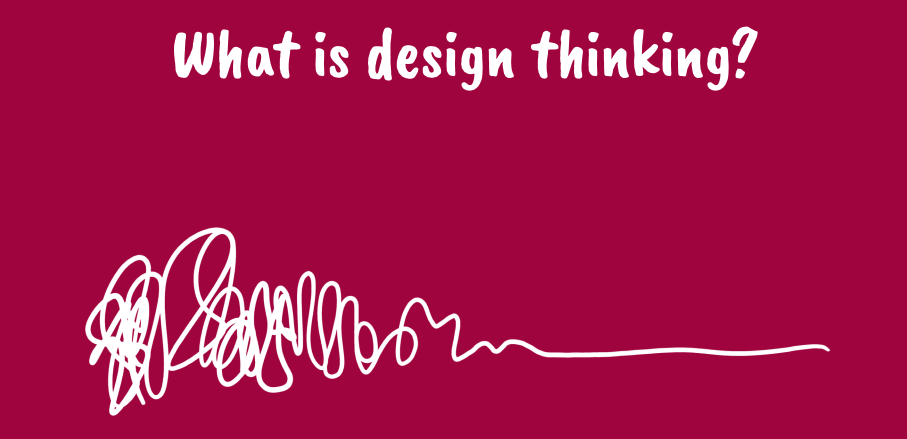
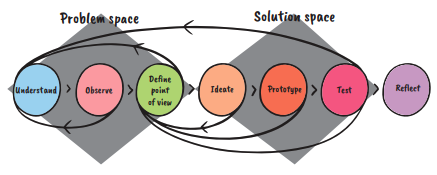
Because design thinking is actually a systematic approach to problem solving.

Find a leader who is innovative in any organization, and he has likely been practicing design thinking all along. It starts with the people we serve and the ability to create a better future for them. It acknowledges that we probably won’t get that right the first time. It does not require super powers.

It’s time for Design Thinking in your organization.

Design thinking can do for organic growth and innovation what TQM did for quality – take something we always have cared about and put tools and processes into the hands of leaders to make it happen.

Jeanne Liedtka and Tim Ogilvie, Designing for Growth

Design Thinking isn’t just choosing the right images and fonts for your next website revision. It’s not about renovating the physical spaces of your organization.

In the old days, designers and design thinking were an afterthought, the people and process at the end of the production. Engineers would hand over something that was functionally effective and have the designers make it look good. Those days are over.

Today, design is about experiences as well as products. It’s about services as much as it is hard goods.

It’s a problem-solving process that incorporates the needs of “customers,” team members, and partners in your organization’s mission. It’s a way of working that creates and refines real-world situations.

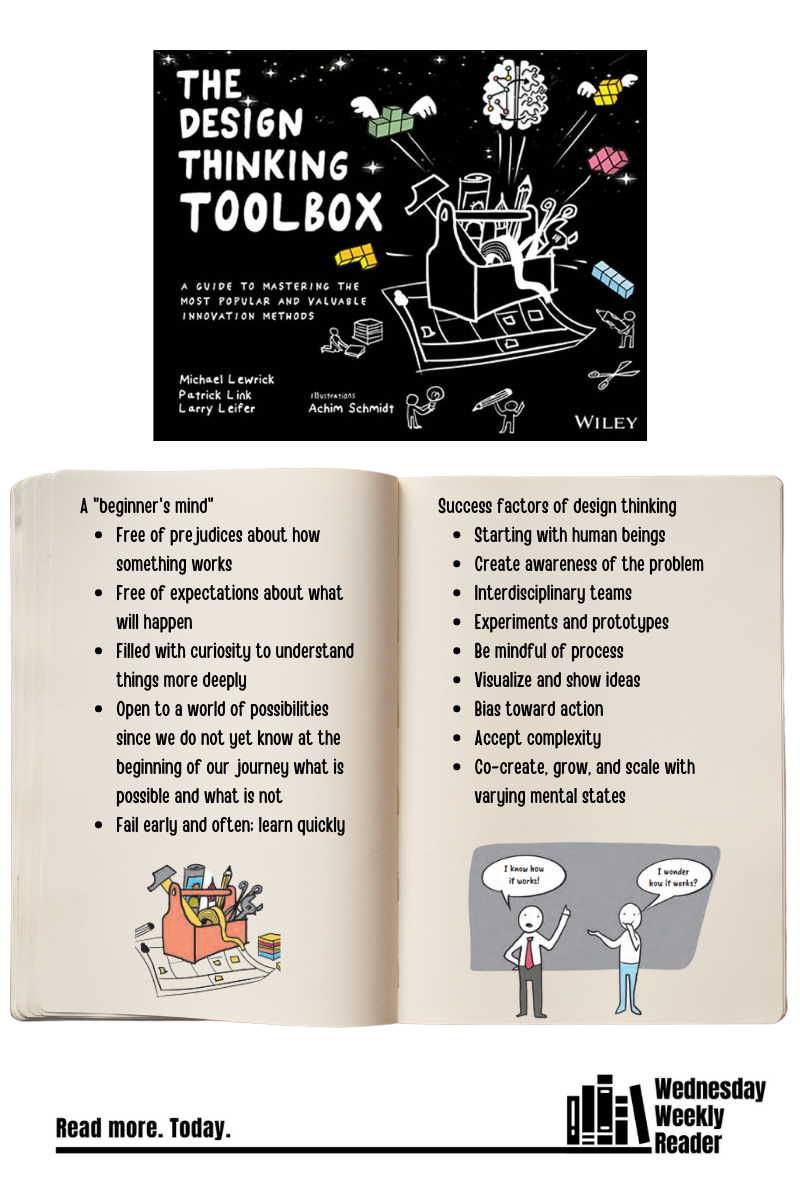
The Design Thinking Toolbox explains the most important tools and methods to put Design Thinking into action. Based on the largest international survey on the use of design thinking, the most popular methods are described in four pages each by an expert from the global Design Thinking community.

If you are involved in innovation, leadership, or design, these are tools you need. Simple instructions, expert tips, templates, and images help you implement each tool or method.

  • Quickly and comprehensively familiarize yourself with the best design thinking tools
  • Select the appropriate warm-ups, tools, and methods
  • Explore new avenues of thinking
  • Plan the agenda for different design thinking workshops
  • Get practical application tips

The Design Thinking Toolbox will help innovators master the early stages of the innovation process.

What challenge are you facing today that could use the discipline of Design Thinking?


Part of a regular series on 27gen, entitled Wednesday Weekly Reader

During my elementary school years one of the things I looked forward to the most was the delivery of “My Weekly Reader,” a weekly educational magazine designed for children and containing news-based, current events.

It became a regular part of my love for reading, and helped develop my curiosity about the world around us.

Are You REALLY Listening, or Just Waiting to Talk?

How many people do you know that approach a conversation as if it were a competition, going something like this: When I pause, you jump in with your thoughts; when you pause, I jump back in so I can top your story or hijack the conversation back to my side.

It’s a fight for control.

Your conversations will be smoother and more successful if you remember that every sentence in a conversation has a history, and you have to practice deliberate listening skills to understand that history better so you can understand the person behind it better.

There’s another way to look at it. The human brain can process somewhere between 350 and 550 words a minute, while most people usually only speak around 120 words a minute. In virtually every exchange of communication, each participating brain has room for 230-375 extra words’ worth of thought to float around. That gives our minds plenty of chance to drift and wander, whether we’re the one speaking or listening.

It’s so easy to slide into the basic communication pitfall of drifting away from the person speaking, often thinking about what we’re going to say next rather than being focused on what we’re communicating or what’s being said to us.

It’s time to challenge your brain to stay in the moment, to be fully present in listening to a conversation, not just preparing how you’re going to respond.

It’s called active listening.

THE QUICK SUMMARY – Good Talk by Daniel Stillman

Leadership is the art of designing transformative conversations.

Real change is needed, now, more than ever. This change can’t happen through force, edict or persuasion. The future will be built through conversation – and Good Talk will show you how.

Good Talk is a step-by-step framework to effect change in your personal and professional conversations. With dozens of tools and interactive components, Good Talk is a handbook to navigate the conversations that matter.

What’s Inside:

  • How to see the structure of conversations. Life is built one messy, slippery conversation at a time. While conversations feel hard to hold onto, ebbing and flowing, back and forth and into eventual silence, they each have a structure. The first step to changing your conversations is seeing what’s going on between the silence.
  • What is your Conversation Operating System? Who gets invited to the conversation? Who speaks first? Where does the conversation take place? What happens if someone messes up? In every conversation, there are elements that guide the exchange. The nine elements of the Conversation OS Canvas can help you to shift the direction of your conversations.
  • What is your conversational range? Conversations are more than dialogue. From the conversations in your head to the complex conversation that is your organization, you need to design conversations that matter across a huge range of sizes. Learn to master conversations from the boardroom and beyond.
  • How to design conversations that matter. The world needs fresh, creative conversations that are alive, and that work for all the people involved. How can you design conversations that matter? Leadership means designing the conditions for these conversations to happen. Learn the patterns and principles to make change possible.


A SIMPLE SOLUTION 

According to author Daniel Stillman, when two people are in a conversation, we take turns listening and speaking. 

What do we do with our turns?

Do you listen, or do you just wait to talk? 

Or do you take the role of listener seriously and enjoy your turn as the listener?

In conversation, we “see” speaking, whereas listening looks like “doing nothing.”

How often in conversations have you interrupted (intentionally or accidentally) the conversation, derailing the other person’s train of thought?

In your eagerness to move the conversation forward, to take your turn, you’ve stopped their turn too soon.

When two people are in a conversation, we take turns speaking and listening. Understanding your “turn-taking” patterns can dramatically shift your conversations for the better.

Daniel Stillman

Conversations can look like a sloshing sea of opinions and arguments, but there’s a pattern underlaying the seeming chaos. There are only a few distinct “moves” we can make inside a conversation, diagrammed below.

Are you someone tho prefers to take a turn? Or do you tend to wait and see which way the wind blows? The former is an “initiator” (at the base of the diamond); the latter is someone who “holds” space at waits (at the center).

Once someone has opened their mouth and opened the floor, what happens next? Some of us tend to immediately react, either positively or negatively (at the apex of the diagram). In both reactions, that move is fairly habitual. I’m sure you know someone who always has something nice to say about everything, or maybe you hang out with people who always focus on the negative.

The default reaction of listening deeply before expressing an opinion is a “reflective” response, seen on the right side of the diagram. This individual peels back layers of meaning before adding their own.

The fifth option could be to reframe the conversation. Reframing can look like “glass half full” thinking, or shifting problems into opportunities. Reframing can powerfully shift a conversation, or feel like an unwelcome erasure of a real issue on the table.

Each of these five “moves” steers the ship of the conversation.

Daniel Stillman, Good Talk

A NEXT STEP

Use the following “active listening script” from author Daniel Stillman to frame how you can deepen your connection with people.

  1. Paraphrase what you just heard the person say in neutral terms. Start with the phrase, “I’m hearing you say…” You can also use the phrase, “Okay, wait…” to give yourself a second to get centered.
  2. Confirm your summary, asking, “Is that right?” Or “Did I get that?”
  3. If they say yes; ask, “Is there anything I missed?” Go deeper.
  4. Wait. Count to three. If they confirm that there’s more, they’ll say more. If they indicate that you got it wrong, they will correct you if you give them time.
  5. Lather, rinse, repeat. Try step 1 again, or continue with normal turn-taking if you feel comfortable doing so.

Part of a regular series on 27gen, entitled Wednesday Weekly Reader

During my elementary school years one of the things I looked forward to the most was the delivery of “My Weekly Reader,” a weekly educational magazine designed for children and containing news-based, current events.

It became a regular part of my love for reading, and helped develop my curiosity about the world around us.

How to Reframe Problems and Develop New Solutions

We are living in an age of disruption. According to Fast Company co-founder William C. Taylor, you can’t do big things anymore if you are content with doing things a little better than everyone else, or a little differently from how you’ve done them in the past. The most effective leaders don’t just rally their teams to outrace the “competition” or outpace prior results. They strive to redefine the terms of competition by embracing one-of-a-kind ideas in a world filled with copy-cat thinking. 

What sets truly innovative organizations apart often comes down to one simple question: What can we see that others cannot?

If you believe that what you see shapes how you change, then the question for change-minded leaders in times of disruption becomes: How do you look at your organization as if you are seeing it for the first time?

The question is not what you look at, but what you see. 

Henry David Thoreau

When you learn to see with fresh eyes, you’re able to differentiate your organization from the competition (and your “competition” isn’t the church down the street). You’re able to change the way your organization sees all the different types of environments around it, and the way your others see your organization.

This mentality is the ability to keep shifting opinion and perception. We live in a world that is less black and white and more shades of gray world, not a black and while one. Seeing in this way means shifting your focus from objects or patterns that are in the foreground to those in the background. It means thinking of things that are usually assumed to be negative as positive, and vice versa. It can mean reversing assumptions about cause and effect, or what matters most versus least.

In a season filled with uncertainty, how can you cultivate a sense of confidence about what lies ahead?

THE QUICK SUMMARY – Stephen M. Shapiro, Invisible Solutions: 25 Lenses that Reframe and Help Solve Difficult Business Problems

Unprecedented access to infinite solutions has led us to realize that having all of the answers is not the answer. From innovation teams to creativity experts to crowdsourcing, we’ve turned from one source to another, spending endless cycles pursuing piecemeal solutions to each challenge we face.

What if your organization had an effective systematic approach to deal with any problem?

To find better solutions, you need to first ask better questions. The questions you ask determine which solutions you’ll see and which will remain hidden.

This compact yet powerful book contains the formulas to reframe any problem multiple ways, using 25 lenses to help you gain different perspectives. With visual examples and guidance, it contains everything you need to start mastering any challenge.

Apply just one of the lenses and you will quickly discover better solutions. Apply all of them and you will be able to solve any problem, in business and in life.

A SIMPLE SOLUTION 

There is no such thing as a new idea. It is impossible. We simply take a lot of old ideas and put them into a sort of mental kaleidoscope. We give them a turn and they make new and curious combinations. We keep on turning and making new combinations indefinitely, but they are the same old pieces of colored glass that have been in use through all the ages. 

Mark Twain

According to author Stephen M. Shapiro, the process for driving better results doesn’t start with great ideas – it starts with better questions.

When faced with disruption and myriad challenges, we crave answers. It’s a natural human instinct.

But having answers is not the answer.

Asking different and better questions is the key to finding better solutions.

By using “reframing lenses,” you will see your problems and opportunities more clearly, and come up with creative answers that will boggle your mind.

Reframing lenses are a powerful tool that transforms complex problems into simple and practical solutions.

By changing the questions you ask, you can uncover answers that were previously hidden from sight. And the tool to help you reframe those questions – and shine light on invisible solutions – are twenty-five lenses.

Stephen M. Shapiro

How do we systematically challenge our assumptions? Using the lens of “reframing” will help you bring your assumptions to the surface. The process of reframing requires that you systematically question the direction you are going.

To help you sift through the lenses, they are grouped into five categories, with five lenses per category:

Reduce Abstraction – Make questions more specific when they are too broad.

  • Leverage
  • Deconstruct
  • Reduce
  • Eliminate
  • Hyponym

Increase Abstraction – Make questions less specific if the challenge is too narrowly defined.

  • Analogy
  • Result
  • Concern Reframe
  • Stretch
  • Hypernym

Change Perspective – Look at the question with a fresh set of eyes.

  • Resequence
  • Reassign
  • Access
  • Emotion
  • Substitute

Switch Elements – Swap multiple factors to get new ideas.

  • Flip
  • Conflicts
  • Performance Paradox
  • Pain vs Gain
  • Bad Idea

Zero-In – Ask the best question to help solve your problem.

  • Real problem
  • Real business
  • Insights
  • Variations
  • Observation

Stephen M. Shapiro, Invisible Solutions: 25 Lenses that Reframe and Help Solve Difficult Business Problems

A NEXT STEP

Use the following ideas from author Stephen Shapiro as a way to begin reframing problems through the use of the lenses listed above. Even without having access to the book and complete definitions and explanations of the lenses, you will be able to see how valuable they can be in overcoming challenges.

Identify an issue, problem, opportunity, or challenge that you want to address. As you are doing this, remember to always bring your assumptions to the surface.

Write down your challenge on a chart tablet in the form of “How can we…”

Once you develop your first iteration of your “How can we” question, you can apply lenses to help you reframe it. Review the list above to see which lenses fit best. Or, better yet, try all of the lenses and force them to fit. You will find that every lens can be applied to any challenge, although some might be more difficult.

Write down as many variations as you can. Try to do it at least six times. A half dozen variations using at least six lenses. More is better as it stretches your thinking.

There are a couple of things to look out for as you go through this process. For starters, avoid jumping to solutions. It is so tempting to fry to find answers before you have created a great list of questions: Stay in the challenge formulation phase.

Also, it is valuable to apply one lens more than one time to a given problem. It is all too easy to find a quick reframe and move on. It takes more discipline to find multiple variations from a single lens.

Recognize that questions beget more questions. Sometimes when you ask a question, you might need to answer another question in order to move forward. Although answering an insight question might not provide a solution, it should provide information that will help you further reframe your primary question.

The point is that it is important to practice reframing. As you go through this process, ask which of the reframed questions seems to create the greatest results. Different questions will create different solutions, which will result in different levels of value.


Part of a regular series on 27gen, entitled Wednesday Weekly Reader

During my elementary school years one of the things I looked forward to the most was the delivery of “My Weekly Reader,” a weekly educational magazine designed for children and containing news-based, current events.

It became a regular part of my love for reading, and helped develop my curiosity about the world around us.

Rest is Not an Option for Leaders

They are too alive to die, and too dead to live.

This haunting observation of most people in the Western world was made by the Korean philosopher Byung-Chu Han.

We all have our own stories of trying to stay sane in the day and age of mobile phones, connected watches, a twenty-four-hour news cycle blaring from our devices, unceasing demands from family, church members, and our team, and …

Do you feel weary?

Do you feel burdened?

You’re not alone.

The most common answer to the question, “How are you?” is, “I’m good – just busy.”

That answer comes from everywhere, bridging gaps of gender, age, ethnicity, and class. Empty-nesters working from home are busy, even with their kids and grandkids spread across the country. New parents are busy, with a new mom headed back to work while the new dad begins the first week of parental leave. Even middle-schoolers are busy trying to juggle three different platforms of distance learning while helping around the home while trying to stay connected with their best friend in the neighborhood two streets over.

THE QUICK SUMMARY – Sacred Rest: Recover Your Life, Renew Your Energy, Restore Your Sanity by Saundra Dalton-Smith

Staying busy is easy. Staying well rested – now there’s a challenge.

How can you keep your energy, happiness, creativity, and relationships fresh and thriving in the midst of never-ending family demands, career pressures, and the stress of everyday life? 

In Sacred Rest, Dr. Saundra Dalton-Smith, a board-certified internal medicine doctor, reveals why rest can no longer remain optional.

Dr. Dalton-Smith shares seven types of rest she has found lacking in the lives of those she encounters in her clinical practice and research-physical, mental, spiritual, emotional, sensory, social, creative-and why a deficiency in any one of these types of rest can have unfavorable effects on your health, happiness, relationships, creativity, and productivity. 

Sacred Rest combines the science of rest, the spirituality of rest, the gifts of rest, and the resulting fruit of rest. It shows rest as something sacred, valuable, and worthy of our respect.

By combining scientific research with personal stories, spiritual insight, and practical next steps, Sacred Rest gives the weary permission to embrace rest, set boundaries, and seek sanctuary without any guilt, shame, or fear.

A SIMPLE SOLUTION

As a society that is now driven by better and faster technology, rest has become a lost art.

According to research, over eight million people in the United States struggle to fall asleep or stay asleep each and every night. 45 percent of Americans say that poor or insufficient sleep affected their daily activities at least once a week. This epidemic has led to poor job performance, depressions, and overall dissatisfaction with quality of life and productivity.

According to author Dr. Saundra Dalton-Smith, finding genuine rest is more than overcoming insomnia.

Sleep is not rest. As different parts of an intricate system, sleep and rest are designed to work together to ensure every part of you has a way to regenerate and be restored.

Aborting rest empties me of everything holy. It strips me of the ability to treasure life and peels away the value of being. A life without periods of rest will not endure the daily grind.

Saundra Dalton-Smith

Physical Rest

None of us are at our best when depleted. Our bodies cannot fully function when they are in a constant fight for excellence high-performance, maximum effectiveness, and optimal capacity. It’s time to transition from our daily hustle to daily hush. In the hush, tension releases and recovery begins.

Mental Rest

Our mental background noise is often infused with negativity. Thoughts about the future are contaminated with anxiety, thoughts about the past are tainted with regret, and thoughts about the present are spoiled with discontentment. Mental rest involves relinquishing the constant stream of thoughts entering your mind quickly and obtaining a sense of cerebral stillness.

Emotional Rest

You experience emotional rest when you no longer feel the need to perform or meet external expectations. When our emotional withdrawals exceed our emotional capacity, we will experience emotional fatigue. Emotional rest is a deposit back into our emotional account.

Spiritual Rest

We all need sanctuary, a secure place where protection reigns and comfort is received. There we find a sense of security and peace that flows from our connection to God. Sanctuary is where we lay down our fight and rest. In the process, we find our way back home to a relationship with God.

Social Rest

Social rest is when we find comfort in our relationships and social interactions. It is the ability to find solace in another. Social rest reconnects us to uplifting, rewarding relationship exchanges. Just as the body hungers, your soul also hungers for connection. Loneliness is the soul’s pleas to feed your need for social rest.

Sensory Rest

Our overly busy and overly stimulating society has created the perfect environment for sensory overload, each technology advancement chipping away at the sanctity of our five senses. Periodic times of selective sensory deprivation deliberately  remove external distractions and stimuli from your senses in order to reenergize them.

Creative Rest

We need periods of creative rest to rejoice in and complement God’s work. We need his example to show us what creative rest looks like. Creative rest uses all God has created around us to create something inside of us.

Saundra Dalton-Smith, Sacred Rest: Recover Your Life, Renew Your Energy, Restore Your Sanity

A NEXT STEP

First, take time to review each of the seven types of rest as described by author Saundra Dalton-Smith. On a scale of one to five, with one meaning “I never rest like this” and five meaning “I am able to rest like this most of the time,” score each type.

For types of rest where you scored a “three” or below, use the following suggestions from the author to become better at resting in that area.

Physical Rest

  • Practice body fluidity – When awake, don’t stay in the same position for more than an hour. Small acts of motion will help prevent stiffness from setting in.
  • Give stillness purpose – Choose to be totally still on purpose for five minutes while lying down, breathing in deeply to remember who is breathing into you.
  • Prepare for sleep – Develop a bedtime routine to prepare your body for sleep.

Mental Rest

  • Time block low-yield activities – Schedule all your energy-draining but necessary tasks into one time block, to be completed only then.
  • Meditate – Make a conscious effort to fill your mental space with restorative thoughts.
  • Create a mental sanctuary – Choose a characteristic of God (like the fruit of the Spirit) to rest on each day, giving you a mental place to return to throughout the day.

Emotional Rest

  • Be emotionally aware – Learn how to give and receive in relationships in ways that leave you emotionally healthy.
  • Cease comparisons – Acknowledge any areas where you may be comparing yourself to others, and give yourself permission to cease comparing.
  • Risk vulnerability – Cultivate rewarding relationships with those in whom you can find the strength to be vulnerable.

Spiritual Rest

  • Explore relationship – God is much easier to know when you take religion out of the question. His first request is simply to love Him.
  • Practice communion – In the privacy of your secret place, lift both hands high above your head to simply prove, “I need help.”
  • Reunite body-mind-spirit – If you want the help of the Healer, you must get to where He is and be still long enough to be examined.

Social Rest

  • Prioritize face-to-face time – Experience the closeness of being face-to-face and use those times to find comfort in the relationships you value.
  • Listen and learn – If most of your time with your closest relationship involves you talking, consider shutting up and listening.
  • Nurture your need to connect – Rest is active, restorative, and relational. Find the people you naturally connected to, and you will find an endless source of social rest.

Sensory Rest

  • Unplug – Too much external stimulation clogs up your life and slows down the flow of rest in your body. Try setting a time each day when you completely disconnect from technology.
  • Test your sensory response – Taste, see, feel, smell, and listen with the liberty to add or subtract from the sensory inputs in your life.
  • Identify and target – Identify one sensory stressor regularly encountered in your life, and work to undo the effect of that specific constant stimulation.

Creative Rest

  • Build sabbaticals into your life – Learn to slip in and out of periods of restfulness in the mist of great productivity.
  • Practice flow-break rhythm – Practice developing a flow of optimal performance for ninety minutes to two hours, followed by twenty minutes of a scheduled rest break.
  • Work with your body clock – Adjust your schedule one day this week to incorporate your must-do activities during the times when your body is wired to respond optimally.

Part of a regular series on 27gen, entitled Wednesday Weekly Reader

During my elementary school years one of the things I looked forward to the most was the delivery of “My Weekly Reader,” a weekly educational magazine designed for children and containing news-based, current events.

It became a regular part of my love for reading, and helped develop my curiosity about the world around us.

Do You Know How to Use Empathetic Listening Skills?

How many people do you know that approach a conversation as if it were a competition, going something like this: When I pause, you jump in with your thoughts; when you pause, I jump back in so I can top your story or hijack the conversation back to my side.

It’s a fight for control.

Your conversations will be smoother and more successful if you remember that every sentence in a conversation has a history, and you have to practice deliberate listening skills to understand that history better so you can understand the person behind it better.

There’s another way to look at it. The human brain can process somewhere between 350 and 550 words a minute, while most people usually only speak around 120 words a minute. In virtually every exchange of communication, each participating brain has room for 230-375 extra words’ worth of thought to float around. That gives our minds plenty of chance to drift and wander, whether we’re the one speaking or listening.

It’s so easy to slide into the basic communication pitfall of drifting away from the person speaking, often thinking about what we’re going to say next rather than being focused on what we’re communicating or what’s being said to us.

It’s time to challenge your brain to stay in the moment, to be fully present in listening to a conversation, not just preparing how you’re going to respond.

It’s called active listening.

THE QUICK SUMMARY – 4 Essential Keys to Effective Communication by Bento C. Leal III

4 Essential Keys to Effective Communication in Love, Life, Work–Anywhere! is an excellent ‘How-To Guide’ for practicing the key skills that will help you identify and overcome communication barriers and achieve relationship success with the important people in your life–your spouse or partner, child or children, parents, siblings, friends, co-workers, customers–everyone!

These skills will help you to:

  • Listen with greater empathy and understanding to what the other person is saying and feeling
  • Avoid listening blocks to effective communication
  • Engage in empathic dialogue to achieve mutual understanding
  • Manage conflicts and disagreements calmly and successfully
  • Nurture your relationships on a consistent basis
  • Experience the power of expressing gratitude and appreciation

An Action Guide at the end of the book will help you practice a particular skill step each day thus growing in confidence and ability as you do.

A SIMPLE SOLUTION

According to author Bento Leal, most of us think we are fairly decent listeners. In other words, when another person is speaking, we are listening, and basically understanding what they are saying – end of story.

However, if we are honest, many times in a conversation our minds wander off while the other person is speaking.

Or, when another person is speaking to us, we are thinking about our response to them rather than focusing on what they are saying in the moment.

What about jumping in with your own ideas while the other person is still speaking to you?

The problem with all of the above situations is that we are not really empathizing with the speaker, and trying to understand their meaning from their point of view, particularly on topics that are of importance to them.

The power of Empathic Listening can help make a healthy relationship even better, and it can help a relationship that’s veered off course move back into a positive direction.

Bento C. Leall III

The Empathetic Listening Skill has 5 steps:

  1. Quiet your mind and focus on the other person as they are speaking. As we listen to what the other person is saying, focusing on their underlying feelings about what they’re saying, and try to get “locked in” to their perspective, the peripheral distractions will start to disappear.
  2. Listen fully and openly to what they are saying, in their words and body language, without bias, defensiveness, or thinking about what you’ll say next. Actively listen. As we do so, we’ll likely get the full meaning of what they’re communicating.
  3. Listen “through the words” to the deeper thoughts and feelings that you sense from the speaker. If I only listen to the words you say, and with only my definition of those words, then I might get only a surface understanding of what you’re trying to communicate. 
  4. Don’t interrupt them as they are speaking to you or try to finish their sentences. Just listen! Interrupting other people when they are speaking is a major communication problem, even when people think they are showing empathy by “engaging” the speaker by talking while the speaker is talking or they think this will help speed up the conversation.
  5. Say back to them, in your own words, what they said and their feelings that you sensed from them to make sure you understand them correctly and they feel understood. They may think they explained themselves fully, but by your feedback – saying back in your own words what they said – they will clearly know if it was enough or if they need to explain more.

Bento C. Leal III, 4 Essential Keys to Effective Communication

A NEXT STEP 

Set aside time in a future meeting to practice the five steps listed above.

Prior to the meeting, copy and distribute this to all of your team members. Ask them to read it in preparation for a team exercise. Also ask them to come prepared to discuss a personal or work situation that they are stuck on, and need advice.

Divide your teams in groups of two; if you have an odd number on your team, have one group consist of three members.

Set a timer for seven minutes. Ask one individual to share his problem, and ask the other individual to listen. When the time is up, ask the group to switch roles.

When the second timer is up, set aside ten minutes, and ask each group member to take no more than five minutes each.  Go through the five steps above, and have each member discuss how their partner did or did not adequately use empathic listening as described in the step.

At the end of this ten-minute period, call the entire group together, and spend 10-15 minutes discussing how this exercise can be used in their personal and team settings to be a better listener, and therefore, a better leader.

By consensus, determine the one step that the team needs to work on, by determination of how it was used in the group exercise. At each team meeting for the next month, use three minutes as a reminder to strengthen this step, and ask for one “celebration” story each month of how a team member successfully used it.


Part of a regular series on 27gen, entitled Wednesday Weekly Reader

During my elementary school years one of the things I looked forward to the most was the delivery of “My Weekly Reader,” a weekly educational magazine designed for children and containing news-based, current events.

It became a regular part of my love for reading, and helped develop my curiosity about the world around us.

How to Lead with Flash Foresight

We are living in an age of disruption. According to Fast Company co-founder William C. Taylor, you can’t do big things anymore if you are content with doing things a little better than everyone else, or a little differently from how you’ve done them in the past. The most effective leaders don’t just rally their teams to outrace the “competition” or outpace prior results. They strive to redefine the terms of competition by embracing one-of-a-kind ideas in a world filled with copy-cat thinking. 

What sets truly innovative organizations apart often comes down to one simple question: What can we see that others cannot?

If you believe that what you see shapes how you change, then the question for change-minded leaders in times of disruption becomes: How do you look at your organization as if you are seeing it for the first time?

The question is not what you look at, but what you see. 

Henry David Thoreau

When you learn to see with fresh eyes, you’re able to differentiate your organization from the competition (and your “competition” isn’t the church down the street). You’re able to change the way your organization sees all the different types of environments around it, and the way your others see your organization.

This mentality is the ability to keep shifting opinion and perception. We live in a world that is less black and white and more shades of gray world, not a black and while one. Seeing in this way means shifting your focus from objects or patterns that are in the foreground to those in the background. It means thinking of things that are usually assumed to be negative as positive, and vice versa. It can mean reversing assumptions about cause and effect, or what matters most versus least.

In a season filled with uncertainty, how can you cultivate a sense of confidence about what lies ahead?

THE QUICK SUMMARY – Flash Foresight: How to See the Invisible and Do the Impossible by Daniel Burrus

Flash Foresight offers seven radical principles you need to transform your organization today. 

From internationally renowned technology forecaster Daniel Burrus—a leading consultant to Google, Proctor & Gamble, IBM, and many other Fortune 500 firms—with John David Mann, co-author of the Wall Street Journal bestseller The Go-Giver, comes this systematic, easy-to-implement method for identifying new business opportunities and solving difficult problems in the twenty-first century marketplace.

A SIMPLE SOLUTION

According to author Daniel Burrus, all of us have had fleeting glimpses of where things might be heading. We have all said, “I knew I should have done that,” or “I knew that would happen.”

That’s hindsight, and it happens because you don’t typically know ahead of time when your hunch is accurate and when it’s not.

What if you could make a distinction and learn to develop glimpses of the future that are reliable foresight, and not just those that are simply hunches?

Flash foresight is a blinding flash of the future obvious. It is an intuitive grasp of the foreseeable future that, once you see it, reveals hidden opportunities and allows you to solve your biggest problems – before they happen.

Daniel Burrus

Flash Foresight is a sensibility, a skill you can develop, refine, and strengthen. 

Flash Foresight is what you get when you combine a shift of perspective, a willingness to get down on your hands and knees and look at things from a fresh point of view, with a grasp of where current trends of change are taking us in the future. It’a about transforming the impossible with a glimpse of the possible.

Flash Foresight Triggers

1. Start with certainty (use hard trends to see what’s coming).

2. Anticipate (base your strategies on what you know about the future).

3. Transform (use technology-driven change to your advantage).

4. Take your biggest problem and skip it (it’s not the real problem anyway).

5. Go opposite (look where not one else is looking to see what no one else is seeing and do what no one else is doing).

6. Redefine and reinvent (identify and leverage your uniqueness in new and powerful ways).

7. Direct your future (or someone else will direct it for you).

Daniel Burrus, Flash Foresight: How to See the Invisible and Do the Impossible

A NEXT STEP 

Using the following ideas below from the author as starters, set up a team meeting with the express purpose of practicing flash foresight.

First, create seven chart tablets, with the word or phrases in bold below as headers.

Next, read the paragraphs below under each section as the launching point for a ten minute discussion of that section. As your team responds to the prompt, write all ideas on the chart tablet. Complete each chart tablet the same way.

Next, at the end of ten minutes, take one minute and identify the top three ideas/actions that would impact your church the most. Circle and number them accordingly.

Finally, review all chart tablets, and on a new chart tablet, write the top three ideas/actions from each of the seven sections. As a group, determine which single one idea/actions from each section that you agree is the most important. Create seven teams of three leaders – one from your team and two other individuals in your church – to research each idea/action more thoroughly, and report back to your leadership team in one month. At that review meeting, force rank the seven ideas/actions, and plan to launch the most important one within two weeks.

Start with certainty

Typically we limit ourselves by looking at all the things we don’t know and all the things we can’t do. Instead, create the habit of starting with a list of things you can know and do. Don’t let yourself get boxed in by the word can’t. Every time you bump into something you aren’t certain about, put that to the side and keep focusing on the things you are certain about. What are our certainties?

Anticipate

Being preactive means anticipating the future before it happens. Being anticipatory, instead of reactive, allows us to change fro the inside out, instead of being forced to change from the outside in. How can we begin to anticipate the future?

Transform

Change means doing the same thing, only with difference. Transformation means doing something completely different. It’s no longer enough to change; no matter what field we’re in, we need to transform. There is no organization that is not going to transform dramatically and fundamentally over the years ahead – whether or not we want it to. What does radiation transformation look like for your organization?

Take your biggest problem and skip it

A difficult problem can easily become a roadblock so large that it seems impossible to get around. The result is often procrastination and paralysis. The key to unraveling our biggest problems is to recognize that they are typically not our real problem. Skipping our biggest problem, instead of trying to solve it, sets our minds free to discover and engage with the real problem. What problem do we need to skip for now?

Go opposite

One powerful way to trigger a flash foresight is to take note of where everyone else is looking, and then look in the opposite direction. Looking where no one else is looking helps you see what no one else is seeing, and then do what no one else is doing. What are some opposite directions we should consider?

Redefine and reinvent

Reinventing our organizations based on the visible changes taking place has always been a powerful strategy, but today it has become a continuous imperative. Reinvention is not the same as adding a twist or a new feature; once something is reinvented, it never goes back to being the way it was before. What do we need to reinvent?

Direct your future

To a certain extent, our vision of the future is a self-fulfilling prophecy. Change your view of the future and you direct your future. Our vision of the future drives our choices and our behaviors, which produce our outcomes and shape our lives. We become what we dream. Which means that if we want to know what we are becoming, we need to ask, what are we dreaming?


Part of a regular series on 27gen, entitled Wednesday Weekly Reader

During my elementary school years one of the things I looked forward to the most was the delivery of “My Weekly Reader,” a weekly educational magazine designed for children and containing news-based, current events.

It became a regular part of my love for reading, and helped develop my curiosity about the world around us.