RECAP: 10 Essential Skills of a Modern Elder

When you are navigating a winding mountain road, you often glimpse sunlight peeking through the trees or shining through a pass. When you come to a particularly sharp bend, do you expect to see a breathtaking panorama with a majestic vista of towering peaks and an end to your journey?

Most of the time, however, the road does not end there; instead, it extends into the distance, with more curves before disappearing into the distance.

The word picture above describes where we find ourselves at the end of a 10-week journey exploring the 10 Essential Skills of a Modern Elder.

Here’s where that journey has taken us:

The journey is not over – not by a long shot!

One of the most important characteristics of a Modern Elder, reflected in all of the topics above, is that of a willingness to learn, adapt, and engage with new ideas and technologies.

With that in mind, I hope you will join me as my journey to becoming a Modern Elder continues…


Bending, Not Breaking: The Modern Elder’s Path to Resilience

In our current era of unprecedented change and uncertainty, resilience has become a critical skill for professionals of all ages. For Modern Elders, resilience takes on a special significance. It’s not just about surviving in a rapidly evolving workplace; it’s about thriving and leading by example. This article explores how Modern Elders can cultivate and demonstrate resilience, bouncing back from setbacks and maintaining mental toughness in the face of constant change.

Though resilience – at least in terms of a much-desired leadership characteristic – seems to be an invention of recent leadership “gurus,” one of the best demonstrations of resilience comes from a true story taking place 110 years ago…

In 1914, explorer Ernest Shackleton’s ship Endurance became trapped in Antarctic ice, leaving him and his crew stranded. Rather than succumb to despair, Shackleton adapted his mission from exploration to survival. He maintained morale through 20 months on the ice, a perilous boat journey, and a treacherous mountain crossing. Thanks to his unwavering determination and ability to inspire hope, Shackleton successfully led all 27 of his men to safety, despite facing seemingly insurmountable odds.

This true story illustrates how Shackleton’s resilience as a leader enabled him to guide his team through extreme adversity, ultimately achieving their new goal of survival against all expectations.

We will have to save a deeper exploration into the leadership of Ernest Shackleton for another day, but as his story indicates, his ability to adapt, persist, and maintain hope in the direst circumstances exemplifies resilience as a crucial leadership characteristic.

The Dual Nature of Resilience for Modern Elders

In today’s unpredictable cultural and business landscape, resilience has become an essential quality for success at any age. For Modern Elders, however, resilience takes on a unique and multifaceted role. It’s not just about weathering storms but about harnessing decades of experience to navigate an ever-changing world with grace and adaptability. As we explore the concept of resilience for Modern Elders, we find that it manifests in two crucial ways, each drawing on the wealth of wisdom accumulated over a lifetime while embracing the challenges of the present and future.

Resilience for Modern Elders encompasses these two key aspects:

  • Bouncing Back from Setbacks: The ability to recover quickly from failures, disappointments, and unexpected challenges.
  • Mental Toughness Amid Change: The capacity to remain focused, adaptable, and positive in an environment of rapid and continuous change.

Mastering the Art of Bouncing Back

Modern Elders have likely experienced numerous setbacks throughout their careers. This wealth of experience can be a powerful tool for developing resilience. Here’s how to enhance your ability to bounce back:

  • Reframe Setbacks as Learning Opportunities: View failures and disappointments as chances to grow and improve rather than as personal deficiencies.
  • Cultivate a Growth Mindset: Embrace the belief that abilities and intelligence can be developed through effort, learning, and persistence.
  • Practice Self-Compassion: Be kind to yourself in the face of failure. Treat yourself with the same compassion you would offer a friend.
  • Leverage Your Experience: Draw on past successes and overcome challenges to boost confidence in your ability to recover.
  • Build a Strong Support Network: Cultivate relationships with colleagues, mentors, and friends who can provide emotional support and practical advice during tough times.
  • Maintain Perspective: Use your years of experience to put current setbacks into a broader context, recognizing that most failures are temporary.

Strategies for developing bounce-back ability:

  1. Reflective Journaling: Regularly write about challenges and how you’ve overcome them to reinforce your resilience.
  2. Skill Development: Continuously learn new skills to increase your adaptability and confidence in facing new challenges.
  3. Physical Well-being: Maintain good physical health through regular exercise, proper nutrition, and adequate sleep to support emotional resilience.
  4. Mindfulness Practices: Engage in meditation or other mindfulness techniques to build emotional regulation and stress management skills.

Cultivating Mental Toughness in the Face of Rapid Change

The pace of change in today’s workplace can be overwhelming, even for seasoned professionals. Here’s how Modern Elders can develop and maintain mental toughness:

  • Embrace a ‘Change is Constant’ Mindset: Accept that change is an integral part of modern professional life, not a series of isolated events.
  • Focus on What You Can Control: Direct your energy towards aspects of your work and life that you can influence, rather than worrying about factors beyond your control.
  • Develop Adaptive Expertise: Cultivate the ability to apply your knowledge and skills flexibly in new and changing situations.
  • Practice Cognitive Flexibility: Train yourself to switch between different concepts, think about multiple concepts simultaneously, and adapt behavior to changing environments.
  • Maintain a Long-Term Perspective: Use your experience to see beyond immediate disruptions and focus on long-term goals and values.
  • Cultivate Curiosity: Approach change with a sense of curiosity and openness, viewing it as an opportunity to learn and grow rather than a threat.

Strategies for building mental toughness:

  1. Scenario Planning: Regularly engage in exercises that envision various possible futures to reduce fear of the unknown.
  2. Continuous Learning: Stay current with industry trends and new technologies to feel more confident in your ability to adapt.
  3. Stress Inoculation: Deliberately expose yourself to small, manageable stressors to build resilience for larger challenges.
  4. Mindset Shifts: Practice reframing negative self-talk into more constructive, solution-focused thinking.

The Modern Elder as a Resilience Role Model

As a Modern Elder, your resilience not only benefits you but also serves as a powerful example for younger colleagues. By demonstrating how to bounce back from setbacks and navigate change with grace, you can:

  • Inspire Confidence: Show that challenges can be overcome, regardless of their magnitude.
  • Provide Perspective: Help younger colleagues understand that setbacks are a normal part of professional life and not career-ending catastrophes.
  • Offer Coping Strategies: Share the techniques and mindsets that have helped you develop resilience over the years.
  • Foster a Resilient Culture: Contribute to creating a workplace environment that values learning from failures and adapting to change.

Overcoming Resilience Challenges

While Modern Elders possess a wealth of experience that can bolster their resilience, they may also face unique challenges in maintaining and developing this crucial trait. By acknowledging these potential stumbling blocks and actively working to address them, Modern Elders can not only maintain their resilience but also enhance it, setting an inspiring example of adaptability and strength for colleagues of all generations.

Here are potential pitfalls to be aware of:

  • Change Fatigue: Guard against becoming worn down by constant change, leading to decreased adaptability.
  • Rigidity: Avoid becoming set in your ways or resistant to new ideas, which can hinder resilience.
  • Imposter Syndrome: Combat feelings of inadequacy that may arise when facing new challenges or working with younger, tech-savvy colleagues.

To address these challenges:

  1. Self-Care: Prioritize activities that recharge you mentally and emotionally.
  2. Peer Support: Connect with other Modern Elders to share experiences and coping strategies.
  3. Professional Development: Continuously update your skills to maintain confidence in your abilities.

Resilience is not a fixed trait but a skill that can be developed and strengthened over time. As a Modern Elder, you have a unique advantage in building resilience, drawing on a wealth of experience and perspective. By consciously cultivating your ability to bounce back from setbacks and maintain mental toughness in the face of change, you position yourself as an invaluable asset in today’s dynamic workplace.

Resilience isn’t about being unaffected by challenges or change. It’s about facing difficulties head-on, learning from them, and emerging stronger. As you continue to develop and demonstrate resilience, you not only enhance your own career longevity and satisfaction but also serve as a beacon of strength and adaptability for your entire organization.

In embodying resilience, you truly exemplify the essence of a Modern Elder – combining the wisdom of experience with the flexibility and strength to thrive in an ever-changing world.


The Power of Panoramic Perception: Unlocking Leadership Agility with Horizon Gazing Practices


It’s not what you look at, its how you look at it.

It’s not just about what you visually observe, but rather how you perceive and engage with your surroundings that can impact your well-being. While spending time outdoors in nature is undoubtedly beneficial, you may not be fully capitalizing on those advantages if you’re not actively working to heighten your senses and awareness. 

An intriguing theory suggests that our ancestors would scan the horizon panoramically to check for potential threats, inducing a calming state when no immediate danger was present. Conversely, if a threat emerged, their vision would narrow to laser focus, triggering the fight-or-flight stress response. This notion raises the possibility that simply adjusting how we look at our environment could influence our emotional state.

Neuroscientific research supports this idea. Studies show that when we visually lock onto something stressful or exciting, our field of view constricts to increase focus while our eyes subtly turn inwards. However, by expanding our peripheral vision to take in a wider view, we can effectively disengage the body’s stress reaction pathways. Deliberately relaxing our gaze to encompass our full surroundings can induce physiological calm.

But vision isn’t the only sense that affects well-being. Often, we become so consumed by internal thoughts during outdoor activities that we fail to truly experience and appreciate our multisensory surroundings. By mindfully engaging each of our senses in turn – absorbing the sounds, feeling the air currents, touching textures – we activate different regions of the brain. This grounding practice helps center us in the present moment while allowing an opportunity to find perspective amidst life’s stresses.

The key is not just passively observing nature, but purposefully directing your senses to fully immerse yourself in the experience. Adopting this intentional mindset can unlock the rejuvenating benefits that connection with the outdoor world can provide.

The intentional mindset described above can also be helpful in another type of gazing at the horizon.

The concept of “horizon gazing” refers to the practice of looking ahead and anticipating future trends, changes, and potential opportunities or challenges that may arise. In the context of leadership development, both for individuals and organizations, horizon gazing plays a crucial role in preparing leaders to navigate and adapt to an ever-changing landscape.

For individuals aspiring to develop their leadership skills, horizon gazing helps them cultivate a forward-thinking mindset. By continuously scanning the horizon for emerging developments in their industry, technology, societal shifts, and other relevant domains, they can better anticipate the future demands and competencies required of effective leaders. This foresight enables them to proactively acquire the necessary knowledge, skills, and mindsets to lead effectively in the face of impending changes.

In an organizational context, horizon gazing is a vital component of strategic planning and leadership development initiatives. Organizations that embrace this practice are better positioned to identify and respond to potential disruptions, emerging customer needs, and competitive threats or opportunities. By fostering a culture of horizon gazing, organizations can:

Identify future talent requirements: By anticipating future trends and challenges, organizations can better understand the leadership competencies and skills that will be needed to navigate the changing landscape. This allows them to develop targeted leadership development programs and succession planning strategies to cultivate the required talent pipeline.

Adapt organizational structures and processes: Horizon gazing can reveal the need for organizational restructuring, process optimization, or the adoption of new technologies or business models. By recognizing these needs early, organizations can proactively adapt and equip their leaders with the necessary tools and capabilities to lead through transformational changes.

Foster innovation and agility: Leaders who are adept at horizon gazing are better equipped to anticipate and respond to market shifts, customer preferences, and technological advancements. This agility enables organizations to stay ahead of the curve, fostering a culture of innovation and continuous improvement.

Mitigate risks and seize opportunities: By identifying potential risks and opportunities on the horizon, organizations can develop contingency plans, implement risk mitigation strategies, and position themselves to capitalize on emerging opportunities before their competitors.

Ultimately, the practice of horizon gazing cultivates a forward-thinking mindset and strategic foresight, which are essential qualities for effective leadership in an ever-changing world. By embedding this concept into leadership development efforts, individuals and organizations can better prepare themselves to navigate uncertainty, adapt to change, and seize emerging opportunities for growth and success.

In other words, I’m adding the skill of horizon gazing to my journey to becoming a Modern Elder.


Glazed Greatness: The Delicious Lessons of Krispy Kreme and Dunkin’

Most Fridays you will find a post here dealing with my journey to becoming a Modern Elder. That journey is based around four concepts: experience, wisdom, curiosity, and adaptability.

Today I’m linking that train of thought to the fact that it is National Donut Day, and the common thread will be found in reviewing the histories of two of the largest and best-known donut chains in the U.S. – Krispy Kreme and Dunkin’ – for leadership principles.

The source of information on these companies comes from two books: Making Dough: The 12 Secrets Ingredients of Krispy Kreme’s Sweet Success (2004) and Around the Corner to Around the World: A Dozen Lessons I Learned Running Dunkin’ Donuts (2020). In addition, I dropped in on three local donut shops in the last week, culminating in a trip to the Krispy Kreme corporate headquarters in Charlotte, NC, and their flagship store.

It turns out that there is a great deal you can learn from donuts.

Mention the words “Krispy Kreme” and people start licking their lips. The company inspires such loyal customer devotion that new store openings routinely cause traffic jams and attract widespread media attention.

With its iconic green and red logo, tantalizing “Hot Now” sign, and melt-in-your-mouth original glazed recipe, Krispy Kreme has become a beacon of joy and indulgence in a world often sorely lacking in both.

More than eight decades after the first doughnut was handed to a customer in Winston-Salem, North Carolina, Krispy Kreme has grown into one of the world’s most beloved brands.

How has Krispy Kreme managed to build such a successful brand and business, especially since it spends no money on advertising? What does the future hold for this unique corporation? And what can other businesses do to emulate Krispy Kreme’s amazing accomplishments?

“Making Dough: The 12 Secret Ingredients of Krispy Kreme’s Sweet Success” offers an insightful exploration into the rise and success of Krispy Kreme, one of America’s most beloved doughnut brands. Authored by Kirk Kazanjian and Amy Joyner, the book provides a comprehensive narrative that intertwines business strategies, company culture, and personal anecdotes to unveil the key elements that contributed to Krispy Kreme’s rapid growth and enduring appeal.

The book is structured around twelve core principles that the authors identify as fundamental to Krispy Kreme’s achievements. These “secret ingredients” are not merely business tactics but also embody the ethos and values that the company espouses. Each chapter delves into one of these principles, supported by interviews with key figures, historical context, and detailed case studies.

  1. Mix good taste with show business
  2. Be picky about your partners
  3. Make good use of your time and resources
  4. Expand and protect your brand
  5. Think big, but grow carefully
  6. Be a guerrilla marketer with a soft touch
  7. Maintain high standards
  8. Harness the power of technology
  9. Give back to the community
  10. Select, train, and treat your employees well
  11. Build on your success
  12. Keep them coming back

Making Dough provides an entertaining and informative business history of a beloved American brand. The authors appear to have extensively researched Krispy Kreme and gained insights from interviews with executives, franchisees, analysts and others. 

The book’s central core of “12 secret ingredients” provides a useful framework for understanding Krispy Kreme’s success and keeps the storytelling engaging. At times this device was a bit contrived or oversimplified the company’s actual history, but overall it highlights important elements that made Krispy Kreme stand out.

Making Dough is an easy, interesting read with lessons applicable to many businesses – not just a niche story for doughnut lovers. Readers will find an inspiring entrepreneurial and branding success story with insights into franchising, experiential retail, building customer loyalty, and managing growth. 

However, since the book was published in 2004, it doesn’t cover Krispy Kreme’s later struggles, including accounting scandals, over expansion, and various leadership departures.

In summary, Making Dough is a worthwhile read for anyone interested in Krispy Kreme’s history, retailing, franchising or brand-building – just keep in mind it covers a limited time period in the company’s history.

Filled with interesting anecdotes and fascinating facts, Making Dough tells the compelling true story of a company that has managed to maintain a wholesome, small-town image, while achieving phenomenal success through a mixture of customer loyalty, high product standards, technological advancements, and community involvement.

Making Dough shows you how Krispy Kreme’s delectable delights rose to the top and continue to tempt the world. Pour yourself a tall glass of cold milk, grab a napkin (or six), and get ready to discover why, when it comes to donuts, there’s just no beating the OG (Original Glazed, that is) as it comes hot off the line.

Step right up and grab a front-row seat, folks, because we’re about to take a deep dive into the sugary, caffeine-fueled world of Dunkin’, the coffee and donut juggernaut that’s been keeping America running for over seven decades. From its humble beginnings as a single coffee shop in Quincy, Massachusetts, to its current status as a global breakfast behemoth with over 12,000 locations worldwide, Dunkin’ has been serving up smiles and satisfying cravings with its iconic pink and orange logo. 

But what’s the secret sauce behind this donut dynasty? How did a simple coffee and pastry shop become a cultural phenomenon, inspiring everything from wedding cakes to sneaker collaborations? Is it the mouth-watering aroma of freshly brewed coffee that lures in bleary-eyed commuters every morning? The dizzying array of colorful, creative donut flavors that make your taste buds do a happy dance? The warm, friendly atmosphere that makes you feel like you’re part of one big, donut-loving family?

Around the Corner to Around the World: A Dozen Lessons I Learned Running Dunkin’ Donuts by Robert Rosenberg is an enlightening memoir and business guide from the former CEO of Dunkin’ Donuts. Rosenberg recounts his experiences and shares the wisdom he gained during his 35-year tenure leading the company. The book is structured around twelve key lessons, each encapsulating essential insights and strategies that contributed to Dunkin’ Donuts’ evolution from a regional chain to a global powerhouse.

  1. Leadership is paramount.
  2. Family Businesses pose unique challenges.
  3. Quality matters.
  4. Effective planning process.
  5. Importance of striking the right balance between exploitation and experimentation.
  6. The tasks and character of an effective CEO.
  7. The importance of trust and mood in coordinating action.
  8. The exceptional benefits of franchising.
  9. Innovate – test – iterate.
  10. Alignment is critical.
  11. Pick and groom a successor.
  12. Transferable lessons for a life well-lived.

Around the Corner to Around the World offers a candid and engaging look at the challenges and triumphs of running an iconic American business. Rosenberg’s storytelling is straightforward, insightful, and often humorous. He doesn’t sugarcoat his own mistakes or the difficulties Dunkin’ faced.

The book is more than just a corporate history. Rosenberg uses his experience to draw out broader lessons about leadership, entrepreneurship, branding, and adapting to change. Many of these lessons, like the importance of hiring talent, fostering innovation, and understanding your own strengths and weaknesses, will resonate with business leaders in any industry.

At the same time, the book provides a fascinating inside look at the evolution of Dunkin’ Donuts. Rosenberg offers detail on key decisions and turning points, like the creation of Munchkins, the introduction of bagels, and the shift away from a wholesale model. He’s honest about the missteps, like ill-fated attempts to expand to Europe and California.

One minor critique is that the 12-lesson structure can feel a bit forced at times. Some lessons overlap or could be combined. Additionally, those looking for a tell-all may be disappointed. While candid, Rosenberg focuses more on business lessons than personal gossip. Finally, though published in 2020, the time period covered ends in 1998 and thus lacks all the changes made in the last two decades.

Overall, Around the Corner to Around the World is an insightful, engaging read for anyone interested in business leadership, entrepreneurship, or the history of an iconic American brand. Rosenberg comes across as a sincere, savvy leader who played a pivotal role in Dunkin’s success.

Around the Corner to Around the World will make you want to grab a cup of your favorite Dunkin’ brew, sit back, and get ready to discover why America truly “Runs on Dunkin’.” But be warned: by the time you finish reading, you might just find yourself craving a Boston Kreme or a Munchkin (or a dozen).


In the ever-evolving landscape of business and entrepreneurship, the enduring success of Krispy Kreme and Dunkin’ Donuts serves as a testament to the power of unwavering commitment, strategic innovation, and a deep understanding of customer desires. These doughnut dynasties have not only satiated our collective sweet tooth but have also imparted invaluable lessons on branding, leadership, and the art of building a dedicated following. As we savor the insights gleaned from their remarkable journeys, we are reminded that true greatness often lies in the simplest of pleasures – a warm, freshly baked doughnut and a cup of coffee shared with loved ones. In a world of ever-changing trends, the timeless allure of these doughnut empires reminds us that sometimes, the sweetest things in life are the ones that never go out of style.


In your donut appetite is still not satisfied, here’s few more articles to fill you up!


The Enduring Leadership Legacy of Nehemiah

Over the past few weeks (see below), we have looked into the remarkable leadership exemplified by Nehemiah, a figure whose unwavering vision, determination, and principled approach offer invaluable lessons for leaders across generations and contexts. Through an exploration of his clarity of purpose, resilience in the face of adversity, organizational prowess, servant leadership philosophy, we have gained a profound appreciation for the enduring relevance of Nehemiah’s leadership principles.

At the heart of Nehemiah’s extraordinary achievements lies his singular vision – to rebuild the walls of Jerusalem. This clarity of purpose, fueled by a deep sense of patriotism and religious devotion, shaped his leadership approach, guiding his decisions and actions with laser-like focus. Nehemiah’s example reminds us that great leaders possess a compelling vision that inspires and unites people toward a common cause, transcending personal interests.

Yet Nehemiah’s journey was far from smooth, as he encountered formidable opposition and challenges that threatened to derail his efforts. Through an examination of his strategies for navigating these obstacles, we have witnessed the hallmarks of resilient leadership – strategic planning, contingency measures, transparent communication, and an unwavering reliance on divine guidance. Nehemiah’s ability to confront adversity head-on, rallying his people and maintaining morale, serves as a testament to the fortitude required of effective leaders in the face of daunting challenges.

Complementing his visionary leadership and resilience, Nehemiah’s organizational and project management skills were nothing short of remarkable. His meticulous planning, efficient resource allocation, coordination of diverse teams, and adept time management offer a masterclass in effective project execution. By studying Nehemiah’s approach, modern leaders can glean invaluable principles and practices for successfully orchestrating complex endeavors, ensuring that vision becomes reality.

Moreover, Nehemiah embodied the essence of servant leadership, putting the needs of his people and the greater cause before his own interests. His selflessness, empathy, and willingness to lead by example earned him the trust and respect of those he led. Nehemiah’s servant leadership philosophy challenges us to embrace humility, foster a culture of empowerment, and prioritize the collective good above personal ambition – qualities that can profoundly transform leadership dynamics in contemporary organizations and communities.

Underpinning Nehemiah’s leadership was a profound ethical and spiritual foundation. His faith and moral principles guided his decision-making, imbuing his actions with integrity and authenticity. By exploring the influence of these spiritual dimensions, we have gained insights into the power of value-based leadership, where principles and convictions serve as an unwavering compass, fostering trust and inspiring others to embrace a higher purpose.

As we conclude this series, we are left with a significant appreciation for the timeless wisdom and enduring relevance of Nehemiah’s leadership principles. His unwavering vision, resilience, organizational acumen, servant leadership philosophy, and ethical and spiritual foundations have transcended the ages, offering a blueprint for principled and impactful leadership in our modern world.

Pastor James Montgomery Boice concluded his excellent book on Nehemiah (Learning to Lead) with these words:

We need to remember Nehemiah’s faith and his great leadership characteristics. Of the many we have seen, I have been most impressed with the following:

  • Nehemiah’s submission to God. Nehemiah had no other plans for his life than to do what God had for him. He could have said with Jesus, “Not as I will, but as you will”‘ (Matthew 26:39).
  • Nehemiah’s ability to focus on the right goals. Nehemiah clearly saw the ultimate goals and the objectives leading to them. He never deviated from any of them, even for a moment.
  • Nehemiah’s wisdom in handling complex situations. The problems Nehemiah faced were all different, and the solution to one was not the solution to another. Nehemiah did not have rote answers. He handled each problem wisely, with a wisdom that came from God.
  • Nehemiah’s courage to act decisively. Because he was serving God and not man and because he knew that the purposes of God will always ultimately triumph, Nehemiah was not afraid to act boldly. His boldness left his enemies stammering, con-founded, and in awe.

Whether in the realms of business, government, non-profit organizations, or community initiatives, Nehemiah’s example serves as a clarion call for leaders to cultivate clarity of purpose, navigate adversity with courage and wisdom, exhibit organizational excellence, embrace servant leadership, and ground their actions in ethical and spiritual foundations. By embodying these principles, leaders can inspire and unite people, overcome formidable challenges, and leave a lasting legacy of positive transformation.


Here’s the full series using the biblical story of Nehemiah as an excellent role model for a Modern Elder:


Organizational and Project Management Skills: Lessons from Nehemiah

I’m continuing a brief series using the biblical story of Nehemiah as an excellent role model for a Modern Elder:


Nehemiah demonstrated remarkable organizational and project management skills in coordinating the rebuilding efforts. What principles and practices can modern leaders draw from his approach?”

This question highlights Nehemiah’s abilities as an effective project manager and organizer, which were crucial to the successful completion of the daunting task of rebuilding the walls of Jerusalem. Here are some key points to consider:

Planning and Preparation: Nehemiah’s approach was marked by careful planning and preparation. He conducted a thorough assessment of the situation, gathered resources, and developed a comprehensive plan before starting the rebuilding process. Effective project management relies on meticulous planning and preparation.

Resource Allocation and Delegation: Nehemiah efficiently allocated resources, including materials, labor, and funds, to ensure the project’s progress. He also delegated responsibilities to different groups and families, leveraging their skills and strengths. Effective resource allocation and delegation are essential for successful project management.

Organization and Coordination: The rebuilding project involved coordinating the efforts of numerous people working simultaneously on different sections of the wall. Nehemiah’s organizational skills enabled him to oversee and coordinate these efforts effectively, preventing duplication of work and ensuring cohesion.

Time Management and Prioritization: Nehemiah recognized the urgency of the task and prioritized the rebuilding efforts accordingly. He set ambitious yet realistic timelines and ensured that the work progressed efficiently. Effective time management and prioritization are crucial for meeting project deadlines.

Risk Management and Contingency Planning: Nehemiah anticipated potential risks and challenges and implemented contingency plans to mitigate them. Risk management is a critical aspect of successful project management.

Monitoring and Adaptation: Nehemiah closely monitored the progress of the rebuilding efforts and was willing to adapt his approach as needed. Effective project managers must continuously monitor progress and make adjustments to address unforeseen circumstances or obstacles.

While Nehemiah’s approach shares many similarities with contemporary project management methodologies, it also reflects the unique challenges and circumstances of his time. Nonetheless, his principles of careful planning, effective resource management, and proactive risk mitigation remain timeless and applicable in modern project management contexts.


Leadership from the Knees Up: Lessons from Nehemiah

In Nehemiah 1:5, Nehemiah implores, “I beseech Thee, O Lord God of heaven,” as he engages in prayer. When confronted with a need, our initial reaction often mirrors our flawed human nature: How can I resolve this? or Who is to blame for this situation? However, the resolution to any people problem lies not in human reasoning alone but in taking it first to God in prayer. This principle, highlighted in the first chapter of the book of Nehemiah and exemplified in Nehemiah’s life, underscores the vital role of prayer in a leader’s life.

Nehemiah’s approach before the Lord serves as a model for leaders. Firstly, he acknowledges and praises God’s greatness, recognizing Him as the ultimate authority. Secondly, Nehemiah humbly confesses his own involvement in the problem, taking responsibility instead of blaming others. This confession is not a scapegoat for others’ failures but a genuine recognition of personal culpability. Thirdly, he lays claim to God’s promises, citing previous assurances of restoration and protection for His people. Lastly, Nehemiah boldly presents his desires before God, seeking success and favor in his endeavors.

Leaders can learn from Nehemiah’s example of complete reliance on prayer, understanding that effective prayer combines conviction with action. Nehemiah 1 exemplifies the synergy between prayer and proactive engagement. Prayer is not merely words and thoughts but practical, prompting action rooted in faith and dependence on God.

The importance of prayer is underscored by four succinct reasons. Firstly, prayer necessitates patience, compelling us to wait on God’s timing rather than rushing into action. Secondly, prayer brings clarity to our vision, dispelling the fog of uncertainty and enabling us to see situations from God’s perspective. Thirdly, prayer soothes our anxieties, replacing worry with peace as we entrust our concerns to God. Lastly, prayer ignites our faith, fostering trust in God’s ability to intervene where human efforts fall short.

Nehemiah’s reliance on prayer highlights its transformative power in leadership. Through prayer, we invite God into our seemingly insurmountable challenges, trusting in His ability to accomplish what is beyond our capability. Nehemiah’s inclination to kneel before God serves as a poignant reminder for leaders to seek divine guidance and assistance in times of need.

As Charles Swindoll stated, Nehemiah modeled true leadership – from the knees up!


Inspired by Hand Me Another Brick, by Charles R. Swindoll


FROM RUINS TO RESILIENCE: Leadership in Times of Adversity

Glance through newsfeeds on your device and it won’t take long to find another story of an organizational or leadership breakdown. Although things may appear smooth and stable on the surface, beneath an often thin veneer it is not unusual to find internal strife or organizational confusion.

Guess what – that’s nothing new.

It’s been around for thousands of years…

Every leader faces problems. But should we solve them by using strategies found in best-selling leadership books?

Or is there another way?

It would be the dream of today’s content creators to write promotional materials for the memoirs of Nehemiah, the governor of Judah in the latter part of the fifth century B.C. They would almost be salivating at the opportunity to mine this amazing text from the Bible which speaks directly to contemporary concerns and offers such practical guidance in so many areas of life.

Here’s a glimpse of what that copy might look like:

Become a Leader and Discover How to:

  • Strategize and execute actionable plans
  • Influence others positively and foster a culture of cooperation
  • Navigate challenging authority figures
  • Inspire and empower team members
  • Unlock eight essential strategies for overcoming obstacles
  • Achieve success where others have faltered
  • Attain victory through collaboration rather than coercion

While each of these insights (and more) are gleaned from Nehemiah, it would be remiss to overlook its most crucial aspect: Nehemiah’s deep devotion to God. His intimate connection with God through prayer and personal piety enabled him to tap into divine wisdom, patience, skill, and perseverance, essential for accomplishing his monumental task.

And what a task it was! In 445 B.C., Nehemiah journeyed from the Persian capital of Susa to the ancient Jewish hub of Jerusalem to oversee its reconstruction. Devastated 141 years earlier by Nebuchadnezzar, the Babylonian king, Jerusalem lay in ruins, its once-majestic walls reduced to rubble. Despite the daunting circumstances and the discouragement of previous failed attempts at reconstruction by returning exiles, Nehemiah orchestrated a remarkable turnaround. In just fifty-two days, amidst fierce opposition, he oversaw the completion of the city’s formidable defenses, commencing work on August 1st and concluding on September 21st.

How did he achieve the seemingly impossible? Nehemiah attributes the success not to his own prowess but to the divine intervention of God. When granted permission by King Artaxerxes, Nehemiah acknowledged God’s favor, stating, “The king granted by requests, for the gracious hand of my God was on me.” (Nehemiah 2:8). Confronted by formidable adversaries such as Sanballat and Tobiah, Nehemiah remained steadfast, affirming, “The God of the heavens is the one who will grant us success” (v. 20). Upon completion, Nehemiah attributed the feat to divine assistance, declaring, ” …this task had been accomplished by our God” (Nehemiah 6:16).

Nehemiah exemplifies exceptional leadership qualities, offering timeless lessons. Yet, beyond his leadership acumen lies his profound reliance on God – a lesson equally vital for us today.

May God raise up leaders like Nehemiah in our time of need.


Inspired by Nehemiah: Learning to Lead, by James Montgomery Boice


Legacy Building through Orbital Influence: A Modern Elder’s Perspective

Humans have always been intrigued by the movement of celestial bodies. The study of planetary orbits involves delving into the laws of celestial mechanics, a field that has evolved significantly since the time of Copernicus (shown) and Johannes Kepler, whose laws of planetary motion developed in the early 17th century provided a groundbreaking understanding of how planets move in elliptical orbits around the Sun. These laws laid the foundation for modern celestial mechanics.

Planets, with their predictable orbits, have often been seen as symbols of order and stability in a seemingly chaotic universe.

With the above in mind, it’s not too far a stretch to use the metaphor of planets in orbit in terms of orbital influence of a modern elder.

Definition of Orbital Influence

Core Concept: Orbital influence refers to the gravitational force exerted by an experienced individual within an organization or community. It symbolizes the impact that a seasoned professional, often a modern elder, can have on the trajectory and development of those around them.

Metaphor Explained: Drawing inspiration from celestial bodies in orbit, the concept likens the influence of an experienced individual to the gravitational pull that shapes the paths of planets. In this context, the ‘gravitational pull’ represents the wisdom, insights, and expertise of the modern elder.

Dynamic Nature: Orbital influence is not a static force; rather, it adapts and evolves with the changing dynamics of the environment. It involves the intentional sharing of knowledge, fostering a sense of continuity and growth.

Significance in Mentorship and Leadership

Mentorship Paradigm: Orbital influence transforms traditional mentorship paradigms. Instead of a top-down approach, it encourages a circular exchange of knowledge and ideas, where both mentor and mentee contribute to each other’s development.

Leadership Impact: Within a leadership context, orbital influence emphasizes the pivotal role of experienced individuals in steering the organization. Modern elders become beacons of guidance, using their accumulated knowledge to influence strategic decisions and inspire innovation.

Cultural Impact: The concept contributes to the development of a positive organizational culture. It promotes a collaborative atmosphere where individuals, regardless of age or experience, recognize the value of shared insights and contributions.

Long-term Legacy: Orbital influence extends beyond immediate results, aiming for a lasting impact. Modern elders, through intentional mentorship and leadership, contribute to the creation of a legacy that outlasts their direct involvement.

With these thoughts in mind over the last six months, here is the initial visualization of the orbital influence of my journey to becoming a modern elder:

Understanding Orbital Influence’s Core Principles

Gravitational Pull of Experience

Accumulated Wisdom: Orbital influence begins with the wealth of experience that a modern elder brings to the table. Years of navigating challenges, successes, and failures contribute to a reservoir of wisdom that can guide and inspire others.

Holistic Perspective: The gravitational pull is not confined to a specific domain but extends across various aspects of professional and personal development. Modern elders draw from a broad range of experiences, providing a holistic perspective on decision-making and problem-solving.

Cultivation of Expertise: The gravitational pull is amplified when the modern elder actively cultivates their expertise. Continuous learning and adaptation to emerging trends ensure that their influence remains relevant and impactful.

Spheres of Expertise

Identifying Strengths: Modern elders leverage their spheres of expertise, recognizing where their knowledge and skills align most effectively with organizational needs. This targeted approach enhances their ability to make meaningful contributions.

Collaborative Approach: Orbital influence encourages collaboration among individuals with diverse spheres of expertise. By fostering a culture of knowledge sharing, modern elders facilitate the cross-pollination of ideas, leading to innovation and problem-solving.

Adaptive Application: The concept acknowledges that spheres of expertise may evolve. Modern elders remain agile, adapting their influence to match the changing landscape, embracing new technologies, and staying abreast of industry developments.

The Modern Elder’s Role

Shaping Organizational Trajectory

Strategic Guidance: Modern elders play a crucial role in shaping the trajectory of an organization by providing strategic guidance based on their experience. This involves participating in decision-making processes and offering insights that consider long-term implications.

Change Leadership: In times of organizational change, modern elders serve as stabilizing forces. Their ability to navigate uncertainty, coupled with a steady hand in leadership, helps the organization adapt and thrive in dynamic environments.

Fostering Innovation through Experience

Innovative Thinking: The modern elder encourages a culture of innovation by infusing the organization with creative thinking. Drawing from past experiences, they inspire teams to explore new possibilities and embrace a mindset of continuous improvement.

Risk Mitigation: Orbital influence includes a nuanced understanding of risk. Modern elders guide the organization in taking calculated risks, drawing on their experiences to navigate potential challenges and maximize opportunities.

Legacy of Learning: Recognizing the importance of learning, modern elders actively contribute to the development of a learning culture within the organization. They champion ongoing education, ensuring that the workforce remains adaptable and prepared for future challenges.

As I continue this journey, I will be exploring how orbital influence can be practically applied in mentorship, leadership, and organizational development. Additionally, I will be working on a more detailed exploration of the core principles underlying orbital influence and the specific role that a modern elder plays in shaping organizational dynamics. Above all, I want to remain firm in keeping God at the center of all my relationships and interactions as a developing Modern Elder.

What do you think? Comments welcome!


Disney at 100: The Leadership Lessons from Walt Disney

Courage is the main quality of leadership, in my opinion, no matter where it is exercised. Usually it implies some risk – especially in new undertakings. Courage to initiate something and to keep it going – pioneering and adventurous spirit to blaze new ways.

Walt Disney

Walt Disney was no stranger to adversity and even failure.

The setbacks, tough times, and even failures of Walt Disney are well-documented. In every case, he led the company bearing his name to greater success in spite of adversity.

March 2020 was a sobering, disconcerting time to be a Cast Member of any Disney organization. As the reality of the COVID pandemic set in, I had conversations with both current and former Cast Members, and to a person, there was been one trait that stood out.

Optimism.

Even when it was hard to see in the increasing numbers of Cast Members laid off, the curtailment of operations, the postponement of work in progress, and the likely cancellation of future planning, optimism is the underlying strength of the Walt Disney Company.

Even now, three years later, there have continued to be many ups and downs.

So where does the optimism come from?

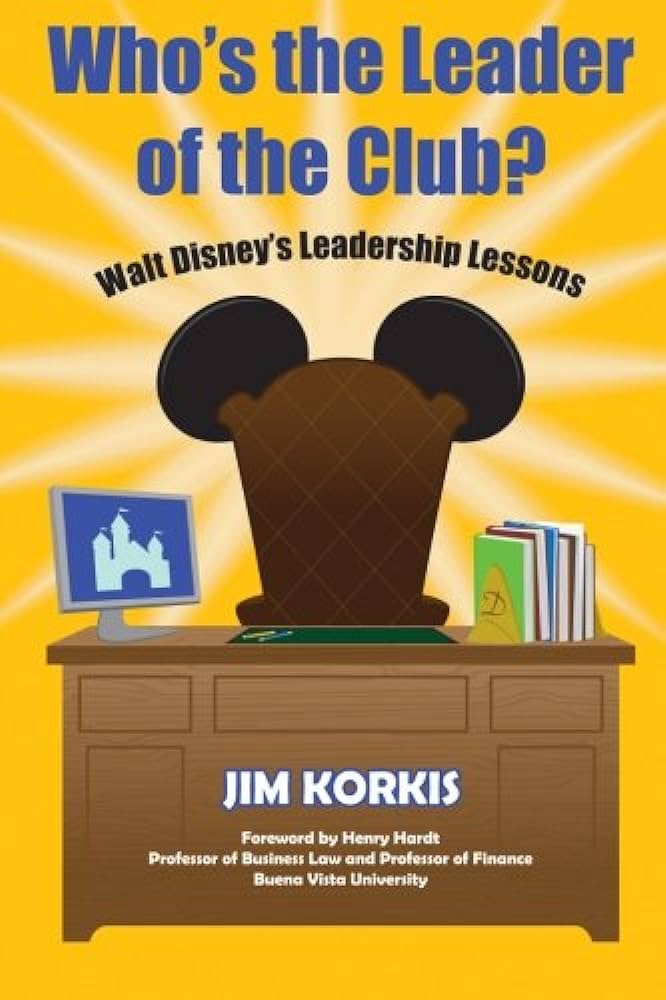
Jim Korkis was a Disney historian and long-time writer and teacher about Walt Disney and the organization he created. Who’s the Leader of the Club: Walt Disney’s Leadership Lessons is a departure for Korkis in that his usual subject matter was about the culture and history of Disney, a topic which he is uniquely qualified to write about.

As a boy, he grew up grew up in Glendale, California, which just happened to be located next to Burbank – the home of the Disney Studios. Korkis was an inquisitive and undaunted fan of Disney who not only watched the weekly Disney television series but took the initiative to write down the names he saw on the end credits.

He matched passion with inquisitiveness and began to look for those names in the local phonebook. Upon finding one, he would call the individual up and ask them about their work. Many were gracious enough to invite Korkis to their homes where he spent hours being enthralled by their stories of their work at the Disney organization.

Fast forward decades, where you will find that Korkis relocated to Orlando FL to take care of aging parents. In his own words,

I got a job at Walt Disney World that included assisting with the professional business programs, where I met many executives who had worked with Walt Disney and been trained by him.

I was often called on to research, design and facilitate customized programs for different Disney clients like Feld Entertainment, Kodak, Toys “R” Us and more that touched on both the connections of the individual companies to Disney history, as well as how Walt did business.

I was tapped to do this work because of my knowledge of Walt Disney and his approach to business.

I got the opportunity to meet with some of Walt’s “original cast.” I was enthralled by their stories and experiences and took detailed notes. Hearing stories about how Walt led and how he expected others to lead with compassion, integrity and common sense made a huge impact on me.

Twenty years later, the result was Who’s the Leader of the Club.

Korkis goes to great lengths to use Walt Disney’s own words, from a variety of published and unpublished interviews, as well as the words of those who personally experienced him in action, to help elaborate and describe the basic concepts.

In doing so, Korkis delivered to us a refreshing breath of fresh air – a business book using the words and actions of a rare genius that are glaringly absent from most organizations today.

68 years after Walt Disney’s death, and on the occasion of the 100th anniversary of the Disney Company, his achievements and legacy continue to inspire new generations.

In my case, it’s actually to re-inspire older generations! As a Baby Boomer, I grew up with “The Wonderful World of Disney” as a weekly television show. As a child, I was taken to see most of the Disney films of the 60’s and early 70’s. As a teenager, I took myself – and then, once I became a father, took my family to see those movies. Though I only visited Walt Disney World once as a teenager, I maintained a fascination with the Disney organization that has continued to grow through the years.

In the early 2000s my vocational role as a consultant with churches took on a specific niche – a focus on guest experiences. That lead to a Disney immersion of research, books, films, on-site visits, and conversations with Disney Cast Members past and present. Over the past decade plus, I have spent over 100 days on Disney properties from coast to coast – and on the oceans. My Disney library numbers over 475+ volumes – the oldest released in 1939; the newest released in the last few weeks.

Vital to that immersion was the work of Jim Korkis – through his books and writings for and about Walt Disney and the Disney organization.

By his own admission, Who’s the Leader of the Club was the most difficult book Korkis has ever written. That may be true from his perspective, but the words and stories flow off the page and into the reader’s conscience in an almost imperceptible manner.

Leaders of any organization would do well to settle in with Who’s the Leader of the Club, and be prepared for a story-filled journey of insight into one of the most creative geniuses of recent history.

Along with the stories the reader will find seven “lessons” about Walt Disney’s leadership. Best of all, Korkis concludes each of the “lesson” chapters with a one page checklist called “What Would Walt Do?” summarizing the key points in the lesson and a space to write notes.

For those who are more curious about the chapters in the book, here is the Table of Contents:

Section One: Disney And Leadership

  • Who Was Walt Disney?
  • What Type of Leader was Walt?
  • Leaders and Managers: Walt and Roy
  • Roy O. Disney and Manager Skills
  • Walt Disney and Leadership Skills

Section Two: Leadership Lessons

  • Lesson One: Know The Story
  • Lesson Two: Share The Story
  • Lesson Three: Take a (Calculated) Risk
  • Lesson Four: Make ‘Em Laugh
  • Lesson Five: Eager To Learn
  • Lesson Six: Understand People
  • Lesson Seven: Live The Story (Integrity)

Section Three: Additional Guidance

  • Walt’s Bad Leadership Traits
  • Walt’s Advice to Leaders
  • Create Leaders
  • Letting People Go
  • Walt and Money
  • Do You Know Your Story?
  • Remembering Walt’s Leadership (Quotes from those who worked for Walt)
  • Final Words from Walt (Quotes from Walt not previously used in the book)
  • Recommended Reading
  • Quotation Sources

Of course, when Korkis wrote the book, he could not have anticipated the  uncertainty caused by the disruption to the Disney “kingdoms” around the world by the pandemic in 2020 and the ongoing uncertainties since then.

Disney emerged from the pandemic a greatly-changed organization – and future generations of families – and leaders – will benefit from it. Recent announcements highlight a 60 billion dollar investment in Disney properties around the world. Only time will tell if they come to fruition.

After all, Walt Disney himself went through countless setbacks, and even failures, before the launch of the Walt Disney Company in 1923…

…and look what that has brought to the world in the 100 years since!

What are you waiting for? It’s time to join the “club!”


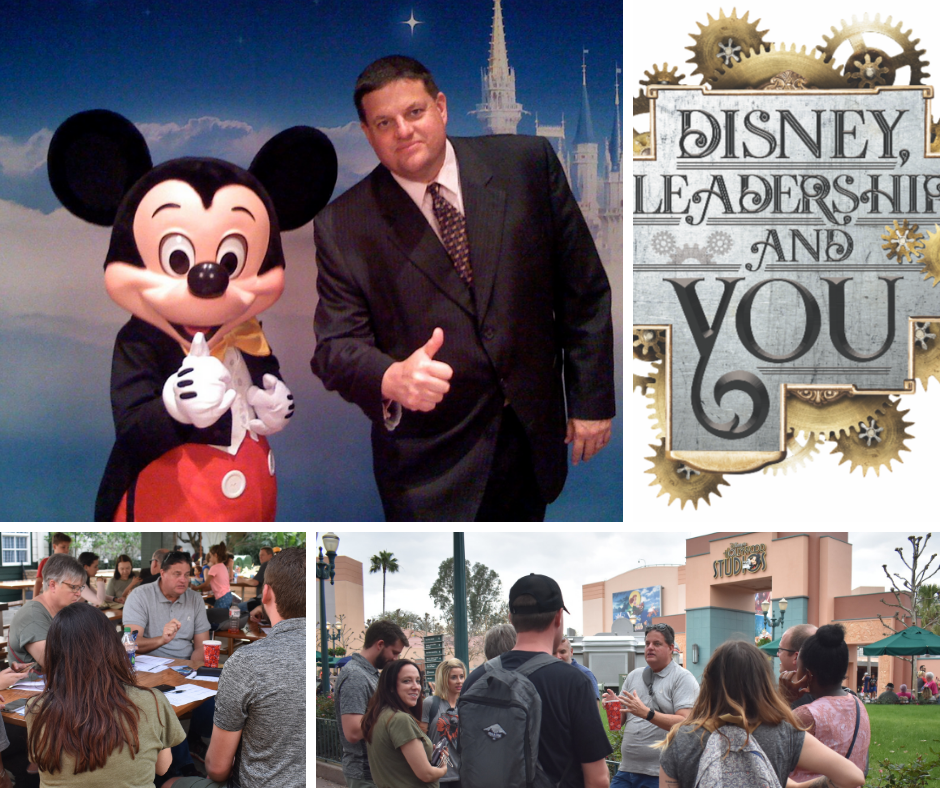
J. Jeff Kober’s book, “Disney, Leadership, and You” is an excellent work that more than delivers on its title.

Drawing from an inquisitive mind and keen insight, Kober has nearly five decades experience with Walt Disney – from both within and without the company – which provide a very readable, practical, and thoroughly enjoyable leadership book that you will find yourself returning to time and again for just the right nugget to use.

I have known of Jeff for years through his writing, and several years ago was grateful to meet him and engage his services for an immersive park experience with a group I was leading. The warmth, wit, and sheer knowledge of Disney, coupled with his ability to instantly link it to practical applications of my group, was one of the highlights of our experience. That same experience has been translated into this book.

If you are a leader in any size or type of organization, the stories Jeff Kober has captured in “Disney, Leadership, and You” should be a valuable addition to your library, a source of personal encouragement, and a wealth of practical training for both you and your team.

The book is divided into four sections:

  1. Defining Leadership
  2. Leaders Attain Results
  3. Leaders Build Relationships
  4. Putting It All Together

In those four sections you will find 18 themed chapters, each chock full of leadership principles illustrated with stories of Disney leaders from all ranks. The principles are solid in themselves, but what makes them memorable is the stories of the Cast Members.

The stories and principles perfectly describe how Disney Cast Members create magic each day through their hard work and respect for Walt Disney’s original vision.

You organization is not Disney, but you can learn from their excellence. “Disney, Leadership, and You” is an extraordinary source of lessons and learning to help you make a dramatic impact on why you do, what you do, and how you do it.


Leadership means that a group, large or small, is willing to entrust authority to a person who has shown judgement, wisdom, personal appeal, and proven competence.

Walt Disney

Research