

When I first began this short series, I intended to limit it to the environs of Mecklenburg County and Charlotte, NC during the years immediately preceding, and carrying through, the American Revolution – roughly 1765-1773. The series covers five books, with the most recent publication first (2023), and then going back over seven decades to 1940.
Almost immediately my research brought up a much repeated phrase: the hornet’s nest – attributed to Lord Cornwallis in referring to the stubborn and insistent fighting of North Carolina militia in the battle of Charlotte on September 26, 1780. While the battle itself was relatively insignificant in the larger scheme of things, that phrase aptly describes the spirit and determination of the North Carolina people leading up the Revolution.
So, when I discovered The Hornet’s Nest, I was eager to open it and read about the story taking place in…
Georgia?
When most people think of Jimmy Carter, they envision the 39th President of the United States, Nobel Peace Prize winner, and humanitarian icon. What they might not expect is a novelist capable of crafting a gripping historical thriller that transports readers to the brutal realities of the Revolutionary War. Yet that’s exactly what Carter accomplishes in “The Hornet’s Nest,” a sweeping historical novel that demonstrates his remarkable versatility as a storyteller and his deep understanding of American history. The book is the first work of fiction by a President of the United States.
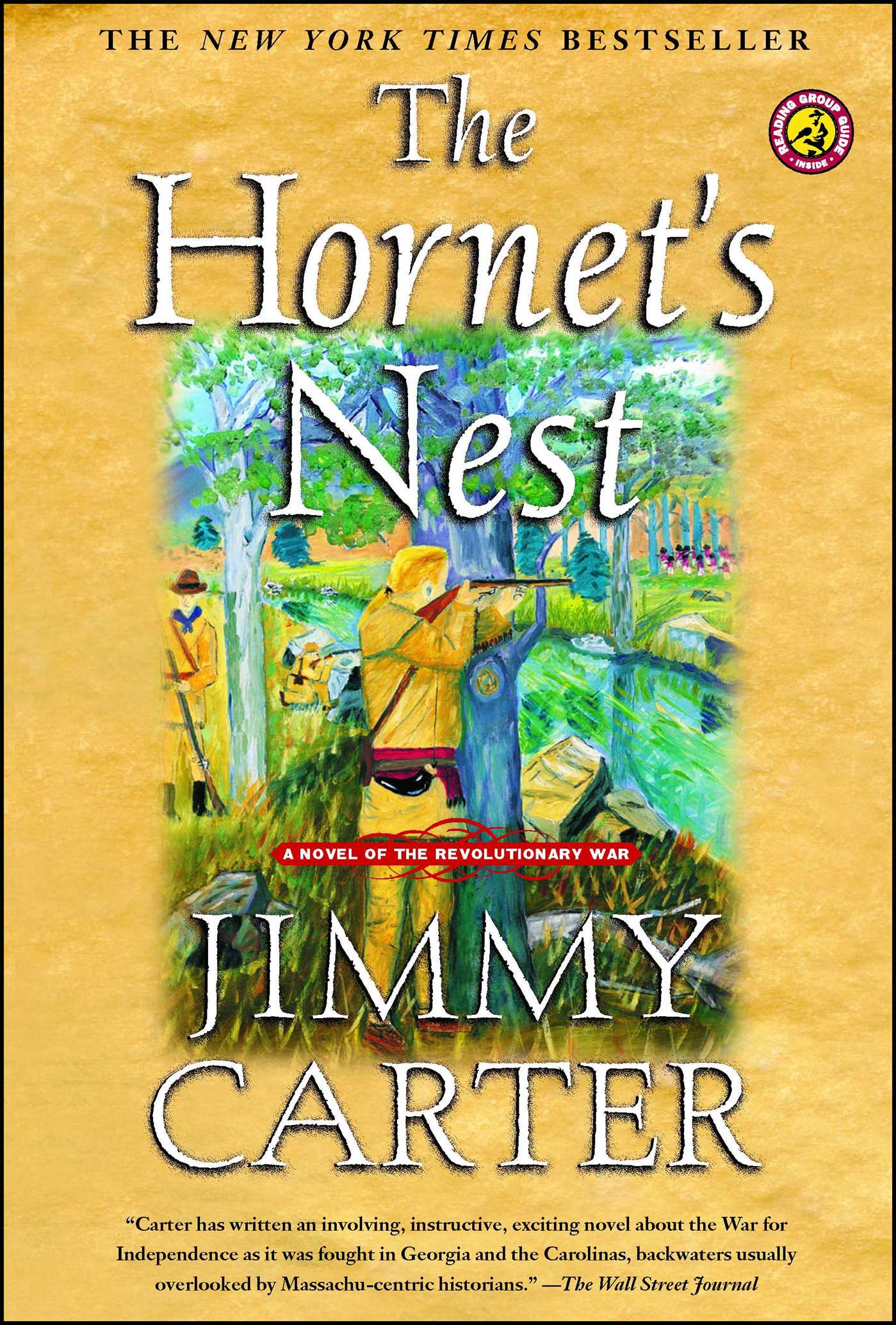
Set in the Georgia backcountry during the Revolutionary War, Hornet’s Nest follows the fictional Pratt family as they navigate the treacherous landscape of colonial America’s fight for independence. The story centers on Ethan Pratt, a young surveyor who finds himself torn between his Quaker upbringing and the violent realities of war. When British forces threaten his community and family – first in North Carolina, then in Georgia, Ethan must decide whether to maintain his pacifist beliefs or take up arms against the Crown.
Carter’s intimate knowledge of Georgia’s history and geography shines through every page. The author, himself a Georgia native, brings an authentic voice to the colonial South that feels both historically accurate and emotionally resonant. His descriptions of the untamed wilderness, the harsh realities of frontier life, and the complex political allegiances of the time create a vivid backdrop that immerses readers in the period.
Hornet’s Nest is a work of historical fiction – the first in this series, but not the last! And the title, as noted above, is a quite common phrase when referring to the North Carolina’s American Revolution story, as you will see next week.
Character Development and Narrative Strength
What sets Hornet’s Nest apart from typical historical fiction is Carter’s nuanced approach to character development. Ethan Pratt is no stereotypical hero; he’s a conflicted young man struggling with moral complexities that have no easy answers. His evolution from peaceful surveyor to reluctant participant in violence reflects the broader transformation of American society during this pivotal period.
The supporting characters are equally well-developed. Epsey, Ethan’s strong-willed wife, represents the often-overlooked perspective of women during the Revolutionary War. Her intelligence and resilience challenge contemporary gender expectations while remaining true to the historical context. The British officers, Native American allies, and colonial militia members are portrayed with complexity rather than as one-dimensional villains or heroes.
Carter’s background as a former president brings a unique perspective to the political machinations of the war. He understands the delicate balance of power, the importance of alliances, and the way personal relationships can influence historical events. This political acumen elevates the novel beyond simple adventure story into a thoughtful examination of how ordinary people navigate extraordinary circumstances.
Historical Authenticity and Research
The novel’s historical accuracy is one of its greatest strengths. Carter clearly conducted extensive research into the Revolutionary War’s Southern Theater, often overlooked in favor of more famous Northern battles. He brings to life the brutal partisan warfare that characterized the conflict in Georgia and the Carolinas, where neighbor fought neighbor and traditional rules of warfare often dissolved into chaos. In fact, some historians refer to this as America’s first “Civil War” as patriots often battled Tories – while from the same area and often related as family.
The author’s attention to detail extends beyond major historical events to include the daily realities of colonial life. From the tools used by surveyors to the political tensions between different religious groups, Carter creates a world that feels lived-in and authentic. His descriptions of Native American customs and British military procedures demonstrate a commitment to historical accuracy that scholarly readers will appreciate.
About the title – it seems that Carter applied the term “hornet’s nest” (first used in the early 1700s and already in colloquial use, symbolizing a source of trouble or agitation) to an area designated by the patriots fighting the British in Georgia as a place of safety. In the book, it was an area of several separated forts with good trails connecting them along with maximum natural protection from impassable creeks, swamps, and hills. Since the story does not include the battle of Charlotte, it would seem that Carter utilized author’s license to appropriate the “hornet’s nest” phrase for the book title and action scenes throughout.
Themes and Relevance
Beneath its adventure narrative, Hornet’s Nest explores themes that resonate beyond its historical setting. The tension between idealism and pragmatism, the cost of violence even in just causes, and the complexity of moral decision-making during wartime all speak to contemporary concerns. Carter’s experience as a peacemaker and his Christian faith inform his nuanced treatment of these themes without overwhelming the story.
The novel also examines the often-forgotten diversity of the Revolutionary War era. Carter includes perspectives from various social classes, ethnic groups, and religious backgrounds, creating a more complete picture of colonial American society than many historical novels provide. This inclusive approach reflects both good historical practice and the author’s lifelong commitment to human rights.
Literary Merit and Accessibility
While Carter may be better known for his political and humanitarian work, Hornet’s Nest demonstrates genuine literary talent. His prose is clear and engaging, never sacrificing readability for literary pretension. The pacing effectively balances action sequences with character development and historical context, keeping readers engaged throughout the novel’s substantial length.
The dialogue feels natural and period-appropriate without being overly archaic or difficult to follow. Carter strikes the right balance between historical authenticity and modern accessibility, making the novel appealing to both serious historical fiction readers and those seeking an entertaining adventure story.

Hornet’s Nest stands as a testament to Jimmy Carter’s remarkable range of talents. While it may not revolutionize the historical fiction genre, it offers a compelling, well-researched, and thoughtfully written exploration of a crucial period in American history. The novel succeeds both as an entertaining adventure and as a serious examination of the moral complexities inherent in violent conflict.
For readers interested in the Revolutionary War, Southern history, or simply well-crafted historical fiction, Hornet’s Nest provides a satisfying reading experience. It reminds us that history is made not just by famous generals and politicians, but by ordinary people facing extraordinary circumstances with courage, conviction, and humanity.
Carter’s transition from statesman to novelist proves that great leaders often possess the storytelling ability that helped shape their public success. Hornet’s Nest is a worthy addition to the historical fiction canon and a fascinating glimpse into the creative mind of one of America’s most respected public figures.
While the majority of the book veered outside my intended scope of the Charlotte, NC area, I found it a thoroughly fascinating account of the little-known battles and everyday lives of colonists in the times leading up to, and through, the American Revolution.

Part of a regular series on 27gen, entitled Wednesday Weekly Reader.
During my elementary school years one of the things I looked forward to the most was the delivery of “My Weekly Reader,” a weekly educational magazine designed for children and containing news-based current events.
It became a regular part of my love for reading, and helped develop my curiosity about the world around us.
Note: Header art by ©Dan Nance
 27gen.com