Be a Good Neighbor and Get to Know Your Neighbors

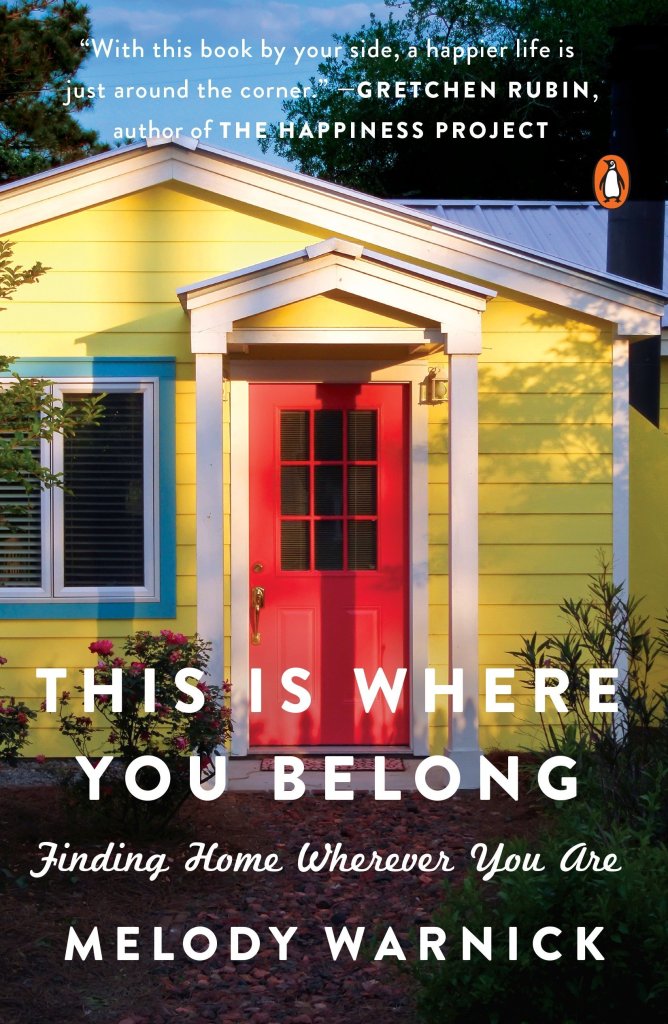
Today’s post is the third in a series of posts over the next few weeks, taking a “deeper dive” into the concepts at the heart of Melody Warnick’s book, This is Where You Belong.

Here is Warnick’s list of ten placement behaviors that she developed on the journey to “Love where you live.”

  1. Walk more
  2. Buy local
  3. Get to know your neighbors
  4. Do fun stuff
  5. Explore nature
  6. Volunteer
  7. Eat local
  8. Become more political
  9. Create something new
  10. Stay loyal through hard times

Place attachment research shows that many of the good feelings we have about the cities where we live stem from the sense that we have relationships there. Here was my chance to craft a “Love Where You Live” experiment that could, potentially, make me happier in my town immediately.

I would make an effort to get to know the locals.

Melody Warnick

Warnick believes that falling in love with your town needs to involve knowing ( and at least sort of liking) your neighbors. And it’s because of a little thing called “neighborhood cohesion,” a term used by social scientists to describe the level of closeness and connection neighbors feel toward each other. In studies, it’s measured by asking people whether they can agree with statements like these:

  • This is a close-knit neighborhood.
  • People around here are willing to help their neighbors.
  • People in this neighborhood generally get along with each other.
  • People in this neighborhood share the same values.
  • My neighbors can be trusted.

When people answer yes, it portends positive outcomes for both physical and emotional health.

Warnick determined that if she was going to use a Love Where You Live experiment to challenge her default settings on behaviors that she knew were making it difficult to become attached to her town, she would have to be a better neighbor.

Her first simple goal: find out who her neighbors were.

Here are a few of the many ideas found in her book:

  • Celebrate Good Neighbor Day. It’s September 28th, but you can declare any holiday or even an ordinary day a special day when you feel like meeting your neighbors.
  • Make and update a spreadsheet of the people on your block or apartment hall/building.
  • Welcome anyone who moves into a house you can see from your front porch or in your apartment building. You don’t have to prepare an elaborate welcome gift – just start by saying “Hi” and see what happens from there.
  • Eat a meal with neighbors. Start out simple, and in today’s climate, “socially distanced,” by inviting neighbors to bring whatever they were going to eat and have a picnic outside.
  • Offer to house-sit or pet-sit for neighbors going out of town. This assumes a level of trust, but you would be surprised how quickly your offer may get accepted.
  • And the biggie: Throw a block party! Maybe the most daunting, but most awesome, of all. You will become a neighborhood legend.

I was beginning to understand the value of meeting our neighbors face-to-face, even when – especially when – they’re not like us.

Melody Warnick

The “place” in place attachment isn’t an abstract concept. Place is physical proximity. The process of putting down roots naturally begins close to home, with the people who live right around us.


I can’t emphasize this enough: If you like the idea of loving where you live, of being a better neighbor, or anything remotely connected, you MUST check out the work of Melody Warnick. Follow her on social media. Buy the book. Sign up for the newsletter on her website. Peruse the website for other articles she has written. It’s all PURE GOLD.
How Buying Local Can Save Main Street America

Today’s post is the second in a series of ten posts over the next few weeks, taking a “deeper dive” into the concepts exploring the heart of Melody Warnick’s book, This is Where You Belong.

Here is Warnick’s list of ten placement behaviors that she developed on the journey to “Love where you live.”

  1. Walk more
  2. Buy local
  3. Get to know your neighbors
  4. Do fun stuff
  5. Explore nature
  6. Volunteer
  7. Eat local
  8. Become more political
  9. Create something new
  10. Stay loyal through hard times

As author Melody Warnick continued her journey of learning to love where she lived, she began to deeply believe that her habits of buying from Target or ordering online from Amazon were contributing to the downfall of Main Street America. Her shopping habits might be killing both her hometown and her prospects of connecting with it, and that had her worried.

Neighborly economics means you don’t go for what’s cheapest and easiest. You think about which relationships and stores you want to preserve in your town, and you shop there. It may be a financial sacrifice, but:

You need to sacrifice for where you live. Sacrifice is going to make your town stronger.

Jay Leeson

Here’s what she found as she began her research:

One hundred years ago, you bought most of what you needed from a store in your community that was owned and operated by someone who lived there. Prescriptions came from the corner drugstore, whose pharmacist knew your kids and your ailments by name. Books were purchased from a local bookseller, who recommended a few new novels you’d like.

With Main Street acting as both substitute town hall and open-air living room, you could chat with your neighbors, debate the problems of day, and still cross milk and socks off your shopping list.

But as the population grew both in number and across the country, spreading from cities to towns to suburbs, chain stores – one store with multiple locations – began to take over. A few decades later, as first malls and big box stores, then retail strips centers expanded, local stores suffered, and then began to vanish.

In spite of research showing that monies spent locally tend to stay in the community in greater amounts, the trend continues for the most part today.

Warnick believes that there are more than just economic costs, though: Shopping locally is a concrete way to help your town thrive economically and to improve your own quality of life. You start buying stuff in your town, particularly from small independent stores owned by people who live there, and all of a sudden more local people have more jobs. So the city collects more taxes. Then the schools have more money for improvements. The streets get repaved, the parks department builds new sports fields, and so on. With millions of dollars, you’d think we’d all jump on board.

Unfortunately, not.

National chains and big-box stores are cheap, quick, and comforting – the retail equivalent of a fast-food cheeseburger – and their spread has turned much of America into a string of bland Anyplaces.

Warnick believes that the first step in any long-term recovery is recognizing you have a problem. She now had another “Love Where You Live” experiment: weaning herself off Target and Amazon and start spreading more of her cash around her hometown.

She called it her “big-box detox.”

You’ll want to get her book to read more about her journey, including:

  • Cash mobs
  • 3/50 Project
  • Support local shops who support local causes
  • Don’t showroom

Warnick believes this is how it works:

You buy stuff. Pick your local thing – birthday presents, bicycles, running shoes, books, lamps, camera gear, art prints, oil changes, carpet cleaning, piano tuning, or whatever. Pick something to buy, pick a local person or store to buy it from, and then stick with it.

Melody Warnick

You can be a cash mob of one. When you go into a local store to spend $20, you know that buying stuff does more than just for you.


I can’t emphasize this enough: If you like the idea of loving where you live, of being a better neighbor, or anything remotely connected, you MUST check out the work of Melody Warnick. Follow her on social media. Buy the book. Sign up for the newsletter on her website. Peruse the website for other articles she has written. It’s all PURE GOLD.

How Taking a Walk Will Make You a Better Neighbor

Because several posts over the last few weeks have been centered on the theme of “walking” it’s only appropriate to use the topic to introduce an amazing book about learning to love where you live.

Today’s post introduces a series of ten posts, taking a “deeper dive” into the concepts exploring the heart of Melody Warnick’s book, This is Where You Belong.

Here is Warnick’s list of ten placement behaviors that she developed on the journey to “Love where you live.”

  1. Walk more
  2. Buy local
  3. Get to know your neighbors
  4. Do fun stuff
  5. Explore nature
  6. Volunteer
  7. Eat local
  8. Become more political
  9. Create something new
  10. Stay loyal through hard times

According to author Melody Warnick, scientists call the way we learn to navigate a place “mental mapping.” The concept, based on behavioral psychology studies done several times since the 40s, showed that rats and chimpanzees who had first aimlessly explored a maze developed a cognitive map that helped them quickly scamper through it later.

One’s destination is never a place but rather a new way of looking at things.

Henry Miller

Warnick, through conversations with Jeff Speck, a city planner and author of Walkable City, believes that walking is more than transportation; it’s experience

As you walk anywhere, your five senses are taking in hundreds of stimuli. All these things combine to create another “sense”: a sense of where we are.

Through her research, and in reference to #1 on the list above, Warnick discovered that people who walk a lot feel better about their lives, and one of the principles she was coming to understand about loving where you live is that feeling good in general often translates to feeling good about where you live.

When you’re happy, for whatever reason, you also happen to be happy in the place you live.

Walking helps people discover the character of where they live and why they like it. Otherwise it’s a faceless kind of experience. You don’t come into contact with anybody. Even having the comfort of being social and being around other people is so healthy. It’ fun to walk around and say hi to people.

Matt Tomasulo

Warnick found that there was something about being on foot or on a bike that makes us explorers of where we live. Walking and biking in her town helped her develop an intimacy with the town that made her find the hidden gems and appreciate where she was.

She also believes that anyone, in any town, could have the same experience.

What about you?

Can you make a change in your routines to walk more in your neighborhood, and maybe even in your town?

Go ahead and try it.

You will be surprised by what you learn.


I can’t emphasize this enough: If you like the idea of loving where you live, of being a better neighbor, or anything remotely connected, you MUST check out the work of Melody Warnick. Follow her on social media. Buy the book. Sign up for the newsletter on her website. Peruse the website for other articles she has written. It’s all PURE GOLD!

It’s Time to Read the Year Out

2020 was the year of reading for me.

2020 wasn’t the year I learned to love reading; that occurred long ago.

2020 wasn’t the year I read widely because I had to; that occurred first in college, and then, to an extent, in seminary and post-graduate studies.

2020 wasn’t the year I read because there wasn’t anything else to do, because of COVID-19 travel restrictions, lockdowns, and quarantines – though there was plenty of “extra” time because of those things.

2020 wasn’t the year I read because my job requires it, though that IS part of my job, and one I look forward to every day.

So why is 2020 the year of reading for me?

It’s best expressed in these thoughts from Anne Bogel in her great little book, I’d Rather Be Reading (on sale for Kindle for $1.99 through the end of the year!).

We are readers. Books grace our shelves and fill our homes with beauty; they dwell in our minds and occupy our thoughts. Books prompt us to spend pleasant hours alone and connect us with fellow readers. They invite us to escape into their pages for an afternoon, and they inspire us to reimagine our lives. Show me a cover of any book I’ve read, and it will take me right back to where I was when I read it.

Anne Bogel

Books are portals to all kinds of memories.

And so, 2020 is a year full of book-inspired memories.

In 2020, those books came to me like this:

  • Books acquired this year: 287
  • Books borrowed from the library: 173
  • Digital books acquired this year: 12

As I have always been clear to point out, I have not read every page of the 472 books that have been in front of me this year. 

With such an immense (and pleasurable) task in front of me (see below), and knowing there is more to my life than reading, I have to resort to some method of finding out what an author is trying to say without reading the whole book. There’s dozens of the total in which I only read the “highlights,” following methods I’ve learned over the years. In about 15 minutes, I can tell whether I will be reading the book, deep-diving into the book, skimming the book, or maybe just returning it (mainly library books).

If a book captures your attention after using whatever method of “quick review” you choose, you should read it.

The converse is true: if a book doesn’t capture your attention after a few attempts, stop reading it. Pick out another one on the topic – there are always more waiting for you!

With those caveats in mind, my “cover-to-cover” reading for 2020 was 217 books.

For the curious, like picking your favorite child (I have four), or favorite daughters/son-in-law (I have four), or grandchildren (I have ten), I don’t typically make a “Best of” list for the year. I find some value in almost every book I read, and for me, that’s good enough.

I talked about that in a podcast with Bryan Rose. You can listen here.

A Little More About My “Book-Inspired” Memories from 2020

In my vocational role, I am responsible for publishing SUMS Remix every two weeks. SUMS Remix is a modified book excerpt in which I develop solutions to a common problem faced by church leaders from 3 different books. So, preparing SUMS Remix in 2020 alone means I have gone through over 100 leadership and organization development books to arrive at the 81 used in producing 27 issues this year. All together, we have published 161 issues, covering 482 books, since 2015. We have just released 6 collections, covering all 161 issues, available for purchase as a downloadable PDF. Find out more here.

Other parts of my role require reading current trends books, used for team research, Navigator support, social media content creation, and other content writing.

I have had a passion for Guest Experience for decades. It’s taken a more-refined shape over the last fifteen-plus years of client work, particularly through constant research in the area of customer experience books for application for churches. Through that, an ongoing project is building The Essential Guest Experience Library, currently over 300 volumes.

A project that has been in development for over three years just became public this year: First Place Hospitality. This is a movement to help church leaders “bring hospitality home” through members building bridges to their neighbors. In addition to research needed for weekly posts, white papers, tools, and social media content, I am also building The Essential Home Hospitality Library, currently at just under 200 volumes.

I am a Disney Fanatic, plain and simple (though my wife says there is nothing plain nor simple about it). From boyhood exposure to the magical world of Walt Disney in the early 1960s, to my first of dozens of theme park visits in 1975, and especially in conversations with current and former Cast Members, I am alway seeking to learn more about Walt Disney the man, and the empire which he started. Of course, that extends to building a Disney library, currently over 420 volumes and growing! A lot of that library contains excellent material that can be applied in Guest Experience, leadership development, and organizational improvement.

Finally, there’s just the pure pleasure of reading – an almost nightly hour or two in the late evening reading a wide range of books, both brand new and classics, fiction and nonfiction. A bulk of the library books listed above fit into this category. This type of reading also helps expand the subject libraries also mentioned above, and helps start new ones!

In these closing days of 2020, and the beginning of a new year just ahead, why don’t you give yourself a gift?

The gift of reading.


Be sure to check out my other websites for more information on how to “Read the Year Out!”

First Place Hospitality

Guest Experience Design