Celebrating National Peach Day: A Sweet Summer Send-Off

August 27 marks National Peach Day, a fitting tribute to one of summer’s most beloved fruits as the season begins its graceful descent toward autumn. 

There’s something almost magical about the way a perfectly ripe peach can transport you with its first bite – the way the fuzzy skin gives way to reveal that sunset-colored flesh, dripping with nectar-sweet juice that runs down your chin and demands immediate attention from your napkin or, more likely, your sleeve.

The peach, with its intoxicating fragrance and velvet texture, represents everything we cherish about summer’s fleeting abundance. It’s a fruit that refuses to be rushed, demanding patience as it ripens to that perfect moment of yielding softness, when the gentlest pressure reveals whether it’s ready to deliver its full symphony of flavors. Miss that window, and you’re left with either a hard, disappointing bite or an overripe mess that’s better suited for cobbler than eating out of hand.

A Spectrum of Summer Sweetness

The world of peaches offers an delightful diversity that extends far beyond the classic fuzzy orb most people envision. Freestone peaches, with their easily removable pits, are the darlings of home cooks and snackers alike, while clingstone varieties hold their fruit close to the stone, making them perfect for commercial processing into jams, preserves, and canned goods that let us taste summer long after the frost arrives.

White peaches, with their more delicate, floral notes and lower acidity, offer a refined sweetness that seems almost exotic compared to their more common yellow cousins. Then there are the donut peaches – those flat, saturn-shaped curiosities that pack concentrated peach flavor into their compact form, perfect for lunch boxes and picnic baskets. Nectarines, technically the smooth-skinned siblings of traditional peaches, bring their own intense flavor profile to the party, proving that sometimes less fuzz means more bite.

Each variety tells its own story through color, texture, and taste. From the deep crimson blush of a Red Haven to the pale yellow glow of a Belle of Georgia, peaches paint summer in shades that would make any sunset jealous. The names alone evoke romance and regional pride: Elberta, Carolina Belle, Georgia Jet, Summer Lady – each cultivar carrying the hopes and heritage of the orchards that nurture them.

Georgia: The Peach State Legacy

When most Americans think of peaches, their minds inevitably wander to Georgia, the self-proclaimed “Peach State.” This association runs so deep that Georgia’s license plates proudly display a peach, and the state quarter features the fruit prominently. But the story of how Georgia earned this sweet reputation is more complex and fascinating than many realize.

Georgia’s peach industry actually began in the mid-1800s when farmers discovered that the state’s climate and soil conditions were ideal for growing high-quality peaches. The industry truly flourished after the Civil War, when innovative farmers like Samuel H. Rumph began developing new varieties better suited to the Southern climate. Rumph’s Elberta peach, named after his wife Clara Elberta Moore, became one of the most successful commercial varieties ever developed and helped establish Georgia’s reputation as peach paradise.

The railroad’s expansion in the late 19th century proved crucial to Georgia’s peach dominance, allowing farmers to ship their delicate cargo to Northern markets before it spoiled. Special refrigerated cars carried Georgia peaches to eager customers in New York, Philadelphia, and Boston, where the fruit commanded premium prices and developed a devoted following.

The industry reached its peak in the 1920s when Georgia was indeed the nation’s top peach producer. Towns like Fort Valley became known as the “Peach Capital of Georgia,” with entire communities revolving around the seasonal rhythms of peach cultivation. The sight of endless rows of peach trees in full bloom each spring became an iconic image of the American South, drawing tourists and photographers from across the nation.

Interestingly, while Georgia maintains its peach state identity, California now produces about 75% of America’s peaches, with South Carolina, Georgia, and New Jersey following as distant runners-up. But Georgia’s peaches maintain a reputation for exceptional quality, with many connoisseurs insisting that the state’s traditional varieties and time-honored growing methods produce fruit with superior flavor and texture.

The Fleeting Season’s Sweet Urgency

Part of what makes peaches so precious is their tantalizingly short season. Unlike apples that can be stored for months or oranges available year-round, fresh peaches demand our attention for just a few precious months each summer. This scarcity creates an urgency that makes every peach moment feel special – the rushed trips to farmers markets, the careful selection process of choosing fruit that will ripen just right, the disappointed sighs when the season’s last peaches disappear from market stands.

This brief window of availability has shaped how we think about and consume peaches. They’re intrinsically linked to summer memories: roadside stands with hand-painted signs, the ritual of eating peach cobbler at family reunions, the simple pleasure of biting into a perfectly ripe peach over the kitchen sink while juice runs everywhere. These moments feel so ephemeral precisely because we know they can’t last.

Farewell to the Peach Milkshake

As we celebrate National Peach Day, we must also acknowledge one of summer’s most beloved peach casualties: the seasonal departure of Chick-fil-A’s Peach Milkshake (August 16th this year). For millions of fans, this creamy, peachy confection represents the absolute pinnacle of peach-flavored indulgence. Made with real peaches and the chain’s signature Icedream, the Peach Milkshake manages to capture the essence of summer in a cup, delivering that perfect balance of fruit and cream that makes you want to savor every sip while simultaneously gulping it down before it melts.

The annual ritual of the Peach Milkshake’s arrival and departure has become a cultural touchstone for many Americans. Its late spring debut signals that summer has truly arrived, while its eventual disappearance from menu boards serves as a melancholy reminder that the season is winding down. Social media fills with both celebration posts when it returns and mournful farewells when it goes, creating a nationwide conversation about seasonal treats and the bittersweet nature of limited-time offerings.

The genius of Chick-fil-A’s Peach Milkshake lies in its ability to concentrate the best aspects of fresh peaches – the sweetness, the aroma, the summery satisfaction – into a form that feels both familiar and special. It’s comfort food that tastes like celebration, a treat that manages to be both nostalgic and thoroughly modern.

An interesting fact I learned while on a Backstage Tour at Chick-fil-A’s headquarters: the peaches used in their milkshakes come from Greece. According to a CFA representative, the temperate, sunny summers, avid autumn rains, and cool winters in Northern Greece make the climate perfect for peaches canned at peak freshness by state-of-the-art processors and packaged as diced pieces in syrup, ready for your favorite summer treat next season.
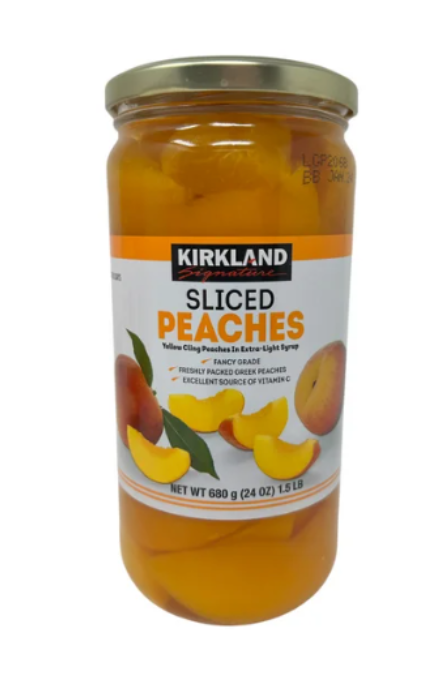
Even after Chick-fil-A’s beloved Peach Milkshake disappears from menus at the end of summer, you don’t have to wait until next year to satisfy your craving. The internet has responded to fans’ devotion with a proliferation of copycat recipes, particularly on Pinterest, where home cooks share their perfected versions that capture that signature peachy sweetness and creamy texture. These recipes typically call for simple, readily available ingredients that you can find at most grocery stores: vanilla ice cream, frozen or canned peaches (with many swearing by the premium Greek peaches available at Costco for their superior flavor), whole milk, and a touch of vanilla extract. Some recipes suggest adding a hint of honey or peach syrup to intensify the fruit flavor, while others incorporate Greek yogurt for extra creaminess. With just a blender and these accessible ingredients, you can recreate this seasonal favorite in your own kitchen year-round, customizing the thickness and sweetness to your personal preference while enjoying the same peachy indulgence that makes the original so special.

Looking Ahead to Next Summer’s Promise

As National Peach Day arrives and summer begins its gradual retreat, we’re already looking ahead to next year’s peach season with eager anticipation. Across Georgia, California, South Carolina, and beyond, peach trees are already setting next year’s fruit, promising another cycle of blossoming hope and summer sweetness. And there is a way to have fresh, you’ve-got-to-eat-them-right-now peaches delivered to your door!

The Peach Truck has revolutionized how fresh, tree-ripened peaches reach consumers across the country, delivering the authentic taste of Georgia and South Carolina orchards directly to neighborhoods nationwide. Founded by a couple who wanted to share the exceptional quality of truly ripe peaches – the kind that are picked at peak ripeness rather than shipped green and hard like most grocery store varieties – the Peach Truck operates on a seasonal schedule that follows the natural peach harvest from May through August. Customers can pre-order online and then pick up their boxes of peaches at designated stops in cities and towns across multiple states, where the distinctive truck arrives loaded with fruit that’s so perfectly ripe it needs to be handled with care and consumed within days of purchase. These peaches arrive with their fuzzy skin intact and flesh so juicy that eating one requires strategic planning to avoid dripping, offering a stark contrast to the firm, often flavorless peaches typically found in supermarkets. The Peach Truck’s delivery model has created a devoted following of customers who eagerly await the annual announcements of delivery schedules, knowing that these premium peaches – with their intense sweetness and aromatic fragrance – represent the gold standard for what a peach should actually taste like.

Whether you source from a local orchard or delivery via The Peach Truck, the beauty of the peach lies not just in its flavor, but in its ability to mark time and create anticipation. Each year’s crop is unique, shaped by weather patterns, rainfall, and countless variables that make every peach season a new adventure. Next summer’s peaches will be growing soon, quietly developing the sweetness that will define another season of farmers market visits, roadside stand discoveries, and perfect peach moments yet to be savored.

Until then, we celebrate today’s peaches and the memories they’ve created, knowing that the promise of next summer’s bounty makes the wait worthwhile. After all, the best things in life – like perfectly ripe peaches – are worth waiting for.


Part of a regular series on 27gen, entitled Wednesday Weekly Reader.

During my elementary school years one of the things I looked forward to the most was the delivery of “My Weekly Reader,” a weekly educational magazine designed for children and containing news-based current events.

It became a regular part of my love for reading, and helped develop my curiosity about the world around us.


Photos: Chick-fil-A, The Peach Truck

Create a Compelling Culture of Hospitality

Do your greeters truly welcome, or do they simply open doors and hand out bulletins?

A common picture at many churches this weekend would look something like this: a couple of people – maybe even a literal couple – stand outside the church’s main entrance. Depending on the weather, they may actually be inside the doors. As people approach the door, they open it and give a brief “hello” or “good morning” or some other similar platitude. Across the lobby, at the doors to the sanctuary or auditorium or large gathering room used for worship, the scene is repeated. Only, this time, the doors are usually propped open and an usher is standing there with a stack of bulletins, giving them out as people enter.

After all, isn’t that the purpose of greeters and ushers? Don’t they have a job description that outlines what they do each weekend?

Danny Franks, Connections Pastor at Summit RDU, gives a brief and compelling argument that hospitality teams serve more than just a utilitarian purpose. While acknowledging the importance of system and process, he challenges us to look at the beauty of hospitality:

The beauty of guest services is that it serves as a signpost to the gospel. Our planning and strategizing and vision casting and volunteer recruiting may indeed reduce combustion points and increase efficiency, but that shouldn’t be the reason we do it. Guest services should ultimately point to the kindness of Jesus. Our hospitality should be a catalyst.

What about your church? Your hospitality teams, in whatever form and name you give them, are literally the first face of your church as guests engage your campus and worship environments. What kind of gospel-impression are they making? How are they developed?

THE QUICK SUMMARY – It’s My Pleasure, by Dee Ann Turner

Businesses are built by growing relationships with customers. Culture is created by the stories those relationships tell. Two of the most important differentiators of a business are its talent and its culture. Talent energized by a compelling culture will drive organizational success and provide innovative growth opportunities for both the business and the individual.

Based on her more than thirty years at Chick-fil-A©, most of which have been spent as Vice President, Corporate Talent, Dee Ann Turner shares how Chick-fil-A© has built a devoted talent and fan base that spans generations. It’s My Pleasure tells powerful stories and provides practical applications on how to develop extraordinary talent able to build and/or stimulate a company’s culture.

A SIMPLE SOLUTION

The title of the book used in this solution is no stranger to a large, and growing, segment of the U.S. population. Made popular by eager and energetic team members at Chick-fil-A© restaurants, it is their response to a customer saying thank you, or some variation of that phrase.

But underneath that phrase is much more. It not only represents a value established by Chick-fil-A© founder Truett Cathy, it is also instilled as a company value taking many shapes, and most importantly, reflects the culture of Chick-fil-A©.

And it’s a good place to begin taking a look at the culture of your hospitality teams.

Creating a strong, compelling culture requires intentionality and vision.

Culture is the soul of the organization. It is the way we envision, engage, and experience others within an organization. Culture defines the values and behaviors that are acceptable and expected. Culture can be an elusive concept to describe, but at Chick-fil-A, we call it living life together.

It is far easier to create a compelling culture from the beginning than to rebrand a struggling culture later, so it’s an essential beginning to any organization.

To build a compelling culture, your organization must take several steps:

  1. A compelling culture begins with a clear purpose for existing.
  2. A compelling culture must have a challenging mission.
  3. A compelling culture must have core values.
  4. A compelling culture has guiding principles.

It’s never too late to help your team or organization strengthen your culture. Start your strategy with the WHY through defining your purpose. Continue with the WHAT in developing your mission and then focus your efforts day in and day out on the HOW through constant commitment to your core values and guiding principles. With unwavering focus and discipline to the process, you can create a compelling culture for your organization.

Dee Ann Turner, It’s My Pleasure 

A NEXT STEP

The minute you follow instructions, you’re no longer an artist.

– Seth Godin

For our purposes, take the quote above to the next step: There’s an art to connecting with people as a part of a hospitality team. Yes, you have to understand what you do as a greeter or usher, but there is a more important WHY behind those actions.

On separate sheets of a chart tablet, list Dee Ann Turner’s four steps for creating a compelling culture listed above, one per sheet.

During a designated leadership team session set aside just for this exercise, work through each of the steps, listing the comments of your team in response to the steps.

After you have listed them, go back and get a group consensus for each step.

Now, extend these steps to your hospitality teams inserting the phrase “of our hospitality teams” and ranking each of the four steps with a 1 (not present at all) to a 5 (always present).

At the next opportunity, review each of the four steps and their rankings with your hospitality team leaders. First, celebrate those steps your team has identified with a 4 or 5 ranking, and encourage your leaders to share your celebration with their teams.

Next, brainstorm how steps with a 1, 2, or 3 ranking can be moved to a 4 ranking. List the responses, and challenge the leaders to take the top three in each group and work with their teams in moving this ranking up.


Excerpt taken from SUMS Remix #46-2, published August 2016.


I’m proud to be a part of the Auxano team, where our 15 years of onsite Guest Perspective Evaluations with over 500 churches form the basis of the Guest Experience Boot Camp. Held on August 29-30 at The Cove Church in Mooresville, NC (Charlotte), the Boot Camp will provide two days of collaborative learning that will help your church develop its front line. Up to five members of your team can attend for an investment of $1,995 for the whole team.

Learn more and register here.


Part of a weekly series on 27gen, entitled Wednesday Weekly Reader

Regular daily reading of books is an important part of my life. It even extends to my vocation, where as Vision Room Curator for Auxano I am responsible for publishing SUMS Remix, a biweekly book “summary” for church leaders. I’m going to peruse back issues of both SUMS and SUMS Remix and publish excerpts each Wednesday.

At Chick-fil-A, HATCH Comes First – Even Before the Chicken or the Egg

At some point in the future, you will be going to a Chick-fil-A restaurant that looks and works a lot different from the one you are familiar with today. It might even have different menu items, or the food might taste a little different.

Guess what? 

The Chick-fil-A restaurant of the next decade already exists, but you will only find it inside HATCH, Chick-fil-A’s Innovation and Learning Center located on their Atlanta campus.

HATCHWelcome

I have been fortunate to be part of a group learning session at the Innovation Center. This 80,000 square foot facility located near the company’s headquarters is dedicated to helping the company invent its way forward. Inside Nest, the Pen, and other cleverly named spaces, CFA is building the next generation of customer experiences and the capabilities that make it possible.

The session gave me a front-row seat where corporate innovation is headed and allowed interaction with CFA leaders on how innovation and creativity are solidly in the center of their company culture.

Launched in late 2012, HATCH is aimed at strengthening the customer experience, the brand, and enriching the company’s culture.

HATCHLobby

In a converted warehouse, restaurant operators, researchers, designers, and staff gather to collaborate and develop whatever the Chick-fil-A brand and its customers need next. Space is divided into cleverly named work areas:

  • Feeder – cafeteria
  • Nest – learning spaces
  • Coop – working prototype restaurants
  • Incubator – collaboration area
  • Pen –  work spaces for architects and designers

This award-winning space has been purposely designed to foster the interchange of ideas and new opportunities for people who work in different areas of the company to get to know each other.

HATCH even includes a virtual simulator, which is used to very inexpensively prototype new restaurant concepts, technologies, and even kitchen operations. During my session, one of our team donned a headset and experienced the 3D world of a new store concept while the rest of us were able to observe what he was viewing on a 2D screen in the room.

VirtualReality2

 What can ChurchWorld leaders learn from Chick-fil-A and their HATCH Innovation Center?

It’s unlikely that any church would invest a fraction of the resources that Chick-fil-A has on innovation, but that doesn’t mean innovation is beyond the reach of churches.

Larry Osborne is Senior Pastor at North Coast Church near San Diego, CA. North Coast is widely recognized as one of the most influential and innovative churches in America, and Osborne’s book Innovation’s Dirty Little Secret provides a wealth of information that church leaders who want to be innovative in ministry can easily access.

Early in the book, Osborne states that many churches have a natural tendency to protect the past at the cost of the future. His solution: Find ways to identify and release the gifted innovators in your midst.

It’s like creating a mini-HATCH environment in your church.

Osborne thinks that in order to identify these types of innovators in your midst, you must first understand how they think and see the world. He has identified 3 telltale traits that set them apart from others:

  1. A special kind of insight – an uncanny knack for predicting what will work and what won’t work and how large groups of people will respond to new ideas.
  2. A unique form of courage – the ability to take carefully calculated risks by trusting their carefully crafted mental models of what could be.
  3. Extraordinary flexibility – the ability to quickly turn on a dime; a master of mid-course correction.

If you’re going to innovate in ministry, you will have to find ways to identify the fledgling innovators in your church and then find ways to support some of their seemingly crazy ideas.

Like the chicken sandwich…


A quick note: I will be returning to the HATCH Innovation Center in a few days as a part of a networking group learning experience. Look for an update soon!

If you liked this post, you might also like:

Remembering Truett Cathy

iceberg1

The iceberg represents your leadership. The 10% above the water is your skill. The 90% below the water is your character.


It’s what’s below the surface that sinks the ship.

Weak character will eventually destroy your ability to lead.


It’s what’s below the surface that supports the tip of the iceberg.

Strong character will hold you up long enough to use your skills.


Truett Cathy knew the difference, and he chose wisely.

We should ask ourselves what’s important and what’s not important. When you live by your character, people respect that.

TruettCathy

photo courtesy of Chick-fil-A

In memory of Truett Cathy

1921-2014