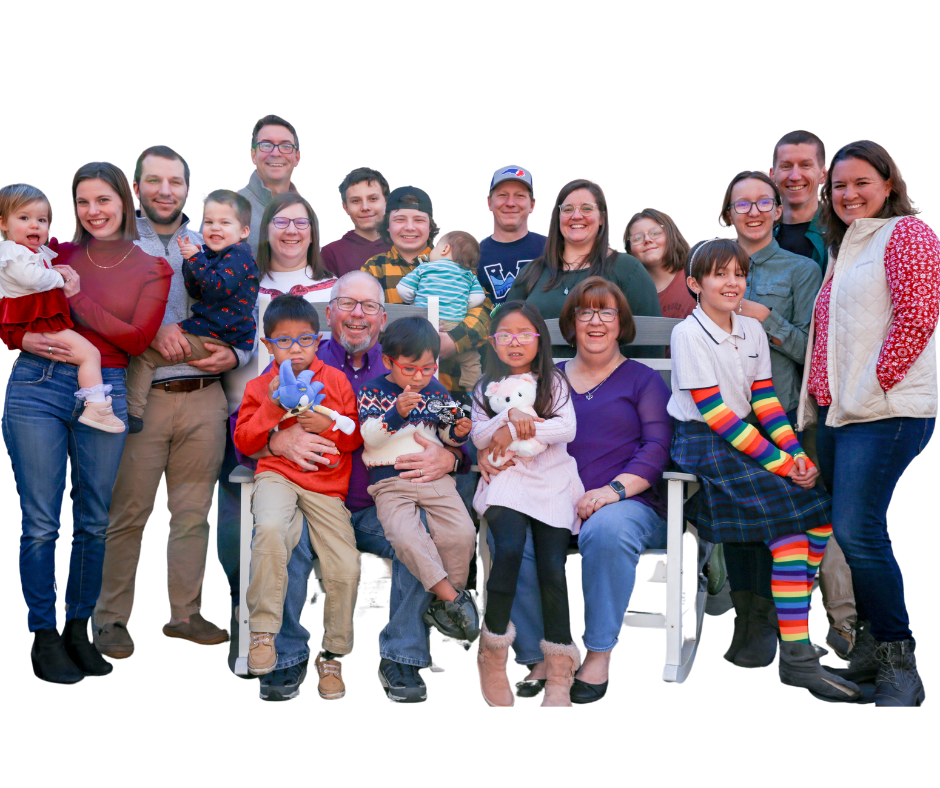
How to Babysit Our GrandBob

(Though the eyes and words of my 5-year-old grandson and a 2-year-old granddaughter)

Hi! My sister and I are excited because GrandBob is at our house right now. Mom and Dad went to the hospital to get our new baby brother, so we have to tell GrandBob how to take care of us.

It’s like we are babysitting him!

GrandBob, listen up!

Morning Time is Snuggle Time!

My sister always wakes up really early, like around 5 o’clock! We let her snuggle with Mom and Dad, or sometimes we watch a show in the playroom so Mom and Dad can go back to sleep. Take your pick!

If it’s a school day, I usually get up an hour after my sister. I get to watch my tablet or TV with my sister for a few minutes before getting dressed. I don’t need any help to pick my outfit or help me get dressed! My sister gets a diaper change then, too.

She is very opinionated about her clothes and shoes now. You can just let her pick them if that’s easier! I love my Crocs, and I don’t need socks with them because I don’t really go outside at school in the winter.

We don’t need breakfast because we get food at school! But we do get to pick a yummy snack.

School Drop-Offs!

We need to be in the car and headed to school by 7:30 a.m. or the drop-off at my school  takes a long time.

First, we go to my school; Dad gave you the address so you can put it in your phone and I can watch the map and our car moving. The school is on the left, and there is a big drop-off circle. People will usually open the door for me and help me get out. Mom always gets out to give me a big hug and a kiss. Even though I think they don’t like it when she gets out, she says she will kiss me as long as I let her! I walk in all by myself because I’m a big boy.

Then you take my sister to her school. I used to go there so I know the teachers. After dropping off my sister Dad says you’re free the rest of the day until it’s time to pick us up. What do you do all day while I’m in school?

Afterschool Pickup, Supper, and Bed Time Rules!

GrandBob, in the afternoon I ride a bus from my school to where Mom works, so Dad told me you would pick me up at the bus drop-off. If you get there early, don’t worry – my bus will go right by your car, but will return to drop me off in about ten minutes. I kinda get “hangry” (that’s the word Mom uses) so I hope you will have a snack waiting for me.

We can go home and I can do my homework and then play for a little while until it is time to go pick up my sister. By the time we pick her up, it will be time for supper because she has an early bedtime – and she likes to eat!

Mom and Dad told me that even though you can cook, we will probably go out for supper after we pick up my sister. You know all my favorite foods, and she eats everything, so I will be happy to go wherever you choose each night.

After supper we have a little time to play before bedtime. My sister is first for bedtime; after you get her jammies on, read her a book, turn the sound machine on, and give her a couple of glow sticks. Since our new brother is getting a room of his own, my sister and I are sharing a room and I like it dark. The glow sticks help my sister go to sleep (and I get one too). She likes three “silly blankets” to cover up in. Sing her a song – “Twinkle, Twinkle Little Star” is her favorite and she usually goes right to sleep.

You can get my jammies out when you are getting my sister ready for bed, and I get dressed for bed around an hour later. Mom and Dad ask if my tummy is full around then, because they say I like to stall before bedtime. If I’m hungry, I can get a snack, but then the kitchen closes.

You can help me brush my teeth, read me a book, and say prayers before I open the door and sneak into my bed so I don’t wake my sister.

The Doggo!

Toby is our dog. He gets one scoop of food in the morning and one at night. We usually let him out before we leave for school, again before supper, and then before you go to bed. More outside time is always good when you are home.

My Dad says he sometimes gets the “zoomies” after we’ve gone to bed, so you might have to play with him. He will try to lay in bed with you when you go to sleep. If you don’t want him there, just tell him “down” a couple of times, and he’ll hop off the bed and sleep right by you on the floor.

When we wake up the next morning, we start everything all over again!

Just Be Respectful!

GrandBob, there are very few rules when Mom and Dad are not home. We just have to be respectful to each other, Poppa, and you. They don’t care about what we eat or how much screen time we get; Mom and Dad say “Survival is the name of the game”!


Note: GrandBob has taken over the narration, because of a big surprise! Wesley wanted to know what I do during the day, so I’ve been planning…

GrandBob’s Winter Wonderland Adventures!

The kids will discover the following in their playroom, with new things added each day when they get home from school:

A white fuzzy blanket on the floor to simulate snow

An indoor tee-pee that will become an “igloo” with white lights wrapped around it

A flashing star on top of the tee-pee

Flashing icicle lights around the room

An inflatable “Frosty the Snowman”

Snowman blankets to snuggle up in

Bunches of special “snow” activities and crafts

Yummy “snow” treats each day

Fun kid’s videos about snow

New books about snow, snowmen, and icicles

When the new baby comes home, I’m guessing the big brother and sister will need a little distraction, so the Winter Wonderland Adventures were born!

Two Mary Poppins: The Book(s) vs. The Movie(s)

I was six years old in the summer of 1964 when my mother took me to see my first movie in a theater. The lights dimmed, the curtains parted, and there she was – Mary Poppins, floating down from the clouds with her parrot-headed umbrella, about to change the Banks family forever. That experience imprinted itself on my memory: Julie Andrews’s crisp British accent, the animated penguins, the magic of it all. For decades, that was Mary Poppins to me. It wasn’t until much later that I discovered P.L. Travers’s original books and realized I’d only met half the story.

For most people, this is the definitive Mary Poppins – cheerful, warm, and practically perfect in every way. But P.L. Travers, who created the character in 1934, had a very different vision in mind.

Of course, it was necessary to pop back into my Mary Poppins library to refresh my memory in preparation for writing about a newly-released book, Making Mary Poppins (article coming soon).

The Mary Poppins of the Books

P.L. Travers introduced Mary Poppins to the world in her first novel, simply titled Mary Poppins, and continued her story across seven more books spanning over five decades, concluding with Mary Poppins and the House Next Door in 1988. In these pages lives a Mary Poppins who would likely terrify the children who grew up watching the Disney film.

Travers’s Mary Poppins is vain, brusque, and often downright rude. She is obsessed with her appearance, constantly admiring herself in shop windows and mirrors. When the children ask her questions, she frequently responds with a sharp “I never explain anything” or denies that magical events ever happened, even when the children witnessed them firsthand. She is enigmatic and unknowable, maintaining an emotional distance that keeps everyone – including the reader – perpetually off-balance.

This Mary Poppins doesn’t coddle. She expects immediate obedience and has little patience for nonsense. Her severity is palpable; she can silence a room with a glance. Yet despite her stern demeanor, the Banks children adore her with an intensity that borders on desperation. They fear her departure more than anything, knowing instinctively that she appears and disappears according to her own mysterious rules, carried on the East Wind and departing on the West.

The magic in Travers’s books is strange and often unsettling. Mary Poppins takes the children to visit her uncle who floats helplessly near the ceiling when seized by laughter. They meet the Bird Woman, communicate with infants who still remember the language of sunlight and wind, and journey to the edges of the world where mythological figures reside. These adventures feel ancient and mythic, drawing from folklore and fairy tale traditions where magic is powerful, capricious, and not necessarily kind.

Travers, who studied mythology and mysticism throughout her life, imbued her nanny with archetypal power. Mary Poppins is less a caregiver than a liminal figure – a bridge between the mundane world and realms of wonder, part governess and part goddess. She belongs to no one, answers to no one, and her true nature remains forever just out of reach.

The Mary Poppins of Disney

When Walt Disney released his film adaptation in 1964, he created something entirely different – a Mary Poppins designed to charm American audiences and become a beloved family classic. Julie Andrews’ portrayal transformed the character into someone warmer, gentler, and far more accessible.

Disney’s Mary Poppins still has high standards and maintains a certain formality, but she’s fundamentally kind. She smiles readily, shows genuine affection for Jane and Michael Banks, and clearly enjoys their company. When she arrives at 17 Cherry Tree Lane, she brings not just magic but joy. Her adventures – jumping into chalk pavement drawings, having tea parties on the ceiling, and visiting Uncle Albert’s laugh-filled floating sessions – are whimsical and delightful rather than mysterious and slightly dangerous.

This Mary Poppins teaches lessons explicitly rather than through enigmatic experiences. She sings about staying positive (“A Spoonful of Sugar”), seeing potential in everyone (“Sister Suffragette” notwithstanding), and the importance of finding wonder in ordinary life. The film adds the subplot of Mr. Banks’s redemption, making Mary Poppins instrumental in healing the entire family, not just entertaining the children.

Perhaps most significantly, Disney’s version explains her magic and makes her motivations clear. She comes to fix the Banks family, and once her work is complete, she leaves – sad to go, but satisfied. The film gives her emotional transparency that Travers’s character never possesses. Julie Andrews plays her with twinkling eyes and barely suppressed delight in her own cleverness, making the audience feel they’re in on the joke.

The musical score by the Sherman Brothers became inseparable from the character. Songs like “Supercalifragilisticexpialidocious” and “Chim Chim Cher-ee” are now cultural touchstones, their melodies instantly recognizable decades later. This Mary Poppins is Technicolor optimism incarnate, a nanny who makes everything better through a combination of magic, music, and good old-fashioned love.

Disney’s commitment to their version of Mary Poppins has only deepened over time. The 2013 film Saving Mr. Banks dramatized the contentious relationship between Walt Disney and P.L. Travers during the original film’s development, revealing how fiercely Travers fought against Disney’s softening of her character – a battle she ultimately lost but never accepted. More recently, Mary Poppins Returns (2018) brought Emily Blunt to Cherry Tree Lane as an older Mary Poppins returning to help the next generation of Banks children. While Blunt’s portrayal incorporated slightly more of Travers’s tartness than Andrews’s version, the film remained firmly in Disney’s magical, musical tradition, proving that their interpretation has become the definitive one in popular culture.

Why She Endures

So why has Mary Poppins – in both her incarnations – captivated audiences for over ninety years? The answer lies in what both versions share despite their differences.

At her core, Mary Poppins represents something children desperately need and adults nostalgically remember: the presence of someone utterly competent and unflappable who makes life extraordinary. Whether stern or sweet, she possesses absolute confidence and capability. In a chaotic world, she is certain. She knows exactly what to do in every situation, and she does it.

Both versions offer escape into wonder. Whether through Travers’s mythic strangeness or Disney’s musical whimsy, Mary Poppins proves that magic exists alongside the ordinary. She validates children’s intuition that the world contains more than what adults acknowledge—that truth and wonder aren’t opposites but companions.

Additionally, Mary Poppins serves as a bridge between childhood and adulthood. She respects children’s experiences and emotions while maintaining adult authority. She takes their concerns seriously without diminishing her own power. This balance is rare in children’s literature and film, and it resonates deeply.

Finally, there’s the bittersweet element of her departure. Mary Poppins never stays. This temporary quality makes her precious – a golden season that must end, teaching children about impermanence while giving them something beautiful to remember. She proves that endings don’t negate meaning; rather, they concentrate it.

Whether you prefer the mysterious, mythic nanny of the books or the singing, smiling governess of screen and stage, Mary Poppins endures because she embodies a timeless promise: that somewhere, somehow, there exists someone who can make everything better, at least for a while. And in that promise lies a magic more powerful than flying umbrellas or enchanted carpetbags – the magic of hope itself.


In August 2016, during a month-long, daily teaser to my children and grandchildren prior to our week-long Walt Disney World Trip, here was the image and text 17 days prior:

In 1964 Walt Disney combined unforgettable performances, memorable songs, and wonderful special effects into one of Hollywood’s biggest hits, “Mary Poppins.”

Mary Poppins is a proper British nanny who is “practically perfect in every way” and can do almost anything. Flying via umbrella into the Banks household at No. 17 Cherry Tree Lane, Mary Poppins arrives to help put the household back in order. Along the way, we are introduced to a wonderful cast of characters including Bert, Constable Jones, Admiral Boom, the Banks household staff, Uncle Albert, the directors of the Dawes, Tomes, Mousely, Grubbs Fidelity Fiduciary Bank, and a host of animated characters.

Those special effects work on “Mary Poppins” was the most challenging Disney Studios had ever attempted. With live-action characters popping into chalk drawings, amazing musical and choreography, and a heart-tugging story, “Mary Poppins” remains one of Disney’s most beloved family films.

At Walt Disney World Mary Poppins can be found in Town Square at the Magic Kingdom and in England at Epcot.

On a personal note, “Mary Poppins” is GrandBob’s favorite Disney live-action movie, and he has been known to turn the family room into a theater reminiscent of the movie’s premier at Grauman’s Chinese Theater. 

With facsimile tickets

Really.

Salisbury, NC: A Crossroads of American History on the Great Wagon Road

Part Four of #OctoberOnTheRoad

In the heart of North Carolina’s Piedmont region lies Salisbury, a city whose significance in American colonial and frontier history far exceeds what its modest size might suggest. As a crucial waypoint along the Great Wagon Road – the primary route for westward migration in 18th-century America – Salisbury emerged as a vital commercial, administrative, and cultural hub that helped shape the settlement patterns and development of the American South.

The Great Wagon Road: America’s First Highway

To understand Salisbury’s importance, one must first appreciate the monumental role of the Great Wagon Road itself. Stretching over 800 miles from Philadelphia through the Shenandoah Valley and into the Carolina Piedmont, this route served as the primary artery for migration and commerce during the colonial period. Between 1730 and 1775, an estimated quarter-million settlers traveled this road, making it arguably the most significant thoroughfare in pre-Revolutionary America. These migrants – predominantly Scots-Irish, German, and English settlers – were seeking fertile land and economic opportunity in the southern backcountry.

Strategic Establishment

Salisbury was officially established in 1753 as the county seat of Rowan County, which at the time encompassed a vast territory extending to the Mississippi River. The town’s location was no accident. Positioned at a strategic point where the Great Wagon Road crossed the Trading Path – an ancient Native American trail running east-west – Salisbury became a natural crossroads. This intersection of major routes transformed the settlement into an indispensable stop for travelers, traders, and settlers moving south and west.

The town was named after Salisbury, England, reflecting the British colonial influence, though its character would be shaped by the diverse stream of settlers flowing through on the wagon road. Its founders, including surveyor John Dunn, recognized the commercial potential of this location and deliberately planned a town that could serve the needs of the constant flow of migrants.

Before the official establishment, at least seven log homes already dotted the landscape. Among those early settlers was Johannes (John) Adams – evidence that these trails served as vital migration and trade corridors. Originally part of Anson County, the growing influx of families prompted the creation of Rowan County, with Salisbury designated as its county seat due to its thriving population.

The settlers brought more than farming traditions. Adams and his son, arriving from Lancaster, established themselves as potters – Adams purchased a lot in 1755 and became Salisbury’s first documented potter of European descent. Their lead-glazed earthenware reflected German ceramic traditions from Central Europe, contributing to North Carolina’s rich pottery heritage alongside influences from the Piedmont Quaker community and the Moravian settlement in Salem. Salisbury’s economy thus developed around both its geographic advantages and the specialized trades its settlers introduced.

John Adams died in 1762, and his sons evidently did not continue in the pottery trade. I am still trying to track down when they left Salisbury, but there is little doubt they did. There are no records of burials before 1793 in the Lutheran Cemetery, which means that John Adams was probably buried in an unmarked grave, possibly on the site of his log cabin.

Economic and Commercial Hub

As traffic along the Great Wagon Road intensified, Salisbury rapidly developed into a thriving commercial center. Taverns, inns, and ordinaries sprang up to accommodate weary travelers who needed rest, provisions, and their wagons repaired before continuing their journeys. Blacksmith shops, general stores, and trading posts proliferated, creating a bustling economy centered on serving the migration corridor.

The town became a crucial resupply point where settlers could purchase essential goods, livestock, and seeds before pushing farther into the frontier. Merchants in Salisbury established trade networks that connected the Atlantic seaboard with the developing backcountry, facilitating the flow of manufactured goods westward and agricultural products eastward. This commercial vitality attracted skilled craftsmen, professionals, and entrepreneurs, further diversifying the local economy.

Administrative and Political Significance

Beyond commerce, Salisbury served as an important administrative center for the sprawling North Carolina backcountry. As the county seat, it housed courts, government offices, and facilities that brought order to the frontier. The courthouse became a symbol of British authority and, later, American governance. Legal proceedings, land transactions, and official business conducted in Salisbury affected settlement patterns across a vast territory.

During the Revolutionary War, Salisbury’s strategic location made it militarily significant. The town served as a supply depot and recruiting center for Continental forces. Lord Cornwallis occupied Salisbury briefly in 1781 during his southern campaign, recognizing its importance as a logistics hub. The town’s prominence in the war effort underscored its role as a regional center of gravity.

Cultural Melting Pot

The constant flow of diverse settlers through Salisbury created a unique cultural environment. Scots-Irish Presbyterians, German Lutherans, English Anglicans, and others brought their distinct traditions, crafts, and worldviews. This diversity fostered a pragmatic, cosmopolitan atmosphere unusual for frontier settlements. Religious institutions, schools, and cultural organizations established in Salisbury served not just the town but the wider region, making it a center for learning and cultural development.

Lasting Legacy

While the Great Wagon Road’s importance diminished with the rise of railroads in the 19th century, Salisbury’s foundational role in regional development left an indelible mark. The town’s early prosperity enabled investment in infrastructure, education, and civic institutions that sustained its growth through subsequent eras. Today, Salisbury preserves numerous historic buildings and sites that tell the story of its wagon road heritage, including preserved sections of the Trading Path and 18th-century structures.

The city’s historic downtown reflects the layers of its past, from colonial-era foundations to antebellum architecture. Museums and heritage sites interpret the wagon road story for modern visitors, connecting present residents to this crucial chapter in American westward expansion.

Salisbury’s development along the Great Wagon Road exemplifies how geography and timing intersect to create places of outsized historical importance. As a crossroads of migration, commerce, and culture, this North Carolina town facilitated the settlement of the American South and helped write the story of a nation pushing westward toward its continental destiny.

And Now – A Twist!

All this month of October, I have been on a journey – physically and digitally – tracing the Adams family’s coming to North America before the founding of the United States of America. As I referenced in the introductory post, it has been a double-barreled journey of discovery: one focused on the Great Wagon Road’s strategic historical significance, and the other on solving the enduring mystery of my 2nd great-grandfather, John Washington Adams. The path beyond him is currently fractured into two intriguing, yet conflicting, ancestral branches. 

This month has been the German branch, tracing a path from arrival in Philadelphia in 1727 to Lancaster and down the Great Wagon Road, arriving in Salisbury in the early 1750s. At this point, I’m going to have to find new resources and possibly take more physical trips to continue this journey.

However, during my research, I’ve come up on the possibility of another branch with English roots, and coming to North America in 1621!

While sharing all this with my brother, he made an interesting comment: I wonder if there are ever any conclusive genealogies that go back hundreds of years?  I guess with “royalty” there is, but I’m guessing few lines among the peons have 100% certainty.

With that as a teaser, stay tuned for more in the future!


Part of a regular series on 27gen, entitled Wednesday Weekly Reader.

During my elementary school years one of the things I looked forward to the most was the delivery of “My Weekly Reader,” a weekly educational magazine designed for children and containing news-based current events.

It became a regular part of my love for reading, and helped develop my curiosity about the world around us.

Salem: The Enduring Heart of the Great Wagon Road in North Carolina

Part Three of October on the Road.


The Great Wagon Road carved its way through the colonial American backcountry, drawing settlers southward in an endless tide. Most towns along this vital artery served merely as brief stopping points, but the settlements of North Carolina’s Wachovia Tract – particularly Salem – stood apart as centers of stability, industry, and spiritual purpose. More than a waypoint, Salem became an economic and cultural powerhouse that demonstrated what organized community and skilled craftsmanship could achieve along one of North America’s most important migration routes.

Moravian Vision and the Birth of Wachovia

Salem’s story begins with the Moravian Church, a Protestant denomination rooted in Bohemia and Moravia. Seeking religious freedom and the chance to build self-sufficient communal societies, the Moravians established successful settlements in North America during the mid-18th century. Their colony in Bethlehem, Pennsylvania thrived, and as German-speaking immigrants pushed southward, Moravian leaders recognized an opportunity to expand their mission.

In 1753, after careful exploration, the Moravians purchased nearly 100,000 acres in North Carolina’s backcountry from John Carteret, Earl Granville. They named this fertile land “Wachovia” – a Latinized form of “Wachau,” Count Zinzendorf’s ancestral estate. Zinzendorf served as the Moravian Church’s patron, and this naming choice reflected the deep connection between the church and its benefactor.

The first settlers arrived in November 1753, establishing Bethabara, or “House of Passage.” Though humble in its beginnings, this settlement marked the start of a meticulously planned venture that would transform the region.

Bethabara: Proving the Concept

Bethabara quickly embodied the Moravian commitment to industry and self-reliance. Within years, the settlement operated a gristmill, sawmill, pottery, tannery, and various craft shops. Its location directly on the well-traveled Great Wagon Road proved immediately advantageous. Weary wagoners, farmers needing grain milled, and families requiring repairs or provisions discovered a welcoming and capable community. This early success validated the Moravian vision for Wachovia as a network of interconnected towns, each serving a specific purpose.

Salem: A Planned Community

The Moravians always intended to establish a central town that would serve as the administrative, spiritual, and commercial heart of Wachovia. That vision became reality in 1766 with Salem’s founding. Unlike the haphazard sprawl typical of frontier settlements, Salem emerged from careful planning. Surveyors laid out streets, public squares, and building plots according to a precise master plan. Even the name – derived from the Hebrew word for “peace” – reflected the community’s aspirations.

An Economic Model Unlike Any Other

Salem’s importance to the Great Wagon Road stemmed from its distinctive economic structure. While most frontier towns depended on subsistence farming and basic trade, Salem operated as a “congregation town” where the church oversaw all aspects of life, including economic activity. This central authority enabled a highly specialized, quality-driven economy. Master craftsmen – silversmiths, potters, cabinetmakers, coopers, bakers, and shoemakers – trained to exacting standards and produced goods renowned for their durability and artistry. Travelers on the Wagon Road sought out these products eagerly.

Picture a family traveling for weeks, their wagon axles groaning and supplies running low. 

Approaching Salem, they would encounter orderly brick and timber-frame buildings – a striking contrast to the rough log cabins common elsewhere on the frontier. Here they could purchase finely crafted tools, durable textiles, and fresh bread from the bakery, or have their wagons expertly repaired by skilled wheelwrights. The tavern offered not just lodging but a glimpse into a different way of life, characterized by order, cleanliness, and quiet purpose.

Salem’s economic influence extended beyond immediate transactions. Its robust internal economy created demand for raw materials, fostering trade relationships throughout the region. Its mills processed grain from local farms, while artisans worked with timber, clay, and metals sourced nearby. This interconnectedness made Wachovia a significant economic engine, providing stability and opportunity in an ever-shifting frontier landscape.

A Cultural and Intellectual Beacon

Salem’s role as a cultural center proved equally important. The Moravians valued education highly, establishing schools for boys and girls, including Salem Academy, founded in 1772 and still operating today. Music formed an integral part of Moravian life, and Salem became celebrated for its rich musical tradition – choirs, instrumental ensembles, and regular performances enriched community life. These cultural offerings provided vital counterbalance to frontier hardships and attracted visitors and settlers seeking more than economic opportunity alone.

A Network of Communities

Other Moravian settlements within Wachovia complemented Salem’s role. Bethania, established in 1759, functioned primarily as an agricultural village, supplying Salem with essential foodstuffs. Friedberg, founded in 1770, also focused on farming, with settlers owning their own farms while remaining connected to central Moravian governance. This network of interdependent communities strengthened the entire tract, creating a cohesive and resilient society.

Legacy and Transformation

As the Great Wagon Road continued channeling migration south and west, Salem and the Wachovia Tract evolved. Even after the communal economic system transitioned to private ownership in the 19th century, the legacy of Moravian craftsmanship, education, and community planning endured. The quality of Salem’s goods, the discipline of its people, and the beauty of its architecture left an indelible mark on the region.

A Living Testament

Today, Historic Old Salem stands as a living museum, preserving this unique colonial settlement’s remarkable story. Walking its cobblestone streets, entering its preserved workshops, and admiring its meticulously restored buildings, visitors can almost hear the rumble of wagon wheels and sense the bustling activity that once characterized this vital hub. Salem was never merely a stopping point. It was a testament to vision, skill, and community – the true enduring heart along a path of relentless progress.

Salem’s Part in My #OctoberOnTheRoad Journey

As introduced here, part of my journey is to research my family’s history. One potential branch, of German ancestry, traveled the Great Wagon Road south from Philadelphia, PA to Salisbury, NC. Johannes Nicholas Adam arrived in the colonies in 1727; his son Johannes (John) Adams left Lancaster PA in the early 1750s. His name pops up in various historical records in Salisbury beginning in 1755; among other findings, he was the first European potter in Salisbury. He died in 1762. A son of his soon departed the area, to Kentucky.

Since John Adams was of Lutheran descent, with a German family, he would have been received well in Salem by the Moravians. Though not of the same religion, they had the same language in common. I would like to imagine that Adams and his family were able to rest, restock, and move on down the Great Wagon Road after spending some time in Salem.


Part of a regular series on 27gen, entitled Wednesday Weekly Reader.

During my elementary school years one of the things I looked forward to the most was the delivery of “My Weekly Reader,” a weekly educational magazine designed for children and containing news-based current events.

It became a regular part of my love for reading, and helped develop my curiosity about the world around us.

The Sweet Convergence: How Culture, Cows, and Capital Built Hershey


Part Two of October on the Road.


In 1903, Milton S. Hershey made a decision that baffled his peers. Against all conventional business wisdom, he chose to build the world’s largest chocolate factory not in a bustling city with ready access to labor and markets, but on a rural patch of Pennsylvania farmland. His contemporaries saw isolation and risk. Hershey saw something else entirely: a centuries-old convergence of cultural values, agricultural resources, and human capital that would transform his audacious gamble into one of America’s most enduring industrial success stories.

The Land That Time Prepared

The story of Hershey, Pennsylvania begins long before Milton Hershey was born. It starts in the 17th and 18th centuries, when waves of German-speaking immigrants – fleeing religious persecution and economic hardship in the war-ravaged Rhineland – arrived in William Penn’s colony seeking religious freedom and fertile land. Between 1727 and 1775, approximately 65,000 Germans landed in Philadelphia, eventually spreading across southeastern Pennsylvania. By 1790, these “Pennsylvania Dutch” (a corruption of “Deutsch,” meaning German) constituted 40 percent of the region’s population.

These weren’t ordinary settlers. Many were religious dissenters – Mennonites, Anabaptists, Lutherans, and Reformed Christians – who brought with them not just their faith but a distinctive approach to life and labor. They had fled regions devastated by the Thirty Years War, where up to 40 percent of the population had perished, and they had escaped inheritance laws that divided family farms into ever-smaller, unsustainable parcels. In America, they found what they had been denied in Europe: abundant land and the opportunity to secure it permanently.

This history shaped everything that followed. The Pennsylvania Germans developed an almost sacred commitment to land stewardship and permanent settlement. Unlike colonists who might exhaust soil and move westward, these farmers painstakingly improved their holdings. Mennonite farmers, in particular, distinguished themselves through relentless soil amendment, meticulously collecting and applying manure when other farmers would simply purchase new land. Their pacifist beliefs meant they relied on intensive family labor rather than hired hands or enslaved workers, fostering self-sufficiency and agricultural innovation.

The result was remarkable. Southeastern Pennsylvania earned the title “breadbasket of America,” its fertile fields yielding abundance through advanced farming techniques and tireless diligence. More importantly for Hershey’s future, these communities were stable, rooted, and deeply resistant to the transient lifestyle common in industrial America. The Pennsylvania Germans had found their promised land, and they weren’t leaving.

From Grain Fields to Dairy Dominance

By the mid-19th century, the region’s agricultural economy was transforming. Lancaster County, initially known for grain and livestock, began specializing in commercial dairy production. This shift was driven by technological advances: improved animal husbandry, factory processing of butter and cheese, condensed milk production, and crucially, refrigerated railroad transportation. The region’s established network of hardworking farmers, combined with historically productive farmland, made it ideal for this emerging dairy industry.

Enter Milton Hershey, born in nearby Derry Township in 1857. After early business failures in Philadelphia and New York, he found success in Lancaster with his caramel company, founded in 1886. The key to his caramels’ popularity was fresh milk – a technique he’d learned while working in Denver. The Lancaster Caramel Company thrived, employing over 1,300 workers and achieving annual revenues exceeding $1 million by the early 1890s.

In 1900, Hershey sold his caramel empire for $1 million – equivalent to tens of millions today. This capital was essential for what came next: his obsession with transforming milk chocolate from an expensive European luxury into an affordable American treat. But this required something unprecedented: a massive, reliable supply of fresh milk, a notoriously perishable commodity.

Hershey developed a proprietary process, slowly boiling milk at low heat in a vacuum with concentrated sugar to create a condensed milk base that blended smoothly with cocoa. This innovation was brilliant, but it demanded proximity to dairy farms. Transportation costs and spoilage could destroy his cost-leadership strategy before it began. He needed to build his factory where the milk was – and where the milk was, in southeastern Pennsylvania, there happened to be something even more valuable: the perfect workforce.

Building Chocolatetown: Infrastructure Meets Ideology

Derry Township in 1903 was hardly an obvious choice for industrial development, but Hershey saw past the surface. The location had a critical advantage: a station on the Philadelphia and Reading Railway, enabling the importation of cocoa beans and sugar from global markets and the distribution of finished products nationwide. To handle local logistics – particularly milk delivery and worker transportation – Hershey sponsored the Hummelstown & Campbellstown Street Railway, which began trolley service in 1904.

But Hershey’s vision extended far beyond a factory. He purchased 200 acres and planned an “ideal twentieth century town,” establishing the Hershey Improvement Company to create a complete community from scratch. His philosophy, which he summarized as “Business Is a Matter of Human Service,” manifested in remarkable ways. The company laid out roads, sidewalks, water, sewer, electric, and gas lines – state-of-the-art infrastructure for the era.

Most strategically, Hershey built attractive, modern homes featuring indoor plumbing and electricity and offered them for purchase to workers. This was genius. By appealing directly to the Pennsylvania German population’s deep cultural commitment to land ownership and permanence, he effectively locked in his workforce for generations. He wasn’t just offering jobs; he was validating centuries-old values.

The town included free public schools, libraries, playgrounds, gymnasiums, and Hersheypark amusement area, opened in 1906. These weren’t mere amenities – they were calculated tools for labor retention, offering a quality of life that typical industrial centers couldn’t match. The approach worked because it aligned perfectly with the cultural environment. Hershey’s emphasis on family values, stability, and education resonated with the traditional, settled population in ways that similar paternalistic ventures elsewhere – like Hershey’s own failed attempt in Cuba – could not replicate.

The company’s control over infrastructure created total economic integration. The factory furnished power for the trolley system; the Improvement Company controlled all utilities. During sales downturns, rather than lay off workers, Hershey paid employees to work on town improvements, reinforcing the stability that attracted the rooted population in the first place.

The Perpetual Machine

In 1909, Milton and his wife Catherine established the Hershey Industrial School for orphaned boys, funded through a trust. Following Catherine’s death in 1915, Milton transferred his entire fortune and company ownership to this trust in 1918. Today, the Hershey Trust Company owns a controlling stake in The Hershey Company and Hershey Entertainment and Resorts, with the Milton Hershey School serving as the economic anchor of the entire ecosystem.

This structure ensures perpetual survival – a fitting legacy for a venture built on the Pennsylvania German value of permanence. Even the school served the paternalistic framework, training students who often entered the factories or related businesses, creating a company-aligned labor stream.

The Lesson of Convergence

The story of Hershey is often told as one man’s visionary achievement, and Milton Hershey certainly possessed extraordinary foresight. But his success came from recognizing and leveraging forces set in motion centuries before his birth. The Pennsylvania Germans had spent generations creating exactly what he needed: a stable, diligent workforce committed to place, and an agricultural infrastructure capable of delivering massive quantities of fresh milk.

Hershey’s $1 million in capital, his technical innovation in milk processing, and his carefully calibrated welfare capitalism were the catalysts, but the fuel had been accumulating since 1683. His peers saw empty farmland; he saw cultural capital that no amount of money could replicate elsewhere. To this day, the vast majority of milk used by The Hershey Company comes from within a 100-mile radius of the original factory.

The transformation of rural Derry Township into “Chocolatetown, U.S.A.” wasn’t just a business decision. It was a masterpiece of historical convergence – a demonstration that industrial success sometimes requires not innovation alone, but the wisdom to recognize where innovation will find the richest soil in which to grow.


Part of a regular series on 27gen, entitled Wednesday Weekly Reader.

During my elementary school years one of the things I looked forward to the most was the delivery of “My Weekly Reader,” a weekly educational magazine designed for children and containing news-based current events.

It became a regular part of my love for reading, and helped develop my curiosity about the world around us.

The Journey of My Adams Family: Three Early Generations on the Path to American Identity

Life on the road allows you to separate yourself from the comforts of the familiar, meet people you might never encounter otherwise, embrace the process of self-discovery, and return home transformed. Invariably, the rejuvenated sense of life purpose that flows out of the journey comes with the realization that creating purpose is itself a lifelong endeavor.

Rolf Potts, The Vagabond’s Way

Part One of October on the Road.


In the first half of the 18th century, the city of Philadelphia, Pennsylvania, stood as the primary entry point for a monumental demographic shift – the mass emigration of German-speaking peoples from the beleaguered territories of the Holy Roman Empire. This was not a trickle, but a flood of humanity, seeking refuge and opportunity under William Penn’s promise of religious liberty and fertile land. The generational journey of the Adam family, originating in the German state of Baden, serves as a powerful microcosm of this vast, complex movement that would ultimately shape the cultural and geographic contours of colonial America, from the Quaker city to the Carolina frontier.

The forces driving this exodus were profound: the incessant warfare and economic devastation plaguing regions like the Palatinate, coupled with religious tensions. For families like that of Johannes Nicholas Adam, born in Eichtersheim, Cannstatt, Baden, in 1695, the New World offered the only viable hope for the future. After marrying Juliana Bernadina Schweikhardt in 1719, Johannes made the life-altering decision to emigrate. Their specific journey illustrates the mid-stream pace of this migration: they arrived in Philadelphia on the ship William and Sarah on September 18, 1727. This single date marks their transition from subjects of the German Empire to newcomers in British Colonial America.

From Philadelphia’s Docks to Lancaster’s Fields

While Philadelphia’s docks offered the initial welcome, the city itself was merely a temporary staging ground. The true goal for the majority of German immigrants was land, a resource that had become increasingly scarce in their homeland. The journey inland from the Delaware River port was arduous, but the reward was the deep, rich topsoil of the rolling countryside to the west. This territory would coalesce into Lancaster County, Pennsylvania.

The “Palatines,” as the immigrants were generically known, quickly established themselves as meticulous and industrious farmers, introducing techniques like crop rotation and the construction of sturdy, stone barns that became the signature of the Pennsylvania German landscape. Johannes Adam’s successful transition from immigrant to landowner is documented in the colonial records: he received a substantial 200-acre land grant in Lancaster County on February 28, 1734. This acquisition was the culmination of the original journey, securing a foundation for the family’s immediate future in agriculture and community building. For the second generation, Lancaster became their homeland, characterized by the use of the Pennsylvania German dialect and the strong social structure centered around Lutheran and German Reformed churches.

The Great Wagon Road and the Southern Push

Within a few short generations, the success and burgeoning population of the Pennsylvania German communities created a new challenge: land saturation. As land prices rose in Lancaster, the younger generations began to look southward, hearing reports of cheaper, equally fertile territory in the interior of the southern colonies. This second, internal migration followed a pivotal colonial thoroughfare known as the Great Wagon Road. This rough-hewn path, also called the Carolina Road or the Philadelphia Wagon Road, originated in Pennsylvania, followed the path of the Great Valley of Virginia, and descended into the backcountry of North and South Carolina.

One of the primary sources to help prepare for my October On the Road has been The Great Wagon Road: From Philadelphia to the South by Parke S. Rouse, Jr. – a historical chronicle of one of the most important and heavily traveled migration routes in colonial America.

The book details the history of the Great Wagon Road, the more than 800-mile artery that began in Philadelphia, passed through Pennsylvania towns like Lancaster and York, and stretched southwest through the Shenandoah Valley into the backcountry of Maryland, Virginia, North Carolina, and ultimately Augusta, Georgia.

Rouse emphasizes that the road, which often followed ancient Native American trails, was the primary pathway for the mass settlement of the Southern backcountry in the 18th century. Tens of thousands of European immigrants – most notably Scots-Irish and German (Palatine) settlers noted above – traveled this rugged route from the congested areas of Pennsylvania to find inexpensive farmland and economic opportunity in the South.

The book showcases how this colonial “superhighway” was instrumental in promoting trade, aiding military movements during the French and Indian War and the American Revolution, and establishing the unique culture and communities of the inland Southern colonies. It frames the Great Wagon Road as an essential part of the nation’s formative years and its original immigrant highway.

The Great Wagon Road was the conduit for the (now) Adams family’s next crucial move. In the 1750s, John Adams (son of Johannes Nicholas Adam) left the established prosperity of Lancaster County and made the weeks-long trek south. His destination was the emerging settlement of Salisbury in Rowan County, North Carolina. This region, far from the coastal elite, offered the space and opportunity John sought.

The Conestoga Wagon: Engine of the Southward Migration

The very mechanism that made the multi-generational journey of the German immigrants possible was the Conestoga wagon (see image above), a heavy, durable freight vehicle developed specifically in Lancaster County. Named for the Conestoga Valley where it originated, this “ship of the inland commerce” was perfectly adapted to the rugged colonial roads. Its distinctive curved bed prevented the cargo – the families’ entire worldly possessions, tools, and provisions – from shifting or falling out on steep grades. Pulled by a team of four to six strong horses, the Conestoga wagon became the essential engine of migration, carrying thousands of Pennsylvania German families, including those like the Adams family, down the treacherous, rutted path of the Great Wagon Road. Its development was a crucial innovation that tied the prosperous Pennsylvania German settlements to the newly opening lands of the South.

A Legacy of Skill: From Farm to Pottery Kiln

Upon arriving in Rowan County, John Adams and his son did not merely replicate the agricultural existence of their Lancaster forebears. They carried with them, or quickly established, a vital trade that catered to the nascent frontier economy: pottery. John Adams, who purchased a lot in 1755, is recognized as the first documented potter of European descent in Salisbury. Most pottery was lead-glazed earthenware, and reflects the German earthenware traditions of Central Europe. Salisbury’s pottery tradition is part of North Carolina’s rich ceramic history, influenced by the Quaker community in the Piedmont region, as well as the Moravian settlement in Salem.

This occupational shift highlights the diverse skills German immigrants contributed to the American frontier. While farming provided sustenance, skilled trades like pottery provided essential goods and economic diversification. They utilized the local clays and the knowledge of European glazing and firing techniques to produce necessary stoneware and earthenware, establishing a lineage of artisans. 

My Adams family’s journey – from the Baden homeland to the Philadelphia port, to the agricultural heartland of Lancaster, and finally, to the pioneering industrial craft of Rowan County – perfectly encapsulates a three-part epic of early German immigration. Their story is a powerful testament to the resilience and enduring impact of a people whose search for freedom and better fortune indelibly marked the cultural landscape of the American South.


Part of a regular series on 27gen, entitled Wednesday Weekly Reader.

During my elementary school years one of the things I looked forward to the most was the delivery of “My Weekly Reader,” a weekly educational magazine designed for children and containing news-based current events.

It became a regular part of my love for reading, and helped develop my curiosity about the world around us.


Photo Credits: Philadelphia Water Department, Explore Pennsylvania History

Following the Tracks of History: October on the Road

As an amateur historian researching the pivotal role of Charlotte and Mecklenburg County, NC, in the American Revolution (see series here), a single historical thread kept pulling me away from all the activities and toward the migration route that made that history possible: The Great Wagon Road. This discovery, with its echoes of countless family journeys, has launched me into an October on the Road – a deeply personal historical pilgrimage that traces the dusty path of colonial pioneers from Pennsylvania south into the Carolinas.

While in reality it was a rough, difficult-to-travel dirt path, it was an 18th-century “superhighway,” a lifeline for tens of thousands of colonial pioneers – predominantly Scots-Irish and German immigrants – who fled the crowded, expensive lands around Philadelphia. In search of cheaper land and new opportunities, they packed their lives into sturdy Conestoga wagons and headed south, opening up the backcountry of Maryland, Virginia, North Carolina, South Carolina, and Georgia to permanent settlement. The Great Wagon Road didn’t just move people; it transplanted cultures, languages, and political ideals, directly setting the stage for the Revolutionary fervor I’ve been researching in North Carolina.

Appropriately, it was a book that inspired my final decision to hit the road!

The Road That Made America: A Modern Pilgrim’s Journey on the Great Wagon Road, is a modern, first-person account following the original path of the Great Wagon Road. James Dodson, whose own ancestors took the road, blends personal narrative with historical research to explore the road’s enduring legacy. The book highlights the strategic importance of the route during major conflicts like the French and Indian War and the American Revolution, and it discusses how the towns along the way became incubators of early American industry. It is a poignant and well-written narrative, and I highly recommend it for readers interested in the early years of America as populations moved away from the east coast into the interior of the country.

From History to Heritage: An Adams Family Mystery

The historical context of the Great Wagon Road has, by sheer coincidence, merged seamlessly with a recently renewed focus on my own Adams family genealogy. Building upon the dedicated work of my niece Amanda, I’ve been pursuing the timeless questions we often ask when thinking of our ancestors: Who were they? Where did they come from? How did they get here?

My “October on the Road” is now a double-barreled journey of discovery: one focused on the road’s strategic historical significance, and the other on solving the enduring mystery of my 2nd great-grandfather, John Washington Adams. The path beyond him is currently fractured into two intriguing, yet conflicting, ancestral branches:

  1. The German Branch: Historical records suggest one line of my ancestors arrived in Philadelphia in the early 1700s from Germany. They spent several generations building a life in Pennsylvania before joining the southern flow on the Great Wagon Road, eventually settling around Salisbury, NC, before finally heading over the mountains into Tennessee. This is the line most directly tied to the wagon road’s main migratory period.
  2. The Puritan Branch: Another set of historical records points to an arrival of Adams ancestors nearly a century earlier, placing my American lineage beginning in 1621 at Plymouth, MA. This branch remained in New England for six generations before a later move to Maryland, and then continuing the westward/southward push toward Tennessee.

This road trip is my chance to travel the ground these families would have walked, to breathe the air of the places they named, and perhaps, to find the subtle geographic clues that can reconcile or confirm one of these diverging family narratives.

The Journey: Following the Faint Tracks

An already-planned fall road trip with Anita now has a consciously revised itinerary, transforming a week in the beautiful Shenandoah Valley into a dedicated pursuit of the Great Wagon Road. Our journey begins where the pioneers did – in the former colonial heartland of Pennsylvania – and will trace the route through West Virginia, Virginia, and into North Carolina.

Northbound Starting Points and Key Stops:

The road’s path is marked by the towns that sprang up to service the steady stream of travelers, and our itinerary will hit the major historical anchors:

  • Pennsylvania: The journey begins at the source, near Philadelphia, before entering major hubs like Lancaster and York, where wagons were outfitted and supplies purchased.
  • Maryland: The route continues through Hagerstown, a key trading hub settled by German immigrants like my potential ancestors.
  • Virginia’s Shenandoah Valley: This days-long segment will immerse us in the heart of the journey. We’ll travel through historic towns like Winchester, Staunton, and Lexington, observing how the fertile land drew in settlers and sustained the immense movement. This region is critical, as it’s where the road begins to fan out – the point where the Wilderness Road branched off towards the Cumberland Gap, and where the main track continued south towards the Carolinas.

The Southern Destination: Old Salem, Salisbury and Charlotte

After the week-long segment depicted above, my “October on the Road” will continue with multiple day trips throughout North Carolina – the destination of one of my Adams family branches.

  • Salisbury: This town is a primary destination, as it was a major terminus for settlers from Pennsylvania and the likely settling point for my German ancestors before they made their final move west to Tennessee. Its growth was directly tied to the lifeblood of the Great Wagon Road.
  • Winston-Salem: We will visit the Moravian Settlements (focusing on Old Salem), which served as a critical, well-organized cultural and economic hub along the road, demonstrating the German religious influence on the southern backcountry.
  • Charlotte: Finally, I’ll arrive home in the region that initiated this journey. Charlotte, and by extension Mecklenburg County, benefited immensely from the road, which facilitated the explosive growth that made it a significant political and economic force by the time of the Revolution – the very history I set out to document.

This October, I won’t just be reading maps and records; I’ll be experiencing the figurative road itself. I’m seeking the resonance between the grand scale of colonial migration and the intimate story of my own family, hoping to see evidence of the Adams name not just on a ledger, but on the very land they crossed. This trip promises to transform the Great Wagon Road from a historical reference into a living, ancestral pathway.


Part of a series on 27gen, entitled Wednesday Weekly Reader.

During my elementary school years one of the things I looked forward to the most was the delivery of “My Weekly Reader,” a weekly educational magazine designed for children and containing news-based current events.

It became a regular part of my love for reading, and helped develop my curiosity about the world around us.

The Enduring Legacy of Doc Adams

An annual post on the occasion of my father’s birthday. Though he as been gone since 2012, his influence continues to shape me. Part of that influence is reading; learn more here.


“I never made much money, but I made a lot of friends, and that’s what’s important.” 

H.D. “Doc” Adams

These words, spoken by Doc Adams and remembered at his celebration service, capture the essence of a man who understood something profound about legacy: the difference between leaving something to people and leaving something in people.

In March 2012, when over 750 guests came to pay their respects to Doc Adams, they weren’t mourning a loss – they were celebrating a living testament to transformational impact. From four-year-olds to ninety-four-year-olds, multiple generations gathered not because of what HD Adams had accumulated, but because of what he had given away.

The Dum Dum Philosophy: Simple Acts, Profound Results

HD Adams ran a gas station, but his true business was in the currency of kindness. For decades, every child who walked through his doors received a Dum Dum sucker – a gesture that cost pennies but created memories lasting decades. This wasn’t marketing strategy; it was life philosophy embodied: “Serve people with a smile, and then give them a little extra.” This came natural to him, but I later discovered he had a little “boost” in this area as well!

The genius lay not in the candy’s simplicity, but in its sustainability. Unlike grand gestures that burn bright and fade, these moments of generosity created what modern psychology calls “orbital influence” – a gravitational pull of goodness that shaped everyone who encountered it. Children didn’t just remember the treat; they remembered feeling seen, valued, and surprised by unexpected kindness from someone who owed them nothing.

This influence extended far beyond the gas station. Doc Adams understood intuitively what research now confirms: meaningful change happens through consistent, authentic interactions, not dramatic moments. Each sucker was a small investment in human connection that paid dividends across generations.

Beyond Material Wealth: The Architecture of True Legacy

When Doc joked about “spending my inheritance” during rare personal purchases, he revealed sophisticated understanding that many wealthy individuals never achieve. He grasped the fundamental distinction between inheritance and legacy – between transactional gifts and transformational impact.

Inheritance is temporary – money, property, possessions that can be divided, spent, or lost. Legacy is permanent – values, character, and wisdom that become part of who people are, impossible to steal and difficult to squander. Doc chose transformation over transaction, understanding his life’s impact would be measured in relationship depth, not dollar amounts.

This choice required courage. In a culture obsessed with accumulation, he demonstrated that true wealth lies in what you distribute, not what you gather.

The Gravitational Pull of Authentic Character

Doc Adams possessed “wisdom intelligence” – the ability to synthesize life experience into actionable insights benefiting others. His gravitational pull wasn’t based on position, power, or wealth, but on authentic care and consistent character.

Like planets in stable orbit, people were drawn to him because he provided reliable warmth and light. His gas station became more than business – it became a community gathering point where people felt safe, valued, and genuinely cared for. This is orbital influence: creating environments where others thrive simply by being in your presence.

The most powerful leaders throughout history understand this principle. They recognize influence isn’t about controlling others’ paths, but providing steady, reliable force that allows others to find their best trajectory. Doc mastered this without leadership books or seminars. He simply understood that people need to feel seen, valued, and encouraged.

Knowledge Transfer Through Living Example

Doc Adams didn’t leave written wisdom or recorded speeches. His knowledge transfer strategy was more powerful: he lived his values so consistently they became embedded in his community’s DNA. When I distributed Dum Dum suckers at my dad’s funeral, I wasn’t just honoring memory – I was perpetuating proven values across decades.

The most effective legacy builders understand that knowledge transfer isn’t about documentation; it’s about demonstration. Doc Adams taught through actions that:

  • Success is measured by relationships, not revenue
  • Small gestures have outsized impact
  • Consistency matters more than intensity
  • Everyone deserves dignity and care
  • Generosity multiplies when freely given

These lessons weren’t taught in a classroom but transmitted through hundreds of daily interactions, each reinforcing that people matter more than profit.

The Compound Effect in Action

The true measure of Doc’s legacy became visible at his celebration service. Our friends and family didn’t gather to honor someone’s bank account – they celebrated a life that touched theirs. Children who had grown into parents brought their own families to pay respects to someone who had shown them kindness decades earlier.

Each sucker given away was an investment paying dividends across generations. Children who felt valued grew up understanding how adults should treat young people. They became parents passing on that same generosity and kindness. The ripple effects of his simple care continue spreading through families and communities, creating positive change that compounds over time.

Lessons for Modern Legacy Builders

HD Adams’ life offers profound guidance for today’s professionals:

  • Start small, stay consistent. You don’t need grand gestures for lasting impact. The power was in consistency, not cost.
  • Prioritize relationships over transactions. Every interaction is an opportunity to deposit value in someone’s life.
  • Choose transformation over transaction. What you leave in people lasts longer than what you leave to them.
  • Understand your influence. Your actions and character create a field that affects everyone around you.
  • Make giving your model. The more you give away, the richer you become in what truly matters: human connection and community impact.

The Living Legacy

Today, over 13 years after his death, Doc Adams’ legacy continues compounding. His children, grandchildren, and great grandchildren carry forward his values, spreading the same generosity that characterized his life. Children who received those suckers are now adults who remember not just candy, but the lesson it represented: everyone deserves unexpected kindness.

This is the true measure of a life well-lived – not assets accumulated, but lives transformed. Doc understood that we make a living by what we get, but we make a life by what we give. His legacy reminds us that the most powerful currency isn’t money, but the consistent choice to make others feel valued and loved.

In our digitally connected world, Doc Adams’ legacy stands as testament to the enduring power of face-to-face kindness, consistent character, and the simple truth that small acts of love, multiplied over time, can change the world – one Dum Dum sucker at a time.


Still Choosing Us: A Valentine’s Day Reflection on Marriage’s Second Half

This Valentine’s Day brings another reminder to Anita and I that we are well into the second half of marriage. For starters, we celebrated 45 years of marriage in December.

Next, over the last six weeks, we found ourselves providing care for each other as first I spent 17 days in the hospital, culminating in surgery on January 10. Then, in a show of togetherness, Anita spent 3 days in the hospital, ending up with the identical surgery exactly a month later on February 10.

If that’s not love…

It may be a fact (sadly) that our bodies are getting a little bit older, and in need of care, but I choose to take the optimistic road and say this DOES NOT make us old! 

We spent the Christmas holidays with 21 of us spending five days together. It took our house and an Airbnb down the street, but we had a wonderful, crazy time together. 10 adults, 11 children, and two dogs – we ended the holidays tired in every sense of the word but-oh-so happy.

As you can read about it here and here, Anita and I had a great time planning, preparing, and pulling the 2024 #AdamsFamilyExperience Christmas off.

As the last family left (I was already in the hospital), Anita came to visit and we both slept the afternoon away. When we woke up, we both made a remark to the tune of, “We’re absolutely worn out – when can we do it again?”

With all that said, our marriage relationship is changing. Yes, we will be doting grandparents to 11 grandchildren; yes, we will still be involved in our four children’s lives; yes, we anticipate lots of changes as they all grow up. 

But slowly, surely, we are discovering that we are moving into a season that is more partner-focused than child-focused.

Just what will that mean? Maybe some of the following:

  • Maximizing individual strengths for the benefit of both of us
  • Finding time to be companions
  • Understanding that compatibility doesn’t always mean agreement
  • Continually adjusting to each other
  • Striving to be partner focused
  • Share rather than divide
  • Make creative use of conflict
  • Work hard at communicating
  • Commitment to continued growth

So here it is Valentine’s Day and I am so thankful that I have the blessing of being married to Anita and sharing it with her. I am grateful for our first half of marriage and celebrations, but I’m excited about our second half!


How can you make the second half of your marriage better than the first?

Loosely defined, the second half of marriage comes when your kids have left home; it may also be marked by decisions a couple is making about their parent’s health and lifestyle.

We’ve had both in the past few years. 

As is my practice, I found a great resource to help this journey: David and Claudia Arp’s wonderful book The Second Half of Marriage. In their own words, here are eight strategies that will help every long-term couple make the most of their marriage:

  1. Let go of past marital disappointments, forgive each other and commit to making the rest of your marriage the best. Are you willing to let go of unmet expectations and unrealistic dreams? Or your mate’s little irritating habits that don’t seem to be disappearing? Giving up lost dreams and overlooking each other’s imperfections are positive steps toward forgiving past hurts and moving on in your marriage.
  2. Create a marriage that is partner-focused rather than child-focused. The tendency, once the kids leave, is to focus on new activities rather than on each other, but these activities can keep you from crafting a more intimate relationship. Try to focus more time and attention on your spouse.
  3. Maintain effective communication that allows you to express your deepest feelings, joys and concerns. Sometimes what worked when the kids were home doesn’t work as well now that the kids are gone. After all, you always had the children to talk about. Now that it’s just the two of you, you might need to upgrade your communication skills.
  4. Use anger and conflict creatively to build your relationship. With the kids gone, many couples find that issues they assumed were resolved resurface. Certain negative patterns of interaction that developed over the years can be deadly for an empty-nest marriage. Learn how to deal with issues and process anger in ways that build your relationship.
  5. Build a deeper friendship and enjoy your spouse. Now is a great time to deepen your friendship with each other and stretch your boundaries to prevent boredom. Think of ways to put more fun in your marriage.
  6. Renew romance and restore a pleasurable sexual relationship. Many people assume that as people grow older they lose interest in sex, but our survey results suggest otherwise. The quality of your love life is not so much a matter of performance as it is an integral part of the relationship. Take care of your health and renew romance even while acknowledging the inevitable changes that come with aging.
  7. Adjust to changing roles with aging parents and adult children. Release your children, then reconnect with them on an adult level. At the same time, your relationship with your parents may need a little altering, too. The effort you expend in forging better relationships with loved ones on both ends of the generational seesaw is well worth it.
  8. Evaluate where you are on your spiritual pilgrimage. Research indicates that most people, as they age and consider death, become more religious because they think more about what it all means. Why not consider this time of transition as an opportunity to talk more openly and regularly about your relationship with Christ: what it means, why it matters, and what it means for your marriage? Take time to serve others, too, and pass along some of the wisdom you have gained.

We’re approaching the second half of marriage as a time of learning about each other and about God’s long-term plans for our marriage. And a time of building together – sharing dreams, making commitments, and working towards a more satisfying union.

It’s day 16,506 for Anita and me – and our journey together continues!

Happy Valentines Day, Anita!

Eating Like a Hobbit: Embracing a New Diet After Surgery


Little did I know that our family’s unique ritual of a “different” Christmas meal every year would soon pay benefits!

Undergoing gallbladder surgery is no small matter, and adapting to new dietary requirements can feel overwhelming. But what if you could turn this challenge into a whimsical adventure inspired by Middle-earth? As a Tolkien fan, I’ve found joy in weaving Hobbit mealtimes into my recovery plan, embracing the seven mealtimes of a Hobbit’s day wholeheartedly. Here’s how these delightful meals are guiding me to a healthier, post-surgery diet.

Breakfast: A Gentle Start

Breakfast sets the tone for the day, and after gallbladder surgery, it’s essential to keep it light and easy on digestion. Think of it as preparing your body for the journey ahead. A warm bowl of oatmeal with a drizzle of honey or a small fruit smoothie offers just the right balance of comfort and energy. Starting with simple, low-fat options ensures a gentle wake-up for your digestive system.

Second Breakfast: A Mid-Morning Boost

Why stop at one breakfast when you can have two? Second Breakfast isn’t just for Hobbits; it’s an excellent way to maintain steady energy throughout the morning. A slice of whole-grain toast with almond butter or a small serving of low-fat yogurt with fresh berries makes for a delightful and nutritious snack. Think of it as fuel for the next leg of your adventure.

Elevenses: A Perfect Snack Break

By mid-morning, your body might call for a little something to keep hunger at bay. Elevenses is the perfect time for a light snack. A handful of unsalted nuts, a rice cake with hummus, or a crisp apple are satisfying and digestion-friendly. It’s a pause to enjoy a moment of calm and nourishment before the day’s bustle continues.

Luncheon: Midday Sustenance

When lunchtime arrives, think balance and moderation. A small portion of grilled chicken or fish paired with steamed vegetables and quinoa offers the right mix of protein, fiber, and complex carbs. Avoid heavy, greasy foods, which can tax your digestion. Instead, focus on meals that leave you feeling energized and ready for the afternoon.

Afternoon Tea: A Tasty Respite

Afternoon Tea is a delightful tradition that fits perfectly into a post-surgery diet. Brew a cup of herbal tea and pair it with whole-grain crackers or veggie sticks dipped in guacamole. This light snack keeps hunger at bay without overloading your system and offers a welcome pause in your day.

Dinner: A Hearty but Balanced Feast

Dinner is often the main event, but post-surgery, it’s wise to keep it hearty yet light. A baked salmon fillet with roasted sweet potatoes and a small green salad provides a satisfying, nutritious meal. Avoid rich, creamy sauces and opt for simple, fresh ingredients that your body will thank you for.

Supper: A Gentle Close to the Day

As the day winds down, Supper offers a final chance to nourish your body without overloading it. A small bowl of soup or a banana with a dollop of peanut butter can be the perfect end to your culinary adventure. Think of it as a peaceful conclusion to a Hobbit-worthy day.

Hobbit Wisdom for Recovery

Hobbits teach us to find joy in the simple pleasures of life, and meal times are no exception. By embracing smaller, more frequent meals, you’re not only aiding your recovery but also rediscovering the joy of mindful eating. So raise your herbal tea and toast to good health, second breakfasts, and the adventure of healing like a Hobbit!