The Architecture of Belonging: Transforming “Othering” into Connection

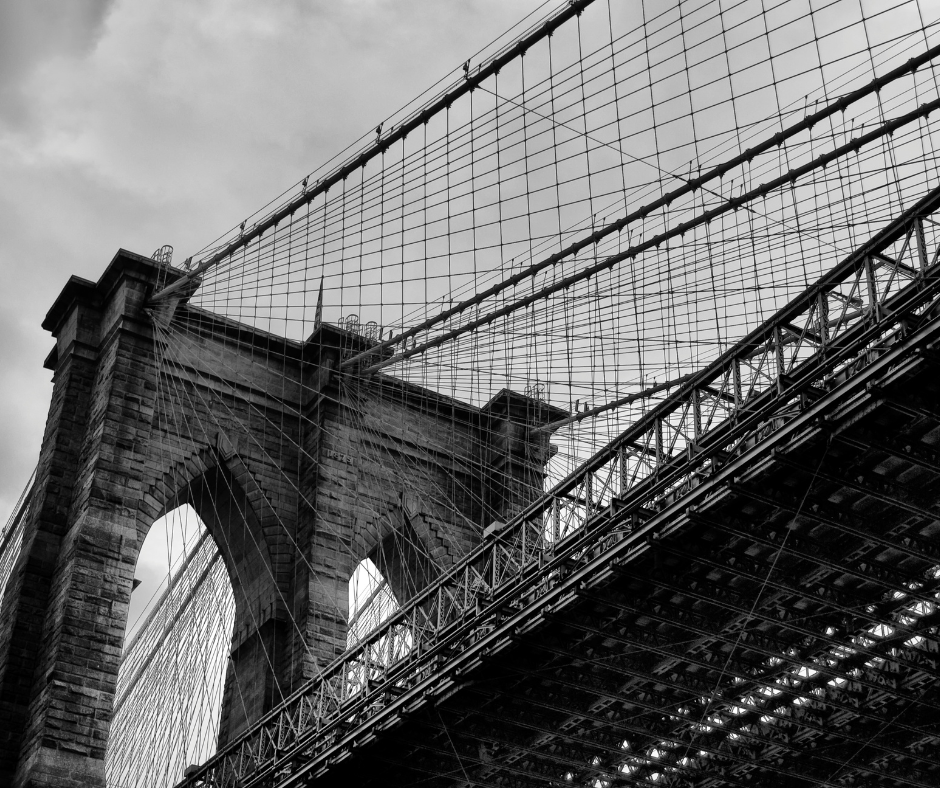
In our physical world, a bridge is a marvel of engineering – a structure of steel, concrete, or stone designed to span a gap that would otherwise be impassable. But as we explored in a previous discussion on the literal and metaphorical power of bridges, these structures do more than just facilitate travel; they symbolize the human desire to connect. While physical bridges conquer geographic divides, there is a much more complex and invisible chasm currently widening in our social fabric: the divide of “Othering.”
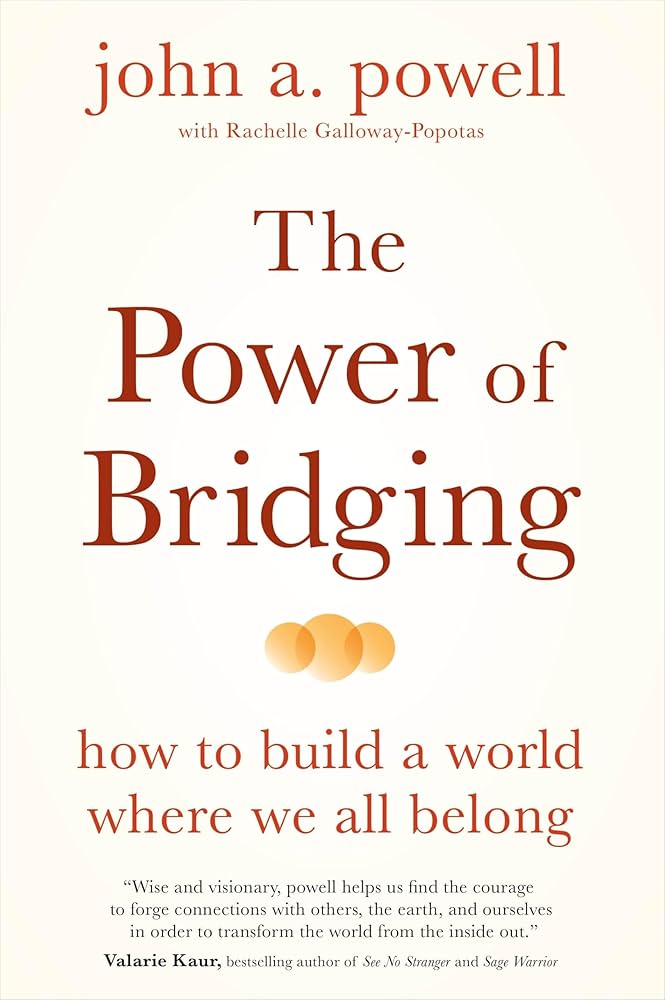
We don’t want to live in a society in turmoil. In fact, 93 percent of people in the U.S. want to reduce divisiveness, and 86 percent believe it’s possible to disagree in a healthy way. Yet with increasing political and social fragmentation, many of us don’t know how to move past our differences. Civil rights scholar john a. powell presents an actionable path through “bridging” that helps us communicate, coexist, and imagine a new story for our shared future where we all belong.

To navigate this, we turn to the powell’s profound insights in his latest work, The Power of Bridging: How to Build a World Where We All Belong. If our earlier exploration of bridges focused on the beauty of the connection itself, powell’s work provides the blueprint for the internal and systemic engineering required to build those connections in a fractured society. He moves us from seeing bridges as static objects to understanding “bridging” as a dynamic, life-saving practice.

The Three States of Human Connection: Breaking, Othering, and Bridging

To understand why we need to bridge, we must first understand the forces that pull us apart. Powell identifies two primary states that define our current social crises: Othering and Breaking.

Othering is the starting point. It is a psychological and sociological process where we perceive certain individuals or groups as fundamentally different from us. It isn’t just noticing a difference; it is the act of attaching a value judgment to that difference – viewing the “other” as a threat, as “less than,” or as someone who does not belong in our circle of concern.

When Othering is left unchecked, it evolves into Breaking. Breaking occurs when we turn inward to our own “in-group” (a process known as bonding) but do so by explicitly pushing away or demonizing the “out-group.” In a state of breaking, we stop seeing the full story of the other person. We see a flat caricature – a stereotype that justifies our fear or exclusion. Breaking is the collapse of the bridge; it is the moment we decide that the gap is too wide to cross and that the person on the other side is an enemy.

Bridging, then, is the intentional antidote. It is the practice of reaching across these divides to connect with people who are unlike us. Crucially, powell emphasizes that bridging is not “same-ing.” It does not require us to erase our differences or abandon our deeply held values. Instead, it asks us to acknowledge those differences and find a shared humanity beneath them.

The Blueprint: Why We Bridge

Why should we take the risk of building a bridge when it feels safer to stay behind our walls? Powell argues that our very survival – socially, politically, and even ecologically – depends on it. We live in a world of “accelerated change.” Technological shifts, climate crises, and shifting demographics create a profound sense of anxiety. When we are anxious, our natural instinct is to “break” – to find a small group where we feel safe and exclude everyone else.

However, breaking is a “false safety.” It narrows our world and prevents us from solving the very problems that cause our anxiety. Bridging, on the other hand, expands the “circle of human concern.” It allows us to co-create a larger “we” – a society where belonging isn’t a zero-sum game. In powell’s vision, my belonging cannot be predicated on your exclusion. If the bridge only supports people who look and think like me, it isn’t a bridge; it’s just an extension of my own island.

The Practice: How to Become a Bridger

Bridging is not a passive state of mind; it is a skill that must be practiced. Drawing from The Power of Bridging, we can identify four pillars of the “bridger’s” craft:

1. Empathetic Listening (The “Sawubona” Approach)

Powell references the South African greeting Sawubona, which means “I see you.” Bridging begins with the radical act of truly seeing another person’s humanity. This requires empathetic listening – listening not to find a flaw in someone’s argument, but to understand their story. When we listen to a story, we move away from the “flat” representation of the other and begin to see their complexities, their fears, and their dreams.

2. Holding Stories Loosely

One of the greatest obstacles to bridging is the “single story.” When we hold our own identity or our group’s narrative too rigidly, any alternative story feels like an existential threat. Powell suggests we should “hold our stories loosely.” This doesn’t mean giving up our identity; it means leaving enough room in our hearts to realize that our story is one of many. By doing so, we create space to co-author a new story together.

3. Navigating the Tension of “Short” and “Long” Bridges

Not all gaps are the same size. A “short bridge” might be connecting with a neighbor who has a different political sign in their yard but shares your love for the local park. A “long bridge” involves reaching across deep historical traumas or systemic injustices. Powell is realistic: long bridges are difficult. They require more vulnerability, more time, and more emotional labor. We cannot bridge all the time, especially when we are too hurt or too angry. But we can maintain bridging as our orientationthe direction in which we are trying to move.

4. Bridging with the Self

Perhaps the most surprising insight in powell’s work is that bridging must also happen internally. We often “other” parts of ourselves – our past mistakes, our vulnerabilities, or aspects of our identity that we’ve been told are “wrong.” To be an effective bridger in the world, we must first bridge the fractures within our own souls, accepting our own complexities so we can better accept them in others.

The “Wildcard” of Co-Creation

The ultimate goal of bridging is not just “getting along.” It is co-creation. When we bridge, we aren’t just crossing over to the other side to visit; we are building a new space in the middle. This is the “Learning Zone.”

In our comfort zone, everything is familiar, but nothing grows. In the “breaking” zone, everything is fear and conflict. But in the bridging zone – the Learning Zone – we experiment. We stretch our abilities. We find that by connecting with someone different, we are actually transformed. We don’t come out the same person we were when we started across the bridge.

A Call to Engineering the Future

In this 27gen article, we saw how bridges are the physical manifestation of our desire to connect. john a. powell takes that metaphor and gives it a moral heartbeat. He reminds us that while the world may feel like it is “breaking,” that breaking is a choice – and bridging is a choice, too.

To be a “bridger” in today’s world is an act of courage. It means being willing to be the structure that others walk on. It means risking the discomfort of the unknown for the possibility of a world where everyone belongs.

As we look at the landscapes of our lives – our families, our workplaces, and our communities – we must ask ourselves: Where are the gaps? Where have I allowed “Othering” to take root? And what is the first small stone I can lay today to begin building a bridge?

The architecture of belonging is not built by geniuses in ivory towers; it is built by ordinary people who decide that the person on the other side of the divide is worth knowing. It is built one story, one heartbeat, and one bridge at a time.


Part of a regular series on 27gen, entitled Wednesday Weekly Reader.

During my elementary school years one of the things I looked forward to the most was the delivery of “My Weekly Reader,” a weekly educational magazine designed for children and containing news-based current events.

It became a regular part of my love for reading, and helped develop my curiosity about the world around us.
Crossing the Bridge: Navigating Life’s Transitions

Bridges are more than mere structures of steel and stone. They are powerful metaphors for life’s most profound journeys – connecting what was to what could be, spanning the uncertain spaces between known and unknown landscapes.

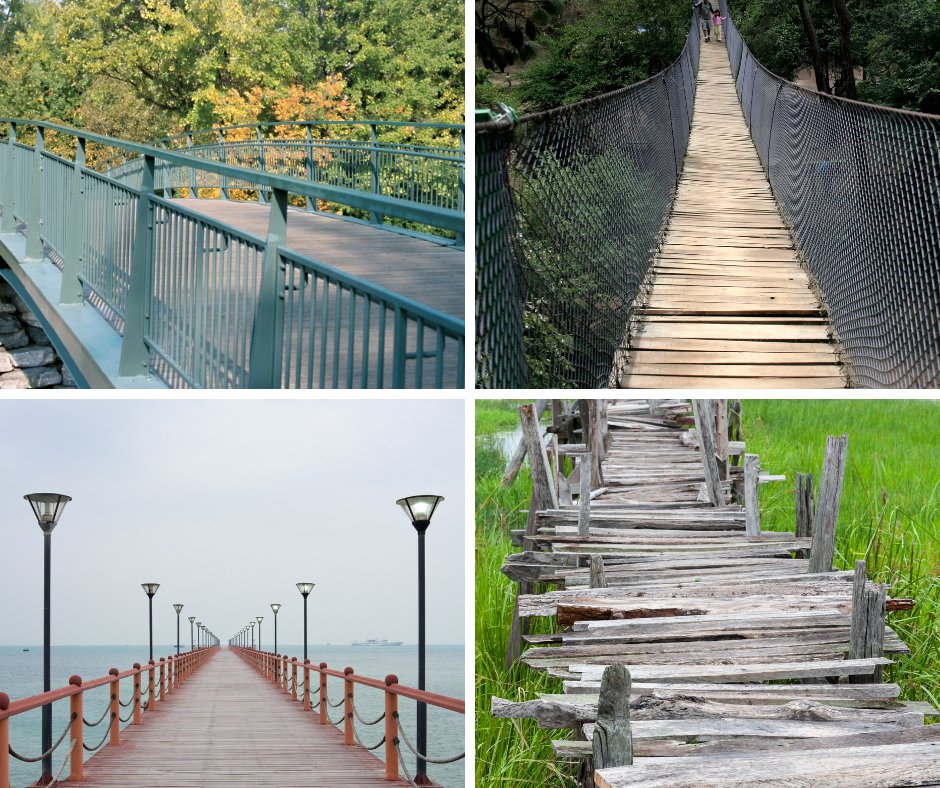
When we stand at the beginning of a bridge, the view can be intimidating. The planks beneath our feet might feel unstable, the distance to the other side shrouded in mist. Life’s transitions often feel exactly like this – a trembling moment of uncertainty, where the past recedes behind us and the future remains undefined.

Each bridge has its own character. Some are sturdy suspension bridges, their cables providing intricate support systems. Others are simple wooden crossings, requiring careful, deliberate steps. Similarly, our personal transitions vary – some are carefully engineered transformations, others spontaneous leaps of faith.

The act of crossing requires courage. Just as a bridge walker must trust the engineering beneath their feet, we must trust our own resilience during life’s changes. The wooden boards might creak, the wind might buffet us, but forward movement is possible. Each step is an act of trust – in ourselves, in the path we’ve chosen, in the possibility of what awaits.

Bridges connect more than physical spaces; they connect states of being. Leaving a job, ending a relationship, moving to a new city – these are bridge moments. We’re suspended between what we knew and what we’re becoming. The middle of the bridge is often the most vulnerable place, where we can look back at familiar terrain or gaze forward into uncharted territory.

Some bridges are long, requiring endurance. Others are short, demanding only a moment of boldness. Some have guardrails, offering security, while others challenge us to balance with nothing but our own determination. Life’s transitions mirror these bridge experiences – some transformations are gradual and supported, others demand we leap with minimal safety nets.

Importantly, not all bridge crossings are solitary journeys. Some bridges are wide enough for companions. Friends, family, mentors – they can walk alongside us, offering encouragement, sharing the weight of uncertainty. Their presence doesn’t eliminate the challenge, but it transforms the crossing from a potentially lonely trek into a shared adventure.

When we finally reach the other side, we are changed. The bridge was never just about getting from one point to another, but about the transformation occurring with each step. We arrive different – more resilient, more knowing, with a broader perspective of the landscape we’ve traversed.

Rather then focusing on the obstacle in your path, focus on the bridge over the obstacle.

Mary Lou Retton

Life’s bridges remind us: transitions are not obstacles, but opportunities. They are not about perfect, fearless passage, but about moving forward with authenticity, courage, and hope.


If you liked this article or you like bridges, check out this post:


Building Connections: The Rich Tapestry of Literal and Metaphorical Bridges

Envision a world where bridges do not exist. Picture major cities like London, Paris, and Rome without convenient pathways across the Thames, the Seine, and the Tiber. Visualize Manhattan as an isolated island, lacking solid connections over the Hudson and East rivers.

Consider San Francisco without road access across the gate to the north and the bay to the east. Imagine Pittsburgh without any bridges spanning the Allegheny and the Monongahela rivers. Picture Chicago without its substantial lift – and drawbridges, or Amsterdam without its more modest canal crossings. Envision Seattle without its lengthy, low floating bridges, or St. Petersburg without its soaring cable-stayed structure stretching over Tampa Bay.

The association between bridges and cities is profound, particularly because many of our greatest cities emerged where they are due to their proximity to water. Settlements along rivers and bays, often at crucial river crossings, have played a significant role in the growth of cities. Cambridge, an ancient English city dating back to Roman times, owes its existence to a bridge over the navigable River Cam. Oxford, another venerable English city, derived its name from being a crossing point of the Thames.

Reflect on the prevalence of water-related words like “port,” “bay,” and “haven” in the names of many cities and towns. Additionally, numerous states share names with the rivers that either border or bisect them.

Now, think about iconic landmarks like the Golden Gate Bridge spanning anything other than the Golden Gate itself. The location, design, proportions, scale, and color of the bridge seem perfectly suited for the site. Can you even imagine any other bridge between San Francisco and Marin County? Could a replica of the Brooklyn Bridge or a smaller version of the Golden Gate Bridge have been envisioned for different locations? Engineers must engage in this type of questioning and imagination before constructing any bridge. Early proposals for bridges in New York and San Francisco looked drastically different from the familiar structures we know today.

Bridges define the entrances to cities, and crossing or passing under some of the world’s great spans is an unforgettable experience. They serve as landmarks and guideposts for travelers, shaping first impressions of cities. Even small, anonymous highway bridges, though less famous, are crucial to local traffic. The engineers who design monumental bridges often begin by working on smaller ones, making them training grounds for ambitious dreams. Every bridge, regardless of size, is not just a functional structure but also an aesthetic and environmental statement.

Despite their significance, our thoughts about bridges often fade once they are open, taken for granted after grand celebrations. However, bridges, like people, are affected by their environment and face wear and tear from traffic, pollution, neglect, and aging. Regular maintenance, inspections, and a recognition of their limits are essential. Unfortunately, neglecting these aspects has led to approximately one in five American bridges being labeled structurally deficient.

Understanding the stories behind our bridges not only fosters a deeper appreciation for their rich history but also provides insight into the humanity of engineers and the field of engineering. It encourages greater pride in the contribution of bridges to our physical and cultural infrastructure and emphasizes the responsibility to maintain them. Imagine a world without bridges, and you’ll realize the immense impact these structures have on our lives.

In Engineers of Dreams, Henry Petroski reveals the science and engineering – not to mention the politics, egotism, and sheer magic – behind America’s great bridges, particularly those constructed during the great bridge-building era starting in the 1870s and continuing through the 1930s. It is the story of the men and women who built the St. Louis, the George Washington, and the Golden Gate bridges, drawing not only on their mastery of numbers but on their gifts for persuasion and self-promotion. It is an account of triumphs and ignominious disasters (including the Tacoma Narrows Bridge, which literally twisted itself apart in a high wind). And throughout this grandly engaging book, Petroski lets us see how bridges became the “symbols and souls” of our civilization, as well as testaments to their builders’ vision, ingenuity, and perseverance.


When you delve into the rich tapestry of bridges, it’s essential to appreciate their multifaceted significance throughout history and their tangible impact on human connectivity. Bridges, both literal and metaphorical, have stood as testaments to human ingenuity, overcoming physical barriers and fostering connections. From ancient structures like the Roman arch bridges to modern engineering marvels such as suspension bridges and cable-stayed spans, each iteration tells a story of innovation and the human desire to traverse obstacles. However, the essence of bridges extends beyond their structural prowess. Metaphorically, the concept of bridges has woven itself into the fabric of our language, serving as a symbol for forging connections, overcoming challenges, and navigating transitions. Let’s explore the myriad ways in which the metaphorical resonance of “bridges” enriches our understanding of relationships, communication, and personal growth across various domains.

The metaphor of “bridges” is widely used across various contexts, symbolizing connections, transitions, and relationships. Here’s a brief listing of the use of “bridges” as a metaphor:

Connecting Generations: The term “bridging the generation gap” is often used to describe efforts to foster understanding and collaboration between different age groups.

Building Relationships: “Building bridges” is a metaphor for establishing and strengthening connections between individuals or groups, emphasizing the importance of communication and understanding.

Navigating Transitions: “Crossing a bridge” is a metaphor for going through a transition or overcoming challenges. It represents a journey from one state to another.

Overcoming Obstacles: “Bridging obstacles” signifies finding solutions and overcoming difficulties, emphasizing resilience and problem-solving.

Cultural Integration: In multicultural contexts, “bridging cultures” refers to efforts to promote understanding and harmony between different cultural groups.

Career Development:”Building a career bridge” is a metaphor for strategic planning and actions taken to advance one’s professional life, moving from one stage to another.

Knowledge Transfer: In the context of mentoring, the term “knowledge bridge” is used to describe the transfer of expertise from experienced individuals to those seeking to learn.

Communication: “Bridging the communication gap” is a common phrase used to highlight efforts to improve understanding and convey messages effectively.

Innovation and Technology: “Bridging innovation” is a metaphor for connecting existing technologies or ideas to create something new and groundbreaking.

Emotional Connections: “Building emotional bridges” is used to describe efforts to establish and maintain meaningful connections on an emotional level.

Mind-Body Connection: “Bridging the mind and body” is a metaphor for achieving harmony and balance between mental and physical well-being.

Education and Learning: ”Bridging knowledge gaps” signifies efforts to enhance learning and understanding, especially in educational settings.

Final Action: “Burning your bridges” forces you to continue with a particular course of action, and makes it impossible for you to return to an earlier situation or relationship.

Drastic Act: Going a “bridge too far” is to pursue something difficult to achieve, often with serious consequences.

These metaphors illustrate the versatility of the “bridge” concept, showcasing its relevance in diverse areas of life and thought.

What use of a “bridge” metaphor would you add to this short (and incomplete) list?


A brief note about this article:

Perhaps the most challenging of all types of reading is syntopical reading, which applies the analytical skills across a multitude of texts. Syntopical reading aims to compare books and authors to one another, to model dialogues between authors that may not be in any one of the books.

The ultimate aim is to understand all the conflicting viewpoints relating to a subject. It’s not to devise your own synthetic answer, as this would merely be an entry into the literature, rather than an understanding of what already exists.

I’m a big proponent of syntopical reading, and at any given time I have a half-dozen or more syntopical collections in progress. The concepts of Bridges in both reality and metaphor is one of my long-standing ones, and one that I will continue to revisit from time to time.

Long-time readers of this site will undoubtably recognize a few more: Modern Elderhood, Disney history, hospitality, and culinary history and practices, for example.


Part of a regular series on 27gen, entitled Wednesday Weekly Reader.

During my elementary school years one of the things I looked forward to the most was the delivery of “My Weekly Reader,” a weekly educational magazine designed for children and containing news-based, current events.

It became a regular part of my love for reading, and helped develop my curiosity about the world around us.