Keep Plussing the Show: No Room for Excuses

We have to keep plussing our show. If we ever lose our Guests, it will take us ten years to get them back.

Walt Disney

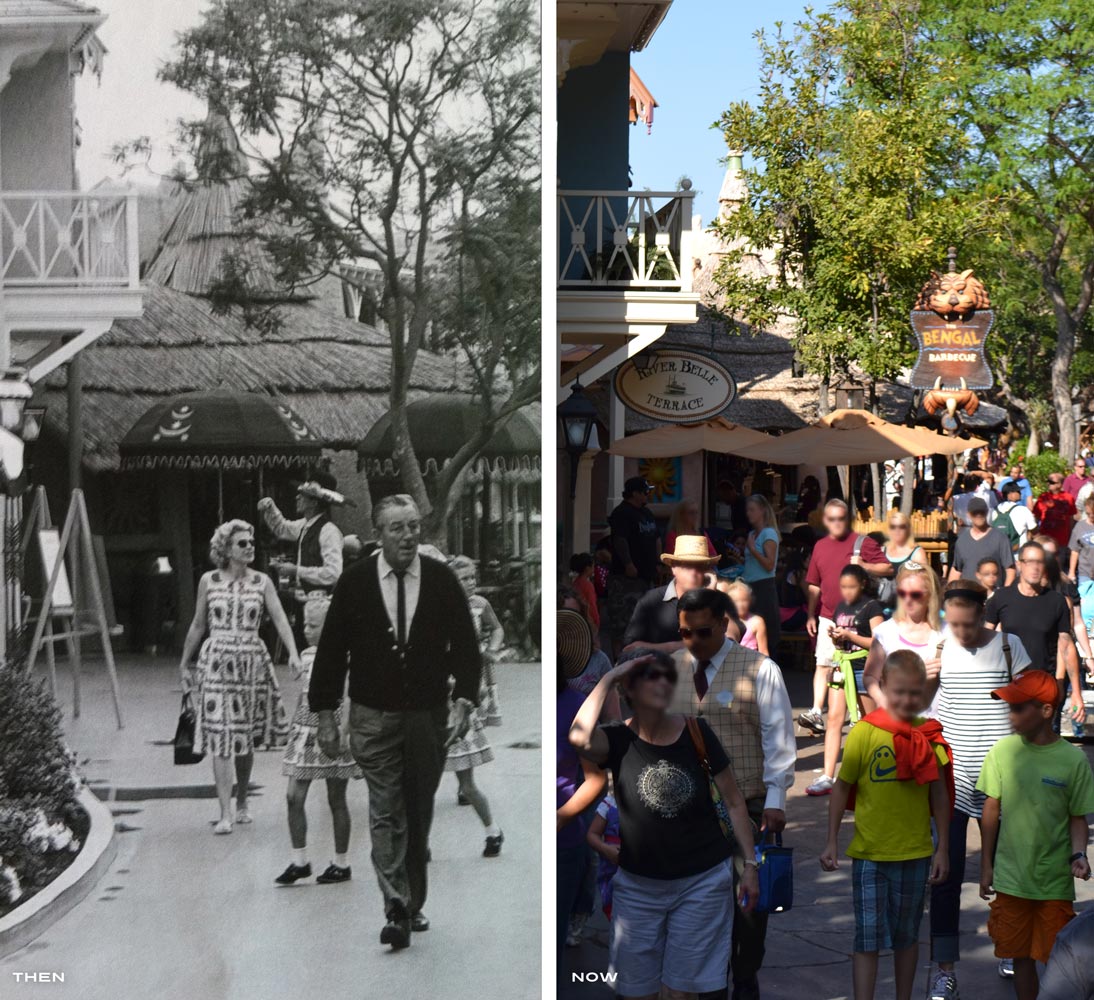
Sometime during the 1940s, Walt Disney coined the term “plussing.” Walt used the word as a verb – an action word. To “plus” something is to improve it. “Plussing” means giving your customers more than they paid for, more than they expect, more than you have to give them. Disney historian Les Perkins recalls an incident at Disneyland during the early years of the park. Walt had decided to hold a Christmas parade at the park – a $350,000 extravagance.

Upon hearing of the parade plans, the accountants approached Walt and said, ‘Why spend money on a Christmas parade? It won’t draw people to the park; they will already be here. It’s an expense we can do without. No one will complain if we dispense with the parade, because nobody’s expecting it.

courtesy matterhorn1959

courtesy matterhorn1959

Walt said, ‘That’s just the point. We should do the parade precisely because no one is expecting it. Our goal at Disneyland is to always give people more than they expect.’

Walt spent the last decade of his life plussing the Disneyland experience. He would continually tell cast members, “Every cast member is responsible for the impression we make,” and “take five minutes a day to make a magical memory for one of our Guests.” Disney would walk around the park with a roll of five dollar bills in his pocket to tip any cast member who worked extra-hard to plus the experience for the Guest.

During the decade after Walt Disney’s death in 1966, and as the excitement of Disneyland and Disney World began to wane with new entertainment options, Van France, founder of Disney University, was determined to reignite the can-do culture of Disney. With Walt Disney’s admonition to “keep plussing the show” in mind, France prepared a refresher course for park management entitled “Gentlemen, This is a Guest!”

Through these sessions, he identified a need to reignite the passion and can-do attitude among managers. Using nothing more than a 15-page memo and a series of short, open forum-style meetings with park management, Van helped a discouraged team reconnect with its roots by emphasizing Disney’s bottom line: a happy Guest. He reminded the managers of their roles by encouraging them to do the following:

  • Think teamwork – thinking “we” is much more powerful than thinking “they,” “them,” etc. Blaming is a bottomless pit.
  • Think audience and Guest – Guests are the audience, paying money to be entertained and find happiness. Guests aren’t “units” or “per capita”; they are human beings.
  • Think happiness for others – Guests come to Disney parks seeking happiness; it is their brief escape from daily frustrations. Walt Disney’s dream of separating the frustrating outside world from the Disney world ensures Guest Happiness. Maintaining an environment of fantasy is the cast member’s job.
  • Practice being friendly – smile and be friendly with each other. Say good morning to other cast members backstage will transfer to friendliness on-stage.
  • Think quality and pride – both are essential in Guest courtesy and showmanship, throughout our backstage activities as well as those on-stage.

Plussing the show is as much about attitude as it is about budget.

France was ardent in challenging excuses for not conducting training for all cast members. He believed that training didn’t have to be a big-budget extravaganza or be limited to activities in a training room. Some of the best training in the world occurs during on-the-job-training sessions conducted by mentors, not trainers. Mentoring, OJT, and role modeling were much more useful and significantly less expensive than classroom training. Jim Cora, retired chairman of Disney International, sums up the training rationale he successfully used during his 43-year career at Disney:

Marketing is the time and money you spend to get people in the door. Training is the investment you make to get Guests to come back and cast members to stay; it creates loyalty.

Plussing the show calls for a keen eye, the ability to focus on the root issues, and a refusal to accept mediocrity. No matter what business you are in, your success depends on your commitment to excellence and attention to detail. If you deliver more than people expect, you will turn Guests into fans. If you go out of your way to make people feel special, they will go out of their way to buy your product or service.

Applying Van France’s Four Circumstances to ChurchWorld Guest Experience Teams

Innovate – Support – Educate – Entertain

Plussing the Show How is plussing the show handled in your organization? How are Van’s Four Circumstances used to differentiate your organization from the “competition” through improved Guest experiences and leadership effectiveness? How are you addressing each of the following five challenges?

  • Doing more with less
  • Keeping team members engaged and motivated
  • Reducing team member turnover
  • Improving Guest experiences
  • Differentiating from the competition

How creative is your organization in taking training out of the classroom? How can you reignite the flagging spirits of your team? Can you create a similarly effective low-budget program that helps plus your Guest Experience?   Disney U

Inspired by and adapted from Disney U by Doug Lipp

Get the book TODAY to learn invaluable lessons for your Guest Experience Teams

 Book     Kindle

Continue the Disney U experience on 4/22/14 with Beyond Orientation


Disney U is one of the most significant resources related to the Disney organization, leadership, team development, and Guest Experiences available. In honor of the one year anniversary of the release of Disney U, this is a look back at a series from the book that originally ran last year.


Simplify the Complex; or What to Do When A Guest Drops a Mickey Bar

Providing the happiest Place on Earth means that cast members must manage a delicate balance of priorities; without clarity, the task becomes overwhelming. Van France and Dick Nunis recognized the challenge. In response, they simplified this inherently complex environment by providing every cast member with crystal-clear marching orders during his or her Disney University orientation.

Dick Nunis came up with a program which, at the time, was a totally new concept for operations. The four elements of theme park operations were listed in order of their importance.

Van France

Simple service standards can be powerful tools in any organization.

ice cream

What happens when a child drops a Mickey ice cream bar?

  • Is it tough luck for the unhappy child?
  • What about the sticky mess on the busy sidewalk?
  • How would you handle a tired, irate parent?
  • What’s the impact on the bottom line?

There’s not an easy answer for the situation above – or for the tens of thousands of other daily occurrences that happen in a Disney theme park.

How do you train cast members to handle whatever may come up in a normal – or not so normal – day in the park?

The recipe for creating the magical environment at Disneyland involved boiling down park operations into four priorities that represent the values driving every decision:

  • Safety – The most important priority for Guests and cast members. Cast members must often protect Guests from themselves! Guests distracted by the beautiful architecture may walk into lampposts and walls. Every operations and design decision must first address safety.
  • Courtesy – The second most important priority after safety is courtesy. Cast members know the value of the smiles on their faces and in their voices and the importance of engaging Guests. A lack of cast member courtesy will poison the safest and most interesting environment.
  • Show – Once safety and courtesy are assured, attention turns to show. Well-maintained attractions and facilities populated by well-groomed cast members ensure good show, a condition Walt Disney passionately promoted.
  • Efficiency – This last priority refers to the number of Guests enjoying the attractions, restaurants, and retail shops. This is the “hard numbers” portion of a business. By placing numbers last, the SCSE model makes a clear, somewhat paradoxical statement: accomplishing the first three priorities ensures that this fourth one is sustainable in the form of happy and loyal cast members and Guests.

The image of shrinking the massive and complex operations at Disneyland – a pot of soup – into a smaller, more manageable package – a bouillon cube – via the SCSE priority model is powerful.

Disney’s Four Keys serve as a compass for creating happiness and serving others. More than five decades after they were created by Dick Nunis, these Four Keys continue to serve as the foundation for everything Disney does. Any organization would be envious to have several key standards stand that test of time. It is at the heart of what has made Disney the powerful name it is today.

About that Mickey ice cream bar…

Applying Van France’s Four Circumstances to ChurchWorld Guest Experience Teams

Innovate – Support – Educate – Entertain

> Simplify the Complex

How are complex operations and processes communicated in your organization? Are priorities succinct and memorable? How are Van’s Four Circumstances used to convey complex and vital procedures and priorities?

> It’s All about the Basics

  • How do you help team members understand standard operating procedures and priorities?
  • Are team members actively involved as change agents, or do they wait for direction?
  • Are policies followed? If not, why not?

> Great Trainers Transfer Knowledge

  • How does your training staff leverage experience from one area to another?
  • What do you do to encourage interactions with Guests and attendees?

> From Pot of Soup to Bouillon Cube

  • What is your organization’s equivalent of SCSE?
  • Can your team member manual be simplified?
  • What are your priorities? Can you summarize your standard operating procedures and priorities, regardless of complexity, with memorable phrases or acronyms?

Inspired by and adapted from Disney U by Doug Lipp

Disney U

Get the book TODAY to learn invaluable lessons for your Guest Experience Teams

Book     Kindle

Continue the Disney U experience on 4/15 with The Honeymoon Will End

Disney U is one of the most significant resources related to the Disney organization, leadership, team development, and Guest Experiences available. In honor of the one year anniversary of the release of Disney U, this is a look back at a series from the book that originally ran last year.


Be Willing to Change or Be Willing to Perish: The Birth of Disney University

One jarring element can undermine a host of favorable impressions.

That’s why street cleaners at Disney World are given extra training at Disney University to ensure that they respond in a positive and helpful fashion to questions from departing Guests.

It might seem strange to train street cleaners in customer service, but Disney learned years ago that these cast members receive the greatest number of unstructured questions from park Guests.

courtesy billbergh.com

courtesy billbergh.com

To make sure that a Guest’s last – and lasting – impression after a wonderful day in the park isn’t ruined by a don’t-ask-me-it’s-not-my-job attitude, Disney provides three extra days of interpersonal skills training for the cleanup crew. Disney believes in a proactive approach to head off potentially damaging situations.

That wasn’t always the case.

Walking in Disneyland and interacting with the large number of cast members in 1962 exposed Van France to the inadequacies of the existing organization and training process. He found:

  • Outdated training materials
  • Trainers who were out of touch with the realities of park operations
  • Temporary summer jobs that had become careers
  • Hard work and long hours on weekends, nights, and holidays
  • Exhausted cast members that were becoming burned-out

Van also saw the need to expand beyond the simple orientation program of 1955 into a more complete sequence that included a consistently applied on-the-job training component.

The Disney University was created 7 years after the 1955 grand opening of Disneyland in response to the demands of a rapidly maturing organization.

Our theme of “happiness” was great for the first years, and we still use the basic elements of that program. But now we needed something new, something that would impose responsibility and self-discipline on all of our key people.

Van France

Walking the park also reinforced in Van’s mind the requisite elements for ensuring “substance” in the Disney University.

  • Training staff had to have credibility
  • Trainers with frontline experience were a must
  • Program content had to reflect the reality of the workplace and still convey corporate values, standards, and expectations

The Disney University should be a pioneering force, the world’s first and foremost corporate institution for training in the art, skills, and knowledge required in outdoor show business.

Van France

With this in mind, Van proposed that the Disney University develop employees into “Disneyland specialists,” with emphasis on four areas:

Leaders: We need to develop leaders who have an overall understanding of the complex combination of skills and professions that have made the Disneyland show the world’s greatest entertainment attraction.

People specialists: We need men and women who are professionally qualified to deal with people and their many demands.

Trade Specialists: WE need to develop those skilled in the various unique technical phases of the operations, but they must also have an overall knowledge of the total operation.

History and traditions: Most importantly, we sorely need training in the Disneyland organization and the history and traditions of Walt and his company.

With all the changes to the Disney organizations over the years since the opening of Disneyland, Van knew that it was more important than ever for the University to create programs that would carry on the traditions, philosophies, and dreams that Walt Disney had left for the organization.

Applying Van France’s Four Circumstances to ChurchWorld Guest Experience Teams

Innovate – Support – Educate – Entertain

Be Willing to Change or Be Willing to Perish

In your organization, can you identify the equivalent of Van’s Four Circumstances that support “Be willing to change or be willing to perish,” balancing tradition with innovation? Can those things be applied to ensure that training and team development programs are credible?

  • How does training in your organization remain relevant and credible?
  • How could training processes, programs, and staff improve “substance”?
  • To what extent are the history and traditions of your organization perpetuated and built upon?
  • What traditions should be maintained in your organization?
  • What traditions are impeding progress and innovation?
  • Who in your organization has the influence and desire to implement change?

Inspired by and adapted from Disney U by Doug Lipp

Get the book TODAY to learn invaluable lessons for your Guest Experience Teams

Disney U

Book     Kindle


Continue the Disney U experience Thursday 4/10/14 with Simplify the Complex


Disney U is one of the most significant resources related to the Disney organization, leadership, team development, and Guest Experiences available. In honor of the one year anniversary of the release of Disney U, this is a look back at a series from the book that originally ran last year.

Gather Facts and Feelings – Walk the Park for a Fresh Perspective

He didn’t have a particular schedule, but his agenda was always the same: connect with and interact with as many guests and cast members as possible.

 Walt would regularly walk through the Park, looking for problems or things to improve. He was good at it and always welcomed suggestions. I copied his routine. I continually walked through the Park, looking for different things, people problems. Facts are easy to identify; I was looking for feelings that were bothering Cast Members.

Van France, founder of Disney University

Walt Disney knew the value of learning as much as possible about the front lines by spending time on the front lines.

courtesy of designingdisney.com

courtesy of designingdisney.com

His strategy of walking the park dates back to the construction of Disneyland. He regularly visited the construction site to assess the proportion or size of buildings. A common site was Walt squatting down and then looking up at a building from a lower angle. His determination to view the storefronts and buildings from the vantage point of children ensured that the needs of this large population of guests – an often overlooked but very influential group – were addressed.

courtesy of Disney Imagineering

courtesy of Disney Imagineering

Walt Disney never stopped looking at Disneyland from the perspective of the guest, even years after the park opened.

Van France, like Walt, favored walking the park to gather information. Often armed with his camera, Van tirelessly sought the opinions and thoughts of cast members and guests.

Bill Ross, a former manager of Disney University, says, “More than anyone I’ve ever known, Van put his ear to the ground to get ideas. He had a wide circle of friends and a strong network. If Van were with us today, he would love using social media.”

Walking the park helped Van clarify the problems and then visualize a process by which to bridge the gaps.

After the park had been open for seven years, Van realized the 1955 model of orientation and cast member training that had been so successful during Disneyland’s early years was no longer sufficient. He faced a paradox: preserving the past while preparing for the future.

Van knew that he needed to identify and preserve the components of orientation and training that had led to such heady success during Disneyland’s first seven years:

  • Friendly environment
  • Creative presentations
  • Useful content

He had to balance these fundamentals while preparing cast members – including managers – for a much more complex future, driven by the following factors:

  • Consistency – everyone must attend the new-hire orientation program
  • Systems – specific on-the-job training must follow the orientation program
  • Continuing education – supervisors and managers needed leadership and communication-skills training

The time was right for Van to build a bridge to the future of training for Disneyland. The time was right for the Disney University.


Applying Van France’s Four Circumstances to ChurchWorld Guest Experience Teams

Innovate – Support – Educate – Entertain

Gather Facts and Feelings

In your organization, can you identify the equivalent of Van’s Four Circumstances that support walking the park and keeping in touch with the front lines? How do you apply those circumstances to gather facts and feelings from team members and Guests?

Walk the Park

  • What is the equivalent of walking the park in your organization? Who does it, and how frequently?
  • How could this strategy be improved? More people involved? More frequently?
  • If leaders aren’t walking the park, what is the excuse?
  • Walt Disney could carve time out of his day to walk the park. Why can’t every leader do that?

Mind the Gap

  • Is there a reality gap between the ideals espoused in your organization and training programs and the realities of the job?
  • How is the effectiveness of your training assessed? With what frequency?

One Foot in the Past, One Foot in the Future

  • How is the history of your organization kept alive? How could this be improved?
  • How does your organization balance history and legacy with current and future needs? Who supports this?

Inspired by and adapted from Disney U by Doug Lipp

Disney U

Get the book TODAY to learn invaluable lessons for your Guest Experience Teams

 Book     Kindle

Continue the Disney U experience Thursday 4/3/14 with Be Willing to Change or Be Willing to Perish: The Birth of the Disney University

Disney U is one of the most significant resources related to the Disney organization, leadership, team development, and Guest Experiences available. In honor of the one year anniversary of the release of Disney U, this is a look back at a series from the book that originally ran last year. 


Want to know more about learning from the front line?

Delivering a Great Guest Experience is a Balance of Art and Science

Trying to keep an operation like Disneyland going you have to pour it [money] in there. It’s not just new attractions, but keeping it staffed properly, you know…never letting your personnel get sloppy. Never letting them be unfriendly.

– Walt Disney

Backstory: The Jungle Cruise was one of the most eagerly awaited attractions when Disneyland opened in 1955. Walt Disney had given the ride extensive publicity on pre-opening television shows. Very little else was far enough along for him to show, but the channel was dug, trees were being planted, and Walt was able to talk his viewers through a typical ride. The art of the sight gag was perfected by Disney Imagineer Marc Davis for the Jungle Cruise. Davis had an impeccable sense of timing that allowed his creations to be read instantly – an important consideration in light of the limited time and dialogue available as the audience moves through a scene. His gag sketches for the Jungle Cruise were often translated practically verbatim into the attraction. While the current version and most previous instances have made use of a comedic spiel, filled with intentionally bad puns, the original intent of the ride was to provide a realistic, believable voyage through the world’s jungles.

The visual imagery set the scene, but the dialogue of the boat’s skipper had to complete the adventure.

courtesy disneybymark.com

courtesy disneybymark.com

Understanding the backstory above sets the scene for this real-life event:

Walt Disney got off the Jungle Cruise boat and wasn’t happy. In fact, something was terribly wrong. The problem was with the skipper of the boat Walt had observed. The skipper hadn’t done his job properly, and that simply wasn’t acceptable to Walt. Yes, the skipper ran the boat safely, so that wasn’t the problem. Yes, he had recited his script line for line, so that wasn’t the problem. It was something else: It was in his delivery. He hadn’t acted his part with as much enthusiasm as Walt wanted. He lacked energy and showmanship. – Ron Dominguez, Executive Vice President, Walt Disney Attractions (retired)

Word got back to the director of operations, Dick Nunis, about how upset Disney was. Dominguez, who was area supervisor at the time, recalls “Walt told Dick, ‘I want the skippers to act as if every trip on the Jungle Cruise is their first trip. I want them to act surprised when the hippos suddenly rise up out of the water. The skippers need to be as surprised as the guests.” Nunis and Dominguez and the whole Jungle Cruise team started a marathon training session at the end of the day to ensure that all the cast members knew the script and performed their roles with the appropriate enthusiasm.

Disneyland was (and along with all the other Disney parks) and remains a balance of science and art.

Building and maintaining Disneyland – the attractions, restaurants, shops, and arcades – was just the starting point: the science. Maintaining the feel of Disneyland and cast member morale is the art. Combined, they create a powerful differentiator from the competition: the stores, restaurants, theaters, resorts, and amusement parks vying for the same customers and employees. Walt’s ride on the Jungle Cruise, along with his scathing comment, is a clear example of his focus on the upkeep of the park and the importance of maintaining both the art and science of the show. Cast members and leaders at Disney properties today refer to this process as keeping the property and show fresh.

At the tenth anniversary of Disneyland, Walt’s remarks to the Imagineers whose creativity and genius brought the Jungle Cruise to life set the stage for what continues today – the never-ending pursuit of perfection:

I just want to leave you with this thought, that it’s just been sort of a dress rehearsal and we’re just getting started. So, if any of you start to rest on your laurels, just forget it.

– Walt Disney

Applying Van France’s Four Circumstances to ChurchWorld Guest Experience Teams

Innovate – Support – Educate – Entertain

How would you apply Van France’s Four Circumstances in your organization? How do you apply them to balancing art and science? Which of the Four is strongest? Which is the weakest? Is there an equivalent to an unenthusiastic Jungle Cruise skipper in your organization?

  • If so, why is this tolerated?
  • What needs to be done to change this environment?
  • What are the barriers?
  • Who in your organization can lead the way?

Inspired by and adapted from Disney U by Doug Lipp

Get the book TODAY to learn invaluable lessons for your Guest Experience Teams

Disney U

Book     Kindle

Continue the Disney U experience Tuesday 4/1/14 with Gather Facts and Feelings: Walk the Park for a Fresh Perspective

Disney U is one of the most significant resources related to the Disney organization, leadership, team development, and Guest Experiences available. In honor of the one year anniversary of the release of Disney U, this is a look back at a series from the book that originally ran last year.

Capturing the Hearts and Minds of Your Team is the Foundation for Excellence

A maxim of the movie industry is that it takes a happy crew to produce a happy show.
Van France

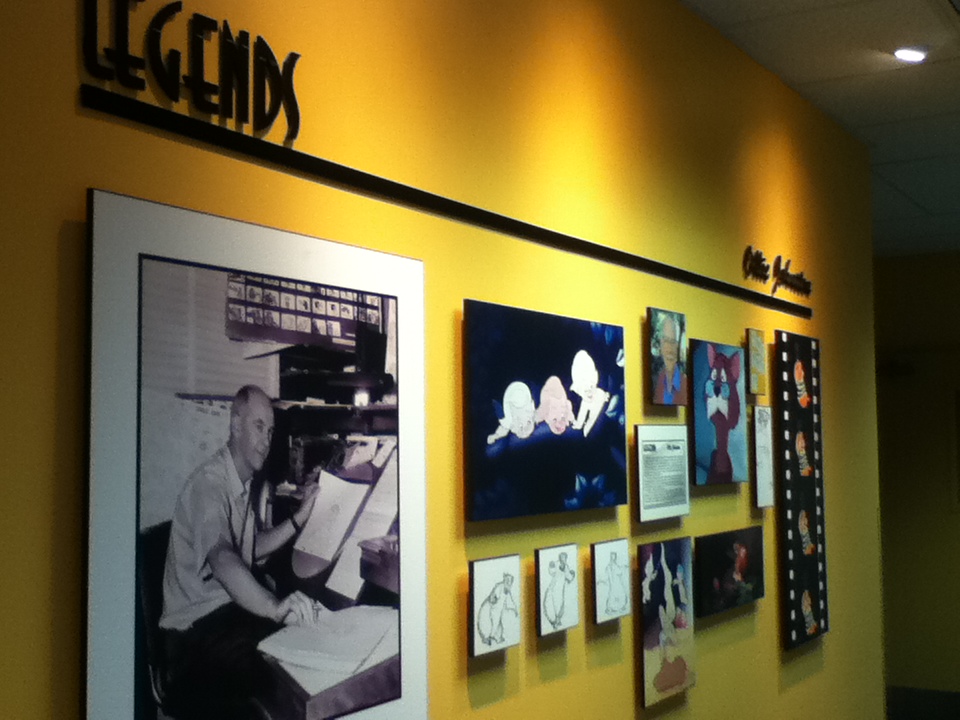
A constant reminder of the Disney organization’s legacy and success are the posters, pictures, and artwork from Academy Award-winning movies and Tony Award-winning Broadway plays lining the walls of the hallways and training rooms.

courtesy of drawntobebad.tumblr.com

courtesy of drawntobebad.tumblr.com

Creating the Happiest Place on Earth is a fine balance of values and things, along with a lot of hard work.

The Disney University has a set of crystal-clear values that are aligned with and fiercely supported by the company leadership.

Disney’s organizational values drive the strategies, which in turn drive Disney’s success.

The Disney University makes certain that every employee is properly introduced to the company and understands the importance of the brand: Disney values, Disney history, and Disney traditions. This context further enriches the specific on-the-job training sessions conducted by the operations team that employees must attend immediately after orientation.

Everyone at Disney knows his or her role in keeping the parks friendly, well maintained, and efficiently operating. This way of business – also known as the Disney Philosophy and the Disney Way – involves a huge investment of time, training, and money that not many others are willing to make.

The Disney Philosophy is not just a nice thing to do, but a must do.

Even the lowest-tech, bare-bones, and budget-challenged training program will get the job done as long as hearts and minds are captured. Training programs reflect organizational values and health.

The content of training programs, the individuals who teach, the team members who attend, and the way the team members are supported outside the classroom reveal much about organizational culture.

The Disney University’s success is due to its uncanny ability to capture the hearts and minds of the thousands of cast members it serves.

You can dream, create, design, and build the most wonderful place in the world but it requires people to make it a reality.
– Walt Disney

It may have all started with a mouse, but Disney has come a long way since then.

Applying Van France’s Four Circumstances to ChurchWorld Guest Experience Teams

Innovate – Support – Educate – Entertain

Capture Hearts and Minds

Can you identify the equivalent of Van France’s Four Circumstances (components) that support highly trained, well-prepared and motivated team members? How do you apply those “circumstances” to capture team members’ hearts and minds?

How Does your Organization Balance Values and Things?
• What is your equivalent of Mickey Mouse, your claim to fame?
• How do you balance these things with values?

Pulling Back the Curtain
• Are your training goals aligned with your organizational goals?
• Are all your different departments engaged in your training efforts?

It’s Everyone’s Job (Starting at the Top)
• Does your Leadership Team demonstrate unwavering support of team member development and training efforts?
• Is there a culture of learning and training?
• Who promotes your organizational culture? Who is your equivalent of Walt Disney or Van France (i.e. role models of excellence for aspiring chief cultural officers)?

Inspired by and adapted from Disney U by Doug Lipp
Get the book TODAY to learn invaluable lessons for your Guest Experience Teams

Disney U
Book     Kindle

Continue the Disney U experience on Thursday 3/27/14 with Delivering a Great Guest Experience is a Balance of Art and Science

Disney U is one of the most significant resources related to the Disney organization, leadership, team development, and Guest Experiences available. In honor of the one year anniversary of the release of Disney U, this is a look back at a series from the book that originally ran last year.

Setting the Stage for Success

The Disney University is a name that carries clout and evokes images of excellence.

How does Disney develop the world’s most engaged, loyal, and Guest-centric employees, year after year?

photo by glassslipperconcierge.com

photo by glassslipperconcierge.com

The simple explanation for the Disney University’s success can be attributed to the levels of support and clarity of purpose found in the Four Circumstances, the organizational values Van France identified as vital to the success of the Disney University.

Training cannot be limited to ‘Here’s what you need to do, now go do it.’ That’s not good enough. Training needs to instill a spirit, a feeling, an emotional connection. Training means creating an environment of thinking and feeling.

– Van France, founder of Disney University

 > Van’s Circumstance #1: Innovation

Backstory: Van France’s background included experience as a trainer in manufacturing and the military. He disliked the idea of a “training department,” but felt that the idea of a university was exciting. Historically, a university was ahead of the times, leading people into exciting adventures.

Van’s focus on being innovative created an ever-evolving learning culture.

> Van’s Circumstance #2: Organizational Support

Backstory: Dick Nunis, Director of Operations at Disneyland when Disney University was founded, had an education degree from USC. Nunis saw the advantages of branching out from a simple orientation program, and backed the concept of Disney University from the start.

Van knew that unless someone from the highest ranks of management backs an idea, it won’t happen. Leadership must be intimately involved and has to set the tone.

> Van’s Circumstance #3: Education

Backstory: Walt Disney established his own unique school for training the Disney animators when traditional art schools couldn’t provide the quality he was looking for. In 1932, Disney began required evening classes, eventually adding ½ day classes as well.

This is the foundation of Disney University: Walt’s long-standing value of providing employees with a tailored, relevant training and educational experience.  Van France built on that foundation, creating a unique school with a different type of artist. These “Disneylanders” would major in the fine art of creating happiness and receive a special curriculum in human relations and Disney philosophy.

> Van’s Circumstance #4: Entertain

Backstory: France had many friends in the Art Department at Disney. As a result, the handbooks and training aids were always creative and interesting, rather than the opposite – dull and academic.

On this point, Van France and Walt Disney were in strong agreement: it was possible – no, required – that Disney University both entertain and educate. Entertainment used as a training strategy is a powerful tool that increases engagement and ensures the retention of new concepts.

Secrets of the Disney University

The message from Van France and the many who worked with him is unwavering. Success is predicated on the following:

  • Having a seat at the leadership table
  • Being a valued part of the organizational culture
  • Moving well beyond providing merely short-lived programs
  • Being incessantly creative and willing to try new approaches to keep the message relevant, fresh, and engaging

The Four Circumstances also greatly influenced Van’s leadership lessons, which are applicable to all organizations and are as relevant today as they were back then.

Applying Van France’s Four Circumstances to ChurchWorld Guest Experience Teams

Innovate – Support – Educate – Entertain

 What Are Your Circumstances?

Identify: How do you set the stage for success to ensure sustained enthusiasm for team development? What values in your organization are nonnegotiable? Identify them.

  • Why are those values in place?
  • What benefits do the values provide your organization and team members?
  • Which values are the strongest? Which are the weakest?

Apply: How are the values of your organization brought to life?

  • How are they communicated to team members? How often? By whom?
  • Does everyone know the values?
  • What happens when these values aren’t upheld? Are there consequences? Exceptions?
  • How can the values be more effectively conveyed throughout your organization?


Inspired by and adapted from Disney U by Doug Lipp

Get the book TODAY to learn invaluable lessons for your Guest Experience Teams

Disney U

Book     Kindle

Continue the Disney U experience on Tuesday 3/25/14 with Capture Hearts and Minds

Disney U is one of the most significant resources related to the Disney organization, leadership, team development, and Guest Experiences available. In honor of the one year anniversary of the release of Disney U, this is a look back at a series from the book that originally ran last year.

Always Remember Your Guest Gets to Make the Call

When it comes to measuring the success of your Guest’s experience, you don’t get to make the call – your Guest does.

No matter how hard you prepare, no matter how well you execute, and no matter how extraordinary the experience, in the end, it’s your Guest who decides if the experience was a success.

What do you do, then?

The best, the only thing you can do, is set the stage for success.

And that is accomplished through people – your Guest Experience Teams.

Are you looking for help in developing friendly, knowledgeable, passionate Guest Teams that deliver a WOW Guest Experience every time?

Maybe it’s time for you to go back to the university – but not just any university…

One year ago today, one of the most significant books related to the Disney organization and Guest Experiences was released. Entitled Disney U, it’s a very powerful and personal story by Doug Lipp, former team leader of the acclaimed Disney University. Lipp mentored under a number of Disney University visionaries, most notably Disney U founder Van France.

In honor of the one year anniversary of the release of Disney U, I will be revisiting a series from the book that originally ran last year.

Disneyland will never be completed. We’ve certainly lived up to that promise. But what about the people who operate it? Are we growing with the show or just getting older? The trouble with people is that we get hardening of the mental arteries, cirrhosis of the enthusiasm, and arthritis of the imagination, along with chronic and sometimes acute allergies to supervision, subordinates, and the whole darned system. 

Is it possible that what we have gained through experience we have lost through habit, and that what we have gained through organization, we have lost in enthusiasm?

Van France, Introduction to his “Proposed Program of the University of Disneyland, 1962-1963

Your Guest Experience Teams are the foundation of the measure of success of your Guest’s experience.

Disney U will give you that foundation.

Next: Begin the Disney U experience with Setting the Stage for Success


Disney U

Be Our Guest – How Disney Exceeds Guest Expectations

Exceeding Guests’ expectations is Disney’s service strategy, and paying attention to every detail is the tactic by which it is accomplished.         – Be Our Guest

All week long my focus has been on books and reading:

What better way to close the week than to combine reading with another passion of mine – Guest Experience – with a summary of Disney’s Be Our Guest.

All organizations are driving toward the same goal – serving the people who purchase or use their products and/or services. Whether they are called clients, customers, constituents, or in Disney-speak, Guests – organizations must satisfy them or risk losing them.

Be Our Guest outlines proven Disney best practices and processes for generating customer loyalty and sound financial results. These principles can help your organization focus its vision and align its people and infrastructure into a cohesive strategy that delivers on the promise of exceptional customer satisfaction.

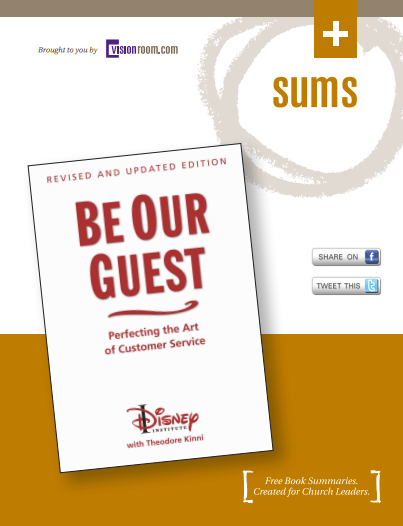
Want to get a glimpse of the Disney magic? You can download a free book summary of Be Our Guest here.

SUMS_BeOurGuest

Reading this Sums will only whet your appetite, so I encourage you to pick up Be Our Guest at your earliest opportunity – it will make a great New Year’s gift to your organizations’ leadership team!


My Favorite Books of 2013

It’s time to close out the reading year – just in time to start a new one!

A quick review of the numbers:

Purchased or review copies of books – 91

Library books checked out – 87

Kindle books downloaded – 27

That’s 205 books read in 2013, averaging almost 4 a week. I’m not a speed-reader per se, but I do read fast – and I don’t read everything in every book.

In no particular order, here are my 13 favorite books published in 2013.

Disney U: How Disney University Develops the World’s Most Engaged, Loyal, and Customer-Centric Employees, by Doug Lipp

Creative Confidence: Unleashing the Creative Potential Within Us All, by Tom and David Kelley

Red Thread Thinking: Weaving Together Connections for Brilliant Ideas and Profitable Innovation, by Debra Kaye

Shaping Our Nation: How Surges of Migration Transformed America and Its Politics, by Michael Barone

The Everything Store: Jeff Bezos and the Age of Amazon, by Brad Stone

What’s the Future of Business: Changing the Way Businesses Create Experiences, by Brian Solis

Decisive: How to Make Better Choices in Life and Work, by Chip & Dan Heath

David & Goliath: Underdogs, Misfits, and the Art of Battling Giants, by Malcolm Gladwell

Die Empty: Unleash Your Best Work Every Day, by Todd Henry

Turn This Ship Around: A True Story of Turning Followers into Leaders, by David Marquet

Leading Missional Communities, by Mike Breen

Amaze Every Customer Every Time: 52 Tools for Delivering the Most Amazing Customer Service on the Planet, by Shep Hyken

Leading the Starbucks Way: 5 Principles for Connecting with Your Customer, Your Products, and Your People, by Joseph Michelli

I realize this is a very arbitrary list, and is weighted toward the category of customer experience. No apologies there – I happen to believe that organizations of every size and type have a LOT to learn about their customers.

If you’re interested in more than just the title, read on!

Disney U, Doug Lipp

Leadership lessons from the iconic brand you can use to drive Disney-style success

In helping Walt Disney create “The Happiest Place on Earth,” Van France and his team started a business revolution in 1955 that eventually became the Disney University—the employee training and development program that powers one of the most famous brands on earth.

Disney U examines how Van France’s timeless company values and leadership expertise have turned into a training and development dynasty: the Disney U. The book reveals the heart of the Disney Culture and describes the company’s values and operational philosophies that support the world-famous Disney brand.

Creative Confidence, David & Tom Kelley

IDEO founder and Stanford d.school creator David Kelley and his brother Tom Kelley, IDEO partner and the author of the bestselling The Art of Innovation, have written a powerful and compelling book on unleashing the creativity that lies within each and every one of us.

Too often, companies and individuals assume that creativity and innovation are the domain of the “creative types.”  But two of the leading experts in innovation, design, and creativity on the planet show us that each and every one of us is creative.  In an incredibly entertaining and inspiring narrative that draws on countless stories from their work at IDEO, the Stanford d.school, and with many of the world’s top companies, David and Tom Kelley identify the principles and strategies that will allow us to tap into our creative potential in our work lives, and in our personal lives, and allow us to innovate in terms of how we approach and solve problems.  It is a book that will help each of us be more productive and successful in our lives and in our careers.

Red Thread Thinking, Debra Kaye

Success is all about connections.

Debra Kaye explodes conventional thinking about innovation and provides an approach that anyone or any business can use to expose the crucial links among observations, experiences, facts, and feelings that on the surface do not seem related–but are–to uncover fresh, brilliant insights. In Red Thread Thinking, Kaye shows you how to weave originality from disparate information and turn it into a product or service that can shake up the marketplace–and your business.

What sets Red Thread Thinking apart from other books is that it reveals exactly how to identify and understand hidden cultural codes and shifts in consumer perceptions that speak to emerging and existing markets and, as a result, catapult fresh products to iconic status.

A mold-breaking system, Red Thread Thinking sharpens your innovation skills and can assist in problem solving, whether preparing a talk, pitching a project to your colleagues and boss, managing staff in a more productive way, or taking business to a new level.

Shaping Our Nation, Michael Barone

It is often said that America has become culturally diverse only in the past quarter century. But from the country’s beginning, cultural variety and conflict have been a centrifugal force in American politics and a crucial reason for our rise to power.

The peopling of the United States is one of the most important stories of the last five hundred years, and in Shaping our Nation, bestselling author and demographics expert Michael Barone illuminates a new angle on America’s rise, using a vast array of political and social data to show America is the product of a series large, unexpected mass movements—both internal and external—which typically lasted only one or two generations but in that time reshaped the nation, and created lasting tensions that were difficult to resolve.

Sweeping, thought-provoking, and ultimately hopeful, Shaping Our Nation is an unprecedented addition to our understanding of America’s cultural past, with deep implications for the immigration, economic, and social policies of the future.

The Everything Store, Brad Stone

Amazon.com started off delivering books through the mail. But its visionary founder, Jeff Bezos, wasn’t content with being a bookseller. He wanted Amazon to become “the everything store,” offering limitless selection and seductive convenience at disruptively low prices.

To do so, he developed a corporate culture of relentless ambition and secrecy that’s never been cracked. Until now. Brad Stone enjoyed unprecedented access to current and former Amazon employees and Bezos family members, giving readers the first in-depth, fly-on-the-wall account of life at Amazon. Compared to tech’s other elite innovators–Jobs, Gates, Zuckerberg–Bezos is a private man. But he stands out for his restless pursuit of new markets, leading Amazon into risky new ventures like the Kindle and cloud computing, and transforming retail in the same way Henry Ford revolutionized manufacturing.

What’s the Future of Business, Brian Solis

Rethink your business model to incorporate the power of “user” experiences.

What’s the Future of Business? will galvanize a new movement that aligns the tenets of user experience with the vision of innovative leadership to improve business performance, engagement, and relationships for a new generation of consumerism. It provides an overview of real-world experiences versus “user” experiences in relation to products, services, mobile, social media, and commerce, among others. This book explains why experience is everything and how the future of business will come down to shared experiences.

Discover how user experience design affects your business, and how you can harness its power for meaningful revenue growth.

Decisive, Chip & Dan Heath

Chip and Dan Heath, the bestselling authors of Switch and Made to Stick, tackle one of the most critical topics in our work and personal lives: how to make better decisions.

Research in psychology has revealed that our decisions are disrupted by an array of biases and irrationalities: We’re overconfident. We seek out information that supports us and downplay information that doesn’t. We get distracted by short-term emotions. When it comes to making choices, it seems, our brains are flawed instruments. Unfortunately, merely being aware of these shortcomings doesn’t fix the problem any more than knowing that we are nearsighted helps us to see. The real question is: How can we do better?

In Decisive, the Heaths, based on an exhaustive study of the decision-making literature, introduce a four-step process designed to counteract these biases. Written in an engaging and compulsively readable style, Decisive takes readers on an unforgettable journey, from a rock star’s ingenious decision-making trick to a CEO’s disastrous acquisition, to a single question that can often resolve thorny personal decisions.

Along the way, we learn the answers to critical questions like these: How can we stop the cycle of agonizing over our decisions? How can we make group decisions without destructive politics? And how can we ensure that we don’t overlook precious opportunities to change our course? 

Decisive is the Heath brothers’ most powerful—and important—book yet, offering fresh strategies and practical tools enabling us to make better choices. Because the right decision, at the right moment, can make all the difference.

David & Goliath, Malcolm Gladwell

Three thousand years ago on a battlefield in ancient Palestine, a shepherd boy felled a mighty warrior with nothing more than a stone and a sling, and ever since then the names of David and Goliath have stood for battles between underdogs and giants. David’s victory was improbable and miraculous. He shouldn’t have won.

Or should he have?

In David and Goliath, Malcolm Gladwell challenges how we think about obstacles and disadvantages, offering a new interpretation of what it means to be discriminated against, or cope with a disability, or lose a parent, or attend a mediocre school, or suffer from any number of other apparent setbacks.

Gladwell begins with the real story of what happened between the giant and the shepherd boy those many years ago. From there, David and Goliath examines Northern Ireland’s Troubles, the minds of cancer researchers and civil rights leaders, murder and the high costs of revenge, and the dynamics of successful and unsuccessful classrooms—all to demonstrate how much of what is beautiful and important in the world arises from what looks like suffering and adversity.

Die Empty, Todd Henry

Most of us live with the stubborn idea that we’ll always have tomorrow to do our most important and valuable work. We fill our days with frantic activity, bouncing from task to task, scrambling to make deadlines and chase the next promotion. But by the end of each day we’re often left asking ourselves “did the work I do today really matter?” We feel the ticking of the clock, but we’re stuck in first gear, unsure of the path forward and without a road map to guide us.

Here’s the hard truth: sooner or later all of our tomorrows will run out, so how we choose to spend today is significant. Each day that we postpone difficult tasks and succumb to the clutter that chokes creativity, discipline, and innovation results in a net deficit to the world, our organizations, and ourselves.

Die Empty is a tool for people who aren’t willing to put off their most important work for another day. Todd Henry explains the forces that keep us in stagnation, and introduces a process for instilling consistent practices into your life that will keep you on a true and steady course.

It’s not about slaving over a project or living on a whim–it’s about embracing the idea that time is finite and making the unique contribution to the world that only you can make. Henry shows how to cultivate the mindset and the methods you need to sustain your enthusiasm, push through mental barriers, and unleash your best work each day.

Turn This Ship Around, David Marquet

David Marquet, an experienced Navy officer, was used to giving orders. As newly appointed captain of the USS Santa Fe, a nuclear-powered submarine, he was responsible for more than a hundred sailors, deep in the sea. In this high-stress environment, where there is no margin for error, it was crucial his men did their job and did it well. But the ship was dogged by poor morale, poor performance, and the worst retention in the fleet.

Marquet acted like any other captain until, one day, he unknowingly gave an impossible order, and his crew tried to follow it anyway. When he asked why the order wasn’t challenged, the answer was “Because you told me to.” Marquet realized he was leading in a culture of followers, and they were all in danger unless they fundamentally changed the way they did things.

That’s when Marquet took matters into his own hands and pushed for leadership at every level. Turn the Ship Around! is the true story of how the Santa Fe skyrocketed from worst to first in the fleet by challenging the U.S. Navy’s traditional leader-follower approach. Struggling against his own instincts to take control, he instead achieved the vastly more powerful model of giving control.

Before long, each member of Marquet’s crew became a leader and assumed responsibility for everything he did, from clerical tasks to crucial combat decisions. The crew became fully engaged, contributing their full intellectual capacity every day, and the Santa Fe started winning awards and promoting a highly disproportionate number of officers to submarine command.

No matter your business or position, you can apply Marquet’s radical guidelines to turn your own ship around. The payoff: a workplace where everyone around you is taking responsibility for their actions, where people are healthier and happier, where everyone is a leader.

Leading Missional Communities, Mike Breen

Missional Communities (MCs) are a hot topic right now in the church, and many are excited about the potential of MCs to be a vehicle that allows the church to better live out its mission in the world. But if we embrace and implement MCs merely as a new program, they won’t live up to their potential and we’ll be on to the next hot topic in a few months. MCs are helpful only if we use them as a vehicle that allows us to point ourselves towards a much deeper issue: how we can learn to live our everyday lives as extended families on mission.

Breen calls this reality oikos (“household” in Greek), and that’s actually what this book is about. Think of it like this: an MC is a great vehicle, but vehicles are supposed to take you somewhere. The destination the vehicle of MC takes us to is oikos. Breen believes oikos is something the Spirit of God is doing in this time to restore the church’s ability to function fruitfully in discipleship and mission the way the early church did, publicly living out this is the make-or-break issue for the Western church.

Breen believes we simply will not see God’s dream for the world come true unless we learn how to function as extended families on mission. And MCs are a great vehicle that helps jump-start that culture-shifting process. Breen began using MCs over 25 years ago, and has seen both breakthrough and failure.

The great thing is that it isn’t actually that complicated, and God will give us the power to do it. This isn’t a task reserved for church leaders, pastors, or experts—it’s for everyone! The goal is to learn how to function as an extended family on mission.

Amaze Every Customer Every Time, Shep Hyken

You must deliver an amazing customer experience. Why? It is the competitive edge of new-era business—in any market and any economy.

Renowned customer experience expert Shep Hyken explains how consistently amazing customers through stellar service can elevate your company from good to great. All transformations require a role model, and Shep has found the perfect role model to inspire your team: Ace Hardware. Ace was named as one of the top ten customer service brands in America by BusinessWeek and ranked highest in its industry for customer satisfaction. Through revealing stories from Ace’s over-the-top work with customers, Shep explores the five tactical areas of customer amazement: leadership, culture, one-on-one, competitive edge, and community.

Delivering amazing service requires everyone in your organization to step up and be a leader. It doesn’t take a title. It takes the right set of tools and principles. To help you empower employees at all levels, Shep brings the content to a deeply practical level. His 52 Amazement Tools—like “Ask the extra question” and “Focus on the customer, not the money”—are simple, clear, useful for almost anybody, and supported with compelling research and stories.

In Amaze Every Customer, you will find the tools and tactics you need to transform your company into a seriously customer-focused operation that will amaze every customer every time.

Leading the Starbucks Way, Joseph Michelli

One of the best-recognized and admired brands in the world, Starbucks singlehandedly transformed the ordinary delivery of coffee into a cultural phenomenon–a result of the company’s exemplary leadership practices.

Joseph Michelli, author of the bestseller The Starbucks Experience, explains that the international success of Starbucks begins with a promise: To inspire and nurture the human spirit–one person, one cup, and one neighborhood at a time. Michelli offers a perspective on the leadership principles that drove the iconic coffee company’s resurgence from serious setbacks during the economic downturn–one of the few true turnaround stories of this time. And the company continues to grow dramatically, entering new markets and channels with fresh products and technologies.

In Leading the Starbucks Way, Michelli establishes five actionable principles that fuel long-term global sustainability at Starbucks and that can be used in any company, in any industry:

  • Savor and Elevate
  • Love to Be Loved
  • Reach for Common Ground
  • Mobilize the Connection
  • Cherish and Challenge Your Legacy

Leading the Starbucks Way is a penetrating look at the inner workings of one of today’s most successful brands. The company gave Michelli one-on-one access to a variety of employees (called partners) to write this book–from baristas to senior leaders, including Howard Schultz, chairman, president, and chief executive officer.

Well, that’s it – it’s time to close out the “books” on 2013…

…I’ve got a few books ready to pick up at the library, and a couple on order scheduled to be released this week!