The Last Click: Erasing Calendar Blocks, Embracing Possibilities

For the last two decades, my workdays have been shaped by the rhythm of my calendar.

A carefully structured flow of time blocks dictated my tasks, my focus, and, in some ways, my identity. There were the predictable, repeating tasks that formed the backbone of my week – daily social media creation and posting, back-end administrative tasks, and engagement actions. As a part of a virtual team since 2012, there were also corporate huddles, team strategic planning sessions, client planning and deliverables, and the one-on-ones where relationships were nurtured and ideas refined. Then there were the scheduled but fluid blocks, the ones set aside for ideation, creativity, and the deep work that fueled progress. Each of these moments played a role in shaping not only my professional life but the legacy I leave behind.

Now, in my final week on the job, I find myself doing something that once would have felt unthinkable: deleting those time blocks. It is a necessary part of the transition out of my job, but also an unexpectedly emotional one. Each click of the delete button erases a piece of the framework that has defined my work for years. With every disappearing time block, I am reminded that this chapter is closing.

At first, it feels like a simple act of housekeeping – removing obligations that no longer apply. But as I scroll through my calendar, the memories attached to those meetings rise to the surface. The weekly project update on Fridays at 10 AM? That was where our team navigated challenges together, brainstorming solutions and celebrating wins. The recurring morning creative sessions for social media? That was time to connect our monthly themes to engaging images and words. Even the Monday morning planning block – once a dreaded necessity – now feels like a familiar companion, a ritual that grounded my week. The “planned spontaneity” of daily creative time? That was my sacred space to step away from the daily grind and dream about the future.

Deleting these blocks is more than clearing space on a calendar; it is acknowledging that the routines that once shaped my days will soon belong to someone else – or to no one at all. The thought is both liberating and melancholic. On one hand, there is an undeniable sense of relief. The deadlines, the obligations, the demands that once felt so urgent are dissolving. The weight of responsibility is lifting. But on the other hand, there is an ache that comes with letting go of something that has been so deeply ingrained in my life.

As the calendar empties, I recognize that I am also making space for something new. While I don’t yet know exactly what the next chapter holds, I do know that the structure I once relied on will soon be replaced by a different rhythm. And maybe that’s the beauty of it – this transition is not just about endings, but about the beginnings waiting just beyond the horizon.

So I take a deep breath, and with one final click, I delete the last remaining hold on my schedule. The time block vanishes, leaving behind an open space. A blank slate.

And in that emptiness, I choose to see possibility.


Closing the Circle: A Grateful Goodbye and a New Beginning

We live in a world defined by exits. Visual reminders of departure surround us daily, guiding our movements, anticipating our turns, and flashing directions.

From following exit arrows in parking garages to noting emergency exits in darkened theaters, from flight attendants’ safety briefings to kindergartners learning their first important words – “exits” represent efficiency, safety, order, and protection. They structure our physical environment and shape our daily routines, whether we’re navigating unfamiliar highways or traveling well-worn paths in our communities with barely a conscious thought.

The language and metaphors of exit permeate our lives as well. We apply for exit visas before international travel, directors choreograph theatrical exits, poker players “fold” to exit a game on their own terms, and even our news media and crime shows are saturated with references to “exit wounds.” These departures are woven into the fabric of our existence – marking our physical landscapes, embedding our language, shaping our national narratives, and influencing our personal development. Yet despite their ubiquity, exits often remain invisible, overshadowed by our cultural fascination with beginnings, launches, and entries.

Perhaps in our celebration of new starts, we’ve rendered the equally important act of leaving somehow less noble by comparison.

Today, I am invoking a deeply personal ritual of goodbye to my job with the Auxano team.

Saying goodbye is never easy, especially after spending over 12 years as part of the incredible Auxano team. But as I consider a new chapter, I want to take a moment to reflect, appreciate, and look ahead with optimism.

For me, this isn’t just an exit – it’s the closing of a circle, a completion of a season filled with dedication, growth, and countless meaningful experiences. The phrase “closing the circle” often symbolizes bringing something to completion, ensuring that what was started is finished well. That’s exactly how I feel about my time on the Auxano team.

My Journey with Books and Auxano

My Auxano journey began in 2008 with books – specifically, one book and a custom bookcase holding 40 or so leadership books, designed to fit in the back of a Jeep Liberty. That initial encounter led to joining the team full-time in 2012.

My Auxano journey is ending with books – specifically, a book curated by me for each member of the current Auxano team – from my Disney library.

Books have always been a part of my life, going all the way back to my childhood. To a lesser extent, Disney has been ever-present as well. It seemed only natural to put those two together a long time ago, and I haven’t stopped yet!

As I wrapped up my time with the Auxano team earlier this week at our annual Resync, I wanted to celebrate each team member in a special way: From my 500+ book Disney library, I chose a specific book for each member of the team that conveyed a message of how their gifts and encouragement have been demonstrated to me. It is my hope they enjoy reading through the book, and as they do, they will know that I remember our times together on the team with much fondness and appreciation for their friendship.

A Legacy of Dedication

Over the past 12+years, I have had the privilege of working alongside some of the most talented, knowledgeable, and compassionate people I’ve ever met. Whether it was managing key projects, brainstorming fresh ideas, or simply being a reliable presence, I have truly cherished the opportunity to contribute and grow alongside this team.

From my early days navigating the new challenges of an almost-vertical learning curve to the most recent initiatives that pushed us forward, I have learned so much. The resilience, creativity, and shared commitment to our mission have made this journey incredibly rewarding. I am proud of what we have accomplished together, and I know that the impact of our work will continue long after I’ve moved on.

Not an Ending, But a New Beginning

While my job may be coming to an end, the relationships, lessons, and experiences of the Auxano team will stay with me forever. This job has never just been about tasks and deliverables – it has been about the people who make it all happen, and the clients we served.

Now, I am looking ahead to a new season, one filled with possibilities. Whether it’s exploring new career opportunities, diving into passion projects, or simply taking a break, I carry with me the confidence that the same qualities that served me well at Auxano and previous jobs will continue to guide me forward. Change can be daunting, but it is also exhilarating – an open door to new adventures and unforeseen opportunities.

A Heartfelt Thank You

As I close this circle with my Auxano brothers and sisters, I do so with immense gratitude. Thank you to each and every one on the Auxano team for your support, encouragement, and friendship. You have shaped my journey in ways that I will never forget. My work here has mattered, but more importantly, you have mattered to me.

While I will not be logging on to the virtual office space that Auxano thrives in every day, know that I will always carry the memories and lessons from this team with me. I celebrate all that we have accomplished together, and I look forward with excitement to what’s ahead for the team.

So here’s to closing the circle – not as a farewell, but as the completion of a journey well traveled and the beginning of a future full of promise. I can’t wait to see what’s next!

May God continue to richly bless each of you in the days ahead!


The Dangers of Words Getting in the Way of Your Vision

A guest post by Auxano Navigator Bryan Rose

John F. Kennedy from Rice University at the dawn of the Space Age.
Dr. Martin Luther King Junior on the steps of the Lincoln Memorial.
Ronald Reagan in front of Berlin’s Brandenburg Gate.

All three of these iconic moments share one critical ingredient: words that created worlds. A language of vision has the power to move people to reach the moon, cross racial divides and tear down political walls. But, words can also get in the way.

Auxano has more than 13 years of walking alongside hundreds of church leaders seeking clarity of identity and direction. As a part of this team, I am more aware than ever of how the right vision language, or the lack thereof, can make all of the difference in the world. Here are 3 painful ways that I have seen words get in the way:

1. When there are too few vision words to foster alignment. Your leaders are leading to a vision. If you have not invested time and team resources into articulating identity and direction for your top level of leaders, their vision leadership is siloed and not shared. Conflicting ministry vision always leads to sideways energy and wasted resources. A senior leader with too few words likely spends more time mediating staff conflict than meditating on God’s preferred future. Jesus did not hesitate to paint a clear and detailed picture of the crucifixion, fueling sacrificial alignment in each disciple’s life from Pentecost forward.

2. When the vision words are too generic to inspire hearts. Safe vision language is actually dangerous to the health of your church. We live in a world of competing messages, in which skilled marketing practitioners move your congregation to buy their latest product or vote for their latest candidate. Many leaders fail to realize that their safe, yet sound words, either fly under the radar or over the heads of busy families and distracted people. Jesus never shied away from powerful words that struck the deepest nerve in the hearts of His listeners: “From now on I will make you fishers of men” wasn’t a slick marketing tagline, it was a vibrant and specific picture of His compelling calling.

3. When there are too many vision words to create confidence. The team cannot execute if the play keeps changing. Overhauling your language and vision with every new conference method or leadership mantra leaves your leadership confused. If everything changes every six months, why should they ever be involved to begin with? The fast-following leader’s desire for “new” starts to get old very quickly. Instead, seek to emulate Jesus as He consistently deployed a simple message of faith and repentance, to the point of rejection and ultimately, death.

Vision Headwaters is a two-hour trek designed to safely start the right conversations among your leadership. This engaging tool will calibrate your vision language using challenging assessment questions and memorable church-personality profiles.If you are not sure which, if any, of the above fits your church, you can be sure that the rest of your team does! To employ an honest assessment of your vision language, download your free copy of Auxano’s latest tool for break-thru leaders: The Vision Headwaters TeamUP 

In this TeamUP tool you will:
Unpack your communication baggage in order to properly prepare for the vision journey ahead
Plot your “Trailhead Type” using key waypoints of missional language and church age
Step onto the clarity pathway with experienced trail guides cheering you onward

Don’t continue to let words get in the way of the world God is calling you to create!

Is It True Collaboration… or Is It a Team?

At Auxano, we practice what we preach.

Editing

Our primary tool for working with organizations is the Vision Frame, consisting of Mission, Values, Strategy, Measures, and Vision Proper. Before we led the first client through the process over 11 years ago, the original team of Will Mancini, Jim Randall, and Cheryl Marting worked out Auxano’s Vision Frame – which we still follow today.

One of our Values is Collaborative Genius, which is accomplished partly by the fact that we are a virtual company of over 20 team members living in 15 cities across 4 time zones.

I only thought I knew what collaboration meant!

In my adult work career, I have served as the accountant in an office setting for a food services company, an audiovisual technician as part of a team of 7 for a seminary, various roles on 3 church staff teams, a church consultant for a design-build company, and as the Vision Room Curator for Auxano.

That’s 36+ years in an environment of multiple team members, ostensibly working together for the good of the organization.

Was I collaborating with others, or merely part of a team?

Collaboration is not the same thing as teamwork. Teamwork is simply doing your part. Collaboration involves leveraging the power of every individual to bring out each other’s strengths and differences.  – Greg Cox, COO, Dale Carnegie, Chicago

At Auxano, we don’t just do our part, we collaborate to deliver excellence in all we do. Here’s a great example: our book summaries for leaders, called SUMS Remix.

The original concept of SUMS was dreamed up by our founder, Will Mancini. When I joined Auxano as Vision Room Curator, it was natural that the SUMS project fall under my guidance. Working from a curated list of books with a focus on the Vision Frame, I read the designated book and wrote the draft summary with recommended resources. I then oversaw the following process:

  • Proofing by Mike Gammill, a scholar and grammatical genius
  • Navigator Applications written by 4 of our full-time Navigators, applying the concepts to the local church leadership context thru their unique lenspowered by auxano
  • Editing by Cheryl Marting, who has eagle eyes
  • Review editing by Angela Reed, a production editor at our parent company, LifeWay
  • Design by James Bethany and our Creative Team, who produce a visual masterpiece every time
  • Final review and approval by Will

Beginning in the fall of 2012, every two weeks, a SUMS was distributed to the SUMS subscriber list. Practically every day of that two weeks, some of the actions above were taking place within our team as we work on multiple books at the same time.

That’s collaboration.

As we neared the end of our second year of SUMS, Will and I refined a concept that came to be called SUMS Remix. Instead of a single summary of one book, SUMS Remix consists of brief excerpts from three books, focused on providing simple solutions to a common problem statement that ministry leaders are facing every week in their churches.

SUMS Remix launched in November of 2014, and we release an issue every two weeks. And a similar collaboration process described above is still taking place.

The collaboration process for SUMS Remix is very similar to the one above, but on steroids! Because SUMS Remix involves 3 books for every issue, and we have a 5 week production cycle, and we release an issue every two weeks – well, without collaboration, it just wouldn’t – no, couldn’t – happen.

At any given time during that 5-week cycle, books are being read, notes are being taken, drafts are being written, drafts are being revised, additional research is being conducted, finished drafts are being designed, proofs are being reviewed, and the final SUMS Remix issue is being delivered.

That’s collaboration!

Want to see the end product of that collaboration? You can learn more about SUMS Remix here.

Midnight LunchI’m indebted to Sara Miller Caldicott, great grandniece of Thomas Edison and author of the book Midnight Lunch, for translating Edison’s world-changing innovation methods for use in the 21st century. Here are some of her thoughts on collaboration:

True collaboration embraces:

  • A discovery learning mindset versus a pure task orientation
  • A belief in anticipating and creating rather than merely reacting and responding
  • Presence of inspiration across multiple facets of both individual and team endeavors
  • Coherence of purpose
  • A dedication to elevating the performance of every team member
  • Connections to human and social networks of influence

Do these qualities sound different from the ones valued by your team? Do they draw upon ideas that feel new or seem broader than your current concept of what teamwork embraces?

Based on my experience, the answer would be yes.

So what are you going to do about it?


Understanding and Using a Journey Map

Journey maps are documents that visually illustrate the particular range of activities of a Guest over time. Many journey maps plot the entire course of a Guest’s relationship with an organization – all of the steps that Guests take as they discover, evaluate, attend, access, use, get support, and leave – or re-engage – the church. Others zoom in to just one particular part of the journey.

The scope of the journey map, the exact visualization, and the degree of detail it contains vary based on how the organization wants to use it.

Jonathan Browne, Forrester Research

At Auxano, our version of a simple journey map is called “The Seven Checkpoints.” We believe the first place to start is to imagine seven checkpoints for your guest. Think of the checkpoints as “gates” or even “hurdles” that any first time Guest must navigate to get from their comfy family room to your worship service.

Auxano7Checkpoints

With every gate comes a simple question: Has the church removed the inherent difficulty of navigating the gate for the first time? 

More specifically we look for every opportunity to make each gate simple, easy and obvious to navigate.

The Seven Checkpoints

#1 Before Departure: Are directions and service times immediately accessible to Guests from your church website, phone recording and yellow pages (yes – they’re still around!)?

#2 Travel to Location: Do Guests know where to turn into your church location?

#3 Parking Lot: Do Guests know where to park?

#4 Building Entrance: Do Guests know which door to enter?

#5 Children’s Ministry: Do Guests know where to take their kids?

#6 Welcome Center: Do Guests know where to go for more information?

#7 Worship: Do Guests know which door to enter?

These seven checkpoints can be plotted on a graph that illustrates how your Guest ministry is doing: is it simple, easy and obvious where your hospitality creates a WOW! or is it complex, confusing, and frustrating where your Guests cry out “Someone help me now?”

Any particular difficulties created by your location or facility should be viewed as hospitality opportunities. By providing a great solution to an obvious barrier, you enhance the wow-factor of the hospitality.

Have you ever considered creating a journey map for Guests coming to your church?

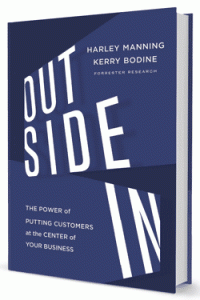
Part 3 of a multi-part series based on the book Outside In

Outside In

These posts “translate” the world of customer experience to the language and setting of Guest Experiences in the church.


>> Read Part 2

What Does Your Church Brand Say?

What do the following have in common?

Uncle Ben, Charlie the Tuna, Morris the Cat, Tony the Tiger, the Pillsbury Doughboy, and the Marlboro Man.

You probably guessed that they are all advertising characters. But did you know they were all created by the same man, Leo Burnett?

In 1943, Burnett met for lunch with Forrest Mars, who had just bought the rights for a new milling process for rice and was looking to market to a wartime economy. Mars had already settled on the name of the product – Uncle Ben’s Converted Brand Rice, named after the owner of the farm that was supplying the rice.

During their lunch, Mars told Burnett he wanted every home in America cooking Uncle Ben’s rice for dinner – even though rice accounted for less than 10 percent of the nation’s starch consumption at the time.

Burnett considered Mars’ ambitious goal, then pointed to the dignified gentleman serving them and said, “If you want everybody eating your rice, you better have somebody real friendly like him serving it.”

Mars took one look at the broad-grinned, slightly balding black man who had been serving them and called him to the table. He made an offer for the man to sit for a portrait, telling him only that he wanted all rights to the picture. The waiter agreed, and in January 1944 Forrest Mars introduced the nation to the now familiar orange box with the picture of “Uncle Ben.”

Burnett believed in selling products with strong yet simple imagery that spoke to people in a friendly manner. His philosophy, later called the “Chicago School,” went on to have a huge impact on American branding.

It’s a great, true story – but what does it mean for leaders in ChurchWorld?

Branding is simply how your church builds relationships with communication tools.

If you want to know more about the concept of branding for churches, start here with an introductory post by Will Mancini on “The Three Branding Strategies for Churches.”

If you want to have a conversation with a talented church design team, learn more about Auxano Design here.

Your church has a brand – even if you don’t know it. Shouldn’t you be the one shaping your brand?

Is Your Church Practicing the 4 Habits Behind a Successful Guest Experience?

I have no talents. I am only passionately curious.   – Albert Einstein

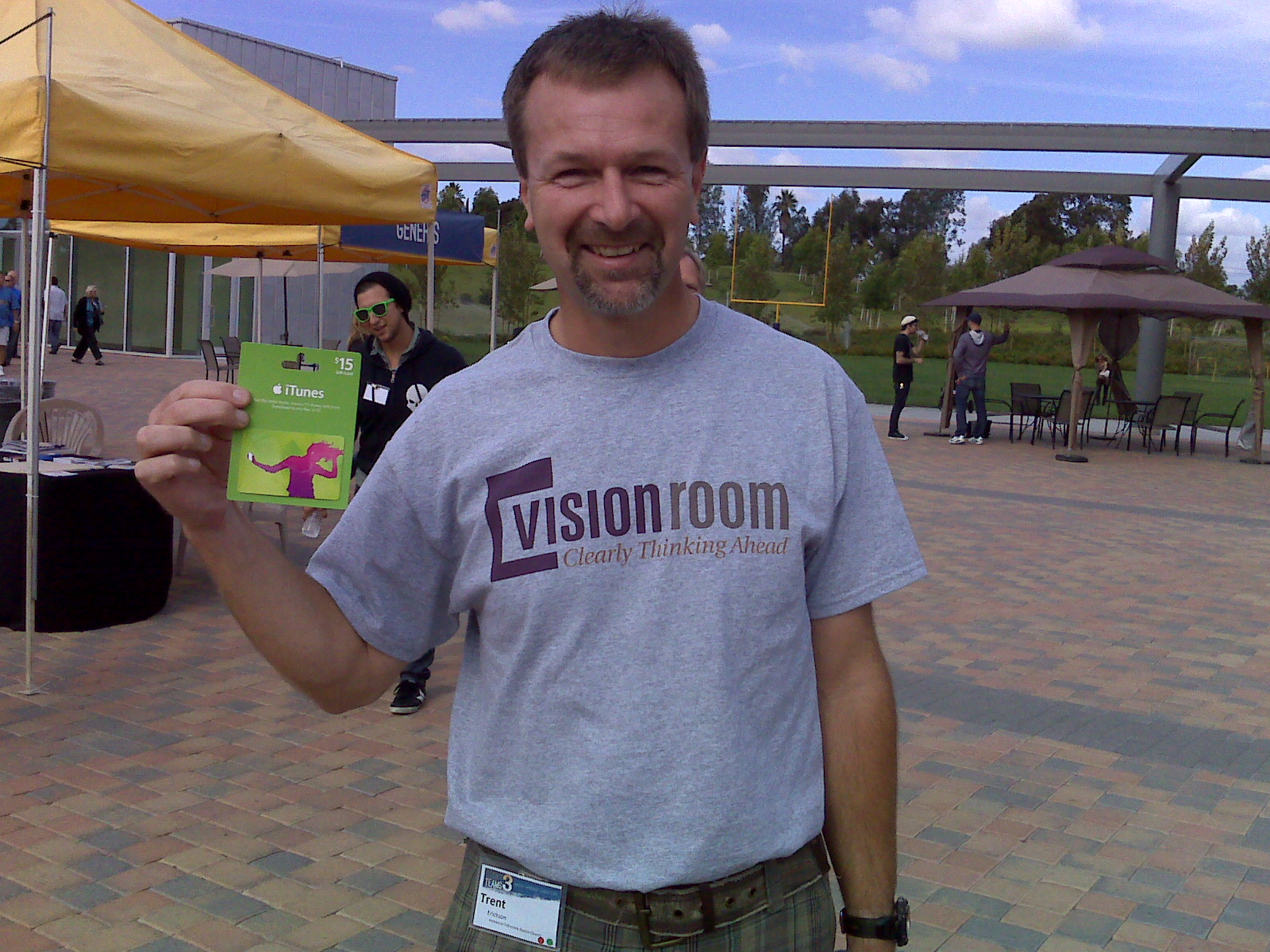
One of the joys of my work at Auxano is that I get to serve in multiple roles. My primary role of Vision Room Curator allows me to thrive in my giftedness of research and curiosity, as I am constantly looking for content that creates break-thru clarity with church teams to realize their vision.

In addition, our value of Carnivorous Learning is demonstrated daily in my research, reading, and curation of the cloud of information available for church leaders.

But when my primary role of Vision Room Curator intersects with my secondary role of Guest Experience Navigator, it’s a really good day.

Today’s Vision Room post “4 Habits Behind a Successful Guest Experience” is a great example of the mashup of my two roles. The post speaks to the idea that a primary factor in creating a great Guest Experience comes down to having great people on your front line teams and training them well.

7-Guest Experience

The post itself stands alone, but I was also able to connect it to our most recent SUMSa free book summary – on Judgment on the Front Line by Chris DeRose and Noel Tichy. The book is essential reading for any church leader whose role involves leading Guest Services, Hospitality, or First Impressions teams. The SUMS is a good introduction, but I encourage you to pick up the book as well.

What makes it a great day is that I get to live out the ideas and thoughts above in a couple of ways: this weekend, I will be conducting a Guest Perspective Evaluation for one of our client churches. Front line interaction is a key indicator of the success of a church’s Guest services. During my evaluation, I will take over 400 images and 3-7 minutes of video, which will be edited into a 2-hour presentation for the senior leadership team the following Monday.

In that presentation, I don’t really have to say much – if “a picture is worth a thousand words,” the several hundred images and a few minutes of video have to be worth a book!

On any given weekend, Auxano Navigators are at a church somewhere across the country making the same kind of evaluations for our clients. It’s a powerful service that we love providing.

Beyond the occasional onsite consultation, I also get to live out my role mashup by serving on a Guest Services team at my church, Elevation Church’s Lake Norman campus. After 4 years as a Guest Services Coordinator at our Uptown campus, I stepped over to the launch of our newest campus in the Lake Norman area to serve on the parking team. (I serve an additional role on the Leadership Development team for the church as a whole, but that’s a story for another day).

My Team Coordinator Skyler and Team Leader Jason have demonstrated an excellent grasp of the 4 activities mentioned in the Vision Room post above:

  1. In spite of intentional preplanning for the launch, they listened to our team’s suggestions each of the following 3 weekends to improve traffic flow, increase pedestrian safety, and make sure our Guests felt welcome at all times.
  2. As Coordinator, Skyler is working with our Boot Camp Team (Elevation’s volunteer enlistment strategy) to make sure Parking Team members have a great attitude.
  3. Our Parking Team – like all Elevation teams – is crystal clear on our purpose, because it’s the same as our church purpose: To reach people far from God so that they might be raised to life in Christ.
  4. Our Team Leader Jason encourages creativity and autonomy – from Ryan who “hooks and lands” VIP (first-time Guests) cars into special parking to Christiana who leads the Lake Norman Taxi Team (golf carts to get our Volunteers from their designated lot 1/3 mile away from the church) to Lindsay whose smile contest makes us all laugh – and smile even bigger.

If you lead or serve on a Guest Services, Hospitality, First Impressions or similarly functioning team, I hope you will click on the links above to read more.

Want to know more? Leave a comment below or use the contact tab above to get in touch with me.

Remember…

How your front line teams represent themselves – what they do (or don’t do), what they say (or don’t say) – that’s the powerful human “first impression” your Guest is experiencing – and will remember.

The Vision Room Launches Today

Auxano’s Vision Room goes live today.

For almost as long as I have known Will Mancini, he has dreamed of the Vision Room. When I first met him in 2008 at a conference we were both speaking at (courtesy of Karen Butler, editor of Church Solutions magazine), he was talking about it.

In dozens of conversations since then, he has continued to talk about it.

In February of this year, he was still talking about it – and in the same breath, asking me to join Auxano as the Vision Room Curator.

I’m still like a kid in a candy store about that…but, here it is:

You can read Will’s official welcome to the Vision Room here.

You can read my initial take on being the Vision Room Curator here.

Of course, I’m sure that will be changing as the dream has become reality…

But for now, the Vision Room is live and

Come on in, look around, but just don’t be a Guest – register your own MyVisionRoom and let me know what you think.

The Guest Perspective

Along with Network Navigator Jeff Harris, I am onsite this weekend in Houston, TX, conducting Guest Perspective Evaluations for two clients. Jeff and I spent time Saturday cruising the communities around the two churches, conducting a “windshield survey” of the areas.  Even though we have also spent time in the digital world of Google Maps, it’s always great to see and experience first-hand the neighborhoods of the churches we are working with.

On my flight out from Charlotte early Saturday morning, I continued reading Andy Stanley’s newest book Deep and Wide. It’s a great book for a bunch of reasons, but I’m going to pull a few quotes out here for their relevance to what Jeff and I are doing today.

Every Sunday people walk onto your campus and determine whether or not they will return the following week before your preacher opens his mouth. And that’s not fair. But it’s true. The moral of the story: Environment matters.

Environments are the messages before the message. The messages your environments communicate have the potential to trump your primary message.

By the time I (Andy Stanley) stand up to deliver what is traditionally considered the message, everybody in our audience has already received a dozen or more messages.

The quality, consistency, and personal impact of your ministry environments define your church. To put it another way, your environments determine what comes to mind when people think about your church.

I think we should determine the messages our environments communicate. We should choose the messages before the message. It’s our responsibility to shape the way people view our local churches.

The moment a church, or even a group of leaders within a church, catches a vision for capturing the hearts and imaginations of those who consider themselves unchurched or dechurched, environments take on new significance.

The longer you’ve served where you are and the longer you’ve done what you are currently doing, the more difficult it will be for you to see your environments with the objectivity needed to make the changes that need to be made. The shorter version: Time in erodes awareness of.

Every one of your ministry environments is being evaluated every week. Based on that evaluation, some people choose not to return. Additionally, every volunteer and staff member is evaluating the success of his or her particular environment against some standard. If you don’t define what excellence looks like for your staff and volunteers, they will define it for themselves. And when you don’t like what you see, you will only have yourself to blame.

Stanley’s words are a powerful reminder of just how important your Guest Experience is.

I’ve got my talking points for the Guest Perspective Evaluation with the Executive Team:

Environment matters.

Time in erodes awareness of.

Those phrases, with several hundred images and about 5-7 minutes of video, will make for a very interesting time come Monday morning.