Make the Leap to Using Visuals Evoking Emotion

Does your team seem to be using more and more words, yet communicating less and less?

Today more than ever, we live in a visual society. Especially in the online world, everyone relies on the power of photos and engagement of video.

While researching a project recently, I was struck by three surprising data points from visual communicator Dan Roam:

  • Research from IBM found that 90% of all data collected in history has been generated in the last two years.
  • Research from Cisco found that 90% of all data transmitted online today is visual.
  • Roam’s experience indicates that 90% of leaders have no idea how to effectively use visuals in their business.

90%-90%-90%. We’re generating more data than ever, that data is overwhelmingly visual, and most of us don’t know how to use images. No matter what business you’re in, the future of your business is visual.

As a church leader, it is incumbent that you get better at using visual images in your communication.

Whether drawing them, looking at them, or talking about them, visual communication adds enormously to your listener’s ability to think, to remember, and to do.

Visual imagery is, in itself, another whole language. Being fluent in that language gives us mind-boggling power to articulate thoughts, communicate those thoughts, and solve problems in ways we otherwise wouldn’t be able to.

It’s time to make the leap and use visuals to evoke emotion.
THE QUICK SUMMARY – Visual Hammer, by Laura Ries

The best way into a mind is not with words at all. The best way into a mind is with visuals.

But not any visual. You need a “visual hammer” that hammers a verbal nail. The Marlboro cowboy. Coca-Cola’s contour bottle. Corona’s lime.

The cowboy hammers “masculinity.” The contour bottle hammers “authenticity.” The lime hammers “genuine Mexican beer.”

A trademark is not a visual hammer. Almost every brand has a trademark, but fewer than one out of a hundred brands have a visual hammer. A trademark is a rebus which communicates nothing except the name of the brand.

A visual hammer, on the other hand, communicates the essence of the brand.

Visual Hammer is the first book to document the superiority of the “hammer and nail” approach to branding. Some examples.

  • The pink ribbon that made Susan G. Komen for the Cure the largest nonprofit foundation to fight breast cancer.
  • The Aflac duck that increased Aflac’s name recognition from 12 percent to 94 percent.
  • The green jacket which made the Masters the most-prestigious golf tournament.
  • The watchband which made Rolex the largest-selling luxury watch.
  • Colonel Sanders who made KFC the world’s largest chicken chain.

Why are marketing plans usually nothing but words when the best way into a mind is with the emotional power of a visual?

After reading Visual Hammer, you might want to tear up your current marketing plan and start fresh.

A SIMPLE SOLUTION

In a typical organization – and that includes churches – there is a whole gang of smart people so overwhelmed by verbal data that they’re hard pressed to know what to pay attention to.

That’s where pictures come in.

The basics of visual thinking have nothing to do with being an artist, or creating impressive designs using the latest computer application. Visual thinking is learning to think with your eyes.

Everyone already has good visual thinking skills, even if they don’t acknowledge it. Visual thinking is a very powerful way to communicate information that will help solve problems. It may appear to be something new, but the fact is, we already know how to do it.

Visual thinking starts with understanding the power of the image.

When you live in a world of word, you tend to see the visual world as secondary to verbal reality. Yet nature is visual, not verbal.

Take a walk in the park. Scuba dive in the ocean. Climb a mountain. This is reality and there are no words in nature. Words are useful devices to communicate the reality of nature.

Photographs, illustrations and drawing are artificial, but they too are a more direct representation of nature than are words.

The Coca-Cola bottle is not just a bottle. It is a visual hammer that nails in the idea that Coke is the original cola, the authentic cola, the real thing. In a Coca-Cola commercial, the visuals speak louder than the words. That’s the work of a visual hammer.

That’s the difference between designing a trademark and designing a visual hammer. Almost every brand has a trademark, but few brands have visual hammers.

A visual hammer doesn’t just repeat your brand name; it hammers a specific word into the mind. For brands that can create and dominate a new category, that word is “leadership.”

When you live in a world of words, you tend to see the visual world as secondary to verbal reality. Yet nature is visual, not verbal.

A visual hammer makes an emotional impact on the right side of the consumer’s brain which motivates the left side of the brain to verbalize the idea and then store it.

Your right brain doesn’t think in the normal sense of what we mean by “thinking.” It reacts emotionally and involuntarily.

To develop a hammer you need a narrow focus you can visualize in a dramatic way.

Don’t fret about narrow concepts not appealing to as many people as broader ones. Better to use a narrow concept to motivate a segment of the market rather than a broad concept that motivates no one.

Laura Ries, Visual Hammer

A NEXT STEP

Explore the power of visual images in solving problems with the following exercise.

Write down a list of at least four questions about a ministry situation or problem you team has recently faced.

Cluster the questions in four groups, giving each set a title.

Bring your team together around a table, and give them a large sheet of paper. Ask you team to create a quadrant by drawing two lines on their paper.

Place magazines, newspapers, precut pictures, fabrics, thread, color pencils, and glue sticks in the sender of the table. Provide plenty of materials in order for all participants to use simultaneously.

Each team member will use the materials on the table to visually answer their question. Designate a time limit for the exercise.

When completed, ask each team member to present and explain their collages. As a group, determine the single best image that represents the best answer for each question.

This exercise demonstrates the power of visual images in answering questions or problems you are encountering.


Part of a weekly series on 27gen, entitled Wednesday Weekly Reader

Regular daily reading of books is an important part of my life. It even extends to my vocation, where as Vision Room Curator for Auxano I am responsible for publishing SUMS Remix, a biweekly book “summary” for church leaders. Each Wednesday I will be taking a look back at previous issues of SUMS Remix and publishing an excerpt here.
Good Design Gets You in the Game…

…great design is the game winner.

Welcome to the world where design is king.


In the old days, designers were an afterthought, the people at the end of the production process. Engineers would hand over something that was functionally effective and have the designers make it look good. Those days are over.

Today, design is about experiences as well as products. It’s about services as much as it is hard goods.

Design is now differentiation.

Alan Webber, founder of Fast Company magazine and author of “Rules of Thumb,” puts it this way: Today companies use design to:

  • create distinctive products and services that capture their customers’ imaginations
  • restructure their corporate operations
  • unveil new logos and uniforms that express a fresh corporate identity
  • develop new communications tools that connect with customers and shareholders
  • build corporate offices that encourage and enable collaboration
  • collect and share information across a global platform

Design is a way to solve deep-seated social problems. And design is a money saver, a way to simplify products and make them easier and less expensive to manufacture and sell. Across the board designers have defines a way of seeing that adds to the delight of customers and the profitability of companies.

Application to ChurchWorld

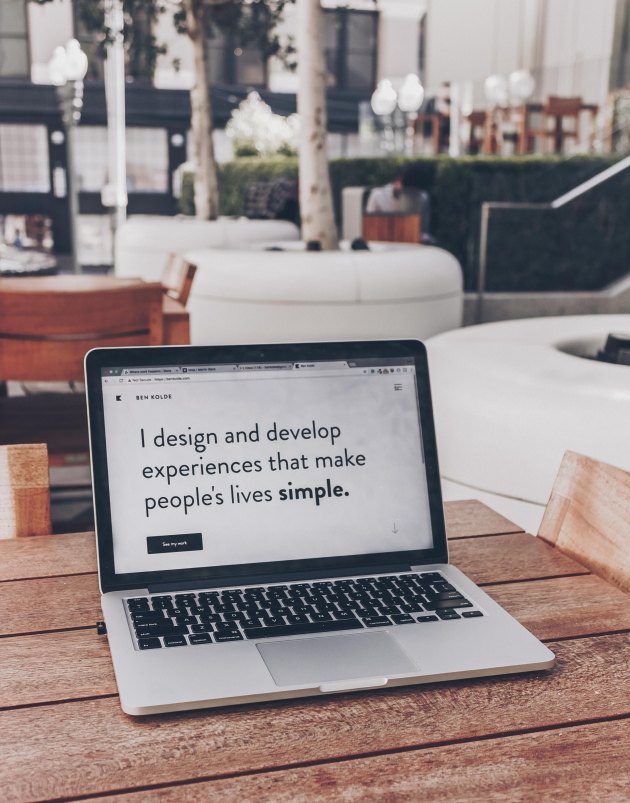
You probably already understand this on some level. You understand that the design of your website says more about you and provides a quick glimpse of your “brand”. You know that the little – and not so little – things like the design of your logo and your letterhead, the print pieces you use, the “flow” of your worship experience all communicate instantly what your church is all about.

But if you are still a design novice, and want to learn more, here are Webber’s three ways to begin to crack the design code:

  • Reading – you may be a word person and you want to try to learn about seeing. Dan Pink’s “A Whole New Mind,” Tim Brown’s “Design Thinking,” Tom Kelley’s “The Art of Innovation” and “The Ten Faces of Innovation,” Jeanne Liedtka and Tim Ogilvie’s “Designing for Growth,” and Don Norman’s “The Design of Everyday Things” are required reading. Get one of them today; start reading it tonight, and put it into action tomorrow.
  • Viewing – You need to practice seeing. Go to an art museum; browse a furniture showroom gallery; check out the latest model cars. The more you look at objects like these, the more you appreciate great design. You’re not buying, so don’t worry about price. Look carefully at the lines, interior detailing and design, and the small things that make a big difference. “Seeing” is a critical skill for aspiring diagnosticians – like you.
  • Shopping – Go out and find an assortment of small objects that go in your home or office. Look at OXO products; visit an IKEA store. When you pick up one of these objects, you will immediately understand what “consumer-centered design” means. Go to an office supply store and sit in an Aeron chair. Look at the latest products from Apple: iPhone, iPad, the latest MacBook Air. Go to an antique store and see what great design looked like in the past. Take a virtual shopping trip to your heart’s content. When you have collected these objects (or examined them enough), what do these products have in common? Are they as good to look at as they are fun to use? Is there an emotional content to their design?

You don’t have to buy anything to get the idea. But you do have to buy into the idea:

Design is everywhere, and increasingly, design is everything.


Build Team Alignment to Your Vision by Celebrating Individual Significance

Does your team have general agreement around your vision, but lack ownership and alignment?

Effective teams do not just agree on vision, they own it and align every ounce of energy and effort toward accomplishing the vision. As a leader, you can sense the difference between your team liking the vision and your team leading toward vision.

In most instances, simple agreement feels like an invisible wall sits somewhere within the team. A divide of mistrust, misunderstanding, or missed input often exists in the origination of the vision. This always leads to misalignment and missed opportunity in the execution of vision.

Every busy week brings a fresh truckload of glass bricks for your team to stack on this invisible wall. No one has ill motives. No one intends cement separation, but the walls go up without conscious notice as the pace of ministry continues.

The good news is that it’s NOT rocket science to take down a wall. Haven’t you noticed it’s easier (and usually more fun) to demolish than it is to build? What your team needs are sledgehammers to take down these hard-to-see barriers.

How do you tear down your team’s invisible walls?

Celebrate individual significance to the vision.

THE QUICK SUMMARY – The Volunteer Project

As a church or nonprofit leader who relies on volunteer teams to get the job done each week, you know how difficult it can be to keep all of your volunteer roles filled.You feel overworked and understaffed, with a budget smaller than your vision. Sometimes your ministry can feel like it has a revolving door, simultaneously bringing in new volunteers as current ones leave.The cycle of volunteer recruitment and turnover can be overwhelming, leading to frustration and distracting from the mission.

In The Volunteer Project, the authors introduce you to four strategies that, when applied, will launch your church or nonprofit ministry into what they call a zero recruitment model of volunteerism.

Formulated from the authors’ research, combined 50+ years of experience in leading volunteer teams, and the feedback of hundreds of volunteers, these four strategies are designed to provide individuals with such satisfying volunteer experiences that they are motivated to continue volunteering, and even invite their friends to join them.

A SIMPLE SOLUTION

Our lives are both too busy and too short to spend our time doing things that don’t connect with the core of who we are. Even when we enjoy doing something, and the doing of it brings satisfaction, the experience is tainted if it is not fulfilling. It is very important that volunteers experience fulfillment and satisfaction in the roles and ministries they are connected to.

Leaders have a responsibility to help their teams not only serve in fulfilling roles, but to help their team members see how they are a significant part of the overall vision.

Deep within each of us is an inner desire to live a life of significance and meaning. We all long for a better future. We want to make a difference. We want to leave the world a better place. Something magical happens when a person’s search for significance collides with an opportunity to be a part of something bigger than oneself.

As leaders, when we understand the power of pairing personal participation with widespread impact, we approach every volunteer position as a platform to assist each unique individual in discovering their potential. As leaders of volunteers, it is our responsibility to assist them in unlocking and developing hidden or underused gifts. When we approach our volunteers with this mindset, our focus shifts from what they can do for us to what God can do through them. In this manner, we are celebrating their significance by doing the hard work of connecting them to opportunities that fulfill their search for meaning.

Within most of our ministries and organizations, we have a clear outline of the positions we need fulfilled. I can imagine right now you might be asking the question, “Is it possible to fill volunteer vacancies, provide meaning to each individual volunteer, and still fulfill the mission of my organization?” The good news is yes! When you understand the types of personalities and giftedness that best fills each unique volunteer role, you are better able to communicate with volunteers. And when they are provided with straightforward communication and an understandable job description, volunteers are able to thrive in accomplishing the mission.

A new volunteer is like an unopened present with layers to be unwrapped. As leaders, we get to peel back these layers by providing opportunities for volunteers to use their gifts to make a meaningful difference.

It’s a win-win! We have the honor and responsibility of helping individuals discover their unique gifts in serving Christ, and they help fulfill the vision and mission of our organization.That partnership is exactly how God intended it to be.

When you skillfully cast vision, you are connecting a volunteer’s inner search for meaning to tangible actions and relationships. Volunteers who feel the exhilaration of thriving in a role become committed to their role within the organization. Once they experience how what they do meets a deep need within them to fulfill God’s unique purpose in and through their life, you may find it is difficult to convince them to volunteer anywhere else.

– Darren Kizer, Christine Kreisher, Steph Whitacre, TheVolunteerProject

A NEXT STEP

How effective is vision communication within your team? To measure your effectiveness, conduct the following exercise.

Gather your team for a “significance” check-up…

  • Ask each team member to come prepared to talk about a time in the last six months when they felt that they made a significant contribution to the church’s vision.
  • First, prepare to edify their contribution and bring at least one example for each team member when you saw them contribute in a significant way. (This is helpful if a team member cannot see their contribution on their own).
  • After each team member shares, follow-up with additional questions that reveal their particular leadership strengths at work in that contribution.
  • Now discuss with the team how they might celebrate the contributions of their volunteer teams in a similar way.

Excerpt taken from SUMS Remix 50-1, September 2016


Part of a weekly series on 27gen, entitled Wednesday Weekly Reader

Regular daily reading of books is an important part of my life. It even extends to my vocation, where as Vision Room Curator for Auxano I am responsible for publishing SUMS Remix, a biweekly book “summary” for church leaders. Each Wednesday I will be taking a look back at previous issues of SUMS Remix and publishing an excerpt here.
Great Design is…

Utterly unexpected. A brilliantly designed product or service is clever and amazing. Think anything Apple.

Amazingly competent. A well-conceived product excels at what it does. It is functionally flawless. Think a Ziploc bag or Google’s home page.

Aesthetically exquisite. At the pinnacle of great design are products so gorgeous you want to hug them. Think a Porsche 911.

Conspicuously conscientious. Consumers (especially those under 30) are demanding socially responsible products and services that reflect a sense of stewardship for the environment and a passion for making a difference. Think Prius.

Unfortunately, design is still an afterthought in most organizations. Great design is less about genius than empathy – and it’s often the tiniest things that make the biggest difference.

– from Gary Hamel’s What Matters Now

Designing takes place in the uncomfortable gap between vision and reality.

Marty Neumeier, The Designful Company

Design is not just about products, even though that is often our first and only thought when it comes to design.

Design is change.

You need to find a situation worth improving and then work through the creative process.

For ChurchWorld Design Thinkers (aka Leaders)

  • What are the thoughtless little ways we irritate our members and Guests and what can we do to change that?
  • What are the small, unexpected delights we could deliver to our members and Guests at virtually no cost?

Design Thinking Matters.

courtesy richworks.in

courtesy richworks.in


Simon Says, Be a Designer

Everyone designs who devises courses of action aimed at changing existing conditions into preferred ones.     – Herbert Simon, Nobel Laureate

If we take Simon’s description but simplify the language and tone, we end up with a new definition powerful enough to recast the way organizations think:

Design is change.

According to Simon, anyone who tries to improve a situation is a designer. You don’t need a Master of Fine Arts degree and 9 years of experience at a design studio to engage in designing.

You just need to find a situation worth improving and then work through the creative process.

And of course, ChurchWorld leaders don’t have any of those situations, do they?

Marty Neumeier, writing in The Designful Company, reminds us that leaders are designers, too, since leading is the act of moving people from an existing situation to an improved one.

According to Neumeier, while everyone uses design thinking in some situations, certain people are particularly suited to it. They tend to be:

  • Empathetic – able to understand the motivations of individuals and form strong emotional bonds
  • Intuitive – a shortcut for understanding situations. While the logical mind works through sequential steps, the intuitive mind is good for seeing the whole picture
  • Imaginative – new ideas come from divergent thinking, not convergent thinking
  • Idealistic – creative personalities are notorious for focusing on what’s wrong, what’s missing, or what they believe needs to change.

Designful leaders are energized by the ambiguity and uncertainty that comes with constant change. Designful leaders don’t accept the hand-me-down notion that cost cutting and innovation are mutually exclusive, or that short-term and long-term goals are irreconcilable. They reject the tyranny of “or” in favor of the genius of “and.”

When you look in your leadership mirror, do you see a designful leader?


inspired by and adapted from The Designful Company by Marty Neumeier

The Designful Company


It’s Time to Rethink How and Why You Exercise

As a leader, does being focused on serving the needs of others makes it easy for you to neglect your own health?

Who takes care of the caregiver?

In your role of a leader and servant to your church, you probably push yourself to a point of exhaustion and beyond, rationalizing that you don’t have time for diets or exercise or that you will catch up on sleep later.

The reality is that the more you neglect your personal health, the less effective you actually are at caring for the spiritual health of others. Nodding off during meetings, eating greasy fast food while you drive, and collapsing on the couch during family time after work can be as destructive and sinful to your ministry as a moral failure.

Many leaders struggle with caring for their own health and well-being, and have become defeated and frustrated through the years as quick-fixes and January resolutions have come and gone. It is easier, and way more fun, to give in and neglect your own health.

It’s time to rethink how and why you exercise.

THE QUICK SUMMARY No Sweat, by Michelle Segar

Do you secretly hate exercising? Struggle to stick with a program? Millions of people try and fail to stay fit. But what if “exercising” is the real problem, not you?

No Sweat translates years of research on exercise and motivation into a simple four-point program that will empower you to break the cycle of exercise failure once and for all. You’ll discover why you should forget about willpower and stop gritting your teeth through workouts you hate. Instead, you’ll become motivated from the inside out and start to crave physical activity. You’ll be hooked!

Practical, proven, and loaded with inspiring stories, No Sweat makes getting fit easier–and more fun–than you ever imagined. Get ready to embrace an active lifestyle that you’ll love. 

A SIMPLE SOLUTION

How many people have you known that have made a resolution to start exercising, watch their diets, and/or improve their overall health? Maybe you have even made that resolution?

Now it’s honesty time – how many of those resolutions lasted even a month?

Millions of Americans seem to be on a diet and exercise treadmill – not the machine, but a cycle of losing and regaining weight, starting an exercise program only to abandon it a few weeks later, and spending hard-earned money on food programs or gym memberships that they soon abandon.

It’s time to consider taking a break, and give yourself some breathing room in this crazy cycle.

The health and fitness message isn’t working for you, and you’re not alone. It’s time to consider doing what you enjoy doing. It will be an excellent motivator for exercising – and it works.

Physical activity is the foundation of a lifetime of fitness, health, meaning, and well-being – and it doesn’t require going to the gym five days a week.

Reaping the benefits of physical activity is not just about the sweat: an almost infinite variety of physical movement choices and intensities will work just as well, or better, than a strict regimen of intense workouts. It requires you to start on a journey to a new way of thinking about things – a journey that requires the right MAPS.

Your MAPS will help you redirect your thinking about physical movement and head in a new and different direction, toward satisfying and sustainable physical goals and outcomes, including energy, meaning, and well-being.

Meaning –This information in this section will help you uncover your hidden expectations, the reasons that set you up for short-term results, and will help you understand that you can change a Meaning that leads to failure into a Meaning that motivates you to move.

Awareness – The information in this section will give you Awareness of the realities of physical exercise, how you make decisions, how motivation works, and how to convert your Meaning of exercise from a chore into a gift. You’ll also become aware of new science on what counts and on how easy and fun it actually is to fit and negotiate feel-good physical activities into your daily life.

Permission – Family, work, friends, and the duties and tasks of daily life all compete for our time and energy. Giving yourself Permission to prioritize your own self-care – to feel better every day – provides the fuel for your cherished roles and responsibilities and powers your sense of well-being.

Strategy – We have all the best intentions in the world, but then life happens. The daily task, the needs of others, and our own routines present challenges that we need to meet with creative solutions. What physical activity do you want to do today? How will you accomplish it? The information in this section gets down to the nitty-gritty: evidence-based negotiation Strategies that will set you up for sustainable success and keep you there.

Michelle Segar, No Sweat

A NEXT STEP

Do you believe it’s possible to undertake an exercise routine that doesn’t require sit-ups, burpees, and a daily trip to a fitness center?

Do you believe that exercise is more like a chore, something you are doing because you should do it? Or, do you believe exercise can be something you are already doing in your normal, everyday routines?

Review the author’s concepts above as an introduction to incorporating physical movement into your life as a part of a daily lifestyle, not a forced regimen. Answer these questions in your own words and then seek the Lord’s direction on the healthy, beneficial next steps.

  • What does exercise mean to me? Don’t answer from the messages surrounding us everyday of the latest exercise fad or “guaranteed” system to lose inches off your waistline. The Meanings we attached to ideas and concepts powerfully influence our motivations for doing something.
  • What are the physical activities that motivate me toward movement? It’s okay to step outside the gym or get off the fitness machine to uncover new ways to exercise. You will benefit from any activity in which you choose to move in ways you like and that fit into your day.
  • What will I change to give myself permission to make my own health a priority? When you do, the sense of feeling better every day provides the fuel for self-care behavior like physical activity. Maybe it’s time to stop letting your calendar undermine your health. It is after all, your calendar.
  • How am I willing to experiment with new strategies and attitudes to overcome the challenges to developing a new, counter-intuitive approach to exercise? When you are able to do that, you will find yourself in a learning process that has application to other areas of your life, not just exercise.


Are you ready to start your journey to a healthier life? Is it time to make some changes? Go ahead – make the commitment!

Excerpted from SUMS Remix 27-3, released November 2015.


Part of a weekly series on 27gen, entitled Wednesday Weekly Reader

Regular daily reading of books is an important part of my life. It even extends to my vocation, where as Vision Room Curator for Auxano I am responsible for publishing SUMS Remix, a biweekly book “summary” for church leaders. Each Wednesday I will be taking a look back at previous issues of SUMS Remix and publishing an excerpt here.
 

The Rebirth of Aesthetics

aes – thet – ics – (noun) a set of principles concerned with the nature and appreciation of beauty

An idea is only an intention until it has been perfected, polished, and produced.

– Marty Neumeier

According to Marty Neumeier, Director of Transformation at the Liquid Agency, the same principles that activate other forms of art will soon become essential to the art of leadership. The more technological our culture becomes, the more we’ll need the sensual and metaphorical power of beauty.

aesthetics

Take a look at the chart below, and see how the aesthetics of the single word on the left inspires your curiosity of leadership through the questions on the right.

The Aesthetics of Leadership

Contrast – How can we differentiate ourselves?

Depth –  How can we succeed on many levels?

Focus – What should we NOT do?

Harmony – How can we achieve synergy?

Integrity – How can we forge the parts into a whole?

Line – What is our trajectory over time?

Motion – What advantage can we gain from speed?

Novelty – How can we use the surprise element?

Order – How should we structure our organization?

Pattern – Where have we seen this before?

Repetition – Where are the economies of scale?

Rhythm – How can we optimize time?

Proportion – How can we keep our strategy balanced?

Scale – How big should our organization be?

Shape – Where should we draw the edges?

Texture – How do details enliven our culture?

Unity – What is the higher-order solution?

Variety – How can diversity drive innovation?

What beautiful thing are you creating in your organization today?

When I’m working on a problem, I never think about beauty. But when I have finished, if the solution is not beautiful, I know it is wrong.

– Buckminster Fuller

inspired by and adapted from Marty Neumeier’s The Designful Company

The Designful Company

How Do You Get Dreamers and Doers on the Same Page?

Most pastors will invest more time on preaching preparation for the next month than they will on vision communication for the next five years. How about you?

That quick experiment is a great way to introduce a special two-part SUMS Remix devoted to the visionary planning problems you must solve.

Will Mancini, founder of Auxano and author of God Dreams, has never had a pastor disagree with him about the simple time analysis above. Most quickly nod with agreement, and understand that something is not quite right about it.

Of the many reasons (let’s be honest… excuses) given, one of the most important is that no one has shown the pastor how to spend time on vision planning. That’s what God Dreams is designed to do. Central to the book’s process is the Horizon Storyline, a tool leaders can use to connect short-term action steps with the long-range dream, while leveraging the power of storytelling to make the plan stick.

Vision Planning Problem #4: People who like to dream and people who like to execute are rarely on the same page. 

THE QUICK SUMMARY – Sprint, by Jake Knapp, John Zeratsky, and Braden Kowitz

From three partners at Google Ventures, a unique five-day process for solving tough problems, proven at more than a hundred companies.

Entrepreneurs and leaders face big questions every day: What’s the most important place to focus your effort, and how do you start? What will your idea look like in real life? How many meetings and discussions does it take before you can be sure you have the right solution?

Now there’s a surefire way to answer these important questions: the sprint. Designer Jake Knapp created the five-day process at Google, where sprints were used on everything from Google Search to Google X. He joined Braden Kowitz and John Zeratsky at Google Ventures, and together they have completed more than a hundred sprints with companies in mobile, e-commerce, healthcare, finance, and more.

A practical guide to answering critical business questions, Sprint is a book for teams of any size, from small startups to Fortune 100s, from teachers to nonprofits. It’s for anyone with a big opportunity, problem, or idea who needs to get answers today.

Solution #4: The Horizon Storyline will bring your dreamers and doers together around one vision.

A SIMPLE SOLUTION 

The fact that most primary leaders in the church communicate for a living amplifies this problem. Sermon development is intuitive, creative, and idea-oriented. It’s often hard to get conceptual thinkers like that sitting down with the operational leaders who manage, budget, and make decision after decision, day after day. These two staff functions usually pass like ships in the night hardly recognizing the other is present.

Entrepreneurs and leaders face big questions every day: What’s the most important place to focus your effort, and how do you start? What will your idea look like in real life? How many meetings and discussions does it take before you can be sure you have the right solution?

Good ideas are hard to find. And even the best ideas face an uncertain path to real-world success. That’s true whether you’re running a startup, teaching a class, or working inside a large organization.

The sprint is Google Venture’s unique five-day process for answering crucial questions through prototyping and testing ideas with customers. It’s a “greatest hits” of business strategy, innovation, behavioral science, design, and more – packaged into a step-by-step process.

Sprint is a DIY guide for running your own sprint to answer your pressing business questions. On Monday, you’ll map out the problem and pick an important place to focus. On Tuesday, you’ll sketch competing solutions on paper. On Wednesday, you’ll make difficult decisions and turn your ideas into a testable hypothesis. On Thursday, you’ll hammer out a realistic prototype. And on Friday, you’ll test it with real live humans.

Jake Knapp, John Zeratsky, and Braden Kowitz, Sprint 

A NEXT STEP

The sprint, as outlined in the book of the same name, is a five-day process for answering tough questions through design, prototyping, and testing ideas. First developed at Google Ventures, it’s now been used by hundreds of organizations around the world.

The sprint process is a literal “greatest hits” of strategy, innovation, behavior science, design thinking – packaged into a one-week process.

When your team takes on the process of a sprint, you can shortcut the endless debate cycle and compress months of time into a single week. It’s almost like having a team superpower: you will be able to fast-forward into the future to see the finished “product” – without having to make expensive commitments of resources.

Gather your team together and watch this video to help set the stage for the process.

It will be helpful for you to review this DIY page prior to this session.

Set the stage for the Sprint Process by downloading the kickoff PDF. Review it and be comfortable enough to lead the session as noted.

Download the Sprint Checklists and review the first three pages, “Setting the Stage” and “Supplies.”

Choose a big picture vision and use the Sprint Process with your team.

Excerpt taken from SUMS Remix 47-4, August 2016.


Part of a weekly series on 27gen, entitled Wednesday Weekly Reader

Regular daily reading of books is an important part of my life. It even extends to my vocation, where as Vision Room Curator for Auxano I am responsible for publishing SUMS Remix, a biweekly book “summary” for church leaders. Each Wednesday I will be taking a look back at previous issues of SUMS Remix and publishing an excerpt here.

The Playground of the Designer: Working in the Space Between Logic and Magic

ChurchWorld leaders need to think like designers.

Before you rule that out by saying you’re not creative, consider the following thoughts, adapted from The Designful Company by Marty Neumeier.

The easiest way to understand the design process is to see how it differs from the traditional organizational processes you are used to. Most decision-making processes used in churches today were derived from the business world. Those processes came from the early management theory developed as the Industrial Age hit its stride. Those processes emphasized two main activities: knowing and doing. Leaders and organizations would analyze a problem, look to a standard box of options – actions that had been proven to work in the past – and then execute the solution. The traditional church organization is all head and legs. 

The designful organization inserts a third activity: making.

Leaders still need to analyze the problem (knowing), but they then “make” a new set of options, and then execute that solution (doing). By inserting making between knowing and doing, leaders can bring an entirely different way of working to the problem. The head and legs are improved by adding a pair of hands.

In reality, designers don’t actually “solve” problems. They work through them. They use non-logical processes that are difficult to express in words but easier to express in action. They use models, mockups, sketches, and stories as their vocabulary. They experiment and try new things. If they fail, that’s no problem – they’ve just discovered a way that won’t work.

Leader/Designers operate in the space between knowing and doing, prototyping new solutions that arise from four strengths of empathy, intuition, imagination, and idealism (more about this in a future post).

In the meantime, if you are a leader, you should be a designer. But don’t think you are creating a masterpiece right out of the gate. Designing, innovating, making – whatever you call it, it’s a messy, chaotic process.

One that you can’t afford to ignore.

When the great innovation appears, it will almost certainly be in a muddled, incomplete, and confusing form. For any speculation that does not at first glance look crazy, there is no hope.     – physicist Freeman Dyson

An organization that automatically jumps from knowing to doing will find that innovation is unavailable to it.

To be innovative, an organization needs not only the head and legs of knowing and doing, but also the intuitive hands of making.

How are you putting hands to work in your church?

inspired by and adapted from The Designful Company, by Marty Neumeier

The Designful Company

Lead Yourself Well to Lead Others Better

It has been said that the people close to us determine our level of success. Moses learned this lesson in the wilderness and so implemented a plan to put competent, godly leaders next to him. David had his mighty men. Paul had Barnabas, John Mark, Timothy, Titus, and Phoebe.

When ministers decide to be leaders, they cross a very important line. They no longer judge themselves solely by what they can do themselves; the truest measure of the impact of a leader is found in what those around them accomplish. In God’s economy, our personal development happens most as we are developing those He has called around us.

THE QUICK SUMMARYThe 4 Dimensions of Extraordinary Leadership, by Jenni Catron

You have the capacity to become an extraordinary leader—if you are willing to embrace a deeper definition of leadership and take action to apply it.

In The 4 Dimensions of Extraordinary Leadership, Jenni Catron, executive church leader and author of Clout, reveals the secrets to standout leadership found in the Great Commandment: “Love the Lord your God with all your heart and with all your soul and with all your mind and with all your strength.”

Weaving a winsome narrative filled with inspiring real-life stories, hard-won wisdom, and practical applications, Catron unpacks four essential aspects of growing more influential: your heart for relational leadership, your soul for spiritual leadership, your mind for managerial leadership, and your strength for visionary leadership.

Leadership isn’t easy, but it is possible to move from ordinary to extraordinary. Jenni Catron shows the way. 

A SIMPLE SOLUTION

Look at almost any definition of a leader, and it will include something about others: influencing them, directing their work, guiding their development. And while this is true, leaders must remember that the first priority of a leader is to lead yourself.

Leaders like to lead. And when we say we like to lead, we usually mean we like to lead others, right? But if you can’t lead yourself well, you will be ill equipped to lead others.

Part of the responsibility of leadership is understanding your influence on others. Leadership is only as strong as the leader. And that responsibility, if you’re grasping the weight of it, is the reason why your leadership journey must begin with leading yourself well.

Self-leadership is a willingness to make yourself uncomfortable in order to lead yourself and others to bigger dreams and greater goals. It requires the humility of introspection. Many leaders skip over self-leadership because the discomfort of facing their own limitations is frightening enough to discourage them before they’ve even begun.

Jenni Catron, The 4 Dimensions of Extraordinary Leadership 

A NEXT STEP

The centerpiece of Jenni Catron’s book is based on the fundamental biblical truth found in Mark 12:28-30, commonly known as the Great Commandment: “Love the Lord your God with all your heart and with all your strength and with all your mind and with all your strength.”

Using this scripture as a foundation, Catron develops a multi-dimensional leadership model that requires leading from our whole selves – heart, soul, mind, and strength.

As noted in the quotations above, Catron feels that first learning to lead yourself is a critical foundation of influence. With this model in mind, set aside time to inventory yourself in each area.

You will find the self-assessment described in the book in an online version listed in the Recommended Resources below, but first, reflect on these questions developed from the book.

Heart – Relational Leadership

  • How are you connecting with those you lead?
  • Do you know their stories and what inspires them?

Soul – Spiritual Leadership

  • What does spiritual formation look like for you?
  • When do you most feel like you’re experiencing spiritual growth?

Mind – Managerial Leadership

  • What systems do you have in place to instill disciplines that transform ideas into accomplishments?
  • How do you demonstrate stewardship in making good, consistent decisions about how to best manage your resources?
  • What principles do you follow in creating a culture of accountability for yourself?

Strength – Visionary Leadership

  • How strong do you feel about the vision you’re working toward?
  • Is there anything you need to do to help own it more?

Once you spend time taking this inventory, prioritize three actions to take in the next three months, with specific and measurable markers of success.

Excerpted from SUMS Remix 44-3, July 2016


Part of a weekly series on 27gen, entitled Wednesday Weekly Reader

Regular daily reading of books is an important part of my life. It even extends to my vocation, where as Vision Room Curator for Auxano I am responsible for publishing SUMS Remix, a biweekly book “summary” for church leaders. Each Wednesday I will be taking a look back at previous issues of SUMS Remix and publishing an excerpt here.