The Enduring Legacy of Doc Adams

An annual post on the occasion of my father’s birthday. Though he as been gone since 2012, his influence continues to shape me. Part of that influence is reading; learn more here.


“I never made much money, but I made a lot of friends, and that’s what’s important.” 

H.D. “Doc” Adams

These words, spoken by Doc Adams and remembered at his celebration service, capture the essence of a man who understood something profound about legacy: the difference between leaving something to people and leaving something in people.

In March 2012, when over 750 guests came to pay their respects to Doc Adams, they weren’t mourning a loss – they were celebrating a living testament to transformational impact. From four-year-olds to ninety-four-year-olds, multiple generations gathered not because of what HD Adams had accumulated, but because of what he had given away.

The Dum Dum Philosophy: Simple Acts, Profound Results

HD Adams ran a gas station, but his true business was in the currency of kindness. For decades, every child who walked through his doors received a Dum Dum sucker – a gesture that cost pennies but created memories lasting decades. This wasn’t marketing strategy; it was life philosophy embodied: “Serve people with a smile, and then give them a little extra.” This came natural to him, but I later discovered he had a little “boost” in this area as well!

The genius lay not in the candy’s simplicity, but in its sustainability. Unlike grand gestures that burn bright and fade, these moments of generosity created what modern psychology calls “orbital influence” – a gravitational pull of goodness that shaped everyone who encountered it. Children didn’t just remember the treat; they remembered feeling seen, valued, and surprised by unexpected kindness from someone who owed them nothing.

This influence extended far beyond the gas station. Doc Adams understood intuitively what research now confirms: meaningful change happens through consistent, authentic interactions, not dramatic moments. Each sucker was a small investment in human connection that paid dividends across generations.

Beyond Material Wealth: The Architecture of True Legacy

When Doc joked about “spending my inheritance” during rare personal purchases, he revealed sophisticated understanding that many wealthy individuals never achieve. He grasped the fundamental distinction between inheritance and legacy – between transactional gifts and transformational impact.

Inheritance is temporary – money, property, possessions that can be divided, spent, or lost. Legacy is permanent – values, character, and wisdom that become part of who people are, impossible to steal and difficult to squander. Doc chose transformation over transaction, understanding his life’s impact would be measured in relationship depth, not dollar amounts.

This choice required courage. In a culture obsessed with accumulation, he demonstrated that true wealth lies in what you distribute, not what you gather.

The Gravitational Pull of Authentic Character

Doc Adams possessed “wisdom intelligence” – the ability to synthesize life experience into actionable insights benefiting others. His gravitational pull wasn’t based on position, power, or wealth, but on authentic care and consistent character.

Like planets in stable orbit, people were drawn to him because he provided reliable warmth and light. His gas station became more than business – it became a community gathering point where people felt safe, valued, and genuinely cared for. This is orbital influence: creating environments where others thrive simply by being in your presence.

The most powerful leaders throughout history understand this principle. They recognize influence isn’t about controlling others’ paths, but providing steady, reliable force that allows others to find their best trajectory. Doc mastered this without leadership books or seminars. He simply understood that people need to feel seen, valued, and encouraged.

Knowledge Transfer Through Living Example

Doc Adams didn’t leave written wisdom or recorded speeches. His knowledge transfer strategy was more powerful: he lived his values so consistently they became embedded in his community’s DNA. When I distributed Dum Dum suckers at my dad’s funeral, I wasn’t just honoring memory – I was perpetuating proven values across decades.

The most effective legacy builders understand that knowledge transfer isn’t about documentation; it’s about demonstration. Doc Adams taught through actions that:

  • Success is measured by relationships, not revenue
  • Small gestures have outsized impact
  • Consistency matters more than intensity
  • Everyone deserves dignity and care
  • Generosity multiplies when freely given

These lessons weren’t taught in a classroom but transmitted through hundreds of daily interactions, each reinforcing that people matter more than profit.

The Compound Effect in Action

The true measure of Doc’s legacy became visible at his celebration service. Our friends and family didn’t gather to honor someone’s bank account – they celebrated a life that touched theirs. Children who had grown into parents brought their own families to pay respects to someone who had shown them kindness decades earlier.

Each sucker given away was an investment paying dividends across generations. Children who felt valued grew up understanding how adults should treat young people. They became parents passing on that same generosity and kindness. The ripple effects of his simple care continue spreading through families and communities, creating positive change that compounds over time.

Lessons for Modern Legacy Builders

HD Adams’ life offers profound guidance for today’s professionals:

  • Start small, stay consistent. You don’t need grand gestures for lasting impact. The power was in consistency, not cost.
  • Prioritize relationships over transactions. Every interaction is an opportunity to deposit value in someone’s life.
  • Choose transformation over transaction. What you leave in people lasts longer than what you leave to them.
  • Understand your influence. Your actions and character create a field that affects everyone around you.
  • Make giving your model. The more you give away, the richer you become in what truly matters: human connection and community impact.

The Living Legacy

Today, over 13 years after his death, Doc Adams’ legacy continues compounding. His children, grandchildren, and great grandchildren carry forward his values, spreading the same generosity that characterized his life. Children who received those suckers are now adults who remember not just candy, but the lesson it represented: everyone deserves unexpected kindness.

This is the true measure of a life well-lived – not assets accumulated, but lives transformed. Doc understood that we make a living by what we get, but we make a life by what we give. His legacy reminds us that the most powerful currency isn’t money, but the consistent choice to make others feel valued and loved.

In our digitally connected world, Doc Adams’ legacy stands as testament to the enduring power of face-to-face kindness, consistent character, and the simple truth that small acts of love, multiplied over time, can change the world – one Dum Dum sucker at a time.


The Pages That Shaped Us: A National Book Lover’s Day Celebration

August 9th holds two profound meanings for me: it’s my father’s birthday, and it’s National Book Lover’s Day. The connection between these dates tells a story about legacy, love, and the transformative power of the written word. Each year as this day approaches I reflect on the power of reading and how my father instilled it in me.


When Words Become Memory

The last time I saw my father truly himself was during Christmas 2011. By then, several strokes had stolen his ability to read – the very thing that had defined so much of who he was. But as I wandered through our family home that quiet holiday evening, his books still lined every shelf, silent witnesses to decades of curiosity and growth.

I pulled volume after volume from their resting places, each one triggering a cascade of memories. Here was the history book that sparked our dinner conversation about World War II. There, the biography that led to his stories about perseverance. Opening each cover was like stepping into a time machine, hearing his voice again through the pages he had loved.

Two months later, on February 25, 2012, the legacy of those books became his lasting gift to me.

The Making of a Reader

My father embodied what author Jessica Hooten Wilson beautifully captures in her observation: “The manual labor of the past that allowed a human being to work in an embodied way, and to contemplate in heart and mind while working with one’s hands, encouraged the desire for reading after the physical exertions were completed.”

After twelve-hour days at his gas station, six days a week, my dad would settle into his chair with a book. Not occasionally – almost every single night. He understood something profound: that reading wasn’t just entertainment, it was essential nourishment for the soul.

This passion became the cornerstone of our family culture. As young children, every two weeks my mother would drive my brother and me to the library in the next town over. We’d return with armloads of books – I’d devour mine within days, then spend the remaining time impatiently waiting for our next literary pilgrimage.

That rhythm became my heartbeat. Elementary school, high school, college, graduate studies, decades into my professional life, and now accelerated in retirement – the weekly library visit remains sacred. Three or four books returned, three or four new adventures collected.

The Art of Deep Reading

National Book Lover’s Day isn’t just about celebrating our love of books – it’s about honoring the profound ways reading shapes us. I’ve discovered that the deepest rewards come not from reading widely, but from reading deeply.

Following Mortimer Adler’s wisdom in How to Read a Book, I practice what he calls synoptical reading – diving deep into subjects by consuming multiple perspectives on the same topic. It’s like being a detective, gathering clues from various sources to solve the mystery of understanding.

For over three decades, I’ve been conducting a synoptical investigation into Walt Disney and his revolutionary approach to creating experiences. My Disney library has grown to over 500 books, spanning from 1939 to last week’s latest releases. These aren’t just books about cartoons and theme parks – they’re masterclasses in vision, leadership, innovation, and human connection.

But Disney isn’t my only reading obsession. I maintain several “reading threads” – ongoing explorations of topics that fascinate me. Current deep dives include:

  • Charting the evolution of hospitality in American culture
  • What it means to be a “modern elder” in today’s world
  • Biblical leadership principles of “shepherding” for contemporary challenges
  • Discovering the “revolutionary” importance of Charlotte and Mecklenburg County in the 1770s

Synoptical reading often plays an important role in the Wednesday Weekly Reader, so I’m devoting an article next week – stay tuned!

Reading as Revolutionary Act

In our age of infinite scrolling and bite-sized content, choosing to read a book is almost rebellious. It’s a declaration that depth matters more than speed, that contemplation trumps consumption.

Prior to retirement, most evenings I would continue my father’s tradition – settling in with a book after the day’s work is done. As I continue to adjust to my new lifestyle, one thing is a constant – reading has expanded! I may be researching topics like those above, or working on my other major website projects – concepts of First Place Hospitality and the Modern Elder. Other times, it’s pure pleasure reading, the kind that makes you forget time.

Thomas Edison understood this hunger for knowledge and put it this way: “I didn’t read a few books, I read the library.” That’s the spirit we need to recapture – not just reading for information, but reading for transformation.

Your Book Lover’s Day Invitation

This August 9th, how will you honor the books that have shaped you? Here are some meaningful ways to celebrate:

Create New Traditions:

  • Start a synoptical reading project on a topic that fascinates you
  • Host a book swap with friends who share your interests
  • Write letters to authors whose work has impacted you
  • Create a reading nook that invites daily literary escapes

Share the Love:

  • Gift a meaningful book to someone who needs its message
  • Volunteer with literacy programs in your community
  • Share your favorite quotes using #NationalBookLoversDay
  • Mentor someone just beginning their reading journey

Go Deeper:

  • Revisit a childhood favorite with adult eyes
  • Finally tackle that classic you’ve been avoiding
  • Join or start a book club focused on challenging reads
  • Practice the four levels of reading Adler describes

The Legacy Lives On

Every August 9th, I’m reminded that the greatest gift my father gave me wasn’t his collection of books – it was his modeling of what it means to be a lifelong learner. He showed me that reading isn’t just about acquiring knowledge; it’s about remaining curious, staying humble, and never stopping our growth.

In a world that often feels chaotic and overwhelming, books offer something irreplaceable: the opportunity to slow down, think deeply, and connect with the vast tapestry of human experience. They remind us that we’re part of something larger than ourselves, contributors to an ongoing conversation that spans generations.

So today, pick up a book. Not just any book, but one that challenges you, changes you, or simply brings you joy. Turn the page with intention, knowing that somewhere, a future reader will be grateful for the path you’re helping to preserve.

After all, we’re not just book lovers – we’re the keepers of humanity’s greatest conversation.

What book will you turn to today? What conversation will you join? The pages are waiting.


Part of a regular series on 27gen, entitled Wednesday Weekly Reader.

During my elementary school years one of the things I looked forward to the most was the delivery of “My Weekly Reader,” a weekly educational magazine designed for children and containing news-based current events.

It became a regular part of my love for reading, and helped develop my curiosity about the world around us.

Purpose Before Party: Why Every Gathering Needs a Soul


In a world where we attend more meetings than ever but feel less connected than before, the quality of our gatherings has never mattered more. Whether you’re leading team meetings, hosting dinner parties, or organizing community events, the difference between forgettable and transformative lies not in your budget or your venue, but in your approach. Drawing from Priya Parker’s groundbreaking book The Art of Gathering, today begins a four-part series to equip you with the tools to create gatherings that people don’t just attend – they anticipate, engage with, and remember long after they end. From discovering your gathering’s true purpose to mastering the art of meaningful beginnings and endings, these articles provide a practical roadmap for anyone ready to move beyond logistics and into the deeper work of human connection. Because in an age of endless digital interaction, the gatherings that bring us together in person have the power to remind us what we’re capable of when we’re truly present with one another.


Do you look at your calendar on the weekend, counting the meetings scheduled for the week ahead? Monday’s “team sync,” Wednesday’s “quarterly check-in,” Friday’s “brainstorming session.” Each gathering has a name, a time slot, and a conference room or virtual space booked. Here’s the bigger question: does a reason exist that would make anyone excited to attend?

Sound familiar? In her transformative book The Art of Gathering, Priya Parker argues that most of our gatherings fail not because of poor logistics or bad food, but because they lack what she calls a “specific, disputable, and meaningful purpose.” We’ve become so focused on the mechanics of bringing people together that we’ve forgotten to ask the most important question: Why are we gathering in the first place?

Beyond the Category Trap

When we plan gatherings, we typically start with a category. “It’s a birthday party.” “It’s a team meeting.” “It’s a networking event.” But Parker reveals a crucial insight: categories tell us nothing about purpose. They’re simply formats, empty vessels waiting to be filled with meaning.

Consider two birthday parties. The first celebrates “John turning 40” with cake, presents, and small talk. The second celebrates “John’s courageous decision to leave corporate law and pursue his passion for teaching.” Both are birthday parties, but only the second has a purpose that creates the potential for meaningful connection and conversation.

The difference isn’t just semantic. Purpose shapes everything: who gets invited, how the space is arranged, what activities occur, and most importantly, how people feel when they leave. A gathering without clear purpose is like a ship without a destination – it might stay afloat, but it won’t take anyone anywhere meaningful.

The Purpose Excavation Process

Finding your gathering’s true purpose requires digging deeper than surface-level descriptions. Start with these three questions:

  • What outcome do I want for my participants? Not what you want to happen during the gathering, but what you want people to think, feel, or do differently afterward. Do you want team members to trust each other more? Do you want family members to appreciate shared values? Do you want strangers to form lasting professional connections?
  • What specific challenge or opportunity are we addressing? Every meaningful gathering responds to a moment in time. Perhaps your team is struggling with communication across departments. Maybe your family is dealing with a significant transition. Or your industry is facing unprecedented challenges that require collective problem-solving.
  • What would happen if we didn’t gather? If the answer is “nothing much,” you probably don’t need to gather. But if you can articulate a genuine loss – missed opportunities for connection, unresolved tensions, or unexplored possibilities – you’re on the path to discovering your purpose.

Crafting Your Purpose Statement

Once you’ve excavated your deeper motivation, distill it into a single, specific sentence. Parker’s formula is simple but powerful: “We’re gathering to [specific outcome] so that [broader impact].”

For example, “We’re gathering to share our most valuable lessons from this challenging year so that we can support each other’s growth and resilience going forward.” Or “We’re gathering to collectively envision our team’s role in the company’s next chapter so that we can align our efforts and increase our impact.”

Notice how these statements are specific enough to guide decisions. They suggest who should be invited, what topics should be discussed, and how success should be measured. They’re also disputable – someone could reasonably disagree with the premise or approach, which means they’re meaningful rather than generic.

Testing Your Purpose

A strong purpose should pass three tests. First, it should be specific enough to rule things out. If your purpose could apply to any gathering of its type, it’s too broad. Second, it should be meaningful enough that people would be disappointed if the gathering didn’t achieve it. Third, it should be disputable—not everyone has to agree with it, but everyone should understand what you’re trying to accomplish.

Common purpose pitfalls include being too broad (“to bring people together”), too obvious (“to share information”), or too focused on activities rather than outcomes (“to have fun”). These aren’t purposes; they’re categories or means to an end.

Purpose in Action

When you lead with purpose, everything changes. Suddenly, decisions become easier. Should you invite that person who always dominates conversations? Only if they can contribute to your specific purpose. Should you start with small talk or dive into deeper topics? Let your purpose guide the choice.

A marketing director used this approach to transform her team’s weekly meetings. Instead of “weekly check-in,” she reframed them as “weekly opportunity assessment – where we identify and act on emerging possibilities for customer connection.” The change in framing led to dramatically different conversations, with team members coming prepared to share insights rather than simply report status.

The Transformation Begins

The next time you plan a gathering, resist the urge to jump straight into logistics. Instead, invest time in discovering your deeper purpose. Ask yourself what you really want to create for your participants and why it matters. The venue, food, and activities are just tools to serve that purpose.

When you get the purpose right, everything else follows. Your gatherings transform from obligations into opportunities, from routine into ritual, from forgettable into meaningful. The question isn’t whether you have time to think about purpose – it’s whether you have time not to.

After all, in a world where we’re constantly connected but rarely truly gathered, purpose is what transforms a room full of people into a community with shared meaning. That’s not just good hosting – it’s an act of generosity that our fractured world desperately needs.

Next Week: How to Lead a Gathering Without Controlling


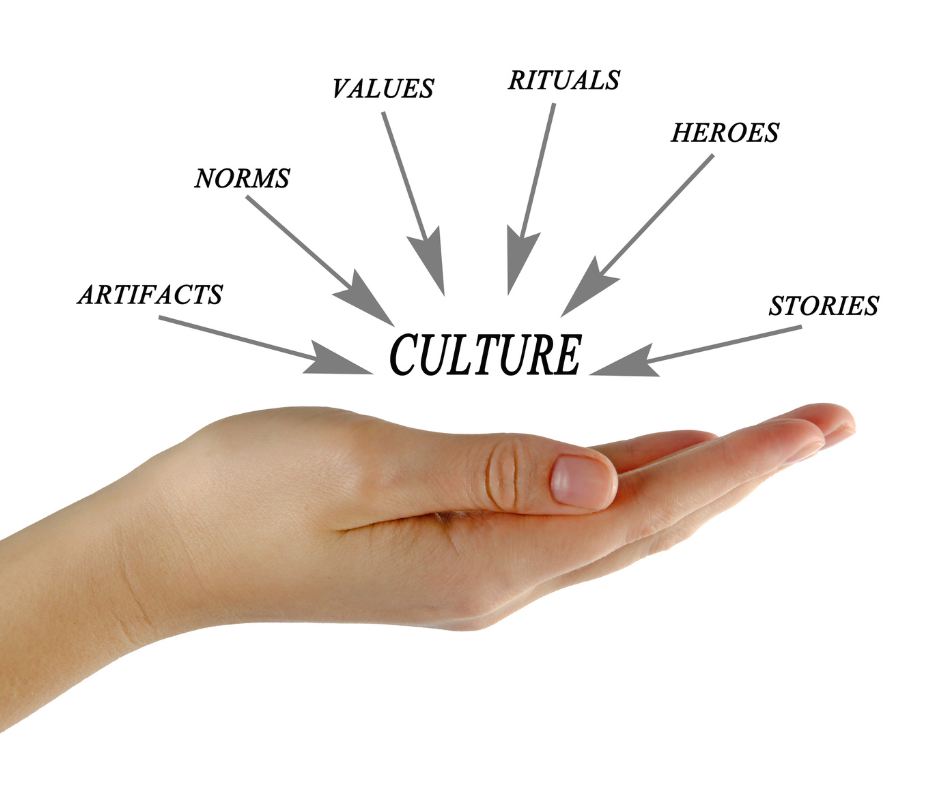
The Cultural Archaeologist: Cultivating Living Traditions in Times of Change

In today’s rapidly shifting business landscape, organizations face a delicate balancing act: how to evolve and innovate while maintaining the cultural DNA that made them successful. This challenge has given rise to a critical leadership competency – cultural stewardship – the art of nurturing organizational heritage while guiding thoughtful transformation.

Today’s article is the final in a 12-part exploration of the Modern Elder’s core competencies distilled from my 40+ year career journey. The topic of understanding of organizational culture and how to preserve valuable traditions while evolving practices is a fitting close to this series.

The Archaeological Approach to Organizational Traditions

Effective cultural stewardship begins with becoming an organizational archaeologist, carefully excavating and examining the traditions, practices, and values that define your company’s identity. Not every long-standing practice deserves preservation simply because it’s old, nor should every new idea be dismissed because it challenges convention.

The most valuable traditions to preserve are those that directly connect to your organization’s core purpose and have demonstrated resilience across multiple challenges. These might include customer service philosophies that have built lasting loyalty, decision-making processes that consistently produce quality outcomes, or mentorship traditions that have developed exceptional talent. Amazon’s customer obsession principle, for instance, has remained constant even as the company has evolved from an online bookstore to a global technology giant.

Look for traditions that embody your organization’s values in action rather than just words on a wall. The weekly town halls where employees can directly question leadership, the informal mentoring relationships that develop organically, or the collaborative problem-solving approaches that emerge during crises – these practices often represent the living essence of your culture.

Orchestrating Cultural Evolution

Healthy cultural evolution requires the same intentionality as biological evolution—it must be adaptive, gradual, and purpose-driven. Organizations that successfully navigate cultural change treat it as an ongoing process rather than a one-time initiative.

The key lies in creating what anthropologists call “cultural bridges” – practices that honor the past while pointing toward the future. When Netflix transitioned from DVD-by-mail to streaming, they maintained their culture of data-driven decision making and customer focus while completely reimagining their business model. The cultural foundation remained solid even as the operational superstructure transformed.

Successful cultural evolution also requires safe spaces for experimentation. Establish pilot programs, innovation labs, or cross-functional teams where new cultural practices can be tested without threatening the entire organizational ecosystem. These experimental zones allow you to observe which changes enhance your culture and which might undermine it.

Building Bridges Across Generational Divides

Perhaps nowhere is cultural stewardship more critical than during leadership transitions and generational handoffs. Institutional memory – the collective knowledge, relationships, and hard-won wisdom that exists in the minds of long-term employees – can evaporate overnight if not carefully preserved and transferred.

Create structured storytelling opportunities where veteran employees can share not just what they know, but how they learned it. The story of how the company navigated the 2008 financial crisis contains more valuable cultural DNA than any policy manual. These narratives help newer employees understand not just the rules, but the reasoning behind them.

Reverse mentoring programs, where younger employees share fresh perspectives with seasoned leaders, create two-way bridges that honor both innovation and experience. When properly structured, these relationships don’t just transfer knowledge – they create hybrid approaches that combine institutional wisdom with contemporary insights.

Cultivating Inclusive Cultural Evolution

True cultural stewardship recognizes that the strongest cultures are those that can incorporate diverse perspectives while maintaining coherent values. This means actively seeking voices that have been historically marginalized and creating pathways for their insights to influence organizational evolution.

Inclusive cultural stewardship goes beyond surface-level diversity initiatives. It involves examining which cultural practices might inadvertently exclude certain groups and being willing to adapt traditions that no longer serve the entire community. The goal isn’t to abandon all traditions, but to ensure that cultural preservation doesn’t become cultural stagnation.

Consider implementing “culture circles” – diverse groups of employees from different levels, departments, and backgrounds who regularly discuss how cultural practices are experienced across the organization. These conversations often reveal blind spots and generate innovative solutions that honor the past while expanding the future.

The Innovation-Tradition Balance

The most successful organizations don’t see innovation and tradition as opposing forces – they view them as complementary aspects of sustainable growth. Apple exemplifies this balance, maintaining Steve Jobs’ design philosophy and attention to detail while continuously pushing technological boundaries.

Establish clear criteria for when to preserve, when to adapt, and when to replace cultural practices. Ask whether a tradition still serves its original purpose, whether it can be modified to work better in current conditions, or whether it has become a barrier to necessary progress.

The Steward’s Legacy

Cultural stewardship isn’t about creating museums – it’s about cultivating living traditions that can adapt and thrive. The most effective cultural stewards understand that their role is temporary; they’re not building monuments to themselves, but creating sustainable systems that will outlast their tenure.

By thoughtfully identifying what to preserve, skillfully facilitating evolution, and courageously bridging divides, cultural stewards ensure that organizations can honor their heritage while boldly embracing their future. In doing so, they create the conditions for sustained success across generations of change.


The First Flame of Freedom: The Spirit of 1775 Lives in This Lost Novel of the South

We’ve come to the conclusion of a 5-part series of books about Mecklenburg County and Charlotte, NC during the years immediately preceding, and carrying through, the American Revolution – roughly 1765-1783. The final book – also the oldest, published in 1940 – is a work of fiction – but one that in my opinion provides an often missing part of understanding history.

Historical fiction serves as a vital bridge between past and present, transforming distant events and forgotten voices into vivid, accessible narratives that resonate with contemporary readers. Through the careful weaving of documented facts with imaginative storytelling, this genre breathes life into history’s dry statistics and dates, allowing us to experience the emotional truths of bygone eras through the eyes of characters who feel authentically human.

More than mere entertainment, historical fiction cultivates empathy by immersing readers in the struggles, triumphs, and daily realities of people from different times and cultures, fostering a deeper understanding of how historical forces shape individual lives. By illuminating the universal themes that connect us across centuries – love, loss, courage, and the pursuit of justice – historical fiction reminds us that while circumstances may change, the fundamental human experience remains remarkably constant, offering both perspective on our present challenges and hope for our shared future.

In Alexandriana, LeGette Blythe crafts a sweeping, nostalgic, and quietly patriotic novel that vividly resurrects colonial North Carolina on the eve of the American Revolution. First published in 1940, Alexandriana is both a regional romance and a work of historical fiction grounded in the lore surrounding Mecklenburg County’s bold – if disputed – claim to be the first American community to declare independence from Britain.

Though largely forgotten in modern literary circles, Blythe’s work deserves fresh attention, not only for its historical significance but for the way it captures a uniquely Southern imagination rooted in land, lineage, and the lingering hope of liberty.

Set in the early 1770s, Alexandriana follows the fictional life of David Barksdale, a spirited young man growing up on the prosperous John McKnitt Alexander plantation near present-day Charlotte. Named “Alexandriana”, the home stands as a symbol of frontier civility and classical refinement in a still-wild land. The novel follows Barksdale’s involvement in many events and battles both preceding and throughout the years of the American Revolution. His persona reflects the emerging tide of revolutionary thought sweeping the Carolina backcountry.

The novel opens in a world still ruled by British custom, Anglican orthodoxy, and class hierarchy. Barksdale is a “bound” boy – a form of apprenticeship. Throughout the years of the novel he grows from a shy boy to an educated young man. His father figure, John McKnitt Alexander, is depicted as the literal center of revolutionary thought in the county – secret meetings with fellow patriots, rumors of rebellion, and, eventually, involvement in what will be known as the Mecklenburg Declaration of Independence.

Barksdale’s personal journey mirrors the broader political transformation of the region. He is shown to be sympathetic to the cause of liberty from the outset, influenced by Alexander’s passion, the injustices he witnesses under British rule, and the writings of well-known “revolutionaries” of the time. When war finally breaks out, Alexandriana becomes both a sanctuary and a battleground: a place where love, loss, and loyalty are all tested.

As the revolution accelerates, the novel becomes more dramatic. Skirmishes erupt. Families are torn apart by divided allegiances. Barksdale himself faces danger and heartbreak, from almost being hung as a traitor by English soldiers to escaping capture when lured by a forbidden love. As the novel proceeds, almost every historical figure involved in the battles in and around the Charlotte area are introduced and developed. Signers of the Mecklenburg Declaration of Independence, Regulators, English commanders – even a young Andrew Jackson (from nearby Waxhaws) is fleshed out and brought to real life. The novel ends on an bittersweet note: independence is achieved, but at a great personal and communal cost. Alexandriana, both the homestead and the idea it represents, survives – but not without scars. Barksdale, now a young man, leaves his home of many years to marry the young woman introduced in the opening pages and teased throughout as beyond his reach.

LeGette Blythe, a North Carolina native and journalist, imbues Alexandriana with a deep affection for the region and its lore. The novel is richly atmospheric, with rolling descriptions of Carolina pine forests, rustic taverns, and parlor rooms filled with candlelight and the scent of a log fire. Blythe’s prose leans toward the romantic, evoking a wistful tone that matches the novel’s reverence for a lost world.

One of the novel’s most compelling strengths is its ability to humanize history. Rather than simply recount events like the the rumored May 20, 1775 declaration or the Mecklenburg Resolves, Blythe roots these moments in lived experience – arguments around supper tables, furtive whispers in barns, and agonizing decisions between loyalty and conscience. Barksdale’s coming-of-age arc gives readers an intimate view of how revolutions aren’t just fought on battlefields, but also in hearts and homes.

That said, the novel is unapologetically idealistic. Alexandriana itself is portrayed almost as an Eden – lush, orderly, cultured – run by benevolent landowners whose relationships with enslaved people are depicted in overly sentimental, unrealistic terms. As with many works of mid-20th-century Southern fiction, the institution of slavery is conspicuously softened. Though enslaved characters appear in the novel, they are relegated to the margins, rarely given full interior lives or moral agency. This romanticization reflects the blind spots of its time and warrants critical scrutiny by modern readers.

The same can be said for gender. While Barksdale’s two love interests are strong and thoughtful protagonists by the standards of the era, their agency is still circumscribed by patriarchal expectations. Their intellectual awakening is real, but their fates is ultimately tied to romantic and domestic fulfillment. Nevertheless, within these constraints, Blythe offers moments of genuine psychological insight. Barksdale’s internal struggle – between security and self-determination, decorum and defiance – feels authentic and earned.

Blythe’s historical detail is generally accurate, though he takes creative liberties to dramatize local legend. The Mecklenburg Declaration, which remains a subject of historical debate, is treated as fact in the novel. Yet this act of myth-making is part of the novel’s charm. Blythe isn’t trying to write academic history; he’s offering a literary defense of a community’s heroic self-conception. In doing so, he elevates local memory to the level of national meaning.

Alexandriana is a novel deeply rooted in time and place. While some of its portrayals are dated, its core themes – political awakening, the price of conviction, and the tension between tradition and transformation – remain relevant. For readers interested in Southern history, American independence, or the complexities of heritage and identity, Alexandriana offers a compelling, if imperfect, window into the birth of a nation from the Carolina frontier.

Like the homestead at its center, the novel is a blend of beauty and contradiction – elegant yet flawed, stirring yet shadowed. It invites both admiration and critique. And in that, perhaps, lies its enduring value.


Part of a regular series on 27gen, entitled Wednesday Weekly Reader.

During my elementary school years one of the things I looked forward to the most was the delivery of “My Weekly Reader,” a weekly educational magazine designed for children and containing news-based current events.

It became a regular part of my love for reading, and helped develop my curiosity about the world around us.


Note: Header art ©Dan Nance; LeGette Blythe photo  ©Charlotte Mecklenburg Library

How Great Leaders Turn Limitations into Strengths

In boardrooms across the globe, a quiet revolution is taking place. The traditional image of the all-knowing, infallible leader is giving way to something far more powerful: the humble elder. This new archetype represents a fundamental shift in how we understand effective leadership, one that embraces vulnerability as strength and treats wisdom as an ongoing journey rather than a destination.

Today’s article is the eleventh of a 12-part exploration of the Modern Elder’s core competencies distilled from my 40+ year career journey. Humility is balancing confidence in acquired wisdom with openness to new approaches and ideas. The humble elder understands a profound truth that often eludes younger leaders: acknowledging what you don’t know is not weakness – it’s intelligence.

The Strength in Acknowledging Limitations

This willingness to reveal limitations stems from a deep security that comes with experience. The humble elder has weathered enough storms to know that pretending to have all the answers is far more dangerous than admitting ignorance. They’ve learned that leadership isn’t about being the smartest person in the room – it’s about being wise enough to recognize and harness the collective intelligence around them.

Research in organizational psychology consistently shows that leaders who acknowledge their limitations create more innovative and resilient teams. When team members see their leader as fallible and human, they’re more likely to contribute their own insights, challenge assumptions, and take calculated risks. The humble elder’s admission of limitations becomes a catalyst for organizational learning and growth.

Balancing Confidence with Openness

The art of humble leadership lies in striking the delicate balance between confidence and openness. The humble elder projects quiet assurance while maintaining intellectual curiosity. They speak with conviction about their values and vision while remaining genuinely interested in perspectives that might challenge or refine their thinking.

This balance manifests in their communication style. When discussing company strategy, a humble elder might say, “Based on my experience, I believe this approach will work because…” followed by, “but I’m curious to hear your thoughts on potential blind spots.” They anchor their team with decisive leadership while creating space for collaborative refinement.

The confidence of the humble elder is earned through decades of both success and failure. It’s not the bravado of inexperience but the quiet assurance of someone who has learned to trust their judgment while remaining open to new information. This creates a leadership presence that is both reassuring and dynamic, stable yet adaptable.

Creating Psychological Safety Through Vulnerability

Perhaps the most transformative aspect of humble elder leadership is how vulnerability becomes a tool for creating psychological safety. When leaders share their struggles, uncertainties, and learning moments, they give permission for others to do the same. This creates an environment where innovation thrives because people feel safe to experiment, fail, and learn.

The humble elder might share stories of past mistakes not to diminish their authority, but to model the learning process. They create cultures where phrases like “I don’t know, but let’s find out” and “I was wrong about that” become signs of intellectual courage rather than weakness. This vulnerability-based leadership style has been shown to increase employee engagement, reduce turnover, and accelerate innovation cycles.

In practice, this might look like a leader beginning a difficult conversation with, “I’m not sure I’m approaching this correctly, so please help me understand your perspective.” Such openness doesn’t undermine authority – it enhances it by demonstrating emotional intelligence and genuine care for outcomes over ego.

Learning from Mistakes and Failures

The humble elder’s relationship with failure is fundamentally different from that of their younger counterparts. Where inexperience might lead to defensiveness or blame-shifting, the humble elder approaches mistakes with curiosity and accountability. They understand that failure is not the opposite of success but a prerequisite for it.

This mature perspective on failure creates a learning culture throughout the organization. When team members see their leader take responsibility for mistakes and extract lessons from them, they’re more likely to adopt similar approaches. The humble elder’s post-mortem meetings focus not on who was at fault but on what can be learned and how systems can be improved.

The key insight of the humble elder is that mistakes become valuable only when they’re acknowledged, analyzed, and integrated into future decision-making. They model this process publicly, turning their own failures into teaching moments for their entire organization.

The Ongoing Journey of Wisdom Acquisition

Perhaps the most defining characteristic of the humble elder is their recognition that wisdom is not a destination but a journey. Even with decades of experience, they maintain a beginner’s mind, approaching new challenges with curiosity rather than assumption. They understand that the world is constantly changing, and what worked yesterday might not work tomorrow.

This commitment to continuous learning manifests in their daily practices. They actively seek out diverse perspectives, read voraciously, and surround themselves with people who challenge their thinking. They ask questions not because they lack confidence but because they understand that inquiry is the path to deeper understanding.

The humble elder’s journey of wisdom acquisition never ends. They approach each new day, each new challenge, and each new relationship as an opportunity to learn something valuable. In doing so, they not only continue to grow but inspire others to embrace their own journey of lifelong learning.

In a world that often celebrates certainty and quick answers, the humble elder offers a different path – one that leads to deeper wisdom, stronger relationships, and more sustainable success. Their legacy lies not in what they knew, but in how they learned, and how they helped others learn alongside them.


Still Buzzing: The Lasting Impact of LeGette Blythe’s “Hornet’s Nest”

Today is the continuation of a short, 5-part series depicting the events in and around Charlotte and Mecklenburg County, NC preceding and during the American Revolution, specifically focusing on the Mecklenburg Declaration of Independence, or MeckDec, from May 20, 1775.

First up was Who’s Your Founding Father, published by David Fleming (2023). Then came The First American Declaration of Independence? by Scott Syfert (2014). Following that was Hornet’s Nest by Jimmy Carter (2003). Today’s article is another Hornet’s Nest – but of an entirely different type than the previous one.


Published in 1961 by the Public Library of Charlotte and Mecklenburg County, Hornet’s Nest: The Story of Charlotte and Mecklenburg County stands as a monumental achievement in regional American history. Co-authored by William LeGette Blythe and Charles Raven Brockmann, this comprehensive chronicle captures the essence of one of North Carolina’s most dynamic regions, earning its place as an enduring reference work despite the passage of more than six decades since its publication.

The book’s title draws from a colorful piece of Revolutionary War history, when British General Cornwallis famously described Charlotte as “a hornet’s nest of rebellion” during the American Revolutionary War. This metaphor perfectly encapsulates the spirit that Blythe and Brockmann capture throughout their narrative – a region characterized by fierce independence, entrepreneurial vigor, and an unwavering commitment to progress that has defined Charlotte and Mecklenburg County from their earliest days to the mid-20th century.

What makes Hornet’s Nest particularly compelling is its dual structure, presenting what the authors describe as “two books within a single cover.” This innovative approach allows readers to experience both the sweeping historical narrative and the intimate human stories that shaped the region’s development. The first book, primarily narrated by LeGette Blythe, provides the chronological backbone of the region’s history, while the second section delves deeper into the cultural, social, and economic forces that transformed a frontier settlement into a major Southern metropolitan area.

A Master Storyteller’s Approach

LeGette Blythe brings exceptional credentials to this project, having established himself as one of North Carolina’s most respected authors and historians. As an ancestor of two of the most prominent families in the story of the MeckDec, his professional craft is tempered by his personal history. Blythe’s previous works, including biographical studies and regional histories, demonstrate his ability to transform historical research into engaging narrative prose. In Hornet’s Nest, Blythe’s storytelling prowess shines as he weaves together complex historical threads into a coherent and compelling account.

The chapters leading up to and including the accounts of the MeckDeck support the declaration’s authenticity, reflecting the local tradition that viewed the May 20, 1775 document as a genuine precursor to the national Declaration of Independence, despite ongoing historical debates about its legitimacy. As you will see in the final article of this series next week, Hornet’s Nest was not Blythe’s first foray into the events surrounding Charlotte and it’s quest for independence in the mid-1700s.

The book excels in its treatment of the area’s founding and early development, tracing the journey from Native American settlements through colonial establishment to the emergence of Charlotte as a significant commercial center. Blythe’s narrative captures the entrepreneurial spirit that characterized the region’s early settlers, many of whom were Scots-Irish immigrants who brought with them a fierce independence and business acumen that would define the area’s character for generations.

While modern historians question whether the May 20th declaration actually existed as claimed, Blythe’s telling captures the undeniable revolutionary fervor that made Mecklenburg County a hotbed of resistance against British rule, embodying the defiant spirit that would define the region’s character throughout the American Revolution.

Comprehensive Coverage and Cultural Insight

One of the book’s greatest strengths lies in its comprehensive scope. Rather than focusing solely on political or economic history, Blythe and Brockmann provide rich coverage of the cultural developments that shaped the region. The authors explore the establishment of educational institutions, the growth of religious communities, the development of arts and literature, and the social dynamics that influenced the area’s evolution.

The book particularly excels in its coverage of Charlotte’s transformation from a small courthouse town to a major financial and commercial center. The authors skillfully document the rise of textile manufacturing, the development of banking institutions, and the growth of transportation networks that positioned Charlotte as a regional hub. Their treatment of these economic developments never loses sight of the human element, consistently connecting industrial growth to the stories of the individuals and families who drove these changes.

Historical Context and Significance

Hornet’s Nest serves as more than just a local history; it provides valuable insights into broader patterns of Southern development and urbanization. The book captures Charlotte and Mecklenburg County at a crucial moment in their history – the early 1960s, when the region stood on the brink of explosive growth that would transform it into one of the Southeast’s major metropolitan areas.

The authors’ treatment of social issues reflects the perspectives and limitations of their era. While the book provides extensive coverage of economic and political development, its treatment of racial relations and social inequality reflects the sensibilities of the early 1960s, before the full impact of the civil rights movement had transformed historical perspectives. Modern readers will note these limitations, but they also provide valuable insight into how history was understood and presented during this pivotal period in American social development.

Literary Merit and Accessibility

Despite its academic foundation, Hornet’s Nest remains highly accessible to general readers. Blythe’s narrative skill ensures that complex historical developments are presented in clear, engaging prose that brings the past to life. The book successfully balances scholarly rigor with storytelling appeal, making it valuable both as a reference work and as an engaging read for anyone interested in Southern history or urban development.

The authors’ use of primary sources and personal accounts adds authenticity and immediacy to their narrative. They skillfully integrate letters, diary entries, newspaper accounts, and oral histories to create a multi-dimensional portrait of the region’s development. This approach helps readers understand not just what happened, but how it felt to live through these transformative periods.

Enduring Value and Limitations

While Hornet’s Nest remains a comprehensive and valuable source for Charlotte and Mecklenburg County history, modern readers should be aware of its limitations. Published in 1961, the book naturally lacks coverage of the dramatic changes that have occurred in the region over the past six decades. The explosive population growth, the transformation into a major banking center, the arrival of major league sports, and the profound social changes that have reshaped the region all lie beyond the book’s scope.

Additionally, contemporary historical scholarship has expanded our understanding of previously marginalized voices and experiences. The book’s treatment of Native American history, African American experiences, and women’s contributions reflects the limitations of historical perspectives available in 1961. These gaps don’t diminish the book’s value but remind readers to supplement it with more recent scholarship that provides a more complete picture of the region’s complex history.

Hornet’s Nest: The Story of Charlotte and Mecklenburg County remains a remarkable achievement in regional American history. LeGette Blythe and Charles Brockmann created a work that successfully captures the spirit and substance of a dynamic region during its formative centuries. While dated in some respects, the book’s fundamental strengths – its comprehensive scope, engaging narrative style, and deep understanding of the forces that shaped the region – ensure its continued relevance for anyone seeking to understand the historical foundations of modern Charlotte and Mecklenberg County.

For historians, genealogists, and anyone interested in Southern urban development, Hornet’s Nest provides an indispensable foundation. It reminds us that behind every modern metropolis lies a rich tapestry of human ambition, struggle, and achievement – and that understanding this past remains essential for comprehending the present and future of this remarkable region.


Part of a regular series on 27gen, entitled Wednesday Weekly Reader.

During my elementary school years one of the things I looked forward to the most was the delivery of “My Weekly Reader,” a weekly educational magazine designed for children and containing news-based current events.

It became a regular part of my love for reading, and helped develop my curiosity about the world around us.


Note: Header art ©Dan Nance

Strategic Storytelling: How to Use the Power of Narrative

In professional environments, the ability to transfer knowledge effectively can make the difference between a team that thrives and one that struggles. While traditional methods like documentation and formal training have their place, strategic storytelling emerges as one of the most powerful tools for ensuring knowledge sticks, resonates, and transforms how people think and work.

Today’s article is the tenth of a 12-part exploration of the Modern Elder’s core competencies distilled from my 40+ year career journey. Storytelling is the skill in sharing experiences and lessons in compelling ways that resonate with others. Through strategic storytelling, we can transform our professional experiences into powerful tools for knowledge transfer, creating lasting impact that extends far beyond traditional training methods.

The Neuroscience of Narrative and Memory Retention

Our brains are wired for story. When we hear a narrative, multiple regions of our brain activate simultaneously, creating a richer, more memorable experience than when we process abstract information alone. The neural coupling effect demonstrates that when we listen to a story, our brains begin to mirror the storyteller’s brain activity, creating a shared experience that enhances understanding and retention.

Stories trigger the release of cortisol during tension-filled moments, oxytocin during emotional connections, and dopamine during positive outcomes. This neurochemical cocktail makes information more memorable and emotionally resonant. Research shows that people retain 65% of information when it’s presented in story format, compared to only 5% when presented as statistics or abstract concepts.

The brain’s default mode network, which is active during rest and introspection, is particularly receptive to narrative structure. This explains why we often remember stories long after we’ve forgotten the specific facts they contained. When we wrap knowledge in narrative, we’re essentially hijacking these natural neural pathways to make our message more powerful and lasting.

Crafting Stories That Convey Complex Lessons

Effective knowledge transfer through storytelling requires more than simply recounting events. The most impactful stories follow a deliberate structure that guides the audience through understanding. The classic three-act structure provides a reliable framework: setup, challenge, and resolution.

Begin with context that establishes the situation, introduces key players, and sets stakes that matter to your audience. The challenge phase should highlight the problem or decision point, emphasizing the complexity and consequences involved. The resolution should reveal not just what happened, but why it happened and what can be learned from it.

The most effective professional stories focus on transformation. They show how a person, team, or organization changed through the experience. This transformation element is crucial because it demonstrates the practical application of knowledge and provides a model for others to follow.

When dealing with complex technical or strategic concepts, use metaphors and analogies within your story structure. These linguistic bridges help audiences connect unfamiliar ideas to familiar experiences, making abstract concepts concrete and actionable.

Using Personal Anecdotes Effectively

Personal anecdotes carry unique power in knowledge transfer because they combine the authenticity of lived experience with the relatability of human struggle and success. When sharing personal stories, vulnerability becomes an asset, not a liability. Audiences connect more deeply with stories that acknowledge mistakes, confusion, or initial failure.

The key to effective personal anecdotes is balancing self-disclosure with professional relevance. Share enough personal detail to create emotional connection, but maintain focus on the professional lesson. Your role in the story should be as a guide or fellow traveler, not as a hero without flaws.

Consider the timing and context of personal stories. A story about overcoming failure might be perfect for a team facing a setback, but inappropriate during a client presentation. The same story can be adapted for different contexts by adjusting the focus and details while maintaining the core message.

Adapting Storytelling to Different Audiences

Effective storytellers understand that the same story can be told in multiple ways to serve different audiences. Senior executives might connect with stories about strategic decisions and their outcomes, while front-line employees might better relate to stories about operational challenges and solutions.

Consider your audience’s experience level, cultural background, and current challenges when selecting and adapting stories. A story that resonates with experienced professionals might need more context and simpler language for newcomers. Similarly, what works in a formal presentation might need adjustment for a casual mentoring conversation.

The emotional tone of your story should match both the message and the audience. A story about learning from failure might be told with humor to a team that’s become risk-averse, but with more serious reflection to a group that’s struggling with recent setbacks.

Building a Personal Story Bank of Professional Experiences

Developing a rich repository of professional stories requires systematic reflection and curation. Start by identifying key themes in your work experience: leadership lessons, problem-solving approaches, innovation examples, or relationship-building strategies. For each theme, collect 3-5 stories that illustrate different aspects or contexts.

Create a simple framework for documenting your stories. Include the situation, actions taken, results achieved, and lessons learned. Note the different ways each story can be adapted for various audiences and contexts. Regular reflection on recent experiences will help you recognize which moments contain teachable insights.

Review and refine your story bank regularly. As you gain more experience and perspective, you’ll discover new angles and applications for existing stories. Some stories will become more valuable over time, while others may lose their relevance.

The most powerful professional stories often come from moments of failure, confusion, or unexpected challenge. These experiences, while difficult to live through, often provide the richest material for knowledge transfer because they reveal the real complexities of professional life and the hard-won wisdom that comes from navigating them.


🏰✨ 70 Years of Magic Today! ✨🏰

On July 17, 1955, Walt Disney opened the gates to something the world had never seen before. Walt’s vision transformed 160 acres of orange groves into a place where dreams literally came to life.

From that chaotic but magical opening day to today’s technological marvels, Disneyland has welcomed over 800 million guests. Here’s to 70 years of believing that dreams really do come true!

70 years ago today, Walt Disney proved that theme parks could be more than just rides and games.

From the original 22 attractions in 1955 to today’s cutting-edge experiences, Disneyland has never stopped evolving. The Happiest Place on Earth by Don Hahn and Christopher Merritt documents this incredible journey – from the addition of New Orleans Square to the technological wizardry of Galaxy’s Edge.

Hahn and Merritt’s research in The Happiest Place on Earth reveals how Walt envisioned a place where families could experience stories together, where every detail mattered, and where imagination had no limits.

What started as Walt’s “little park” in Southern California became a worldwide cultural phenomenon. The Happiest Place on Earth traces how Disneyland’s influence extended far beyond its gates, inspiring theme parks globally and changing how we think about entertainment, storytelling, and family experiences.

Each generation has added their own magic while preserving Walt’s original spirit. Disneyland remains the gold standard for immersive entertainment. Walt’s original park continues to be the creative heart of the Disney magic we know and love.

As we celebrate 70 incredible years, we’re reminded that Disneyland was always meant to be a living, breathing creation. Walt famously said his park would never be completed as long as there was imagination left in the world.

Here’s to the next 70 years of magic, innovation, and dreams coming true at The Happiest Place on Earth!


Photos ©Disney

Stirring The Hornet’s Nest: A Unique Look at the American Revolution in the South

When I first began this short series, I intended to limit it to the environs of Mecklenburg County and Charlotte, NC during the years immediately preceding, and carrying through, the American Revolution – roughly 1765-1773. The series covers five books, with the most recent publication first (2023), and then going back over seven decades to 1940.

Almost immediately my research brought up a much repeated phrase: the hornet’s nest – attributed to Lord Cornwallis in referring to the stubborn and insistent fighting of North Carolina militia in the battle of Charlotte on September 26, 1780. While the battle itself was relatively insignificant in the larger scheme of things, that phrase aptly describes the spirit and determination of the North Carolina people leading up the Revolution.

So, when I discovered The Hornet’s Nest, I was eager to open it and read about the story taking place in…

Georgia?


When most people think of Jimmy Carter, they envision the 39th President of the United States, Nobel Peace Prize winner, and humanitarian icon. What they might not expect is a novelist capable of crafting a gripping historical thriller that transports readers to the brutal realities of the Revolutionary War. Yet that’s exactly what Carter accomplishes in “The Hornet’s Nest,” a sweeping historical novel that demonstrates his remarkable versatility as a storyteller and his deep understanding of American history. The book is the first work of fiction by a President of the United States.

Set in the Georgia backcountry during the Revolutionary War, Hornet’s Nest follows the fictional Pratt family as they navigate the treacherous landscape of colonial America’s fight for independence. The story centers on Ethan Pratt, a young surveyor who finds himself torn between his Quaker upbringing and the violent realities of war. When British forces threaten his community and family – first in North Carolina, then in Georgia, Ethan must decide whether to maintain his pacifist beliefs or take up arms against the Crown.

Carter’s intimate knowledge of Georgia’s history and geography shines through every page. The author, himself a Georgia native, brings an authentic voice to the colonial South that feels both historically accurate and emotionally resonant. His descriptions of the untamed wilderness, the harsh realities of frontier life, and the complex political allegiances of the time create a vivid backdrop that immerses readers in the period.

Hornet’s Nest is a work of historical fiction – the first in this series, but not the last! And the title, as noted above, is a quite common phrase when referring to the North Carolina’s American Revolution story, as you will see next week.

Character Development and Narrative Strength

What sets Hornet’s Nest apart from typical historical fiction is Carter’s nuanced approach to character development. Ethan Pratt is no stereotypical hero; he’s a conflicted young man struggling with moral complexities that have no easy answers. His evolution from peaceful surveyor to reluctant participant in violence reflects the broader transformation of American society during this pivotal period.

The supporting characters are equally well-developed. Epsey, Ethan’s strong-willed wife, represents the often-overlooked perspective of women during the Revolutionary War. Her intelligence and resilience challenge contemporary gender expectations while remaining true to the historical context. The British officers, Native American allies, and colonial militia members are portrayed with complexity rather than as one-dimensional villains or heroes.

Carter’s background as a former president brings a unique perspective to the political machinations of the war. He understands the delicate balance of power, the importance of alliances, and the way personal relationships can influence historical events. This political acumen elevates the novel beyond simple adventure story into a thoughtful examination of how ordinary people navigate extraordinary circumstances.

Historical Authenticity and Research

The novel’s historical accuracy is one of its greatest strengths. Carter clearly conducted extensive research into the Revolutionary War’s Southern Theater, often overlooked in favor of more famous Northern battles. He brings to life the brutal partisan warfare that characterized the conflict in Georgia and the Carolinas, where neighbor fought neighbor and traditional rules of warfare often dissolved into chaos. In fact, some historians refer to this as America’s first “Civil War” as patriots often battled Tories – while from the same area and often related as family.

The author’s attention to detail extends beyond major historical events to include the daily realities of colonial life. From the tools used by surveyors to the political tensions between different religious groups, Carter creates a world that feels lived-in and authentic. His descriptions of Native American customs and British military procedures demonstrate a commitment to historical accuracy that scholarly readers will appreciate.

About the title – it seems that Carter applied the term “hornet’s nest” (first used in the early 1700s and already in colloquial use, symbolizing a source of trouble or agitation) to an area designated by the patriots fighting the British in Georgia as a place of safety. In the book, it was an area of several separated forts with good trails connecting them along with maximum natural protection from impassable creeks, swamps, and hills. Since the story does not include the battle of Charlotte, it would seem that Carter utilized author’s license to appropriate the “hornet’s nest” phrase for the book title and action scenes throughout.

Themes and Relevance

Beneath its adventure narrative, Hornet’s Nest explores themes that resonate beyond its historical setting. The tension between idealism and pragmatism, the cost of violence even in just causes, and the complexity of moral decision-making during wartime all speak to contemporary concerns. Carter’s experience as a peacemaker and his Christian faith inform his nuanced treatment of these themes without overwhelming the story.

The novel also examines the often-forgotten diversity of the Revolutionary War era. Carter includes perspectives from various social classes, ethnic groups, and religious backgrounds, creating a more complete picture of colonial American society than many historical novels provide. This inclusive approach reflects both good historical practice and the author’s lifelong commitment to human rights.

Literary Merit and Accessibility

While Carter may be better known for his political and humanitarian work, Hornet’s Nest demonstrates genuine literary talent. His prose is clear and engaging, never sacrificing readability for literary pretension. The pacing effectively balances action sequences with character development and historical context, keeping readers engaged throughout the novel’s substantial length.

The dialogue feels natural and period-appropriate without being overly archaic or difficult to follow. Carter strikes the right balance between historical authenticity and modern accessibility, making the novel appealing to both serious historical fiction readers and those seeking an entertaining adventure story.

Hornet’s Nest stands as a testament to Jimmy Carter’s remarkable range of talents. While it may not revolutionize the historical fiction genre, it offers a compelling, well-researched, and thoughtfully written exploration of a crucial period in American history. The novel succeeds both as an entertaining adventure and as a serious examination of the moral complexities inherent in violent conflict.

For readers interested in the Revolutionary War, Southern history, or simply well-crafted historical fiction, Hornet’s Nest provides a satisfying reading experience. It reminds us that history is made not just by famous generals and politicians, but by ordinary people facing extraordinary circumstances with courage, conviction, and humanity.

Carter’s transition from statesman to novelist proves that great leaders often possess the storytelling ability that helped shape their public success. Hornet’s Nest is a worthy addition to the historical fiction canon and a fascinating glimpse into the creative mind of one of America’s most respected public figures.

While the majority of the book veered outside my intended scope of the Charlotte, NC area, I found it a thoroughly fascinating account of the little-known battles and everyday lives of colonists in the times leading up to, and through, the American Revolution.


Part of a regular series on 27gen, entitled Wednesday Weekly Reader.

During my elementary school years one of the things I looked forward to the most was the delivery of “My Weekly Reader,” a weekly educational magazine designed for children and containing news-based current events.

It became a regular part of my love for reading, and helped develop my curiosity about the world around us.


Note: Header art by ©Dan Nance