In recognition of National Personal Chef’s Day today, here’s a trip down memory lane from the end of summer 2014. Neither of my two sons who are chefs are personal chefs, but the recollections made me smile.
My 19 year-old son finished his first year at Johnson and Wales University on May 24 this year. On May 25, he reported to Cornerstone Christian Conference Center as their summer Sous Chef. He proceeded to work 14 hours a day for five or six days at a time. He returned home a week or so ago, begins his sophomore year on September 10. After a year of dorm life, he decided that he would live at home for the current year. There are few downsides, and a great many benefits!
It’s been interesting to note the changes in our house just during this brief interim period and first few weeks of his sophomore year:
We are eating more, and better, meals at home
The number of dirty pots and pans has increased exponentially for said meals
Consequently, we find ourselves running the dishwasher every day at least once, in addition to hand-washing several items
Therefore, our water bill is undergoing steep inflation
We don’t have a good kitchen to work in (according to the chef-in-training)
A remedy to that starts with a little reorganization, including mounting a rack to the wall
Fresh is always best
It’s amazing what wine does to enrich ordinary sauces and dishes
The proper knife and technique make preparing fresh foods fun
If he had a proper mixer, we could be having fresh breads, pizza, and other pastry items on a regular basis
His explanation of culinary terms is straining my two years of French (that, and the last French I regularly spoke/heard/wrote was over 36 years ago)
When we eat out, we now have an instant food and service critic with us
He’s pretty good at what he does, and he’s eager to learn more
His oldest brother (twelve years his senior) has been involved in food service since he was a sophomore in high school in 1997. From dishwasher to general manager at a national chain and everything in between, food and the preparation of it remain a part of his life.
Taking a look at the above, and thinking of about a dozen more stories, and combining it with my long-time love of culinary reading and research, the idea for a new periodic series on 27gen is swirling in my mind: Chef Stories. I hope you will enjoy these little interludes in my normal postings, but be careful – you might just learn something here as well!
In our fast-paced, get-it-done-now culture, the fact is that almost everyone on your team could use some help in increasing their personal productivity. This pace has only been accelerating because of the COVID-19 pandemic and the resulting changes in our lives.
The very nature of ministry often makes the “I’ve gotten something done today” feeling elusive. For many church leaders, there are no edges to their work – it’s not easy to tell when the work is finished, because it really never is. Most of your team have at least half a dozen things they are trying to achieve right now – today! And a pastoral need could arise at any moment to make that to-do list completely irrelevant.
Is it possible that our productivity could actually be increased by first slowing down?
True productivity is less about getting things done; it is more concerned with stewarding priorities, time, and resources wisely and faithfully in a way that honors God. In Every Day Matters Brandon Crowe provides an accessible and biblical understanding of productivity filled with practical guidance and examples.
Crowe draws insights from wisdom literature and the life and teaching of the Apostle Paul to reclaim a biblical perspective on productivity. He shows the implications for matters such as setting priorities and goals, achieving rhythms of work and rest, caring for family, maintaining spiritual disciplines, sustaining energy, and engaging wisely with social media and entertainment.
A SIMPLE SOLUTION
In the book of Genesis, we find the description of a seven-day week. On the first six of these days, God works. He begins by creating the universe, and as the week progresses, culminates His work of creation with man and woman.
As God’s week progressed, things got more complicated. After each of the first five days, God said, “Good.” After the pinnacle of his creation – Adam and Eve – God said, “Very good.”
But on the seventh day, God created the Sabbath, and whispered, “Holy.”
Up until this point, everything had been created out of nothing, but on the morning of the seventh day, God makes nothing out of something. Rest is brought into being.
The word Sabbath means “cease from working.” Resting one day a week by any name is holy – the point is to stop on that day and look for God.
Could it be that if we want to be our best, to be productive, we must do so from a day of rest?
To maintain an effective, productive lifestyle, you need rhythms of rest built into your schedule. Instead of working longer hours each day, you should aim to maximize your time devoted to working so that you have time to recover before the next day.
Brandon D. Crowe
Rest
One of the great productivity myths is that you can accomplish more by working longer hours and cutting back on sleep. But sleep cannot be cheated. You need various kinds of rest:
You need to get enough sleep each night.
You need breaks while you are working.
You need a weekly day of rest.
It’s wise to take time for an extended period of rest on a yearly basis – a vacation.
Refresh
In addition to sleep, you need recreation of down time in order to be refreshed. Not all rest, in other words, has to be sleeping. Sometimes resting from work means being alive in other ways. You need things to do when you’re not working that bring enjoyment, which ends up funneling into increased productivity when you are working. These are ways to decompress and unwind.
Despite your best intentions, you will not succeed in staying focused each day. You will fail. You will get distracted. Every day matters, but you will not be at your best every day. Do not be discouraged; each day is a new day, and each day is a new opportunity to move forward.
Repent
You should repent daily from your sins. This is not simply a matter of productivity, but a matter of pleasing God. You should constantly be examining your life to consider where you have sinned, and where you have sinned, you should repent and ask God to forgive you. A consistent review process will give you an opportunity to recognize and address negative habits.
Resolve
You also need to consistently renew your commitment to the most important things. Resolve to grow each day. As you identify areas that need improvement, recommit yourself anew each day to your vision and priorities. Each day is a new day for you to live by your priorities and do those things you know need to be done.
Author Brand Crowe developed the following action steps in the areas of Rest, Refresh, Repent, and Resolve. Set aside some time before the end of this week to review these, and resolve to begin implementing them next week.
Track your sleep to determine how much sleep you need to function well.
Determine what time you need to get up in the mornings for your personal routine, and resolve to go to bed sufficiently early to allow for your needed levels of sleep.
Put away work related issues after your eventing shut-down rituals.
Write down two to three activities you would like to do to provide refreshment. Begin to pursue these as you have opportunity.
Resolve to take Sunday off from work to focus on worship and others.
Part of a regular series on 27gen, entitled Wednesday Weekly Reader
During my elementary school years one of the things I looked forward to the most was the delivery of “My Weekly Reader,” a weekly educational magazine designed for children and containing news-based, current events.
It became a regular part of my love for reading, and helped develop my curiosity about the world around us.
Along with early and ongoing encouragement from my parents – especially my father – reading was established as a passion in my life that I was happy to continually learn from, share with my children, and watch them share with their children.
There are few certainties in ministry today. Unfortunately, one of them is the inevitability of a potential crisis occurring in our country, your community or even your church that could have a major effect on your congregation and even your reputation.
A crisis is an event, precipitated by a specific incident, natural or man-made, that attracts critical media attention and lasts for a definite period of time. Certainly, the COVID-19 pandemic qualifies.
But life is full of other types of disruptions, some seemingly minor in nature and others truly of a global scale. In between those two bookends are countless events that require leaders to be at the forefront in communicating to their organizations, the community, and the greater public.
When your church finds itself in the midst of a crisis, the ripple effects can disrupt lives and operations for the foreseeable future if public opinion is not properly addressed and stewarded.
Skillfully managing the perception of the crisis can determine the difference between an organization’s life or death. In the pitched battle between perception and reality, perception always wins.
There is a solution – you can prepare for the inevitable crisis by proactive actions that will help in preempting potential crises or help make them shorter in duration. Finding yourself in a crisis situation is bad; not being prepared when a crisis occurs is devastatingly worse.
Skillfully managing the perception of the crisis determines the difference between a company’s life or death. Because in the pitched battle between perception and reality, perception always wins.
The inevitability of a crisis having a potentially major effect on your business and your reputation – at some point – is almost a guarantee. When your company finds itself in the midst of a crisis, the ripple effects can disrupt lives and business for the foreseeable future if public opinion is not properly shaped and managed.
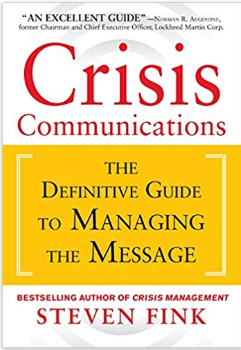
Fortunately, there is a solution. Crisis communications and crisis management legend Steven Fink gives you everything you need to prepare for the inevitable—whether it’s in the form of human error, industrial accidents, criminal behavior, or natural disasters.
In this groundbreaking guide, Fink provides a complete toolkit for ensuring smooth communications and lasting business success through any crisis. Crisis Communications offers proactive and preventive methods for preempting potential crises. The book reveals proven strategies for recognizing and averting damaging crisis communications issues before it’s too late. The book also offers ways to deal with mainstream and social media, use them to your advantage, and neutralize and turn around a hostile media environment.
A SIMPLE SOLUTION
According to author Steven Fink, a good working definition of a crisis is any situation, that if left unattended, has the potential to:
Escalate the intensity
Damage the reputation or positive public opinion of the organization or its leadership
Interfere with the normal operations
Fall under close government or media scrutiny
Impact the organization’s financial well-being
Using the five-step list above as a pragmatic guide, the responsible leader will realize that what may not qualify as a minor crisis in one situation may actually threaten the existence of the organization in another.
So the question becomes, do you know what YOUR crisis is?
Before you can even begin to think about communicating during a crisis, there are three absolute imperatives that must be undertaken in any crisis situation.
Steven Fink
Identify your crisis
Isolate your crisis
Manage your crisis
IDENTIFY
How hard can it be to identify a crisis when it’s happening to your organization? Actually, it’s harder than you might think. Focus on identifying your crisis – the one with which you have to deal, the one over which you have some measure of control. Try to avoid distracting scenarios, of which there will be many.
In a crisis, especially a crisis with competing interests, the only person who is looking out for your organization’s reputation is you.
ISOLATE
Isolation might very well mean designating a crisis management team to deal exclusively with the crisis, with its members temporarily delegating their normal duties and responsibilities to others for the duration of the crisis. Ideally, this team would be isolated from the rest of the company, and hopefully, keep quiet about its progress until the appropriate time.
MANAGE
If you have properly identified and then successfully isolated the crisis, the actual management of the crisis is the easiest part (assuming you are a good manager to begin with). That’s because you will now be laser-focused on the specific task at hand, and once you’ve cleared away the distracting brush, your mission becomes crystal clear. When that occurs, making vigilant decisions – the epitome of good crisis management – is well within your grasp.
While the COVID-19 crisis is certainly on everyone’s mind, it is truly a once-in-a-lifetime event, and “understanding” it in terms of the discussion above is beyond the scope of this exercise.
However, your organization likely has faced a crisis within the last year – a physical event, a natural disaster, or a personnel issue. No matter what the crisis, it was a disruption to your normal activities.
Using a past crisis, have your team walk through the three steps listed above. You are actually doing a post-mortem or after-action report: using a past event, evaluated through a new lens (the three steps above) to help prepare you for the next time you have a crisis.
Taking note of any actions you should have done, but didn’t, develop an action plan to make sure you do it the next time.
Part of a regular series on 27gen, entitled Wednesday Weekly Reader
During my elementary school years one of the things I looked forward to the most was the delivery of “My Weekly Reader,” a weekly educational magazine designed for children and containing news-based, current events.
It became a regular part of my love for reading, and helped develop my curiosity about the world around us.
Along with early and ongoing encouragement from my parents – especially my father – reading was established as a passion in my life that I was happy to continually learn from, share with my children, and watch them share with their children.
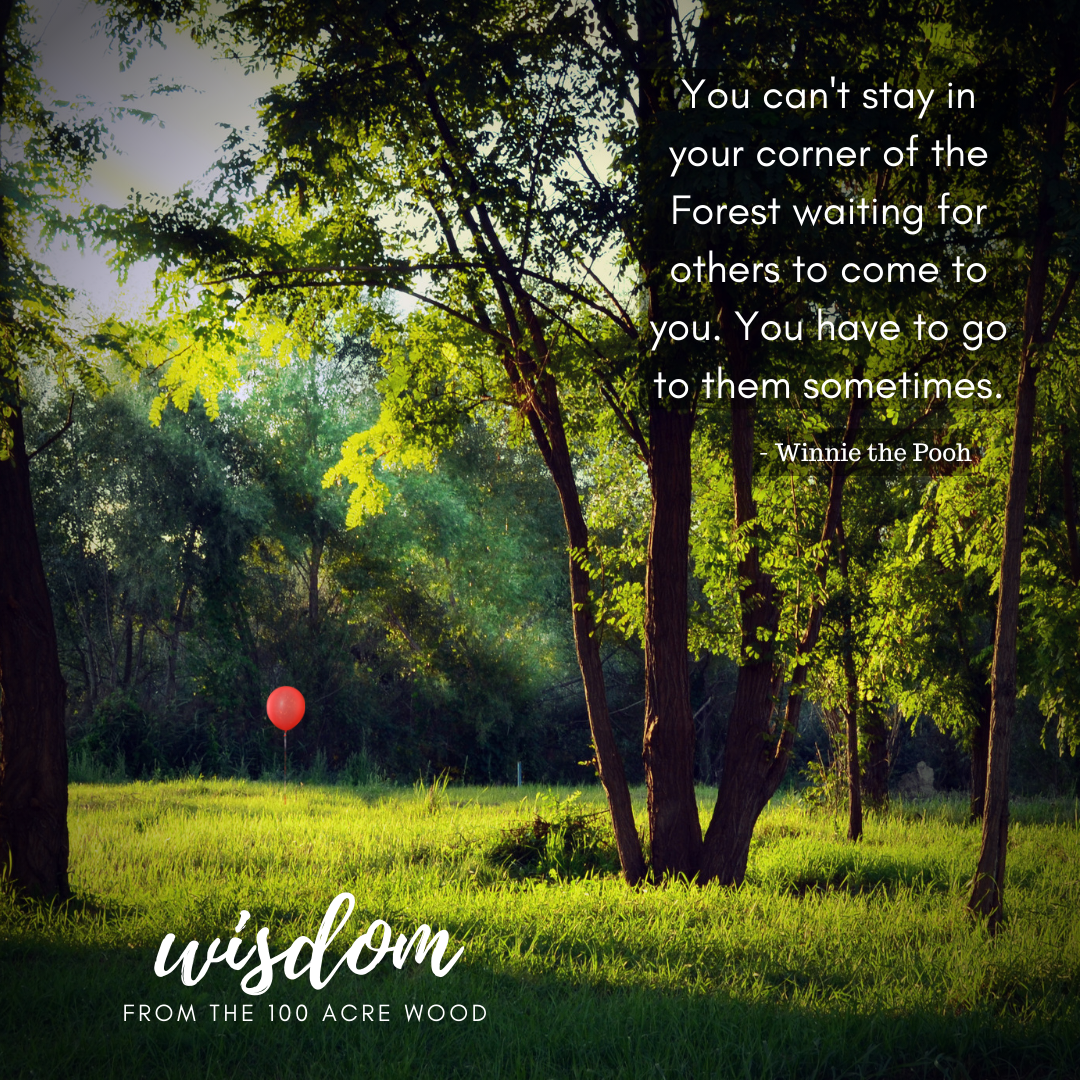
One of the reasons we chose our home over 26 years ago was that it was being built on a very special street, one that backed up to a park…
…a 100 acre wood, if you will.
As kids of all ages know, the One Hundred Acre Wood is home to Winnie the Pooh and all his friends, and the setting for the beloved stories about his adventures there.
The Hundred Acre Wood is based on an actual place called the Five Hundred Acre Wood, situated in the Ashdown Forest, in East Sussex, England, where A. A. Milne was living when he wrote the books.
Today, areas of this wood have been named after locations seen or mentioned in Milne’s Pooh books, as a tribute to the author, including a bridge identified as the Poohsticks Bridge, and an area designed as the Enchanted Place. There is also a memorial plaque dedicated to both Milne and Ernest H. Shepard, who illustrated the classic books.
During our children’s early years, the stories of Winnie the Pooh were read and reread by my wife and I, and then read by our children on their own. It was an easy leap of imagination to think that our “One Hundred Acre Wood” was the same as Winnie the Pooh’s, meaning adventures of all kinds were to be found there.
And so they did, discovering adventures in the woods or making them up with friends.
Now, our children have moved away. Their children have been introduced to Winnie the Pooh and his friends. Our children may or may not remember our “One Hundred Acre Wood,” but you can be sure that when their children come to visit Nina and GrandBob, they will introduced properly.
Then again, maybe we’re rereading the stories for ourselves.
A children’s story which is enjoyed only by children is a bad children’s story.
On Father’s Day 2021 I find myself in a unique place in time:
My father has been gone for 9 years, but I still see and feel his influence in my life daily.
All three of my sons celebrate Father’s Day as fathers in their own right: Between them, they have a 13-year old, a nine-year old, an 8-year old, a 10-year old, an 8 year old, a 2-year old, a 16-month old, and a 10-month old.
My oldest son left for college in 1999; the youngest graduated from college six years ago, but the flip side of being empty nesters:
My oldest son and wife welcomed the teenage years with our oldest grandson this year; along with his sister and brother, they are definitely always on the go. The mountains, streams, and lakes beckon, and they are a fishing family much of their free time.
My middle son and wife continue their adventures as an Air Force family, along with providing foster care for 2 siblings (the 16th and 17th children they’ve had in their care over the last five years). With their two daughters, their household is always in motion – but it’s filled with love, overflowing.
My daughter is moving to a new and exciting work adventure this week. It will require commuting, work from anywhere, and living “here and there” for a few months, but she and her husband have done that before. I am so proud of her recognition of excellence at her workplace of the last 6 1/2 years which led to this new opportunity.
My youngest son and his wife have weathered the work hardships of 2020 while welcoming their son, and remain committed to their work while keeping family first. They are both loving, generous, and absolutely infatuated parents of the youngest grandchild.
Of course, without my wife none of this would have been possible. Through 41+ years of marriage we’ve had laughter, tears, adventures, and accumulated thousands of life stories of our family’s experiences. The journey continues each day, and becomes sweeter.
Fatherhood is a journey, and each step along the way brings a new opportunity to grow and learn just how to be a father. I’m 40+ years in, and sometimes I feel like it has just begun.
At other times, I look back and wonder where the time has gone.
Your team has probably been working remotely for a year or more now, and even as the country moves into fast-forward about “opening up”, it’s likely that remote work will continue in some form for the foreseeable future.
What may have been quick emergency actions like having the basic tools and defining remote processes is now moving toward a new normal.
To make it through the current crisis and return to that new normal, you and your team will need to be resilient. The good news is that leaders can help create the conditions that make this possible.
As Bryan Miles, CEO and cofounder of BELAY, a leading U.S.-based, virtual solutions company says:
“Productivity comes from people completing their tasks in a timely, professional, adult manner, not from daily attendance in a sea of cubicles and offices.”
How will you lead your team through both this changing tide and new reality?
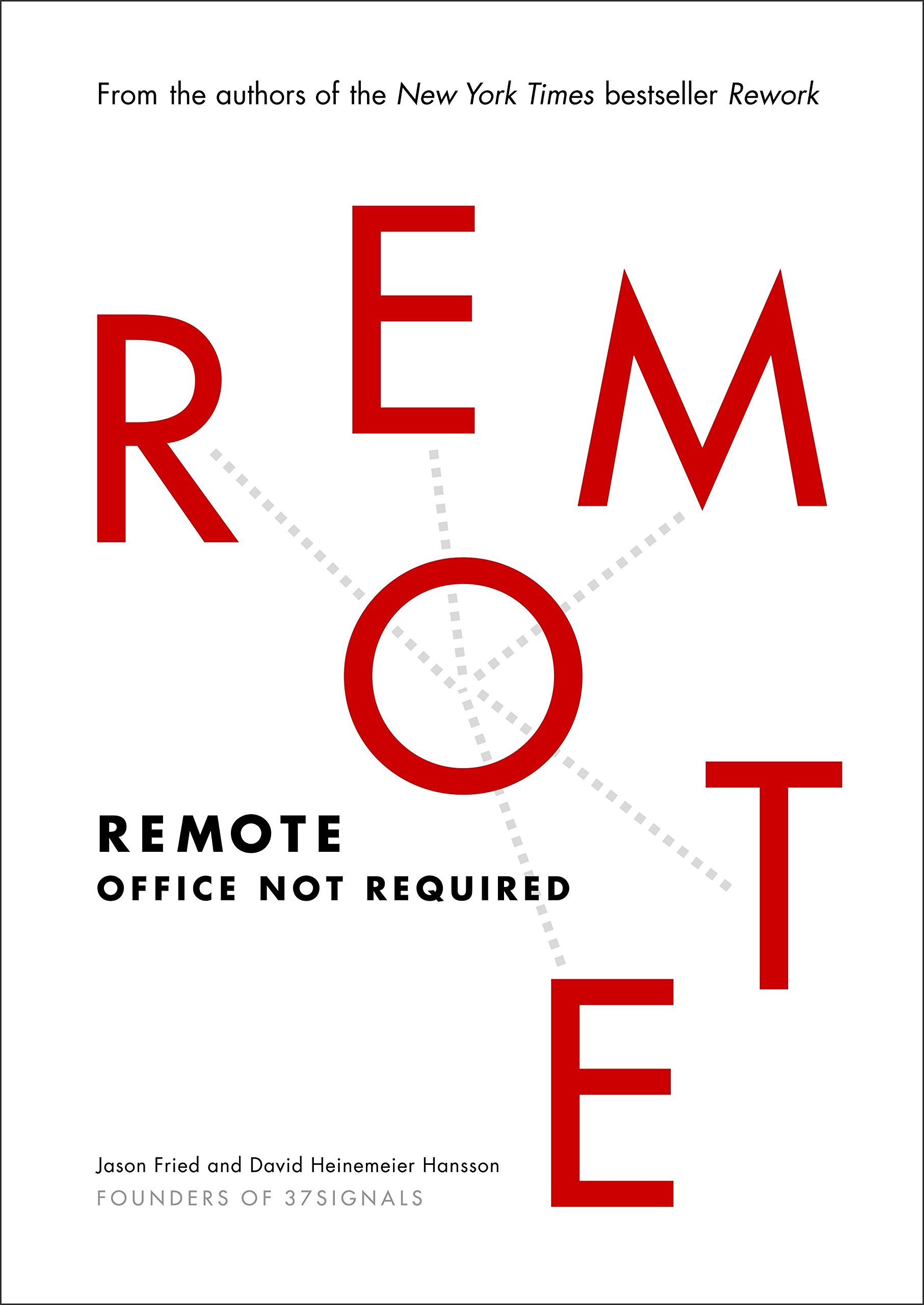
The “work from home” phenomenon is thoroughly explored in this illuminating book from bestselling 37signals founders Fried and Hansson, who point to the surging trend of employees working from home (and anywhere else) and explain the challenges and unexpected benefits. Most important, they show why – with a few controversial exceptions such as Yahoo – more businesses will want to promote this new model of getting things done.
The Industrial Revolution’s “under one roof” model of conducting work is steadily declining owing to technology that is rapidly creating virtual workspaces and allowing workers to provide their vital contribution without physically clustering together. Today, the new paradigm is “move work to the workers, rather than workers to the workplace.” According to Reuters, one in five global workers telecommute frequently and nearly 10 percent work from home every day. Moms in particular will welcome this trend. A full 60% wish they had a flexible work option. But companies see advantages too in the way remote work increases their talent pool, reduces turnover, lessens their real estate footprint, and improves the ability to conduct business across multiple time zones, to name just a few advantages. In Remote, authors Fried and Hansson will convince readers that letting all or part of work teams function remotely is a great idea–and they’re going to show precisely how a remote work setup can be accomplished.
A SIMPLE SOLUTION
A common belief among managers contemplating remote work teams is the fear that their employees would slack off when out of the office and away from their watchful eyes.
The reality is that remote employees are more likely to overwork than underwork.
The employee who has passion and dedication to their work often has difficulty balancing their work and demands of their private lives when their work is being done in the spaces normally dedicated to private lives.
Leaders of remote teams must be aware of the signs of overwork, and intentionally work to prevent it.
Be on the lookout for overwork, not underwork.
If you’ve read about remote-work failures in the press, you might thing that the major risk in setting our people free is that they’ll turn into lazy, unproductive slackers. In reality, it’s overwork, not underwork, that’s the real enemy in a successful remote working environment.
Working at home and living there means there’s less delineation between the two parts of your life. You’ll have all your files and all your equipment right at hand, so if you come up with an idea at 9pm, you can keep plowing through, even if you already put in more than adequate hours from 7am to 3pm.
The fact is, it’s easy to turn work into your predominate hobby.
If work is all-consuming, the worker is far more likely to burn out. This is true even if the person loves what he does. Perhaps especially if he loves what he does, since it won’t seem like a problem until it’s too late.
It’s everyone’s job to be on the lookout for coworkers who are overworking themselves, but ultimately the responsibility lies with the managers to set the tone.
In the same way that you don’t want a gang of slackers, you also don’t want a band of supermen. The best workers over the long term are people who put in sustainable hours. Not too much, not too little – just right.
As the leader of remote teams, how you practice working remotely will often set the pattern and practice of your team.
Using the following ideas from Work Together Anywhere, evaluate your own remote practices, and then determine how you will share the expectations with your team.
Motivation and Self-Discipline
Have a set routine
Dress like you’re going to work
Work in a space designated for work
Set a schedule and stick to it
Productivity
Experiment with time- and task-management methodologies and apps
Minimize multitasking; instead, focus on one thing at a time
Pace yourself to regulate your energy, maximizing your stamina and mental acuity
Make sure your workspace aids rather than hinders your productivity
Self-Care
Balance stints of productive, focused work with sufficient breaks that include movement.
Don’t forget to allow yourself the perks of remote working, like taking a break in your living room, or eating lunch on your patio
Combat the risk of loneliness by actively seeking social interaction both in person and online
Communication and Collaboration
Adopt a virtual-team mindset by trusting others to deliver the results they committed to while doing the same
Practice positive communication by being overtly friendly and assuming positive intent
Be reliable, consistent, and transparent: make sure your teammates know what you’re working on and how to reach you, within agreed upon guidelines
In honor of National Doughnut Day, a “sweet” repost from the past, updated for today:
National Doughnut Day was established in 1938 by the Chicago Salvation Army to honor women who served doughnuts to soldiers during World War I. The holiday is traditionally celebrated on the first Friday of June. But there’s also another National Donut Day in November!
Here’s an infographic from Fast Company magazine about today’s National Doughnut Day:
Upon closer look at the picture above – especially the statistic in the doughnut hole – it’s nice to know that I’m above average.
Seriously.
Like many things in my life, this fondness all came about because of a book: Homer Price and the Doughnut Machine. I have great memories of reading about Homer and Uncle Ulysses and the automatic doughnut machine. I remembered the image of doughnuts stacked to the ceiling with more coming out of the machine every minute. I’ve looked for a machine like that for a long time, but the Krispy Kreme shop is as close as I’ll come! Reading that book gave me a taste for doughnuts that continues to this day.
Thinking about Homer Price, I just happened to be near my favorite used bookstore in Charlotte – Book Buyers. On a whim, I pulled in, went to the children’s section, and there it was, just like I remembered it. With my $1 purchase, I’m going to start the day off, reading the story again – with a doughnut, of course!
There’s no “Hot Light” in my hometown, but that’s not going to stop me from celebrating somewhere…
Your team has probably been working remotely for most of the last year now, and even as discussions about “opening up” begin to become more prevalent, it’s likely that remote work will continue in some form for the foreseeable future.
That’s the question Google is tacking with a new set of policies recently rolled out by the company’s CEO. They center around just three words:
Flexibility and Choice.
What may have been quick emergency actions like having the basic tools and defining remote processes is now moving toward a new normal.
To make it through the current crisis and return to that new normal, you and your team will need to be resilient. The good news is that leaders can help create the conditions that make this possible.
As Bryan Miles, CEO and cofounder of BELAY, a leading U.S.-based, virtual solutions company says:
“Productivity comes from people completing their tasks in a timely, professional, adult manner, not from daily attendance in a sea of cubicles and offices.”
How will you lead your team through both this changing tide and likely new normal?
As more organizations adopt a remote workforce, the challenges of leading at a distance become more urgent than ever. The cofounders of the Remote Leadership Institute, Kevin Eikenberry and Wayne Turmel, show leaders how to guide their teams by recalling the foundational principles of leadership.
The authors’ “Three-O” Model refocuses leaders to think about outcomes, others, and ourselves—elements of leadership that remain unchanged, whether employees are down the hall or halfway around the world. By pairing it with the Remote Leadership Model, which emphasizes using technology as a tool and not a distraction, leaders are now able to navigate the terrain of managing teams wherever they are.
Filled with exercises that ensure projects stay on track, keep productivity and morale high, and build lasting relationships, this book is the go-to guide for leading, no matter where people work.
A SIMPLE SOLUTION
Leadership has never been a simple task. Factor in the many complications of leading your team remotely, and it would seem that leadership difficulties have magnified exponentially.
According to author Kevin Eikenberry, “It may have always been lonely at the top, but now we’re literally, physically, by ourselves much of the time.”
Being a Long-Distance Leader may feel radically different from how you’ve led in the past, but the core part is still the same: you are a leader, first.
Accept the fact that leading remotely requires you to lead differently.
What’s needed is a change in mindset from time-based working to results-based working, which calls for evaluating output rather than hours.
Kevin Eikenberry and Wayne Turmel
There are three areas of focus all leaders must recognize and use to reach their maximum success.
Outcomes—you lead people with the purpose of reaching a desired outcome.
Others—you lead with and through other people to reach those outcomes.
Ourselves—you can’t leave yourself out of this model. While leadership is about outcomes and other people, none of that happens without you whether you like it or not.
At the highest level, organizations exist to reach outcomes of one sort or another. As a Long-Distance Leader, this focus on outcomes is, if possible, even more important and can definitely be harder. There are three reasons for this difficulty:
Isolation. When people are working remotely, they are likely alone more of the time, often leading to silos of the smallest nature – people acting as if they are a team of one, and forgetting how their outcomes are part of the larger whole.
Lack of environmental cues. Working from a home office or remote location, people do not receive the very clear clues and cues that reinforce the organizational focus.
(Potentially) less repetition of messages. Unless leaders consistently, and in a variety of ways, communicate and reiterate the goals and outcomes for the team, people may get lost in their own bubble.
Long-Distance Leaders must also focus on others. Here are seven reasons why:
You can’t do it alone anyway. Leadership is about the outcomes, but those must be reached through others.
You win when they win. True and lasting victory comes from helping others win, too.
You build trust when you focus on others. Focusing on others and showing them you trust them first will build trust with others.
You build relationships when you focus on others. When you’re interested in, listen to and care about others, you build relationships.
You are more influential when you focus on others. Since we can’t control people, only influence them, our focus on others will help be a positive influence.
Team members are more engaged when you focus on them. People want to work with and for people who they know believe and care about them.
You succeed at everything on “the list” when you focus on others. Whatever your to-do “list” contains, by focusing on others first, achieving that list will be more successful.
The great paradox of leadership is that it isn’t about us at all—as we have just said, fundamentally leadership is about outcomes and other people.
Finally, who you are, what you believe, and how you behave plays a huge role in how effectively you will do the other things. Here are three reasons why Long-Distance Leaders must focus on themselves:
Assumptions. You have assumptions about what it means to work remotely. We could give you the statistics that show teleworkers are more productive, but if you don’t believe that, or assume people are multitasking on non-work items while they are at work, you will operate based on that belief rather than the facts.
Intention is important, but not enough. Throughout this book we talk about being intentional with nearly everything. Here, though, the challenge lies in the gap between what you want and mean to do, and what you actually do.
Making a decision. As a long-distance leader, you will face many choices and have lots of ideas. But none of them will work until you decide to act.
Use the following questions by author Kevin Eikenberry to honestly evaluate how you are practicing the three “O” principles listed above: Outcomes, Others, and Ourselves.
What do you feel are the most important outcomes expected of you as a leader?
How has working remotely impacted those outcomes for you and your people?
What do you feel are the most important ways to focus on others in your organization?
How has working remotely impacted that focus?
How do you see yourself in your role as a leader?
How has leading remotely impacted your beliefs and behaviors?
Like many parents, my coaching career began with my own kids. First it was my oldest son (now 40) and Pee Wee Basketball. After a couple of years, I traded my tennis shoes for a pair of soccer cleats, and began a 10-year run coaching various levels of soccer teams for all 4 of my kids at one time or another, often multiple teams in the same year. When my youngest son (now 28) moved beyond my coaching skills and desires, it was time to retire and become a spectator.
Of the many lessons I learned as a coach, one stands out:
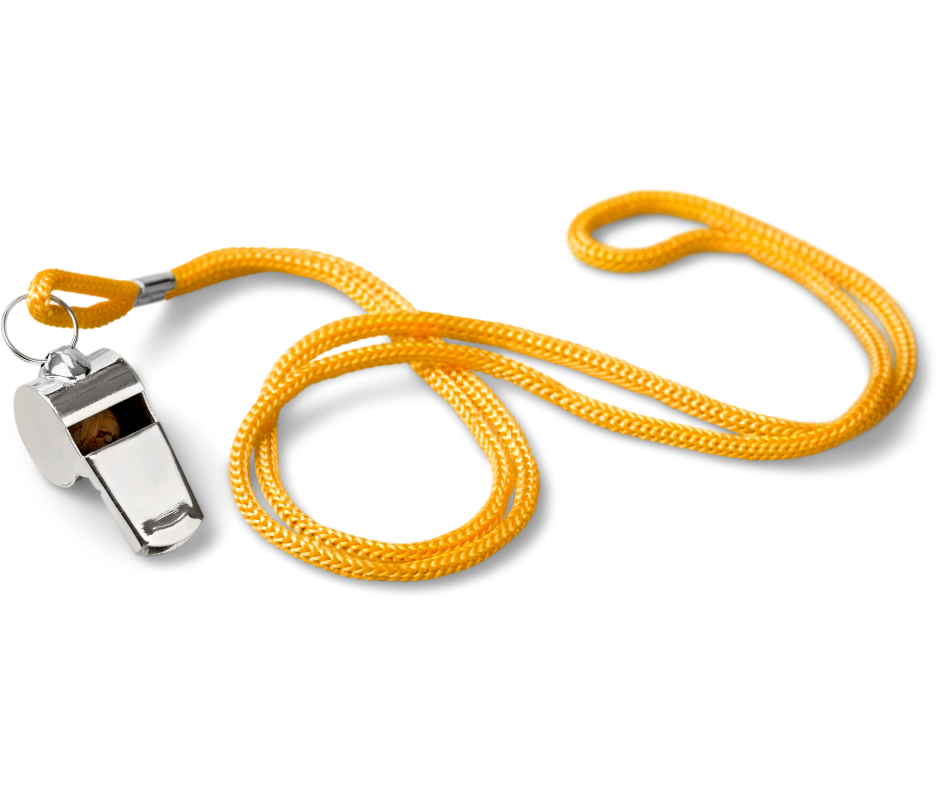
If you want to be a coach, you’d better have a whistle.
Imagine a group of 14 5-year olds, most who have never participated in any kind of organized sports. Add a beautiful spring day, a group of over-eager parents, and the child’s natural tendency to just want to kick the ball. Often jokingly referred to as “herd ball”, that’s what most kids’ introduction to soccer looked like.
Over a 10-year period, I coached 14 different teams, often 2 seasons a year. The teams went from beginning level soccer as 5 year olds to Challenge level for 12 year olds to Classic level for 18 year olds. Coaching both boys and girls of all ages and skill levels, with each one bringing their unique personality to the field, it was often challenging at best to coach.
Enter the whistle.
You may consider it a throwback to a different time, but I found it quite effective for all ages of players (and quite a few parents, too). It may have been unorganized chaos on the field to begin with, but after two sharp and loud blasts on the whistle, the players would stop what they were doing and give me their attention. What I did with their attention is another story, but it’s the sound of the whistle that is important here.
It stopped everyone from what they were doing and turned their attention to the coach.
You may not be a coach, but as a leader you have a room full of team members, often doing all kinds of different activities at once. When you need to get their attention, what do you do? How can you quickly and efficiently get their attention and make the best use of everyone’s time?
Leaders need a whistle, too.
The difference between a great practice session and a good one – and often the difference between a great organization and a good one – is established in systems that allow your productive work to be obsessively efficient.
Great leaders step in with whistles – clear, distinctive signals – to make people’s practices efficient as possible – even in professional settings and even with adults.
How is time wasted in your organization? What can you do differently?









 27gen.com