Don’t You Want to Be Where Everybody Knows Your Name?

It was a scene straight out of the sitcom Cheers, repeated weekly from September 1982 to May 1993.

Many of you will be able to add the soundtrack to the image above. In case you haven’t yet discovered this classic series of 80’s comedy, it’s “Norm” – the one-word greeting given to the supporting character of Norm Peterson, played brilliantly by George Wendt. Norm is a Cheers bar regular and occasionally-employed accountant. A recurrent joke on the show, especially in the earlier seasons, was that the character was such a popular and constant fixture at the bar that anytime he entered through the front door everyone present would yell out his name (“NORM!”) in greeting.

Except this time, and in a different place, it was me.
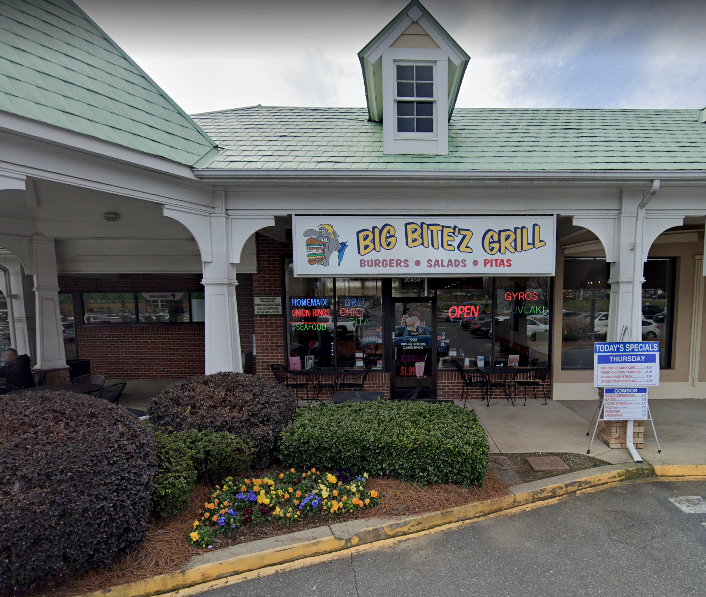
For years I have been a regular, weekly customer of Big Bite’z Grill in Cornelius, NC. I call it my “Lunch and Learn” and it usually occurs on Tuesdays (sometimes Wednesdays). The first stop is at my library to drop off and pick up books. Then, it’s a short drive to the restaurant. I try to arrive early, both to avoid the lunch rush and to claim my table – it’s the two-top all the way in the back, next to the kitchen door. While there, I not only have a great lunch, but make connections with the staff and a chance to skim a new book just picked up.

My food order on these visits is always the same: buffalo chicken pita, onion rings, and until recently, a Mountain Dew. Everyone, from the owner John, counter servers Carolyn or Demetri, to the cooks in the kitchen know my order. Most days, the cooks have already started the order when they see me walking across the parking lot. When I walk in the front door, it’s already being rung up. If John is busy, he will bring me the food when it’s ready and I’ll pay before leaving.

I’m one of the hundreds of “regulars” that frequent Big Bite’Z throughout the week. On my regular day, I can pretty much count that “Coach” will be coming in as I am leaving. One or two of the regular vendors are finishing up John’s orders for the week. There’s the construction crews that rotate in and out to the patio seating. Over there are Cornelius policemen, regular customers like me. Nowadays, there is a constant stream of nearby workers who come in to pick up a carryout, along with various food delivery orders.

If it’s not too busy, I will always have an ongoing conversation with John about the current state of the world. Carolyn keeps me up to date on her family, as well as keeping my drink filled. Even when it is busy, one or both of them makes it a point to stop by my table, just to chat even if just for a short while.

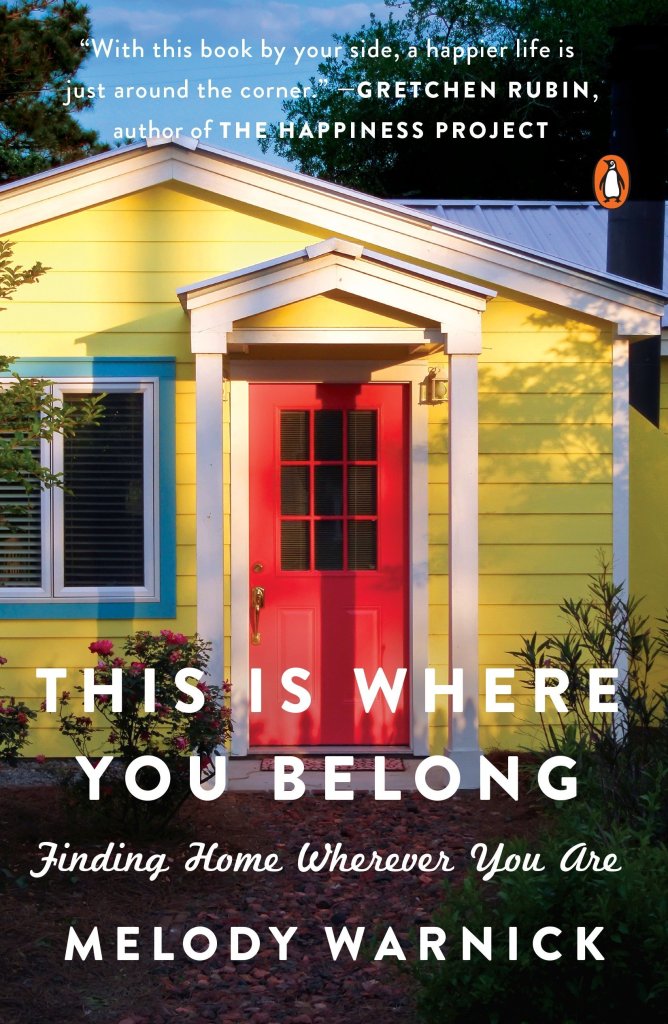
I’ve been writing about this phenomena for some time. It’s a little different application, but it’s also true at Big Bite’z. In the words of author Melody Warnick:

It’s a symbiotic relationship. Restaurant staff make customers feel like they’ve wandered into the proverbial Cheersian establishment where everybody (or at least somebody) knows their name. Customers, in turn, treat their favorite restaurants as hangout spots that are neither home nor work but something in between – what sociologist Ray Oldenburg, terms a “third place.” “At the risk of sounding mystical,” says Oldenburg, “I will contend that nothing contributes as much to one’s sense of belong to a community as much as ‘membership’ in a third place.”

Melody Warnick, This is Where You Belong

During the early weeks of our local distancing restrictions in the spring of 2020, I made it a Saturday lunch practice to take orders from four-five of our neighbors, call in the order, and drive over to pick the orders up and drop them off on our neighbor’s front porch. I also continued my weekly Lunch and Learn visits, but with take out. Later in the summer, when the restrictions were eased to allow 50% seating, I returned to my weekly visit to the restaurant.

All that changed the last week of October 2020 upon learning that I had been unknowingly exposed to COVID-19 the weekend before. I immediately quarantined in our house. The next day I tested negative, and after experiencing symptoms, I tested negative again twice more over the few days later (eventually I tested positive). For the next five weeks, my world was our house. Without going into details, I exhibited literally all the CDC list of symptoms during the first two weeks, and following that, had two virtual visits with my PCP, which culminated in a day spent in the ER. While I recovered from the initial symptoms, earlier this year after another hospital stay, I became an official “long-hauler,” and am participating in our local hospital’s Long Term COVID Clinic studies. I have returned to an outside, though restricted, life. Fatigue and other symptoms are a regular part of my life.

Back to mid-December of 2020: It was with much anticipation, and maybe a little trepidation, that I pulled into the parking lot at Big Bite’z for my first visit in over five weeks.

When I walked in the door, I saw two big smiles, heard “Bob,” and immediately my order was called out to the kitchen, the cooks acknowledging me with big smiles.

Everybody wanted to know why I had been absent, and what happened, and was everything ok. It was a genuine, heartfelt connection, not just as a customer, but more – a friend.

After the initial conversations, it was as if the five weeks had not occurred. John stopped by my table two or three times with his latest opinion on what was going on. Carolyn was so kind as usual, and the kitchen conversations in Greek and Spanish just behind me were as reassuring as they were humorous.

I was back, and to my friends at Big Bite’z, I was missed, and welcomed back as if I had never been gone.

This has been a long and personal story, with only one question for you to consider:

How are you going to welcome back regulars when they return?

Love Where You Live by Volunteering

Today’s post is the sixth in a series of ten posts over the next few weeks, taking a “deeper dive” into the concepts at the heart of Melody Warnick’s book, This is Where You Belong.

Here is Warnick’s list of ten placement behaviors that she developed on the journey to “Love where you live.”

  1. Walk more
  2. Buy local
  3. Get to know your neighbors
  4. Do fun stuff
  5. Explore nature
  6. Volunteer
  7. Eat local
  8. Become more political
  9. Create something new
  10. Stay loyal through hard times

There are a million good reasons to volunteer, one of them being that “you don’t have to move out of your neighborhood to live in a better one,” as urban activist Majora Carter has said. Falling in love with where you live is simply a side benefit.

Melody Warnick

According to author Melody Warnick, volunteering in your hometown gives you a double-whammy benefit: Helping out makes you feel better while simultaneously making your city a better place to live. What’s good for your community is good for you.

One of the by-products of volunteering in and for your city can be a sense of “place identity.” The idea is that, in the same way you might self-identify as a parent or a lawyer or a dog lover, volunteering helps you see yourself as a valuable part of your town. You join the collective “we” of your place, a sentiment that’s summed up tidily in this statement from the place attachment scale: “Where I live tells you a lot about who I am as a person.”

Here are a few of the many ideas in her book:

  • Consider the things about your area that break your heart, like the homeless guy on the ben or the packs of teenagers you see shuffling around at loose ends.
  • Find a place to volunteer. Big cities have lots of opportunities. Small towns often have their own volunteer centers. Check out the local branch of the United Way.
  • Perform random acts of kindness, either on a special day like your birthday or a day you’re bored.
  • Donate to a cause, and make it a family project by saving change in a jar. Let the family decide where the donation will go.

I can’t emphasize this enough: If you like the idea of loving where you live, of being a better neighbor, or anything remotely connected, you MUST check out the work of Melody Warnick. Follow her on social media. Buy the book. Sign up for the newsletter on her website. Peruse the website for other articles she has written. It’s all PURE GOLD.

Love Where You Live by Exploring Nature

Today’s post is the fifth in a series of ten posts over the next few months, taking a “deeper dive” into the concepts at the heart of Melody Warnick’s book, This is Where You Belong. The idea of a deeper dive is the second week in this website’s monthly rotation. The first and third weeks are BookNotes: short excerpts and teasers from great books about hospitality and your neighborhood. The fourth week will develop a tool you can use to become a better neighbor.

Here is Warnick’s list of ten placement behaviors that she developed on the journey to “Love where you live.”

  1. Walk more
  2. Buy local
  3. Get to know your neighbors
  4. Do fun stuff
  5. Explore nature
  6. Volunteer
  7. Eat local
  8. Become more political
  9. Create something new
  10. Stay loyal through hard times

Studies have shown that spending time in green space improves immune system function, lowers blood glucose levels in diabetics, boosts cognitive function and concentration, lengthens attention span, and strengthens impulse control.

Melody Warnick

According to author Melody Warnick, humans are born with an inborn craving for wildness and green, what Harvard biologist E.O. Wilson call “biophilia.” We are, he says, built for nature.

Here’s the rub: Towns and cities usually aren’t.

In addition to the benefits of nature listed above, Warnick also found that green space builds social cohesion, the companion to place attachment that develops in tight-knit neighborhoods. One study showed that when homes are set among trees and plants, neighbors form stronger social ties and a better sense of community. People who live near parks trust each other more and are quicker to aid their neighbors than people who live farther away.

Outcomes like these made Warnick come up with her own hypothesis: that people who lived where they could spend more time in the natural world would feel more enthusiastic about their communities.

Here are a few of the many ideas found in her book:

  • Make a list of your town’s natural assets. If you live in a city, are there parks nearby? Secret gardens? What makes you feel close to nature where you live?
  • Learn the names of the flora and fauna in your area. Check out a book on the subject, or connect with the Master Naturalists or Master Gardeners in your town.
  • Find ways to do the outdoorsy things you love where you live. Even in cities, you can walk through parks, bike greenbelts, or dangle your feet in ponds.
  • Invite friends for a hike, since doing something in nature with people you love creates a happy place anchor.
  • So you’re not outdoorsy.That’s fine. Figure out one beautiful place in your town – a creek, a park a river – and spend some time there. Go for a drive and enjoy the view.

I can’t emphasize this enough: If you like the idea of loving where you live, of being a better neighbor, or anything remotely connected, you MUST check out the work of Melody Warnick. Follow her on social media. Buy the book. Sign up for the newsletter on her website. Peruse the website for other articles she has written. It’s all PURE GOLD.

I’m delighted to report that Melody’s latest book, If You Could Live Anywhere, was just released! I’ve just started reading it, but it is written in the same engaging style, and addresses the question on many people’s minds today:

The future of work is clear: It can happen wherever you are. So where do you really want to be?

How to Love Where You Live: Do Fun Things

Today’s post is the fourth in a series over the next few weeks, taking a “deeper dive” into the concepts at the heart of Melody Warnick’s book, This is Where You Belong.

Here is Warnick’s list of ten placement behaviors that she developed on the journey to “Love where you live.”

  1. Walk more
  2. Buy local
  3. Get to know your neighbors
  4. Do fun stuff
  5. Explore nature
  6. Volunteer
  7. Eat local
  8. Become more political
  9. Create something new
  10. Stay loyal through hard times

Learning my town’s history hadn’t made it to my “Love Where You Live” To-Do list.

Maybe it should have.

Melody Warnick

According to author Melody Warnick, it can take time and effort for your town’s things to become your things. Realistically, determining beforehand how well a city’s social offerings match your interests will increase your chance of loving it there. After all, these are social offerings, and social connectedness is at the heart of place attachment.

In some ways, developing place satisfaction is really a matter of creating a repository of happy memories where you live. Here’s where we toured the historic home. Here’s where we went on the bike ride. Here’s where we spent the day at the museum/football game/park/nature center.

Each shining moment gets pinned to your mental map of your city, and soon it’s entirely overlaid with pleasures big and small.

Here are a few of the many ideas found in her book:

  • Develop your out-of-towner list using the Power of 10+ framework developed by Project by Public Spaces. What ten local sites, historic landmarks, tourist attractions, parks, museums, statues, or events can you show off to visitors? Take people to the places that have meaning to you.
  • Find out what’s going on in your hometown. Most large cities and many smaller ones have websites, magazines, or newspapers with event calendars.
  • Do the stuff your town is good at. Learn to like them. You’ll feel happier faster.
  • Annual festivals are often a focal point of local pride, and they tell you a lot about what your place values and what residents consider themselves good at. Plus, research shows that such community rituals can increase place attachments.
  • Show up. Make a goal to show up to one community social offering a month, even if it’s not what you’d normally do for fun.
  • Create fun for yourself. A shortcut to place attachment is to do the things that make you happy where you live. Pinpoint the ways you like to spend your time, then search out the right kinds of activities in your town – or make them happen yourself.

I can’t emphasize this enough: If you like the idea of loving where you live, of being a better neighbor, or anything remotely connected, you MUST check out the work of Melody Warnick. Follow her on social media. Buy the book. Sign up for the newsletter on her website. Peruse the website for other articles she has written. It’s all PURE GOLD.

Be a Good Neighbor and Get to Know Your Neighbors

Today’s post is the third in a series of posts over the next few weeks, taking a “deeper dive” into the concepts at the heart of Melody Warnick’s book, This is Where You Belong.

Here is Warnick’s list of ten placement behaviors that she developed on the journey to “Love where you live.”

  1. Walk more
  2. Buy local
  3. Get to know your neighbors
  4. Do fun stuff
  5. Explore nature
  6. Volunteer
  7. Eat local
  8. Become more political
  9. Create something new
  10. Stay loyal through hard times

Place attachment research shows that many of the good feelings we have about the cities where we live stem from the sense that we have relationships there. Here was my chance to craft a “Love Where You Live” experiment that could, potentially, make me happier in my town immediately.

I would make an effort to get to know the locals.

Melody Warnick

Warnick believes that falling in love with your town needs to involve knowing ( and at least sort of liking) your neighbors. And it’s because of a little thing called “neighborhood cohesion,” a term used by social scientists to describe the level of closeness and connection neighbors feel toward each other. In studies, it’s measured by asking people whether they can agree with statements like these:

  • This is a close-knit neighborhood.
  • People around here are willing to help their neighbors.
  • People in this neighborhood generally get along with each other.
  • People in this neighborhood share the same values.
  • My neighbors can be trusted.

When people answer yes, it portends positive outcomes for both physical and emotional health.

Warnick determined that if she was going to use a Love Where You Live experiment to challenge her default settings on behaviors that she knew were making it difficult to become attached to her town, she would have to be a better neighbor.

Her first simple goal: find out who her neighbors were.

Here are a few of the many ideas found in her book:

  • Celebrate Good Neighbor Day. It’s September 28th, but you can declare any holiday or even an ordinary day a special day when you feel like meeting your neighbors.
  • Make and update a spreadsheet of the people on your block or apartment hall/building.
  • Welcome anyone who moves into a house you can see from your front porch or in your apartment building. You don’t have to prepare an elaborate welcome gift – just start by saying “Hi” and see what happens from there.
  • Eat a meal with neighbors. Start out simple, and in today’s climate, “socially distanced,” by inviting neighbors to bring whatever they were going to eat and have a picnic outside.
  • Offer to house-sit or pet-sit for neighbors going out of town. This assumes a level of trust, but you would be surprised how quickly your offer may get accepted.
  • And the biggie: Throw a block party! Maybe the most daunting, but most awesome, of all. You will become a neighborhood legend.

I was beginning to understand the value of meeting our neighbors face-to-face, even when – especially when – they’re not like us.

Melody Warnick

The “place” in place attachment isn’t an abstract concept. Place is physical proximity. The process of putting down roots naturally begins close to home, with the people who live right around us.


I can’t emphasize this enough: If you like the idea of loving where you live, of being a better neighbor, or anything remotely connected, you MUST check out the work of Melody Warnick. Follow her on social media. Buy the book. Sign up for the newsletter on her website. Peruse the website for other articles she has written. It’s all PURE GOLD.

How Buying Local Can Save Main Street America

Today’s post is the second in a series of ten posts over the next few weeks, taking a “deeper dive” into the concepts exploring the heart of Melody Warnick’s book, This is Where You Belong.

Here is Warnick’s list of ten placement behaviors that she developed on the journey to “Love where you live.”

  1. Walk more
  2. Buy local
  3. Get to know your neighbors
  4. Do fun stuff
  5. Explore nature
  6. Volunteer
  7. Eat local
  8. Become more political
  9. Create something new
  10. Stay loyal through hard times

As author Melody Warnick continued her journey of learning to love where she lived, she began to deeply believe that her habits of buying from Target or ordering online from Amazon were contributing to the downfall of Main Street America. Her shopping habits might be killing both her hometown and her prospects of connecting with it, and that had her worried.

Neighborly economics means you don’t go for what’s cheapest and easiest. You think about which relationships and stores you want to preserve in your town, and you shop there. It may be a financial sacrifice, but:

You need to sacrifice for where you live. Sacrifice is going to make your town stronger.

Jay Leeson

Here’s what she found as she began her research:

One hundred years ago, you bought most of what you needed from a store in your community that was owned and operated by someone who lived there. Prescriptions came from the corner drugstore, whose pharmacist knew your kids and your ailments by name. Books were purchased from a local bookseller, who recommended a few new novels you’d like.

With Main Street acting as both substitute town hall and open-air living room, you could chat with your neighbors, debate the problems of day, and still cross milk and socks off your shopping list.

But as the population grew both in number and across the country, spreading from cities to towns to suburbs, chain stores – one store with multiple locations – began to take over. A few decades later, as first malls and big box stores, then retail strips centers expanded, local stores suffered, and then began to vanish.

In spite of research showing that monies spent locally tend to stay in the community in greater amounts, the trend continues for the most part today.

Warnick believes that there are more than just economic costs, though: Shopping locally is a concrete way to help your town thrive economically and to improve your own quality of life. You start buying stuff in your town, particularly from small independent stores owned by people who live there, and all of a sudden more local people have more jobs. So the city collects more taxes. Then the schools have more money for improvements. The streets get repaved, the parks department builds new sports fields, and so on. With millions of dollars, you’d think we’d all jump on board.

Unfortunately, not.

National chains and big-box stores are cheap, quick, and comforting – the retail equivalent of a fast-food cheeseburger – and their spread has turned much of America into a string of bland Anyplaces.

Warnick believes that the first step in any long-term recovery is recognizing you have a problem. She now had another “Love Where You Live” experiment: weaning herself off Target and Amazon and start spreading more of her cash around her hometown.

She called it her “big-box detox.”

You’ll want to get her book to read more about her journey, including:

  • Cash mobs
  • 3/50 Project
  • Support local shops who support local causes
  • Don’t showroom

Warnick believes this is how it works:

You buy stuff. Pick your local thing – birthday presents, bicycles, running shoes, books, lamps, camera gear, art prints, oil changes, carpet cleaning, piano tuning, or whatever. Pick something to buy, pick a local person or store to buy it from, and then stick with it.

Melody Warnick

You can be a cash mob of one. When you go into a local store to spend $20, you know that buying stuff does more than just for you.


I can’t emphasize this enough: If you like the idea of loving where you live, of being a better neighbor, or anything remotely connected, you MUST check out the work of Melody Warnick. Follow her on social media. Buy the book. Sign up for the newsletter on her website. Peruse the website for other articles she has written. It’s all PURE GOLD.

How Taking a Walk Will Make You a Better Neighbor

Because several posts over the last few weeks have been centered on the theme of “walking” it’s only appropriate to use the topic to introduce an amazing book about learning to love where you live.

Today’s post introduces a series of ten posts, taking a “deeper dive” into the concepts exploring the heart of Melody Warnick’s book, This is Where You Belong.

Here is Warnick’s list of ten placement behaviors that she developed on the journey to “Love where you live.”

  1. Walk more
  2. Buy local
  3. Get to know your neighbors
  4. Do fun stuff
  5. Explore nature
  6. Volunteer
  7. Eat local
  8. Become more political
  9. Create something new
  10. Stay loyal through hard times

According to author Melody Warnick, scientists call the way we learn to navigate a place “mental mapping.” The concept, based on behavioral psychology studies done several times since the 40s, showed that rats and chimpanzees who had first aimlessly explored a maze developed a cognitive map that helped them quickly scamper through it later.

One’s destination is never a place but rather a new way of looking at things.

Henry Miller

Warnick, through conversations with Jeff Speck, a city planner and author of Walkable City, believes that walking is more than transportation; it’s experience

As you walk anywhere, your five senses are taking in hundreds of stimuli. All these things combine to create another “sense”: a sense of where we are.

Through her research, and in reference to #1 on the list above, Warnick discovered that people who walk a lot feel better about their lives, and one of the principles she was coming to understand about loving where you live is that feeling good in general often translates to feeling good about where you live.

When you’re happy, for whatever reason, you also happen to be happy in the place you live.

Walking helps people discover the character of where they live and why they like it. Otherwise it’s a faceless kind of experience. You don’t come into contact with anybody. Even having the comfort of being social and being around other people is so healthy. It’ fun to walk around and say hi to people.

Matt Tomasulo

Warnick found that there was something about being on foot or on a bike that makes us explorers of where we live. Walking and biking in her town helped her develop an intimacy with the town that made her find the hidden gems and appreciate where she was.

She also believes that anyone, in any town, could have the same experience.

What about you?

Can you make a change in your routines to walk more in your neighborhood, and maybe even in your town?

Go ahead and try it.

You will be surprised by what you learn.


I can’t emphasize this enough: If you like the idea of loving where you live, of being a better neighbor, or anything remotely connected, you MUST check out the work of Melody Warnick. Follow her on social media. Buy the book. Sign up for the newsletter on her website. Peruse the website for other articles she has written. It’s all PURE GOLD!

How Have You Been Celebrating National Library Week?

Happy National Library Week! This week, April 3rd through 9th, has been National Library Week.

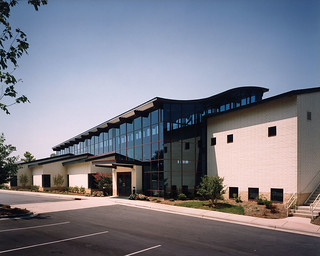
Here’s my library:

That’s the North County Regional branch of the Charlotte Mecklenburg library.

It’s also my weekly destination for dropping off and picking up books I’ve placed on hold throughout the week.

Visiting the local library is a long-standing tradition with me. As a small boy, I remember with fondness the bi-monthly visits to the branch library in the next county. We were limited to checking out 20 books at a time, and it was a rare week when I didn’t meet that quota.

As soon as the car pulled in the driveway, I would race into our house and begin reading through my treasure trove of books.

In my early years, I would often have them all read in a matter of days. As I got older and the books got longer, it might take the whole two-week period to read them.

Then there’s school libraries, from middle school to high school to college to graduate school. More treasures of a deeper and longer-lasting sort.

When our children came along, I introduced them to the joy of reading and the local library. In each city we’ve lived in, one of the very first visits we made after moving was to stop by the library and pick up a library card. Since our four children were born four years apart, that’s a long time of library visits!

I’m proud to say that as they have grown up, and with children of their own, reading and visiting the library is still important in their lives. And of course, any grandchild visiting Nina and GrandBob is going to have a selection of the latest age-appropriate books from our library waiting!

Whether you visit in person or virtually, the library can help you access the resources and services you need. Libraries have been adapting to our changing world by expanding their resources and services. Through access to technology, multimedia content, and educational programs, libraries offer opportunities for everyone to explore new worlds and become their best selves.

You may or may not be in the habit of reading, and of utilizing your local library for research, pleasure reading, or other uses.

If you are, I know you are grateful for everything you find there.

If you are not, you are missing out on a vast, free resource. Don’t let another day go by until you “check it out.”

How Could Anyone Ever Know That Something Is Good Before It Exists?

From author John McPhee’s encouraging words to his daughter when she was frustrated at a senior high writing assignment:
“Blurt it out, heave out, babble something out – anything – as a first draft.
With that, you have achieved a sort of nucleus.
Then, as you work it over and alter it, you begin to shape sentences that score higher with the eye and ear. The chances are that about now you’ll be seeing something that you are sort of eager for others to see.
And all that takes time.”


“You finish that first awful blurting, and then you put the thing aside. You get in the car and drive home. On the way, your mind is still knitting at the words. You think of a better way to say something, a good phrase to correct a certain problem.
Without the drafted version – if it did not exist – you obviously would not be thinking of things that would improve it.
Your mind, in one way or another, is working on it twenty-four hours a day – but only if some sort of draft or earlier version already exists.
Until it exists, writing has not really begun.”

John McPhee, Draft No. 4 On the Writing Process

How to Help Math-Lovers (and Math-Haters) Translate the Numbers That Animate Our World

We live in a world in which our success often depends on our ability to make numbers count.

There are some authors from which I will preorder their book without question. They demonstrate the rare ability to communicate concepts with ease, giving the reader just enough information to satisfy without being overly verbose. They present an intriguing concept, provide in-depth information, and make you wonder, “That’s simply brilliant.” And better yet, they provide solid application – ways to help you translate information into action.

Chip Heath is one of those.

Along with co-author Karla Starr, Heath’s new book Making Numbers Count arrived on my porch yesterday, and I eagerly consumed it overnight.

We lose information when we don’t translate numbers into instinctive human experiences.

Chip Heath & Karla Starr, Making Numbers Count

The subtitle, “The Art of Science of Communicating Numbers” is well-stated. Using four broad categories, the authors proceed to capture readers with stories, examples, and applications of how important numbers are in our everyday lives, and more importantly, how we can use them to communicate clearly to our audience – whether our family or organization-wide.

The categories are:

  • Translate everything, favor user-friendly numbers
  • To help people grasp your numbers, ground them in the familiar, concrete, and human scale
  • Use emotional numbers – surprising and meaningful – to move people to think and act differently
  • Build a scale model

In typical fashion, Heath provides footnotes that satisfy the curious and enough endnotes (31 pages!) to make even the most avid researcher approve.


How much bigger is a billion than a million?

Well, a million seconds is twelve days. A billion seconds is…thirty-two years.

Understanding numbers is essential—but humans aren’t built to understand them. Until very recently, most languages had no words for numbers greater than five—anything from six to infinity was known as “lots.” While the numbers in our world have gotten increasingly complex, our brains are stuck in the past. How can we translate millions and billions and milliseconds and nanometers into things we can comprehend and use?

Author Chip Heath has excelled at teaching others about making ideas stick and here, in Making Numbers Count, he outlines specific principles that reveal how to translate a number into our brain’s language. This book is filled with examples of extreme number makeovers, vivid before-and-after examples that take a dry number and present it in a way that people click in and say “Wow, now I get it!”

You will learn principles such as:

SIMPLE PERSPECTIVE CUES: researchers at Microsoft found that adding one simple comparison sentence doubled how accurately users estimated statistics like population and area of countries.
VIVIDNESS: get perspective on the size of a nucleus by imagining a bee in a cathedral, or a pea in a racetrack, which are easier to envision than “1/100,000th of the size of an atom.”
CONVERT TO A PROCESS: capitalize on our intuitive sense of time (5 gigabytes of music storage turns into “2 months of commutes, without repeating a song”).
EMOTIONAL MEASURING STICKS: frame the number in a way that people already care about (“that medical protocol would save twice as many women as curing breast cancer”).

Whether you’re interested in global problems like climate change, running a tech firm or a farm, or just explaining how many Cokes you’d have to drink if you burned calories like a hummingbird, this book will help math-lovers and math-haters alike translate the numbers that animate our world—allowing us to bring more data, more naturally, into decisions in our schools, our workplaces, and our society.

A clear, practical, first-of-its-kind guide to communicating and understanding numbers and data—from bestselling business author Chip Heath.


We believe in numbers not as background, not as decorations, but as central points, with profound stories to tell. We believe in numbers, deeply. We believe in making them count.

Chip Heath & Karla Starr


Part of a regular series on 27gen, entitled Wednesday Weekly Reader

During my elementary school years one of the things I looked forward to the most was the delivery of “My Weekly Reader,” a weekly educational magazine designed for children and containing news-based, current events.

It became a regular part of my love for reading, and helped develop my curiosity about the world around us.