The Heart and Science of Nursing

A Personal Story

You know that nurse who helped you or your loved one during a hospital stay? The one who really saw you, heard you, and knew exactly what you needed? That’s not a coincidence – it’s what great nursing is all about. Whether we realize it or not, nurses are often there for many of life’s biggest moments, from our first breath to our last, the birth and growing pains of our children, and then the reality of aging adults – first our parents, then ourselves.

In a continuation of a recent post, I want to give you “the rest of the story.”

After 10 days in the hospital, spread over 2 stays, I was looking forward to going home – and I did, for 3 uneventful days. Then the pain returned with a vengeance, and so did I – back to the hospital. Imaging soon revealed that while the ulcer was continuing to heal, the aftereffects of the perforation had inflamed the gallbladder, and a stone lodged in a duct was causing the intense pain. Surgery was scheduled for the next day, and I was discharged two days later.

The pain was gone, and it was time to continue healing at home. I couldn’t do anything except lay in bed, and for those of you who know me, you know what’s coming next:

Reading.

In this case, I wanted to know more about that wonderful team of women (mostly) and men we call nurses who had provided care for me. A quick search of my local library and a pickup by Anita delivered this marvelous book that reflects so much of what I experienced over a two-week plus stay in the hospital, all under the care of the PSC-3 Nursing team at Atrium Cabarrus.


Nurses have always been vital to human existence. A nurse was likely there when you were born and a nurse might well be there when you die. Familiar in hospitals and doctors’ offices, these dedicated health professionals can also be found in schools, prisons, and people’s homes; at summer camps; on cruise ships, and at workplaces. Yet despite being celebrated during the Covid-19 epidemic, nurses are often undermined and undervalued in ways that reflect misogyny and racism, and that extend to their working conditions – and affect the care available to everyone. But the potential power of nursing to create a healthier, more just world endures.

The story of nursing is complicated. It is woven into war, plague, religion, the economy, and our individual lives in myriad ways. In Taking Care, journalist Sarah DiGregorio chronicles the lives of nurses past and tells the stories of those today – caregivers at the vital intersection of health care and community who are actively changing the world, often invisibly. An absorbing and empathetic work that combines storytelling with nuanced reporting, Taking Care examines how we have always tried to care for each other – the incredible ways we have succeeded and the ways in which we have failed. Fascinating, empowering and significant, it is a call for change and a love letter to the nurses of yesterday, today, and tomorrow.


Think about what comes to mind when you hear the word “nurse.” Maybe you remember clapping during the early days of COVID, or you picture Florence Nightingale with her lamp. Perhaps you think of TV shows like M*A*S*H or countless others.. But the reality of nursing goes much deeper than any of these images suggest.

Here’s something that might surprise you: nursing is actually one of the biggest professions in the world, with over 27 million nurses and midwives globally. In the U.S. alone, there are three times as many nurses as doctors! Without nurses, our healthcare system would basically grind to a halt.

And nurses? They’re everywhere! They’re not just in hospitals – they’re on cruise ships managing outbreaks, in libraries doing free blood pressure checks, at NASA monitoring astronauts (how cool is that?), and even in state legislatures writing healthcare policies. They’re the ultimate healthcare multitaskers.

But what exactly do nurses do? Well, it’s way more than just following doctors’ orders. While doctors typically focus deeply on specific medical conditions, nurses take care of the whole picture. Think of it this way: if you’re leaving the hospital, your doctor might prescribe your medications, but your nurse is the one making sure you understand how to take them, checking if you can handle the stairs at home, and figuring out if you have someone to help with cooking.

Here’s my real-world example: imagine you need gallbladder removal surgery. Sure, the hepato-pancreato-biliary surgeon does the actual operation, but nurses are there every step of the way. They’re prepping you, putting in your IV, checking your vitals, and acting like healthcare air traffic controllers – making sure everyone from social workers to anesthesiologists to radiology staff is in the right place at the right time. After surgery, they’re watching your pain levels, managing your medications, preventing infections, and teaching your family how to care for you at home.

One nurse quoted in Taking Care put it perfectly: “Doctors figure out where the patient is and where they need to be. Nurses are the ones who actually get you there.” It’s like doctors draw the map, but nurses help you navigate the journey.

And get this – nursing isn’t just about medical procedures and medications. It’s about building relationships and understanding people in their full context – their family situation, their community, their environment. As nurse researcher Monica McLemore explained in the book, “Everyone thinks it’s just skills and tasks, like putting in IVs or reading monitors. But that’s just one part. Our real job is helping people through transitions, whether that’s recovering from illness or adapting to a new health reality.”

Think about it: nurses are often the first ones to notice when something’s off. Maybe it’s a subtle change in someone’s mental state that could signal a stroke, or maybe it’s spotting a pattern of heat-related health issues in farm workers. They’re like healthcare detectives, constantly putting together pieces of the puzzle.

The cool thing about nursing is that it’s both super scientific and deeply human. Nurses need to understand complex biology and medical procedures, but they also need to be great communicators and problem-solvers. They’re the ones asking the practical questions that doctors might not think of: “Do you feel safe walking in your neighborhood?” “Is there anyone at home who can help you?” “Do you need assistance getting food?”

And here’s something that often gets overlooked: nurses work with doctors, not for them. They’re separate but complementary professions, like two sides of the same healthcare coin. While doctors might focus on curing a specific condition, nurses focus on healing the whole person – and yes, there’s a difference!

So next time you’re in a healthcare setting, remember that the nurse caring for you is part of this amazing tradition that combines scientific knowledge, practical skills, and deep human connection. They’re not just there to take your temperature or give you medicine – they’re there to help guide you through whatever health journey you’re on, making sure you have what you need every step of the way.

After all, sooner or later, we all need someone to nurse us through tough times. And when that time comes, it’s pretty amazing to have someone who knows both the science of healing and the art of caring on your side.

With grateful appreciation to all the nursing team of PSC-3; you are caring professionals to the core.

Thank you.


Part of a regular series on 27gen, entitled Wednesday Weekly Reader.

During my elementary school years one of the things I looked forward to the most was the delivery of “My Weekly Reader,” a weekly educational magazine designed for children and containing news-based current events.

It became a regular part of my love for reading, and helped develop my curiosity about the world around us.

When Technology Moves In: The Impact of Digitalization on Third Places

Third places have long been celebrated as the heart of informal community life – places where people connect, converse, and unwind outside of home and work. But over the past 30 years, the rapid advancement of technology has profoundly changed the way we interact in these spaces. While digital tools have introduced new opportunities for connection, creativity, and productivity, they have also altered the dynamics of third places in ways that deserve reflection.

Here’s a quick dive into how technology has reshaped third places and what it means for the future of these essential spaces.

Technology as an Enabler in Third Places

In many ways, technology has amplified the appeal of third places. A primary example is the widespread availability of free Wi-Fi, which has transformed coffee shops, libraries, and even parks into productive hubs for work, study, and communication. Today, it’s common to see laptops open and phones charging as people work remotely or catch up with friends via video calls. Technology has expanded the functionality of third places, allowing them to serve a wider range of purposes beyond social gathering.

The Remote Work Revolution

The rise of remote work, turbocharged by the COVID-19 pandemic, has only accelerated this trend. Many people now use third places as extensions of their home offices, blurring the lines between leisure and labor. Coffee shops, for instance, are no longer just places for casual conversation or quiet contemplation—they’ve become coworking spaces, complete with power outlets and communal tables.

For freelancers, students, and entrepreneurs, this shift has been a game changer. Third places offer a sense of community and energy that can’t be replicated at home, while providing access to the digital tools they need to get work done. In this way, technology has made third places more inclusive for people who might have previously seen them as purely recreational.

New Forms of Community

Technology has also opened up new possibilities for building community in third places. Many venues now host virtual or hybrid events – think book clubs, gaming tournaments, or streaming parties – that allow people to connect both in-person and online. Social media plays a huge role here, too, with third places using platforms like Instagram and Facebook to foster engagement, share events, and attract patrons.

For some, these digital layers enrich the experience of third places by creating additional entry points for interaction. A local café’s Instagram page, for example, might highlight regulars, post upcoming events, or share stories that deepen patrons’ connection to the space.

The Drawbacks of Digitalization

As exciting as these developments are, technology’s presence in third places is not without its downsides. Many of the qualities that make third places special – their spontaneity, sense of equality, and focus on face-to-face interaction – are challenged by our increasing reliance on digital tools.

The “Alone Together” Phenomenon

Walk into any modern coffee shop, and you’re likely to see a room full of people… staring at their screens. This “alone together” dynamic, where individuals share a space but remain isolated in their own digital worlds, has become a hallmark of technology’s impact on third places. While people may still be physically present, the focus on devices often limits the kind of spontaneous, meaningful interactions that Oldenburg saw as central to third places.

In some cases, the proliferation of technology can even create tension. Patrons typing away on laptops for hours might monopolize tables, making it harder for casual visitors to find a seat. Similarly, the constant presence of screens can clash with the atmosphere of certain third places, such as cozy bookstores or intimate pubs, where the goal is to unplug and unwind.

Digital Divides and Inequality

Not everyone has equal access to the technology that increasingly defines third places. Free Wi-Fi and charging stations may be ubiquitous, but owning a laptop or smartphone is still a barrier for many people. As third places become more digitally oriented, those without the means to participate in this tech-enabled culture risk being excluded.

Moreover, some argue that the reliance on digital tools has made third places feel more transactional. For example, a café might prioritize accommodating remote workers who will stay for hours and make multiple purchases, rather than locals who simply want a quiet place to chat. This shift can subtly alter the inclusivity and purpose of third places, making them less welcoming for certain demographics.

Preserving the Soul of Third Places in a Digital World

Despite these challenges, there are ways to harness the benefits of technology in third places without losing the human connections that make them so valuable. It all comes down to balance—embracing digital tools while maintaining the qualities that make third places feel like home.

Intentional Design

Many third places are now rethinking their layouts and policies to create spaces that encourage both digital productivity and face-to-face interaction. For example, some coffee shops designate specific “no laptop” zones or set time limits on Wi-Fi use to ensure that everyone has a chance to enjoy the space. Others integrate technology in subtle, non-intrusive ways, such as offering power outlets under tables or using apps to streamline ordering without disrupting the atmosphere.

Programming That Bridges Digital and Physical

Hybrid events—like live music performances streamed online or trivia nights with digital scoring—can bring people together across physical and virtual spaces. These kinds of programs not only accommodate technology but actively use it to enhance the experience of third places, fostering connection rather than division.

Fostering Digital Literacy

For third places to remain inclusive, it’s crucial to address the digital divide. Community-oriented spaces like libraries are already leading the way by offering free access to technology and digital literacy programs. Other third places could follow suit, providing resources or workshops to help patrons make the most of their digital tools.

Preserving Spontaneity

Finally, third places must find ways to preserve the serendipitous interactions that make them unique. This might mean encouraging activities that take people away from their screens, such as board game nights, group exercise classes, or simply creating environments that invite conversation. The goal is to ensure that third places remain places where people connect—not just with Wi-Fi, but with each other.

Looking Ahead

Technology is here to stay, and its presence in third places will only grow. The challenge lies in integrating it thoughtfully, so that digital tools enhance rather than replace the social bonds that make these spaces so vital. By striking the right balance, third places can continue to evolve while staying true to their purpose: bringing people together in a way that feels meaningful, authentic, and human.


Other posts in this series:

The Joy of Reading: Reflecting on Another Year Between the Pages

Normally during the last week of the year, maybe sliding into the first few days of the new year, a post appears on 27gen related to reading and books.

Sometimes it’s about reading in general; others it’s about specific books that I’ve read during the past year.

That’s “normally” – the last few weeks have been anything but normal!

You can read more about it here (with a follow-up on 1/22), but the bottom line is that the last three weeks have been pretty much a blur, and a post in development since mid-December is just now ready for publication.


We have closed the book on 2024, and we are several weeks deep into 2025.

I find myself, like many book lovers, taking stock of the stories that have shaped my year. As someone who devours 2-3 books weekly, my life is measured not just in days and months, but in the volumes that have kept me company through seasons of change.

“Reading is a passport to countless adventures,” wrote Mary Pope Osborne, and indeed, each book opens a portal to new worlds, fresh perspectives, and unexpected revelations. This past year, through the pages of countless books, I’ve walked the bustling streets of distant cities, unraveled mysteries in moonlit manor houses, and contemplated the deepest questions of human existence – all from the comfort of my favorite reading chair.

Toni Morrison once said, “Books were my pass to personal freedom.” In a world that often feels increasingly fragmented and fast-paced, reading remains our sovereign territory, a space where we can pause, reflect, and truly be present. It’s a form of meditation, really – a way to quiet the endless notifications and urgent demands of modern life.

Looking back at 2024, I’m struck by how the books I’ve read (acquired 117, borrowed 174 from the library) have served as faithful companions through both ordinary days and extraordinary moments. They’ve been there during early morning tea rituals, afternoon coffee shop visits, late-night contemplations, and those precious stolen moments between responsibilities. As Neil Gaiman beautifully put it, “A book is a dream that you hold in your hand.” These dreams have sustained us, challenged us, and helped us make sense of an ever-changing world.

A special part of the AdamsFamilyExperience at Christmas (when all of our kids and grandkids were with us for 5+ days) was seeing parents and kids alike sprawled over a chair or on the floor, reading a book. That sight warmed my heart!

But reading is more than just escape or entertainment. Research consistently shows that regular reading improves empathy, reduces stress, enhances cognitive function, and even helps stave off cognitive decline as we age. In essence, every time we open a book, we’re investing in our mental and emotional wellbeing. As Maya Angelou wisely observed, “Any book that helps a child to form a habit of reading, to make reading one of his deep and continuing needs, is good for him.” The same holds true for adults.

As we look ahead to 2025, there’s something deeply comforting about the towering stack of books waiting to be read – the “to-be-read” pile that seems to grow taller despite our best efforts to keep pace. Each unread book represents a promise of discovery, a future adventure waiting to unfold. Italo Calvino captured this anticipation perfectly: “The more you read, the more you realize you haven’t read. The more you know, the more you realize you don’t know.”

In this coming year, I encourage fellow readers to embrace both the familiar and the unknown. Perhaps it’s time to venture beyond our comfort zones – to pick up genres we normally bypass, to seek out voices we haven’t heard before, to challenge our preconceptions through literature that pushes us to think differently. As Frederick Douglass reminded us, “Once you learn to read, you will be forever free.”

Reading isn’t just a solitary pursuit, either. Book clubs, online reading communities, and literary social media have created vibrant spaces where readers can connect, debate, and share their love of literature. These connections remind us that while reading itself may be solitary, the joy of books is meant to be shared. As C.S. Lewis noted, “We read to know we are not alone.”

If you prepare a reading resolution for 2025, remember that there’s no “right” way to be a reader. Whether you prefer physical books, e-readers, or audiobooks; whether you read one book a month or one a day; whether you annotate meticulously or simply let the words wash over you – all approaches are valid. The only requirement is the willingness to open yourself to the transformative power of stories.

So here’s to another year of reading adventures. Here’s to dog-eared pages and highlighted passages, to late nights spent promising ourselves “just one more chapter,” to the books that will make us laugh, cry, think, and grow. As we stand at the beginning of 2025, let’s remember what Susan Sontag said: “Reading sets standards. When we read, we want to read more, better, deeper.”

May your 2025 be filled with wonderful books, quiet reading moments, and the joy of discovering new favorite authors.

When people ask me, “Do you collect books?” I always say, “No, books collect me.”

Nicholas Barker, in At Home with Books

Changing Social Norms and Work-Life Boundaries: The Impact on Third Places

Over the past few decades, societal shifts in how we approach work and leisure have had a profound impact on third places. The rise of remote work, the gig economy, and an increasingly flexible approach to work-life balance has redefined when, where, and how people engage with spaces outside of home and work. As a result, third places have evolved to accommodate new social norms and the blurring of traditional boundaries.

Here are some brief thoughts and an exploration of how these changing dynamics have reshaped third places, focusing on the emergence of co-working spaces and the increased flexibility that characterizes modern life.

Co-Working Spaces: A New Hybrid Between Work and Socialization

One of the most striking developments in the landscape of third places is the rise of co-working spaces. Designed to meet the needs of freelancers, remote workers, and entrepreneurs, these spaces combine the functionality of a workplace with the informal, community-oriented vibe of traditional third places. While co-working spaces blur the line between second places (work) and third places (social hubs), they represent a new model that bridges both worlds.

Community Meets Productivity

Unlike traditional offices, co-working spaces prioritize flexibility and community. Members can choose when and how to use the space, whether for focused solo work, casual collaboration, or attending networking events. The open, adaptable layouts—often featuring communal desks, breakout areas, and cozy nooks—encourage organic interactions and serendipitous conversations. Many co-working spaces also host workshops, happy hours, and speaker events, creating opportunities for professionals to connect on a deeper level.

By fostering a sense of belonging, these spaces replicate some of the social benefits of third places while accommodating the demands of modern work. For many people, especially those working independently, co-working spaces have become essential hubs for both productivity and interpersonal connection.

A Global Phenomenon

The proliferation of co-working spaces is not limited to urban centers. Smaller towns and suburban areas are also seeing the rise of these hubs, often tailored to local needs. In some cases, co-working spaces double as cultural or community centers, further integrating them into the social fabric of their surroundings. Global brands like WeWork and Industrious cater to professionals seeking consistency and amenities, while smaller, independent co-working spaces often reflect the unique character of their communities.

Blurring Boundaries

Despite their many benefits, co-working spaces challenge the traditional concept of third places. Their emphasis on productivity and networking can make them feel more like extensions of the workplace than neutral, egalitarian gathering spots. Additionally, access often comes at a price—whether through memberships or day passes—which can create barriers for those unable to afford these fees. As such, co-working spaces might not fully embody the inclusivity that defines classic third places.

Increased Flexibility and the Fluidity of Work and Leisure

Another major shift affecting third places is the growing fluidity between work and leisure. As remote work and flexible schedules become more common, the way people use third places has changed significantly. No longer confined to a rigid 9-to-5 routine, individuals now seek social interaction and relaxation at all hours of the day.

Third Places at Unconventional Times

In the past, third places like coffee shops, gyms, and libraries often catered to predictable patterns: morning coffee rushes, lunch breaks, and after-work happy hours. Today, these spaces must adapt to a more varied and unpredictable flow of visitors. A remote worker might settle into a café at 10 a.m. for a virtual meeting, while a group of gig workers might gather at a co-working space at 9 p.m. to collaborate on a project.

This shift has made third places more dynamic, as they now serve diverse needs throughout the day. It has also led to changes in the services and amenities offered. For example, many coffee shops now provide extended hours, enhanced Wi-Fi, and quiet zones to accommodate both early birds and night owls. Similarly, libraries and community centers are experimenting with flexible opening times and multi-use spaces to remain relevant in this new context.

Blurring of Roles and Identities

The merging of work and leisure in third places reflects broader changes in how people view their roles and identities. For many, professional and personal lives are no longer distinct categories but fluid parts of a larger whole. This mindset is especially prevalent among millennials and Gen Z, who often prioritize work-life integration over separation.

In third places, this shift is evident in the way people blend activities. A person might take a work call at a café, meet a friend for lunch at the same table, and then spend the afternoon reading or brainstorming a creative project. These multi-functional uses challenge the traditional purpose of third places as purely leisure-focused environments but also expand their versatility.

Challenges of Flexibility

While increased flexibility offers many benefits, it also comes with challenges for third places. The rise of remote work has heightened demand for spaces that cater to both individual and group needs, requiring investments in infrastructure like seating, power outlets, and acoustics. Additionally, the presence of remote workers can sometimes conflict with the needs of casual visitors. For example, a family looking to enjoy a quiet afternoon at a café might find the atmosphere dominated by laptops and phone calls.

The expectation of constant availability can also strain the social aspects of third places. When individuals are always “on” for work, it can be harder to disconnect and engage in the kind of spontaneous, unstructured interactions that make third places unique.

The Future of Third Places in a Changing World

As social norms and work-life boundaries continue to evolve, third places will need to adapt to remain relevant. Co-working spaces and flexible schedules are likely to play an increasingly central role in shaping how we use these spaces. However, the challenge will be to balance productivity with community, ensuring that third places retain their core purpose as sites of connection and belonging.

To achieve this, designers and operators of third places might consider:

  • Creating distinct zones for different activities, such as quiet work, socializing, and relaxation, to accommodate diverse needs.
  • Offering affordable or free access to ensure inclusivity, particularly in co-working environments.
  • Fostering opportunities for spontaneous interaction through events, shared seating arrangements, or creative programming.

By embracing these changes while staying true to the spirit of third places, we can ensure that these vital community spaces continue to thrive in an increasingly flexible and interconnected world.


Other posts in this series:

What I Did On My Christmas Vacation


A Tale of Two Experiences

There’s something undeniably nostalgic about the phrase, What I Did on My Christmas Vacation. For many of us, it immediately conjures up memories of childhood – returning to school in January, bundled up in our winter coats, and being handed the inevitable post-holiday writing assignment. The topic was always the same: share your holiday experience in the form of a story, complete with a beginning, middle, and end. Back then, it was an exercise in creativity, structure, and self-expression. Now, as adults, we’re still asked the same question – though the audience has changed. Instead of teachers grading our grammar and imagination, we find ourselves recounting our holiday stories to work colleagues, catching up with friends, or even reflecting on it for ourselves.

This simple question has endured because it’s more than just small talk; it’s a way to connect, to share a piece of ourselves with others. Whether we’re reminiscing about the holidays of childhood, giving a polished version to coworkers, or swapping heartfelt moments with close friends, the answer allows us to revisit our experiences and build connections. With this throwback memory to those early school days, let me tell you about my Christmas vacation…

The #AdamsFamilyExperience at Christmas

As you can read here, this was to be no ordinary Christmas holiday at our house – for the first time in several years, everyone was coming home. 

All 21 of us!

Things unfolded as planned – everyone arrived pretty much on time, everyone was healthy, and everyone was happy to see siblings and cousins.

We had already designated Monday 12/23 as our “Christmas” – and on the night of the 22nd, all four of our kids and their spouses dove in after their kids, nieces, and nephews were in bed to create the first ever #AdamsFamilyExperience Christmas train:

It actually took less time that I anticipated; in some of Anita and my past experiences, I remember Christmas Eve assembly and wrapping sessions that lasted until the early hours of the morning! Of course, ten sets of hands helped!

The result speaks for itself – an engine with 11 cars, one for each grandchild!

The next fews days were mostly a blur as we unwrapped gifts, ate wonderful meals, played with new toys (grandkids) and games (adults), and just generally enjoyed the wonderful chaos called family.

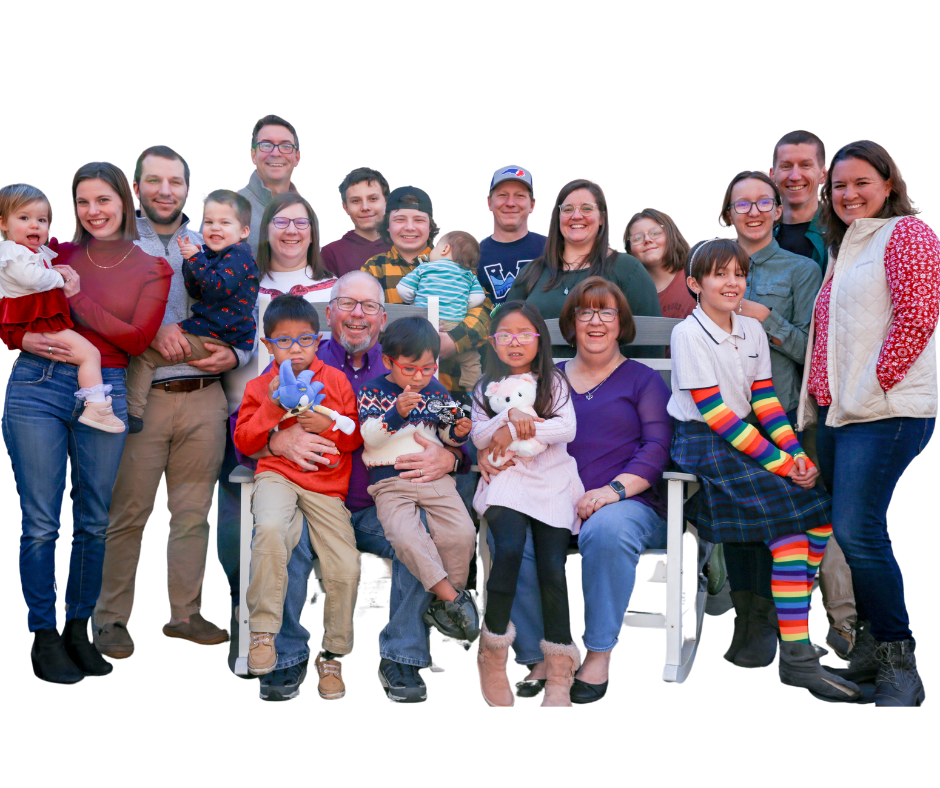
We even had time to gather for a family photo:

When Christmas Day rolled around, it was time to begin saying goodbye as three of the families headed back home to continue their own Christmas traditions. Our NM tribe had planned to stay with us until the 30th.

…and then some other stuff happened.

The day after Christmas I was not feeling well, and took it easy most of the day. By 12/27 I was in quite a bit of pain, so Dr. Mom, AKA Anita, took me to urgent care where they promptly sent me off the the Emergency Department – where I spent the day into the next morning waiting for a hospital room so I could be transferred.

The diagnosis leaving the ED was surgery for a perforated ulcer, and the surgical team at Atrium Cabarrus was anticipating that as well. However, that’s not what God had planned.

Because of the delay in getting a room, then a delay in having an imaging test that would pinpoint the problem, it was actually Sunday 12/29 when the surgical team took a conservative approach – no surgery at the moment, but complete rest and IV fluids only for up to a week.

It seems my body had encapsulated the ulcer, and was in the process of healing itself. A fews days later I was able to observe first-hand the amazing view of swallowing a radioactive dye going down my throat and into and through the various organs – with no signs of a leak this time.

With vitals where they wanted them, I was discharged on Thursday 1/2 – only to be readmitted 12 hours later with intense pain in my chest. Focused on signs of cardiac distress, the triage team was not as fast as getting me in a room as I would have liked – but at least I got an ED room instead of the dozen or so patients who were lined up in the hallways (including the sheriff’s deputies and a patient in handcuffs)! Imaging revealed an inflamed gallbladder, likely as a result of what was going on next door with my ulcer.

After a few hours in the ED, I was transferred back to PSC-3 – the same post surgical wing with the same nursing staff I had just spent a week with. This group of dedicated nurses were simply the best in caregiving I have ever experienced. To a person they were gentle and efficient as they went beyond fulfilling what they had to do to actually caring about me as a person. Over my 10-day stay, they were amazing in looking out for me in every way imaginable. We even got to laugh over “losing” me during one of the procedures!

On Sunday 1/12 I heard the words from my surgical team I was anticipating: “Do you want to go home today?” With a genuinely fond farewell from the nursing team, Anita brought me home that evening, where I crashed for the next 14 hours.

My prognosis is good, with additional tests and imaging scheduled in about a month to see where my body is at in the healing process.

The boyhood me, receiving a post-holiday assignment, would have quite a tale to tell.

The adult me, reflecting on what happened over the past couple of weeks, has no less of a tale to tell.

Whether it’s an essay for a teacher, small talk with coworkers, or a heartfelt chat with friends, What I Did on My Christmas Vacation is a question that evolves with us. It’s a chance to reflect, share, and connect in ways that go beyond the surface. So the next time you hear it, embrace the opportunity to tell your story – and to learn a little more about the people asking the question. After all, the magic of the holidays lives on in the stories we share.


What did you do on your Christmas vacation?

Mastering the Adams Family Experience Christmas: A Tactical Guide

The Christmas season is upon us, and in our household, this means only one thing: The Adams Family Experience Christmas is gearing up for another legendary chapter! 

With 21 people from five families descending upon Huntersville, NC over three travel days from four locations, coordinating this event is less like planning a holiday gathering and more like executing a military campaign. In the spirit of strategic brilliance, I’ve turned to Sun Tzu’s The Art of War for guidance. After all, if Sun Tzu can conquer kingdoms, surely he can help me conquer Christmas chaos.

Step 1: Know Thy Enemy — The Guest List

Sun Tzu wisely said, “If you know the enemy and know yourself, you need not fear the result of a hundred battles.” Our “enemy” is not the need for lactose-free eggnog or gluten-free stuffing demands – it’s the sheer logistics of hosting this crew:

  • From Alamogordo, NM: The desert-dwelling faction arrives with tales of tumbleweeds and an 3-year old whose energy rivals that of the Energizer Bunny.
  • From Farmville, VA: A group of refined Southern charmers who always bring a new (and weird) game that everyone enjoys. Accompanying them is the newest granddog, a lovable golden retriever with the biggest feet we’ve ever seen.
  • From Boone, NC: Our rugged mountain kin, eager to discuss “what real cold feels like” while chasing down the 18-month old “party animal”.
  • From Fuquay-Varina, NC: The suburbanites are bringing diva dog (a beagle who doesn’t know she is a dog) and endless enthusiasm for games of all kinds – as long as they win.

The ages of our crew range from precocious toddlers to the youngest “elders” you’ve ever seen in their mid-60s. That’s five generational cohorts in one house!

Step 2: Every Battle is Won Before It is Fought — Sleeping Arrangements

With a full house and a rented Airbnb 4 houses down the street, the sleeping strategy must be airtight. Here’s the tactical breakdown:

Our House: Reserved for the early risers, light sleepers, and those who require direct proximity to coffee and tea. It’s essentially triage by caffeine dependence.

  • Main Bedroom – The VA crew will be ensconced in the primary bedroom suite with kids, dog, and parents scattered around the space.
  • Front Bedroom – The NM parents will ride herd on their kids scattered upstairs and downstairs.
  • Disney Bedroom – The younger boys will be immersed in LEGO to their heart’s delight
  • Upstairs Bedroom – All the older girl cousins will be stacked up in double-decker cots.

The Airbnb: This fortress houses the night owls and party animals. The teenage boys, armed with iPhones and headphones, are banished to a makeshift barracks in the family room. 

  • Bedroom 1: Nina and GrandBob (the generals of this campaign) will run the whole multi-day event from this hideaway.
  • Bedroom 2 – The Boonie parents, accompanied by the youngest member of the family, will retreat here.
  • Bedroom 3 – The diva dog will be snoozing away at least 20 hours a day here, and has graciously consented to allow her people to stay and take care of her.

Step 3: Feed Your Troops — Meal Planning

“The line between disorder and order lies in logistics,” said Sun Tzu. Feeding 21 people, including gluten-free, lactose-intolerant, and diabetic contingents, is a logistical Everest. As you will see, we like to eat! Luckily, we have a lot of good cooks in the family! Here’s the plan:

Day 1: Reconnaissance Fare

As the crews begin arriving throughout the day, a light breakfast, followed by a visit to a great CLT restaurant, and ending with soup and chili is the plan. It’s versatile and scalable as our numbers increase during the day, and easily accommodates dietary needs.

Day 2: Full Crew Offensive

With almost the full #AdamsFamilyExperience tribe gathered, it’s time for a North Carolina staple at lunch: BBQ and all the fixings. When evening rolls around, it’s time for a Taco Bar, with specialties added in: Gluten-free tortillas, lactose-free sour cream, and enough of Uncle Aaron’s guac to fill a kiddie pool.

Day 3: Middle Earth Feast

A strategic masterpiece featuring the full seven meals of a hobbit’s day:

Everyone (well, maybe not the toddlers) is contributing to the feast courtesy of a shared Google doc and lots of research over the last month. At least half the fun will be the pandemonium of everyone working on their dishes throughout the day. It’s a good thing we will have two kitchens!

Day 4: Christmas Eve

Assuming we wake up from the previous day’s food coma, we will turn back to more traditional fare: breakfast goodies, Jimmy John’s sandwiches for lunch, and Mississippi Pot Roast for supper.

Day 5: Christmas Day

Pancakes! Fruit! Ham rolls! A Caprese Christmas Tree! Cranberry Orange Chicken! Roasted Root Vegetables! Winter Salad! Dessert! Oh. My.

Day 6: The Leftover Buffet

 As the crews begin to depart one by one, we will throw open the fridge and let the troops forage. Survivors will head to our favorite restaurant, La Unica, and the best server in the world, Nancy.

Day 7: Pizza Peace Talks

We’re down to one family besides Nina and GrandBob, but it’s the biggest with 5 kids! Time to roll out a family favorite: Pizza and a Movie!

Step 4: All Warfare is Based on Deception — Managing the Dogs

Two dogs present a unique challenge. Sun Tzu might suggest deploying decoys, but we’re going with containment zones:

  • The Retriever – Assigned to the main house, complete with chew toys and a toddler-proof deck for plenty of space to roam as needed.
  • The Beagle – Indoors at the main house, but nights at the Airbnb with the world’s softest dog bed to prevent territorial skirmishes.

From prior experience, there will be separate food/water bowls set up in different rooms in the house. Both dogs will be strategically kept away from the dining tables – a critical neutral zone.

Step 5: Let Your Plans Be Dark and Impenetrable — Entertainment Strategy

To maintain peace among 21 people, the entertainment schedule must be flawless. Sun Tzu reminds us, “Opportunities multiply as they are seized,” so we’ll seize opportunities for fun:

  • Board games for the adults and teenagers; LEGO, kid games, and Disney movies for the children, and a Christmas craft activity with Nina
  • The traditional Christmas LEGO project, drawing from a collection 40 years in the making
  • Morning and afternoon walks with the dogs
  • Outside fun on the playset or in the park, weather permitting
  • Fire pit and deck heater for after-hours conversations 
  • Christmas Eve service at our church
  • Family gift exchange, courtesy of a holiday Gift Train, with 11 “cars” (apparently, adults don’t count)
  • A family photo session that will be considered a success if it only takes 17 attempts
  • Planned spontaneity

Step 6: In the Midst of Chaos, There is Also Opportunity

Let’s face it: no amount of planning will prevent every toddler meltdown, burnt pie crust, or game argument. But as Sun Tzu might say, victory isn’t perfection – it’s managing the mayhem with grace and the occasional adult beverage.

This year, the #AdamsFamilyExperience Christmas will be a masterpiece of strategic planning, creative problem-solving, and good humor. And if all else fails, there’s always the peace treaty of Netflix, Disney+,  and all-day pajamas.

Happy holidays from the “battlefield” – AKA the AdamsFamilyExperience. May your Christmas be as merry and well-planned as ours is striving to be!

Beyond Change: Mastering the Psychological Journey of Transition

Often when you think you’re at the end of something, you’re at the beginning of something else.

Fred Rogers

It has become almost a cliché that the only constant today is change.

What moves it from a cliché to a truism is that the Greek philosopher Heraclitus said the same thing – 2,500 years ago.

In spite of that historical background, we all feel that change is different today: it is without end, and increasingly complex. We talk not of a single change, but of change as an ongoing phenomenon. It’s a collage, not a single simple image; one change overlaps with another, and it’s all change as far as the eye can see.

To some degree, the downside of change is inevitable. Whenever human communities are forced to adjust to shifting conditions, pain is ever present. But a significant amount of the waste and anguish we’ve witnessed in change management is avoidable.

The typical organization – or person – has not operated well in a rapidly changing environment. Structure, systems, and culture have often been a drag on change rather than a facilitator.

The failure to sustain significant change recurs again and again despite substantial resources committed to the change effort, talented and committed people “driving the change,” and high stakes. In fact, leaders feeling an urgent need for change end up right: organizations that fail to sustain significant change end up facing crises.

This isn’t the sort of challenge you take on because it sounds good.

Adapting to and mastering change is not a choice. A significant part of a leader’s responsibility deals with being a change agent in the organization’s culture. In a time when changes come so fast and from so many unexpected angles, change is no longer a luxury but an imperative.

Even though change is a must, the “how-to’s” can often prove a problem. Many people lunge into change with no idea of its rules, its guiding principles, its nuances – and its dangers. Quite often disaster is the result. The only thing worse than ignoring change is leaping into it willy-nilly.


THE QUICK SUMMARY – Managing Transitions by William Bridges

The business world is constantly transforming. When restructures, mergers, bankruptcies, and layoffs hit the workplace, employees and managers naturally find the resulting situational shifts to be challenging. But the psychological transitions that accompany them are even more stressful. Organizational transitions affect people; it is always people, rather than a company, who have to embrace a new situation and carry out the corresponding change.

As veteran business consultant William Bridges explains, transition is successful when employees have a purpose, a plan, and a part to play. This indispensable guide is now updated to reflect the challenges of today’s ever-changing, always-on, and globally connected workplaces. Directed at managers on all rungs of the corporate ladder, this expanded edition of the classic bestseller provides practical, step-by-step strategies for minimizing disruptions and navigating uncertain times.

A SIMPLE SOLUTION

If you were to gather a group of 10 to 20 people together, and ask them to discuss changes they are going through (or have recently gone through), before long you will notice all different types of change provide people with the same basic experience.

Three main similarities begin to present themselves:

  1. An ending, followed by
  2. A period of confusion and distress, leading to
  3. A new beginning.

However you deal with them, endings are the first phase of transition. The second phase is a time of lostness and emptiness before “life” resumes an intelligible pattern and direction, while the third phase is that of beginning anew.

That is the order of things in nature. Leaves fall in autumn, winter sets in, and then the green emerges again from the dry brown wood in the spring. Human affairs flow along similar channels, or they would if we were better able to stay in that current.

But endings are fearful. They break our connections with the setting in which we have come to know ourselves, and they awaken old memories of hurt and shame. Growing frightened, we are likely to abort the three-phase process of ending, lostness, and beginning.

Sometimes, we even twist the pattern around so that beginnings come first, then endings, and then…then what? Nothing.

It is when we turn things around in that way that transition becomes so unintelligible and frightening.

It isn’t the change that will do you in – it’s the transitions. Getting people through the transition is essential if the change is actually to work as planned.

The Three Phases of Transition

Endings – Letting go of the old ways and the old identity people had. This first phase of transition is an ending and the time when you need to help people deal with their losses.

Neutral Zone – Going through and in-between time when the old is gone but the new isn’t fully operational. Called the “neutral zone,” it’s when the critical psychological realignments and repatternings are taking place.

New Beginnings – Coming out of the transition and making a new beginning. This is when people develop the new identity, experience the new energy, and discover the new sense of purpose that make the change begin to work.

William Bridges, Managing Transitions

A NEXT STEP

On the top of a chart tablet, list a change in your organizational life that you have been considering.

Underneath this, divide the rest of the chart tablet into three columns, and write the headings “Endings,” “Neutral Zone,” and “New Beginnings” at the top of the columns.

Before you move forward, ask yourselves these three questions developed by the William Bridges Associates team:

  1. What is changing? Until any vagueness you have about change can be clarified and until the leaders of the change can explain it clearly, in a statement lasting no longer than one minute, there is no way that they are going to be able to get other people to buy into the change. Longer explanations and justifications will also have to be made but it is the one-minute statement that will be the core of people’s understanding.
  2. What will actually be different because of the change? Many change projects are designed and launched at such a high level in the organization that all the planning is unrelated to the everyday, operational details that make up the lives of most workers. In such cases, the decision-makers often have no idea how changes will actually make anyone’s life or job, or even the function of a whole department, different. Yet that is all that people need to know before they can embrace and support a change.
  3. Who’s going to lose what? There must be a hundred other versions of objections to dealing with endings and losses, but they are all variations on a single theme: the mistaken idea that the best way to get people through a transition is to deny that they are even in a transition. In fact many internal communications projects are based on this central misconception that you can (and should) talk people out of their reactions to the change.

Transition management is based on another idea: that the best way to get people through transition is to affirm their experience and to help them to deal with it. It is simply a question of understanding how the world looks to them and using that as the starting point in your dealings with them.

With an understanding of the dynamics covered in these three questions, spend at least one hour working through the three phases of transition, writing down words or phrases under each heading.


Part of a regular series on 27gen, entitled Wednesday Weekly Reader.

During my elementary school years one of the things I looked forward to the most was the delivery of “My Weekly Reader,” a weekly educational magazine designed for children and containing news-based current events.

It became a regular part of my love for reading, and helped develop my curiosity about the world around us.

When Commerce Meets Community: The Transformation of Third Places

Over the past 35+ years, the concept of the “third place” has undergone a remarkable transformation. Originally described by sociologist Ray Oldenburg as informal public spaces where people could gather, relax, and connect outside of home and work, these third places have increasingly shifted from grassroots, community-driven hubs to commercially branded environments. While the rise of corporate third places has introduced new opportunities for connection and convenience, it has also brought challenges that affect inclusivity, authenticity, and the role these spaces play in our lives.

How has commercialization reshaped third places – and what does that mean for the way we socialize and build community?

The Branded Third Place: Where Community Meets Profit

In Oldenburg’s mindset, third places were often neighborhood coffee shops, diners, bookstores, or pubs where people could linger without the pressure to spend much money. Today, corporations have seized on the idea of the third place and turned it into a marketing tool. Starbucks, perhaps the most famous example, explicitly branded itself as a “third place” in the 1990s, creating environments where customers could gather, work, or relax while enjoying a coffee. This idea caught on, and other brands, from Panera Bread to McDonald’s with its McCafé concept, began to position themselves as modern-day community hubs.

While these branded spaces often provide a consistent and welcoming experience – comfortable seating, free Wi-Fi, ambient music – they are inherently transactional. To enjoy these spaces, customers are typically expected to make a purchase. Unlike traditional third places, where lingering was often welcomed regardless of spending, these spaces come with an unspoken understanding: you’re welcome as long as you’re consuming.

Independent Third Places Face Challenges

As corporate third places have flourished, many independent, grassroots third places have struggled to survive. Local coffee shops, bookstores, and neighborhood bars often lack the financial resources to compete with large chains that benefit from economies of scale and brand recognition. Rising rents and changing consumer habits have also played a role, making it difficult for these smaller spaces to stay afloat.

The loss of independent third places has broader implications. These spaces often reflect the unique character of their communities, offering a sense of local identity and culture that branded third places can’t replicate. A family-owned café might host open mic nights or community discussions, fostering a sense of belonging that goes beyond the transactional. When these spaces disappear, communities lose not just a gathering spot, but a part of their cultural fabric.

The “Pay-to-Play” Model and Inclusivity

One of the most significant shifts in third places has been the introduction of financial thresholds for participation. While traditional third places often welcomed people from all walks of life, modern branded spaces tend to cater to specific demographics. The expectation to purchase a latte or sandwich in exchange for using the space creates a barrier for those with limited disposable income. For individuals who used to rely on free or low-cost community spaces, such as libraries or parks, this can make socializing more difficult.

This shift also raises questions about inclusivity. Oldenburg’s vision of third places emphasized their egalitarian nature – a pub or café where people from different socioeconomic backgrounds could meet as equals. In many branded third places, the design and pricing often cater to a more affluent clientele, making these spaces feel exclusive rather than welcoming to all.

The Commodification of Social Interaction

Another consequence of commercialization is the commodification of the very social interactions that make third places valuable. Today, spending time in a third place is often tied to lifestyle branding. A chic café with minimalist décor might appeal to young professionals or creatives, while a rustic microbrewery draws in a different niche. These curated environments encourage customers to identify with the space—and by extension, the brand—turning what should be a community-oriented experience into a carefully marketed product.

Additionally, many modern third places have introduced data-driven business models. For example, establishments offering free Wi-Fi might collect data on browsing habits or purchasing patterns, turning customers into sources of revenue beyond their coffee orders. This surveillance adds another layer of commercialization, subtly altering the experience of being in a third place.

The Positive Side of Commercialized Third Places

It’s not all bad news, though. The rise of branded third places has made these spaces more widely available and accessible in some respects. Chains like Starbucks have brought the concept of the third place to areas that previously lacked such gathering spots, particularly in suburban and rural regions. For people who value consistency and convenience, these spaces provide a reliable option for meeting friends, working remotely, or simply relaxing.

Corporate ownership has also brought attention to the importance of design and amenities in creating welcoming environments. Many branded third places invest in features like comfortable seating, good lighting, and thoughtful layouts, enhancing the overall experience. During challenging times, such as the COVID-19 pandemic, larger chains were often able to adapt quickly, offering mobile ordering, curbside pickup, and expanded outdoor seating – ensuring that third places remained accessible when people needed them most.

Striking a Balance

The commercialization of third places presents a complex picture. On one hand, branded spaces have made third places more widely available and have introduced new amenities that enhance convenience and comfort. On the other hand, the transactional nature of these spaces, their tendency to cater to specific demographics, and the decline of independent alternatives have raised concerns about inclusivity and authenticity.

As we move forward, communities and businesses alike will need to think critically about how to preserve the spirit of Oldenburg’s third places in an increasingly commercialized world. How can we create spaces that are welcoming to everyone, regardless of their ability to pay? How can we balance the convenience of branded third places with the cultural richness of grassroots ones? These are questions worth exploring if we want to ensure that third places remain vital parts of our social fabric.

Ultimately, the best third places – whether branded or independent – are those that prioritize connection over consumption, fostering a sense of belonging that goes beyond the bottom line. After all, it’s the people who make these spaces special, not the products they sell.


Other posts in this series:

Attunement in Leadership: Converting Resistance into Collective Commitment

One of the most challenging aspects of leadership isn’t dealing with external obstacles – it’s managing internal resistance from your own team. While leaders generally prepare themselves for external challenges, the emotional toll of facing opposition from within can be particularly devastating, often leaving them feeling betrayed and discouraged.

 Every leader knows the stormy seas of resistance. When faced with change, even the most dedicated teams can push back, especially when there’s something to lose. How do you guide your team through these turbulent times without losing sight of the mission? Leading Through Resistance by Tod Bolsinger is a beacon for leaders navigating the choppy waters of organizational change.

Leading Through Resistance offers more than just strategies; it delivers a mindset shift. With wisdom woven through every page, Tod Bolsinger teaches you unexpected skills to not only face resistance but to transform it into a mission-driving force.

Leading Through Resistance is a roadmap to resilient leadership. Equip yourself with the tools to lead with confidence, adapt with grace, and inspire transformation. Whether you’re a seasoned leader or just starting your leadership journey, Leading Through Resistance is your essential guide to turning resistance into resilience.


Understanding Internal Resistance

Internal resistance emerges when we introduce new ideas or attempt to implement significant organizational changes. As leaders, we often take this resistance personally, allowing our egos to become overinvolved until any disagreement feels like a direct challenge to our professional identity. This emotional response can lead to either passive avoidance or counterproductive pushback.

However, it’s crucial to understand that resistance to change isn’t malicious – it’s natural. As Edwin Friedman noted, sabotage isn’t “the bad things that evil people do,” but rather “the human things that anxious people do.” In fact, resistance is so inherently linked to the leadership process that it should be expected whenever significant change is initiated.

The Path Forward: From Pushback to Pull-Together

Instead of trying to eliminate resistance, successful leaders learn to lead through it. The key is to implement an emotionally intelligent process that transforms pushback into buy-in. Rather than meeting resistance with force, invite your team to lock arms and channel their energy toward collective progress.

Core Principles for Managing Resistance

Start with Dual Convictions

  • The Preservation Conviction: Ensure all changes protect and maintain the organization’s core purpose and values
  • The Change Conviction: Acknowledge that adaptation is necessary to preserve and advance the organization’s mission

Stay Calm, Curious, and Connected

  • Maintain emotional equilibrium without becoming detached
  • Create psychologically safe spaces for honest dialogue
  • Move closer to resistance rather than away from it
  • Transform heated emails into personal conversations
  • Convert formal complaints into opportunities for coffee meetings

Practice Attunement

Research shows that nearly 90% of what distinguishes outstanding leaders comes down to emotional intelligence rather than cognitive abilities. This emotional intelligence manifests through four core competencies:

  • Self-awareness
  • Self-management
  • Social awareness
  • Relationship management

Practical Strategies for Implementation

Slow Down the Process – While crisis often provides the urgency needed for change, resist the temptation to rush. Frenetic action rarely leads to sustainable transformation.

Give the Work Back – Engage key stakeholders early in the process. As Patrick Lencioni wisely noted, “If people don’t weigh in, they can’t buy in.” Create a guiding coalition that includes even those likely to push back— – heir perspective is valuable.

Conduct an Accusation Audit – Begin by acknowledging potential objections and fears. People are typically twice as motivated by fear of loss as they are by potential gains. Creating this psychological safety helps lower defensive barriers.

Practice Active Mirroring – Listen intently enough to repeat key phrases and emotions expressed by others. The goal isn’t to get them to say “You’re right,” but rather to hear them say “That’s right” when you reflect their concerns back to them.

Embrace the Power of “No” – Counter-intuitively, a genuine “no” is more valuable than a “counterfeit yes.” When people feel safe expressing disagreement, it builds trust and opens the door to authentic commitment later.

For those of us trained in the old “command and control” mindset,  it is natural to assume that we have to stand our ground for things to go our way. Don’t eliminate resistance – lead through it.

Tod Bolsinger

The Adaptive Reset

The traditional leadership model of meeting resistance with resistance is outdated. Today’s effective leaders understand that attunement accelerates change. When clarity and empathy combine, they become powerful tools for reducing resistance and fostering genuine buy-in.

Remember that emotional connection precedes rational agreement. In the words of moral psychologist Jonathan Haidt, “Intuitions come first, strategic reasoning second.” By focusing on building trust and lowering defensiveness through genuine connection, leaders can create the conditions for meaningful transformation.

The path forward isn’t about domination or control – it’s about the art of persuading people to work toward a common goal. When leaders make the conscious choice to resist pushing back against pushback and instead attune with those who resist, they create the possibility for collective movement forward.

This approach isn’t manipulation; it’s a process of genuine mutual transformation rooted in deep values and full engagement. By combining clear purpose with emotional intelligence, leaders can turn opponents into allies and resistance into momentum for positive change.


Charcoal Mellowed and History Forgotten: The Legacy of Nearest Green and Jack Daniel

As a Native Tennesseean, specifically Middle Tennessee, I have long been aware of the person of Jack Daniel and the distillery that bears his name.

Interestingly enough, other than name recognition, my first extended exposure to Jack Daniel was through music.

When Jack Daniel opened saloons in Lynchburg in 1892, he thought of a novel way to attract people to the town square. Mr. Jack formed The Silver Cornet Band with musically inclined locals – a bank clerk, grocer, policeman, and even a local lawyer. Like his whiskey, music brought folks together from every walk of life. Mr. Jack’s band played together for another 20 years. Even when the Distillery was closed due to various state and local Prohibition laws, the band kept Jack’s spirit alive.

Mr. Jack Daniel’s Original Silver Cornet Band is an affectionate re-creation of a small town band that existed in Lynchburg, Tennessee from 1892 until about 1914.

The “modern” version of this band was the creation of David Fulmer in the mid-1970s, who wrote the show and performed as the “Professor” for many years.

The band began touring in 1978, performing in concert halls throughout the United States and Canada and delighting audiences at music festivals, music educator conferences, and for civic and private events with its joyful style and expert musicianship.

More than just a band concert, a performance by the Silver Cornet Band was a time traveling excursion to an era when life moved at a less hurried pace; when a warm summer evening was spent with a picnic supper in the park, the fellowship of friends and neighbors, and the sound of band music in the air.

I knew several of the band members over the years, as several came from the music program at my college, Tennessee Technological University. Although known primarily as an engineering school, it also had an outstanding low-brass music program, and the attraction of a “brass band” from a turn-of-the-century time period captured the imagination and participation of students.

I was fortunate to attend several concerts over the years, and have all of their music that has been released on CDs. I suppose it was my fondness for the music and the generosity of the man who inspired it, Jack Daniel, who lead me to take the next step in learning more.

Several years after the 100th anniversary of the founding of the distillery, I took part in a tour, fascinated by the stacks of hardwood burning to make the charcoal to filter the liquid, curious about the cave spring that supplied the water, impressed by the craftsmanship needed to create the barrels, and amazed at the huge gallons of mash as it begin the fermentation process that ultimately produced the golden amber liquid that was a part the southern culture of my teenage and college years.

Though not a partaker of alcohol, I was fascinated by the story of Jack Daniel and his life. Over the years, I would read and/or see articles about Jack Daniel and its contribution to culture – particularly the Southern culture from which it arose.

Then, in 2016, a story began to come out: Jack Daniel did own and operate the first registered distillery in the U.S. – but the secret of his charcoal-filtered whiskey came from the knowledge and expertise of a former slave (not owned by Jack Daniel) named Nearest Green who taught a young Jack Daniel all about distilling whiskey…

…and that brings us to today’s Wednesday Weekly reader.


New York Times bestselling author Fawn Weaver unveils the hidden narrative behind one of America’s most iconic whiskey brands. This book is a vibrant exploration set in the present day, delving into the life and legacy of Nearest Green, the African American distilling genius who played a pivotal role in the creation of the whiskey that bears Jack Daniel’s name.

Set against the backdrop of Lynchburg, Tennessee, Love & Whisky weaves together a thrilling blend of personal discovery, historical investigation, and the revelation of a story long overshadowed by time. Through extensive research, personal interviews, and the uncovering of long-buried documents, Weaver brings to light not only the remarkable bond between Nearest Green and Jack Daniel but also Daniel’s concerted efforts during his lifetime to ensure Green’s legacy would not be forgotten. This deep respect for his teacher, mentor, and friend was mirrored in Jack’s dedication to ensuring that the stories and achievements of Nearest Green’s descendants, who continued the tradition of working side by side with Jack and his descendants, would also not be forgotten.

Love & Whiskey is more than just a recounting of historical facts; it’s a live journey into the heart of storytelling, where every discovery adds a layer to the rich tapestry of American history. Weaver’s pursuit highlights the importance of acknowledging those who have shaped our cultural landscape; yet remained in the shadows.

As Weaver intertwines her present-day quest with the historical threads of Green and Daniel’s lives, she not only pays homage to their legacy but also spearheads the creation of Uncle Nearest Premium Whiskey. This endeavor has not only brought Nearest Green’s name to the forefront of the whiskey industry but has also set new records, symbolizing a step forward in recognizing and celebrating African American contributions to the spirit world.

Love & Whiskey invites readers to witness a story of enduring friendship, resilience, and the impact of giving credit where it’s long overdue. It’s an inspiring tale of how uncovering the past can forge new paths and how the spirit of whiskey has connected lives across generations. Join Fawn Weaver on this extraordinary adventure, as she navigates through the layers of history, friendship, and the unbreakable bonds formed by the legacy of America’s native spirit, ensuring the stories of Nearest Green and his descendants live on in the heart of American culture.


The story of Nearest Green, one of the most remarkable yet long-forgotten figures in American whiskey history, has become an essential narrative in understanding the origins of Jack Daniel’s whiskey. Nathan “Nearest” Green was not only the first known African American master distiller, but he was also instrumental in teaching Jack Daniel the craft of whiskey making. His story, rediscovered after more than a century of obscurity, has profoundly reshaped how we view the birth of one of the world’s most famous whiskey brands.

The Early Life of Nearest Green

Nathan Green, commonly known as “Uncle Nearest,” was born into slavery in the early 1800s in Maryland. Like many enslaved people of that time, his skills were not limited to manual labor. Green had an exceptional talent for distilling whiskey, a process that was complex and labor-intensive, requiring a mastery of both art and science. While little is known about his early life, it is likely that he learned the distillation process from earlier generations of enslaved African Americans or European settlers who practiced whiskey-making techniques brought over from Ireland and Scotland.

By the mid-1800s, Green was enslaved on a farm owned by the Reverend Dan Call, a preacher and distiller in Lynchburg, Tennessee. It was at Call’s distillery that Green’s talents in whiskey production would shape history.

Meeting Jack Daniel

Jack Daniel, born Jasper Newton Daniel in 1846, grew up in a world where whiskey was an essential part of southern life. After losing his mother at a young age and suffering from a strained relationship with his father, young Jack left home as a teenager. It was during this period that he was introduced to Reverend Dan Call, who not only took him under his wing but also introduced him to the art of whiskey making. However, it wasn’t Call who would provide Jack with the most important lessons in distilling; that honor belonged to Nearest Green.

Recognizing Green’s unmatched skill, Call entrusted him with teaching Jack Daniel how to make whiskey. Green became Daniel’s mentor, passing on the essential techniques of distillation, including the critical process of charcoal mellowing – an important step in what would later become the defining feature of Tennessee whiskey. The charcoal mellowing technique, also known as the “Lincoln County Process,” involves filtering the whiskey through charcoal to remove impurities and smooth out the flavor. This unique process differentiates Tennessee whiskey from other American whiskeys like bourbon, and it was Green who mastered and shared this process with Jack Daniel.

The Role of Nearest Green in Shaping Jack Daniel’s Whiskey

Nearest Green’s contribution to the Jack Daniel’s whiskey brand goes far beyond simply passing down techniques. His expertise was fundamental to the product’s flavor, consistency, and quality, and his influence is seen in the principles that would guide Jack Daniel’s whiskey production for generations.

Green’s mastery of the charcoal mellowing process allowed Jack Daniel’s whiskey to stand out from competitors. This filtration method gave the whiskey its distinctive smoothness and refinement, creating the signature taste that would make Jack Daniel’s a household name. Green’s influence is not just in the technique but in the philosophy that great whiskey is a product of attention to detail, patience, and craftsmanship.

Even after the end of slavery following the Civil War, Nearest Green remained an integral part of the Jack Daniel’s distillery. When Jack Daniel formally established his distillery in 1866 (which today is considered the oldest registered distillery in the United States), Nearest Green continued to work alongside him, this time as a free man. In fact, records show that Green was one of the distillery’s first employees, making him not only one of the first African American master distillers but also an important partner in the founding of the brand. Later, Green’s two sons continued their father’s legacy at Jack Daniel’s distillery.

The Lost Legacy of Nearest Green

Despite his undeniable contributions, Nearest Green’s role in the creation of Jack Daniel’s whiskey faded from history over the decades. Whiskey production in the 19th century was dominated by white narratives, and the contributions of African Americans were often overlooked or erased altogether. As a result, Nearest Green’s name was not mentioned in the official Jack Daniel’s company history for over 150 years.

It wasn’t until the 21st century that Green’s role began to be rediscovered. In 2016, author and historian Fawn Weaver embarked on a mission to uncover the true history behind the origins of Jack Daniel’s whiskey. Through meticulous research, Weaver uncovered documentation and oral histories that confirmed Nearest Green’s integral role in teaching Jack Daniel how to make whiskey.

Her efforts led to a groundbreaking realization: that Nearest Green was not only Jack Daniel’s teacher but also a key figure in the establishment of one of the most iconic whiskey brands in the world. This discovery marked a turning point in the narrative of American whiskey history and forced a reexamination of the often-overlooked contributions of African Americans to the industry.

Restoring Green’s Place in History

The rediscovery of Nearest Green’s legacy has led to a concerted effort to ensure his contributions are recognized and celebrated. In 2017, Jack Daniel’s officially acknowledged Nearest Green as the first master distiller for the brand. The company has since made efforts to honor his memory, including creating a dedicated section on the distillery’s tour that focuses on Green’s contributions.

Fawn Weaver also founded the Nearest Green Foundation, which aims to preserve Green’s legacy and provide scholarships for his descendants. Additionally, in 2017, a new whiskey brand, Uncle Nearest Premium Whiskey, was launched in his honor. Uncle Nearest Whiskey has quickly gained popularity, and its success serves as a fitting tribute to the man whose expertise and craftsmanship shaped the early days of Jack Daniel’s whiskey.

The Legacy of Nearest Green

Nearest Green’s story is not just one of whiskey-making brilliance; it’s a story about how the contributions of African Americans were often sidelined or forgotten in history. The rediscovery of his legacy offers a fuller, more accurate picture of the origins of Jack Daniel’s whiskey and highlights the crucial role African Americans played in shaping the American whiskey industry.

Nearest Green’s influence endures in every bottle of Jack Daniel’s whiskey, a testament to his mastery of distilling and the indelible mark he left on the industry. Today, his legacy is being restored and celebrated, reminding us of the rich and complex history behind one of the world’s most beloved spirits.


Part of a regular series on 27gen, entitled Wednesday Weekly Reader.

During my elementary school years one of the things I looked forward to the most was the delivery of “My Weekly Reader,” a weekly educational magazine designed for children and containing news-based current events.

It became a regular part of my love for reading, and helped develop my curiosity about the world around us.