
As a longtime researcher of on the history of Walt Disney (the man), it’s fascinating to consider how an attraction he developed can serve as a lens through which to examine societal concepts, particularly those surrounding aging. I recently discovered a book that explored that concept, drawing on the themes present in Walt Disney’s Carousel of Progress.
But before we get into that book in this week’s Wednesday Weekly Reader, you’ve got to understand the background of the Carousel of Progress.

Walt Disney’s Carousel of Progress, a classic attraction found in the Magic Kingdom’s Tomorrowland, presents a unique perspective on the evolution of American life through the 20th century. Through its rotating stages, the attraction showcases how technological advancements have transformed the daily lives of a typical American family over four time periods. While ostensibly a celebration of progress, the Carousel of Progress also inadvertently offers a compelling metaphor for understanding evolving concepts of old age in the United States.
Walt Disney originally conceived concepts that became the show in 1958 as part of a new area at Disneyland Park in California called Edison Square. When the concept was abandoned, the idea was reimagined, eventually opening under the name “Progressland” at the 1964-65 New York World’s Fair in the General Electric Pavilion.
With the classic song “There’s a Great Big Beautiful Tomorrow” by the Academy Award®-winning team of brothers Richard and Robert Sherman, the show was an instant hit. Following its success, the show moved to Disneyland Park and opened in 1967 as the Carousel of Progress. In 1973 it was closed and moved to Walt Disney World in Orlando.
In 1975, the attraction opened in Magic Kingdom park where it was rewritten and restaged with a new theme song, “The Best Time of Your Life.”
In the true spirit of progress, the show was reworked in 1994 to its initial incarnation with the original theme song intact – as a tribute to nostalgia.
The Carousel of Progress holds the record as the longest-running stage show in the history of American theater. It is one of the oldest attractions in the Walt Disney World Resort, and the oldest attraction at Walt Disney World to have been worked on by Walt Disney.
Despite its undeserved reputation of being outdated and boring, I have liked the Carousel of Progress since I unknowingly rode the attraction the year it opened in 1975; I was part of the year-long celebration of America’s Bicentennial that Walt Disney World staged beginning that summer, called “America on Parade.”
As a rising high school senior who had limited time in the park, the Carousel of Progress – along with Space Mountain, Pirates of the Caribbean, and the Haunted Mansion were the four attractions I rode that day. Space Mountain aside (vertigo), those are the same attractions I’ve made sure to go on during every visit to the Magic Kingdom over the ensuing years.
Accordingly, I’ve remained interested in each of those attractions, and when any of them pop up in unexpected and unusual conversations almost 50 years later, I naturally explore them more!
The Carousel of Progress, Walt Disney’s animatronic celebration of technological advancement, takes visitors on a journey through the American century beginning in the late 1800s. We join a ‘typical” family as only Hollywood of the early 1960s can conceive: they navigate the wonders of electricity, household appliances, and eventually voice-activated home systems, all while the patriarch cheerfully reminds us that “there’s a great big beautiful tomorrow shining at the end of every day.”
This attraction embodies America’s once-unwavering faith in the marriage of capitalism and technology – a belief that progress was inevitable, linear, and universally beneficial. As audiences rotate from scene to scene, they witness how innovation solves yesterday’s problems while creating greater comfort, leisure, and prosperity.
But what happens when the carousel stops spinning? When progress falters, or when we discover that technological advancement hasn’t delivered on its promises for vast segments of society?
This is the territory author James Chappel explores in his provocative new work Golden Years: How American Invented and Reinvented Old Age. Utilizing Disney’s attraction as a metaphor in his introduction, Chappel examines how Americans have conceptualized progress over decades. Unlike Disney’s optimistic portrayal, however, Chappel interrogates the gap between the promised future and our lived reality, particularly in how we care for our aging population – a demographic conspicuously absent from Disney’s vision of perpetual youth and boundless opportunity (even though, interestingly, the “aged” are present in each scene of the Carousel of Progress).
Beginning with the 1935 passage of the Social Security Act, Americans were sold on the idea of old age: what it was, and what is was for. The core idea was simple. Older people, while distinct in capacities and purposes from younger ones, had a meaningful place in the world. They ought to be valued and respected, and they deserved security and dignity even if they were no longer participating in the waged labor force. Older people, in short, belonged on the Carousel.
James Chappel, Golden Years
The Narrative of Progress
The attraction’s core theme is “progress,” a concept deeply ingrained in American culture. Each scene depicts a more technologically advanced era, highlighting the conveniences and comforts that new inventions bring. This unwavering focus on forward momentum reflects a societal tendency to equate “good living” with constant advancement.
In the context of aging, this can translate to a cultural pressure to remain “productive” and “modern,” often leading to the marginalization of those who cannot keep pace with rapid technological change.
The Shifting Landscape of “Modern Life”
The Carousel of Progress illustrates how the definition of “modern life” has drastically shifted over time. What was considered cutting-edge in the early 20th century is now quaint and nostalgic.
Similarly, societal perceptions of aging have evolved. Older generations have witnessed profound transformations in technology, social norms, and lifestyles. This creates a generational divide, where the experiences and perspectives of older adults may be perceived as “outdated.”
Nostalgia and the Idealized Past
The attraction evokes a sense of nostalgia, romanticizing the past while simultaneously celebrating the future. This nostalgic element can be seen as a reflection of how society often views aging, with a tendency to idealize youth and earlier life stages.
This can also create a difficult situation, where older people are seen as living in the past, and not properly living in the present.
Technological Integration and Isolation
While showing the benefits of technology, it can be argued that it also shows how technology can isolate people. Modern scenes show people more and more focused on individual devices.
This can be a big problem for the elderly, where technology can be a barrier, and also where the use of technology can cause social isolation.
In essence, the Carousel of Progress, with its optimistic portrayal of technological advancement, mirrors the complex and often contradictory attitudes towards aging in American society. It highlights the tension between celebrating progress and grappling with the challenges of a rapidly changing world. By examining this beloved attraction through the lens of social commentary, the hope is to gain a deeper understanding of how cultural narratives shape our perceptions of aging.
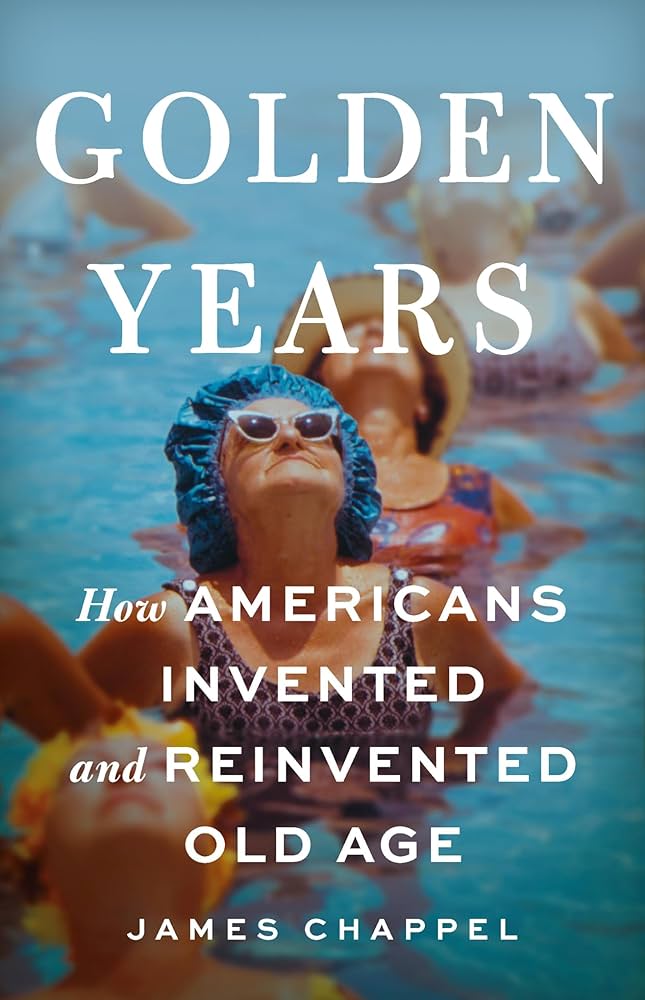
On farms and in factories, Americans once had little choice but to work until death. As the nation prospered, a new idea was born: the right to a dignified and secure old age. That project has benefited millions, but it remains incomplete – and today it’s under siege.
In Golden Years, historian James Chappel shows how old age first emerged as a distinct stage of life and how it evolved over the last century, shaped by politicians’ choices, activists’ demands, medical advancements, and cultural models from utopian novels to The Golden Girls. Only after World War II did government subsidies and employer pensions allow people to retire en masse. Just one generation later, this model crumbled. Older people streamed back into the workforce, and free-market policymakers pushed the burdens of aging back onto older Americans and their families. We now confront an old age mired in contradictions: ever longer lifespans and spiraling health-care costs, 401(k)s and economic precarity, unprecedented opportunity and often disastrous instability.
As the population of older Americans grows, Golden Years urges us to look to the past to better understand old age today—and how it could be better tomorrow.
Golden Years is a fascinating account of the history of old age in modern America, showing how we created unprecedented security for some and painful uncertainty for others.
Golden Years: How Americans Invented and Reinvented Old Age by James Chappel offers a comprehensive examination of the evolving perceptions and policies surrounding aging in the United States. Chappel, a historian at Duke University, delves into the socio-political, economic, and cultural factors that have shaped the experience of old age over the past century.
In the late 19th and early 20th centuries, many Americans worked until they were physically unable, with little to no financial support in their later years. The introduction of the Social Security Act in 1935 marked a pivotal shift, providing a safety net that acknowledged the right to a secure and dignified retirement. However, Chappel points out that these benefits were initially designed for a specific demographic: middle-class, married, white couples. Notably, agricultural and domestic workers, many of whom were African American, were excluded from these early provisions.
The mid-20th century saw the rise of the term “senior citizens,” reflecting a societal shift towards viewing older adults as active and engaged members of the community. This era witnessed the expansion of programs like Medicare and Medicaid, further solidifying support for the elderly. Cultural representations, such as the 1985 television show “The Golden Girls,” mirrored and influenced these changing attitudes by portraying older women leading vibrant, independent lives.
However, Chappel highlights that the landscape of aging underwent significant changes towards the end of the 20th century. The shift towards privatization, exemplified by the introduction of IRAs and 401(k) plans, placed more responsibility on individuals to secure their own retirement. This move, coupled with rising healthcare costs and longer life expectancies, has led to increased financial insecurity among older adults.
Chappel also addresses the disparities that persist within the aging population. For instance, older Black Americans have often faced discriminatory practices in nursing homes and have been disproportionately affected by policies that did not account for their unique challenges. Activists like sociologist Jacquelyne Jackson have worked to bring these issues to light, advocating for policies that recognize and address the specific realities confronting older Black individuals.
In the contemporary context, Chappel observes a dilution of collective advocacy for older adults. Organizations such as AARP have shifted focus towards commercial ventures, potentially at the expense of robust policy advocacy. This evolution raises concerns about the future of Social Security and the adequacy of support systems for an aging population.
Golden Years is not only a captivating historical account but also a call to action. Chappel urges policymakers and society at large to reconsider how aging is approached, emphasizing the need for inclusive and sustainable models that ensure dignity and security for all older adults, regardless of race or socioeconomic status.
As individuals, and as a nation, we are all getting older. We will be making decisions together about how to shape the gray future. And in doing so, it might help to understand a good deal more about the gray past.
Chappel’s work offers a nuanced exploration of the transformation of old age in America. By weaving together historical analysis with cultural insights, Golden Years provides readers with a deeper understanding of the challenges and opportunities that come with an aging society. It serves as a timely reminder of the importance of equitable policies and the collective responsibility to support individuals as they age.

Part of a regular series on 27gen, entitled Wednesday Weekly Reader.
During my elementary school years one of the things I looked forward to the most was the delivery of “My Weekly Reader,” a weekly educational magazine designed for children and containing news-based current events.
It became a regular part of my love for reading, and helped develop my curiosity about the world around us.
 27gen.com
magnificent! 36 2025 Navigating Change with Wisdom: Gandalf as a Timeless Model for the Modern Elder majestic