Breaking Free from Stagnation: The Art of Strategic Reset

Organizations around the world are plagued by staff burnout, high turnover, and low morale.

How do you turn this around? How do you make things better?

Changing how we work can feel overwhelming. Like trying to budge an enormous boulder, we’re stifled by the gravity of the way we’ve always done things. And we spend so much time fighting fires -and fighting colleagues – that we lack the energy to shift direction.

But with the right strategy, we can move the boulder.
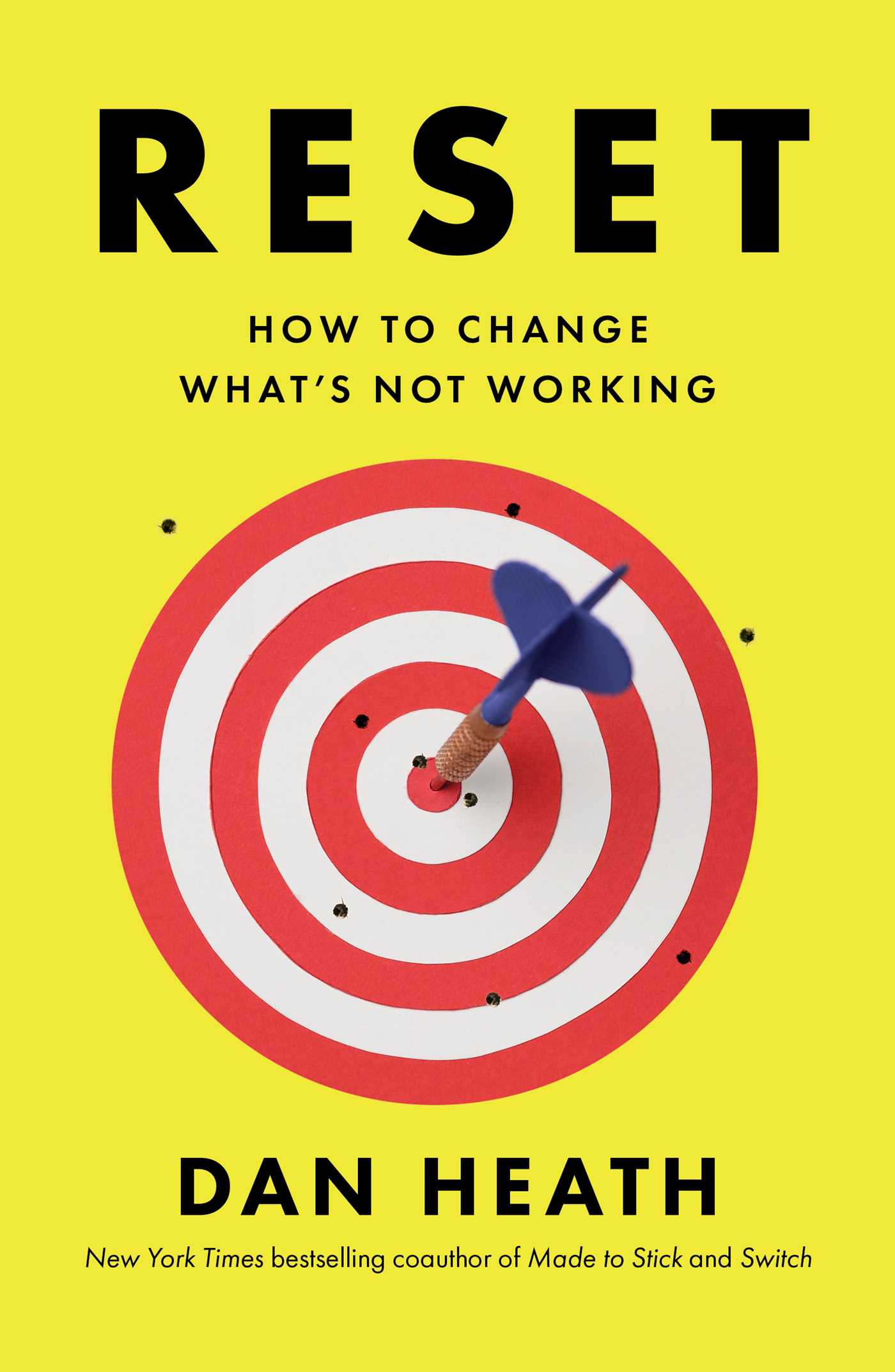
In Reset, Dan Heath explores a framework for getting unstuck and making the changes that matter. The secret is to find “leverage points”: places where a little bit of effort can yield a disproportionate return. Then, we can thoughtfully rearrange our resources to push on those points.

Heath weaves together fascinating examples, ranging from a freakishly effective fast-food drive-thru to a simple trick from couples therapy to an inspirational campaign that saved a million cats.

In Reset, you’ll learn:

-Why the feeling of progress can be your secret weapon in accelerating change

-How leaders can uncover and stop wasteful activities

-Why your team’s motivation is often squandered—and how to avoid that mistake

-How you can jumpstart your change efforts by beginning with a “burst”

The book investigates mysteries: Why the middle is the roughest part of a change effort. Why inefficiency can sometimes accelerate progress. Why getting “buy-in” is the wrong way to think about change.

What if we could unlock forward movement – achieving progress on what matters most – without the need for more resources? The same people, the same assets…but dramatically better results. Yesterday, we were stuck. Today, we reset.


When organizations and individuals find themselves stuck in unsatisfactory situations, the natural instinct is often to push harder or work longer hours. However, as revealed in Reset from Heath’s extensive research spanning over two and a half years, meaningful change requires a more nuanced approach than simply applying more force to existing problems.

Through 240 interviews across various industries, combined with insights from psychology and successful transformation methodologies, Heath developed a clear framework for breaking free from stagnation. The key lies not in working harder, but in working smarter through strategic intervention points.

Think of being stuck as facing a massive boulder blocking your path. No amount of direct force will move it – you need leverage. This metaphor captures the essence of the reset process: identifying precise points where minimal effort can yield maximum results, known as Leverage Points.

However, finding these Leverage Points requires methodical investigation. There are five primary methods for uncovering them

  1. Direct observation of work processes can reveal inefficiencies that aren’t apparent from a distance. 
  2. Examining alternative routes to your ultimate goal might uncover easier paths forward.
  3. Studying your own success stories can highlight replicable winning strategies.
  4. Identifying the primary constraint holding you back helps focus efforts where they matter most. 
  5. Taking a holistic view of the system often reveals unexpected opportunities for intervention.

But identifying Leverage Points is only half the battle. The other crucial element is Restacking Resources – redirecting your existing assets, time, and energy toward these strategic pressure points. This process isn’t about finding additional resources; it’s about making smart trade-offs with what you already have.

The challenge lies in the fact that most resources are already committed to ongoing operations. No team member believes their current work is pointless, making it difficult to redirect efforts elsewhere. 

This is where six specific strategies come into play

  1. Beginning with an intense focused burst of effort.
  2. Eliminating wasteful activities.
  3. Shifting resources from low-value to high-value work.
  4. Tapping into intrinsic motivation.
  5. Empowering team members to lead change.
  6. Accelerating feedback loops for faster learning.

What makes this approach particularly powerful is its alignment with human psychology. Research by Teresa Amabile and Steven Kramer, involving over 12,000 diary entries from 238 employees across seven companies, revealed a fascinating insight: the single most powerful motivator in the workplace is making progress on meaningful work. On employees’ best days, 76% involved achieving progress, while only 13% involved setbacks. Surprisingly, only 5% of managers recognized progress as a primary motivator, ranking it last among potential motivational factors.

This “progress principle” becomes a powerful ally in the reset process. Once you start moving the boulder – even slightly – the psychological boost from that progress creates positive momentum that can help sustain the change effort. It transforms the daunting task of organizational change from an exhausting push against resistance into a more natural flow of continuous improvement.

As with his previous books (see here, here, and here), Heath uses real-world examples to demonstrate the effectiveness of this approach across diverse situations: from turning around struggling libraries and companies to revitalizing hospital operations and even improving personal relationships. The framework has proven adaptable to various contexts, whether addressing operational inefficiencies, customer satisfaction, employee engagement, or strategic direction.

The process challenges several common assumptions about organizational change. It suggests that seeking “buy-in” might be the wrong approach to change management. It reveals that inefficiency can sometimes accelerate progress, and that people often overestimate their understanding of the systems they work within. Perhaps most importantly, it demonstrates that the middle phase of any change effort is typically the most challenging – a insight that helps teams prepare for and push through the inevitable rough patches.

The beauty of this Reset framework lies in its simplicity: find the right leverage points and realign resources to apply pressure there. While the concept is straightforward, the execution requires careful analysis, strategic thinking, and willingness to make difficult trade-offs. However, the rewards are worth the effort: breaking free from unproductive patterns, experiencing forward momentum where there was once stagnation, and regaining a sense of agency over seemingly intractable situations.

This approach offers hope to anyone feeling stuck in a rut, whether personally or professionally. It provides a practical pathway to change that doesn’t rely on heroic efforts or unlimited resources, but rather on smart targeting of effort and strategic reallocation of existing assets. By understanding and applying these principles, individuals and organizations can transform themselves from spinning their wheels to moving purposefully toward their goals.


In a future post, I will be unpacking Reset in terms of how I am applying it in my personal life. Stay tuned!


Part of a regular series on 27gen, entitled Wednesday Weekly Reader.

During my elementary school years one of the things I looked forward to the most was the delivery of “My Weekly Reader,” a weekly educational magazine designed for children and containing news-based current events.

It became a regular part of my love for reading, and helped develop my curiosity about the world around us.

A Hybrid Future of Third Places

The concept of the third place has always been about more than just the physical spaces we frequent to unwind, connect, and build community. Coined by sociologist Ray Oldenburg, third places are those informal gathering spots – cafés, parks, libraries, pubs – that provide a neutral ground for interaction, fostering a sense of belonging outside of home (first place) and work (second place). While Oldenburg’s vision remains relevant, the 21st century has seen a dramatic evolution in what constitutes a third place, thanks to the digital revolution, shifts in societal norms, and hybrid models of interaction.

In today’s world, third places are no longer confined to brick-and-mortar establishments. They coexist with digital platforms and hybrid environments that blur the lines between the physical and virtual. Here’s how these changes reflect the changing nature of how people connect and build community, offering a glimpse into the hybrid future of third places.

The Expansion of Third Places into Digital Spaces

One of the most significant shifts in the concept of third places is their expansion into the digital realm. Social media platforms, online gaming communities, and virtual spaces like Discord servers or Reddit threads have become modern third places for many. These platforms offer the same sense of camaraderie, interaction, and shared interest that Oldenburg attributed to physical third places – but without the need for physical presence.

Take online multiplayer games as an example. Games like World of Warcraft or Fortnite have created vibrant, interactive worlds where players from around the globe meet, collaborate, and socialize. These digital environments often feel as real to participants as a local pub might to its regulars. Similarly, platforms like Twitch, where communities form around shared entertainment, mirror the sense of belonging found in traditional third places.

Digital third places also break down barriers of geography, enabling people to connect regardless of their physical location. This inclusivity can be particularly meaningful for those who might lack access to traditional third places due to financial, geographic, or mobility constraints. However, they’re not without challenges—online environments often lack the serendipity of physical spaces, and they can sometimes exacerbate feelings of disconnection or anonymity.

Hybrid Models: Bridging the Physical and Digital

The future of third places isn’t an either-or scenario between physical and digital; it’s about hybridization. Hybrid third places seamlessly integrate in-person interaction with digital connectivity, creating new opportunities for connection that cater to modern lifestyles. Consider the rise of co-working spaces that offer virtual memberships or host hybrid events where participants can join both in-person and online.

This hybrid model became especially prevalent during the COVID-19 pandemic, when lockdowns forced physical spaces to adapt. Cafés began offering online book clubs, gyms provided virtual fitness classes, and libraries hosted Zoom-based story times. These adaptations didn’t just fill a temporary gap – they highlighted the potential for hybrid third places to reach broader audiences and foster community in new ways.

Even traditional third places like pubs and restaurants are embracing hybrid elements. Some venues now host livestreamed trivia nights, allowing patrons to participate both on-site and from home. Others integrate technology like augmented reality (AR) to enhance the experience of being in the space. For example, a café might offer an AR-enabled mural that comes to life through a smartphone app, combining art, technology, and community.

The Enduring Relevance of Traditional Third Places

While digital and hybrid models have gained prominence, traditional third places remain indispensable. These physical spaces offer something uniquely human: face-to-face interaction. The sensory experience of sitting in a bustling café, sharing laughter over drinks, or browsing a local bookstore creates a connection that digital spaces struggle to replicate.

Moreover, traditional third places often serve as equalizers, providing neutral ground where people from different walks of life can come together. They foster the kind of spontaneous, unstructured interactions that build social trust and community cohesion. A park bench or a neighborhood pub might not have the technological bells and whistles of a digital platform, but they offer something just as valuable: a space to simply be with others.

To stay relevant, traditional third places are finding ways to complement – rather than compete with – digital and hybrid options. For example, many cafés and libraries now offer robust Wi-Fi and charging stations to accommodate remote workers, blending the physical and digital to meet evolving needs.

The Challenges of a Hybrid Future

As exciting as the hybrid future of third places is, it’s not without challenges. One concern is accessibility. Digital and hybrid third places often require technology, such as smartphones or reliable internet access, which not everyone has. Ensuring inclusivity means addressing these disparities and finding ways to make hybrid third places accessible to all.

Another challenge is preserving the essence of third places – their sense of spontaneity, neutrality, and community – in a hybrid model. Too much emphasis on digital tools or commercial elements can risk turning third places into transactional environments rather than spaces of genuine connection.

Designing Third Places for the Future

To thrive in the 21st century, third places must be intentionally designed to embrace both traditional and modern elements. This might include:

  • Flexible layouts: Spaces that can accommodate both digital and physical interactions, such as communal tables for collaboration and quiet corners for introspection.
  • Inclusive programming: Events and initiatives that cater to diverse audiences, both in-person and online.
  • Tech integration with purpose: Using technology to enhance, rather than replace, the human experience. For example, digital tools could be used to facilitate connections between patrons or highlight local community initiatives.
  • Sustainability: Ensuring that third places remain accessible to all, regardless of income or technological access.

A Vision for Connection in the 21st Century

The hybrid future of third places reflects the evolving ways in which people connect, build community, and find belonging. While the digital age has expanded the possibilities for interaction, the core principles of third places remain unchanged: they are spaces where people come together, share experiences, and feel part of something bigger than themselves.

By embracing both the old and the new, third places can continue to serve as vital hubs of community in a rapidly changing world. Whether physical, digital, or somewhere in between, these spaces remind us of the importance of connection – and the many forms it can take.


Other posts in this series:

Eating Like a Hobbit: Embracing a New Diet After Surgery


Little did I know that our family’s unique ritual of a “different” Christmas meal every year would soon pay benefits!

Undergoing gallbladder surgery is no small matter, and adapting to new dietary requirements can feel overwhelming. But what if you could turn this challenge into a whimsical adventure inspired by Middle-earth? As a Tolkien fan, I’ve found joy in weaving Hobbit mealtimes into my recovery plan, embracing the seven mealtimes of a Hobbit’s day wholeheartedly. Here’s how these delightful meals are guiding me to a healthier, post-surgery diet.

Breakfast: A Gentle Start

Breakfast sets the tone for the day, and after gallbladder surgery, it’s essential to keep it light and easy on digestion. Think of it as preparing your body for the journey ahead. A warm bowl of oatmeal with a drizzle of honey or a small fruit smoothie offers just the right balance of comfort and energy. Starting with simple, low-fat options ensures a gentle wake-up for your digestive system.

Second Breakfast: A Mid-Morning Boost

Why stop at one breakfast when you can have two? Second Breakfast isn’t just for Hobbits; it’s an excellent way to maintain steady energy throughout the morning. A slice of whole-grain toast with almond butter or a small serving of low-fat yogurt with fresh berries makes for a delightful and nutritious snack. Think of it as fuel for the next leg of your adventure.

Elevenses: A Perfect Snack Break

By mid-morning, your body might call for a little something to keep hunger at bay. Elevenses is the perfect time for a light snack. A handful of unsalted nuts, a rice cake with hummus, or a crisp apple are satisfying and digestion-friendly. It’s a pause to enjoy a moment of calm and nourishment before the day’s bustle continues.

Luncheon: Midday Sustenance

When lunchtime arrives, think balance and moderation. A small portion of grilled chicken or fish paired with steamed vegetables and quinoa offers the right mix of protein, fiber, and complex carbs. Avoid heavy, greasy foods, which can tax your digestion. Instead, focus on meals that leave you feeling energized and ready for the afternoon.

Afternoon Tea: A Tasty Respite

Afternoon Tea is a delightful tradition that fits perfectly into a post-surgery diet. Brew a cup of herbal tea and pair it with whole-grain crackers or veggie sticks dipped in guacamole. This light snack keeps hunger at bay without overloading your system and offers a welcome pause in your day.

Dinner: A Hearty but Balanced Feast

Dinner is often the main event, but post-surgery, it’s wise to keep it hearty yet light. A baked salmon fillet with roasted sweet potatoes and a small green salad provides a satisfying, nutritious meal. Avoid rich, creamy sauces and opt for simple, fresh ingredients that your body will thank you for.

Supper: A Gentle Close to the Day

As the day winds down, Supper offers a final chance to nourish your body without overloading it. A small bowl of soup or a banana with a dollop of peanut butter can be the perfect end to your culinary adventure. Think of it as a peaceful conclusion to a Hobbit-worthy day.

Hobbit Wisdom for Recovery

Hobbits teach us to find joy in the simple pleasures of life, and meal times are no exception. By embracing smaller, more frequent meals, you’re not only aiding your recovery but also rediscovering the joy of mindful eating. So raise your herbal tea and toast to good health, second breakfasts, and the adventure of healing like a Hobbit!

The Heart and Science of Nursing

A Personal Story

You know that nurse who helped you or your loved one during a hospital stay? The one who really saw you, heard you, and knew exactly what you needed? That’s not a coincidence – it’s what great nursing is all about. Whether we realize it or not, nurses are often there for many of life’s biggest moments, from our first breath to our last, the birth and growing pains of our children, and then the reality of aging adults – first our parents, then ourselves.

In a continuation of a recent post, I want to give you “the rest of the story.”

After 10 days in the hospital, spread over 2 stays, I was looking forward to going home – and I did, for 3 uneventful days. Then the pain returned with a vengeance, and so did I – back to the hospital. Imaging soon revealed that while the ulcer was continuing to heal, the aftereffects of the perforation had inflamed the gallbladder, and a stone lodged in a duct was causing the intense pain. Surgery was scheduled for the next day, and I was discharged two days later.

The pain was gone, and it was time to continue healing at home. I couldn’t do anything except lay in bed, and for those of you who know me, you know what’s coming next:

Reading.

In this case, I wanted to know more about that wonderful team of women (mostly) and men we call nurses who had provided care for me. A quick search of my local library and a pickup by Anita delivered this marvelous book that reflects so much of what I experienced over a two-week plus stay in the hospital, all under the care of the PSC-3 Nursing team at Atrium Cabarrus.


Nurses have always been vital to human existence. A nurse was likely there when you were born and a nurse might well be there when you die. Familiar in hospitals and doctors’ offices, these dedicated health professionals can also be found in schools, prisons, and people’s homes; at summer camps; on cruise ships, and at workplaces. Yet despite being celebrated during the Covid-19 epidemic, nurses are often undermined and undervalued in ways that reflect misogyny and racism, and that extend to their working conditions – and affect the care available to everyone. But the potential power of nursing to create a healthier, more just world endures.

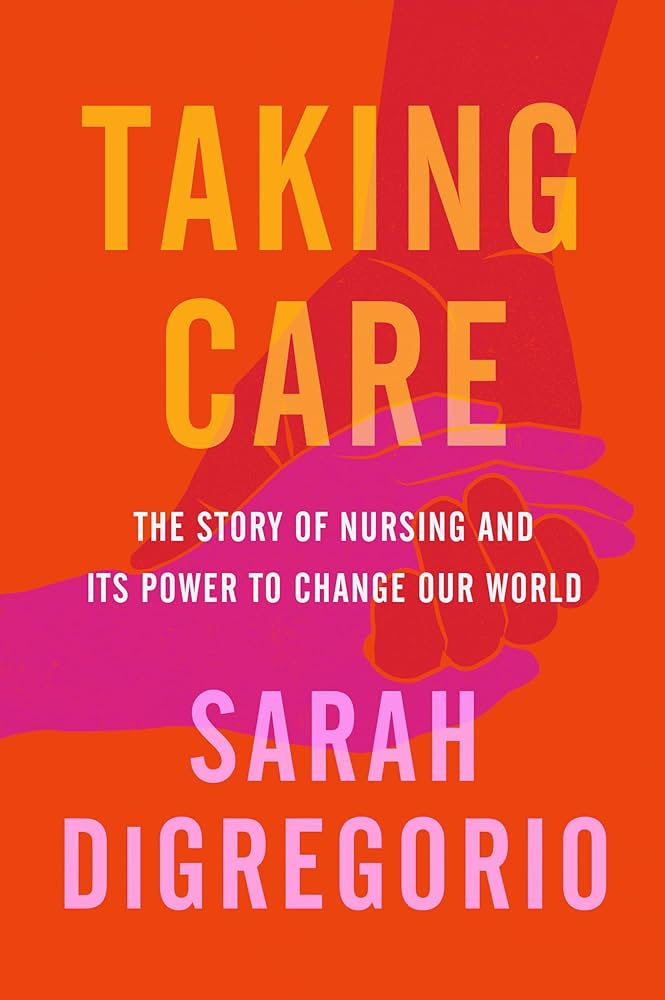
The story of nursing is complicated. It is woven into war, plague, religion, the economy, and our individual lives in myriad ways. In Taking Care, journalist Sarah DiGregorio chronicles the lives of nurses past and tells the stories of those today – caregivers at the vital intersection of health care and community who are actively changing the world, often invisibly. An absorbing and empathetic work that combines storytelling with nuanced reporting, Taking Care examines how we have always tried to care for each other – the incredible ways we have succeeded and the ways in which we have failed. Fascinating, empowering and significant, it is a call for change and a love letter to the nurses of yesterday, today, and tomorrow.


Think about what comes to mind when you hear the word “nurse.” Maybe you remember clapping during the early days of COVID, or you picture Florence Nightingale with her lamp. Perhaps you think of TV shows like M*A*S*H or countless others.. But the reality of nursing goes much deeper than any of these images suggest.

Here’s something that might surprise you: nursing is actually one of the biggest professions in the world, with over 27 million nurses and midwives globally. In the U.S. alone, there are three times as many nurses as doctors! Without nurses, our healthcare system would basically grind to a halt.

And nurses? They’re everywhere! They’re not just in hospitals – they’re on cruise ships managing outbreaks, in libraries doing free blood pressure checks, at NASA monitoring astronauts (how cool is that?), and even in state legislatures writing healthcare policies. They’re the ultimate healthcare multitaskers.

But what exactly do nurses do? Well, it’s way more than just following doctors’ orders. While doctors typically focus deeply on specific medical conditions, nurses take care of the whole picture. Think of it this way: if you’re leaving the hospital, your doctor might prescribe your medications, but your nurse is the one making sure you understand how to take them, checking if you can handle the stairs at home, and figuring out if you have someone to help with cooking.

Here’s my real-world example: imagine you need gallbladder removal surgery. Sure, the hepato-pancreato-biliary surgeon does the actual operation, but nurses are there every step of the way. They’re prepping you, putting in your IV, checking your vitals, and acting like healthcare air traffic controllers – making sure everyone from social workers to anesthesiologists to radiology staff is in the right place at the right time. After surgery, they’re watching your pain levels, managing your medications, preventing infections, and teaching your family how to care for you at home.

One nurse quoted in Taking Care put it perfectly: “Doctors figure out where the patient is and where they need to be. Nurses are the ones who actually get you there.” It’s like doctors draw the map, but nurses help you navigate the journey.

And get this – nursing isn’t just about medical procedures and medications. It’s about building relationships and understanding people in their full context – their family situation, their community, their environment. As nurse researcher Monica McLemore explained in the book, “Everyone thinks it’s just skills and tasks, like putting in IVs or reading monitors. But that’s just one part. Our real job is helping people through transitions, whether that’s recovering from illness or adapting to a new health reality.”

Think about it: nurses are often the first ones to notice when something’s off. Maybe it’s a subtle change in someone’s mental state that could signal a stroke, or maybe it’s spotting a pattern of heat-related health issues in farm workers. They’re like healthcare detectives, constantly putting together pieces of the puzzle.

The cool thing about nursing is that it’s both super scientific and deeply human. Nurses need to understand complex biology and medical procedures, but they also need to be great communicators and problem-solvers. They’re the ones asking the practical questions that doctors might not think of: “Do you feel safe walking in your neighborhood?” “Is there anyone at home who can help you?” “Do you need assistance getting food?”

And here’s something that often gets overlooked: nurses work with doctors, not for them. They’re separate but complementary professions, like two sides of the same healthcare coin. While doctors might focus on curing a specific condition, nurses focus on healing the whole person – and yes, there’s a difference!

So next time you’re in a healthcare setting, remember that the nurse caring for you is part of this amazing tradition that combines scientific knowledge, practical skills, and deep human connection. They’re not just there to take your temperature or give you medicine – they’re there to help guide you through whatever health journey you’re on, making sure you have what you need every step of the way.

After all, sooner or later, we all need someone to nurse us through tough times. And when that time comes, it’s pretty amazing to have someone who knows both the science of healing and the art of caring on your side.

With grateful appreciation to all the nursing team of PSC-3; you are caring professionals to the core.

Thank you.


Part of a regular series on 27gen, entitled Wednesday Weekly Reader.

During my elementary school years one of the things I looked forward to the most was the delivery of “My Weekly Reader,” a weekly educational magazine designed for children and containing news-based current events.

It became a regular part of my love for reading, and helped develop my curiosity about the world around us.

When Technology Moves In: The Impact of Digitalization on Third Places

Third places have long been celebrated as the heart of informal community life – places where people connect, converse, and unwind outside of home and work. But over the past 30 years, the rapid advancement of technology has profoundly changed the way we interact in these spaces. While digital tools have introduced new opportunities for connection, creativity, and productivity, they have also altered the dynamics of third places in ways that deserve reflection.

Here’s a quick dive into how technology has reshaped third places and what it means for the future of these essential spaces.

Technology as an Enabler in Third Places

In many ways, technology has amplified the appeal of third places. A primary example is the widespread availability of free Wi-Fi, which has transformed coffee shops, libraries, and even parks into productive hubs for work, study, and communication. Today, it’s common to see laptops open and phones charging as people work remotely or catch up with friends via video calls. Technology has expanded the functionality of third places, allowing them to serve a wider range of purposes beyond social gathering.

The Remote Work Revolution

The rise of remote work, turbocharged by the COVID-19 pandemic, has only accelerated this trend. Many people now use third places as extensions of their home offices, blurring the lines between leisure and labor. Coffee shops, for instance, are no longer just places for casual conversation or quiet contemplation—they’ve become coworking spaces, complete with power outlets and communal tables.

For freelancers, students, and entrepreneurs, this shift has been a game changer. Third places offer a sense of community and energy that can’t be replicated at home, while providing access to the digital tools they need to get work done. In this way, technology has made third places more inclusive for people who might have previously seen them as purely recreational.

New Forms of Community

Technology has also opened up new possibilities for building community in third places. Many venues now host virtual or hybrid events – think book clubs, gaming tournaments, or streaming parties – that allow people to connect both in-person and online. Social media plays a huge role here, too, with third places using platforms like Instagram and Facebook to foster engagement, share events, and attract patrons.

For some, these digital layers enrich the experience of third places by creating additional entry points for interaction. A local café’s Instagram page, for example, might highlight regulars, post upcoming events, or share stories that deepen patrons’ connection to the space.

The Drawbacks of Digitalization

As exciting as these developments are, technology’s presence in third places is not without its downsides. Many of the qualities that make third places special – their spontaneity, sense of equality, and focus on face-to-face interaction – are challenged by our increasing reliance on digital tools.

The “Alone Together” Phenomenon

Walk into any modern coffee shop, and you’re likely to see a room full of people… staring at their screens. This “alone together” dynamic, where individuals share a space but remain isolated in their own digital worlds, has become a hallmark of technology’s impact on third places. While people may still be physically present, the focus on devices often limits the kind of spontaneous, meaningful interactions that Oldenburg saw as central to third places.

In some cases, the proliferation of technology can even create tension. Patrons typing away on laptops for hours might monopolize tables, making it harder for casual visitors to find a seat. Similarly, the constant presence of screens can clash with the atmosphere of certain third places, such as cozy bookstores or intimate pubs, where the goal is to unplug and unwind.

Digital Divides and Inequality

Not everyone has equal access to the technology that increasingly defines third places. Free Wi-Fi and charging stations may be ubiquitous, but owning a laptop or smartphone is still a barrier for many people. As third places become more digitally oriented, those without the means to participate in this tech-enabled culture risk being excluded.

Moreover, some argue that the reliance on digital tools has made third places feel more transactional. For example, a café might prioritize accommodating remote workers who will stay for hours and make multiple purchases, rather than locals who simply want a quiet place to chat. This shift can subtly alter the inclusivity and purpose of third places, making them less welcoming for certain demographics.

Preserving the Soul of Third Places in a Digital World

Despite these challenges, there are ways to harness the benefits of technology in third places without losing the human connections that make them so valuable. It all comes down to balance—embracing digital tools while maintaining the qualities that make third places feel like home.

Intentional Design

Many third places are now rethinking their layouts and policies to create spaces that encourage both digital productivity and face-to-face interaction. For example, some coffee shops designate specific “no laptop” zones or set time limits on Wi-Fi use to ensure that everyone has a chance to enjoy the space. Others integrate technology in subtle, non-intrusive ways, such as offering power outlets under tables or using apps to streamline ordering without disrupting the atmosphere.

Programming That Bridges Digital and Physical

Hybrid events—like live music performances streamed online or trivia nights with digital scoring—can bring people together across physical and virtual spaces. These kinds of programs not only accommodate technology but actively use it to enhance the experience of third places, fostering connection rather than division.

Fostering Digital Literacy

For third places to remain inclusive, it’s crucial to address the digital divide. Community-oriented spaces like libraries are already leading the way by offering free access to technology and digital literacy programs. Other third places could follow suit, providing resources or workshops to help patrons make the most of their digital tools.

Preserving Spontaneity

Finally, third places must find ways to preserve the serendipitous interactions that make them unique. This might mean encouraging activities that take people away from their screens, such as board game nights, group exercise classes, or simply creating environments that invite conversation. The goal is to ensure that third places remain places where people connect—not just with Wi-Fi, but with each other.

Looking Ahead

Technology is here to stay, and its presence in third places will only grow. The challenge lies in integrating it thoughtfully, so that digital tools enhance rather than replace the social bonds that make these spaces so vital. By striking the right balance, third places can continue to evolve while staying true to their purpose: bringing people together in a way that feels meaningful, authentic, and human.


Other posts in this series:

The Joy of Reading: Reflecting on Another Year Between the Pages

Normally during the last week of the year, maybe sliding into the first few days of the new year, a post appears on 27gen related to reading and books.

Sometimes it’s about reading in general; others it’s about specific books that I’ve read during the past year.

That’s “normally” – the last few weeks have been anything but normal!

You can read more about it here (with a follow-up on 1/22), but the bottom line is that the last three weeks have been pretty much a blur, and a post in development since mid-December is just now ready for publication.


We have closed the book on 2024, and we are several weeks deep into 2025.

I find myself, like many book lovers, taking stock of the stories that have shaped my year. As someone who devours 2-3 books weekly, my life is measured not just in days and months, but in the volumes that have kept me company through seasons of change.

“Reading is a passport to countless adventures,” wrote Mary Pope Osborne, and indeed, each book opens a portal to new worlds, fresh perspectives, and unexpected revelations. This past year, through the pages of countless books, I’ve walked the bustling streets of distant cities, unraveled mysteries in moonlit manor houses, and contemplated the deepest questions of human existence – all from the comfort of my favorite reading chair.

Toni Morrison once said, “Books were my pass to personal freedom.” In a world that often feels increasingly fragmented and fast-paced, reading remains our sovereign territory, a space where we can pause, reflect, and truly be present. It’s a form of meditation, really – a way to quiet the endless notifications and urgent demands of modern life.

Looking back at 2024, I’m struck by how the books I’ve read (acquired 117, borrowed 174 from the library) have served as faithful companions through both ordinary days and extraordinary moments. They’ve been there during early morning tea rituals, afternoon coffee shop visits, late-night contemplations, and those precious stolen moments between responsibilities. As Neil Gaiman beautifully put it, “A book is a dream that you hold in your hand.” These dreams have sustained us, challenged us, and helped us make sense of an ever-changing world.

A special part of the AdamsFamilyExperience at Christmas (when all of our kids and grandkids were with us for 5+ days) was seeing parents and kids alike sprawled over a chair or on the floor, reading a book. That sight warmed my heart!

But reading is more than just escape or entertainment. Research consistently shows that regular reading improves empathy, reduces stress, enhances cognitive function, and even helps stave off cognitive decline as we age. In essence, every time we open a book, we’re investing in our mental and emotional wellbeing. As Maya Angelou wisely observed, “Any book that helps a child to form a habit of reading, to make reading one of his deep and continuing needs, is good for him.” The same holds true for adults.

As we look ahead to 2025, there’s something deeply comforting about the towering stack of books waiting to be read – the “to-be-read” pile that seems to grow taller despite our best efforts to keep pace. Each unread book represents a promise of discovery, a future adventure waiting to unfold. Italo Calvino captured this anticipation perfectly: “The more you read, the more you realize you haven’t read. The more you know, the more you realize you don’t know.”

In this coming year, I encourage fellow readers to embrace both the familiar and the unknown. Perhaps it’s time to venture beyond our comfort zones – to pick up genres we normally bypass, to seek out voices we haven’t heard before, to challenge our preconceptions through literature that pushes us to think differently. As Frederick Douglass reminded us, “Once you learn to read, you will be forever free.”

Reading isn’t just a solitary pursuit, either. Book clubs, online reading communities, and literary social media have created vibrant spaces where readers can connect, debate, and share their love of literature. These connections remind us that while reading itself may be solitary, the joy of books is meant to be shared. As C.S. Lewis noted, “We read to know we are not alone.”

If you prepare a reading resolution for 2025, remember that there’s no “right” way to be a reader. Whether you prefer physical books, e-readers, or audiobooks; whether you read one book a month or one a day; whether you annotate meticulously or simply let the words wash over you – all approaches are valid. The only requirement is the willingness to open yourself to the transformative power of stories.

So here’s to another year of reading adventures. Here’s to dog-eared pages and highlighted passages, to late nights spent promising ourselves “just one more chapter,” to the books that will make us laugh, cry, think, and grow. As we stand at the beginning of 2025, let’s remember what Susan Sontag said: “Reading sets standards. When we read, we want to read more, better, deeper.”

May your 2025 be filled with wonderful books, quiet reading moments, and the joy of discovering new favorite authors.

When people ask me, “Do you collect books?” I always say, “No, books collect me.”

Nicholas Barker, in At Home with Books

Changing Social Norms and Work-Life Boundaries: The Impact on Third Places

Over the past few decades, societal shifts in how we approach work and leisure have had a profound impact on third places. The rise of remote work, the gig economy, and an increasingly flexible approach to work-life balance has redefined when, where, and how people engage with spaces outside of home and work. As a result, third places have evolved to accommodate new social norms and the blurring of traditional boundaries.

Here are some brief thoughts and an exploration of how these changing dynamics have reshaped third places, focusing on the emergence of co-working spaces and the increased flexibility that characterizes modern life.

Co-Working Spaces: A New Hybrid Between Work and Socialization

One of the most striking developments in the landscape of third places is the rise of co-working spaces. Designed to meet the needs of freelancers, remote workers, and entrepreneurs, these spaces combine the functionality of a workplace with the informal, community-oriented vibe of traditional third places. While co-working spaces blur the line between second places (work) and third places (social hubs), they represent a new model that bridges both worlds.

Community Meets Productivity

Unlike traditional offices, co-working spaces prioritize flexibility and community. Members can choose when and how to use the space, whether for focused solo work, casual collaboration, or attending networking events. The open, adaptable layouts—often featuring communal desks, breakout areas, and cozy nooks—encourage organic interactions and serendipitous conversations. Many co-working spaces also host workshops, happy hours, and speaker events, creating opportunities for professionals to connect on a deeper level.

By fostering a sense of belonging, these spaces replicate some of the social benefits of third places while accommodating the demands of modern work. For many people, especially those working independently, co-working spaces have become essential hubs for both productivity and interpersonal connection.

A Global Phenomenon

The proliferation of co-working spaces is not limited to urban centers. Smaller towns and suburban areas are also seeing the rise of these hubs, often tailored to local needs. In some cases, co-working spaces double as cultural or community centers, further integrating them into the social fabric of their surroundings. Global brands like WeWork and Industrious cater to professionals seeking consistency and amenities, while smaller, independent co-working spaces often reflect the unique character of their communities.

Blurring Boundaries

Despite their many benefits, co-working spaces challenge the traditional concept of third places. Their emphasis on productivity and networking can make them feel more like extensions of the workplace than neutral, egalitarian gathering spots. Additionally, access often comes at a price—whether through memberships or day passes—which can create barriers for those unable to afford these fees. As such, co-working spaces might not fully embody the inclusivity that defines classic third places.

Increased Flexibility and the Fluidity of Work and Leisure

Another major shift affecting third places is the growing fluidity between work and leisure. As remote work and flexible schedules become more common, the way people use third places has changed significantly. No longer confined to a rigid 9-to-5 routine, individuals now seek social interaction and relaxation at all hours of the day.

Third Places at Unconventional Times

In the past, third places like coffee shops, gyms, and libraries often catered to predictable patterns: morning coffee rushes, lunch breaks, and after-work happy hours. Today, these spaces must adapt to a more varied and unpredictable flow of visitors. A remote worker might settle into a café at 10 a.m. for a virtual meeting, while a group of gig workers might gather at a co-working space at 9 p.m. to collaborate on a project.

This shift has made third places more dynamic, as they now serve diverse needs throughout the day. It has also led to changes in the services and amenities offered. For example, many coffee shops now provide extended hours, enhanced Wi-Fi, and quiet zones to accommodate both early birds and night owls. Similarly, libraries and community centers are experimenting with flexible opening times and multi-use spaces to remain relevant in this new context.

Blurring of Roles and Identities

The merging of work and leisure in third places reflects broader changes in how people view their roles and identities. For many, professional and personal lives are no longer distinct categories but fluid parts of a larger whole. This mindset is especially prevalent among millennials and Gen Z, who often prioritize work-life integration over separation.

In third places, this shift is evident in the way people blend activities. A person might take a work call at a café, meet a friend for lunch at the same table, and then spend the afternoon reading or brainstorming a creative project. These multi-functional uses challenge the traditional purpose of third places as purely leisure-focused environments but also expand their versatility.

Challenges of Flexibility

While increased flexibility offers many benefits, it also comes with challenges for third places. The rise of remote work has heightened demand for spaces that cater to both individual and group needs, requiring investments in infrastructure like seating, power outlets, and acoustics. Additionally, the presence of remote workers can sometimes conflict with the needs of casual visitors. For example, a family looking to enjoy a quiet afternoon at a café might find the atmosphere dominated by laptops and phone calls.

The expectation of constant availability can also strain the social aspects of third places. When individuals are always “on” for work, it can be harder to disconnect and engage in the kind of spontaneous, unstructured interactions that make third places unique.

The Future of Third Places in a Changing World

As social norms and work-life boundaries continue to evolve, third places will need to adapt to remain relevant. Co-working spaces and flexible schedules are likely to play an increasingly central role in shaping how we use these spaces. However, the challenge will be to balance productivity with community, ensuring that third places retain their core purpose as sites of connection and belonging.

To achieve this, designers and operators of third places might consider:

  • Creating distinct zones for different activities, such as quiet work, socializing, and relaxation, to accommodate diverse needs.
  • Offering affordable or free access to ensure inclusivity, particularly in co-working environments.
  • Fostering opportunities for spontaneous interaction through events, shared seating arrangements, or creative programming.

By embracing these changes while staying true to the spirit of third places, we can ensure that these vital community spaces continue to thrive in an increasingly flexible and interconnected world.


Other posts in this series:

What I Did On My Christmas Vacation


A Tale of Two Experiences

There’s something undeniably nostalgic about the phrase, What I Did on My Christmas Vacation. For many of us, it immediately conjures up memories of childhood – returning to school in January, bundled up in our winter coats, and being handed the inevitable post-holiday writing assignment. The topic was always the same: share your holiday experience in the form of a story, complete with a beginning, middle, and end. Back then, it was an exercise in creativity, structure, and self-expression. Now, as adults, we’re still asked the same question – though the audience has changed. Instead of teachers grading our grammar and imagination, we find ourselves recounting our holiday stories to work colleagues, catching up with friends, or even reflecting on it for ourselves.

This simple question has endured because it’s more than just small talk; it’s a way to connect, to share a piece of ourselves with others. Whether we’re reminiscing about the holidays of childhood, giving a polished version to coworkers, or swapping heartfelt moments with close friends, the answer allows us to revisit our experiences and build connections. With this throwback memory to those early school days, let me tell you about my Christmas vacation…

The #AdamsFamilyExperience at Christmas

As you can read here, this was to be no ordinary Christmas holiday at our house – for the first time in several years, everyone was coming home. 

All 21 of us!

Things unfolded as planned – everyone arrived pretty much on time, everyone was healthy, and everyone was happy to see siblings and cousins.

We had already designated Monday 12/23 as our “Christmas” – and on the night of the 22nd, all four of our kids and their spouses dove in after their kids, nieces, and nephews were in bed to create the first ever #AdamsFamilyExperience Christmas train:

It actually took less time that I anticipated; in some of Anita and my past experiences, I remember Christmas Eve assembly and wrapping sessions that lasted until the early hours of the morning! Of course, ten sets of hands helped!

The result speaks for itself – an engine with 11 cars, one for each grandchild!

The next fews days were mostly a blur as we unwrapped gifts, ate wonderful meals, played with new toys (grandkids) and games (adults), and just generally enjoyed the wonderful chaos called family.

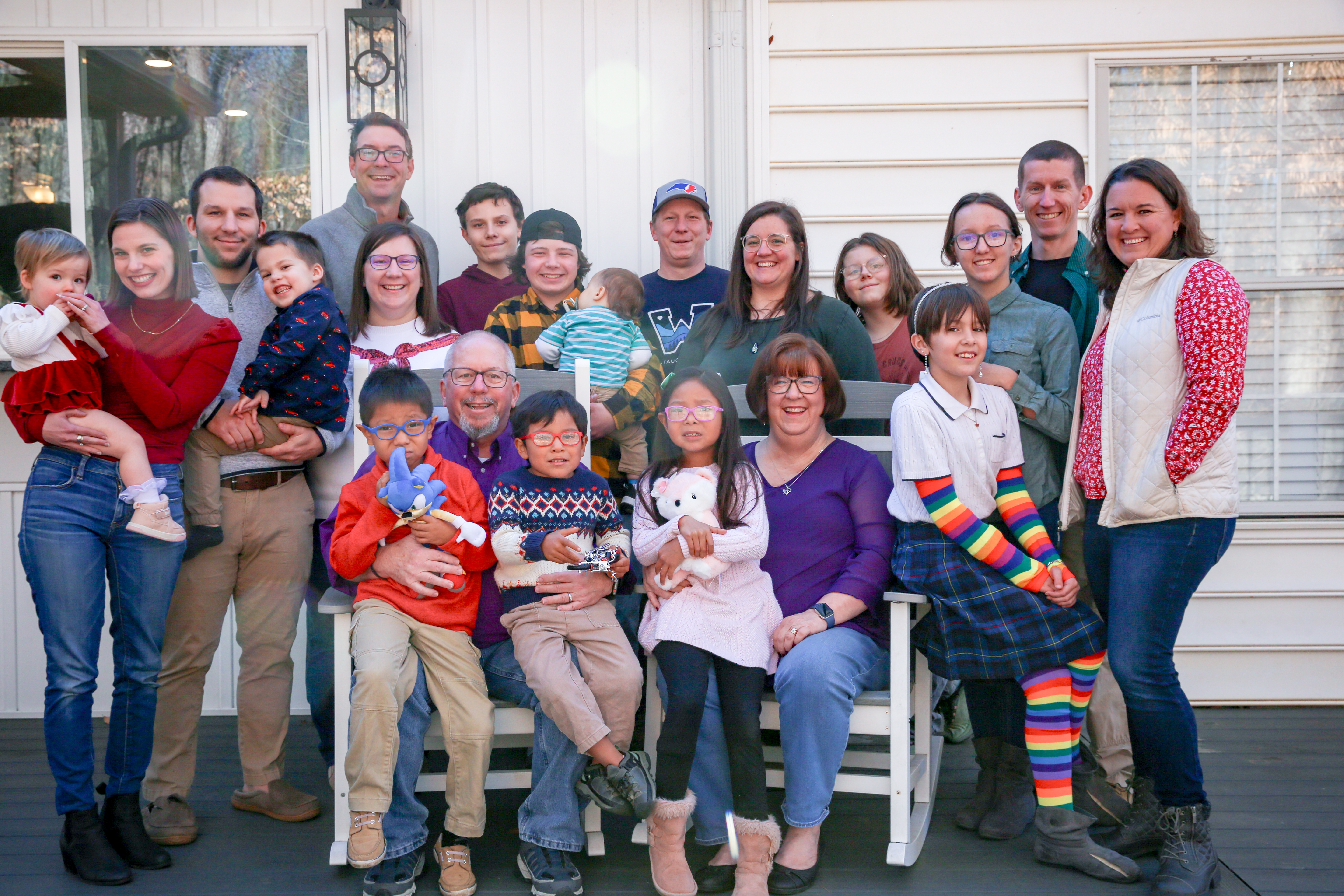
We even had time to gather for a family photo:

When Christmas Day rolled around, it was time to begin saying goodbye as three of the families headed back home to continue their own Christmas traditions. Our NM tribe had planned to stay with us until the 30th.

…and then some other stuff happened.

The day after Christmas I was not feeling well, and took it easy most of the day. By 12/27 I was in quite a bit of pain, so Dr. Mom, AKA Anita, took me to urgent care where they promptly sent me off the the Emergency Department – where I spent the day into the next morning waiting for a hospital room so I could be transferred.

The diagnosis leaving the ED was surgery for a perforated ulcer, and the surgical team at Atrium Cabarrus was anticipating that as well. However, that’s not what God had planned.

Because of the delay in getting a room, then a delay in having an imaging test that would pinpoint the problem, it was actually Sunday 12/29 when the surgical team took a conservative approach – no surgery at the moment, but complete rest and IV fluids only for up to a week.

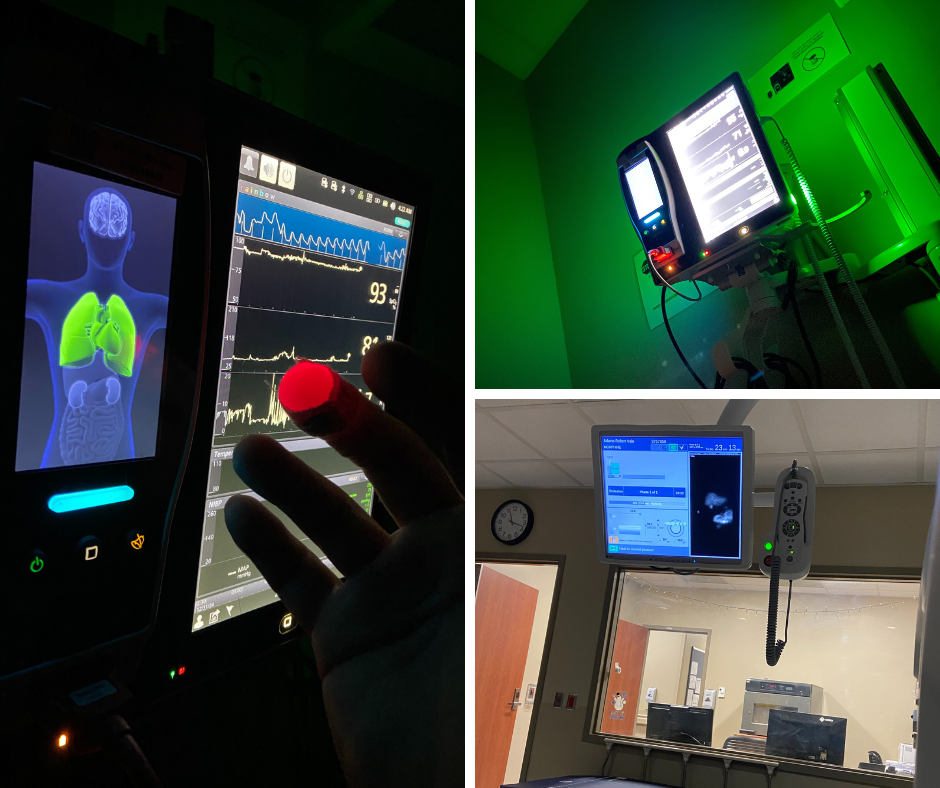
It seems my body had encapsulated the ulcer, and was in the process of healing itself. A fews days later I was able to observe first-hand the amazing view of swallowing a radioactive dye going down my throat and into and through the various organs – with no signs of a leak this time.

With vitals where they wanted them, I was discharged on Thursday 1/2 – only to be readmitted 12 hours later with intense pain in my chest. Focused on signs of cardiac distress, the triage team was not as fast as getting me in a room as I would have liked – but at least I got an ED room instead of the dozen or so patients who were lined up in the hallways (including the sheriff’s deputies and a patient in handcuffs)! Imaging revealed an inflamed gallbladder, likely as a result of what was going on next door with my ulcer.

After a few hours in the ED, I was transferred back to PSC-3 – the same post surgical wing with the same nursing staff I had just spent a week with. This group of dedicated nurses were simply the best in caregiving I have ever experienced. To a person they were gentle and efficient as they went beyond fulfilling what they had to do to actually caring about me as a person. Over my 10-day stay, they were amazing in looking out for me in every way imaginable. We even got to laugh over “losing” me during one of the procedures!

On Sunday 1/12 I heard the words from my surgical team I was anticipating: “Do you want to go home today?” With a genuinely fond farewell from the nursing team, Anita brought me home that evening, where I crashed for the next 14 hours.

My prognosis is good, with additional tests and imaging scheduled in about a month to see where my body is at in the healing process.

The boyhood me, receiving a post-holiday assignment, would have quite a tale to tell.

The adult me, reflecting on what happened over the past couple of weeks, has no less of a tale to tell.

Whether it’s an essay for a teacher, small talk with coworkers, or a heartfelt chat with friends, What I Did on My Christmas Vacation is a question that evolves with us. It’s a chance to reflect, share, and connect in ways that go beyond the surface. So the next time you hear it, embrace the opportunity to tell your story – and to learn a little more about the people asking the question. After all, the magic of the holidays lives on in the stories we share.


What did you do on your Christmas vacation?