Beyond the Bleah: Embracing Blue Zone Habits for a Vibrant Future

Growing up in the 1960s, I had the distinct advantage of parents who were avid newspaper readers. Part of that luxury came from the fact that my father owned a gas station, and the morning (and for many years, evening) editions of the Nashville papers provided plenty of conversation fodder for the regular customers who frequented his business.

Of course, the first section I was interested in was the comics, and first in the comics was the Peanuts strip by Charles Schulz. And as with many – children and adults alike – my favorite character in the Peanuts comic strip was Snoopy. Because newspaper seemed to vanish after a day or so, the gift of the first Peanuts Treasury book in 1969 was a true treasure – one that is still in my library.

In the “Peanuts” comic strip, Snoopy, Charlie Brown’s imaginative beagle, is known for many quirks and catchphrases. One of his most memorable expressions is the simple yet evocative “bleah.”

The Bleah Zone

“Bleah” first appeared in the Peanuts comics as Snoopy’s way of expressing disgust, disappointment, or general dissatisfaction. Creator Charles M. Schulz used this expression to give Snoopy a unique “voice” without resorting to actual speech bubbles, as Snoopy’s thoughts were typically shown in thought balloons.

When Snoopy says “bleah,” it’s often accompanied by a distinctive facial expression – a look of disgust with his tongue sticking out. This expression is used in various situations:

1. Food-related disgust: Often when faced with dog food he doesn’t like.

2. Disappointment: When plans fall through or expectations aren’t met.

3. Annoyance: In response to other characters’ actions or statements.

4. General dissatisfaction: As a commentary on life’s little frustrations.

“Bleah” became one of Snoopy’s trademark expressions, instantly recognizable to Peanuts fans. Its simplicity and versatility made it a popular phrase beyond the comics, often used by people to express their own feelings of disgust or disappointment in a lighthearted way.

The expression has been featured in Peanuts TV specials, merchandise, and even entered common usage among fans. It represents Snoopy’s ability to convey complex emotions through simple, dog-like utterances, adding to his charm as a character who bridges the human and canine worlds.

“Bleah” remains a quintessential part of Snoopy’s character, embodying his expressive nature and the comic strip’s ability to convey relatable emotions through seemingly simple means.

For the purpose of this discussion, however, there is also a phonetically similar sounding phrase that is important: the Blue Zone.

The Blue Zone

“Blue zones” are regions where people live significantly longer than average. This concept, and the research surrounding it, has gained popularity in health and lifestyle studies over the past two decades.

The term “blue zone” was first coined by Dan Buettner, a National Geographic fellow, in 2005. It originated from a demographic study of Sardinia, Italy, where researchers used blue markers to highlight areas with a high concentration of centenarians. His latest book, The Blue Zone: Secrets for Living Longer, brings readers a beautifully illustrated and informative guide to the places on Earth where people live the longest—including lessons learned, top longevity foods, and the behaviors to help you live to 100.

Buettner and his team identified five blue zones worldwide:

  • Okinawa, Japan
  • Sardinia, Italy
  • Nicoya, Costa Rica
  • Ikaria, Greece
  • Loma Linda, California, USA

Blue zone research focuses on common lifestyle factors among these long-lived populations, including:

  • Plant-based diets
  • Regular physical activity
  • Strong social connections
  • Sense of purpose
  • Stress reduction techniques

Today, blue zone research informs public health initiatives, urban planning, and individual lifestyle choices. Some cities and communities have implemented “Blue Zones Projects” to promote healthier living based on these principles.

The concept has also influenced the food industry, with “blue zone” diets becoming popular among health-conscious consumers.

While the research has its critics who point out potential confounding factors, the blue zone concept continues to shape discussions about longevity and healthy aging…

…two very important parts of the journey to becoming a Modern Elder!

While working through Chip Conley’s wonderful book, Learning to Love Midlife, these two concepts come together in the first of twelve reasons of why life gets better with age.

We Have More Life Left Than We Thought

As we approach middle age, it’s crucial to differentiate between life span and health span. Life span refers to our total years of life, while health span describes the period we remain free from serious illnesses and capable of independent living. 

In the U.S. life spans have been increasing over the past decades. In my case, having reached age 65 last year, there’s at least a 50 percent chance I will live past 85. 

Fortunately, health spans are also increasing, with those reaching 85 more likely to have maintained an active lifestyle in their later years. It’s possible to slow down biological aging compared to chronological aging.

The 20th century saw remarkable progress in extending life expectancy, with a global average increase of 30 years. Now, the focus shifts to enhancing the quality of these additional years, ensuring that extended lives are filled with depth and meaning.

Dan Buettner, a faculty member at Modern Elder Academy and author of the renowned Blue Zones research referenced above, has identified nine key factors associated with living long, healthy lives. His work examines regions worldwide known for exceptional longevity:

  1. Move Naturally – The world’s longest-living people garden and go for walks. They don’t necessarily pump iron.
  2. Have a Purpose – Being clear about one’s sense of purpose can add seven to eight years to one’s life expectancy.
  3. Downshift – People with a long life span-and a long health span — incorporate practices into their daily lives that reduce stress and promote mental health.
  4. Eat by the 80 Percent Rule – Healthy agers stop eating when their stomachs are 80 percent full.
  5. Eat Plants – A plant-based diet with a limited amount of meat can extend your life several years.
  6. Drink Alcohol Moderately – People in Blue Zones drink regularly and moderately, generally with friends and/or food.
  7. Belong to a Faith Community – Attending faith-based services weekly can add four to fourteen years of life expectancy.
  8. Prioritize Loved Ones – Whether it’s with blood- or chosen-family, those who live to be centenarians have deep bonds with their kin.
  9. Find a Healthy Tribe – The people who live the longest thrive in social circles that support healthy behaviors and a sense of connection.

If your current life style is more like Snoopy’s “bleah zone,” it doesn’t mean you can’t improve your longevity. Adopting lifestyle habits from “blue zones” – regions known for exceptional longevity – can potentially increase your both your life span and your health span.

It’s important to note that as you enter middle age, behaviors that seemed harmless in your youth may begin to have more significant impacts on your health. This stage of life is a crucial time to recognize and act on our ability to shape our future health and longevity through our choices and habits.

What will it be? On the journey to becoming a Modern Elder, which choice will you make:

Bleah or Blue?


Inspired by:


Exploring Arthur Conan Doyle’s Literary Worlds Beyond Sherlock Holmes

While Sherlock Holmes remains Arthur Conan Doyle’s most famous and enduring literary creation, the prolific author populated his stories with several other memorable recurring characters. Among them were the eccentric Professor George Edward Challenger and the boastful but courageous Brigadier Gerard, each starring in their own book series showcasing Doyle’s talent for adventure tales and historical fiction respectively.

Professor Challenger first appeared in the 1912 novel The Lost World, in which the ill-tempered but brilliant scientist acted as the combustible narrator who recounts an expedition to a remote plateau in South America where dinosaurs and other prehistoric creatures still roamed. This imaginative work not only offered thrilling accounts of discovery and survival, but engaged with early 20th century theories about the extinction of ancient species and natural selection. 

If sounds familiar, author Michael Crichton’s novel The Lost World (1995) was heavily influenced by Conan Doyle. Bringing a dead character back (Ian Malcolm)  was an idea Crichton got from Conan Doyle, who did the same with his character Sherlock Holmes.

Crichton later stated that the novel’s title is an homage to Doyle’s 1912 novel of the same name, as well as the 1925 film adaptation of Doyle’s novel, also titled The Lost World. Crichton’s novel also shares some story similarities with Doyle’s novel, as they both involve an expedition to an isolated Central American location where dinosaurs roam.

Challenger proved so popular that Doyle brought him back as the cantankerous hero of four more novels – The Poison Belt (1913), The Land of Mist (1926), The Disintegration Machine (1927), and When the World Screamed (1928) – as well as several short stories. These tales saw the gruff academic encounter catastrophes like a cloud of toxic gas enveloping the earth, psychic phenomena, and futuristic destructive technology, allowing Doyle to indulge his fascination with the supernatural and speculative science.

During the 10-year period between effectively “killing off” Sherlock Holmes and bringing him back in 1903, Arthur Conan Doyle dedicated much of his writing to historical fiction. His most acclaimed works from this era were the short stories recounting the exploits of Brigadier Gerard, a fictional French officer who served in Napoleon’s army up to the Battle of Waterloo. 

In most of these tales, Etienne Gerard himself narrates his highly implausible yet entertaining adventures. Readers are transported to feeling like they are sitting in a Parisian cafe in the mid-19th century, listening to this aging soldier’s boastful boasting and witty stories. Gerard hails from the Gascony region of southwest France, embodying the stereotypical Gascon personality of being vain, brave and crafty.

The stories showcase Doyle’s zeal for historical accuracy. While Gerard himself was an invented character, his adventures drew inspiration from the memoirs and biographies of over 20 real soldiers from that era, especially Baron de Marbot who became one of Napoleon’s aides and generals and even earned a mention in Napoleon’s will. Doyle meticulously researched to ground the fantastical tales in realism.

With his oversized ego, lust for glory, and utterly undeserved self-confidence, the Brigadier personified the stereotype of the arrogant French soldier. And yet, despite or perhaps because of his oblivious buffoonery, Gerard still managed heroic feats of courage and daring on the battlefield, creating a lovable characters that Doyle clearly relished writing about over the course of nearly two decades.  

While very different in personality and the eras they occupied, both Professor Challenger and Brigadier Gerard provided Arthur Conan Doyle with wonderful vehicles to showcase his talent for adventure writing outside the Holmes mysteries. The curmudgeonly scientist and the blusteringly vain soldier allowed Doyle to transport readers to lost worlds of the prehistoric past, psychic dimensions, and the age of Napoleonic conquest through his endlessly creative literary imagination.


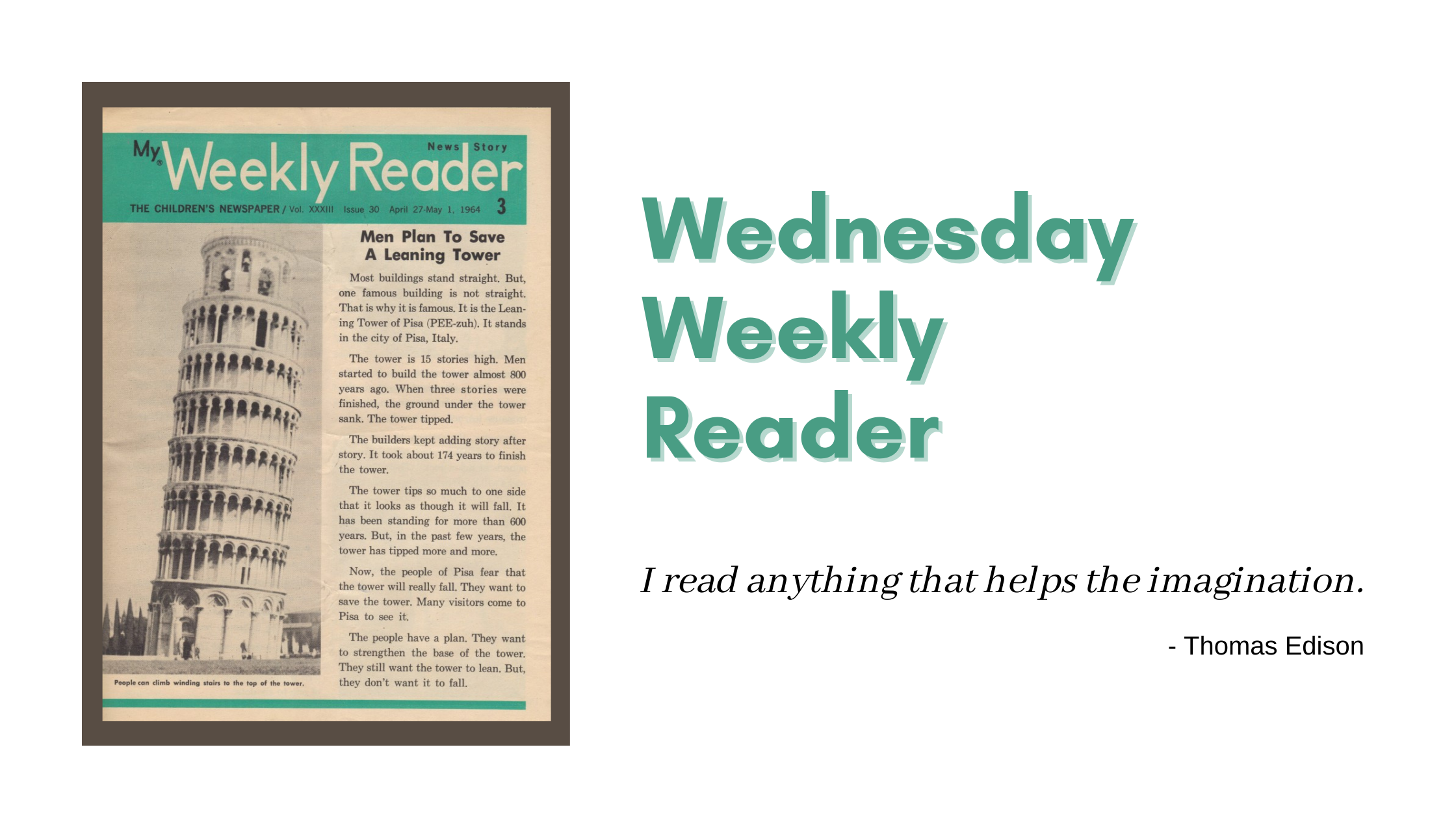
Part of a regular series on 27gen, entitled Wednesday Weekly Reader.

During my elementary school years one of the things I looked forward to the most was the delivery of “My Weekly Reader,” a weekly educational magazine designed for children and containing news-based current events.

It became a regular part of my love for reading, and helped develop my curiosity about the world around us.

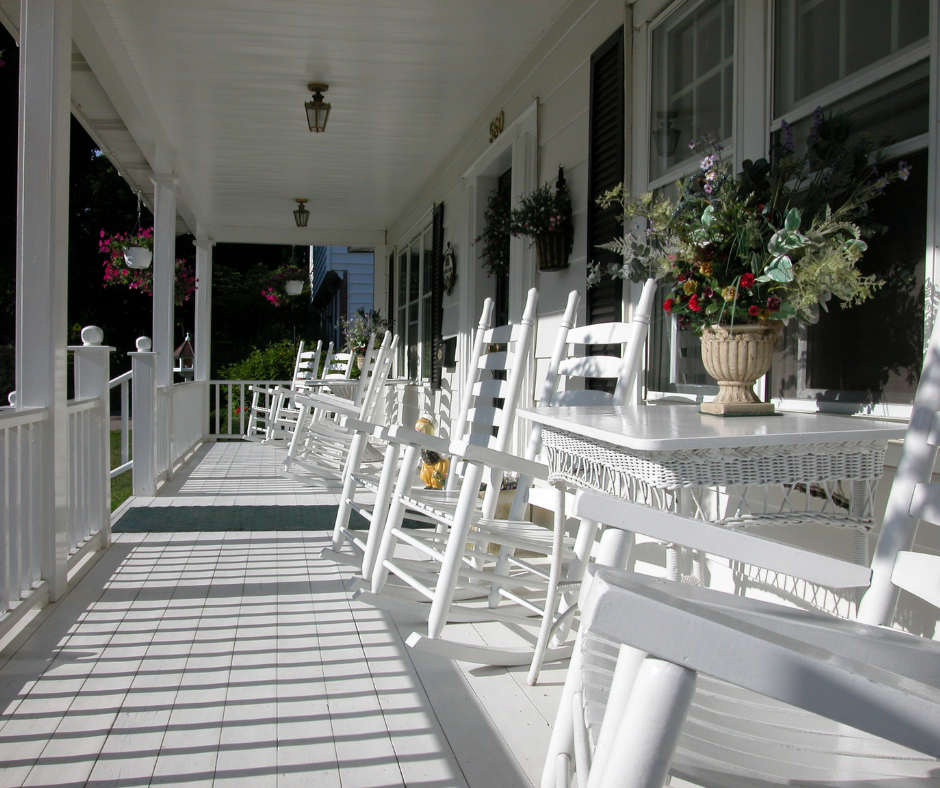
The Irresistible Lure of the American Front Porch


Porch Revival: How an Architectural Classic Reclaimed Its Place in Modern Living

The porch, a quintessential element of American residential architecture, underwent significant transformations in the latter half of the 20th century and into the 21st century. Once a ubiquitous feature of homes across the country, the porch experienced a decline in popularity during the post-World War II era, only to experience a resurgence in recent decades.

The Mid-20th Century Decline

In the 1950s and 1960s, the rise of suburban living and the prevalence of air conditioning contributed to the diminishing role of porches. As families embraced a more private, indoor lifestyle, porches were often seen as unnecessary appendages or relics of a bygone era. Ranch-style homes, which were popular during this period, frequently lacked prominent porch spaces, favoring a sleek, minimalist aesthetic.

The Return of the Porch: 1970s-1990s

By the 1970s and 1980s, a renewed appreciation for traditional architectural styles and a growing interest in outdoor living began to revive the porch’s popularity. The resurgence of Victorian and Craftsman-style homes brought back the iconic wraparound porch, while contemporary designs incorporated more modest porch elements.

During this period, porches evolved to serve multiple functions beyond their traditional role as social gathering spaces. They became extensions of indoor living areas, offering additional seating and entertaining spaces for homeowners. The porch also emerged as a transitional zone between the home’s interior and the outdoors, blurring the boundaries between private and public spaces.

The Modern Porch: 2000-Present

In the 21st century, porches have continued to evolve, reflecting changing lifestyles and architectural trends. Here are some notable developments:

Outdoor Living Spaces: Porches have become integrated into larger outdoor living areas, featuring comfortable seating, outdoor kitchens, and entertainment systems. This trend has blurred the lines between indoor and outdoor spaces, creating seamless transitions between the two.

Sustainable Design: With an increased emphasis on environmental sustainability, porches have been designed to incorporate eco-friendly features such as natural ventilation, shading devices, and energy-efficient lighting. These elements contribute to the overall energy efficiency of the home while providing comfortable outdoor spaces.

Versatile Functionality: Contemporary porches often serve as multifunctional spaces, accommodating a variety of activities. From outdoor dining areas to home offices or exercise spaces, porches have become adaptable extensions of the home’s interior.

Aesthetic Diversity: While traditional porch styles like wraparounds and covered entries remain popular, architects and designers have also explored more modern interpretations. These include minimalist designs with clean lines, cantilevered structures, and the integration of innovative materials like glass and steel.

As societal values and architectural trends continue to evolve, the porch remains a beloved and adaptable element of American residential design. Its ability to seamlessly blend indoor and outdoor living, while reflecting changing lifestyles and sustainability goals, ensures its enduring relevance in the 21st century and beyond.

If you want to build community and attachment to where you live, scientists and neighbors agree: a front porch is just the ticket.

After more than a hundred years of inordinate fondness, Americans at the middle of the twentieth century discarded the porch as old-fashioned, obsolete, and valueless – until a blend of conservation and revival began to restore it to a place of honor and utility. The porch will never be what it once was, but neither will it vanish. Instead, after 150 years of yawing from ubiquity to rejection, the porch will hold its place as a standard element of domestic American architecture, and we will all be the better for that.

Michael Dolan

During the last decades of the Twentieth Century, outdoor life shifted away from the fronts of the houses. Before WW II, even fairly humble houses had front porches where people spent part of their free time. Upper-middle-class houses frequently had side porches. In the half-century after the war, family leisure gravitated to back yards,  which are now routinely equipped with decks or patios. In other words, private areas behind the houses have been upgraded, while public areas facing the streets and sidewalks have surrendered much of their social importance.

Philip Langdon

We thought that the point of requiring porches on the fronts of houses was for environmental reasons – to cool the air doing into the house. We realized after the houses were up that everybody saw the social component of the porch – it status as the important in-between space separating the pubic realm from the private realm.

Elizabeth Plater-Zyberk

People like the image of a porch; it takes them back to simplicity, it conjures up the symbol of ‘I want to go there,’ and the porch takes them there.

Niedra North

For author Michael Dolan, if an American porch is really to be an American porch, it has to have some Americans on it. Latter-day porches often honor that principle in the breach. Instead of serving as community-oriented  centers of conviviality and welcome, these porches stand, with their perfectly-placed rockers and adroitly-arranged tchotchkes, as illustrations of the hospitality folks would extend if only they weren’t so busy being busy, and if only being sociable didn’t intrude so much on their private lives.

He believes that if more houses had porches more people will have the chance to sit on them.

It that were the case, he continued, in time, as it had been for him with his older neighbors when he moved to the neighborhood, the first names would come, and then the friendships – and if not friendship, then neighborhood cordiality, that pleasant state in which you and the guy next door know one another well enough to say hello from the porch or to invite one another up to sit in a rocker or the glider.

Bringing Hospitality Back to Your Porch

Simply put, the front porch is too good an idea to be allowed to slip away, even if the hospitality we display is more theoretical than real.

– Michael Dolan

The good ol’ American front porch seems to stand for positivity and openness; a platform from which to welcome or wave farewell; a place where things of significance could happen. 

– Dan Stevens

Make your front porch a part of your home, and it will make you a part of the world. 

– John Sarris

My porch represents what I want my house to be: sheltering and communal, private and welcoming, a quiet vantage point from which to greet the whole world.

– Melody Warnick

Inspired by these books:

The American Porch, by Michael Dolan

This Is Where You Belong, by Melody Warnick

A Better Place to Live, by Philip Langdon


The Power of Panoramic Perception: Unlocking Leadership Agility with Horizon Gazing Practices


It’s not what you look at, its how you look at it.

It’s not just about what you visually observe, but rather how you perceive and engage with your surroundings that can impact your well-being. While spending time outdoors in nature is undoubtedly beneficial, you may not be fully capitalizing on those advantages if you’re not actively working to heighten your senses and awareness. 

An intriguing theory suggests that our ancestors would scan the horizon panoramically to check for potential threats, inducing a calming state when no immediate danger was present. Conversely, if a threat emerged, their vision would narrow to laser focus, triggering the fight-or-flight stress response. This notion raises the possibility that simply adjusting how we look at our environment could influence our emotional state.

Neuroscientific research supports this idea. Studies show that when we visually lock onto something stressful or exciting, our field of view constricts to increase focus while our eyes subtly turn inwards. However, by expanding our peripheral vision to take in a wider view, we can effectively disengage the body’s stress reaction pathways. Deliberately relaxing our gaze to encompass our full surroundings can induce physiological calm.

But vision isn’t the only sense that affects well-being. Often, we become so consumed by internal thoughts during outdoor activities that we fail to truly experience and appreciate our multisensory surroundings. By mindfully engaging each of our senses in turn – absorbing the sounds, feeling the air currents, touching textures – we activate different regions of the brain. This grounding practice helps center us in the present moment while allowing an opportunity to find perspective amidst life’s stresses.

The key is not just passively observing nature, but purposefully directing your senses to fully immerse yourself in the experience. Adopting this intentional mindset can unlock the rejuvenating benefits that connection with the outdoor world can provide.

The intentional mindset described above can also be helpful in another type of gazing at the horizon.

The concept of “horizon gazing” refers to the practice of looking ahead and anticipating future trends, changes, and potential opportunities or challenges that may arise. In the context of leadership development, both for individuals and organizations, horizon gazing plays a crucial role in preparing leaders to navigate and adapt to an ever-changing landscape.

For individuals aspiring to develop their leadership skills, horizon gazing helps them cultivate a forward-thinking mindset. By continuously scanning the horizon for emerging developments in their industry, technology, societal shifts, and other relevant domains, they can better anticipate the future demands and competencies required of effective leaders. This foresight enables them to proactively acquire the necessary knowledge, skills, and mindsets to lead effectively in the face of impending changes.

In an organizational context, horizon gazing is a vital component of strategic planning and leadership development initiatives. Organizations that embrace this practice are better positioned to identify and respond to potential disruptions, emerging customer needs, and competitive threats or opportunities. By fostering a culture of horizon gazing, organizations can:

Identify future talent requirements: By anticipating future trends and challenges, organizations can better understand the leadership competencies and skills that will be needed to navigate the changing landscape. This allows them to develop targeted leadership development programs and succession planning strategies to cultivate the required talent pipeline.

Adapt organizational structures and processes: Horizon gazing can reveal the need for organizational restructuring, process optimization, or the adoption of new technologies or business models. By recognizing these needs early, organizations can proactively adapt and equip their leaders with the necessary tools and capabilities to lead through transformational changes.

Foster innovation and agility: Leaders who are adept at horizon gazing are better equipped to anticipate and respond to market shifts, customer preferences, and technological advancements. This agility enables organizations to stay ahead of the curve, fostering a culture of innovation and continuous improvement.

Mitigate risks and seize opportunities: By identifying potential risks and opportunities on the horizon, organizations can develop contingency plans, implement risk mitigation strategies, and position themselves to capitalize on emerging opportunities before their competitors.

Ultimately, the practice of horizon gazing cultivates a forward-thinking mindset and strategic foresight, which are essential qualities for effective leadership in an ever-changing world. By embedding this concept into leadership development efforts, individuals and organizations can better prepare themselves to navigate uncertainty, adapt to change, and seize emerging opportunities for growth and success.

In other words, I’m adding the skill of horizon gazing to my journey to becoming a Modern Elder.


Shelf Discovery: The Journey from One Book to Many

For avid readers, finishing one book is often just the beginning of a journey into a new subject or author. A great book has a way of piquing your curiosity and leaving you hungry to learn more. You find yourself wanting to dive deeper into the world or ideas the book exposed you to. 

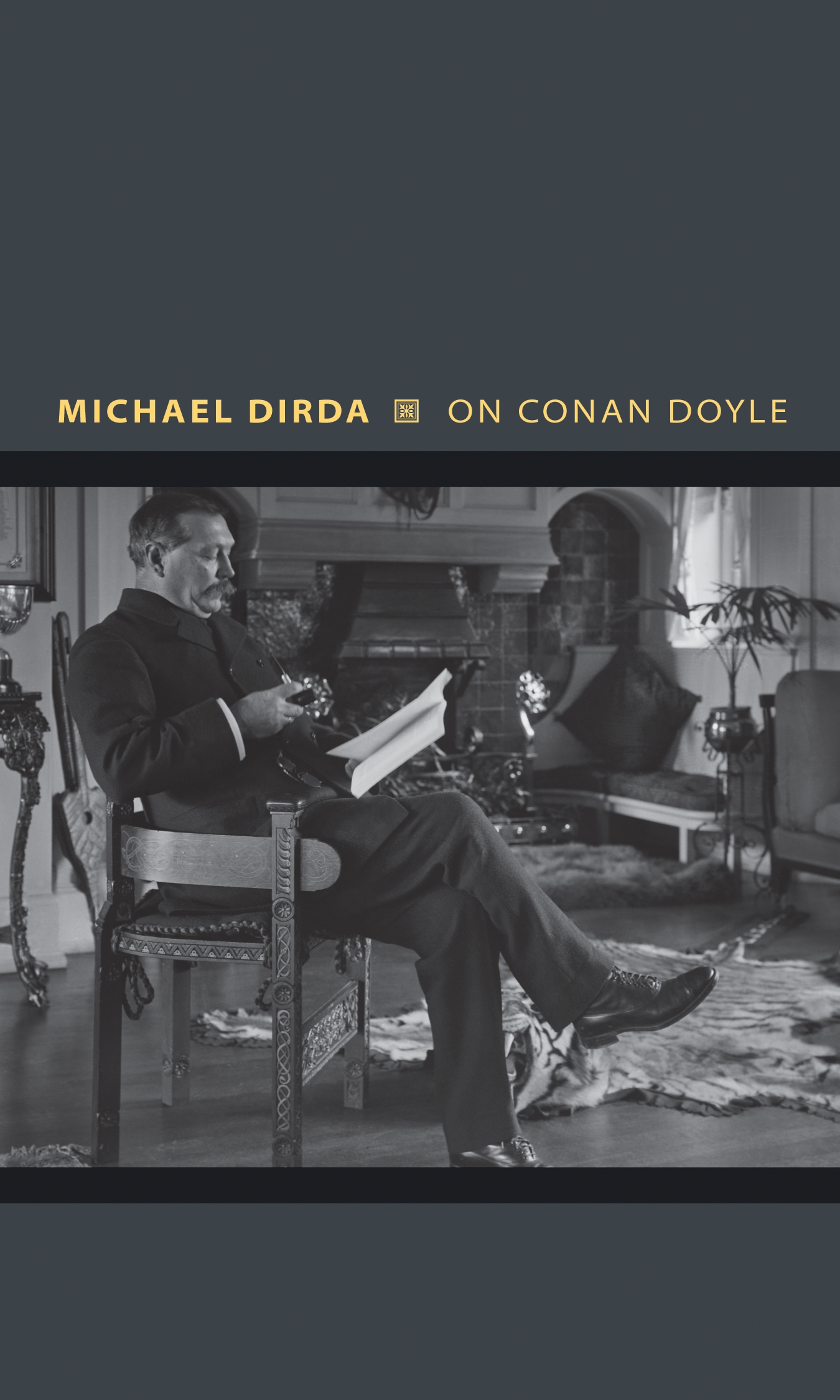
This was the case for me recently after reading Michael Dirda’s On Conan Doyle, Or, The Whole Art of Storytelling. Dirda’s passionate celebration of Sir Arthur Conan Doyle as a master storyteller cast new light on the Sherlock Holmes tales I had read years ago. His analysis made me want to revisit the classic detective stories with a fresh perspective.

In his book, Dirda explores how Conan Doyle’s own fascinating life experiences allowed him to inject realism and detail into his fiction writing. He quotes extensively from Conan Doyle’s works, breaking down the author’s techniques for building suspense, vividly depicting London at that time, and bringing the charismatic characters of Holmes and Watson to life. 

After being reminded by Dirda of the sheer genius of Conan Doyle’s storytelling powers, I couldn’t resist pulling my old collection of the complete Sherlock Holmes canon off the shelf to re-read the stories and novels. This time, armed with Dirda’s insights, I found myself newly appreciating Conan Doyle’s intricate plotting, clever foreshadowing, and rich descriptions that allowed the late 1800s-era London to jump off the page.

I also discovered background information I hadn’t known before, like how Conan Doyle had modeled the brilliant but eccentric Holmes on one of his former university professors. And his time studying at a medical school gave him knowledge about forensics and analytical skills that informed how he wrote Holmes’ deductive reasoning process.

From there, my curiosity propelled me to explore literary biographies about Conan Doyle’s life, writings by Sherlock Holmes experts dissecting the stories, books analyzing Conan Doyle’s lasting influence on the mystery genre, and more.

One book had opened up an entire new area of interest to dive into.

This is the power and delight of being a lifelong reader – books become portals to universes of knowledge, allowing you to find new areas to explore in depth simply by following your curiosity from one page to the next. A single book can act as a key that unlocks fascinating connections, insights, and paths of discovery you may never have anticipated.


Though Sherlock Holmes is widely recognizable, few could craft as lively and personal an account of the detective’s creator’s life and lesser-known works as Michael Dirda does in On Conan Doyle, Or, The Whole Art of Storytelling

A passionate lifelong fan of the Sherlock Holmes adventures, Pulitzer Prize–winning critic Michael Dirda is a member of The Baker Street Irregulars – the most famous and romantic of all Sherlockian groups. Combining memoir and appreciation, On Conan Doyle is a highly engaging personal introduction to Holmes’s creator, as well as a rare insider’s account of the curiously delightful activities and playful scholarship of The Baker Street Irregulars.

Dirda interweaves his own childhood discovery of Holmes and Watson with details about Sir Arthur Conan Doyle’s life and writing career. While casual readers associate Conan Doyle solely with the Holmes stories, Dirda makes a strong case for exploring the author’s extensive bibliography across multiple genres like adventure, historical fiction, supernatural tales, and writings on spiritualism. However, Holmes remains the main draw, and the fascinating culture of the Irregulars society is as rich as any of Conan Doyle’s fictions.

Dirda provides a personal journey exploring the creator of Sherlock Holmes and his prodigious output across various genres beyond the famous detective stories. Most know Conan Doyle tried to kill off his iconic character, which he cared little for compared to works like The Lost World. However, Dirda still centers much of his discussion on Holmes while striving to highlight Doyle’s other writings too – his horror, fantasy, non-fiction essays, letters, and his favorite creation Professor Challenger. Recounting his own boyhood introduction to Doyle’s books, Dirda reminisces about joining the Baker Street Irregulars society devoted to Holmes and includes an abridged pastiche of his own Sherlock-inspired fiction.

Dirda particularly excels at appreciating Conan Doyle’s direct yet versatile literary style spanning genres, and examining the values of civic duty the author aimed to impart through his writing (values he felt the Holmes tales lacked).

On Conan Doyle is a much-needed celebration of Arthur Conan Doyle’s genius for every kind of storytelling.

It is also an excellent launching pad for further investigations into Conan Doyle’s other works!


Part of a regular series on 27gen, entitled Wednesday Weekly Reader.

During my elementary school years one of the things I looked forward to the most was the delivery of “My Weekly Reader,” a weekly educational magazine designed for children and containing news-based current events.

It became a regular part of my love for reading, and helped develop my curiosity about the world around us.

The Profound Wisdom of Mister Rogers’ Neighborhood


In his insightful book The Good Neighbor, author Maxwell King delves into the enduring legacy of Fred Rogers and his revolutionary approach to teaching children about the importance of being a good neighbor. Rogers, best known for his iconic children’s television series “Mister Rogers’ Neighborhood,” was a pioneer in using the medium to impart valuable life lessons on kindness, empathy, and community.

Fred Rogers (1928–2003) was an enormously influential figure in the history of television. As the creator and star of Mister Rogers’ Neighborhood, he was a champion of compassion, equality, and kindness, fiercely devoted to children and taking their questions about the world seriously.

The Good Neighbor is the first full-length biography of Fred Rogers, a staple of public television and an icon to generations of children. Based on original interviews, oral histories, and archival documents, biographer Maxwell King traces Rogers’s personal, professional, and artistic life through decades of work.

One of many touching stories told is the story of his appearance on Oprah Winfrey’s talk show in 1985, when Rogers issued strict instructions: No children were to be present during the taping. Winfrey and her producers ignored his request and filled her studio with young children and their mothers.

Author Maxwell King writes, “As soon as the children started to ask him questions directly, he seemed to get lost in their world, slowing his responses to their pace, and even hunching in his chair as if to insinuate himself down to their level. This wasn’t good television – at least, good adult television. Everything was going into a kind of slow motion as Fred Rogers became Mister Rogers, connecting powerfully with the smallest children present. He seemed to forget the camera as he focused on them one by one. . . . In the audience, Winfrey leaned down with her microphone to ask a little blond girl if she had a question for Mister Rogers. Instead of answering, the child broke away from her mother, pushed past Winfrey, and ran down to the stage to hug him. As the only adult present not stunned by this, apparently, Fred Rogers knelt to accept her embrace.”

The Good Neighbor is the definitive portrait of a beloved figure whose life and work continue to resonate today because of Mister Rogers’ message of kindness and compassion.

At the heart of Rogers’ philosophy was the belief that every person, regardless of age or background, has an inherent worth and deserves to be treated with dignity and respect. This fundamental principle formed the foundation of his concept of “neighborliness,” which extended far beyond mere physical proximity.

To Rogers, being a good neighbor meant cultivating a deep sense of compassion and understanding for others. It involved actively listening, recognizing the unique perspectives and experiences of those around us, and embracing diversity as a strength rather than a divisive force. Through his gentle yet profound teachings, Rogers encouraged children to see their neighbors not as strangers but as fellow human beings worthy of care and consideration.

One of the most powerful messages Rogers imparted was the importance of emotional intelligence and self-awareness. He believed that by developing a greater understanding of our own emotions and inner lives, we could better empathize with and support those around us. This idea was central to his approach to building strong, interconnected communities where individuals felt valued and supported.

King’s book highlights Rogers’ innovative use of storytelling and imagination to convey these profound lessons in a way that resonated with children. Through the world of make-believe and the familiar characters of the Neighborhood of Make-Believe, Rogers created a safe space for children to explore complex emotions, confront difficult topics, and develop a deeper appreciation for the richness of human experience.

Moreover, Rogers emphasized the significance of intergenerational connections and the role of adults in modeling positive behaviors for children. He believed that by embodying the principles of neighborliness themselves, adults could inspire the next generation to carry on these values and create a more compassionate world.

King’s exploration of Rogers’ teachings serves as a poignant reminder of the enduring relevance of his message in today’s increasingly polarized and disconnected society. At a time when divisions seem to run deep and empathy appears in short supply, Rogers’ call to see one another as neighbors – to embrace our shared humanity and work towards building inclusive, supportive communities – resonates more strongly than ever.

Through his gentle yet profound wisdom, Fred Rogers left an indelible mark on generations of children and adults alike. As King’s book illustrates, his concept of being a good neighbor transcends time and geography, offering a blueprint for fostering understanding, kindness, and a deep sense of connection in an increasingly fragmented world.


Vintage Brilliance: The Underrated Genius of Elders’ Crystallized Intelligence

As we grow older, our minds and cognitive abilities evolve in fascinating ways. While certain facets of fluid intelligence – the ability to think logically, process information rapidly, and solve novel problems – may decline with age, our crystallized intelligence has the opportunity to blossom. Crystallized intelligence refers to the knowledge, facts, and skills we have accumulated over a lifetime of experience and education. For modern elders, harnessing and cultivating this form of intelligence is essential for continued growth, wisdom, and engagement with the world around us.

The concept of crystallized intelligence was first introduced by Raymond Cattell in the 1960s, bridging psychometric studies with the insights of generations past – that we grow wiser as we grow older. The theme of his 1971 book, Abilities: Their Structure, Growth, and Action, could be stated as “When you are young, you can generate lots of facts; when you are old, you know what they mean and how to use them”. (From Strength to Strength, Brooks). Our rich tapestries of lived experiences become repositories of deep understanding across diverse domains. An economically-astute elder may have decades of business acumen ingrained. A passionate hobbyist maintains profound reservoirs of specialized knowledge around his lifelong interests. These deep wells of crystallized intelligence are invaluable assets to be nurtured and shared.

Depicted by the image below from the MIT Sloan Management Review, although fluid intelligence – which includes working memory and reasoning – typically begins to decline in early adulthood, crystallized intelligence (or wisdom, knowledge, and expertise) doesn’t deteriorate with age.

In our modern world of rapid technological and social change, the value of elderhood is too often discounted. However, those with decades of accumulated wisdom can offer nuanced historical context, seasoned perspectives, and profound insights to society’s challenges. Their crystallized intelligence serves as an anchor of stability and a guide towards judicious paths forward amidst turbulence. From being a voice of wisdom for younger generations to leveraging knowledge to make unique creative contributions, there are myriad opportunities for elders to have an enduring impact.

Of course, crystallized intelligence is not stagnant – it continues expanding with new knowledge and viewpoints. An intellectually humble mindset, openness to personal growth, and commitment to lifelong learning are key to distilling wisdom from our experiences. Reading widely, exploring new subjects, seeking out diverse perspectives – these are vital practices that enrich our crystallized intelligence and prevent insular thinking. Modern elders who embrace this expansive, growth-oriented mindset unlock new cognitive abilities and ways of understanding our infinitely complex world.

For individuals and societies alike, cultivating crystallized intelligence in elderhood yields profound dividends. Respecting and elevating the voices of wise elders anchors us to our shared heritage while illuminating paths towards progress. As modernity pulls swiftly forward, we should create space for the transcendent wisdom born of experience to guide the way.

This concept is not a recent discovery of the last few decades – take a look at the wisdom of the first-century BC Roman statesman, lawyer, scholar, and philosopher Marcus Tullius Cicero:


The old…should, it seems, have their physical labors reduced; their mental activities should be actually increased. They should endeavor, too, by means of their counsel and practical wisdom to be of as much service as possible to their friends, and to the young, and above all, to the state.


Cicero, De Offices

Author and social scientist Arthur C. Brooks, in his wonderful book From Strength to Strength, calls this “The Second Curve.” He challenges those in or approaching the latter years of their life to “Get on your second curve. Jump from what rewards fluid intelligence to what rewards crystallized intelligence. Learn to use your wisdom.”

How to do that? Well, in a nutshell, that’s what this whole journey of becoming a Modern Elder is about!


Inspired by From Strength to Strength, by Arthur C. Brooks


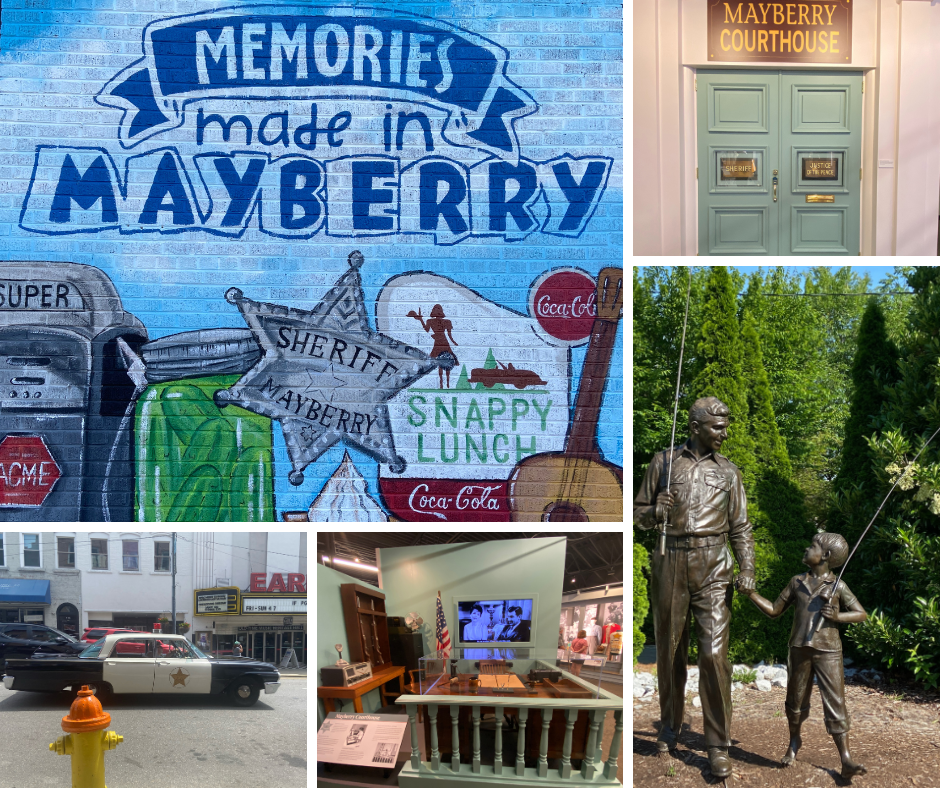
A Stroll Down Memory Lane in Mt. Airy, NC – The Hometown of Andy Griffith

For fans of the beloved 1960s sitcom The Andy Griffith Show, a visit to the quaint town of Mt. Airy, North Carolina is akin to stepping into the fictional world of Mayberry. This charming locale, nestled in the foothills of the Blue Ridge Mountains, holds a special allure as the birthplace and childhood home of the show’s star, Andy Griffith.

On a recent Saturday day trip, a birthday gift from my wife Anita, we made the pleasant drive to Mt. Airy. Arriving in mid-morning, we explored the tree-lined streets and historic downtown area. As we walked past Floyd’s Barber Shop to the Snappy Lunch for an early meal, it’s easy to see why Griffith drew inspiration from his hometown for the idyllic Mayberry setting. The town exudes a warm, welcoming atmosphere that harkens back to a simpler time when life moved at a more leisurely pace.

One of the must-visit attractions for Andy Griffith enthusiasts is the Andy Griffith Museum, which pays homage to the life and career of the iconic actor and comedian. Housed in a lovingly restored building that once served as a theater, the museum features an impressive collection of memorabilia, including costumes, scripts, and personal items from Griffith’s early years. While having a cursory knowledge of Griffith’s television career, neither Anita nor I were aware of his long pre-television drama career, spanning from high school to college to the theater. The museum house a good representation of all his journey’s in the entertainment field.

Visitors can also embark on the self-guided Mayberry Tour, which takes them on a nostalgic journey through the town’s landmarks and filming inspirations from the show (even though they were all recreated on a Hollywood soundstage). From the iconic squad car parked outside the courthouse to the famous Snappy Lunch diner, each stop along the way offers a glimpse into the world that captivated millions of viewers.

Beyond its ties to The Andy Griffith Show, Mt. Airy boasts a rich cultural heritage that is celebrated through various festivals and events throughout the year. The annual Mayberry Days festival, held each September, attracts thousands of fans from around the world who come to experience the town’s charm and participate in a variety of Mayberry-themed activities.

For those seeking outdoor adventures, the surrounding area offers plenty of opportunities for hiking, fishing, and enjoying the natural beauty of the Blue Ridge Mountains. The nearby Pilot Mountain State Park, with its iconic knob-shaped peak, is a popular destination for hikers and rock climbers.

Whether you’re a die-hard Andy Griffith fan or simply someone who appreciates small-town charm, Mt. Airy is a delightful destination that invites you to slow down and savor the simple pleasures of life. With its friendly locals, rich history, and enduring connection to one of television’s most beloved shows, this little town in North Carolina is sure to leave a lasting impression on all who visit.


Of course, it wouldn’t be a Wednesday Weekly Reader post without at least a nod to some literary background, and here’s a couple of books that will certainly give the Andy Griffith fan some pleasurable reading.

Andy Griffith and Don Knotts first met on Broadway in the 1950s. When Andy moved to Hollywood to film a TV pilot for a comedy about a small-town sheriff, Don called to ask if Andy’s sheriff could use a deputy. The friendship and comedy partnership between Sheriff Andy Taylor and Deputy Barney Fife ignited The Andy Griffith Show, elevating the folksy television sitcom into a timeless study of human friendship.

Together, they created a program with a uniquely small-town dynamic that captured the hearts of Americans across the country who watched these two men rocking on the front porch, meditating about the pleasure of a bottle of pop.

Written by Don Knotts’s brother-in-law, Andy and Don is a lively look inside the entertainment industry in the latter half of the twentieth century that is entertaining and provocative.

But behind this sleepy charm, Daniel de Visé’s exclusive reporting “captures the complexity of both men and the intimacy of their friendship with extreme detail and sensitivity” (Publishers Weekly), from unspoken rivalries, passionate affairs, unrequited loves, struggles with the temptations of fame, and friendships lost and regained. Although Andy and Don ended their Mayberry partnership in 1965, they remained best friends for the next half-century.


Andy Griffith is one of North Carolina’s most beloved exports, capturing America’s heart as Sheriff Andy Taylor. Evan Dalton Smith was born in the North Carolina Piedmont over four decades after Andy, just an hour south of Griffith’s hometown of Mount Airy. Both were small-town boys who grew up in similar places, where the counties were dry and the churches plentiful. But for both, there was darkness, crushed hopes, and tragedy, hidden just below the surface.

For Smith and many generations in North Carolina and across the U.S., Andy Griffith was like the air – everywhere, all the time, a part of daily life. Even after he left the state, Smith always felt the pull of home and the lingering ghost of Andy alongside it.

Looking for Andy Griffith is an exploration on celebrity and the self, on home and what that means when you leave it, and why we love and admire the people we do – even if we’ve never met them – all told through the entwined lives of iconic actor Andy Griffith and writer Evan Dalton Smith. It is through Smith’s telling of Griffith’s life that he finds his own story, one that is both informed by and freed from the legacy of one of North Carolina’s most famous sons.


While Mt. Airy will forever be inextricably linked to The Andy Griffith Show and the idyllic world of Mayberry it brought to life, the town’s appeal transcends mere nostalgia. It stands as a living testament to the enduring power of simplicity, community, and finding joy in life’s simple pleasures – the very values Griffith himself embodied through his iconic roles.

As visitors depart this charming town nestled in the Blue Ridge Mountains, they carry with them more than just memories; they take away a renewed appreciation for the unhurried pace, natural beauty, and genuine human connections that have sadly become rarities in our fast-paced modern age.

Mt. Airy is a reminder that the most extraordinary experiences are often found in life’s mundane moments when we allow ourselves to embrace the Mayberry mindset of savoring the simple gifts that surround us each day. By preserving Andy Griffith’s heartwarming legacy, this special place ensures that the wisdom and warmth of Mayberry will continue to inspire generation after generation.


Part of a regular series on 27gen, entitled Wednesday Weekly Reader.

During my elementary school years one of the things I looked forward to the most was the delivery of “My Weekly Reader,” a weekly educational magazine designed for children and containing news-based current events.

It became a regular part of my love for reading, and helped develop my curiosity about the world around us.

Glazed Greatness: The Delicious Lessons of Krispy Kreme and Dunkin’

Most Fridays you will find a post here dealing with my journey to becoming a Modern Elder. That journey is based around four concepts: experience, wisdom, curiosity, and adaptability.

Today I’m linking that train of thought to the fact that it is National Donut Day, and the common thread will be found in reviewing the histories of two of the largest and best-known donut chains in the U.S. – Krispy Kreme and Dunkin’ – for leadership principles.

The source of information on these companies comes from two books: Making Dough: The 12 Secrets Ingredients of Krispy Kreme’s Sweet Success (2004) and Around the Corner to Around the World: A Dozen Lessons I Learned Running Dunkin’ Donuts (2020). In addition, I dropped in on three local donut shops in the last week, culminating in a trip to the Krispy Kreme corporate headquarters in Charlotte, NC, and their flagship store.

It turns out that there is a great deal you can learn from donuts.

Mention the words “Krispy Kreme” and people start licking their lips. The company inspires such loyal customer devotion that new store openings routinely cause traffic jams and attract widespread media attention.

With its iconic green and red logo, tantalizing “Hot Now” sign, and melt-in-your-mouth original glazed recipe, Krispy Kreme has become a beacon of joy and indulgence in a world often sorely lacking in both.

More than eight decades after the first doughnut was handed to a customer in Winston-Salem, North Carolina, Krispy Kreme has grown into one of the world’s most beloved brands.

How has Krispy Kreme managed to build such a successful brand and business, especially since it spends no money on advertising? What does the future hold for this unique corporation? And what can other businesses do to emulate Krispy Kreme’s amazing accomplishments?

“Making Dough: The 12 Secret Ingredients of Krispy Kreme’s Sweet Success” offers an insightful exploration into the rise and success of Krispy Kreme, one of America’s most beloved doughnut brands. Authored by Kirk Kazanjian and Amy Joyner, the book provides a comprehensive narrative that intertwines business strategies, company culture, and personal anecdotes to unveil the key elements that contributed to Krispy Kreme’s rapid growth and enduring appeal.

The book is structured around twelve core principles that the authors identify as fundamental to Krispy Kreme’s achievements. These “secret ingredients” are not merely business tactics but also embody the ethos and values that the company espouses. Each chapter delves into one of these principles, supported by interviews with key figures, historical context, and detailed case studies.

  1. Mix good taste with show business
  2. Be picky about your partners
  3. Make good use of your time and resources
  4. Expand and protect your brand
  5. Think big, but grow carefully
  6. Be a guerrilla marketer with a soft touch
  7. Maintain high standards
  8. Harness the power of technology
  9. Give back to the community
  10. Select, train, and treat your employees well
  11. Build on your success
  12. Keep them coming back

Making Dough provides an entertaining and informative business history of a beloved American brand. The authors appear to have extensively researched Krispy Kreme and gained insights from interviews with executives, franchisees, analysts and others. 

The book’s central core of “12 secret ingredients” provides a useful framework for understanding Krispy Kreme’s success and keeps the storytelling engaging. At times this device was a bit contrived or oversimplified the company’s actual history, but overall it highlights important elements that made Krispy Kreme stand out.

Making Dough is an easy, interesting read with lessons applicable to many businesses – not just a niche story for doughnut lovers. Readers will find an inspiring entrepreneurial and branding success story with insights into franchising, experiential retail, building customer loyalty, and managing growth. 

However, since the book was published in 2004, it doesn’t cover Krispy Kreme’s later struggles, including accounting scandals, over expansion, and various leadership departures.

In summary, Making Dough is a worthwhile read for anyone interested in Krispy Kreme’s history, retailing, franchising or brand-building – just keep in mind it covers a limited time period in the company’s history.

Filled with interesting anecdotes and fascinating facts, Making Dough tells the compelling true story of a company that has managed to maintain a wholesome, small-town image, while achieving phenomenal success through a mixture of customer loyalty, high product standards, technological advancements, and community involvement.

Making Dough shows you how Krispy Kreme’s delectable delights rose to the top and continue to tempt the world. Pour yourself a tall glass of cold milk, grab a napkin (or six), and get ready to discover why, when it comes to donuts, there’s just no beating the OG (Original Glazed, that is) as it comes hot off the line.

Step right up and grab a front-row seat, folks, because we’re about to take a deep dive into the sugary, caffeine-fueled world of Dunkin’, the coffee and donut juggernaut that’s been keeping America running for over seven decades. From its humble beginnings as a single coffee shop in Quincy, Massachusetts, to its current status as a global breakfast behemoth with over 12,000 locations worldwide, Dunkin’ has been serving up smiles and satisfying cravings with its iconic pink and orange logo. 

But what’s the secret sauce behind this donut dynasty? How did a simple coffee and pastry shop become a cultural phenomenon, inspiring everything from wedding cakes to sneaker collaborations? Is it the mouth-watering aroma of freshly brewed coffee that lures in bleary-eyed commuters every morning? The dizzying array of colorful, creative donut flavors that make your taste buds do a happy dance? The warm, friendly atmosphere that makes you feel like you’re part of one big, donut-loving family?

Around the Corner to Around the World: A Dozen Lessons I Learned Running Dunkin’ Donuts by Robert Rosenberg is an enlightening memoir and business guide from the former CEO of Dunkin’ Donuts. Rosenberg recounts his experiences and shares the wisdom he gained during his 35-year tenure leading the company. The book is structured around twelve key lessons, each encapsulating essential insights and strategies that contributed to Dunkin’ Donuts’ evolution from a regional chain to a global powerhouse.

  1. Leadership is paramount.
  2. Family Businesses pose unique challenges.
  3. Quality matters.
  4. Effective planning process.
  5. Importance of striking the right balance between exploitation and experimentation.
  6. The tasks and character of an effective CEO.
  7. The importance of trust and mood in coordinating action.
  8. The exceptional benefits of franchising.
  9. Innovate – test – iterate.
  10. Alignment is critical.
  11. Pick and groom a successor.
  12. Transferable lessons for a life well-lived.

Around the Corner to Around the World offers a candid and engaging look at the challenges and triumphs of running an iconic American business. Rosenberg’s storytelling is straightforward, insightful, and often humorous. He doesn’t sugarcoat his own mistakes or the difficulties Dunkin’ faced.

The book is more than just a corporate history. Rosenberg uses his experience to draw out broader lessons about leadership, entrepreneurship, branding, and adapting to change. Many of these lessons, like the importance of hiring talent, fostering innovation, and understanding your own strengths and weaknesses, will resonate with business leaders in any industry.

At the same time, the book provides a fascinating inside look at the evolution of Dunkin’ Donuts. Rosenberg offers detail on key decisions and turning points, like the creation of Munchkins, the introduction of bagels, and the shift away from a wholesale model. He’s honest about the missteps, like ill-fated attempts to expand to Europe and California.

One minor critique is that the 12-lesson structure can feel a bit forced at times. Some lessons overlap or could be combined. Additionally, those looking for a tell-all may be disappointed. While candid, Rosenberg focuses more on business lessons than personal gossip. Finally, though published in 2020, the time period covered ends in 1998 and thus lacks all the changes made in the last two decades.

Overall, Around the Corner to Around the World is an insightful, engaging read for anyone interested in business leadership, entrepreneurship, or the history of an iconic American brand. Rosenberg comes across as a sincere, savvy leader who played a pivotal role in Dunkin’s success.

Around the Corner to Around the World will make you want to grab a cup of your favorite Dunkin’ brew, sit back, and get ready to discover why America truly “Runs on Dunkin’.” But be warned: by the time you finish reading, you might just find yourself craving a Boston Kreme or a Munchkin (or a dozen).


In the ever-evolving landscape of business and entrepreneurship, the enduring success of Krispy Kreme and Dunkin’ Donuts serves as a testament to the power of unwavering commitment, strategic innovation, and a deep understanding of customer desires. These doughnut dynasties have not only satiated our collective sweet tooth but have also imparted invaluable lessons on branding, leadership, and the art of building a dedicated following. As we savor the insights gleaned from their remarkable journeys, we are reminded that true greatness often lies in the simplest of pleasures – a warm, freshly baked doughnut and a cup of coffee shared with loved ones. In a world of ever-changing trends, the timeless allure of these doughnut empires reminds us that sometimes, the sweetest things in life are the ones that never go out of style.


In your donut appetite is still not satisfied, here’s few more articles to fill you up!


Donut Nostalgia: A Journey from Childhood Treats to Adult Indulgences

From the moment we walk into a donut shop and smell the tantalizing aroma of the dough rising, then watching the process of ingredients becoming a finished product, and finally sinking our teeth into a soft, sugary donut, these sweet treats become an integral part of our lives, weaving themselves into the fabric of our memories.

As we journey through childhood, adolescence, and adulthood, donuts remain a constant companion, reminding us of life’s simple pleasures and the joy of sharing experiences with others.

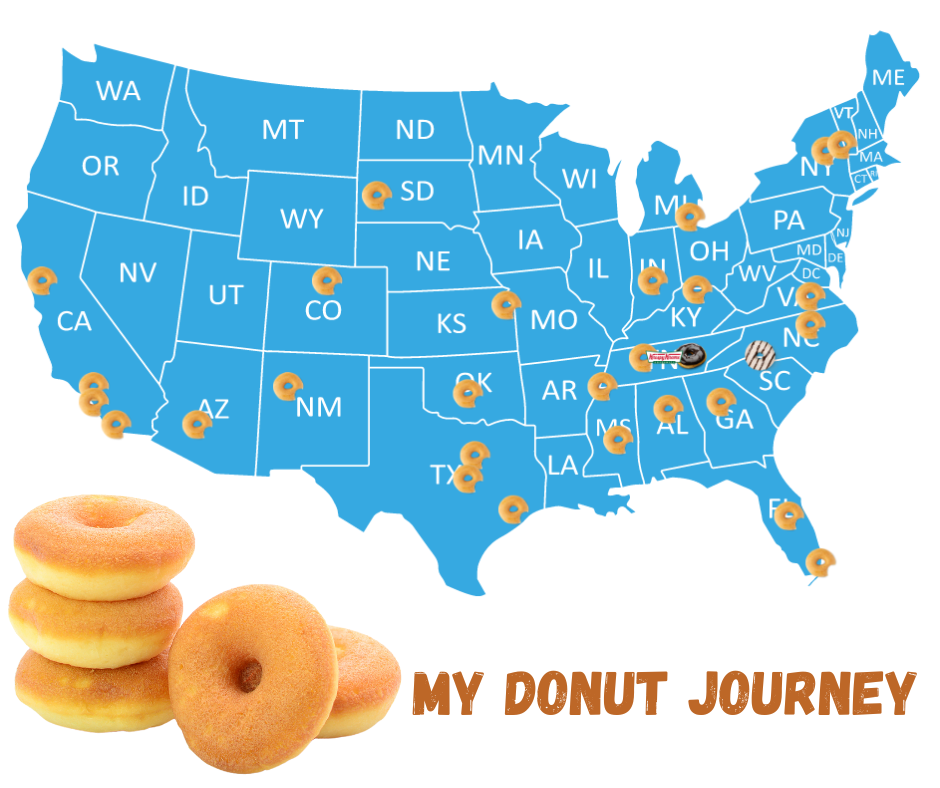
For many of us, childhood memories are synonymous with weekend trips spent at the local bakery, eagerly pointing to our favorite donut behind the glass display case. The warm, sugary aroma would fill the car on the ride home, tempting us to sneak a bite before arriving at our destination. My earliest recollection of donuts is connected to Krispy Kreme, both as a special part of a trip to downtown Nashville, TN for a visit to the bakery there, and to those same donuts being served as a part of the annual Thanksgiving breakfast at our church. On the map below, you can find the Krispy Kreme logo sandwiched in between two other notable bites. Later on, shopping, doctor’s visits, or similar trips to the the nearby town would often included a stop at the donut shop, where we would savor the soft, fluffy texture and sweet glaze, a moment of pure bliss.

As I grew older and entered high school and college, donuts remained a staple in my life. During high school years, donuts were not a regular part of our weekly “hanging out” but were still looked forward to. In college, late-night study sessions were made more bearable by the cry of “Let’s go to Ralph’s!” – a 24-hour donut shop located minutes from our school. Our studies soon forgotten, each person debated the merits of their favorite flavor. Jelly-filled or chocolate-frosted? Classic glazed or sugar-sprinkled? The choices were endless, and the arguments passionate. Even going on 50 years later, conversations with college friends inevitably – and quickly – turn to a Ralph’s story. On the map below, that memory is marked with a chocolate donut.

Following college into graduate school and part-time work, donuts became a part of both campus and work life. Entering the workforce, I discovered that donuts had a special place in office culture. The excitement of “Donut Fridays” would ripple through the office, as coworkers bonded over their shared love of these sweet treats.

During the ensuing decades of life, with children of my own, the familiar special stops at a donut shop became a part of our family rituals. As I recalled from my own childhood, a donut is amazing therapy for the (imagined) trauma of a doctor’s visit. With four children, I was able to benefit greatly from their experiences!

In the last decade, as my work travels took me all over the country, my donut fondness took on a whole new meaning. As a part of my consulting work, I traveled to dozens of churches for weekend visits, and I took advantage of those trips to indulge in some of the best independent or small chain donut shops across the country. On the map below, the glazed donuts with a bite out are a representative sample of the most memorable of those shops.

These road trips and adventures were incomplete without discovering hidden gem donut shops in towns, the perfect “prep snack” for a long day of consulting work. In times of stress and deadlines, the soothing ritual of a donut provided a moment of comfort and indulgence, a brief escape from the demands of life.

Now, as I have grown (slowly) more health-conscious, I’ve learned to balance my donut cravings with a healthy lifestyle, savoring the occasional treat with mindfulness and appreciation. With my birthday, National Donut Day, and Father’s Day falling into a three-week period, you can bet I’ve temporarily shelved the “healthy lifestyle” for a quick visit (or two) to our local donut shop, Jelly Donuts. Marked with a chocolate striped donut on the map above, each bite from one of their donuts magically transports me back in time.

Throughout life’s stages, donuts have remained a constant source of comfort, nostalgia, and connection. They have been present at some of my most memorable moments, from childhood parties to college adventures and family celebrations. The enduring appeal of donuts lies not only in their delightful taste and texture but also in their ability to bring people together, creating lasting memories and shared experiences.

As I look back on my donut-filled journey, it’s amazing to realize how these simple treats have played a significant role in shaping my life. They have been a sweet companion through the years, reminding me to savor life’s little pleasures and to cherish the moments I have shared with others.

On the day before National Donut Day (June 7 this year), and the next time you bite into a soft, sugary donut, take a moment to reflect on the memories it evokes and the joy it continues to bring, one delicious bite at a time.


If you liked this post, check these out:

and of course, a baker’s dozen donut books!