Be Willing to Change or Be Willing to Perish: The Birth of Disney University

One jarring element can undermine a host of favorable impressions.

That’s why street cleaners at Disney World are given extra training at Disney University to ensure that they respond in a positive and helpful fashion to questions from departing Guests.

It might seem strange to train street cleaners in customer service, but Disney learned years ago that these cast members receive the greatest number of unstructured questions from park Guests.

courtesy billbergh.com

courtesy billbergh.com

To make sure that a Guest’s last – and lasting – impression after a wonderful day in the park isn’t ruined by a don’t-ask-me-it’s-not-my-job attitude, Disney provides three extra days of interpersonal skills training for the cleanup crew. Disney believes in a proactive approach to head off potentially damaging situations.

That wasn’t always the case.

Walking in Disneyland and interacting with the large number of cast members in 1962 exposed Van France to the inadequacies of the existing organization and training process. He found:

  • Outdated training materials
  • Trainers who were out of touch with the realities of park operations
  • Temporary summer jobs that had become careers
  • Hard work and long hours on weekends, nights, and holidays
  • Exhausted cast members that were becoming burned-out

Van also saw the need to expand beyond the simple orientation program of 1955 into a more complete sequence that included a consistently applied on-the-job training component.

The Disney University was created 7 years after the 1955 grand opening of Disneyland in response to the demands of a rapidly maturing organization.

Our theme of “happiness” was great for the first years, and we still use the basic elements of that program. But now we needed something new, something that would impose responsibility and self-discipline on all of our key people.

Van France

Walking the park also reinforced in Van’s mind the requisite elements for ensuring “substance” in the Disney University.

  • Training staff had to have credibility
  • Trainers with frontline experience were a must
  • Program content had to reflect the reality of the workplace and still convey corporate values, standards, and expectations

The Disney University should be a pioneering force, the world’s first and foremost corporate institution for training in the art, skills, and knowledge required in outdoor show business.

Van France

With this in mind, Van proposed that the Disney University develop employees into “Disneyland specialists,” with emphasis on four areas:

Leaders: We need to develop leaders who have an overall understanding of the complex combination of skills and professions that have made the Disneyland show the world’s greatest entertainment attraction.

People specialists: We need men and women who are professionally qualified to deal with people and their many demands.

Trade Specialists: WE need to develop those skilled in the various unique technical phases of the operations, but they must also have an overall knowledge of the total operation.

History and traditions: Most importantly, we sorely need training in the Disneyland organization and the history and traditions of Walt and his company.

With all the changes to the Disney organizations over the years since the opening of Disneyland, Van knew that it was more important than ever for the University to create programs that would carry on the traditions, philosophies, and dreams that Walt Disney had left for the organization.

Applying Van France’s Four Circumstances to ChurchWorld Guest Experience Teams

Innovate – Support – Educate – Entertain

Be Willing to Change or Be Willing to Perish

In your organization, can you identify the equivalent of Van’s Four Circumstances that support “Be willing to change or be willing to perish,” balancing tradition with innovation? Can those things be applied to ensure that training and team development programs are credible?

  • How does training in your organization remain relevant and credible?
  • How could training processes, programs, and staff improve “substance”?
  • To what extent are the history and traditions of your organization perpetuated and built upon?
  • What traditions should be maintained in your organization?
  • What traditions are impeding progress and innovation?
  • Who in your organization has the influence and desire to implement change?

Inspired by and adapted from Disney U by Doug Lipp

Get the book TODAY to learn invaluable lessons for your Guest Experience Teams

Disney U

Book     Kindle


Continue the Disney U experience Thursday 4/10/14 with Simplify the Complex


Disney U is one of the most significant resources related to the Disney organization, leadership, team development, and Guest Experiences available. In honor of the one year anniversary of the release of Disney U, this is a look back at a series from the book that originally ran last year.

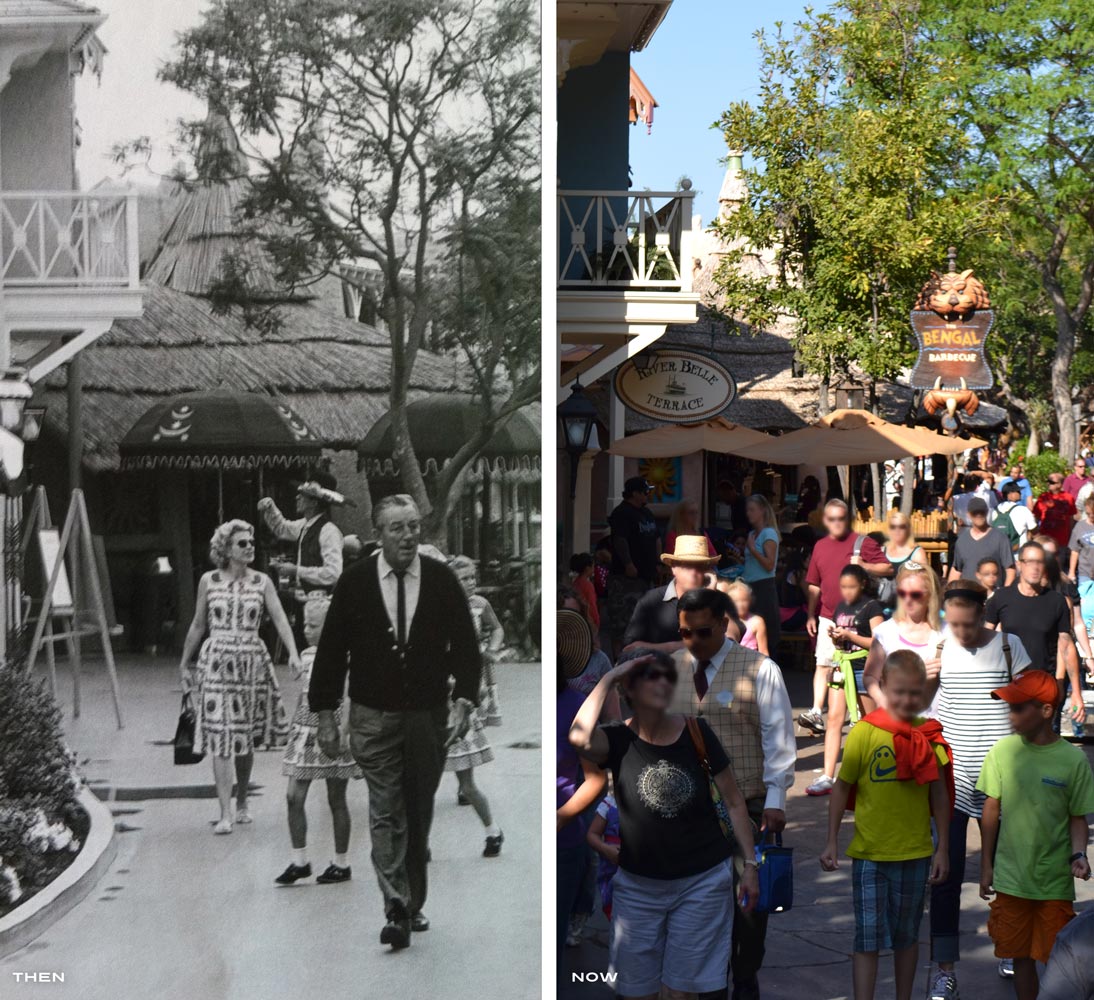
Gather Facts and Feelings – Walk the Park for a Fresh Perspective

He didn’t have a particular schedule, but his agenda was always the same: connect with and interact with as many guests and cast members as possible.

 Walt would regularly walk through the Park, looking for problems or things to improve. He was good at it and always welcomed suggestions. I copied his routine. I continually walked through the Park, looking for different things, people problems. Facts are easy to identify; I was looking for feelings that were bothering Cast Members.

Van France, founder of Disney University

Walt Disney knew the value of learning as much as possible about the front lines by spending time on the front lines.

courtesy of designingdisney.com

courtesy of designingdisney.com

His strategy of walking the park dates back to the construction of Disneyland. He regularly visited the construction site to assess the proportion or size of buildings. A common site was Walt squatting down and then looking up at a building from a lower angle. His determination to view the storefronts and buildings from the vantage point of children ensured that the needs of this large population of guests – an often overlooked but very influential group – were addressed.

courtesy of Disney Imagineering

courtesy of Disney Imagineering

Walt Disney never stopped looking at Disneyland from the perspective of the guest, even years after the park opened.

Van France, like Walt, favored walking the park to gather information. Often armed with his camera, Van tirelessly sought the opinions and thoughts of cast members and guests.

Bill Ross, a former manager of Disney University, says, “More than anyone I’ve ever known, Van put his ear to the ground to get ideas. He had a wide circle of friends and a strong network. If Van were with us today, he would love using social media.”

Walking the park helped Van clarify the problems and then visualize a process by which to bridge the gaps.

After the park had been open for seven years, Van realized the 1955 model of orientation and cast member training that had been so successful during Disneyland’s early years was no longer sufficient. He faced a paradox: preserving the past while preparing for the future.

Van knew that he needed to identify and preserve the components of orientation and training that had led to such heady success during Disneyland’s first seven years:

  • Friendly environment
  • Creative presentations
  • Useful content

He had to balance these fundamentals while preparing cast members – including managers – for a much more complex future, driven by the following factors:

  • Consistency – everyone must attend the new-hire orientation program
  • Systems – specific on-the-job training must follow the orientation program
  • Continuing education – supervisors and managers needed leadership and communication-skills training

The time was right for Van to build a bridge to the future of training for Disneyland. The time was right for the Disney University.


Applying Van France’s Four Circumstances to ChurchWorld Guest Experience Teams

Innovate – Support – Educate – Entertain

Gather Facts and Feelings

In your organization, can you identify the equivalent of Van’s Four Circumstances that support walking the park and keeping in touch with the front lines? How do you apply those circumstances to gather facts and feelings from team members and Guests?

Walk the Park

  • What is the equivalent of walking the park in your organization? Who does it, and how frequently?
  • How could this strategy be improved? More people involved? More frequently?
  • If leaders aren’t walking the park, what is the excuse?
  • Walt Disney could carve time out of his day to walk the park. Why can’t every leader do that?

Mind the Gap

  • Is there a reality gap between the ideals espoused in your organization and training programs and the realities of the job?
  • How is the effectiveness of your training assessed? With what frequency?

One Foot in the Past, One Foot in the Future

  • How is the history of your organization kept alive? How could this be improved?
  • How does your organization balance history and legacy with current and future needs? Who supports this?

Inspired by and adapted from Disney U by Doug Lipp

Disney U

Get the book TODAY to learn invaluable lessons for your Guest Experience Teams

 Book     Kindle

Continue the Disney U experience Thursday 4/3/14 with Be Willing to Change or Be Willing to Perish: The Birth of the Disney University

Disney U is one of the most significant resources related to the Disney organization, leadership, team development, and Guest Experiences available. In honor of the one year anniversary of the release of Disney U, this is a look back at a series from the book that originally ran last year. 


Want to know more about learning from the front line?