The Path to Wisdom: Cultivating the Heart and Mind

In a world driven by instant gratification and quick fixes, the pursuit of wisdom often takes a backseat. We are drawn to dramatic turnarounds and immediate results, neglecting the transformative power of patience, discipline, and inner growth. As the quote below by Tim Keller wisely reminds us, true wisdom is not found in shortcuts but in the enduring journey of long training and discipline. However, he emphasizes that the heart, not just the mind and will, must be trained to embark on this enlightening path.

The Power of Patience and Discipline

Wisdom is not a destination; it is a lifelong pursuit. It requires the cultivation of patience and discipline, qualities that enable us to navigate the complexities of life with grace and insight. Like a skilled craftsman honing their craft over years of dedicated practice, the path to wisdom necessitates consistent effort, perseverance, and a willingness to learn from both successes and failures.

Training the Mind and Will

Intellectual knowledge and strong determination are fundamental pillars of wisdom. Training the mind involves acquiring knowledge, critical thinking, and the ability to discern between truth and falsehood. It is through the continuous expansion of our intellectual capacities that we develop a deeper understanding of the world and gain the tools to make informed decisions.

Equally important is the training of the will—the ability to harness our inner strength, exercise self-control, and align our actions with our values. Willpower empowers us to resist temptations, overcome obstacles, and persevere in the face of challenges on our journey toward wisdom.

The Heart: The Seat of Wisdom

While training the mind and will is crucial, the quote reminds us that the heart must not be overlooked. The heart represents our emotional intelligence, compassion, empathy, and the capacity to connect with others and ourselves on a deeper level. It is through cultivating the heart that wisdom truly blossoms.

Training the heart involves developing qualities such as kindness, gratitude, forgiveness, and love. These virtues foster harmonious relationships, promote understanding, and allow us to navigate conflicts with empathy and compassion. By nurturing the heart, we become more attuned to our inner voice and the needs of others, enabling us to make choices that align with our values and benefit the greater good.

Integrating Mind, Will, and Heart

Wisdom flourishes when the mind, will, and heart are integrated and work in harmony. It is the synergy of these elements that allows us to approach challenges and decisions with clarity, balance, and a profound understanding of ourselves and the world around us.

To embark on the path of wisdom, we must engage in practices that train all aspects of our being. This may include reading and seeking knowledge, engaging in reflective practices such as meditation and journaling, embracing self-discipline, and nurturing our emotional intelligence through acts of kindness and self-care.


Modern Elders realize that the pursuit of wisdom is not a quick-fix solution but rather a lifelong journey that requires patience, discipline, and a holistic approach. By training the mind, will, and heart, we unlock the true potential for growth, understanding, and compassion within ourselves. 

Embrace the wisdom in the quote and commit to cultivating all aspects of our being, for it is through this integration that we can truly embody the transformative power of wisdom in our lives and positively impact the world around us.

Wisdom is Developed Only in Experience

Out in the open wisdom calls aloud, she raises her voice in the public square; on top of the wall she cries out, at the city gate she makes her speech. (Proverbs 1:20–21, NIV)


Wisdom invites people to learn from her, but she does so not from the ivory tower but outside, in the public square and public places of the city. Wisdom is developed only in experience. No matter how hard they study, the graduates of medical school, law school, and business school will become truly wise in their fields only out in the open, that is, in real-life experience. 

Proverbs is not an “inspirational” book with statements that immediately jump off the page at you. Wisdom cannot be conveyed by a series of TED talks or “executive briefings.” It is inaccessible to people too busy for its method. It comes through first with experience and then with deep, honest reflection on that experience. 

The journey from the Proverbs of Solomon to the writings of Socrates (via his student Plato) is not as strange as one might seem:

Wisdom is humility, accepting that we know very little or nothing at all

Socrates describes this conclusion when he states “I am wiser than that man. Neither of us probably knows anything worthwhile; but he thinks he does when he does not, and I do not and do not think I do”. Socrates is considered the wisest man in Athens by the Oracle, because instead of assuming he possesses wisdom, he accepts that wisdom is often unattainable and that we should instead continuously pursue new and truer knowledge. (from Plato’s Apology)

Socratic wisdom, then, is humility: a recognition of your own ignorance.

To continually move past this ignorance, the Socratic method uses questions to examine the values, principles, and beliefs of students in a dialogue, not a one-sided monologue by the teacher.

Wisdom emerges only as we ask thought-provoking, searching questions: 

  • When did I last see this illustrated in my life or someone else’s? 
  • Where do I need to practice this? 
  • How would my life be different if I did? 
  • What wrong thinking and attitudes result when I forget this? 

Jesus, often spoke in parables and answered questions with other questions, trying to get us to reflect, think, and grow in wisdom (Matthew 13:10; Luke 20:4; John 16:29). 

What has happened to you recently that was significantly good or difficult? Have you reflected on it with others to learn wisdom from it?

I’m reminded of a wise saying by my father: 

It’s okay to be ignorant – it just means you haven’t learned something yet. Just don’t be stupid – stupid is terminal.

Doc Adams

My journey to becoming a Modern Elder is all about reciprocity. 

Giving and receiving. Teaching and learning. Speaking and listening. 

Everyone gets older, but not everyone gets elder.

The first just happens (if you’re lucky and healthy). The other you have to earn.


Adapted from God’s Wisdom for Navigating Life by Tim and Kathy Keller, and Wisdom@Work by Chip Conley

What Should Christians Do About Cities?

Note: During the current “stay-at-home” mandates and other restrictions in place across the country, I am diving back into 11 years of posts, articles, and reviews across my different websites to bring back timely information for today.


Christians should seek to live in the city, not to use the city to build great churches, but to use the church’s resources to seek a great, flourishing city.  –Tim Keller

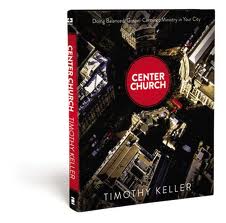
In Center Church, Tim Keller offers challenging insights and provocative questions based on over twenty years of ministry in New York City. Center Church outlines a theological vision for ministry – applying classic doctrines to our time and place – organized around three core commitments:

  1. Gospel-centered: The gospel of grace in Jesus Christ changes everything, from our hearts to our community to the world. It completely reshapes the content, tone and strategy of all that we do.
  2. City-centered: Cities increasingly influence our global culture and affect the way we do ministry. With a positive approach toward our culture, we learn to affirm that cities are wonderful, strategic and underserved places for gospel ministry.
  3. Movement-centered: Instead of building our own tribe, we seek the prosperity and peace of our community as we are led by the Holy Spirit.


In the section on “City Vision,” Keller answers the question raised in the title of this post with the following thoughts:

  • Christians should develop appreciative attitudes toward the city – In obedience to God, Job went to the city of Nineveh, but he didn’t love it. In the same way, Christians may come to the city out of a sense of duty to God while being filled with great disdain for the density and diversity of the city. But for ministry in cities to be effective, it is critical that Christians appreciate cities. They should love city life and find it energizing.
  • Christians should become a dynamic counterculture where they live – It will not be enough for Christians to simply live as individuals in the city. They must live as a particular kind of community. Christians are called to be an alternate city within every earthy city, an alternate human culture within every human culture – to show how sex, money, and power can be used in nondestructive ways; to show how classes and races that cannot get along outside of Christ can get along in him; and to show how it is possible to cultivate by using the tools of art, education, government, and business to bring hope to people rather than despair or cynicism.
  • Christians should be a community radially committed to the good of their city as a whole – It is not enough for Christians to form a culture that merely “counters” the values of the city. We must also commit, with all the resource of our faith and life to serve sacrificially the good of the whole city, and especially the poor. Christians in cities must become a counterculture for the common good. They must be radically committed to its benefit. They must minister to the city out of their distinctive Christian beliefs and identity.

If Christians seek power and influence, they will arouse fear and hostility. If instead they pursue love and seek to serve, they will be granted a great deal of influence by their neighbors, a free gift given to trusted and trustworthy people.

Reflections and excerpts from Tim Keller’s book Center Church.

To read other posts about Center Church, go here and here.

7 Features of a Church for the City

Note: During the current “stay-at-home” mandate and other restrictions in place across the country, I am diving back into 11 years of posts, articles, and reviews across my different websites to bring back timely information for today.


The challenge is to establish churches and other ministries that effectively engage the realities of the cities of the world. – Tim Keller

As Tim Keller, pastor of Redeemer Presbyterian Church in NYC notes in his book Center Church, “the majority of evangelical Protestants who presently control the United States mission apparatus are typically white and non-urban in background. They neither understand nor in most cases enjoy urban life. Furthermore, many of the prevailing ministry methods are forged outside of urban areas and then simply imported, with little thought given to the unnecessary barriers this practice erects between urban dwellers and the gospel.

Keller believes that churches that minister in ways that are indigenous and honoring to a city – whatever its size – exhibit these seven vital features:

Respect for Urban Sensibility – Christian leaders and ministers must genuinely belong to the culture so they begin to intuitively understand it. Center-city culture in particular is filled with well-informed, verbal, creative, and assertive people who do not respond well to authoritative pronouncements. They appreciate thoughtful presentations that are well argued and provide opportunities for feedback.

Unusual Sensitivity to Cultural Differences – Effective leaders in urban ministry are acutely aware of the different people groups within their area. Because cities are dense and diverse, they are always culturally complex. The ever-present challenge is to work to make urban ministry as broadly appealing as possible and as inclusive of different cultures as possible.

Commitment to Neighborhood and Justice – Urban neighborhoods are highly complex. Often, alongside the well-off residents in gentrified neighborhoods with their expensive apartments, private schools, and community associations, there is often a “shadow neighborhood” filled with many who live in poverty, attend struggling schools, and reside in government housing. Urban ministers learn how to exegete their neighborhoods to grasp their sociological complexity.

Integration of Faith and Work – Traditional evangelical churches tend to emphasize personal piety and rarely help believers understand how to maintain and apply their Christian beliefs and practice to the worlds of the arts, business, scholarship, and government. Urban Christians need a broader vision of how Christianity engages and influences culture. Cities are culture-forming incubators, and believers in such places have a significant need for guidance on how Christian faith should express itself in public life.

Bias for Complex Evangelism – Not only must an urban church be committed to evangelism; it must be committed to the complexity of urban evangelism. There is no “one-size-fits-all” method or message that can be used with all urban residents. Urban evangelism requires immersion in the various cultures’ greatest hopes, fears, views and objections to Christianity. It requires a creative host of different means and venues, and it takes great courage.

Preaching that Both Attracts and Challenges Urban People – Perhaps the greatest challenge for preachers in urban contexts is the fact that many secular and non-believing people ma be in the audience.  The challenge is for the urban preacher to preach in a way that edifies believers and engages and evangelizes non-believers at the same time.

Commitment to Artistry and Creativity – Professional artists live disproportionately in major urban areas, and so the art are held in high regard in the city, while in non-urban areas little direct attention is given to them. Urban churches must be aware of this, and should have high standards for artistic skill in their worship and ministries. They must also think of the artists no simply as persons with skills to use, but connect to them as worshippers and hearers, communicating that they are valued for both their work and their presence in the community.

By his grace, Jesus lost the city-that-was, so we could become the citizens of the city-to-come, making us salt and light in the city-that-is. – Tim Keller


Reflections and excerpts from Tim Keller’s book Center Church.


To read another post about Center Church, go here.


Next: What should Christians do about cities?

The Opportunity of Ministry in Cities

Note: During the current “stay-at-home” and other restrictions in place across the country, I am diving back into 11 years of posts, articles, and reviews across my different websites to review, update, and bring back timely information for today.


If the church in the West remains, for the most part, in the suburbs of Middle America and neglects the great cities, it risks losing an entire generation of American society’s leaders.

The growth in size and influence of cities today presents the greatest possible challenge for the church. Never before has it been so important to learn how to do effective ministry in cities, and yet, by and large, evangelical Christianity in the US is still non-urban.

Along with these challenges comes a range of unique opportunities. Tim Keller, founder and senior pastor of Redeemer Presbyterian Church in New York City, sees four important groups of people who must be reached to fulfill the mission of the church – and each of them can best be reached in the cities. Here’s a brief summary of his thoughts:

The Younger Generation – the prospects for advancement, the climate of constant innovation and change, the coming together of diverse influences and people – all of these appeal to young adults.  In the US and Europe, the young disproportionately want to live in cities, and for the highly ambitious, the numbers are even higher.

The Cultural “Elites” – the second group is made up of those who have disproportionate influence on how human life is lived in a society because they exert power in business, publishing the media, the academy and the arts. These people spend much of their time or live in city centers.

Accessible “Unreached” People Groups – the currents of history are now sweeping many formerly unreached people into cities as rural economies fail to sustain the old ways of life. These newcomers need help and support to face the moral, economic, emotional, and spiritual pressures of city life, and this is an opportunity for the church to serve them with supportive community, a new spiritual family, and a liberating gospel message.

The Poor – a fourth group of people who must be reached in cities is the poor. Some have estimated that one-third of the people representing the new growth in cities in the developing world will live in shantytowns. A great majority of the world’s poor live in cities, and there is an important connection between reaching the urban elites and serving the poor of your city.

The cities of the world will continue to grow in significance and power. Because of this, they remain just as strategic – if not more so – than they were in the days of Paul and the early church.

  • If Christians want to reach the unreached, we must go to the cities.
  • To reach the rising generations, we must go to the cities.
  • To have any impact for Christ on the creation of culture, we must go to the cities.
  • To serve the poor, we must go to the cities.

– Tim Keller

In Center Church, Timothy Keller offers challenging insights and provocative questions based on over twenty years of ministry in New York City. This book outlines a theological vision for ministry—based on classic doctrines but rethinking our assumptions about church for our time and place—organized around three core commitments:

  1. Gospel-centered: The gospel of grace in Jesus Christ changes everything, from our hearts to our community to the world. It completely reshapes the content, tone and strategy of all that we do.
  2. City-centered: Cities increasingly influence our global culture and affect the way we do ministry. With a positive approach toward our culture, we learn to affirm that cities are wonderful, strategic and underserved places for gospel ministry.
  3. Movement-centered: Instead of building our own tribe, we seek the prosperity and peace of our community as we are led by the Holy Spirit.


Next: 7 Features of a Church for the City

12 Best Books of 2012

Making a “Best of” list is always hard – it’s a very subjective process, driven by my personal tastes, professional needs, and plain curiosity.

I’ve always been a voracious reader – a cherished habit passed down to me by my late father. In the past year, though, I’ve been able to ramp it up considerably because of my role as Vision Room Curator.

It’s not only a pleasure to read, it’s part of my job description – how cool is that?

Even so, it’s also hard to narrow it a “Best of” list down: in 2012, my reading included:

  • 127 books checked out from my local library
  • 68 print books purchased
  • 31 books received for review
  • 75 digital books on my Kindle

I also perused dozens of bookstores on my travels, writing down 63 titles for future review and/or acquisition. There are also a lot of late releases just coming out that I don’t have time to take a look at – yet. Be that as it may, here is my list of my 12 favorite books published in 2012.

Outside In

  Outside In

Guest Experiences for ChurchWorld is my passion, and this book by Harley Manning and Kerry Bodine will provide churches a “go-to” manual for years to come


Deep and Wide

Deep and Wide

Andy Stanley and Northpoint Ministries have a solid model that all churches would do well to study – not to duplicate, but to understand how to impact your community for Christ.


Center Church

Center Church

Tim Keller delivers a textbook for doing church; possibly the most important church theology/leadership/practical book in a decade


The Advantage

   The Advantage

Patrick Lencioni captures the concept of clarity (he uses the phrase “organizational health”) like no business thinker today


The Icarus Deception

   The Icarus Deception

Seth Godin’s most recent book is probably the most challenging personal one I’ve read – and that’s saying a lot!


The Lego Principle

   The LEGO Principle

Joey Bonifacio writes in a simple, profound way about the importance of “connecting” in relationships that lead to discipleship


Missional Moves

   Missional Moves

Rob Wegner and Jack Magruder in a quiet, unassuming way, illustrate how Granger Community Church is transforming into a community of believers reaching their community – and the world.


Lead with a Story

Lead with a Story

Paul Smith delivers a powerful tool to enhance the leader’s skill in storytelling.


Design Like Apple

Design Like Apple

John Edson delivers a stunningly designed book that challenges the reader to understand and utilize Apple’s principles of design


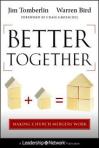
Better Together

   Better Together

Church mergers (and closings) are going to be a huge event in the next decade; Jim Tomberlin and Warren Bird give an excellent resource on how to survive and thrive throughout the process.


Quiet

   Quiet

Susan Cain writes the book I’ve been waiting for over 30 years – because I am an introvert leader.


Midnight Lunch

   Midnight Lunch

Sarah Miller Caldicott delivers a powerful primer for collaborative teamwork.


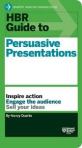
HBR Guide to Persuasive Presentations

   HBR Guide to Persuasive Presentations

Nancy Duarte is not just a great writer – she knows how to deliver a great presentation from the first idea to the final applause.


Okay, it’s not 12 – but it is a baker’s dozen!

Let’s see – there’s still over 2 weeks left in 2012 – plenty of time to find a good book – what do you recommend?